
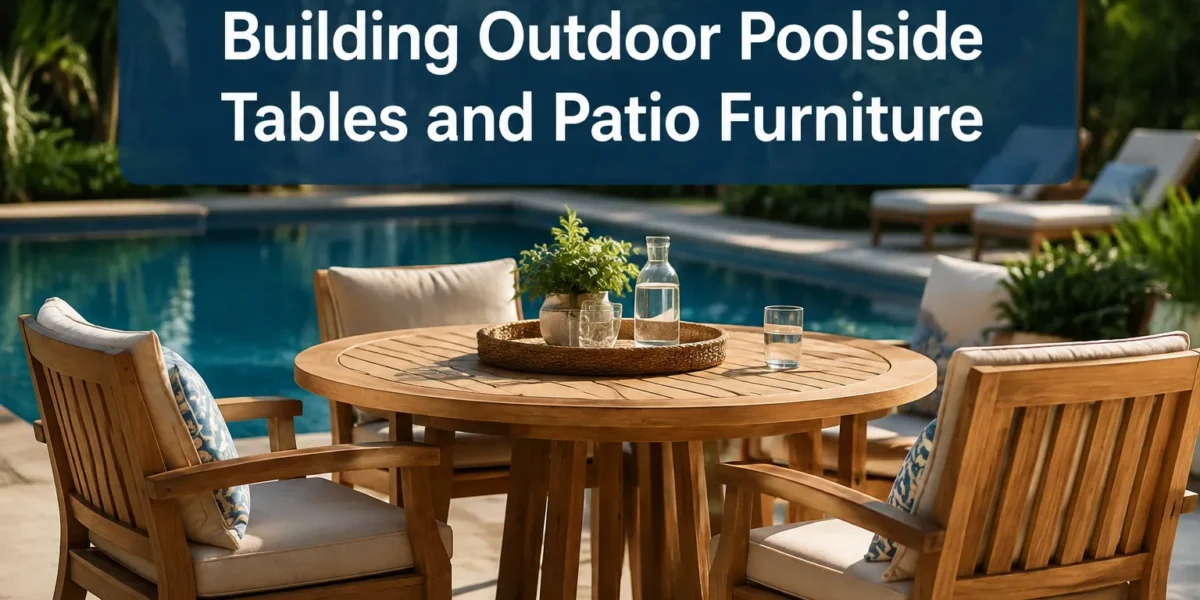
The relentless exposure to sun, rain, and corrosive pool chemicals can turn even the most robust indoor furniture into a rapidly decaying relic when placed outdoors. In 2026, homeowners and woodworkers seeking to create enduring beauty for their patios and pool decks face the unique challenge of selecting and preparing materials that withstand these harsh elements. Building outdoor poolside tables and patio furniture demands a deep understanding of weather-resistant woods and specialized finishing techniques to ensure longevity and maintain aesthetic appeal for years to come.
This article delves into the critical factors for choosing the right lumber and applying the finishes necessary to protect your handcrafted pieces from the ravages of nature and chlorine.
Key Takeaways
- Wood Selection is Paramount: Choosing naturally weather-resistant woods like Teak, Ipe, Cedar, and Redwood is the first and most crucial step for outdoor furniture longevity.
- Understanding Environmental Stressors: Poolside furniture faces unique challenges from humidity, UV radiation, chlorine, and biological growth, which dictate material and finish choices.
- Robust Joinery is Essential: Strong, weather-appropriate joinery methods, often reinforced with marine-grade fasteners, are vital to prevent structural failure.
- Strategic Finishing Techniques: Applying multiple layers of marine-grade finishes, sealers, and UV inhibitors is key to creating a durable barrier against moisture and sun.
- Ongoing Maintenance is Non-Negotiable: Regular cleaning, re-oiling, or refinishing schedules are necessary to preserve outdoor furniture’s condition and extend its lifespan.
Selecting Weather-Resistant Woods for Outdoor Poolside Tables and Patio Furniture
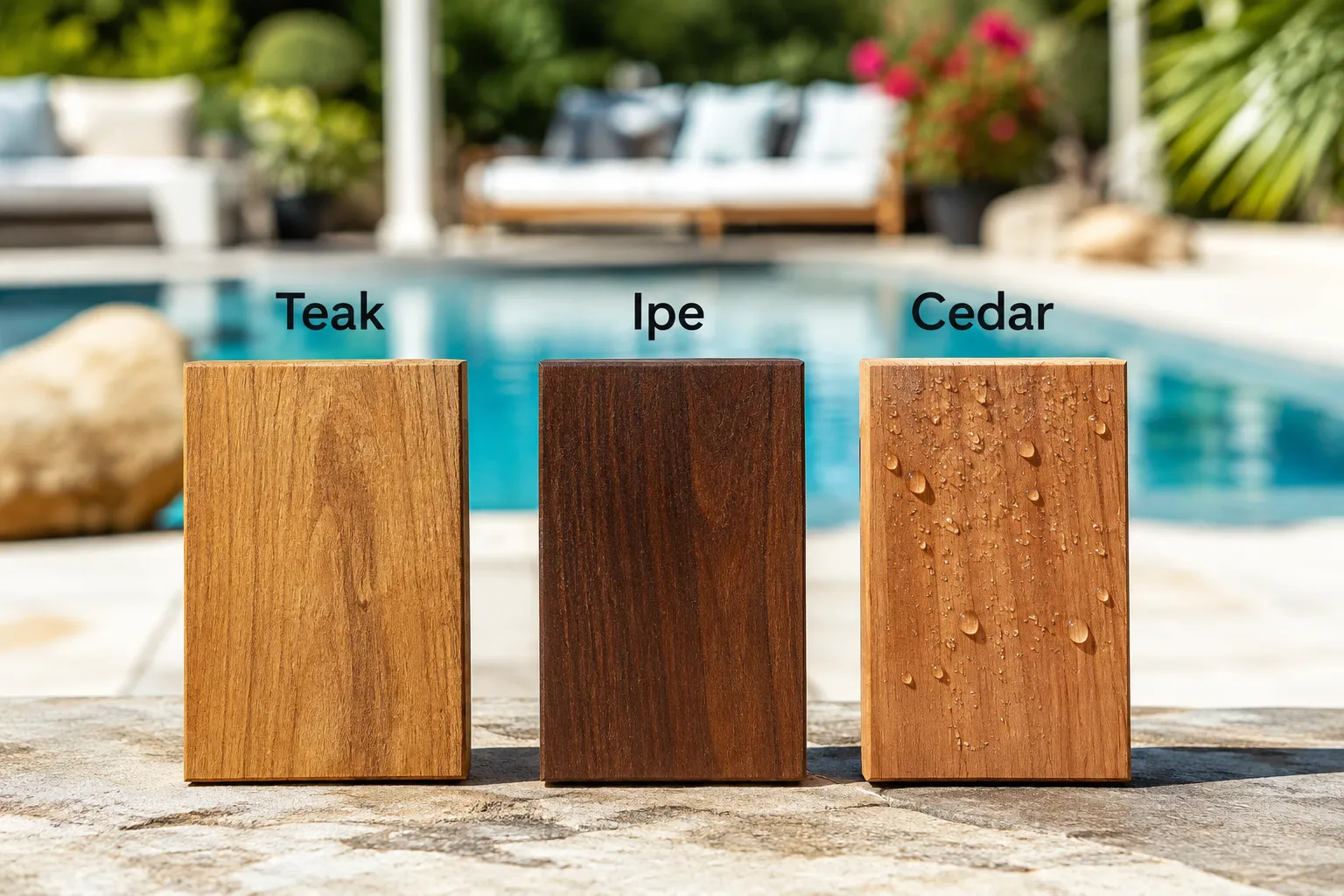
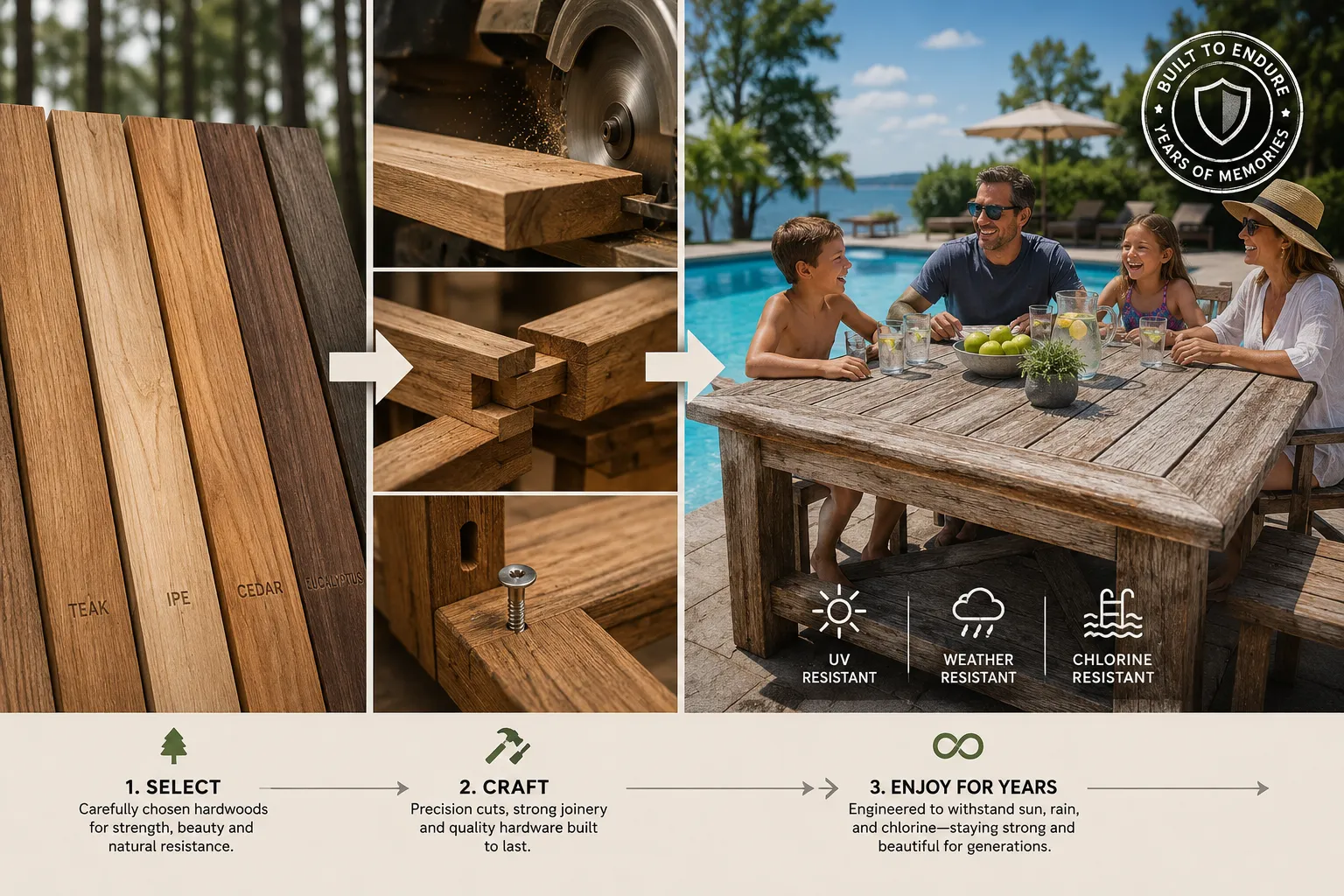
The foundation of durable outdoor furniture lies in the wood itself. Not all wood species are created equal when it comes to battling the elements. For pieces intended for poolside or patio use, inherent resistance to moisture, decay, insects, and UV radiation is paramount. Here are the top contenders for building outdoor poolside tables and patio furniture:
Teak (Tectona grandis)
Teak is often considered the gold standard for outdoor furniture. Its high oil content and dense grain make it exceptionally resistant to water, decay, and insects. Teak also contains natural rubber, which adds to its water repellency. Over time, untreated teak weathers to a beautiful, silvery-gray patina. While expensive, its unparalleled durability and minimal maintenance requirements often justify the cost.
- Pros: Supreme weather resistance, natural oils protect against rot and insects, low maintenance if left to weather, attractive aging.
- Cons: High cost, can be difficult to work with due to density and silica content.
Ipe (Handroanthus spp.)
Known as Brazilian Walnut, Ipe is an incredibly dense and hard tropical hardwood. It boasts exceptional resistance to rot, insects, and UV degradation, making it another excellent choice for high-traffic outdoor areas and marine environments. Ipe is so dense it often sinks in water. Its fine texture and rich dark brown color are very appealing.
- Pros: Extremely durable, highly resistant to rot, insects, and scratches, long lifespan.
- Cons: Very hard to work with (requires carbide tooling), high cost, can be prone to checking if not dried properly, sustainability concerns (ensure FSC certified).
Cedar (Thuja plicata – Western Red Cedar, Cedrus deodara – Deodar Cedar)
Western Red Cedar is a popular, more affordable choice for outdoor furniture. It contains natural oils (thujaplicins) that act as fungicides and insecticides, providing good decay resistance. It’s relatively lightweight and easy to work with. While not as durable as teak or ipe, with proper finishing, it performs very well outdoors. It typically weathers to a soft gray.
- Pros: Good natural decay and insect resistance, lightweight, easy to work with, aromatic.
- Cons: Softer than hardwoods, can dent more easily, requires more frequent maintenance for color retention.
Redwood (Sequoia sempervirens)
Similar to cedar, redwood contains natural tannins that offer resistance to insects and rot. It’s a stable wood, meaning it resists warping and checking, which is beneficial for outdoor applications. Redwood has a beautiful reddish-brown hue. Like cedar, it’s easier to work with than tropical hardwoods.
- Pros: Good natural decay and insect resistance, very stable, attractive color, relatively lightweight.
- Cons: Can be expensive for clear grades, softer wood, requires proper finishing to maintain color.
Other Considerations: Treated Lumber and Accoya
- Pressure-Treated Lumber: While designed for outdoor use and cost-effective, pressure-treated lumber (often pine or fir) is typically used for structural elements like deck framing. Its appearance is less refined, and it’s less suitable for fine furniture surfaces due to chemicals and potential for warping.
- Accoya Wood: This is a modified wood product created through acetylation, making fast-growing, sustainable woods incredibly durable and stable. Accoya boasts performance comparable to teak but with better environmental credentials. It’s an excellent, albeit pricier, modern alternative.
When selecting your wood, always look for kiln-dried material to ensure stability and reduce the likelihood of warping or checking after construction. Sourcing from reputable suppliers is also crucial to ensure the wood’s quality and, for tropical hardwoods, ethical harvesting practices. For more on selecting premium woods, explore premium wood selection for 2026 projects.
Essential Joinery and Fasteners for Outdoor Poolside Tables and Patio Furniture
Beyond wood selection, the strength and longevity of outdoor furniture heavily depend on robust joinery and the right fasteners. Humidity fluctuations, direct water exposure (especially chlorinated water), and temperature changes put immense stress on joints.
Durable Joinery Techniques
For outdoor applications, joints need to be strong, offer maximum gluing surface, and be able to resist movement caused by moisture absorption and drying cycles.
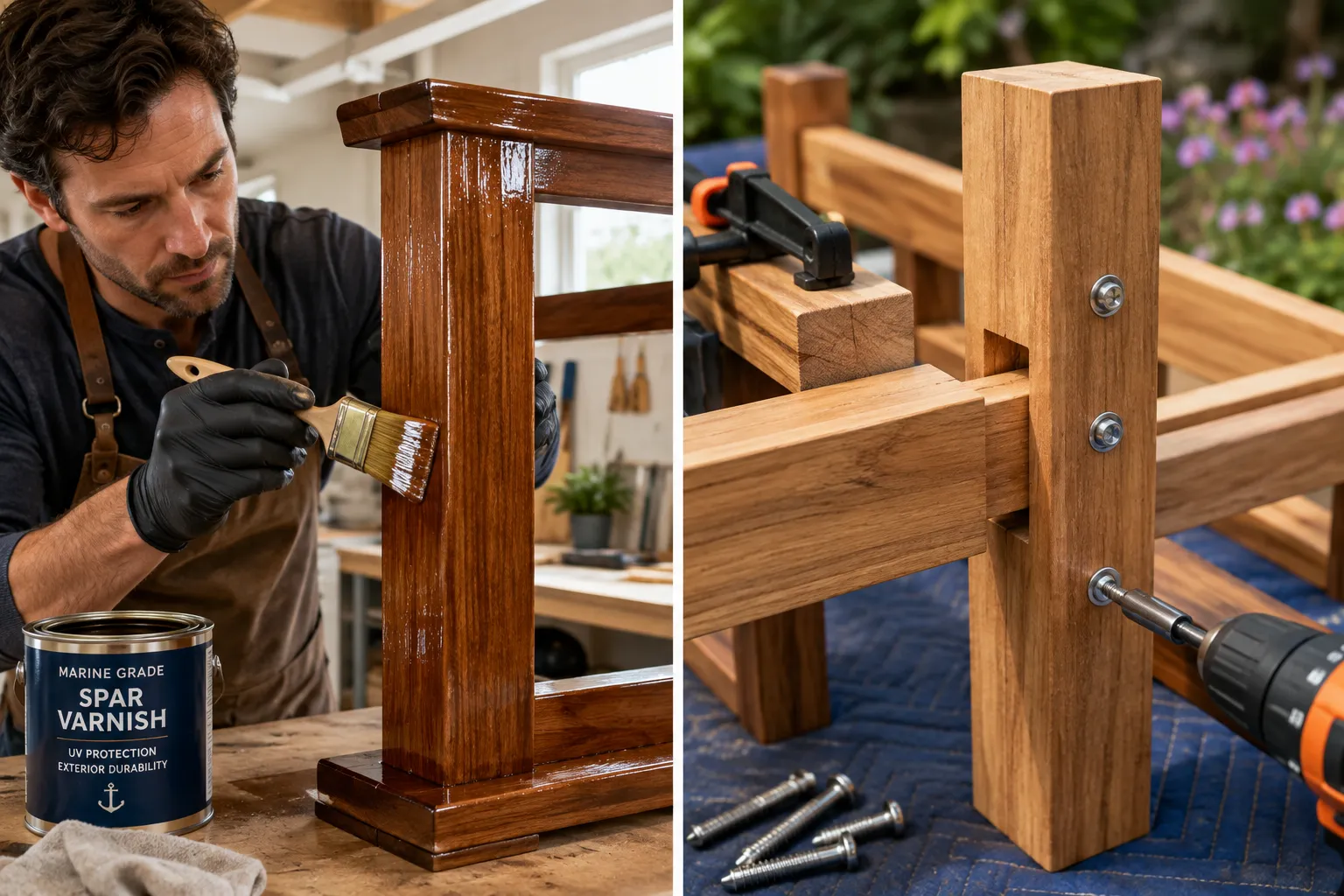
- Mortise and Tenon Joints: These are exceptionally strong and provide a large gluing surface. They are ideal for connecting rails to legs in tables and chairs. Through mortise and tenons, where the tenon extends through the mortise, can be pinned for extra mechanical strength. Learn more about traditional joinery with the art of Japanese wood joinery.
- Dovetail Joints: While often associated with drawers, through dovetails can be used for box-like constructions or joining thicker boards at corners, offering superior mechanical strength against pulling forces.
- Half-Lap Joints: Simple yet effective for frame construction, half-laps offer good gluing surface and mechanical interlocking.
- Dados and Rabbets: Excellent for shelving or cabinet construction, providing stable seating for panels.
- Pocket Hole Joinery: While convenient, pocket holes should be used cautiously outdoors. The screws are visible, and the angled grain can be more susceptible to moisture ingress if not properly sealed. If used, ensure stainless steel screws and generous application of waterproof glue.
Adhesives and Fasteners
The glues and fasteners used are just as critical as the joints themselves.
- Waterproof Glues: Use only exterior-grade, waterproof wood glues (e.g., Titebond III, Gorilla Glue Ultimate, or epoxy resin). These glues cure to form a strong, water-resistant bond that won’t delaminate when exposed to moisture.
- Stainless Steel Fasteners: Avoid galvanized or coated fasteners, as these coatings can degrade over time, leading to rust stains on the wood and structural weakening. Always use marine-grade stainless steel (304 or 316 grade) screws, bolts, and hardware. These offer superior corrosion resistance, especially near chlorinated pools.
- Brass Hardware: For decorative elements, solid brass hardware can be used, as it is also corrosion-resistant and develops an attractive patina.
Design for Durability
Consider the overall design to minimize water trapping.
- Slatted Surfaces: Table tops and chair seats designed with slats allow water to drain quickly, preventing pooling and subsequent wood rot.
- Elevation: Keep furniture legs slightly elevated from the ground using glides or feet to prevent constant contact with damp surfaces.
- Angled Surfaces: Design surfaces with a slight angle to encourage water runoff.
Finishing Techniques for Maximum Weather Resistance
Even the most naturally resistant woods benefit from proper finishing to enhance their beauty and extend their life, especially when building outdoor poolside tables and patio furniture. The goal is to create a barrier against UV radiation, moisture, and biological growth while allowing the wood to breathe and move naturally. For eco-conscious builders, explore sustainable wood finishing techniques.
Surface Preparation
Proper preparation is the cornerstone of any durable finish.
- Sanding: Begin with rougher grits (80-100) to remove milling marks, then progress through finer grits (120-150, possibly 180 for a smoother feel). Avoid sanding too fine (e.g., 220+) as it can close the wood’s pores, hindering finish penetration.
- Cleaning: After sanding, thoroughly clean the wood surface to remove all dust, oils, and contaminants. A tack cloth or compressed air followed by a wipe with mineral spirits can be effective. Ensure the wood is completely dry before applying any finish.
Penetrating Oils
Penetrating oils soak into the wood fibers, nourishing them and offering protection from within. They are often preferred for their natural look and ease of reapplication.
- Teak Oil: Specifically formulated for teak and other dense hardwoods, teak oil (often a blend of tung oil, linseed oil, and solvents) helps maintain the wood’s golden color and provides water repellency. It needs regular reapplication (annually or bi-annually) to prevent the wood from turning gray.
- Linseed Oil/Tung Oil: Pure linseed or tung oil can also be used, offering deep penetration and a natural, matte finish. However, they take a long time to cure and offer less UV protection compared to finishes with added pigments or UV inhibitors. Boiled linseed oil cures faster but contains metallic driers.
Film-Building Finishes
These finishes create a protective layer on the wood’s surface, acting as a robust barrier.
- Marine-Grade Spar Varnish: This is one of the most durable film-building finishes for outdoor use. Spar varnishes contain UV inhibitors to resist sun damage, are flexible to accommodate wood movement, and are highly water-resistant. Apply multiple thin coats (3-5 minimum) for maximum protection, sanding lightly between coats.
- Outdoor Polyurethane: While good for general outdoor use, marine-grade spar varnish typically offers superior UV and flexibility characteristics for furniture directly exposed to the elements. Ensure any polyurethane used is specifically rated for exterior applications.
- Deck Stains and Sealers: These products are formulated for horizontal surfaces like decks, offering good protection but may not provide the refined furniture finish desired for tables and chairs. They come in transparent, semi-transparent, and solid varieties. Semi-transparent stains with UV inhibitors can be a good choice for colored finishes on less expensive woods like cedar.
Primers and Sealers
For woods that are particularly absorbent or if you’re aiming for a painted finish, a good primer/sealer is crucial.
- Penetrating Sealer: Before applying a topcoat, a penetrating sealer can help stabilize the wood and provide an initial layer of water resistance.
- Exterior Primer: If painting, use an oil-based or high-quality acrylic exterior primer. This helps the paint adhere better, blocks tannins from bleeding through (especially with cedar and redwood), and provides an extra layer of moisture protection.
Step-by-Step Finishing Process Example for Spar Varnish
- Preparation: Sand thoroughly with progressive grits (e.g., 100, 150), then clean.
- First Coat: Apply a thin coat of thinned spar varnish (e.g., 1 part mineral spirits to 3 parts varnish) to allow for deeper penetration. Let dry completely.
- Light Sanding: Lightly sand with 220-320 grit sandpaper to de-nib the surface. Clean thoroughly.
- Subsequent Coats: Apply 2-4 more full-strength coats of spar varnish, sanding lightly and cleaning between each coat. Ensure each coat is fully cured before the next.
- Final Cure: Allow the furniture to cure for several days or weeks in a dry, well-ventilated area before full exposure to the elements.
Maintenance and Longevity
No finish lasts forever, especially outdoors. Regular maintenance is key.
- Cleaning: Wash furniture regularly with mild soap and water to remove dirt, pollen, and chlorine residue.
- Reapplication: For oil finishes, reapply annually or when the wood starts to look dry. For film finishes, inspect annually for cracks or peeling. Sand problem areas and apply new coats as needed. Entirely refinishing may be required every few years, depending on exposure. This process is similar to restoring and repurposing vintage wooden furniture, though focused on outdoor resilience.
- Winter Storage: If possible, store outdoor furniture in a sheltered location during the harshest winter months to significantly extend its life.
Conclusion
Building outdoor poolside tables and patio furniture is a rewarding endeavor that yields beautiful, functional pieces designed to withstand the rigors of exterior environments. The key to success lies in a meticulous approach, starting with the selection of inherently weather-resistant woods like teak, ipe, cedar, or redwood. This foundation must be supported by robust joinery techniques and corrosion-proof stainless steel fasteners, ensuring structural integrity against humidity and movement. Finally, the application of appropriate finishing techniques, whether penetrating oils or durable marine-grade spar varnishes, creates a crucial protective barrier against UV radiation, moisture, and chemical exposure from pool water.
By understanding these critical elements and committing to regular maintenance, woodworkers can craft outdoor furniture in 2026 that not only enhances their living spaces but also endures gracefully for many years, providing a testament to thoughtful design and skilled craftsmanship. Take these insights and start planning your next durable outdoor project.
SEO Meta Title: Building Outdoor Poolside Furniture: Weather-Resistant Wood & Finishes SEO Meta Description: Learn to build durable outdoor poolside tables and patio furniture in 2026. Discover weather-resistant woods, joinery, and marine-grade finishing techniques for lasting beauty.