
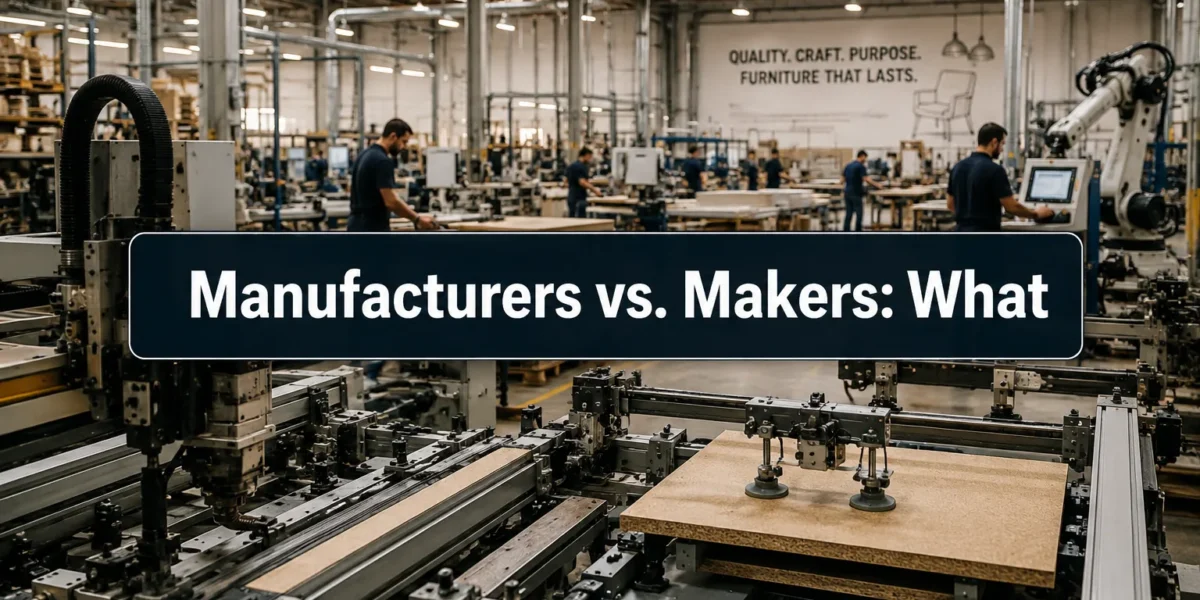
The average lifespan of furniture manufactured today often exceeds decades, a testament to the meticulous planning, robust processes, and stringent quality control employed by professional furniture manufacturers. This longevity stands in stark contrast to many well-intentioned hobbyist projects which, while infused with passion, sometimes fall short on durability or efficiency. Understanding the core distinctions in approach between “manufacturers” and “makers” can unlock significant improvements for woodworking hobbyists, from enhancing project quality and speed to adopting more systematic and enjoyable workflows in their own shops. The lessons learned from how industrial furniture manufacturers design for efficiency, repeatability, and durability can be directly translated into small-shop workflows, effective jigs, and even batch production for those looking to elevate their craft. This article explores these critical differences, offering practical insights for the dedicated woodworking enthusiast in 2026.
Key Takeaways
- Mindset Shift: Professional manufacturers prioritize efficiency, repeatability, and cost-effectiveness, principles hobbyists can adopt.
- Design for Production: Designing components for ease of replication and assembly, rather than one-off creation, is crucial.
- Systematic Workflow: Implementing standardized processes, jigs, and fixtures significantly improves accuracy and reduces errors.
- Quality Control: Formalizing checks at various stages ensures higher quality and minimizes waste, mirroring industrial practices.
- Continuous Improvement: Regularly evaluating and refining methods leads to ongoing skill development and better project outcomes.
Manufacturers vs. Makers: Understanding the Fundamental Differences
At first glance, the terms “manufacturer” and “maker” might seem interchangeable, particularly in the context of creating tangible goods. However, in woodworking, they represent fundamentally different philosophies and operational scales. A hobbyist maker typically focuses on individual projects, often valuing uniqueness, the artistic process, and personal satisfaction above all else. Each piece might be a unique creation, with variations in design and execution. The joy often comes from the hands-on process and the singular outcome.
Professional furniture manufacturers, on the other hand, operate with a distinct set of objectives. Their primary goals include efficiency, cost-effectiveness, consistent quality, and scalability. They are driven by the need to produce multiple identical or highly similar items reliably and profitably. This distinction is vital for woodworking hobbyists to grasp when considering what Manufacturers vs. Makers: What Woodworking Hobbyists Can Learn from Professional Furniture Manufacturers. The insights gained aren’t about sacrificing passion for production, but about integrating proven industrial methodologies to elevate the hobbyist’s craft.
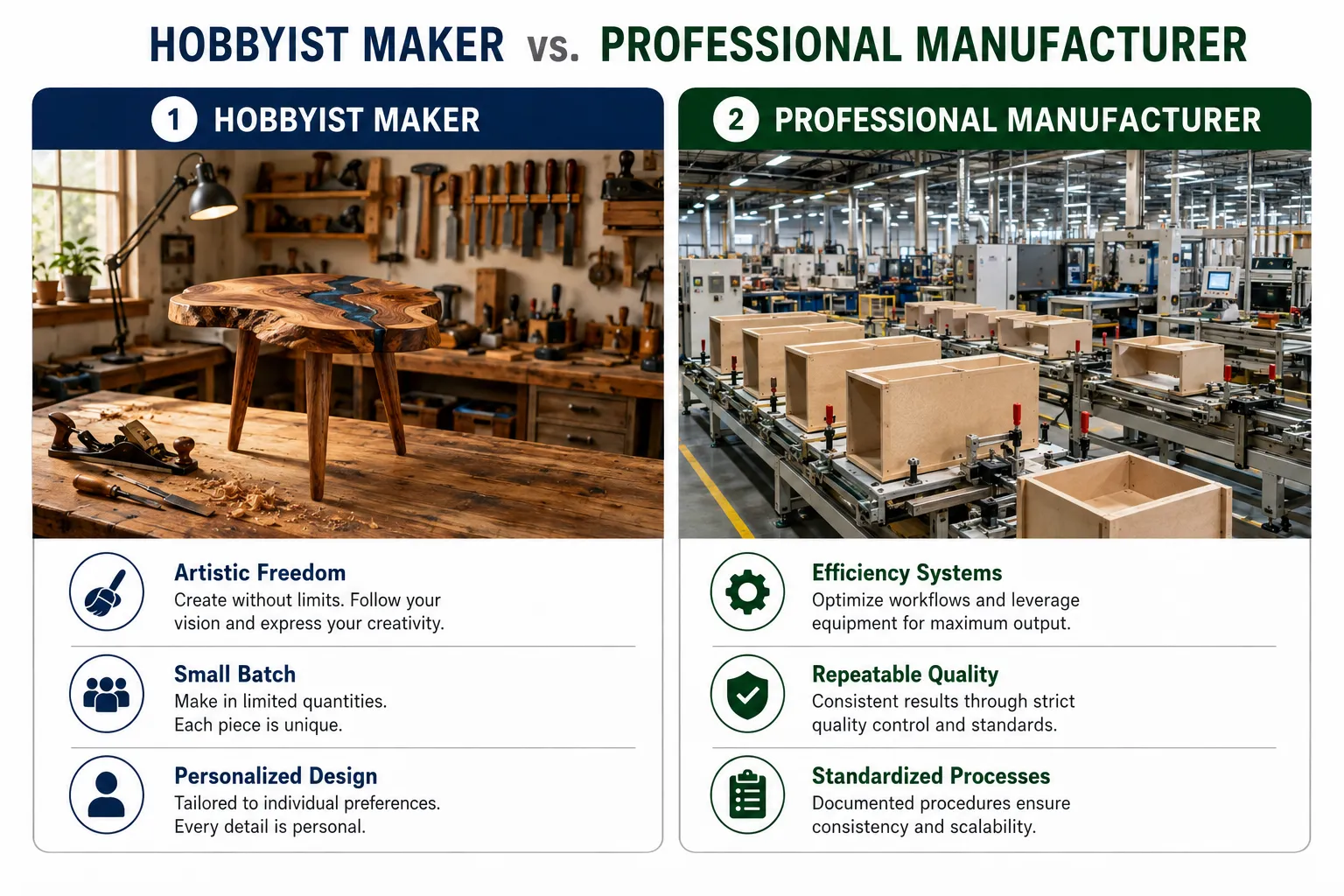
Table 1: Key Distinctions Between Makers and Manufacturers
| Feature | Hobbyist Maker | Professional Furniture Manufacturer |
|---|---|---|
| Primary Goal | Personal satisfaction, unique creation, skill dev. | Efficiency, profit, consistent quality, scalability |
| Volume | Single pieces, small batches | Large batches, mass production, custom orders (within system) |
| Approach | Iterative, organic, often problem-solving on-the-fly | Systematic, planned, standardized processes, optimized workflow |
| Design Focus | Aesthetics, personal vision, material exploration | Manufacturability, durability, cost, assembly ease |
| Tooling/Jigs | Ad-hoc, project-specific, often temporary | Permanent, robust, multi-use, precision-engineered |
| Quality Control | Self-assessment, visual inspection | Formalized checks, precise measurements, statistical process control |
| Time/Cost View | Leisure activity, material cost is primary | Labor and material cost optimization, time is money |
The lessons for hobbyists from this comparison are not to become miniature factories, but to strategically adopt elements of the manufacturing mindset. By doing so, they can enjoy increased accuracy, reduce frustration, produce higher-quality results, and potentially even create woodworking projects that sell.
Translating Industrial Efficiency to the Small Shop
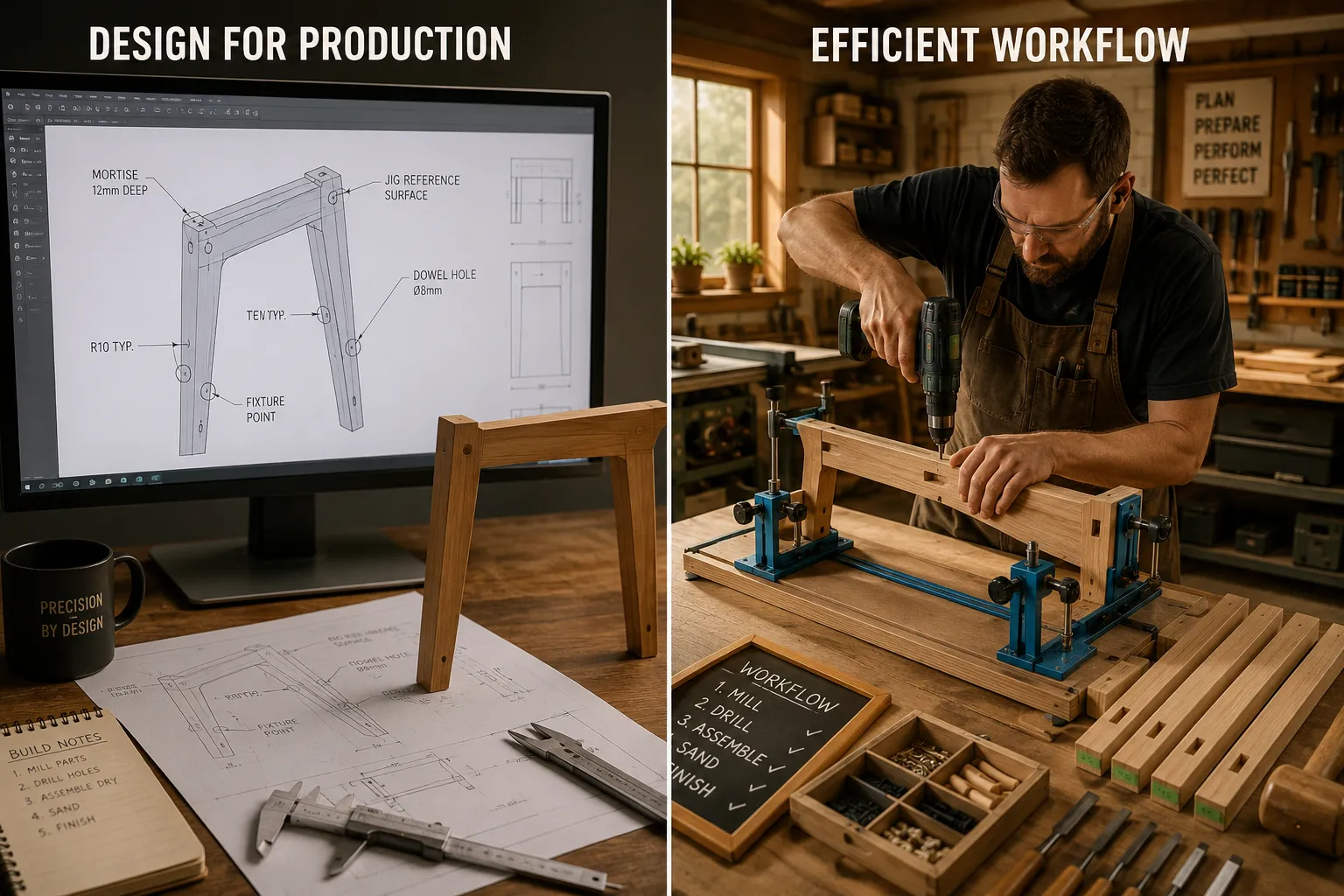
One of the most valuable lessons woodworking hobbyists can glean from professional furniture manufacturers is the concept of designing for efficiency and repeatability. Industrial producers don’t just build; they engineer the build process itself. This means components are designed to be cut, shaped, and joined with minimal setup changes and maximum accuracy across many units. For the hobbyist, this translates into adopting standardized measurements, creating reusable templates, and building robust jigs.
Consider the simple act of cutting multiple identical parts. A hobbyist might measure and cut each piece individually, introducing slight variations. A manufacturer uses a precise stop block or a dedicated jig on a table saw to ensure every cut is identical. This principle extends to every stage: routing profiles, drilling holes, and even assembly.
The Power of Jigs and Fixtures
Jigs are the bedrock of manufacturing efficiency. They guide tools or workpieces, ensuring precise, repeatable operations. For a hobbyist, investing time in creating good jigs can drastically improve the quality and consistency of projects.
- Crosscut Sleds: Essential for accurate and repeatable crosscuts on a table saw.
- Router Jigs: Templates for consistent curves, dados, or mortises.
- Drilling Jigs: Ensure holes are perfectly aligned and spaced, crucial for joinery or hardware installation.
- Assembly Jigs: Hold parts at specific angles or positions during glue-up, preventing creep and ensuring squareness.
Building these jigs doesn’t just benefit the current project; it builds a reusable asset for future endeavors. This systematic approach not only saves time but also reduces material waste from errors, a key aspect of industrial efficiency. When crafting a woodworking dining chair, for instance, having consistent leg lengths and stretcher dimensions across all chairs is paramount for stability and aesthetics.
Optimizing Workflow and Shop Layout
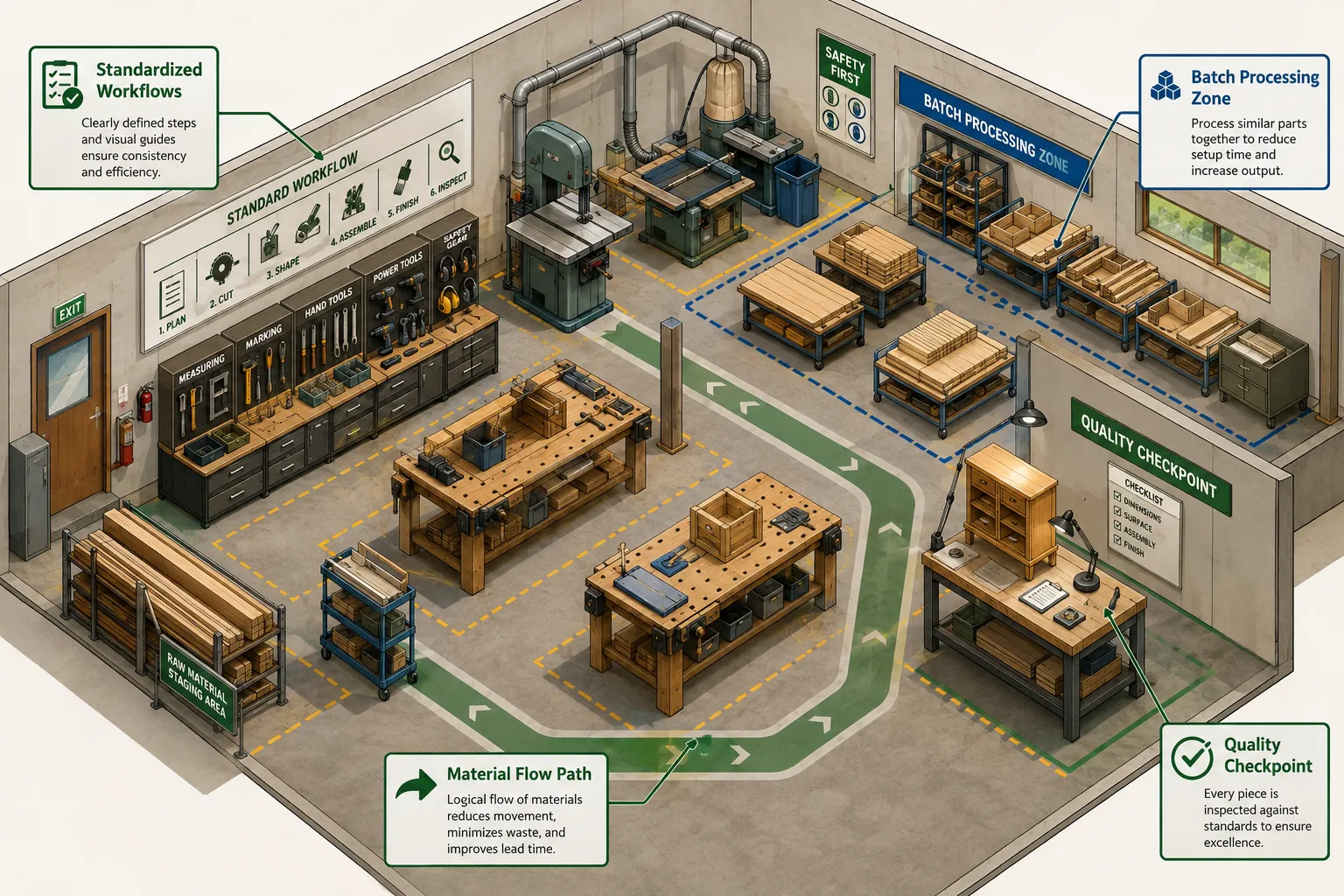
Professional manufacturers meticulously plan their workflow to minimize wasted motion and maximize throughput. Materials move logically from one station to the next, reducing backtracking and bottlenecks. Hobbyists can apply this by:
- Creating Ergonomic Layouts: Arranging tools and workspaces logically, minimizing steps between related operations. Our guide on creating ergonomic workshop layouts offers practical advice.
- Batch Processing: Instead of cutting one component, then sanding it, then joining it, cut all identical components at once, then sand all of them, then assemble. This reduces setup time and streamlines tasks.
- Dedicated Workstations: Having distinct areas for milling, assembly, and finishing can prevent clutter and improve focus. Even in a small shop, a portable assembly table or a dedicated finishing area can make a difference.
- Standard Operating Procedures (SOPs): While informal for hobbyists, thinking through the “best way” to perform a recurring task and sticking to it (e.g., how to set up the jointer, how to prepare a glue-up) establishes good habits.
By integrating these practices, a hobbyist woodworking shop, regardless of its size, can transform into a highly efficient and productive environment, allowing for more ambitious and complex projects.
Elevating Quality and Durability Through Manufacturing Principles
Beyond mere efficiency, professional furniture manufacturers are obsessive about quality and durability. Their reputation and profitability depend on delivering products that meet specific standards and withstand the test of time. For the woodworking hobbyist, this focus on robust construction and consistent finish can significantly elevate the value and longevity of their handmade pieces. This is another crucial aspect of Manufacturers vs. Makers: What Woodworking Hobbyists Can Learn from Professional Furniture Manufacturers.
Material Selection and Preparation
Manufacturers invest heavily in sourcing appropriate materials and preparing them correctly. For hobbyists, this means:
- Understanding Wood Properties: Selecting the right wood species for structural integrity or aesthetic appeal. Our guide on mastering the art of wood selection can help.
- Proper Drying and Acclimation: Ensuring wood is at the correct moisture content to prevent warping, cracking, and joint failure post-construction.
- Careful Stock Preparation: Jointing and planing lumber accurately to ensure flat, square, and parallel faces. This foundational step is critical for strong joinery.
Robust Joinery and Assembly Techniques
Industrial furniture is built to endure, often through engineered joinery that is strong and repeatable. While hobbyists might enjoy intricate hand-cut joints, manufacturers often opt for strong, production-friendly methods.
- Mechanical Fasteners: Where appropriate, screws, bolts, and specialized connectors are used for strength and ease of assembly/disassembly.
- Dowel and Mortise & Tenon Variations: Precision-machined versions of classic joints ensure tight fits and structural integrity. Hobbyists can achieve similar results with accurate jigs and setup.
- Optimized Glue-Ups: Using appropriate clamps, cauls, and sufficient open/closed times for glues to cure properly, preventing weak joints. This is particularly important for projects like building live edge dining tables with reclaimed wood, where stability is paramount.
Integrated Quality Control
Manufacturers implement quality control at every stage, not just at the end. This ‘inspect-as-you-go’ approach catches errors early, preventing costly rework.
- Dimension Checks: Verifying the size of cut parts against specifications before moving to the next stage.
- Squareness and Flatness: Regularly checking components for squareness and flatness before assembly.
- Test Fits: Dry-fitting assemblies before glue-up to ensure everything aligns perfectly.
- Finishing Checks: Inspecting surfaces for defects, proper sanding, and consistent finish application. For various wood finishing techniques, thorough inspection is key.
Adopting these quality control checkpoints means that by the time a project reaches the final finishing stage, any potential issues have already been addressed, resulting in a superior finished product.
Embracing Durability in Design
Ultimately, the goal is to build furniture that lasts. This means considering how a piece will be used, the stresses it will undergo, and designing accordingly.
- Structural Integrity: Thinking about load-bearing points and reinforcing them.
- Material Thickness: Using appropriate thicknesses of material for strength without unnecessary bulk.
- Movement of Wood: Designing assemblies that accommodate wood movement due to humidity changes, preventing cracks and joint failures. This is especially vital when sourcing and selecting reclaimed urban lumber as its history can make its movement more unpredictable.
- Protective Finishes: Applying finishes that not only enhance beauty but also protect the wood from moisture, wear, and UV light.
By systematically applying these principles, derived from the rigorous world of furniture manufacturing, woodworking hobbyists can move beyond merely crafting beautiful objects to creating heirloom-quality pieces that stand the test of time.
Conclusion
The journey from hobbyist maker to an artisan who consistently produces high-quality, durable, and efficient woodworking projects is greatly enriched by understanding the core principles employed by professional furniture manufacturers. While the scale and objectives differ, the underlying emphasis on systematic processes, efficient design, repeatable operations, and stringent quality control offers a powerful framework.
By adopting a “manufacturability” mindset, thinking about how a piece can be built with precision and consistency, utilizing robust jigs, optimizing workflow, and integrating continuous quality checks, woodworking hobbyists can elevate their craft significantly in 2026. This isn’t about sacrificing creativity for mass production; it’s about channeling that creativity through more refined and effective methods, ultimately leading to greater satisfaction, fewer errors, and projects that truly endure. Start by identifying one area in your current process to standardize, build a dedicated jig for a recurring task, or simply plan your cuts more strategically. The lessons from the factory floor are accessible to every workshop, regardless of size, promising a future of more refined and robust woodworking.