
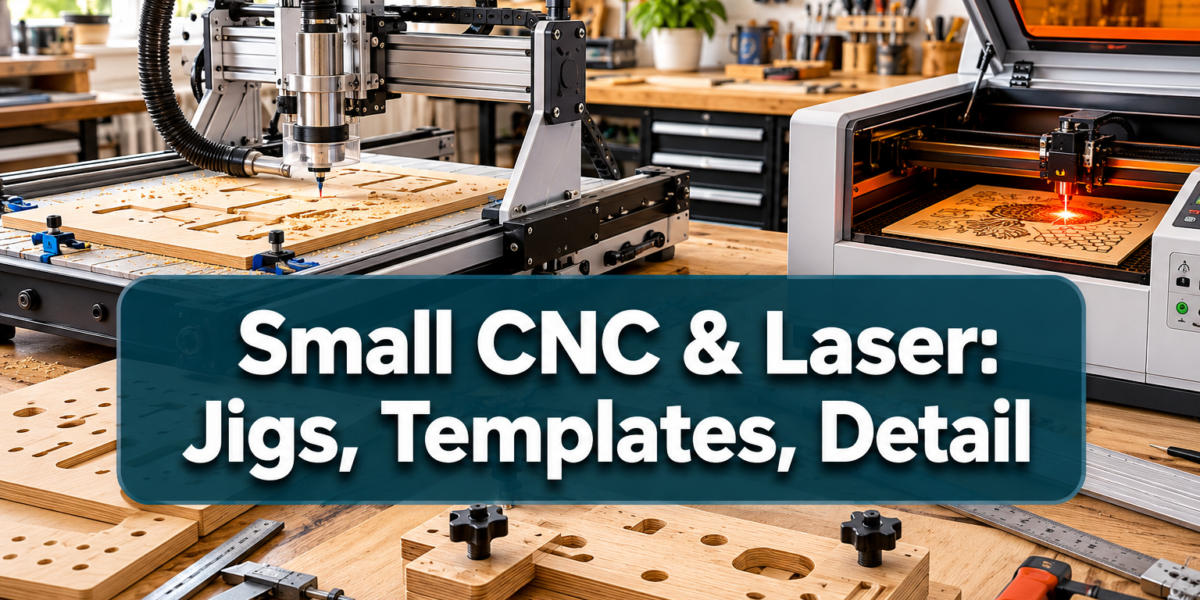
The persistent myth that precise, intricate woodworking and fabrication are exclusively the domain of large, industrial-grade machinery is rapidly eroding in 2026. Affordable and compact CNC routers and laser cutters have revolutionized the home workshop, transforming ambitious projects from painstaking, manual labor into highly repeatable, precision-driven endeavors. This article delves into the core principles of [Small CNC and Laser Cutter Mastery: Jigs, Templates, and Detail Work for Home Workshops], revealing how these powerful tools can elevate your craftsmanship without requiring you to abandon your beloved hand tools. Far from replacing traditional techniques, these machines serve as invaluable allies, enabling woodworkers and makers to achieve unparalleled accuracy, efficiency, and creative freedom in their projects.
Key Takeaways
- Small CNC and laser cutters dramatically enhance precision and repeatability in home workshops.
- They excel at creating custom jigs and templates, which in turn improve the accuracy of traditional hand-tool work.
- Mastering these machines involves understanding design software, material properties, and safe operation.
- Integrated use of CNC/laser with hand tools allows for complex detail work that is both efficient and high-quality.
- The learning curve is manageable, offering significant returns in project sophistication and workflow optimization.
The Foundation of Precision: Jigs and Templates with Small CNC and Laser Cutter Mastery: Jigs, Templates, and Detail Work for Home Workshops
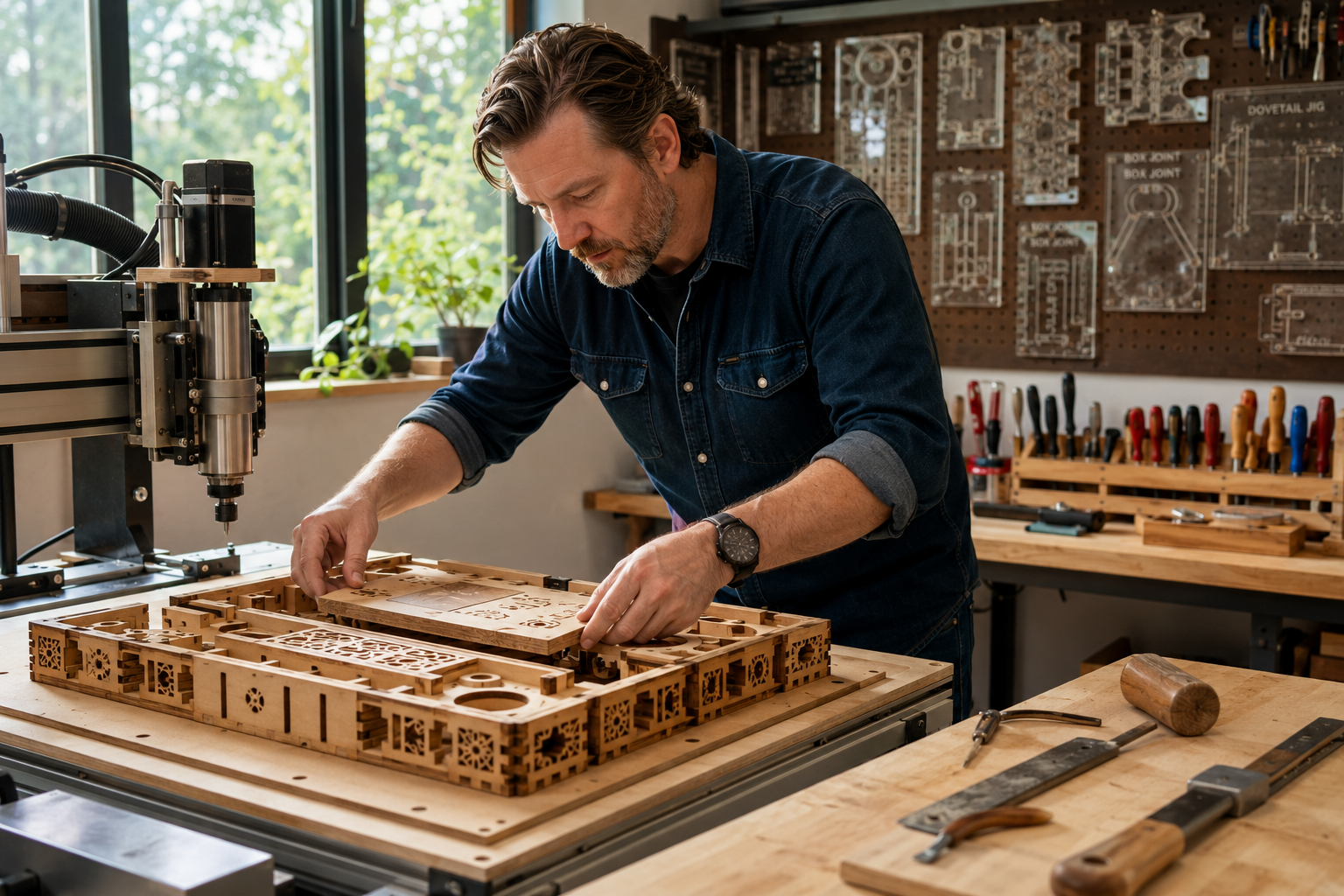
The essence of precision work, regardless of the tools used, lies in repeatability and accuracy. Jigs and templates are the unsung heroes of the workshop, ensuring that every cut, drill hole, or shaped edge is identical to the last. Historically, crafting these essential aids was a time-consuming process requiring careful measurement and skilled handwork. Today, small CNC routers and laser cutters dramatically streamline this foundational step, elevating the potential for intricate and consistent results.
Revolutionizing Jig Creation
With a small CNC router, creating complex jigs becomes a matter of design and execution rather than arduous manual labor. Imagine needing to cut identical mortises at a precise angle across multiple pieces. A custom CNC-routed jig can hold these pieces securely, guiding a router bit or even a hand saw for perfect, repeatable results. Materials like MDF, plywood, or even acrylic are ideal for CNC machining into sturdy, long-lasting jigs.
Consider the common challenge of drilling perfectly perpendicular holes or routing intricate dadoes. A CNC machine can carve out custom drill guides or routing templates with sub-millimeter accuracy. This is particularly beneficial for projects requiring numerous identical components, such as cabinet doors, box joints, or intricate joinery. For those just starting, exploring a Beginner’s Guide to CNC Routers for Small Woodshops: From Setup to First Project can provide a solid introduction.
Laser-Cut Templates for Unmatched Detail
Laser cutters bring an entirely different level of precision to template creation, especially for thinner materials and highly intricate shapes. For instance, crafting curved pieces for furniture or decorative elements often requires a precise pattern. A laser cutter can etch or cut templates from thin plywood, cardstock, or acrylic with razor-sharp accuracy, far surpassing what can be achieved with a scroll saw or band saw by hand.
For projects involving complex inlay work, decorative accents, or even custom fretwork, laser-cut templates provide the exact outline needed for precise hand-tool follow-up. This hybrid approach, using the laser for absolute precision in templating and hand tools for the final cuts and finishing, allows for sophisticated designs that would otherwise be impractical or impossible for the home workshop. Creating a custom jig to help with tasks like Mastering Dovetail Joints with Hand Tools: A Step-by-Step Guide for Flawless Wood Joinery is an excellent example of this synergy.
Table: Comparison of Jig/Template Creation Methods
| Method | Advantages | Disadvantages | Best For |
|---|---|---|---|
| Hand-Cut | Low cost, immediate results | Time-consuming, less precise, prone to error | Simple, one-off cuts |
| Small CNC Router | High precision, repeatable, durable jigs | Requires CAD/CAM, initial investment | Complex jigs, repeated parts, thicker materials |
| Small Laser Cutter | Extremely high precision, intricate details | Limited to thinner materials, material restrictions | Fine detail templates, decorative inlays |
Integrating Design Software and Material Science for Small CNC and Laser Cutter Mastery: Jigs, Templates, and Detail Work for Home Workshops
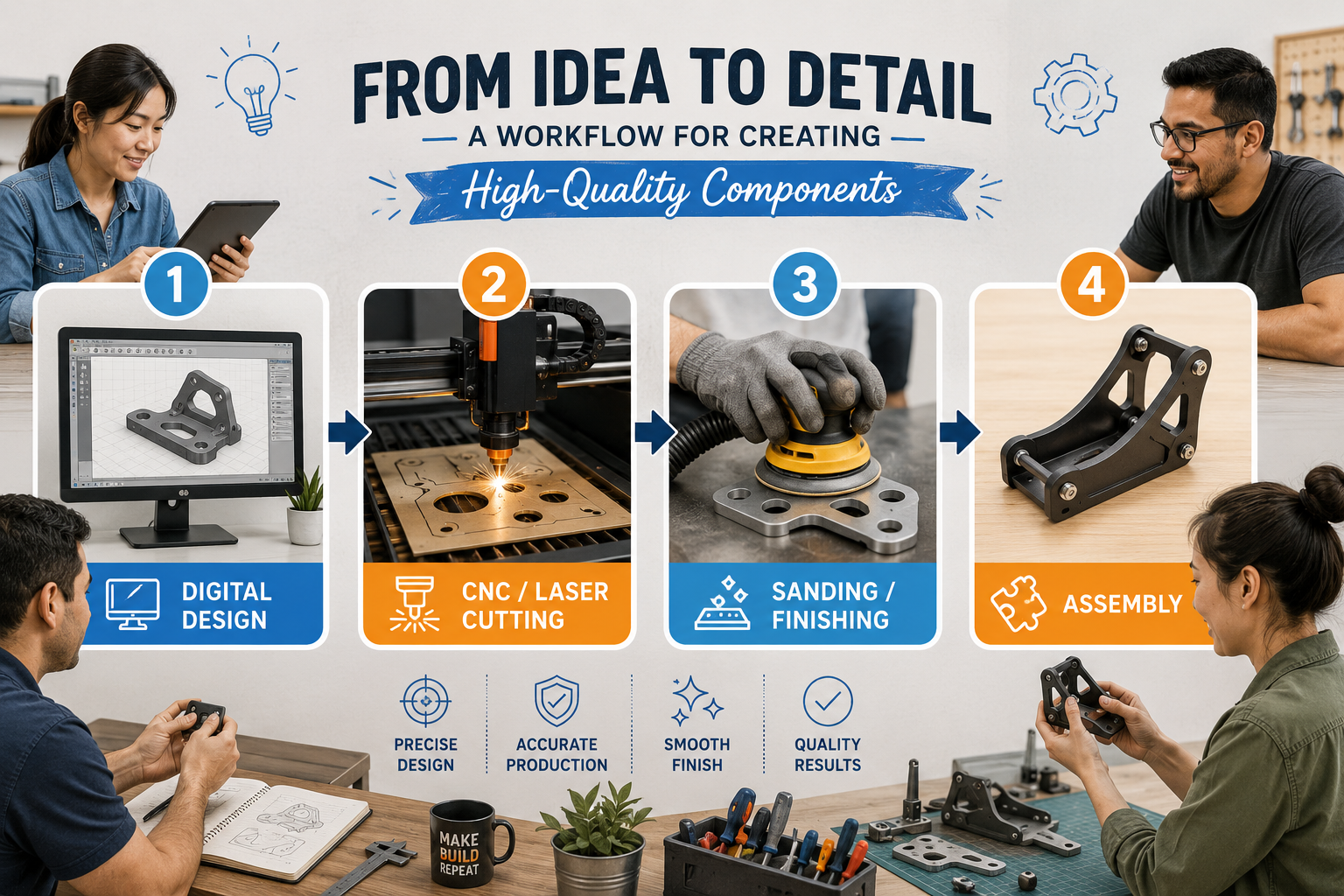
The power of small CNC and laser cutters is unlocked through effective design software and a solid understanding of material properties. These machines don’t inherently know what to do; they follow instructions generated from digital designs. Mastering this digital workflow is crucial for achieving the intricate detail work and precision templates that elevate home workshop projects.
The Digital Design Workflow
Every project that goes through a CNC or laser cutter begins in a Computer-Aided Design (CAD) program. Software like Fusion 360, Vectric Aspire, Inkscape, or LightBurn allows users to draw, dimension, and visualize their parts with incredible accuracy. For jigs and templates, this means designing the precise cutouts, mounting holes, and guide surfaces needed.
- CAD for CNC Jigs: For CNC routers, CAD software helps define toolpaths, depth of cuts, and fixture points. Designing a jig often involves creating interlocking components, dog bones for internal corners, and careful consideration of clamping mechanisms. The ability to simulate cuts before sending them to the machine saves time and material.
- Vector Graphics for Laser Templates: Laser cutters primarily use vector graphics. Programs like Inkscape or Adobe Illustrator are perfect for creating clean lines and shapes for cutting, and complex fills for engraving. Understanding how different line colors or thicknesses translate to specific laser operations (cut, score, engrave) is key.
This digital precision ensures that the final physical product perfectly matches the intended design, a cornerstone of [Small CNC and Laser Cutter Mastery: Jigs, Templates, and Detail Work for Home Workshops].
Material Considerations
Choosing the right material is as important as the design itself. Different machines and materials behave differently.
- For CNC Routers: MDF is often a go-to for jigs and templates due to its stability, affordability, and consistent density. Plywood offers more strength for larger jigs, while acrylic or HDPE can provide durable, low-friction surfaces. Hardwoods can also be machined for high-wear jigs, but require different feed rates and spindle speeds.
- For Laser Cutters: Thin plywood (birch, baltic birch), MDF, and acrylic are excellent choices for laser-cut templates. Each material has specific laser settings (power, speed, passes) that must be optimized for a clean cut or crisp engraving. Understanding these parameters prevents charring, melting, or incomplete cuts. Always consult material safety data sheets and ensure proper ventilation, especially when laser cutting.
For example, when creating delicate wooden elements for a project like Crafting Custom Wooden Record Player Consoles: Integrating Modern Audio with Mid-Century Design, a laser cutter can precisely cut thin veneer inlays or intricate grilles that would be exceedingly difficult to achieve by hand. Conversely, a CNC router would be ideal for cutting the primary structural components and ensuring perfect joinery pockets. The blend of digital design and material knowledge ensures efficient, high-quality output.
Achieving Exquisite Detail Work: A Hybrid Approach
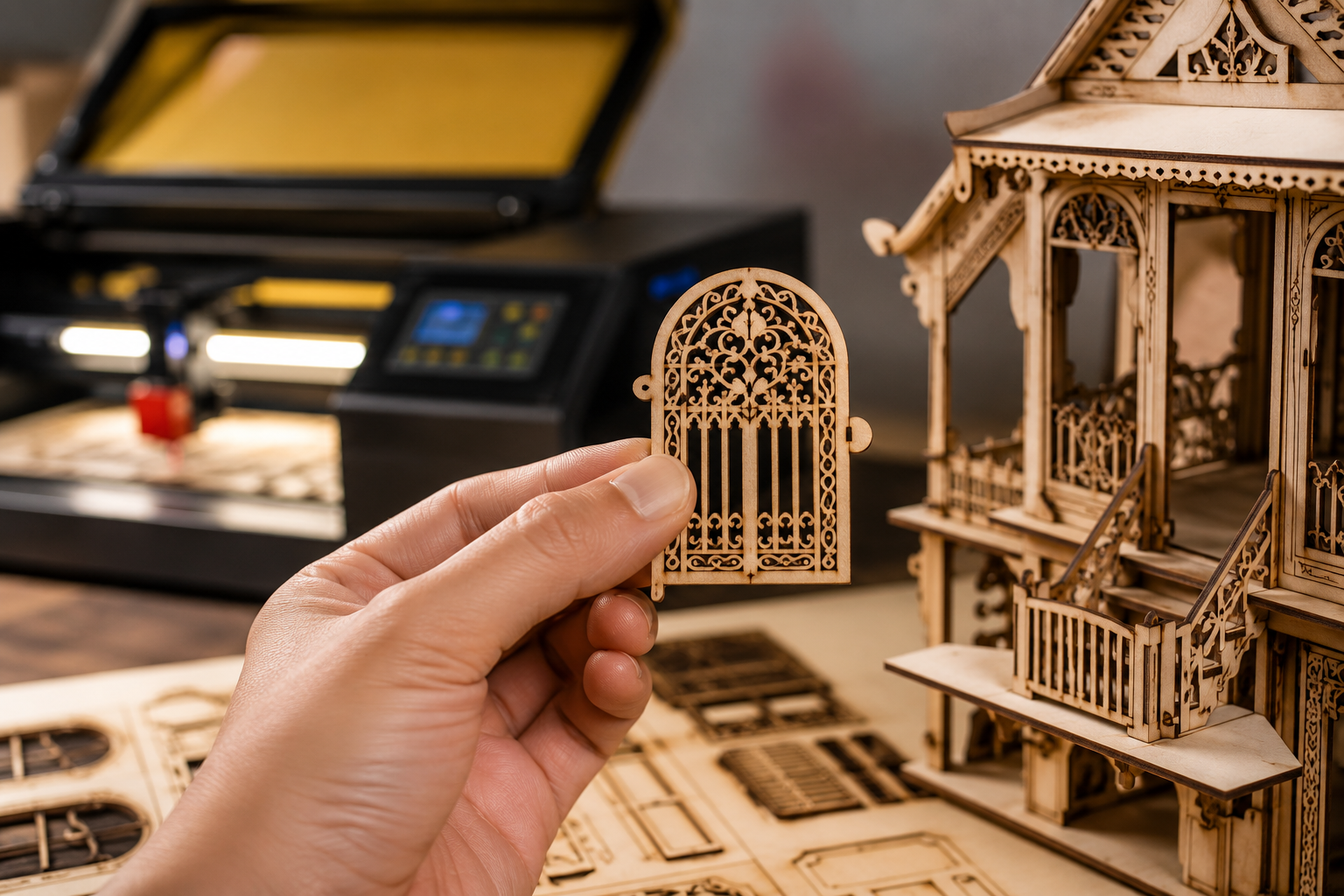
While CNC and laser cutters are powerful, they are most effective when integrated thoughtfully into a broader workshop strategy. The true mastery comes from knowing when to use the machines for their strengths (precision, repeatability, intricate cuts) and when to revert to the nuanced feel and control of hand tools for finishing, fitting, and fine-tuning. This hybrid approach allows for the creation of truly exquisite detail work in a home workshop setting.
Leveraging Machines for Intricacy
Modern projects often demand levels of detail that are time-consuming or nearly impossible with traditional methods alone.
- CNC for Carvings and Engravings: Small CNC routers can perform detailed 3D carving, intricate text engraving, and complex profile cutting on various wood types. This opens doors for personalized projects, custom signage, decorative panels, or even detailed relief carvings on furniture pieces. Imagine adding a family crest to a custom-built cabinet or an intricate border to a tabletop.
- Laser for Micro-Details and Etching: Laser cutters excel at superfine detail work: engraving delicate patterns, cutting small, intricate parts for inlays, or even etching photographic images onto wood surfaces. This is invaluable for items like custom gift boxes, jewelry components, detailed scale models, or personalized branding on finished projects. For example, a laser can precisely cut veneer pieces for complex marquetry designs, allowing for incredibly tight tolerances.
The ability to produce these intricate elements quickly and accurately frees up the craftsperson to focus on the artistry of assembly, sanding, and finishing. This efficiency can even make small, detailed projects Profitable Woodworking for Beginners: Building and Selling High-Demand Small Projects Under $50 in Materials more accessible and viable.
The Role of Hand Tools in Finishing and Refinement
Despite the precision of machines, hand tools remain indispensable for achieving a polished, professional finish.
- Finessing Machine Cuts: CNC and laser cuts often leave behind tool marks, slight charring (from lasers), or burrs. Hand planes, chisels, sandpapers, and scraping tools are crucial for refining these surfaces. A perfectly cut dovetail from a CNC still benefits from a light hand-planing pass to remove any fuzz and achieve a silky-smooth joint.
- Custom Fitting and Joinery: While machines can cut components to exact dimensions, the subtle nuances of fitting joints, especially in fine woodworking, often require the experienced touch of a hand tool. A chisel can shave off a hair’s breadth of material for a perfect friction fit, or a block plane can ease an edge precisely.
- Artistic Embellishment: After machine work, hand carving, distressing, or specific finishing techniques can add character and uniqueness that machines cannot replicate. The blend creates a project that is both technically precise and artistically soulful.
This synergistic approach, central to [Small CNC and Laser Cutter Mastery: Jigs, Templates, and Detail Work for Home Workshops], means the machines handle the heavy lifting of precision and repeatability, while hand tools provide the essential human touch for refinement and artistic expression. This ensures projects are not only accurate but also imbued with the quality and character of true craftsmanship. For instance, when constructing a complex piece like a Building a Custom Murphy Bed with Integrated Desk: Space-Saving Furniture Solutions for Small Homes and Apartments, the CNC can cut all large panels and joinery pockets, while hand tools ensure perfect fit, smooth edges, and a beautiful finish on exposed surfaces.
Conclusion
The integration of small CNC routers and laser cutters into home workshops marks a significant evolution in craftsmanship, not a replacement of traditional skills. Achieving [Small CNC and Laser Cutter Mastery: Jigs, Templates, and Detail Work for Home Workshops] is about strategically leveraging these modern tools to enhance precision, boost efficiency, and unlock new creative possibilities. By harnessing the power of digital design to produce highly accurate jigs and templates, woodworkers can ensure repeatability and elevate the quality of their hand-tool work. Furthermore, these machines enable intricate detail work, from fine carvings to delicate inlays, that would otherwise be impractical or impossible.
The true art lies in the hybrid approach: utilizing machines for their speed and precision in foundational tasks and intricate cuts, and then applying the nuanced control and tactile sensitivity of hand tools for refinement, fitting, and the ultimate artistic finish. Embracing this synergy allows makers to push the boundaries of their projects, creating pieces that are both technically flawless and rich in character. For anyone looking to elevate their woodworking, investing time in understanding and integrating these technologies will undoubtedly lead to a more capable, creative, and fulfilling workshop experience in 2026 and beyond.
References
- Ching, F. D. K. (2014). Architectural Graphics. John Wiley & Sons.
- Hack, L. (2018). The CNC Handbook: A Guide to the CAD/CAM, CNC, & Machining Revolution. McGraw-Hill Education.
- Lashley, M. (2021). Woodworking with the Router: Professional Router Techniques for Every Project. Fox Chapel Publishing.
- Powell, C. (2019). The Laser Engraving & Cutting Handbook. Make: Community LLC.
SEO Meta Title: Small CNC & Laser Cutter Mastery: Jigs, Templates, Details SEO Meta Description: Unlock precision woodworking in 2026! Master small CNC and laser cutters for custom jigs, templates, and intricate detail work in your home workshop.