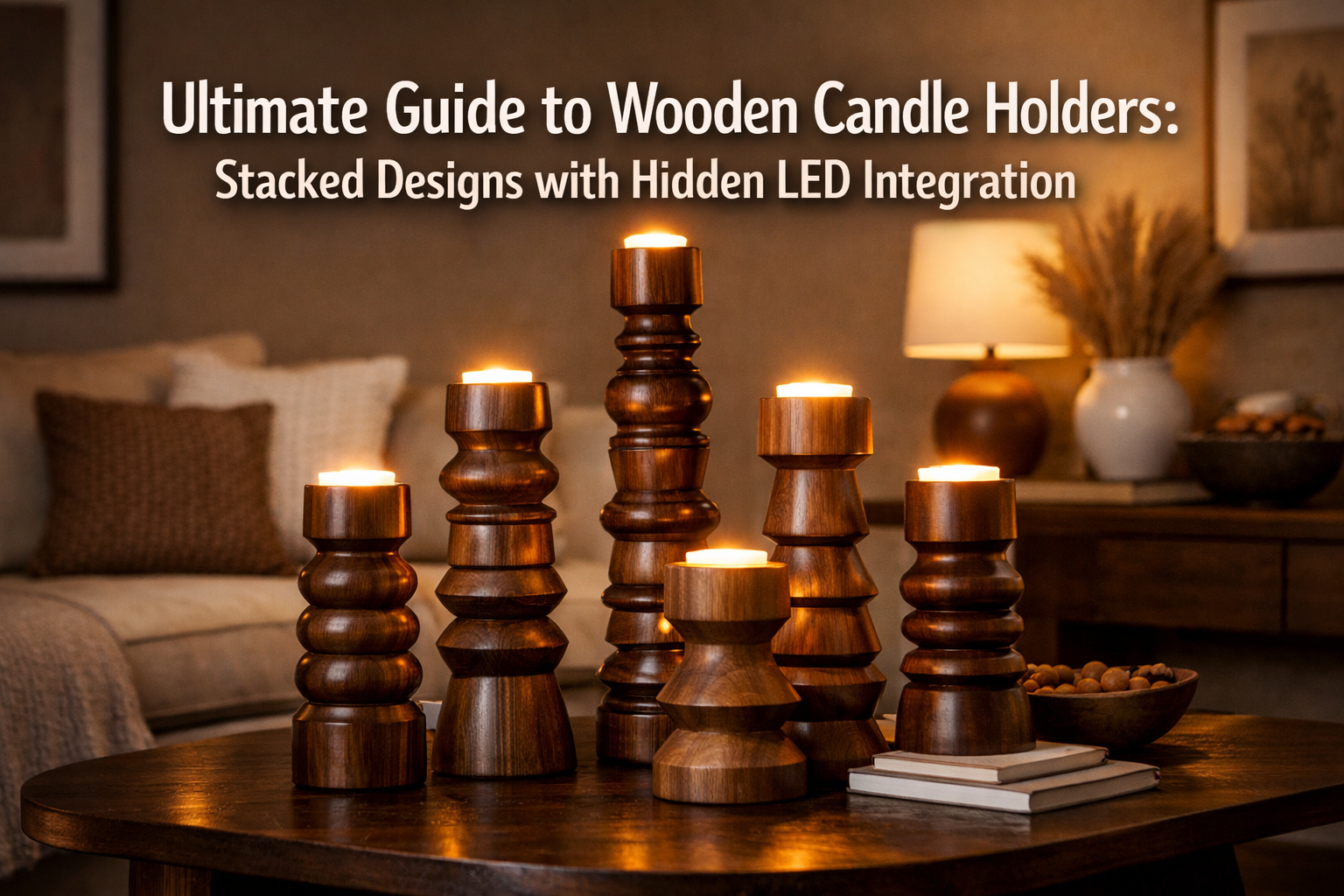

In 2026, home decor transcends mere aesthetics, embracing smart functionality and sustainable design. This Ultimate Guide to Wooden Candle Holders: Stacked Designs with Hidden LED Integration explores how traditional woodworking techniques, like layered pillar and tealight holders crafted with dowel joinery and woodturning, can be beautifully updated for modern smart home trends. Discover how to create safe, ambient decor by integrating optional battery-powered LED lighting, transforming simple wooden pieces into captivating focal points that blend warmth, craftsmanship, and cutting-edge illumination.
Key Takeaways
- Blending Tradition with Tech: Wooden candle holders can be modernized with hidden LED integration, offering ambient lighting without open flames.
- Design Versatility: Stacked and turned designs provide endless creative possibilities, from minimalist to rustic, accommodating various decor styles.
- Safety & Convenience: Battery-powered LEDs eliminate fire hazards and allow for flexible placement, often with remote control or smart home integration.
- Woodworking Skills: Projects involve fundamental woodworking techniques such as turning, dowel joinery, and precise drilling for LED components.
- Customization & Market Appeal: Crafting these unique pieces offers significant customization potential, making them attractive for personal use or as profitable items for sale.
The Evolution of Wooden Candle Holders: Stacked Designs Meet Smart Lighting
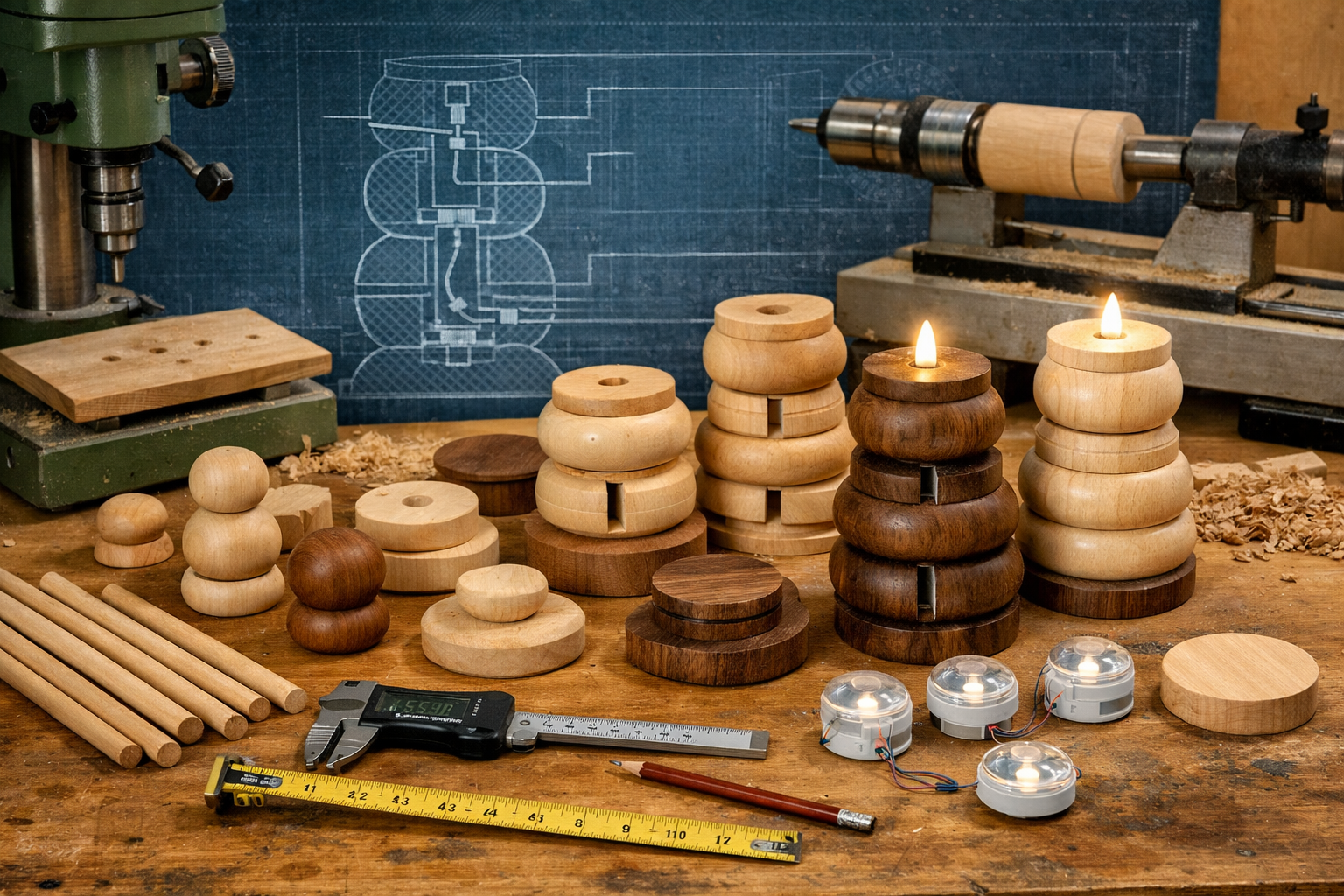
The timeless appeal of wooden candle holders lies in their natural beauty, warmth, and the artisan’s touch. For centuries, wood has been shaped into various forms to cradle the soft glow of a flame. However, as interior design trends shift towards smart, safe, and sustainable solutions, the traditional candle holder is undergoing a remarkable transformation. The Ultimate Guide to Wooden Candle Holders: Stacked Designs with Hidden LED Integration highlights this evolution, focusing on designs that not only celebrate woodcraft but also incorporate discrete, battery-powered LED lighting. This fusion offers the best of both worlds: the rustic charm of wood and the safety and convenience of modern illumination.

Why Stacked Designs?
Stacked wooden candle holders, often utilizing various heights and profiles, create dynamic visual interest. By layering different turned or geometric wood pieces, artisans can achieve intricate silhouettes and impressive scale. This design approach is particularly effective for creating centerpieces or accent lighting that draws the eye. The beauty of stacked designs lies in their modularity, allowing for customization in height, shape, and wood species.
Integrating Hidden LEDs: A Modern Necessity
The integration of hidden LEDs addresses several contemporary needs:
- Safety First: Eliminates the fire risk associated with open flames, making them ideal for homes with children, pets, or in settings where candles are prohibited.
- Ambient Glow: LEDs, especially warm white or flickering flame-effect varieties, can mimic the soft, inviting glow of a real candle without the soot or melting wax.
- Smart Home Compatibility: Many battery-powered LED modules offer remote control, timer functions, or even smart home integration, allowing for effortless control of ambiance.
- Sustainability: LEDs are energy-efficient and long-lasting, reducing the need for constant candle replacement.
Consider the potential for creating truly unique pieces that seamlessly blend into a smart home ecosystem. For those interested in advanced joinery techniques that support sturdy, beautiful constructions, exploring resources like our guide on Mastering Modern Hand-Cut Joinery: Adapting Classics for Live Edge and Modular Furniture can provide valuable insights for crafting the base elements of these candle holders.
Choosing the Right Wood and Finish
The selection of wood is paramount. Hardwoods like oak, walnut, maple, and cherry are excellent choices due to their durability and beautiful grain patterns. Softwoods like pine or cedar can also be used, offering a more rustic aesthetic, but they require careful finishing.
Table 1: Popular Wood Choices for Candle Holders
| Wood Type | Characteristics | Ideal Finish | Aesthetic |
|---|---|---|---|
| Oak | Strong, prominent grain, durable | Clear polyurethane, oil, stain | Traditional, rustic |
| Walnut | Rich, dark color, fine grain, luxurious | Clear oil, lacquer | Elegant, modern |
| Maple | Light color, subtle grain, very hard | Clear lacquer, light stain | Contemporary, minimalist |
| Cherry | Reddish-brown, beautiful aging, fine grain | Clear oil, shellac | Classic, warm |
| Pine | Light, soft, distinct knots | Stain, paint, distressed finish | Rustic, farmhouse |
Once the wood is chosen, the finish protects the wood and enhances its natural beauty. Options range from clear oils that deepen the wood’s color to stains that alter its hue, and varnishes or polyurethanes that provide a durable protective layer. For intricate finishing techniques, exploring guides like faux wood finishing techniques or mahogany wood finishing techniques can offer inspiration and practical advice.
“The beauty of a stacked wooden candle holder with hidden LEDs lies in its ability to tell a story – a narrative of nature’s elegance meeting human ingenuity, creating an ambiance that is both ancient and futuristic.”
Crafting Stacked Designs with Hidden LED Integration
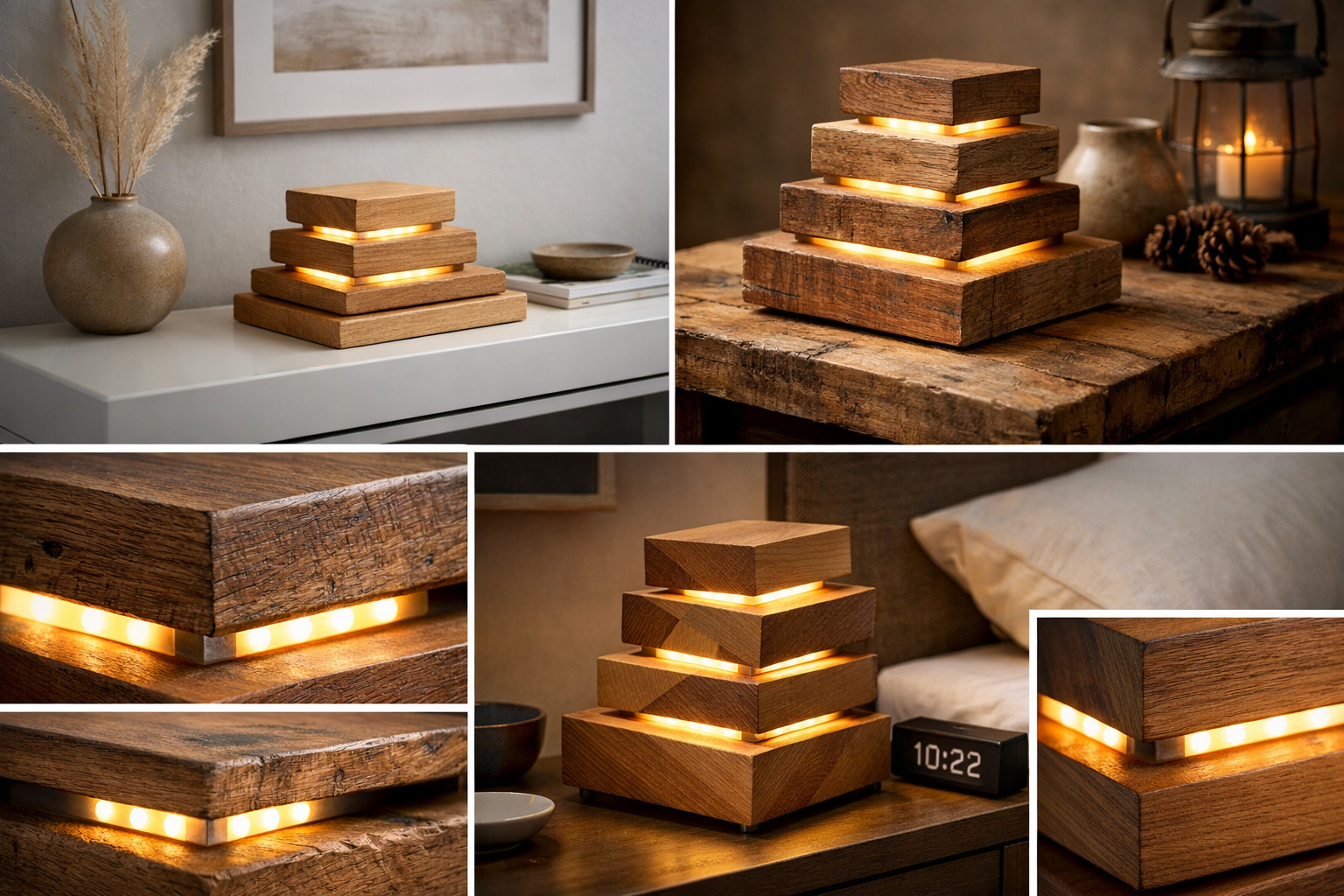
Creating these innovative wooden candle holders involves a blend of traditional woodworking skills and a thoughtful approach to electrical integration. The core techniques often include woodturning for shaping individual components, dowel joinery for stacking, and precise drilling for routing wires and embedding LED modules.
Woodturning for Unique Forms
Woodturning on a lathe allows for the creation of symmetrical, elegant shapes that form the individual tiers of a stacked candle holder. From classic pillar designs to more contemporary geometric forms, the lathe offers immense creative freedom.
Common Turned Elements:
- Bases: Providing stability and a foundation for the stack.
- Pillars/Columns: Varying in height and profile to create visual interest.
- Rings/Spacers: Adding decorative accents or separating larger components.
- Caps: Finishing the top of the holder, often designed to house an LED puck.
For those new to woodturning, practicing basic spindle turning techniques is a great starting point. Remember to prioritize safety when operating power tools.
Dowel Joinery for Stacking
Dowel joinery is an excellent choice for connecting the individual turned or shaped wooden components of a stacked candle holder. It provides strong, invisible joints that maintain the clean aesthetic of the piece.
Steps for Dowel Joinery:
- Prepare Components: Ensure all wooden pieces are sanded and ready for assembly.
- Mark Dowel Locations: Accurately mark the center points for drilling on both connecting surfaces.
- Drill Dowel Holes: Use a drill press for precise, perpendicular holes to ensure alignment. The depth should allow for sufficient dowel engagement in both pieces. For tips on screw selection for overall woodworking, refer to Mastering Woodworking Screws: Your Ultimate Guide for 2026 – Wood Craft Wiz.
- Cut Dowels: Cut dowels to the appropriate length, slightly shorter than the combined depth of the two holes to allow for glue.
- Apply Glue: Apply wood glue to the dowel holes and around the mating surfaces.
- Assemble: Carefully align and press the components together. Clamp if necessary until the glue dries.
Integrating Hidden LED Lighting
This is where the project truly shines and adapts to 2026 smart home trends. The goal is to embed the LED components seamlessly so they are practically invisible until illuminated.

Key Considerations for LED Integration:
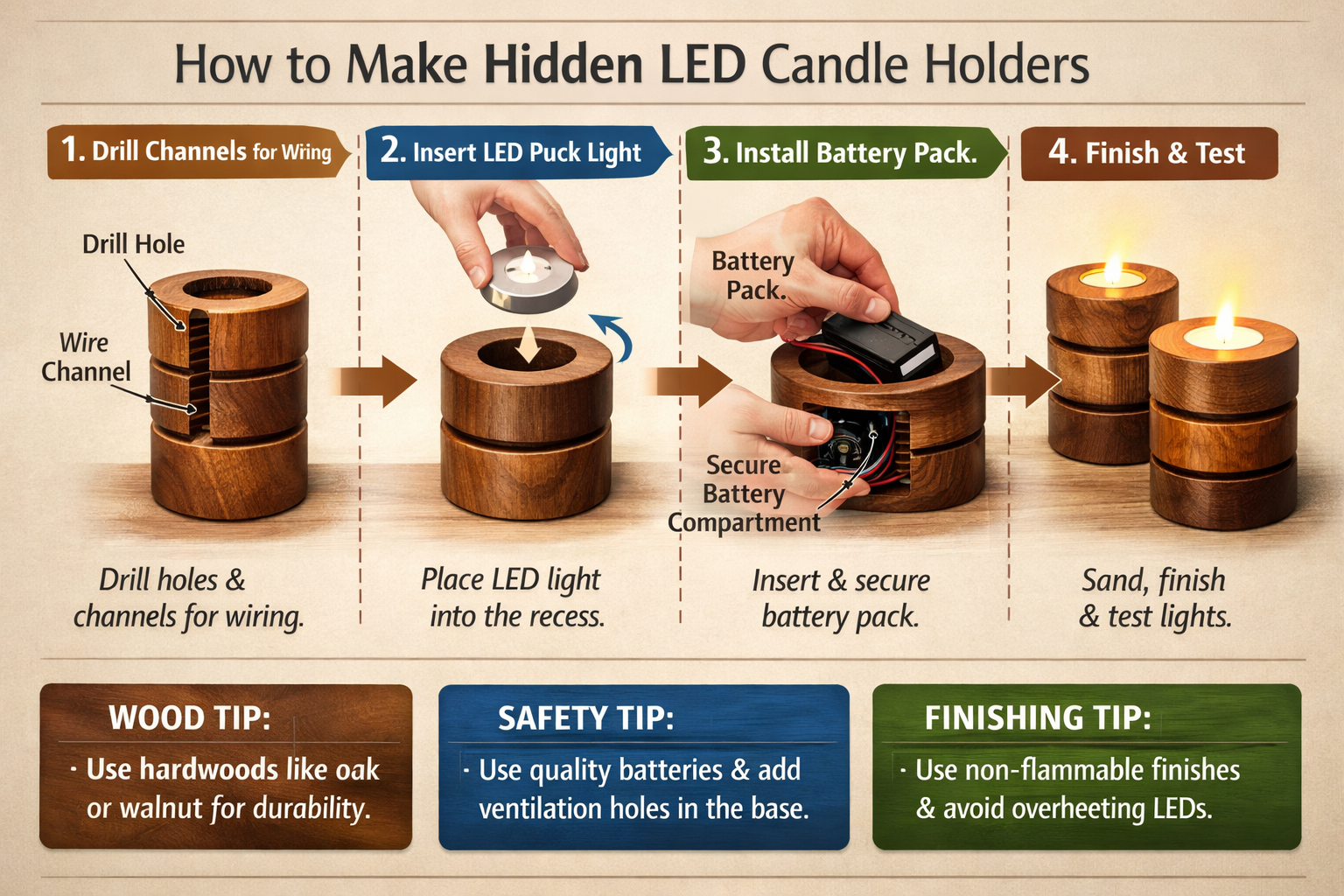
- LED Type: Small, battery-powered LED puck lights are ideal. Look for those with remote controls or timer functions. Some even mimic a flickering flame effect.
- Battery Access: Design your holder so that battery replacement is easy and doesn’t require disassembling the entire piece. A removable cap or base is often the best solution.
- Wiring Channels: If you’re using wired LEDs (less common for stacked, battery-powered designs but possible for larger installations), precise drilling for wiring channels is crucial.
- Component Housing: Create recesses or pockets within the wood to snugly fit the LED module and its battery pack. A router or Forstner bits are indispensable for this task.
Example Process for a Stacked Pillar with LED:
- Base Layer: Turn a wide, stable base.
- Middle Pillars: Turn several narrower pillars of varying heights. Drill a hole through the center of each for a central dowel.
- Top Cap/Holder: Turn a decorative cap. On its underside, route a recess for the LED puck light and its battery compartment. You may need a small access hole on the side for a switch or IR receiver if using a remote.
- Assembly: Use dowel joinery to stack the pillars onto the base, ensuring the LED cap is the final piece. Glue the central dowel for maximum stability.
- Wiring (if applicable): If using a single, larger battery pack in the base and running wires up to multiple LEDs (a more advanced project), carefully drill vertical channels through the center of each pillar.
For projects involving complex joinery and structural integrity, such as Building Custom Wooden TV Stands: Modern Media Consoles with Cable Management and Hidden Joinery, the principles of hidden integration and structural stability are highly relevant.
Finishing Touches
Once assembled, a final sanding to a high grit is essential. Then, apply your chosen finish. Clear finishes will allow the wood’s natural grain to shine, while stains can dramatically alter its appearance. Remember to protect any exposed LED components during finishing.
Designing and Customizing Your Ultimate Guide to Wooden Candle Holders: Stacked Designs with Hidden LED Integration
The true artistry of this project lies in the design phase. Beyond basic shapes, consider how your stacked wooden candle holders with hidden LED integration will complement various interior aesthetics and functional needs. This section delves into design principles, customization options, and tips for creating truly unique and desirable pieces.
Aesthetic Versatility
Stacked wooden candle holders can adapt to almost any decor style.
- Modern Minimalist: Opt for clean lines, geometric shapes, light-colored woods (like maple or ash), and a smooth, unadorned finish. The hidden LED integration perfectly suits this aesthetic, offering light without visual clutter.
- Rustic Farmhouse: Embrace distressed finishes, reclaimed wood, and more organic or chunky turned elements. Oak, pine, or even reclaimed urban lumber can create a warm, inviting feel.
- Bohemian Chic: Mix different wood species, incorporate intricate carvings (perhaps using a woodworking burner), and experiment with vibrant stains or painted details.
- Contemporary Elegance: Use dark, rich woods like walnut or mahogany, sleek turned profiles, and a high-gloss or satin finish. The subtle LED glow adds a touch of sophistication.
Play with Height and Form
The “stacked” aspect offers incredible flexibility.
- Varying Heights: Create a set of three or five holders of different heights to arrange as a cluster, forming a dynamic landscape of light.
- Interlocking Components: Design pieces that can be arranged and rearranged, allowing the user to customize the stack. This modularity adds interactive appeal.
- Mixed Materials: While the focus is on wood, consider subtle accents of metal or acrylic between wood layers for an industrial or contemporary twist.
- Functional Integration: Think beyond just illumination. Could a wider base also serve as a small trinket dish? Could a top piece double as a coaster when not illuminated?
Smart Features and User Experience
In 2026, smart home integration is a significant selling point.
- Remote Control: Ensure the chosen LED pucks come with a remote for easy on/off and brightness adjustments.
- Timer Function: Many LED lights offer built-in timers (e.g., 6 hours on, 18 hours off), providing effortless ambiance.
- Smart Home Connectivity: For more advanced users, explore LED modules that can connect to Wi-Fi or Bluetooth for integration with platforms like Google Home or Alexa. This might require careful consideration of battery life and potential larger battery packs.
- Hidden Switches: If remote control isn’t an option, discreetly embed a small push-button switch on the underside or back of the holder for manual operation.
Project Ideas and Inspiration
Consider these unique approaches:
- Geometric Stacks: Instead of turned shapes, use precisely cut wooden blocks or rings that stack to form geometric patterns. This can be achieved with a table saw or band saw.
- “Tree Branch” Design: Mimic the organic shape of branches by using irregular, stacked wood pieces, perhaps even incorporating sections of live edge wood slabs for a truly natural feel.
- Modular Centerpiece: Design individual components that can be used alone as single LED holders or stacked in multiple configurations to create a larger, customizable centerpiece. This concept aligns well with the principles of modular furniture design for woodworkers.
- Integrated Storage: A wider base could incorporate a hidden drawer or compartment, similar to concepts explored in Master Your Craft: Building the Ultimate Woodworking Storage Bench in 2026 – Wood Craft Wiz, offering dual functionality.
When designing, always keep the internal mechanics of the LED integration in mind. Plan your routing, battery access, and switch placement early in the design process to avoid complications during assembly. The goal is a finished product where the technology is felt, not seen, creating a magical, ambient glow from within the wood.
Conclusion
The Ultimate Guide to Wooden Candle Holders: Stacked Designs with Hidden LED Integration unveils a captivating intersection of traditional woodworking and modern technology. By combining the timeless beauty of woodturning and dowel joinery with the safety and convenience of hidden, battery-powered LED lighting, woodworkers can create exquisite decorative pieces that resonate with 2026’s smart home aesthetics. These innovative candle holders offer ambient illumination without the risks of open flames, providing versatility for various decor styles from rustic farmhouse to contemporary minimalist.
Embracing this design philosophy not only enhances the appeal of handcrafted items but also broadens their marketability, making them ideal for personal enjoyment or as profitable craft items. The ability to customize wood types, stacked forms, and smart lighting features ensures each piece can be a unique statement of artistry and functionality.

Actionable Next Steps:
- Sketch Your Design: Begin by sketching various stacked forms and considering how LED pucks and battery compartments can be subtly integrated.
- Gather Materials: Select your preferred wood species and source high-quality, remote-controlled or timer-enabled LED puck lights.
- Practice Techniques: If new to woodturning or dowel joinery, hone your skills on scrap wood before committing to your final project.
- Experiment with Finishes: Explore different wood finishes to achieve the desired aesthetic and protection for your creation.
- Share Your Creations: Document your process and share your finished stacked wooden candle holders with hidden LED integration with the woodworking community or as potential products.
By following this guide, you can craft not just candle holders, but illuminated sculptures that bring warmth, style, and smart functionality into any space.