
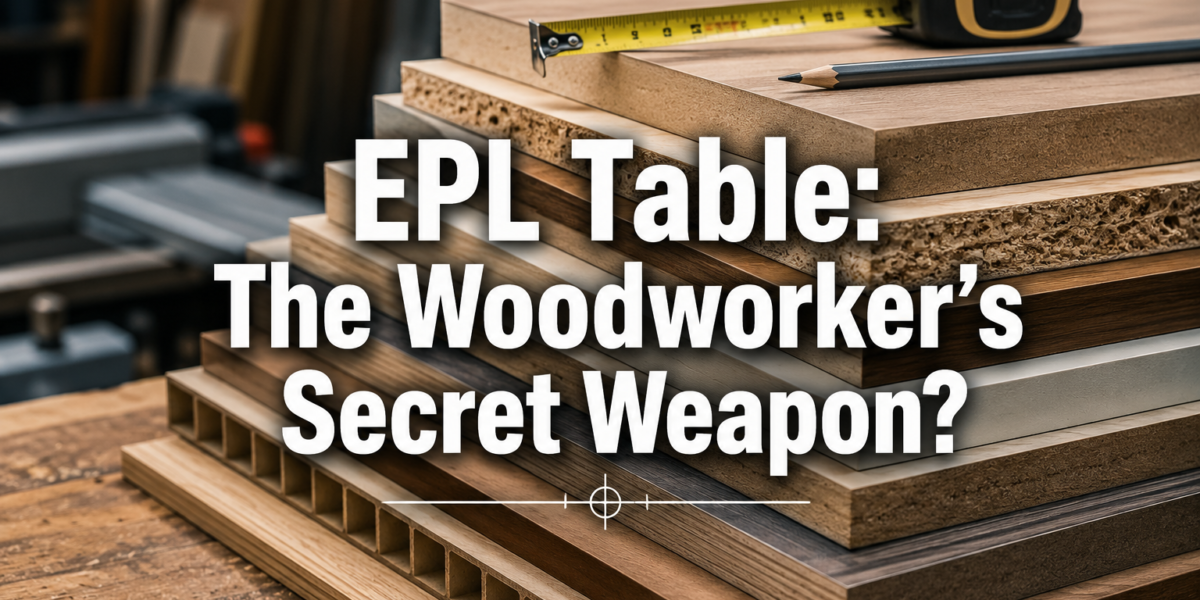
A common misconception among aspiring woodworkers is that the “EPL Table” refers to an actual piece of furniture or a specific type of workbench. In reality, the term “EPL Table” is a woodworking industry shorthand that frequently causes confusion. It does not denote a physical table but rather refers to Engineered Parallel Lumber (EPL), a category of engineered wood products. Understanding what is EPL Table and how does it affect woodworking projects is crucial for selecting appropriate materials, optimizing project outcomes, and managing costs in 2026. This comprehensive guide will demystify EPL, exploring its properties, advantages, disadvantages, and practical implications for various woodworking endeavors.
Key Takeaways
- EPL (Engineered Parallel Lumber) is an engineered wood product, not a physical table, known for its strength, stability, and consistency.
- It is created by laminating thin wood veneers or strands with adhesives under heat and pressure, resulting in a product that often outperforms solid lumber in certain applications.
- EPL offers superior dimensional stability, reduced warping, and greater predictability in structural integrity compared to traditional lumber.
- While offering many benefits, EPL can be more expensive, requires specific cutting and finishing techniques, and may present challenges with aesthetics due to its manufactured appearance.
- Woodworkers must consider project requirements for strength, appearance, cost, and environmental factors when deciding whether to incorporate EPL into their designs.
Demystifying EPL: What Exactly is Engineered Parallel Lumber?
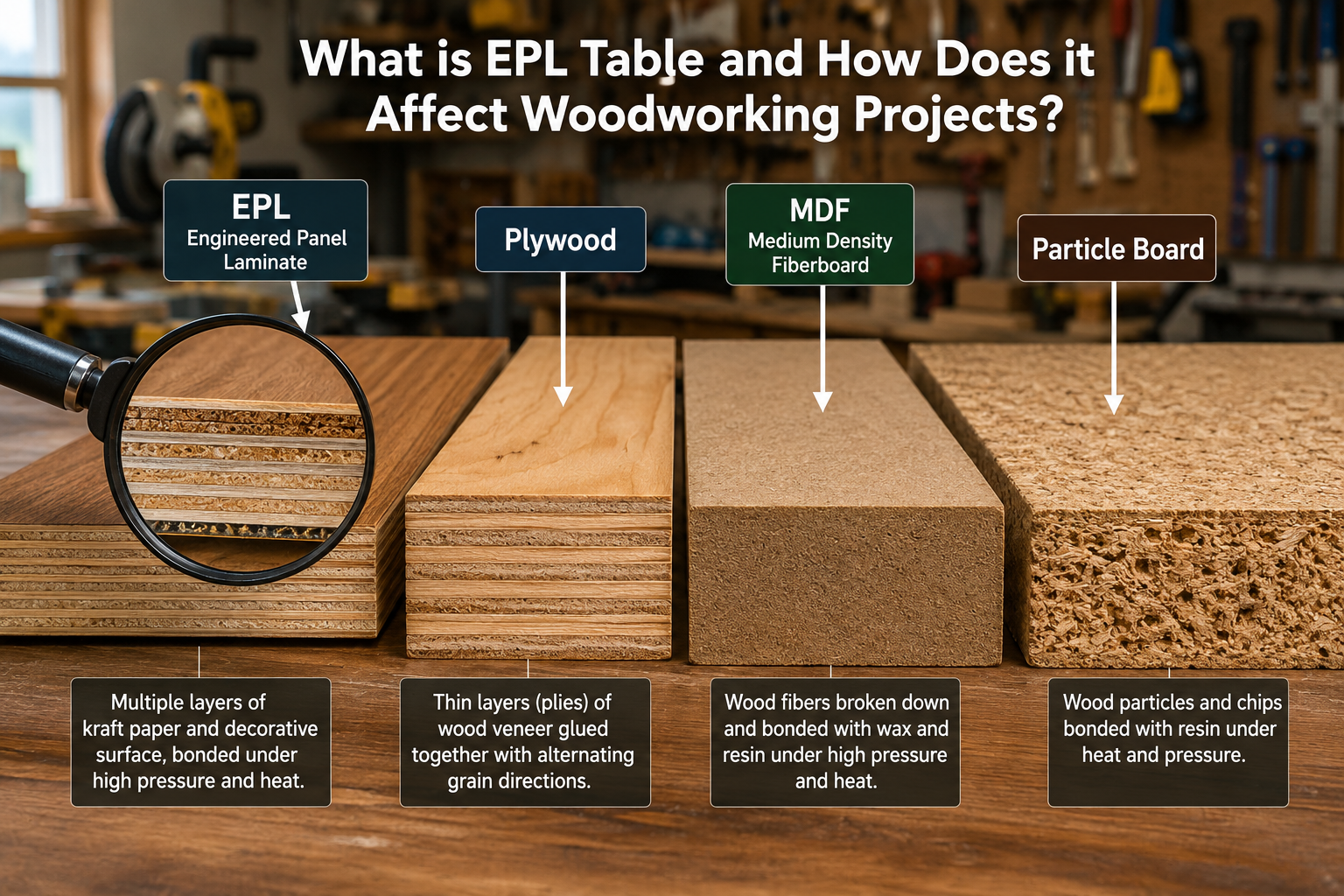
When woodworkers discuss an “EPL table,” they are almost always referring to Engineered Parallel Lumber (EPL), a classification within the broader family of engineered wood products. Unlike solid wood, which is cut directly from a tree trunk, EPL is manufactured by combining wood fibers, veneers, or strands with adhesives to create a composite material. The “parallel” aspect signifies how the wood elements are oriented, typically running in the same direction, which imparts specific strength and performance characteristics.
The manufacturing process for EPL involves carefully selected and processed wood elements, usually veneers or small strands, which are then bonded together using high-strength, waterproof adhesives under immense heat and pressure. This controlled process allows manufacturers to create panels or beams that are remarkably consistent in strength, stiffness, and dimensions. This consistency is a major advantage over natural lumber, which can vary significantly in grain, knot content, and structural integrity.
Common types of engineered wood that fall under the general concept of “EPL table” or parallel lumber include:
- Laminated Veneer Lumber (LVL): Produced by bonding thin wood veneers (typically 1/8 inch thick) together with parallel grain orientation. LVL is often used for headers, beams, and rim boards due to its high strength and consistent dimensions.
- Parallel Strand Lumber (PSL): Made from long, thin strands of wood (up to 12 feet long) arranged in parallel and bonded with adhesive. PSL is exceptionally strong and dense, commonly used for heavy-duty applications like long-span beams and columns.
- Laminated Strand Lumber (LSL): Similar to PSL but uses shorter strands of wood, offering good structural properties but typically not as strong as PSL or LVL. It’s often used for studs, headers, and rim joists.
These products are engineered to optimize the structural properties of wood, making them incredibly stable and resistant to the warping, twisting, and shrinking that can plague traditional solid lumber. For woodworkers, understanding the nuances of these materials is key to leveraging their benefits. For instance, knowing the difference can help in projects like building a portable workbench where dimensional stability is paramount.
Historical Context and Evolution
The development of engineered wood products like EPL stems from a desire to maximize the utility of timber resources and overcome the natural limitations of solid lumber. Early forms of engineered wood, such as plywood, emerged in the early 20th century. However, the sophisticated, parallel-aligned products like LVL and PSL gained significant traction in the latter half of the century and into the 2000s, driven by advancements in adhesive technology and wood processing.
Today, EPL products are a cornerstone of modern construction and a valuable resource for woodworkers tackling a wide array of projects, from structural components to custom furniture. Their consistent performance and ability to utilize smaller, fast-growing timber species make them an environmentally responsible choice, complementing efforts in sourcing reclaimed and salvaged wood for sustainable practices.
How Does What is EPL Table Affect Woodworking Projects?
The impact of EPL (Engineered Parallel Lumber) on woodworking projects is significant, influencing everything from material selection and design to construction techniques and the final aesthetics of a piece. Understanding these effects is crucial for any woodworker looking to make informed decisions in 2026.
Advantages of Using EPL in Woodworking
EPL offers several compelling advantages that make it an attractive option for many woodworking applications:
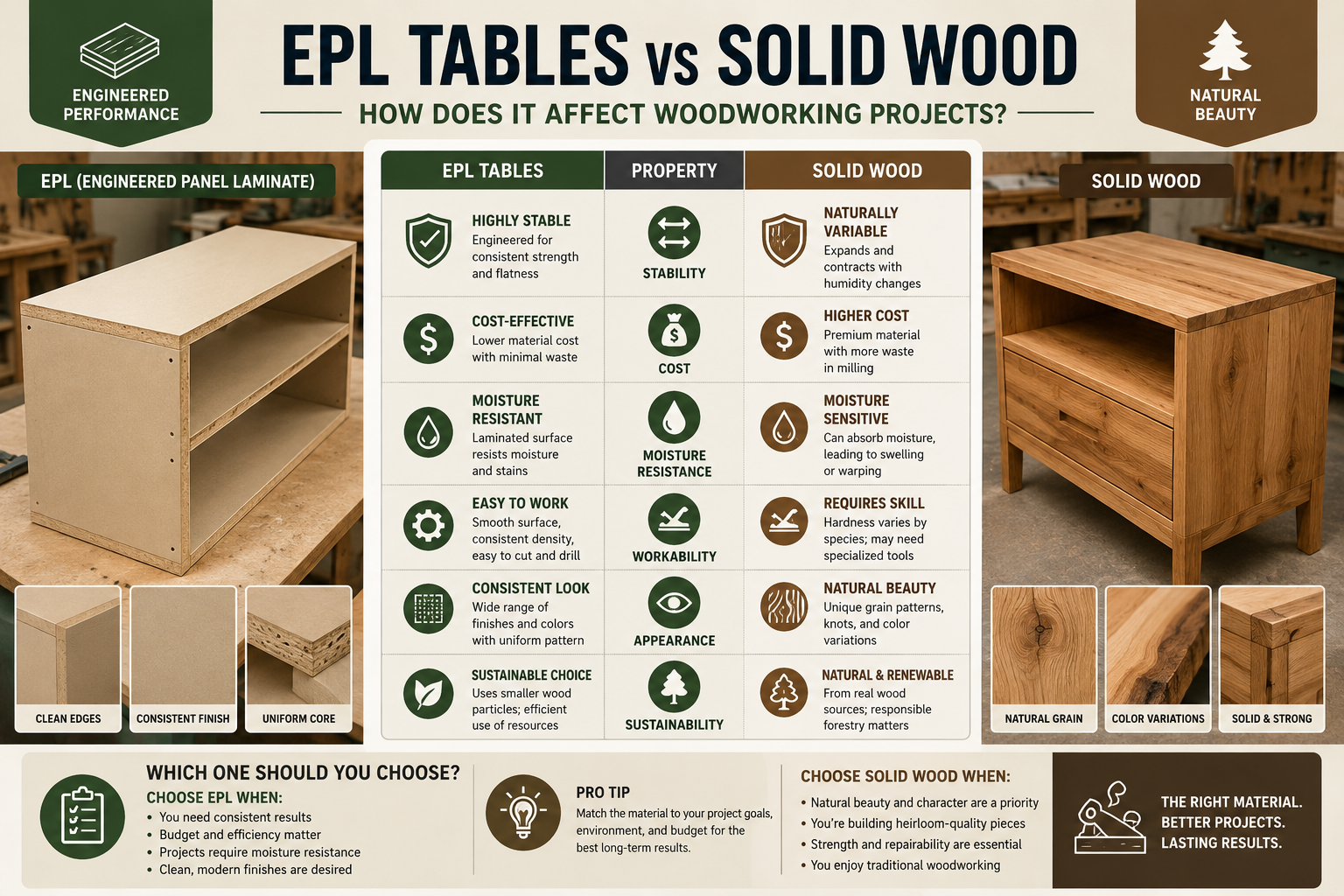
- Dimensional Stability: This is perhaps the most significant benefit. EPL is engineered to be far less prone to warping, twisting, shrinking, or expanding than solid wood. This stability is invaluable for projects requiring precise joinery, flat surfaces, or structural integrity over time. Think of large tabletops, cabinet doors, or long shelves where maintaining flatness is critical.
- Superior Strength and Consistency: Due to its layered and bonded structure, EPL often boasts higher strength-to-weight ratios than traditional lumber. It has fewer natural defects like knots and grain run-out, leading to more predictable performance. This consistency means fewer surprises during cutting and assembly, and a more reliable finished product.
- Wider Dimensions and Longer Spans: EPL can be manufactured in much wider and longer dimensions than most solid wood. This allows woodworkers to create expansive surfaces or long structural elements without needing to glue up multiple pieces, simplifying construction and potentially reducing labor.
- Optimized Resource Utilization: EPL is made from smaller, faster-growing trees, often from sustainable forests. The manufacturing process maximizes the use of each log, reducing waste compared to milling solid lumber. This makes it a more environmentally friendly choice for many projects.
- Cost-Effectiveness (in specific applications): While some specialized EPL products can be expensive, standard LVL and LSL can be more cost-effective than large, clear-grade solid lumber for structural applications, especially when large spans or high strength are required.
Disadvantages and Considerations
Despite its benefits, EPL is not a universal solution and comes with its own set of considerations:
- Aesthetics: EPL typically lacks the natural beauty and unique grain patterns of solid wood. Its manufactured appearance, often with visible glue lines or layered edges, means it’s usually veneered or covered when aesthetics are important. This makes it less suitable for projects where the natural wood grain is a primary design feature, such as decorative live edge slab selection and preparation projects.
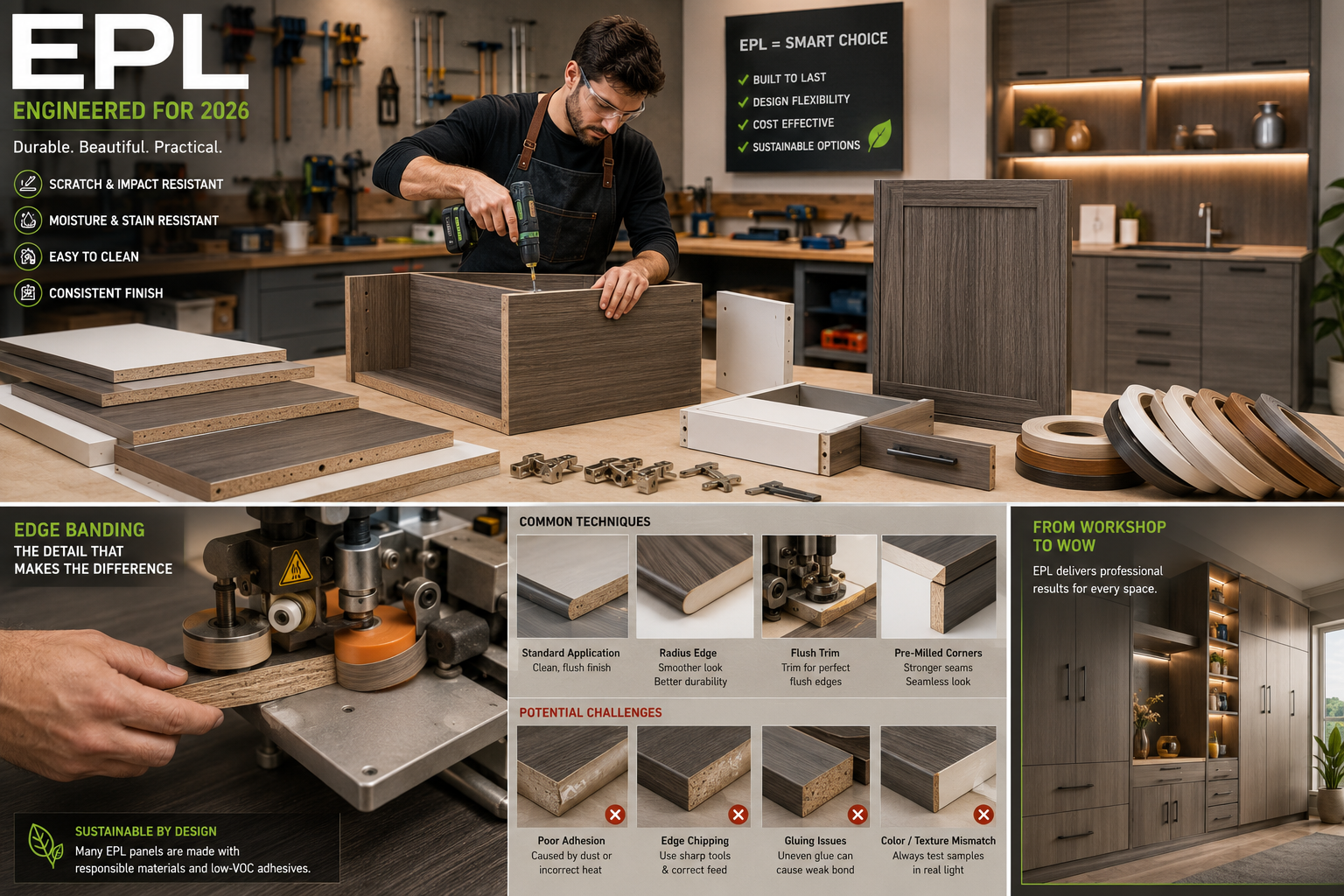
- Workability: EPL can be denser and harder to work with than some solid woods. It can dull cutting tools faster, and specific cutting techniques might be needed to avoid splintering, especially with LVL. Fasteners may also require pilot holes to prevent splitting.
- Edge Treatment: The exposed edges of EPL often need to be finished, typically with edge banding or solid wood trim, to conceal the layered appearance and provide a cleaner look. This adds an extra step and material cost to projects like crafting custom wooden record player consoles where visible edges matter.
- Moisture Sensitivity: While modern adhesives are highly water-resistant, prolonged exposure to moisture can still degrade EPL, causing delamination or swelling. It’s generally not recommended for outdoor applications without extensive sealing and protection.
- Cost (in specific applications): For smaller, non-structural projects, EPL might be more expensive than lower-grade solid lumber or plywood. Woodworkers need to weigh the stability benefits against the material cost for each project.
| Feature | Engineered Parallel Lumber (EPL) | Solid Wood (e.g., Oak, Maple) |
|---|---|---|
| Dimensional Stability | Excellent; highly resistant to warping, twisting, shrinking. | Good to Fair; prone to movement with humidity changes. |
| Strength | Very High; consistent and predictable. | High; can vary depending on species, grain, and defects. |
| Appearance | Uniform, often plain; requires veneer or edge banding. | Natural, unique grain patterns; aesthetically appealing. |
| Workability | Denser, can dull tools faster; may require pilot holes. | Varies by species; generally easier to cut and shape. |
| Availability in Large Sizes | Excellent; available in wide and long dimensions. | Limited; large, clear pieces are rare and expensive. |
| Cost | Can be cost-effective for structural/large-span uses; higher for small projects than lower-grade solid wood. | Varies widely by species and grade; premium for large, clear pieces. |
Practical Applications and Project Considerations for EPL
Understanding what is EPL Table and how does it affect woodworking projects fundamentally changes how woodworkers approach material selection and construction. Its unique properties make it ideal for certain applications while being less suitable for others.
Ideal Woodworking Projects for EPL
EPL excels in projects where structural integrity, dimensional stability, and consistent performance are paramount.
- Cabinetry and Built-ins: For cabinet carcases, shelving, and internal framing, EPL provides a stable and strong base that resists sagging and warping, crucial for long-lasting, functional furniture. Its consistency makes cutting and assembly straightforward.
- Workbenches and Assembly Tables: The inherent flatness and stability of EPL make it an excellent choice for workbench tops or assembly tables. Its ability to withstand heavy loads and maintain a true surface is invaluable in a workshop environment. Consider incorporating EPL when creating ergonomic workshop furniture.
- Structural Components: While often hidden, EPL is perfect for internal framing in furniture, table stretchers, and other structural elements that demand high strength without the need for visible grain.
- Jigs and Fixtures: For jigs and fixtures that require precise dimensions and resistance to movement, EPL’s stability is a major asset, ensuring accuracy over repeated uses.
- Substrates for Veneering: Because of its exceptional flatness and stability, EPL is an ideal substrate for applying wood veneer, creating a beautiful surface with the structural benefits of engineered wood.
Techniques and Tips for Working with EPL
Working with EPL requires a slightly different approach than solid wood:
- Sharp Tools are Essential: EPL’s density can quickly dull blades and bits. Use carbide-tipped blades and router bits designed for engineered wood or hardwoods to ensure clean cuts and extend tool life. For precise cuts on larger panels, a miter saw table height that’s correctly set can significantly improve results.
- Edge Treatment: Plan for edge banding or solid wood trim on exposed edges to cover the layered appearance. This adds a finished look and protects the core.
- Fasteners: While strong, EPL can sometimes split if screws are driven too close to an edge or without pilot holes. Always pre-drill pilot holes, especially for larger fasteners or when working near edges.
- Adhesives: Standard woodworking glues like PVA (yellow glue) work well with EPL. Ensure good clamping pressure for strong bonds.
- Finishing: Like other engineered wood products, EPL typically requires a sealant and topcoat. If veneered, finish as you would solid wood. If left exposed (e.g., inside a cabinet), a simple clear coat can protect it.
- Dust Control: Cutting EPL can generate a significant amount of fine dust. Always use proper dust collection and wear a respirator.
By understanding these distinctions, woodworkers can effectively integrate EPL into their projects, choosing the right material for the job. Whether it’s for the stability of a workbench top or the unseen strength within a cabinet, EPL plays a vital role in modern woodworking, helping artisans create durable and precise pieces in 2026.
Conclusion
Understanding “what is EPL Table and how does it affect woodworking projects” is not about a physical table but rather about a crucial category of engineered wood products: Engineered Parallel Lumber (EPL). This material offers remarkable benefits in terms of dimensional stability, strength, and consistency, making it an invaluable asset for many woodworking endeavors in 2026. While its manufactured appearance and specific workability characteristics require careful consideration, EPL’s advantages in structural applications, large formats, and resistance to warping are undeniable.
For woodworkers, the intelligent application of EPL can lead to more durable, precise, and efficient project outcomes. By integrating EPL into cabinetry, workbenches, or structural frames, woodworkers can overcome some of the natural limitations of solid lumber, achieving superior performance and reliability. As sustainable practices become increasingly important, EPL also stands out as an environmentally conscious choice, maximizing timber utilization.
Ultimately, the choice between EPL and solid wood depends on the specific demands of each project, balancing aesthetic requirements with structural needs, cost considerations, and environmental impact. By embracing the capabilities of EPL, woodworkers can expand their material palette and enhance the quality and longevity of their creations.
Actionable Next Steps:
- Evaluate Your Project Needs: Before starting your next project, assess if dimensional stability and consistent strength are critical. If so, consider where EPL could be a superior alternative to solid lumber.
- Research Specific EPL Types: Familiarize yourself with LVL, PSL, and LSL to understand their distinct properties and best uses.
- Invest in Appropriate Tools: Ensure you have sharp, carbide-tipped blades and bits suitable for dense engineered wood to achieve clean cuts and prolong tool life.
- Practice Edge Treatment: Experiment with different edge banding or solid wood trim techniques to master finishing EPL edges seamlessly.
- Visit Your Local Supplier: Inquire about the availability and pricing of different EPL products to better understand their practical applications for your workshop.