
The profound resurgence of handcrafted goods in 2026 highlights a growing appreciation for longevity, authenticity, and the narrative imbued within objects. Yet, few truly grasp the intricate journey required to replicate the soul of historical woodcraft. It’s a path that demands more than mere assembly; it calls for a deep immersion into the past, understanding not just the final form but the very spirit of its creation. This article delves into “Woodman’s Workshop: Replicating Classic Woodcraft Styles from Historical Eras,” providing a comprehensive guide for modern artisans seeking to breathe new life into time-honored designs.
Key Takeaways
- Historical Context is Crucial: Understanding the social, economic, and technological factors of an era is vital for authentic replication.
- Mastering Period Tools & Techniques: Embracing traditional hand tools and joinery methods is key to capturing the original craftsmanship.
- Material Selection Matters: Choosing appropriate wood species and finishes from the specific historical period enhances authenticity.
- Attention to Detail: From grain matching to hardware, replicating classic styles demands meticulous observation and execution.
- Evolution of Woodcraft: Recognize that styles evolved and adapt to blend historical inspiration with contemporary functionality.
Understanding the Foundations of Woodman’s Workshop: Replicating Classic Woodcraft Styles from Historical Eras
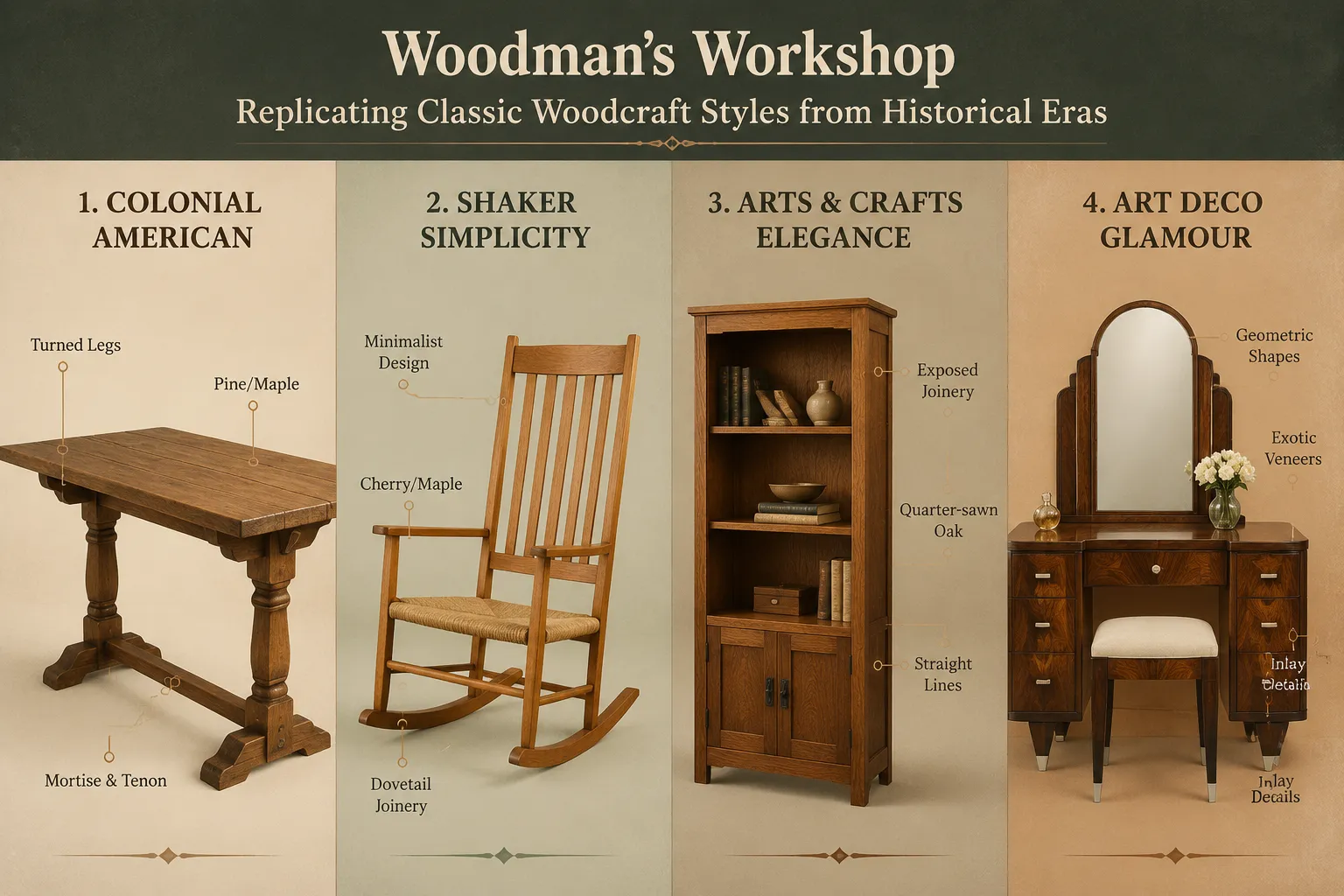
To authentically replicate classic woodcraft styles, one must first understand the historical context that shaped them. Each era, from the functional simplicity of Colonial America to the intricate grandeur of the Victorian period, had distinct influences on design, materials, and construction techniques. Embracing “Woodman’s Workshop: Replicating Classic Woodcraft Styles from Historical Eras” means embarking on a journey through time, studying the needs, aesthetics, and limitations of past societies.
Consider the early American period. Furniture was often utilitarian, built for necessity and durability with readily available local hardwoods like pine, maple, and oak. Joinery, though robust, was typically straightforward, relying on mortise and tenon, dovetails, and simple pegging. Finishes were often natural, such as wax or shellac, to protect and enhance the wood’s inherent beauty.
As society progressed, so did woodcraft. The 18th century saw the rise of more refined styles like Queen Anne and Chippendale, introducing cabriole legs, carved details, and imported exotic woods. The Industrial Revolution, while seemingly a step away from traditional craftsmanship, actually led to a flourishing of ornate, mass-produced Victorian pieces, often incorporating machine-cut elements alongside hand-carved accents.
| Era/Style | Key Characteristics | Common Wood Species | Typical Joinery | Finishes |
|---|---|---|---|---|
| Colonial American | Simple, functional, robust | Pine, Maple, Oak | Mortise & Tenon, Dovetail, Pegs | Wax, Shellac, Milk Paint |
| Shaker | Utilitarian, minimalist, excellent craftsmanship | Cherry, Maple | Dovetail, Mortise & Tenon | Clear finishes, light stains |
| Queen Anne/Chippendale | Elegant curves, carved details, cabriole legs | Walnut, Mahogany | Dovetail, Mortise & Tenon | Varnish, Polishing |
| Arts & Crafts | Honesty of materials, exposed joinery, rectilinear forms | Quarter-sawn Oak, Cherry | Exposed Dovetail, Mortise & Tenon | Oil, Shellac |
| Art Deco | Geometric shapes, sleek lines, luxurious materials | Exotic Veneers, Walnut, Ebony | Modern joinery, laminations | High gloss lacquers, varnish |
Understanding these foundational elements allows a woodworker to approach a project not just as a reproduction, but as a conversation with history. This foundational knowledge also extends to the tools themselves. While modern power tools offer incredible efficiency, truly replicating the nuances of historical pieces often requires dipping into the methods of those who originally crafted them. This often means returning to the roots of woodworking, where hand tools were paramount, as explored in our Beginners Guide To Hand Cut Joinery Classic Joints Adapted For Modern Workshop Workflows.
Essential Tools and Techniques for Woodman’s Workshop: Replicating Classic Woodcraft Styles
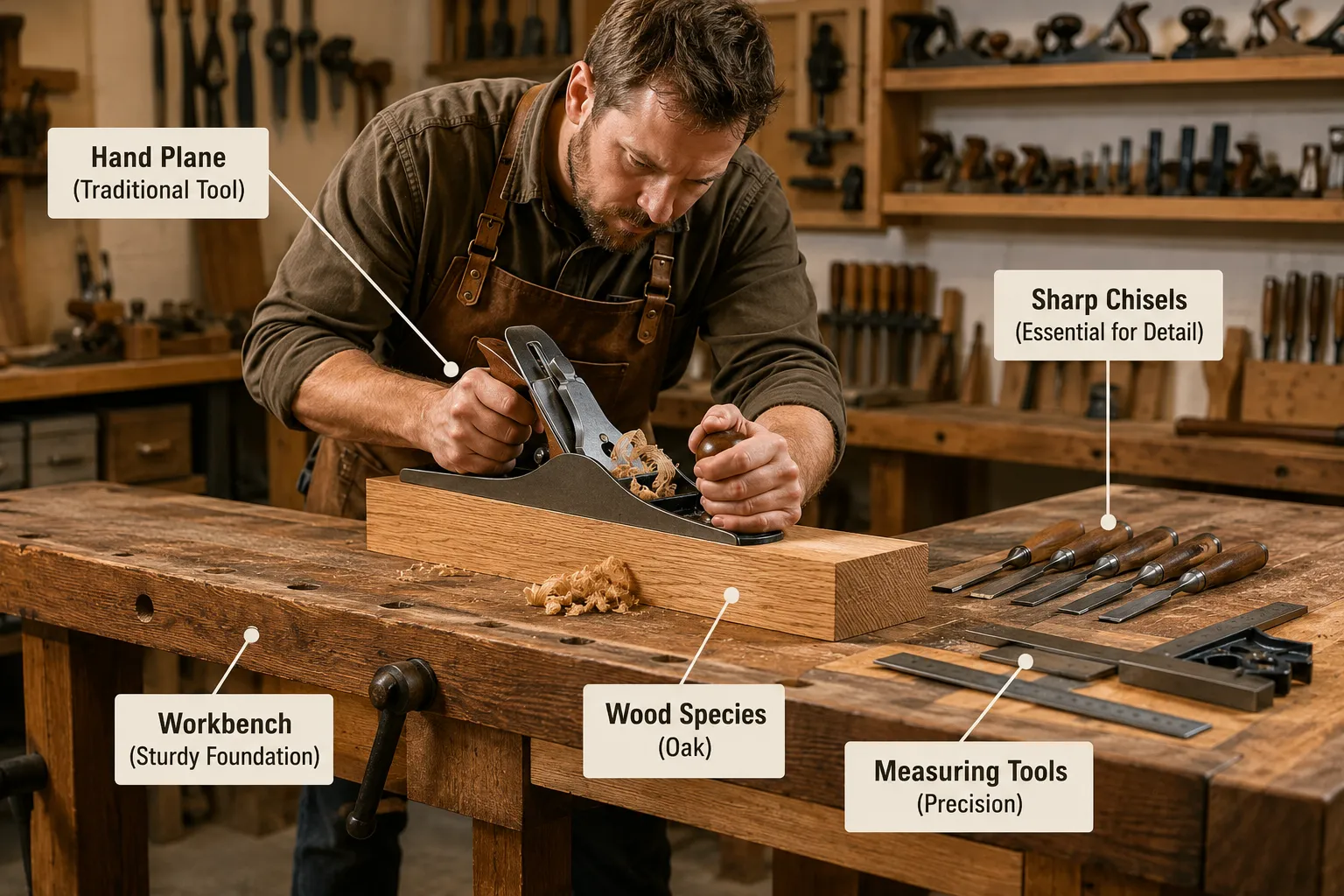
The success of “Woodman’s Workshop: Replicating Classic Woodcraft Styles from Historical Eras” hinges on mastering the right tools and techniques. While contemporary power tools certainly have their place for efficiency in rough dimensioning, achieving the authentic feel and precision of period pieces often necessitates a return to hand tools and traditional methods.
Hand Tools: The Heart of Historical Woodcraft
For many historical styles, the subtle marks left by hand tools are part of the aesthetic. Understanding and skillfully using these tools is crucial:
- Hand Planes: Essential for achieving perfectly flat surfaces, squaring edges, and creating smooth finishes without sanding. Different types, like jointers, fore planes, and smoothing planes, each have specific roles.
- Chisels and Gouges: Fundamental for joinery, carving, and paring precise shapes. Sharp chisels are non-negotiable for clean dovetails and mortises.
- Saws: Panel saws, tenon saws, dovetail saws, each designed for specific cuts, offering control and accuracy unmatched by many power alternatives for fine work.
- Mallets: Used with chisels for driving joints and shaping wood.
- Marking and Measuring Tools: Scribing gauges, rules, and calipers are vital for transferring dimensions accurately and repeatedly.
While setting up a dedicated hand tool workshop can be an investment, starting with a few key pieces and gradually expanding is a common approach. Learning to sharpen and maintain these tools is as important as learning to use them.
Traditional Joinery Techniques
The backbone of classic furniture lies in its joinery. Unlike modern screws and fasteners, traditional wood joints rely on precision and interlocking wood fibers for strength and longevity.
- Mortise and Tenon: A foundational joint where a projecting tenon fits into a rectangular hole (mortise). Variations include through-mortise, blind mortise, and haunched tenon. This is often featured in pieces like dining tables and benches.
- Dovetail: Famous for its strength and aesthetic appeal, the dovetail joint features interlocking wedge-shaped ‘tails’ and ‘pins’. It’s particularly strong in tension, making it ideal for drawers and carcass construction.
- Dado and Rabbet: Simple yet effective joints for shelves, backs, and case construction, involving grooves or recesses cut into the wood.
- Tongue and Groove: Primarily used for wide panel construction, such as tabletops or chest bottoms, allowing for wood movement.
Learning these joints requires patience and practice. Resources like “Introduction To Traditional Japanese Wood Joinery Creating Strong And Beautiful Connections Without Fasteners” can offer deep insights into joinery principles that transcend cultural boundaries. Even in a modern workshop, the integration of both hand and power tools for specific tasks can optimize workflow, as highlighted in guides like Selecting the Best Ryobi Power Tools for Small Workshop Setup:.
| Traditional Joinery | Primary Use | Key Strength |
|---|---|---|
| Mortise & Tenon | Frame and panel construction, table and chair legs | Strong resistance to racking and twisting |
| Dovetail | Drawer boxes, carcass corners, fine cabinetry | Excellent tensile strength, resists pulling apart |
| Dado | Shelves, drawer bottoms, cabinet dividers | Supports weight over a wide area, easy to cut |
| Rabbet | Back panels, box construction, drawer sides | Simple, strong corner connection |
| Tongue & Groove | Tabletops, wall paneling, floorboards | Allows for wood expansion/contraction |
Material Selection and Finishing for Authentic Woodman’s Workshop Replicas
The choice of wood species and the application of historical finishes are critical elements in “Woodman’s Workshop: Replicating Classic Woodcraft Styles from Historical Eras.” An authentic replica isn’t just about the shape and joinery; it’s also about how the piece looks and feels, which is heavily influenced by its materials and surface treatment.
Selecting the Right Wood Species
Researching the common wood types used in the target historical period is paramount. Using modern, fast-growing species for a Colonial piece, for example, would instantly compromise its authenticity.
- Early American & Colonial: Pine, maple, cherry, and oak were staples due to their local availability. Pine was often used for case goods and painted, while maple and cherry were favored for their hardness and beautiful grain.
- Federal & Empire: Mahogany became popular for its rich color and workability, often imported. Walnut was also a significant choice.
- Victorian: Walnut, mahogany, and rosewood were frequently used, often combined with exotic veneers for intricate patterns and ornamentation.
- Arts & Crafts: Quarter-sawn oak was the quintessential wood, prized for its distinctive ray fleck and stability. Cherry and mahogany were also common.
- Art Deco: Exotic veneers like macassar ebony, amboyna burl, and zebrano were popular, often paired with domestic woods like walnut for structural elements.
Beyond species, consider the cut of the wood. Quarter-sawn lumber, for instance, exhibits a different grain pattern and stability than plain-sawn, and its use was deliberate in certain eras, like Arts & Crafts. Sourcing reclaimed or locally harvested timber can further enhance the historical accuracy. Insights into specific selections can be found in resources like Wood Species Selection For Visible Joinery Choosing Materials That Showcase Hand Cut Joints In Contemporary Designs.
Recreating Period-Appropriate Finishes
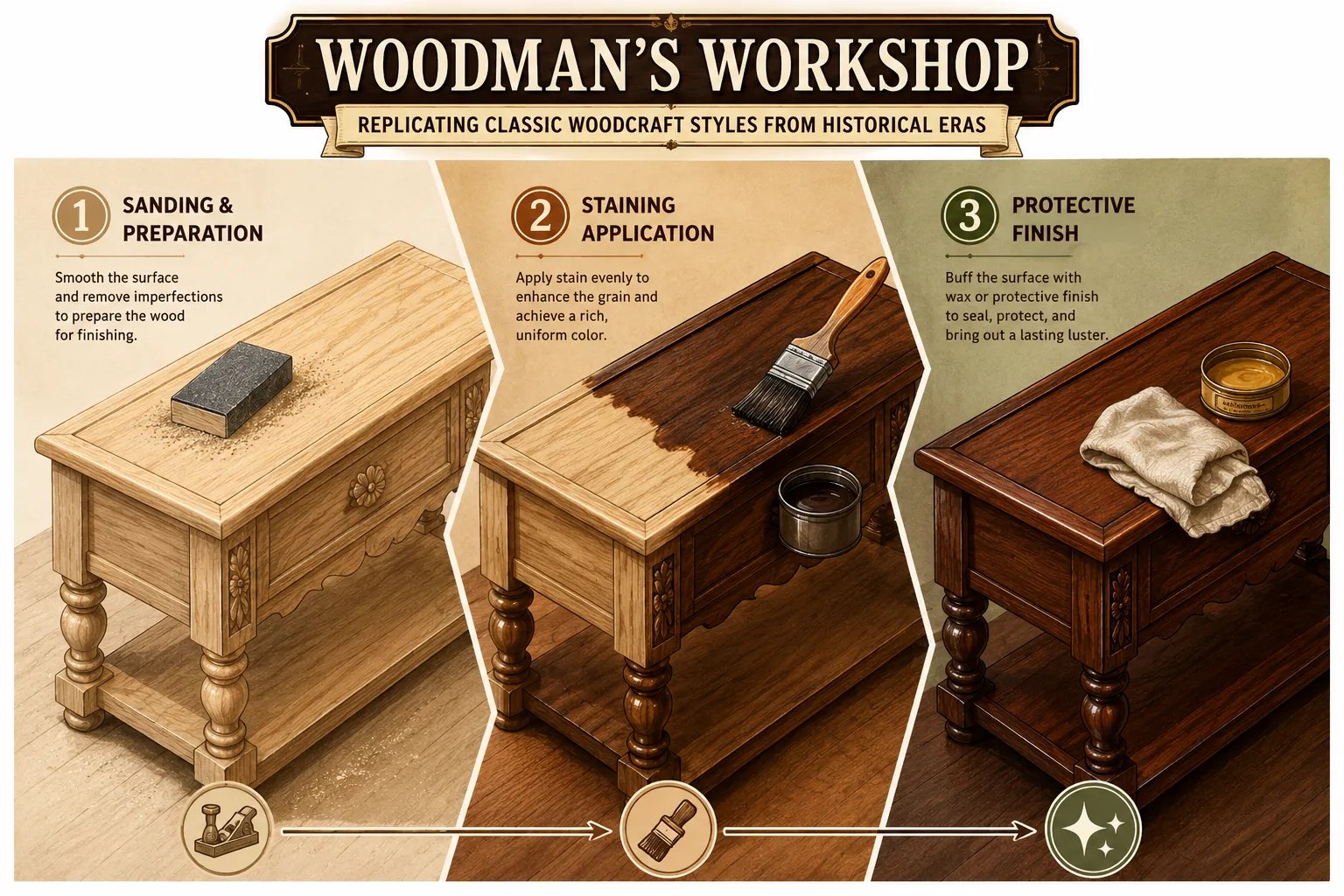
Finishes are the final layer that protects and enhances the wood, and they also contribute significantly to the aesthetic of a period piece. Modern polyurethane, while durable, rarely achieves the nuanced look of historical finishes.
- Oil Finishes: Linseed oil or tung oil were common, providing a natural, matte look that allows the wood grain to shine through. They penetrate the wood, offering protection from within.
- Shellac: A natural resin dissolved in alcohol, shellac was a widespread finish for centuries. It’s easy to repair, provides a warm glow, and can be built up to a high-gloss French polish.
- Varnish: Early varnishes, often based on natural resins like copal or amber, offered more durability than oil or shellac. They tend to amber with age, adding a characteristic warmth.
- Paint & Milk Paint: For utilitarian pieces or specific styles like Colonial, milk paint (a casein-based paint) was a common and durable choice, often distressed to simulate age.
- Wax: Often used as a topcoat over oil or shellac, wax provides a soft luster and a protective layer.
When applying finishes, technique is vital. Building up thin layers, meticulous sanding between coats, and careful buffing are often necessary to achieve a truly authentic look. Furthermore, understanding the properties of different adhesives is also part of material mastery, as detailed in The Ultimate Guide To Wood Glue Choosing The Right Adhesive For Every Project Joint And Environmental Condition.
Conclusion: Crafting Legacies in 2026
“Woodman’s Workshop: Replicating Classic Woodcraft Styles from Historical Eras” is more than just a hobby; it’s a profound connection to human history, skill, and enduring beauty. In 2026, as the world increasingly values sustainable practices and meaningful objects, the ability to create authentic, vintage-inspired furniture stands as a testament to craftsmanship and a rejection of disposability. By understanding the historical context, mastering period-appropriate tools and techniques, and making informed material and finishing choices, woodworkers can not only reproduce but also reinterpret classic styles, ensuring their relevance for generations to come.
To begin your journey into historical woodcraft, start by selecting a style that genuinely captivates you. Research its defining characteristics, common materials, and construction methods. Invest in a few quality hand tools and dedicate time to practicing fundamental joinery. Seek out mentors, join online communities, and visit museums or antique shops to study original pieces firsthand. Remember, patience and persistence are your greatest allies in transforming raw timber into timeless artistry.