

In the dynamic world of woodworking, where trends constantly evolve, the year 2026 sees a renewed appreciation for meticulous craftsmanship and the timeless beauty of hand-cut joinery. No longer content with merely hidden fasteners, contemporary designs increasingly celebrate the structural and aesthetic integrity of visible joints. However, the true artistry in showcasing these intricate details lies not just in their execution, but critically, in the Wood Species Selection for Visible Joinery: Choosing Materials That Showcase Hand-Cut Joints in Contemporary Designs. The right wood choice can transform a simple joint into a captivating design element, turning a functional connection into a focal point.
This comprehensive guide delves into the strategic considerations involved in selecting wood species that not only provide the necessary structural properties but also enhance the visual appeal of hand-cut joints. From contrasting colors and grain patterns to workability and finishing characteristics, understanding these nuances is paramount for woodworkers aiming to elevate their craft in today’s design landscape.

Key Takeaways
- Contrast is Key: Choose wood species that offer a noticeable difference in color or grain pattern to make hand-cut joints pop.
- Workability Matters: Select woods that are enjoyable to cut and carve, ensuring clean, precise joinery without excessive effort.
- Durability and Stability: Consider the inherent strength and movement characteristics of wood to ensure joints remain tight and beautiful over time.
- Finishing Harmony: Understand how different finishes interact with various wood species to highlight or subtly blend joinery.
- Sustainability & Sourcing: Make informed choices about environmentally responsible wood options without compromising design integrity.
Understanding the Aesthetic Impact of Wood Species on Joinery
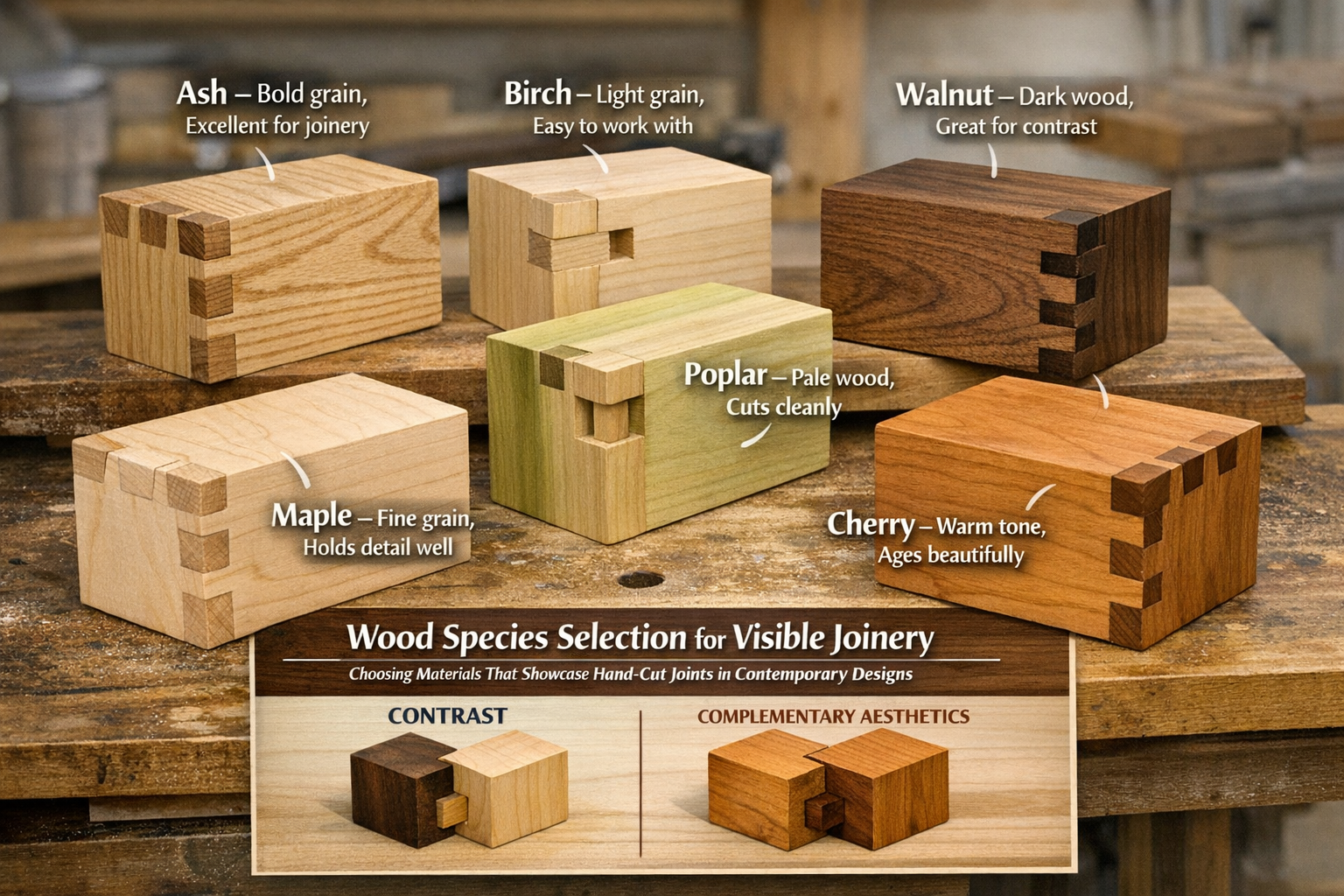
The visual impact of a hand-cut joint is profoundly influenced by the wood species used. It’s not simply about assembling pieces; it’s about crafting a narrative where the joint itself becomes a testament to skill and design intention. When considering Wood Species Selection for Visible Joinery: Choosing Materials That Showcase Hand-Cut Joints in Contemporary Designs, the interplay of color, grain, and texture becomes critical.
The Power of Contrast: Color and Grain
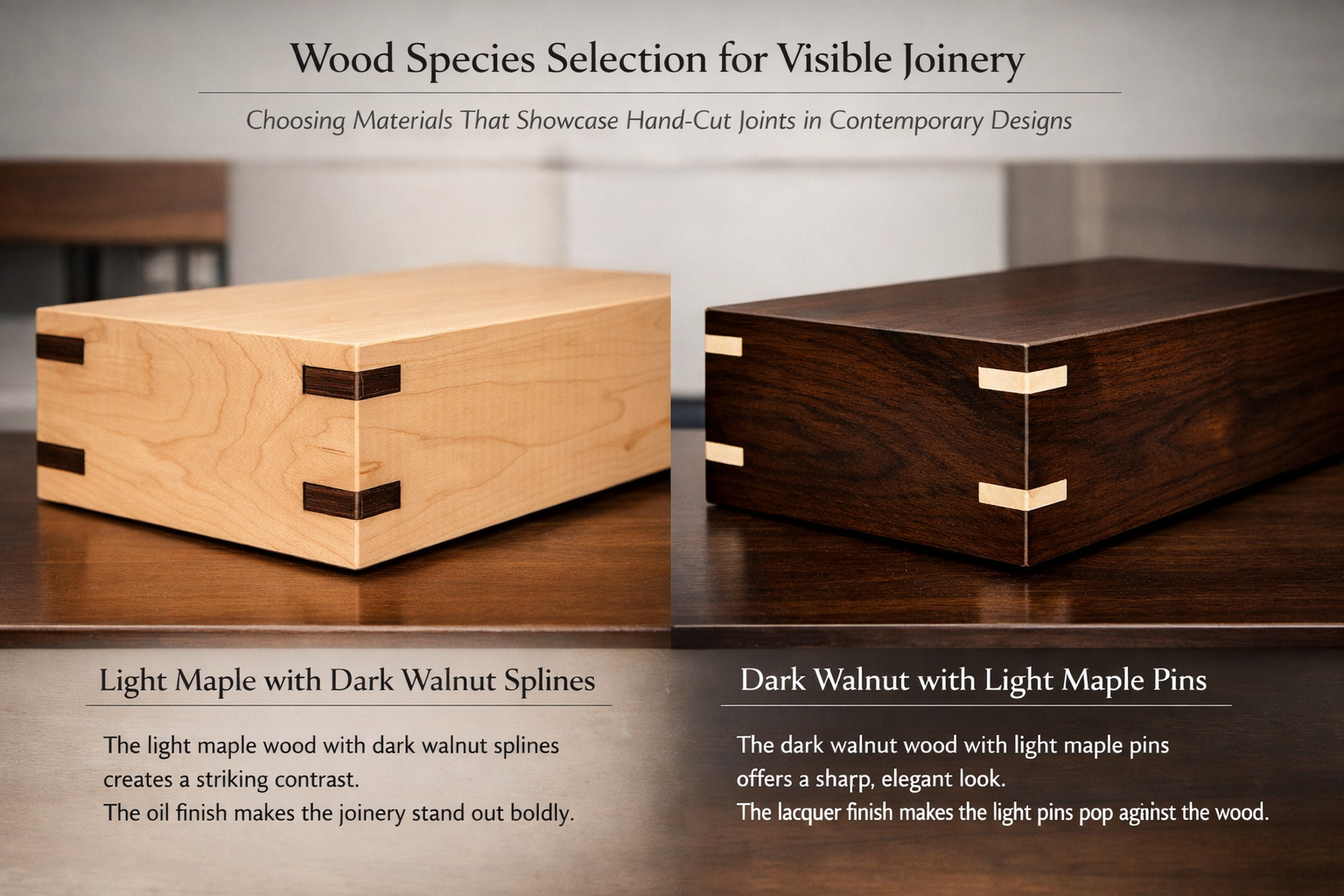
The most straightforward way to highlight visible joinery is through color contrast. This involves combining woods where one is significantly lighter or darker than the other. Imagine a crisp, bright maple dovetailed into a rich, dark walnut. The stark difference immediately draws the eye to the precision of the joint.
- High Contrast:
- Dark Woods: Black Walnut, Wenge, Cherry (darkens with age), African Padauk (deep reddish-orange).
- Light Woods: Hard Maple, Ash, Birch, Holly (exceptionally white).
- Example Combination: A mortise and tenon joint crafted from Hard Maple set within a frame of Black Walnut creates a sophisticated, eye-catching detail. Conversely, Wenge dowels in an Ash table provide a modern, striking accent.
However, contrast isn’t solely about color. Grain pattern also plays a significant role. Some woods have a very pronounced, open grain, while others are fine and subtle.
- Open Grain: Oak (especially White Oak), Ash, Walnut, Mahogany. These woods can “catch” light differently within the joint, emphasizing its three-dimensional form.
- Closed Grain: Maple, Cherry, Poplar, Birch. These woods offer a smoother, more uniform surface that allows the sharp lines of the joint to stand out distinctly.
When pairing woods, consider how their grain patterns will complement or compete with each other. A subtle, closed-grain wood for the main body paired with a contrasting open-grain wood for a spline or a detail in a through tenon can add depth and interest. For instance, an oak wood finishing technique might enhance the grain enough to create an interesting texture contrast with a smoother, denser wood.
Texture and Light Interaction
Beyond color and grain, the inherent texture of a wood species and how it interacts with light can emphasize joinery. Woods like Mahogany or Teak have a natural sheen that can make joints appear to glow, while a dense, fine-grained wood like Boxwood offers a velvety smoothness that highlights sharp, clean edges.
Pull Quote: “The essence of visible joinery is to celebrate the connection. Choosing the right wood makes that celebration undeniable.”
The way light falls across the joint, influenced by the wood’s texture and density, can create subtle shadows and highlights that articulate the joint’s form. This is especially true for hand-cut joints, where slight variations from the cutting tools can add character that is beautifully revealed by the right wood.
Practical Considerations for Wood Species Selection for Visible Joinery: Choosing Materials That Showcase Hand-Cut Joints in Contemporary Designs
While aesthetics are paramount, practical considerations are equally important when making your Wood Species Selection for Visible Joinery: Choosing Materials That Showcase Hand-Cut Joints in Contemporary Designs. These factors ensure the longevity, workability, and overall success of your project.
Workability and Machinability
The beauty of hand-cut joints lies in their precision. Therefore, selecting a wood that is easy and predictable to work with is crucial. Some woods are notoriously difficult, prone to tear-out, or splinter easily, making intricate joinery a frustrating endeavor.

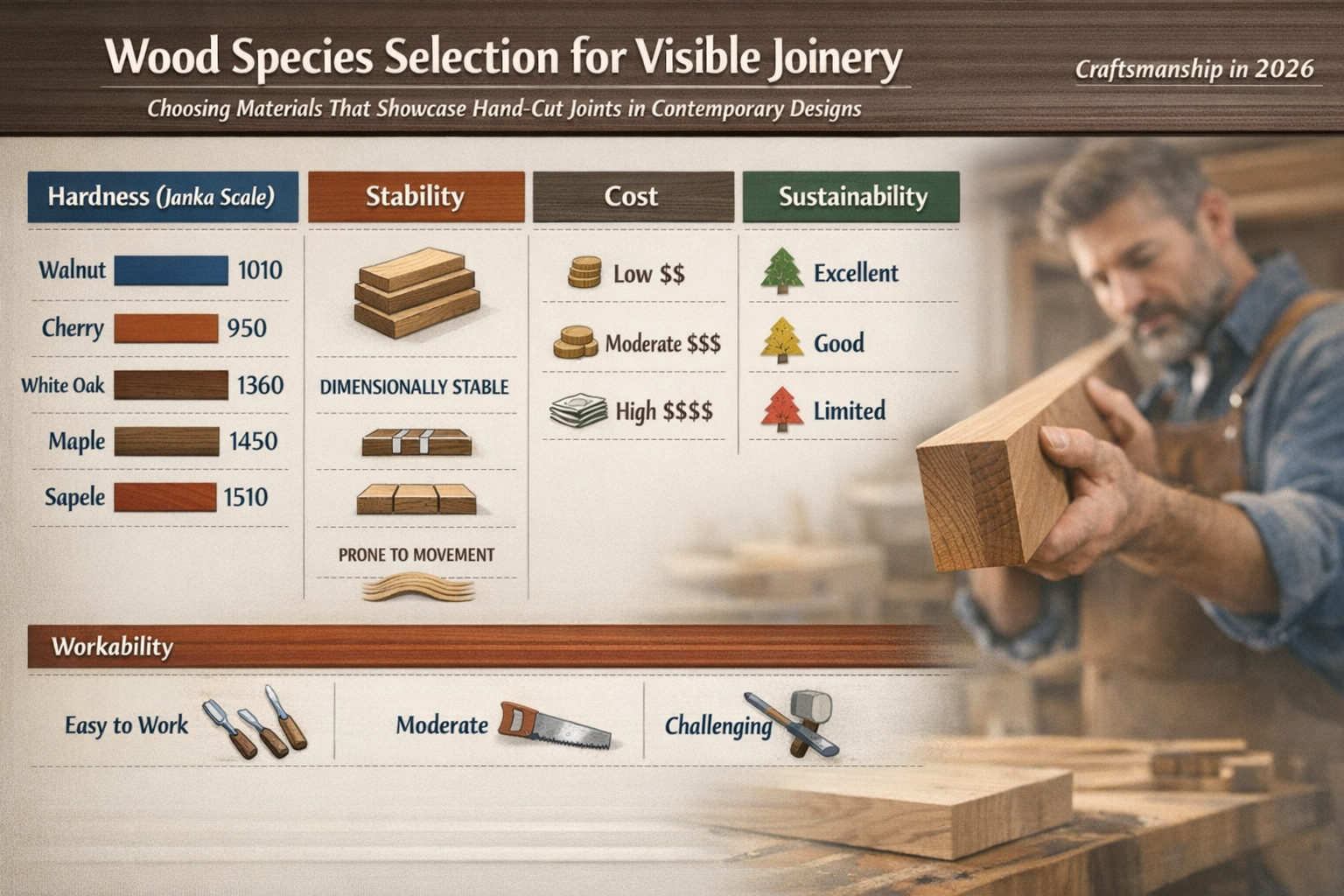
| Wood Species | Hardness (Janka) | Workability for Joinery | Tear-out Tendency | Notes |
|---|---|---|---|---|
| Maple | 1450 | Excellent | Low | Very dense, takes a sharp edge. |
| Cherry | 950 | Excellent | Low | Carves beautifully, stable. |
| Walnut | 1010 | Excellent | Low | Cuts cleanly, machines well. |
| Ash | 1320 | Good | Moderate | Can be slightly stringy, but cuts well. |
| Oak (Red) | 1290 | Good | Moderate | Open grain can be tricky for very fine details. |
| Oak (White) | 1360 | Good | Moderate | Similar to Red Oak, but slightly denser. |
| Poplar | 540 | Very Good | Low | Soft, dents easily, but cuts extremely clean. |
| Mahogany (African) | 800 | Excellent | Low | Very stable, easy to cut. |
| Wenge | 1630 | Challenging | High | Very hard, splinters easily, dulls tools. |
- Softwoods vs. Hardwoods: While softwoods like pine are easy to cut, they often lack the density for crisp, durable joinery, and their tendency to dent can compromise the visual integrity of visible joints. Hardwoods generally offer better results.
- Grain Direction: Be mindful of grain direction when cutting joints, especially for woods with interlocking grain, to minimize tear-out. Even the best species can cause problems if not handled correctly.
- Tool Sharpness: Regardless of wood choice, razor-sharp tools are non-negotiable for clean, visible joinery.
For projects like a DIY coffee table, where joinery might be a key aesthetic feature, selecting a wood that is forgiving to work with can significantly improve the final outcome and enjoyment of the process.
Stability and Durability for Long-Term Beauty
Visible joinery is an investment in craftsmanship, meant to last. Therefore, the stability and durability of your chosen wood species are critical. Wood naturally expands and contracts with changes in humidity. If the movement characteristics of the joined pieces are vastly different, or if the wood itself is unstable, the joint can open up, crack, or become unsightly over time.
- Movement Rates: Research the tangential and radial shrinkage rates of your desired woods. Ideally, woods with similar movement characteristics should be paired, especially for large, complex joints.
- Density and Hardness: Denser, harder woods tend to hold their shape better and resist wear and tear, which is important for exposed joinery that might see frequent contact. The Janka hardness scale provides a good indicator.
- Environmental Factors: Consider the environment where the piece will reside. High humidity, direct sunlight, or extreme temperature fluctuations can accelerate wood movement.
For instance, if you are building a woodworking bedroom, the wood needs to be stable enough to withstand indoor climate changes without compromising the integrity of visible drawer dovetails or bed frame joinery.
Finishing Characteristics to Enhance Joinery
The chosen finish can dramatically alter how visible joinery is perceived. Different woods react differently to various finishes, affecting color, sheen, and grain pop.

- Clear Finishes (Oils, Polyurethane, Lacquer):
- Oils (e.g., Danish Oil): Penetrate the wood, enriching its natural color and grain. This is excellent for highlighting subtle grain differences and making joints appear integrated. They offer a natural, matte to satin finish.
- Polyurethane/Lacquer: Create a durable surface film. These can enhance contrast by adding depth and gloss, making the sharp lines of joinery more pronounced. Applying polyurethane in high humidity requires careful technique to avoid issues that could obscure joint details.
- Stains and Dyes:
- Stains can be used to emphasize contrast further, either by darkening one wood significantly or by adding a color that makes the other wood pop. However, be cautious not to obscure the natural beauty of the wood or the joint itself.
- Dyes penetrate more deeply and can achieve more vibrant or uniform color changes, but careful application is needed to ensure consistency across different wood species within a joint.
Some contemporary designs might even use a combination of finishes – perhaps an oil on the main body of the furniture to preserve its natural feel, and a clear lacquer specifically on the visible joint to give it a slight sheen and highlight its precision. Exploring unique wood finishing techniques can open up new possibilities for emphasizing joinery.
Popular Wood Species for Visible Joinery in 2026 Contemporary Designs
As woodworkers continue to refine their craft in 2026, certain wood species consistently stand out for their ability to showcase visible joinery in contemporary designs. Their unique characteristics make them ideal for highlighting the meticulous details of hand-cut connections.
Hard Maple: The Canvas of Precision
Hard Maple is a perennial favorite for visible joinery, particularly for its ability to create striking contrast. Its pale, creamy white color and fine, uniform grain provide a clean canvas that makes darker woods or even the natural shadows of the joint stand out dramatically.
- Pros: Very hard and dense, excellent workability for clean cuts, minimal tear-out, stable, readily available. Its light color darkens slightly to a beautiful golden hue over time.
- Cons: Can be challenging to stain uniformly due to its dense nature, sometimes prone to burnishing if tools aren’t sharp.
- Ideal for: Dovetails, finger joints, through tenons, and contrasting splines or pegs in darker woods. It pairs beautifully with Black Walnut or Cherry for classic contrast.
- Contemporary Use: Often seen in minimalist furniture where the joint is the primary decorative element, offering a subtle yet powerful statement.
Black Walnut: Richness and Definition
Black Walnut is another top contender, celebrated for its rich, dark brown color, often with purple or reddish undertones, and its attractive, open grain. It offers fantastic contrast when paired with lighter woods and provides deep visual interest even when used alone.
- Pros: Excellent workability, cuts cleanly with minimal tear-out, highly stable, luxurious appearance, develops a beautiful patina over time.
- Cons: Can be more expensive than other domestic hardwoods.
- Ideal for: Through dovetails, wedged mortise and tenons, and exposed joinery where its inherent beauty is meant to be admired. It provides superb contrast for maple or ash elements.
- Contemporary Use: Frequently used in high-end, contemporary pieces where its elegance and workability allow for complex, exposed joinery details to shine. For example, a contemporary woodworking box lid might feature intricate walnut dovetails.
American Cherry: Warmth and Grace
American Cherry is renowned for its smooth, fine grain and its beautiful transformation from a pale pinkish-brown to a deep, reddish-brown with exposure to light. This aging process adds character and depth to visible joinery.
- Pros: Excellent workability, cuts very cleanly, stable, naturally beautiful color.
- Cons: Relatively soft compared to maple or oak, can dent more easily, UV exposure is required for its color development, so even finishing is key.
- Ideal for: Delicate joinery, such as half-blind dovetails, or where a subtle, elegant contrast with a lighter wood is desired. Its uniform texture makes the lines of the joint very clear.
- Contemporary Use: Perfect for pieces seeking a warm, inviting aesthetic where the joinery adds a layer of refined craftsmanship rather than stark contrast.
White Oak: Strength and Distinctive Grain
White Oak offers exceptional strength, durability, and a distinctive, often ray-flecked grain that can add significant character to visible joinery. Its light to medium brown color allows for subtle contrast with darker woods.
- Pros: Very strong and durable, good workability (though can be a bit harder to cut than walnut or cherry), excellent stability, beautiful grain.
- Cons: Open grain can sometimes make very fine details less crisp, harder to cut than some other species.
- Ideal for: Robust, structural visible joinery like through mortise and tenons, or large dovetails in contemporary farmhouse or craftsman-style pieces. It also stands out when dark wood finishing techniques are applied to create a strong color contrast.
- Contemporary Use: Gaining popularity in designs that merge modern lines with natural, rustic elements, where the robust joinery speaks to integrity and craftsmanship.
Exotic Woods: Adding Unique Flair
While domestic woods offer a fantastic palette, exotic species can bring unparalleled visual drama to visible joinery. Woods like Wenge, Padauk, or even the striking streaks of Zebrawood can be used as accents for pins, splines, or wedges.
- Wenge: A very dark, almost black wood with pronounced light and dark streaks. Offers extreme contrast with light woods. Can be challenging to work due to hardness and splintering.
- Padauk: Known for its vibrant, almost fluorescent reddish-orange color that darkens to a deep reddish-brown over time. Excellent for high-contrast accents.
- Zebrawood: Features bold, alternating dark and light stripes, creating a dramatic visual effect. Best used sparingly for small, impactful joinery details due to its intense pattern.
- Holly: An exceptionally white wood, perfect for creating the brightest possible contrast as a decorative element in a joint, such as tiny inlay details or contrasting pins.
- Considerations: Exotic woods often come with higher costs and potential sustainability concerns. Always verify the source and ensure it’s responsibly harvested. Also, their workability can vary widely, requiring specific tools and techniques.
For example, using thin strips of Padauk or Wenge as contrasting keys in a mastering shelf woodworking project can turn a functional component into an artistic statement. Remember, for a truly distinctive piece, even exploring options like blue wood natural could open up unique aesthetic possibilities for small, decorative joinery elements.
Conclusion: Crafting with Intent in 2026
The art of woodworking in 2026 is witnessing a powerful resurgence of craftsmanship, where the honest expression of joinery takes center stage. Mastering Wood Species Selection for Visible Joinery: Choosing Materials That Showcase Hand-Cut Joints in Contemporary Designs is not merely a technical exercise but a crucial design decision that impacts the entire aesthetic and narrative of a piece.
By understanding the interplay of color, grain, texture, and the practicalities of workability, stability, and finishing, woodworkers can make informed choices that elevate their creations. Whether opting for the classic contrast of maple and walnut, the elegant warmth of cherry, or the robust character of oak, each wood species brings its own unique contribution to the story told by a hand-cut joint.
Embrace the opportunity to let your joinery speak volumes. Experiment with combinations, pay attention to the subtle nuances of each wood, and always prioritize precision in your cuts. The goal is to not just hide the connection, but to highlight it, turning a structural necessity into an undeniable mark of skill and artistic intent.
Actionable Next Steps:
- Experiment with Samples: Obtain small samples of different wood species you are considering. Cut a simple joint (like a through tenon) in each combination and apply your intended finish to observe the final look.
- Study Grain Patterns: Pay close attention to how grain patterns interact when cut and joined. Consider whether they complement or compete with each other.
- Invest in Sharp Tools: Sharp tools are fundamental for clean, precise joinery, regardless of wood species. Regular sharpening will make your work more enjoyable and the results more beautiful.
- Research Wood Movement: Before embarking on a large project, familiarize yourself with the movement characteristics of your chosen woods to prevent future joint failure.
- Explore Finishing Techniques: Investigate how different natural wood finishing techniques or cool wood finishing techniques can enhance or subtly alter the appearance of your visible joinery.
By thoughtfully applying these principles, woodworkers can ensure that their visible joinery not only performs its structural function impeccably but also stands as a proud, beautiful testament to their craft in the contemporary design landscape of 2026.