

Elevating the craft of woodworking from functional pieces to works of art requires a keen understanding of joinery that goes well beyond the elementary butt joint. For those looking to create truly memorable and heirloom-quality items, mastering advanced joinery techniques is the key. This article delves into the intricate world of “Beyond the Basic Box: Advanced Joinery for Unique Wooden Gift Boxes and Keepsakes,” exploring methods that enhance both the structural integrity and aesthetic appeal of your creations in 2026.
Imagine presenting a gift in a box whose corners tell a story of meticulous craftsmanship, where the wood grains interlock with stunning precision, or where joints are so seamlessly integrated they seem to vanish. This level of detail transforms a simple container into a treasured keepsake, a testament to the maker’s skill and dedication. Whether for jewelry, cherished mementos, or bespoke gifts, advanced joinery sets these wooden boxes apart, making them not just vessels, but gifts in themselves.
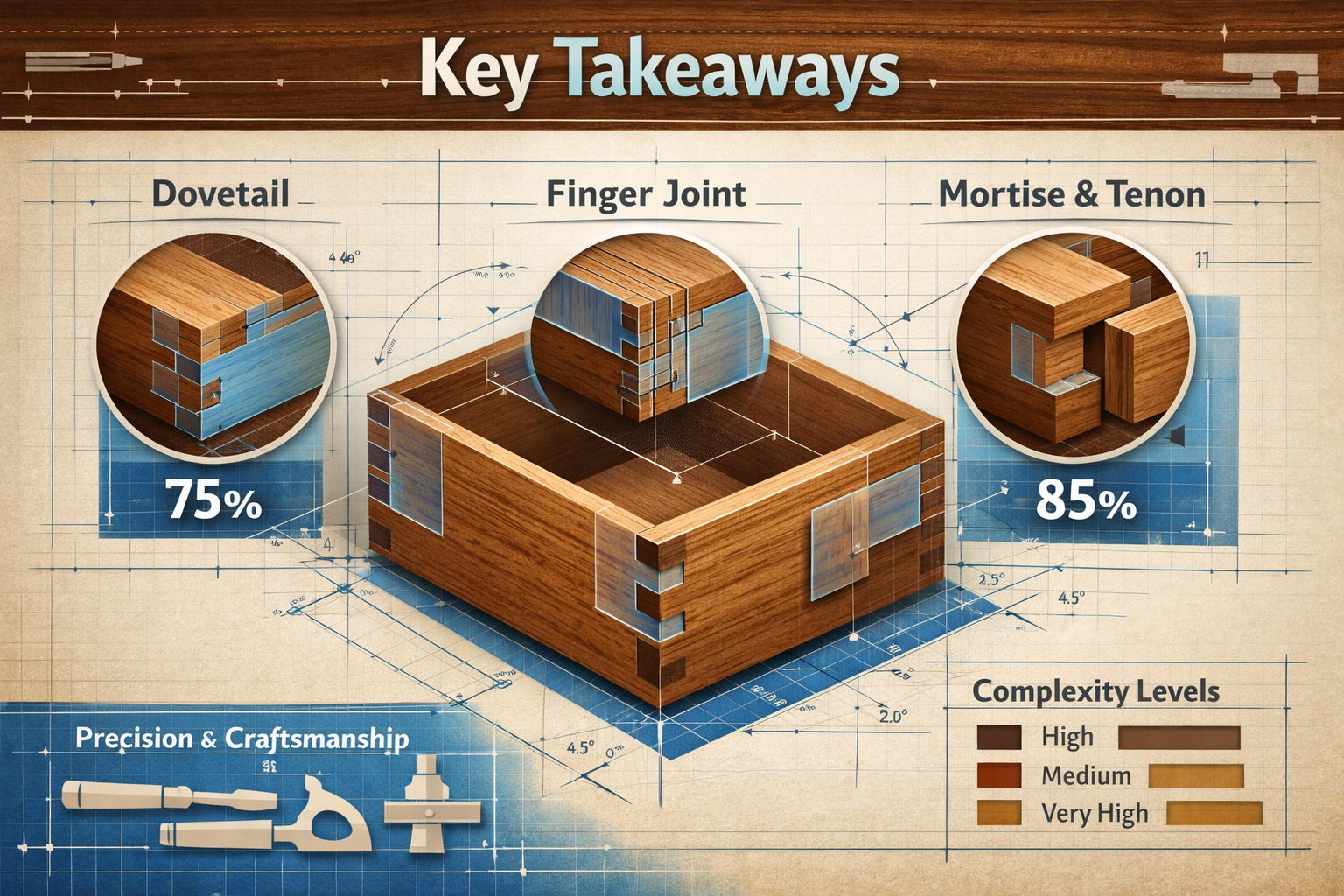
Key Takeaways
- Advanced joinery significantly elevates the aesthetic and structural quality of wooden gift boxes.
- Techniques like through dovetails, splined miters, and secret mitered dovetails add beauty and durability.
- Precision in measuring, cutting, and fitting is paramount for successful advanced joinery.
- Both hand tools and power tools can be employed, with jigs and templates crucial for consistency.
- Mastering these joints allows for the creation of unique, heirloom-quality keepsakes that will be cherished for generations.
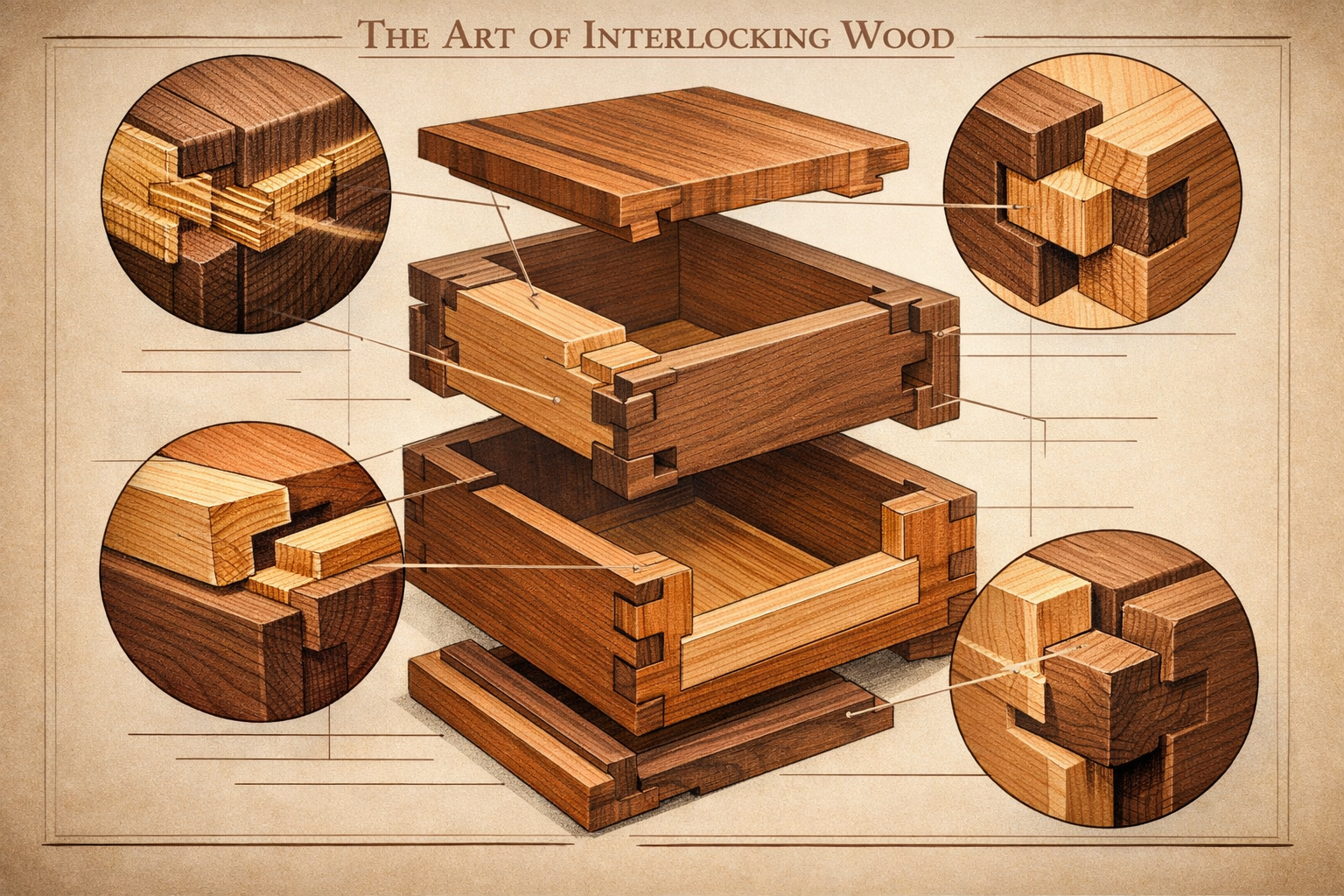
The Art of Interlocking Wood: Elevating Box Construction
The humble wooden box, in its simplest form, serves a purely functional purpose. However, with the application of advanced joinery, it transforms into an object of beauty and lasting value. Moving “Beyond the Basic Box: Advanced Joinery for Unique Wooden Gift Boxes and Keepsakes” means stepping into a realm where the joints themselves become integral design elements, showcasing the natural beauty of the wood and the artisan’s skill. This section explores several key advanced joinery techniques that can turn an ordinary box into an extraordinary keepsake.
Through Dovetail Joints: The Classic Showpiece
The through dovetail joint is arguably the most recognizable symbol of fine woodworking and is a hallmark of quality construction. Its interlocking “pins” and “tails” create a strong mechanical bond that resists pulling apart, making it ideal for the corners of boxes and drawers. Visually, the exposed end grain of the pins and tails provides a beautiful, rhythmic pattern that celebrates the construction itself.
Creating a perfect through dovetail requires:
- Precision Marking: Using a marking gauge and dovetail marker to lay out the pins and tails accurately.
- Careful Sawing: Employing a sharp dovetail saw to make precise cuts along the marked lines.
- Chisel Work: Finely tuning the waste removal with sharp chisels to achieve tight-fitting joints.
For those venturing into hand-tool joinery, the dovetail is an excellent skill to develop. It not only builds fundamental hand-tool proficiency but also provides immense satisfaction in achieving tight, flush joints. Explore more about Hand Tool Joinery for Visible Wood Joints: Dovetails, Mortise and Tenon, and Box Joints as Design Features in Furniture and Small Projects for a deeper dive.
| Joint Type | Strength | Aesthetic Appeal | Complexity | Best Use |
|---|---|---|---|---|
| Through Dovetail | Excellent | High, visible | Moderate | Boxes, drawers, traditional furniture |
| Half-Blind Dovetail | Excellent | Moderate, visible on one side | Moderate | Drawer fronts, where one side is hidden |
| Mitered Dovetail | Excellent | High, nearly invisible | High | High-end boxes, modern aesthetics |
Splined Miter Joints: Elegant Strength
While a simple miter joint can look clean, it relies solely on glue for strength, making it vulnerable to stresses. Introducing a spline vastly improves its integrity and introduces a subtle, elegant design feature. A splined miter involves cutting a groove (kerf) into the mating edges of a miter joint and then inserting a thin strip of wood (the spline) that spans both pieces.
The benefits of splined miters for “Beyond the Basic Box: Advanced Joinery for Unique Wooden Gift Boxes and Keepsakes” include:
- Increased Surface Area: The spline provides significant additional gluing surface, drastically improving joint strength.
- Enhanced Stability: It prevents the joint from racking or twisting, maintaining squareness.
- Decorative Potential: Splines can be made from contrasting wood species (e.g., maple spline in a walnut box) to create a striking visual accent.
Splines are typically cut using a table saw or router, often with specialized jigs to hold the workpieces safely and precisely. This method is particularly effective for contemporary box designs where clean lines are desired without the busy aesthetic of exposed dovetails.
Secret Mitered Dovetail Joints: The Vanishing Act
For the ultimate in sophisticated box construction, the secret mitered dovetail joint offers both the strength of a dovetail and the seamless appearance of a miter. This joint is truly a mark of advanced craftsmanship, as it hides all end grain, making it appear as a simple miter while providing exceptional mechanical strength.
The complexity lies in its execution:
- Mitered Exterior: The outside corner looks like a standard miter joint.
- Hidden Dovetails: On the inside, half-blind dovetails are cut, providing the robust interlocking mechanism.
- Precise Fit: The challenge is to align and cut both the miter and the hidden dovetails perfectly so that no gaps are visible from the exterior.
This joint requires significant practice and meticulous attention to detail, often involving specialized jigs or templates. When successfully executed, the result is a breathtakingly clean aesthetic that hints at underlying strength without revealing its secrets. It’s an ideal choice for high-end keepsakes where visual purity is paramount.
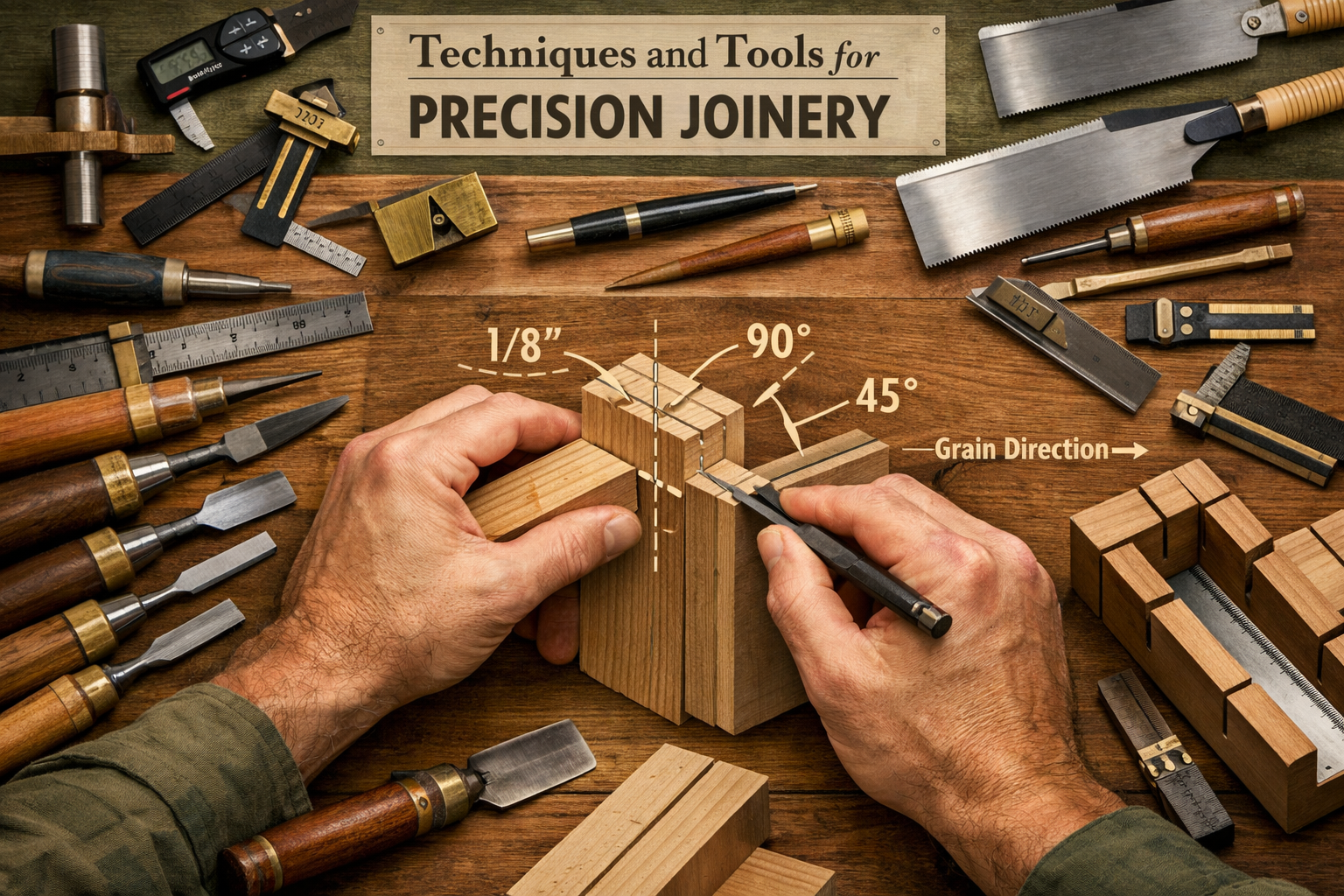
Techniques and Tools for Precision Joinery
Achieving the tight, visually appealing joints required for “Beyond the Basic Box: Advanced Joinery for Unique Wooden Gift Boxes and Keepsakes” demands precision at every step. This involves not only selecting the right tools but also mastering the techniques and employing jigs that ensure consistent and repeatable results.
Hand Tools vs. Power Tools: A Synergistic Approach
Both hand tools and power tools have their place in advanced joinery for wooden boxes. Often, the most skilled woodworkers employ a synergistic approach, leveraging the strengths of each.
- Hand Tools: For dovetails, a sharp dovetail saw, chisels, and marking gauges are indispensable for the fine control and precise fitting that characterize superior hand-cut joints. The intimacy of working with hand tools allows for subtle adjustments and a deeper understanding of the wood. Our guide on Hand Tool Mastery for Detail Work: Chisels, Hand Planes, and Rasps for Refined Joinery and Finishing offers further insights.
- Power Tools: For splined miters, a table saw or router with appropriate jigs offers speed and accuracy. Routers are excellent for cutting precise grooves for splines or for intricate decorative patterns. For general box construction, a high-quality table saw is crucial for preparing perfectly square stock, which is the foundation of any tight joint. For more on maximizing your power tools, check out Power Tool Mastery for Decorative Wood Projects: Creating Professional Finishes on Cutting Boards, Serving Trays, and Wooden Clocks.
Jigs and Templates: The Key to Repeatable Accuracy
Regardless of whether you primarily use hand or power tools, jigs and templates are invaluable for ensuring accuracy and repeatability, especially when making multiple identical parts or complex joints.
- Dovetail Jigs: Available for routers, these jigs can quickly cut precise dovetails, ideal for production work or for those less comfortable with hand-cutting.
- Miter Sleds: Essential for cutting accurate 45-degree angles on a table saw, ensuring tight miter joints.
- Spline Jigs: Simple yet effective jigs that hold box sides at the correct angle for cutting spline grooves on a table saw or with a router. These ensure consistent depth and placement of the spline.
- Box Joint Jigs: While less complex than dovetails, box joints are another robust and decorative option for box construction, and jigs make them straightforward to produce on a table saw or router.
Using jigs reduces the margin for error, allowing even intermediate woodworkers to achieve professional-level results when creating unique wooden gift boxes and keepsakes. Always prioritize safety when working with power tools and jigs.
Design Considerations for Unique Wooden Gift Boxes and Keepsakes
Moving “Beyond the Basic Box: Advanced Joinery for Unique Wooden Gift Boxes and Keepsakes” involves not just mastering the technical aspects of joinery, but also applying thoughtful design principles. The choice of wood, hardware, and interior finishes can significantly impact the final aesthetic and perceived value of your handcrafted piece.
Wood Selection: More Than Just Appearance
The type of wood chosen plays a crucial role in both the functionality and beauty of your box.
- Hardwoods like walnut, cherry, maple, and oak are excellent choices due to their durability, stability, and beautiful grain patterns. They hold fine details well, which is essential for intricate joinery.
- Exotic Woods such as wenge, padauk, or purpleheart can add dramatic color and contrast, especially when used for splines or inlays.
- Grain Direction and Stability: Always consider the wood’s movement (expansion and contraction with humidity changes). Proper grain orientation is vital to prevent joints from failing or boxes from warping over time.
For a unique and rustic touch, consider incorporating elements from Live Edge Slab Selection and Preparation: From Raw Material to Finished Showpiece, perhaps for a lid or base, though this requires careful integration with precise joinery.
Hardware and Finishing Touches
The hardware you select can either elevate or detract from your box.
- Hinges: Choose high-quality brass or nickel-plated hinges that complement the box’s style. Barrel hinges, quadrant hinges, or continuous (piano) hinges are popular choices for boxes.
- Latches/Catches: Magnetic catches, friction catches, or small box latches add functionality and a tactile experience.
- Lining: A soft lining, such as felt, suede, or velvet, protects the contents and adds a touch of luxury.
- Finish: A well-applied finish, whether it’s an oil finish to bring out the natural grain, a clear lacquer for durability, or a hand-rubbed wax, is the final step in showcasing your joinery and protecting the wood. Consider exploring different cool wood finishing techniques to find the perfect complement to your design.
Incorporating Unique Features
To truly make a box a keepsake, consider adding personalized or functional features:
- Hidden Compartments: A false bottom or a small drawer can add an element of surprise and increased utility. Learn techniques from Building Custom Wooden Key Holders: Wall-Mounted Designs with Hidden Compartments which can be adapted for boxes.
- Engravings or Inlays: Laser engraving or hand-carved inlays can personalize a box for the recipient. See how similar techniques apply to Engraved Wooden Coasters with Custom Designs: Laser and Hand Carving Techniques for Profitable Sales.
- Custom Inserts: Foam or wood inserts can be custom-fitted to hold specific items, making the box a perfect presentation piece for jewelry, watches, or other valuables.
Each of these elements contributes to the narrative and purpose of the box, ensuring it becomes a cherished item for years to come.
Conclusion
Stepping “Beyond the Basic Box: Advanced Joinery for Unique Wooden Gift Boxes and Keepsakes” is a rewarding journey that merges technical skill with artistic expression. The mastery of joints such as through dovetails, splined miters, and secret mitered dovetails not only enhances the structural integrity of your projects but also transforms them into exquisite pieces that speak volumes about craftsmanship and attention to detail.
In 2026, the demand for unique, handcrafted items continues to grow, and wooden gift boxes crafted with advanced joinery stand out as truly exceptional presents. They are not merely containers; they are heirlooms, tokens of affection, and testaments to the enduring beauty of wood. By combining precise cuts, thoughtful wood selection, and elegant finishing touches, woodworkers can create keepsakes that will be cherished for generations.
Actionable Next Steps:
- Start Simple: Begin by practicing one advanced joint, such as through dovetails, on scrap wood until you achieve consistent results.
- Invest in Quality Tools: Sharp chisels, a good dovetail saw, and reliable marking gauges are crucial for hand-cut joints. For power tool methods, ensure your saw blades and router bits are sharp and high-quality.
- Utilize Jigs: Fabricate or purchase jigs for splined miters or dovetails to improve accuracy and efficiency.
- Experiment with Wood: Try different wood species for the main box and for contrasting splines to discover new aesthetic possibilities.
- Refine Your Finish: Pay attention to sanding and finishing techniques; a perfect joint can be obscured by a poor finish, while a great finish enhances the joint’s beauty.
By embracing these advanced techniques, you elevate your woodworking, creating truly unique wooden gift boxes and keepsakes that transcend the ordinary.