
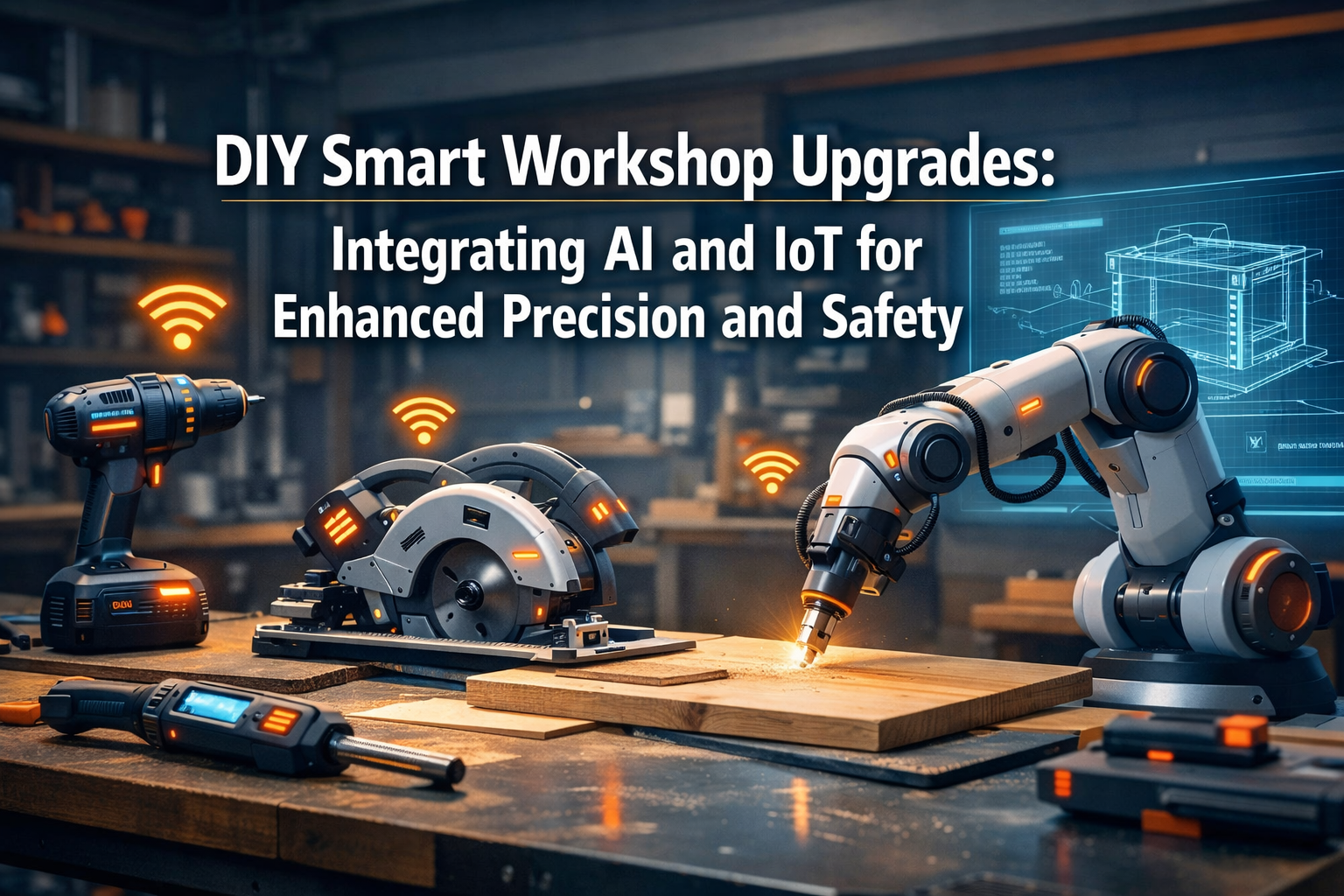
The modern workshop is evolving. Gone are the days when a collection of hand tools and power tools was sufficient to define a crafting space. In 2026, the forefront of innovation beckons hobbyists and professionals alike to embrace “DIY Smart Workshop Upgrades: Integrating AI and IoT for Enhanced Precision and Safety.” This transformation leverages artificial intelligence (AI) and the Internet of Things (IoT) to create environments that are not only more efficient and precise but also significantly safer. Imagine a workshop where your tools communicate, your dust collection activates automatically, and potential hazards are identified before they become incidents. This article explores how to turn that vision into a tangible reality.
This guide will demystify the process of upgrading your personal workshop, demonstrating how readily available smart technologies can be integrated to elevate your crafting experience. From optimizing workflow to safeguarding against common workshop dangers, the synergy of AI and IoT opens up a new realm of possibilities for every DIY enthusiast.
Key Takeaways
- Automated Environmental Control: IoT sensors can manage dust collection, air quality, and lighting, creating a healthier workspace.
- Enhanced Tool Precision: AI-powered systems can guide cuts, monitor tool wear, and suggest optimal settings for superior results.
- Proactive Safety Measures: Smart cameras and proximity sensors offer real-time hazard detection and automated shutdowns for accident prevention.
- Predictive Maintenance: IoT connectivity allows for monitoring tool health, predicting failures, and scheduling maintenance proactively.
- Integrated Workflow Optimization: Centralized smart systems streamline project management, inventory tracking, and energy usage.
The Foundation: Building a Connected Workshop with IoT
The first step in implementing DIY Smart Workshop Upgrades: Integrating AI and IoT for Enhanced Precision and Safety begins with establishing a robust IoT infrastructure. This involves networking various sensors and smart devices to gather data and automate basic functions. Think of it as creating the nervous system for your workshop, allowing different components to “talk” to each other.
Essential IoT Components for Your Smart Workshop
- Smart Plugs and Power Strips: These are the simplest entry points. Plug your dust collector, shop lights, or charging stations into smart plugs to control them remotely or via schedules. Imagine your dust collector automatically turning on the moment you power up your table saw, and then switching off a minute after you’re done cutting. This is a game-changer for maintaining air quality.
- Environmental Sensors:
- Air Quality Sensors: Monitor particulate matter, volatile organic compounds (VOCs), and humidity. Integrate these with smart exhaust fans or air purifiers to maintain a healthy breathing environment. Wood dust, in particular, can be a significant health hazard, making this a critical upgrade.
- Temperature and Humidity Sensors: Crucial for woodworkers, as wood’s moisture content directly impacts its stability and your project’s longevity. These sensors can trigger dehumidifiers or heaters to keep your stock in optimal condition.
- Motion and Proximity Sensors: Ideal for automating lighting in specific zones or as part of a security system. They can also be used to detect presence near dangerous machinery, signaling a safety alert.
- Smart Lighting Systems: Beyond basic on/off control, smart lighting allows you to adjust brightness and color temperature, optimizing visibility for different tasks and reducing eye strain. Some systems can even integrate with motion sensors to illuminate only active work zones.
Connecting these devices often involves a central hub or a mesh network using Wi-Fi, Zigbee, or Z-Wave protocols. The goal is to collect actionable data and enable automated responses. For instance, an air quality sensor detecting high dust levels could automatically activate a smart plug connected to your shop’s primary dust collector. This proactive approach significantly enhances safety and efficiency.
Elevating Precision and Safety with AI
Once your workshop is connected via IoT, the true power of AI comes into play. AI can analyze the data collected by your IoT devices to provide insights, automate complex tasks, and predict potential issues, moving beyond simple automation to genuine intelligence.
AI for Enhanced Precision
- AI-Powered Machine Vision: Integrate cameras with AI algorithms into your cutting tools like table saws, miter saws, or CNC machines. These systems can:
- Verify Cuts: Ensure exact alignment and depth, flagging any discrepancies before the cut is made. This minimizes errors and reduces material waste, which is particularly valuable when working with premium wood selections for 2026 projects.
- Material Optimization: Analyze wood grain patterns or defects to suggest optimal cutting paths, maximizing yield from expensive lumber. This is particularly useful for projects involving live edge slab selection and preparation.
- Real-time Feedback: Provide instant visual and audio feedback on tool performance, helping you maintain consistent technique.
- Predictive Tool Performance: AI can analyze data from tool vibration sensors, motor temperature, and usage patterns to predict when a blade needs sharpening or a bearing is about to fail. This allows for proactive maintenance, preventing costly downtime and ensuring consistent precision. For tools like a Ryobi AP1300 Planer, knowing when to replace blades can be crucial for smooth finishes.
- Automated Design & Project Assistance: Advanced AI tools can help with project planning, material estimates, and even suggest design modifications based on available stock or aesthetic preferences. Imagine an AI helping you optimize cuts for a DIY Wooden Birdhouses project to minimize waste.
AI for Unmatched Safety
Safety is paramount in any workshop, and AI can provide an unprecedented layer of protection.
- Hazard Detection and Prevention:
- Proximity Alerts: AI-enabled cameras can monitor the proximity of hands or fingers to dangerous blades, triggering immediate alerts or even emergency shutdowns. This is a significant leap beyond traditional blade guards.
- Anomalous Behavior Detection: AI can learn normal operational patterns for tools and detect deviations that might indicate a jammed workpiece, an overloaded motor, or unusual vibrations, alerting the user or automatically halting operation.
- Fall Detection and Emergency Response: Wearable IoT devices or overhead cameras can detect falls or prolonged inactivity, automatically alerting emergency contacts if a solo worker is injured.
- Intelligent Dust Management: Beyond simple on/off, AI can optimize dust collection based on the specific operation being performed, the type of material, and real-time air quality data. This targeted approach ensures maximum dust capture with minimal energy consumption.
- Smart Power Management: AI can identify tools that are idle but still drawing power (phantom load) and automatically shut them off, improving energy efficiency and reducing fire risk.
Implementing AI may involve specialized hardware like micro-controllers (e.g., Raspberry Pi) with attached cameras, running open-source AI libraries, or subscribing to cloud-based AI services that integrate with your smart home ecosystem. The key is to start small, identify critical areas for improvement, and gradually expand your smart capabilities.
Practical Implementations and Future-Proofing Your Smart Workshop
The journey to DIY Smart Workshop Upgrades: Integrating AI and IoT for Enhanced Precision and Safety is ongoing. As technology advances, so too will the possibilities for enhancing your workspace. Starting with practical, impactful upgrades and planning for future integrations will ensure your workshop remains at the cutting edge.
Building Your Smart Workshop: Step-by-Step
- Assess Your Current Setup: Identify pain points, safety concerns, and areas where automation could provide the most benefit.
- Start Small with IoT Basics: Begin with smart plugs for dust collection and lighting, and basic environmental sensors. These are affordable and offer immediate benefits.
- Choose a Compatible Ecosystem: Whether it’s Home Assistant, SmartThings, or another platform, select a system that allows for integration of various brands and offers flexibility for expansion. Open-source solutions often provide the most customization.
- Integrate AI for Specific Tasks: Once your IoT foundation is stable, consider adding AI capabilities. A vision system for a table saw, for example, could be a dedicated project using a Raspberry Pi and a camera module.
- Focus on Safety First: Prioritize AI and IoT applications that directly enhance safety, such as proximity detection or automated emergency shutdowns. For discussions on safe tool operation, explore guides like those for the Craftsman 137248 table saw overview.
- Learn and Experiment: The DIY nature means you’ll be learning as you go. Online communities and resources are invaluable for troubleshooting and discovering new applications.
Considerations for a Future-Proof Smart Workshop
- Modularity and Open Standards: Opt for devices and platforms that support open standards (like MQTT) and allow for easy integration and upgrades as new technologies emerge.
- Data Security and Privacy: Be mindful of the data your smart devices collect. Choose reputable brands and secure your network.
- Scalability: Design your initial integrations with future expansion in mind. Can you easily add more sensors or smarter tools later?
- Power Reliability: Ensure your workshop’s electrical system can handle the increased load from smart devices and connected tools. Consider a dedicated circuit for your most powerful equipment.
For those interested in building robust projects that benefit from these smart upgrades, consider advanced joinery techniques for items like DIY Wooden Knife Blocks or mastering hand tool mastery for detail work. These skills, combined with a smart workshop, empower you to achieve truly exceptional results.
Conclusion
The evolution of the traditional workshop into a smart, connected environment through DIY Smart Workshop Upgrades: Integrating AI and IoT for Enhanced Precision and Safety is no longer a distant dream but an achievable reality in 2026. By strategically implementing smart plugs, environmental sensors, and AI-powered vision systems, you can create a workspace that is safer, more precise, and remarkably efficient. This integration not only streamlines your workflow and reduces waste but fundamentally transforms how you interact with your tools and materials, opening up new avenues for creativity and craftsmanship.
Embrace the future of woodworking and DIY by taking the first steps towards a smarter, safer workshop. Start small, prioritize impact, and continuously explore the ever-expanding possibilities that AI and IoT offer. Your projects will benefit from enhanced precision, and your peace of mind from unparalleled safety.