
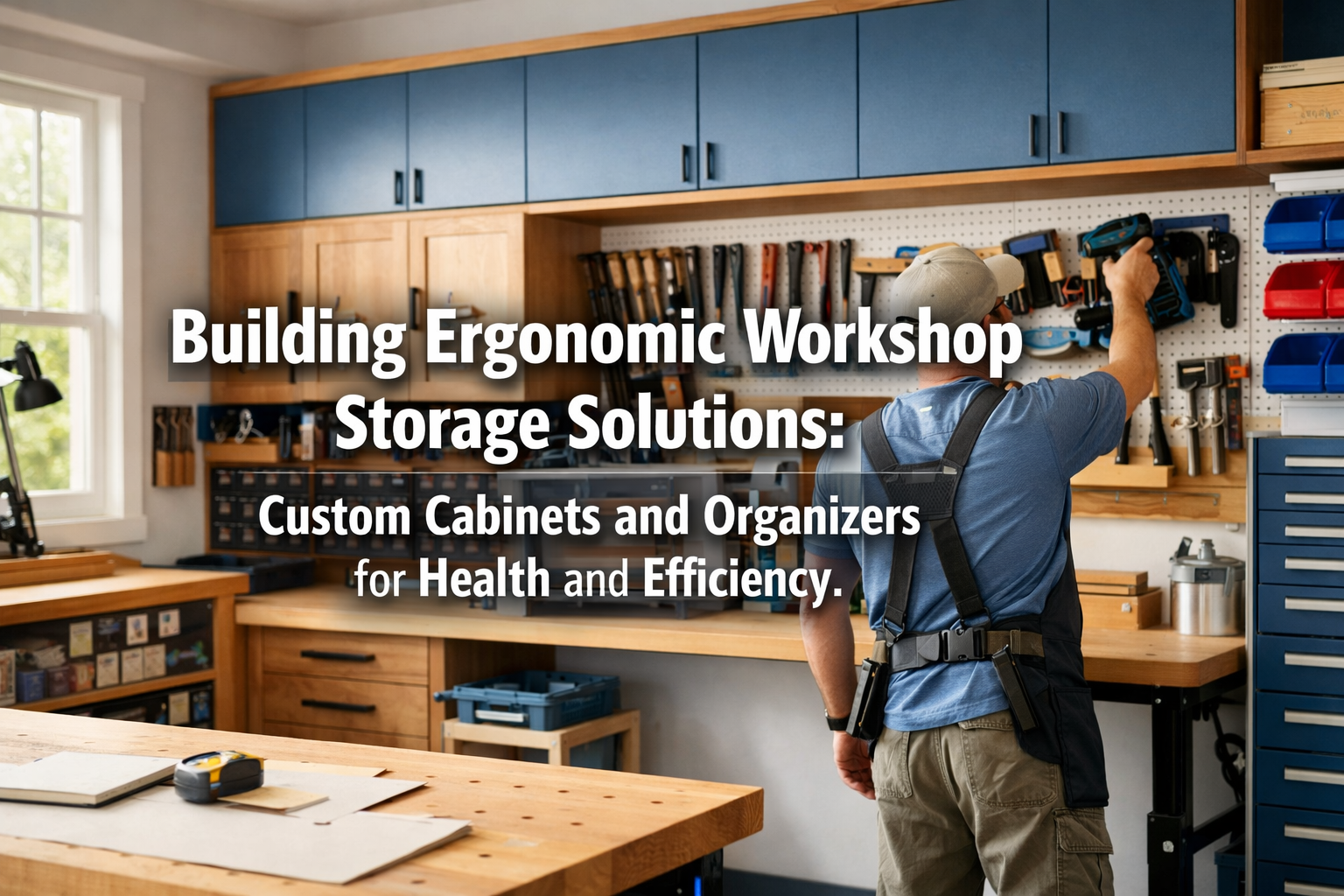
The modern workshop is more than just a place to build; it’s an environment where efficiency, safety, and personal well-being are paramount. In 2026, craftsmen and DIY enthusiasts alike are recognizing the critical importance of creating a workspace that supports their health and optimizes their workflow. This is where Building Ergonomic Workshop Storage Solutions: Custom Cabinets and Organizers for Health and Efficiency comes into play. By thoughtfully designing and implementing storage that reduces strain, minimizes wasted motion, and keeps everything within easy reach, you can transform your workshop from a chaotic clutter zone into a beacon of productivity and comfort.
Imagine a workshop where every tool has its dedicated, easily accessible spot, where heavy items can be moved without back strain, and where your workflow flows seamlessly from one task to the next. This isn’t just a dream; it’s an achievable reality through smart ergonomic design. This comprehensive guide will explore the principles, practicalities, and creative possibilities of building custom storage solutions that prioritize your health and supercharge your workshop’s efficiency.
Key Takeaways
- Prioritize Ergonomics: Design storage to minimize bending, reaching, and heavy lifting, ensuring tools and materials are at comfortable working heights.
- Customization is Key: Tailor cabinets, drawers, and organizers to your specific tools and workflow, maximizing space and accessibility.
- Modular and Adaptable Systems: Incorporate modularity to allow for future expansion and reorganization as your tool collection and project needs evolve.
- Smart Lumber and Material Storage: Implement systems for safe and efficient storage of raw materials, protecting them while keeping them accessible.
- Embrace Technology and Organization: Utilize labeling, shadow boards, and integrated charging stations to enhance workflow and maintain order.
Understanding Ergonomics in Workshop Design and Building Ergonomic Workshop Storage Solutions: Custom Cabinets and Organizers for Health and Efficiency
Ergonomics, at its core, is the science of designing and arranging workplaces, products, and systems so that they fit the people who use them. In a workshop, this translates to reducing physical stress, preventing injuries, and improving overall comfort and performance. When you are Building Ergonomic Workshop Storage Solutions: Custom Cabinets and Organizers for Health and Efficiency, you are proactively investing in your long-term well-being and productivity.
The goal is to create a dynamic environment that minimizes awkward postures, repetitive motions, and excessive force. Consider the following core principles:
- Reach Zones: Categorize items by how often they are used. Frequently used tools should be in the “primary reach zone” (within arm’s length without stretching). Less frequent items can be in the “secondary reach zone” (requires a slight lean or step) or “occasional reach zone.”
- Working Heights: Ensure your primary workbench and assembly areas are at an appropriate height for you, reducing strain on your back and shoulders. Adjustable height workbenches are an excellent ergonomic investment. For guidance on creating an ideal workspace, see our article on Building a Compact and Ergonomic Workbench for Small Workshops.
- Weight Management: Heavy tools and materials should be stored at waist height or on mobile carts to avoid lifting from the floor or above shoulder height.
- Visibility and Accessibility: All items should be easily visible and accessible without having to move multiple other items. This is where custom organizers truly shine.
Planning Your Ergonomic Layout
Before you cut a single piece of wood for your custom cabinets, a thorough planning phase is essential.
{{IMG_SLOT_1}}
- Inventory Your Tools and Materials: List every tool, jig, and material you have. Categorize them by frequency of use, size, weight, and type (e.g., hand tools, power tools, fasteners, lumber).
- Map Your Workflow: Observe how you move around your shop during typical projects. Identify bottlenecks, unnecessary steps, and areas where you frequently cross paths.
- Sketch Your Space: Draw a scaled floor plan of your workshop. Experiment with different layouts for your workstations, major machinery, and potential storage areas. Consider the flow of work from raw material storage to finished product assembly.
- Define Reach Zones: Mark primary, secondary, and occasional reach zones around your main workstations. This will dictate where specific tools and supplies should be stored.
“A well-designed workshop isn’t just tidy; it’s a finely tuned machine that amplifies the craftsman’s skill and protects their body.”
Choosing the Right Materials
For custom cabinets and organizers, the choice of materials impacts durability, cost, and aesthetics.
| Material | Pros | Cons | Best Use Cases |
|---|---|---|---|
| Plywood | Stable, strong, relatively inexpensive, easy to work | Edges can be unsightly (needs edge banding) | Carcasses, shelves, drawer boxes, large panels |
| MDF | Very smooth, stable, takes paint well, inexpensive | Heavy, susceptible to moisture, not good for joinery | Cabinet doors, drawer fronts (painted), jigs, temporary fixtures |
| Solid Wood | Durable, beautiful, repairable, prestige | Expensive, can warp/move with humidity, harder to work | Drawer fronts (natural finish), cabinet doors, heavy-duty work surfaces, accents |
| Melamine | Durable, easy to clean, stable | Edges chip easily, heavy, limited color choices | Cabinet interiors, shelving, work surfaces where spills are common |
For robust cabinet construction, especially in a workshop environment, understanding materials like plywood is key. You can learn more about this in our article on 12 Plywood Cabinets: Understanding Construction Techniques and Maintenance.
Designing and Building Ergonomic Workshop Storage Solutions: Custom Cabinets and Organizers
Once your planning is complete, it’s time to bring your vision to life. The core of Building Ergonomic Workshop Storage Solutions: Custom Cabinets and Organizers for Health and Efficiency lies in creating tailored storage that perfectly fits your needs.
Custom Cabinets: The Foundation of Organization
Custom cabinets provide enclosed storage, protecting tools from dust and allowing for a clean aesthetic.
Base Cabinets: Design these with drawers and shelves appropriate for their contents.
- Deep Drawers: Ideal for power tools, often with custom foam inserts or dividers to prevent tools from shifting and knocking together. Ensure drawers glide smoothly and fully extend for easy access.
- Shallow Drawers: Perfect for hand tools, measuring devices, and smaller jigs. Consider organizing these with dividers or custom inserts for specific tools. Learn more about advanced drawer construction in Mastering Dovetail Drawers for Cabinets.
- Adjustable Shelves: Provide flexibility for storing varying sizes of equipment or project materials.
Wall-Mounted Cabinets: Keep frequently used hand tools and supplies off the workbench, freeing up valuable surface area.
- Glass Doors (Optional): If you want to see contents at a glance while keeping dust out.
- Open Shelving: For quick grab-and-go items. For more ideas on efficient wall storage, explore Smart Workshop Storage Solutions: Maximizing Small Spaces with Modular Systems and DIY Organizers.
{{IMG_SLOT_2}}
Specialized Organizers for Maximum Efficiency
Beyond standard cabinets, specialized organizers are crucial for an ergonomic and efficient workshop.
Tool Walls and Shadow Boards:
- Pegboard/French Cleat Systems: Highly versatile for wall-mounted tools. A French cleat system is particularly strong and allows for easy repositioning of storage units.
- Shadow Boards: Trace the outline of each tool directly on the pegboard or wall. This makes it immediately obvious when a tool is missing and ensures everything is returned to its proper place, reducing search time and clutter. 🛠️
Fastener and Hardware Storage:
- Drawer Dividers: Custom-fit dividers for various sizes of screws, nails, bolts, and washers.
- Clear Bins/Containers: Allow for quick visual identification of contents. Mount these on shelves or within drawers.
- Tilt-Out Bins: Space-saving and ergonomic, allowing access to small parts without opening full drawers.
Lumber and Sheet Goods Storage:
- Vertical Racks: Ideal for long lumber, keeping it organized and preventing warping. Ensure easy access without heavy lifting.
- Horizontal Racks: For sheet goods (plywood, MDF). Consider a mobile cart with vertical slots or a dedicated area that allows for easy retrieval, perhaps even a hoist system for heavier sheets.
- Offcut Bins: Keep small scraps organized by species or size, making it easy to find suitable pieces for smaller projects, aligning with strategies for Turning Shop Scraps into Design Features.
Mobile Carts and Workstations:
- Roll-Away Tool Carts: Keep frequently used tools on a mobile cart that can be moved to your current work area, reducing trips across the shop.
- Assembly Tables on Casters: Easily repositionable for various project sizes or to clear space. Ensure locking casters for stability.
- Dust Collection Carts: Mobile units for shop vacuums or smaller dust collectors, reducing hose runs and improving flexibility. Consider solutions like the 14 Gal RIDGID Shop Vac on a dedicated cart.
Enhancing Efficiency and Safety Through Smart Organization
The final step in Building Ergonomic Workshop Storage Solutions: Custom Cabinets and Organizers for Health and Efficiency is to integrate smart organization strategies that streamline your work and enhance safety.
Labeling and Inventory Systems
- Clear Labeling: Every drawer, bin, and shelf should be clearly labeled. Use large, legible fonts or even color-coding. This dramatically reduces time spent searching for items.
- Inventory Management: For larger shops or extensive collections, consider a simple digital inventory system. Knowing exactly where every item is stored saves valuable time and prevents duplicate purchases.
{{IMG_SLOT_3}}
Integrated Charging Stations and Power Management
- Dedicated Charging Areas: Designate a specific cabinet or shelf with integrated power strips for charging cordless tool batteries. This keeps chargers off your workbench and organizes cables.
- Cord Management: Route power cords for stationary tools efficiently to avoid trip hazards. Consider ceiling-mounted power reels.
Lighting and Environmental Control
While not strictly storage, good lighting and environmental control are crucial ergonomic factors.
- Task Lighting: Supplement general overhead lighting with adjustable task lighting at your workbench, lathe, or specific machine areas.
- Dust Collection: An effective dust collection system is vital for respiratory health. Ensure machines are connected and collection points are easily accessible for emptying. For example, understanding components like the Delta Table Saw Wrench for maintenance also implies proper dust extraction around the blade.
- Temperature and Humidity Control: Protecting your tools and materials from extreme temperature swings and humidity helps maintain their condition and prevents warping of wood stock.
Maintenance and Continuous Improvement
An ergonomic workshop isn’t a one-time build; it’s an ongoing process.
- Regular Decluttering: Periodically go through your tools and materials. Get rid of broken items, dispose of expired finishes, and organize misplaced tools.
- Adapt as You Grow: As your skills evolve and your tool collection expands, your storage needs will change. Modular systems make it easier to reconfigure and expand your setup without a complete overhaul.
- Seek Feedback: If others use your workshop, ask for their input on what works well and what could be improved ergonomically.
By consistently applying these principles, you’ll ensure your workshop remains a healthy, efficient, and inspiring space for all your woodworking endeavors in 2026 and beyond.
Conclusion
Building Ergonomic Workshop Storage Solutions: Custom Cabinets and Organizers for Health and Efficiency is an investment that pays dividends in comfort, productivity, and personal well-being. By taking the time to plan, design, and construct storage systems that truly fit your workflow and tools, you transform your workshop into an optimized environment. From custom drawers for power tools to easily accessible wall organizers and intelligent lumber storage, every element contributes to a space where you can work smarter, safer, and with greater enjoyment.
Start by assessing your current workshop, identifying pain points, and envisioning a more streamlined process. Then, armed with the principles of ergonomics and the flexibility of custom design, begin to build the workshop of your dreams – a place where health and efficiency go hand in hand.