
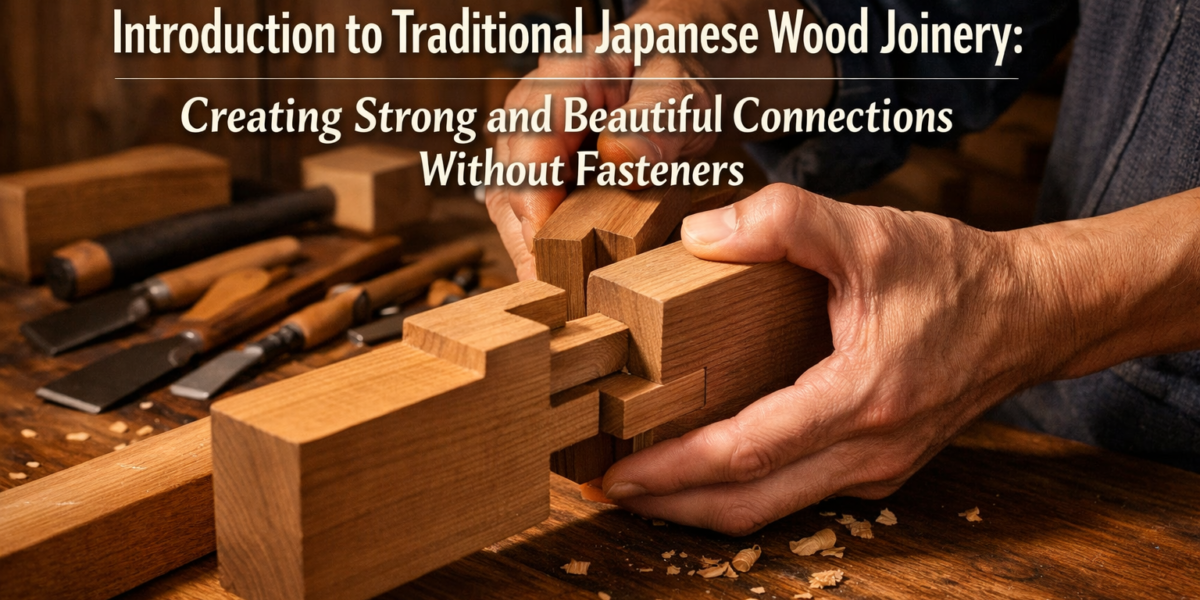
For centuries, structures across Japan, from majestic temples to humble tea houses, have withstood earthquakes and the test of time not through nails, screws, or modern adhesives, but through an intricate dance of wood meeting wood. This enduring legacy stems from traditional Japanese wood joinery, a sophisticated art form that creates incredibly strong and beautiful connections without fasteners. In 2026, as woodworking enthusiasts increasingly seek both durability and aesthetic purity, understanding these time-honored techniques offers a profound pathway to elevating one’s craft. This article provides an Introduction to Traditional Japanese Wood Joinery: Creating Strong and Beautiful Connections Without Fasteners, exploring its philosophy, fundamental joints, and the tools required to embark on this rewarding journey.
Key Takeaways
- Historical Resilience: Japanese wood joinery has enabled structures to endure for over a thousand years through ingenious design, not fasteners.
- Aesthetic & Strength: This craft prioritizes both visual elegance and structural integrity, resulting in connections that are both beautiful and incredibly strong.
- Fundamental Joints: Basic joints like the half-lap and mortise and tenon form the foundation for more complex joinery.
- Precision is Paramount: Success in Japanese joinery hinges on meticulous measurement and accurate cuts.
- Minimalist Philosophy: The absence of fasteners aligns with a minimalist approach, celebrating the natural beauty of wood.
Understanding the Philosophy Behind Japanese Wood Joinery
The essence of traditional Japanese wood joinery goes far beyond simply connecting two pieces of wood. It embodies a philosophy rooted in harmony with nature, respect for materials, and meticulous craftsmanship. Unlike Western joinery which often relies on mechanical fasteners to bear the load, Japanese joinery designs joints where the wood fibers themselves interlock, distributing stress evenly and allowing the structure to flex and adapt, particularly important in an earthquake-prone region.
This approach views wood as a living material, honoring its unique grain, strength, and movement. Craftsmen carefully select specific pieces of timber, often “reading” the grain to determine how it will perform within a joint. The goal is to create a connection so precise that the assembled pieces appear as one, their union a testament to skill and patience rather than overt mechanical force. This seamless integration contributes to the understated elegance characteristic of traditional Japanese architecture and furniture.
Furthermore, Japanese joinery promotes sustainability. By minimizing waste and maximizing the inherent strength of wood, it offers a timeless method of construction that is both efficient and environmentally conscious. The ability to disassemble and reassemble structures, a feature of many traditional joints, also speaks to a long-term view of craftsmanship and repair. This pursuit of purity and integrity in construction makes an Introduction to Traditional Japanese Wood Joinery: Creating Strong and Beautiful Connections Without Fasteners a fascinating study for any woodworker.
Fundamental Joints: The Building Blocks of Unfastened Connections
To truly appreciate the depth of Japanese joinery, one must start with its foundational elements. While thousands of variations exist, several key joints form the basis for creating strong, beautiful, and fastener-free connections. Mastering these simpler joints is the first step towards tackling more complex designs.
The Half-Lap Joint
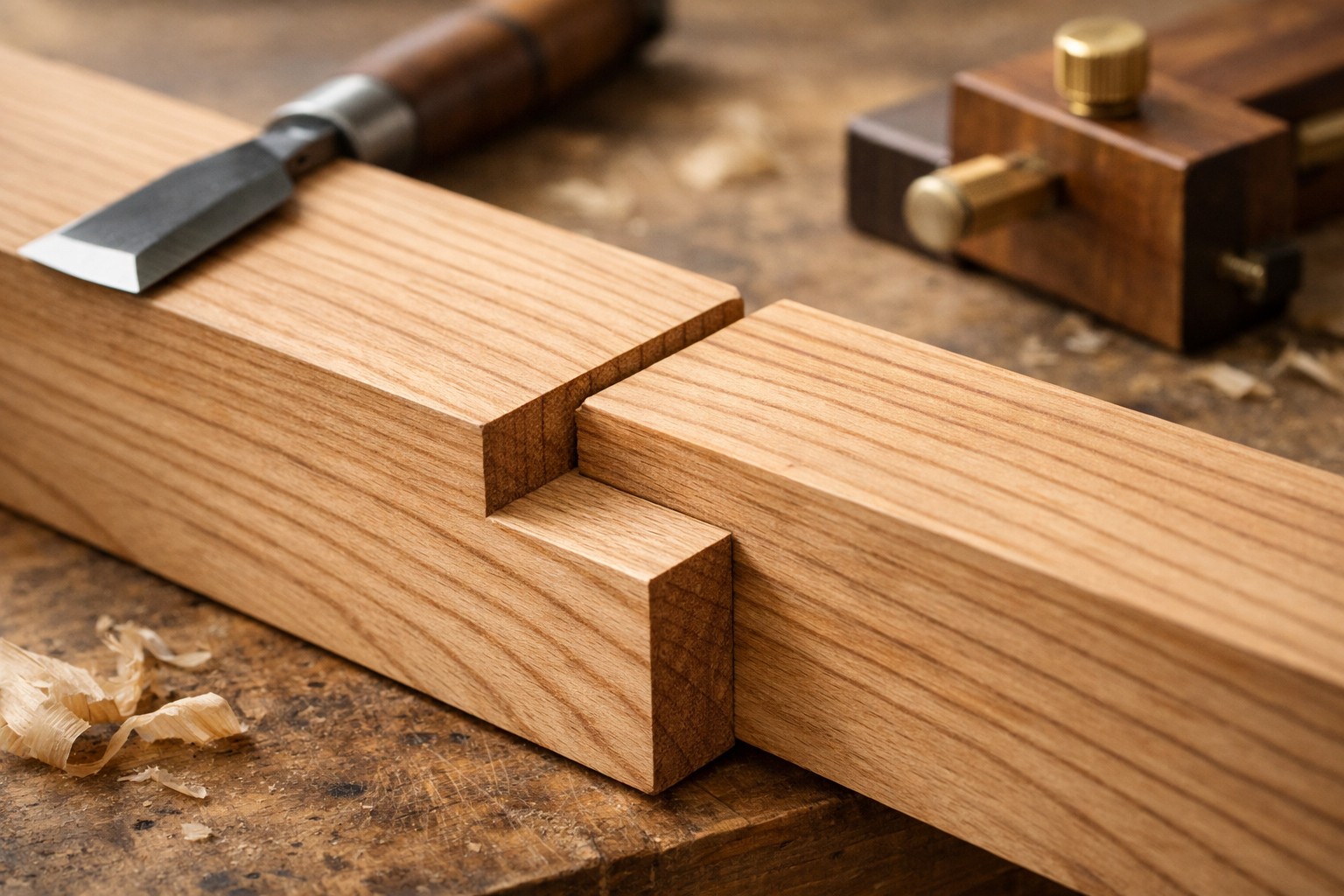
One of the most straightforward yet versatile Japanese joints is the half-lap. It’s an excellent starting point for beginners. This joint involves removing half the thickness of the wood from the end of two pieces, allowing them to overlap and create a flush surface when joined.
Types of Half-Lap Joints:
| Type of Half-Lap | Description | Common Application |
|---|---|---|
| End Lap | Material is removed from the end of two boards, which then overlap. | Framing, light-duty structures, simple boxes. |
| Cross Lap | Material is removed from the middle of one board and the end of another, allowing them to cross and sit flush. | Creating grid patterns, table stretchers, frames. |
| Middle Lap | Material is removed from the middle of two boards, allowing them to cross and sit flush. This creates a strong intersection within a larger framework. | Structural framing, ladder construction. |
The strength of a half-lap joint comes from the large gluing surface it provides, even though in traditional Japanese practice, glue is often minimal or entirely absent, relying instead on the precise fit. When cut accurately, a half-lap can be remarkably strong, distributing forces over a wider area.
The Mortise and Tenon Joint
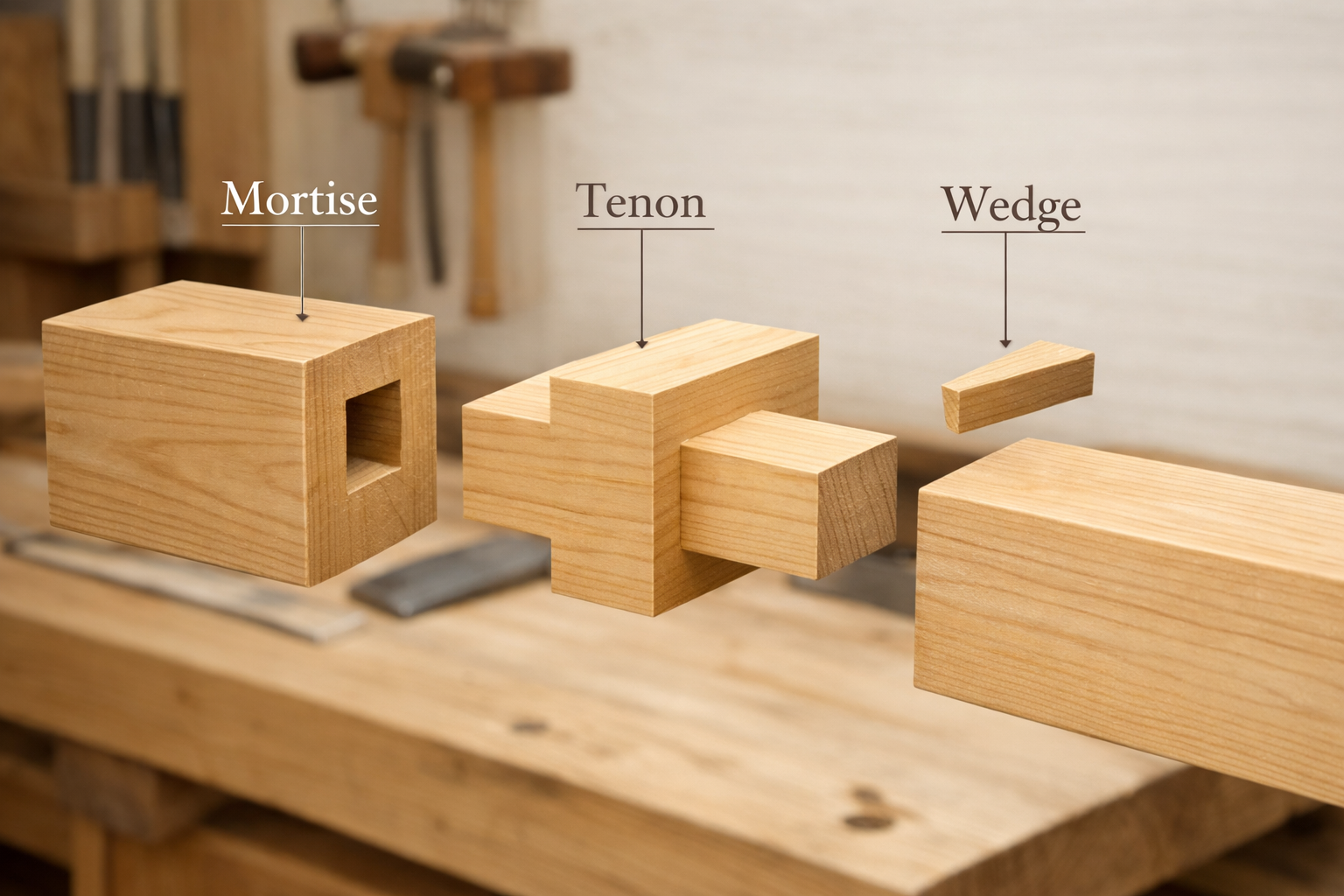
The mortise and tenon joint is a cornerstone of traditional Japanese joinery and woodworking worldwide, renowned for its incredible strength and versatility. It consists of two primary components:
- Mortise: A hole or slot cut into one piece of wood (the mortise piece).
- Tenon: A projecting piece shaped to fit perfectly into the mortise, typically at the end of another piece of wood (the tenon piece).
The magic of the mortise and tenon lies in its ability to resist pulling forces and prevent racking. When cut with precision, the fibers of both pieces interlock, creating a robust mechanical connection. Japanese craftsmen often incorporate subtle angles, wedges, or keys into their mortise and tenon joints, making them even stronger and, in some cases, allowing for easy disassembly and reassembly without damage. These variations highlight the ingenuity behind creating strong and beautiful connections without fasteners.
Variations of Mortise and Tenon:
- Through Mortise and Tenon: The tenon passes completely through the mortise piece, often visible on the opposite side. It can be wedged for added strength.
- Blind Mortise and Tenon: The tenon does not pass all the way through, remaining hidden. This offers a cleaner aesthetic.
- Haunched Mortise and Tenon: A small shoulder (haunch) is left on the tenon, preventing it from twisting within the mortise and providing extra gluing surface.
- Tusk Tenon: A wedge (tusk) is driven through a slot in the tenon after it passes through the mortise, locking the joint securely.
For anyone looking to deepen their understanding of robust joinery, exploring more advanced techniques like the dovetail joint provides excellent progression. You can learn more about Mastering Dovetail Joints with Hand Tools: A Step-by-Step Guide for flawless wood joinery.
Tools and Techniques for Japanese Wood Joinery
Achieving the precision required for traditional Japanese wood joinery demands not only skill but also the right tools and a disciplined approach to technique. While power tools can assist with initial milling, the refinement and final fit of these joints are almost exclusively accomplished with hand tools.
Essential Hand Tools
The beauty of traditional Japanese woodworking lies in its reliance on a relatively simple yet highly effective set of hand tools:
- Japanese Saws (Nokogiri): Unlike Western saws that cut on the push stroke, Japanese saws cut on the pull stroke. This allows for thinner blades and finer, more accurate cuts with less effort.
- Ryoba: A double-edged saw with rip teeth on one side and crosscut teeth on the other.
- Dozuki: A backsaw with a rigid spine, used for very fine, precise cuts, especially for tenons and dovetails.
- Chisels (Nomi): Japanese chisels are known for their exceptional sharpness and robust construction. They are used for paring, chopping out mortises, and refining joint surfaces.
- Oire Nomi: General-purpose bench chisels.
- Tsuki Nomi: Paring chisels with longer blades for reaching into deep mortises.
- Planes (Kanna): Japanese planes are also pull-stroke tools, producing exceptionally smooth surfaces. They are crucial for fine-tuning the thickness of tenons or the flatness of mortise walls.
- Marking Tools: Precision marking is paramount.
- Keshiki: Marking gauges for scribing parallel lines.
- Sumi-Sashi (Ink Line): A traditional Japanese ink line for marking long, straight lines.
- Sashigane (Try Square): A highly accurate steel square for marking right angles and measuring.
- Mallets (Genno): Used in conjunction with chisels for chopping out waste.
For those interested in exploring more about woodworking tools, including chisels and planes, consider reading an Introduction to Wood Carving for Beginners: Tools, Techniques, and simple projects to get started.
Key Techniques
Mastering traditional Japanese joinery requires developing specific techniques and a disciplined approach:
- Accurate Marking: Every joint begins with precise marking. Use sharp pencils, marking knives, and gauges to define every cut line clearly. “Measure twice, cut once” is an understatement; in Japanese joinery, it’s “measure five times, cut once.”
- Sawing with Control: Learn to guide the pull saw with a light touch, letting the saw do the work. Focus on maintaining a straight line and consistent depth.
- Chiseling Precision: Use chisels to remove waste efficiently and, more importantly, to pare down surfaces to the exact dimensions required. Holding the chisel correctly and understanding grain direction are critical. For advanced techniques, see Mastering the Router Table: Essential Jigs, Safety, and Advanced Techniques for Precision Joinery and Edges.
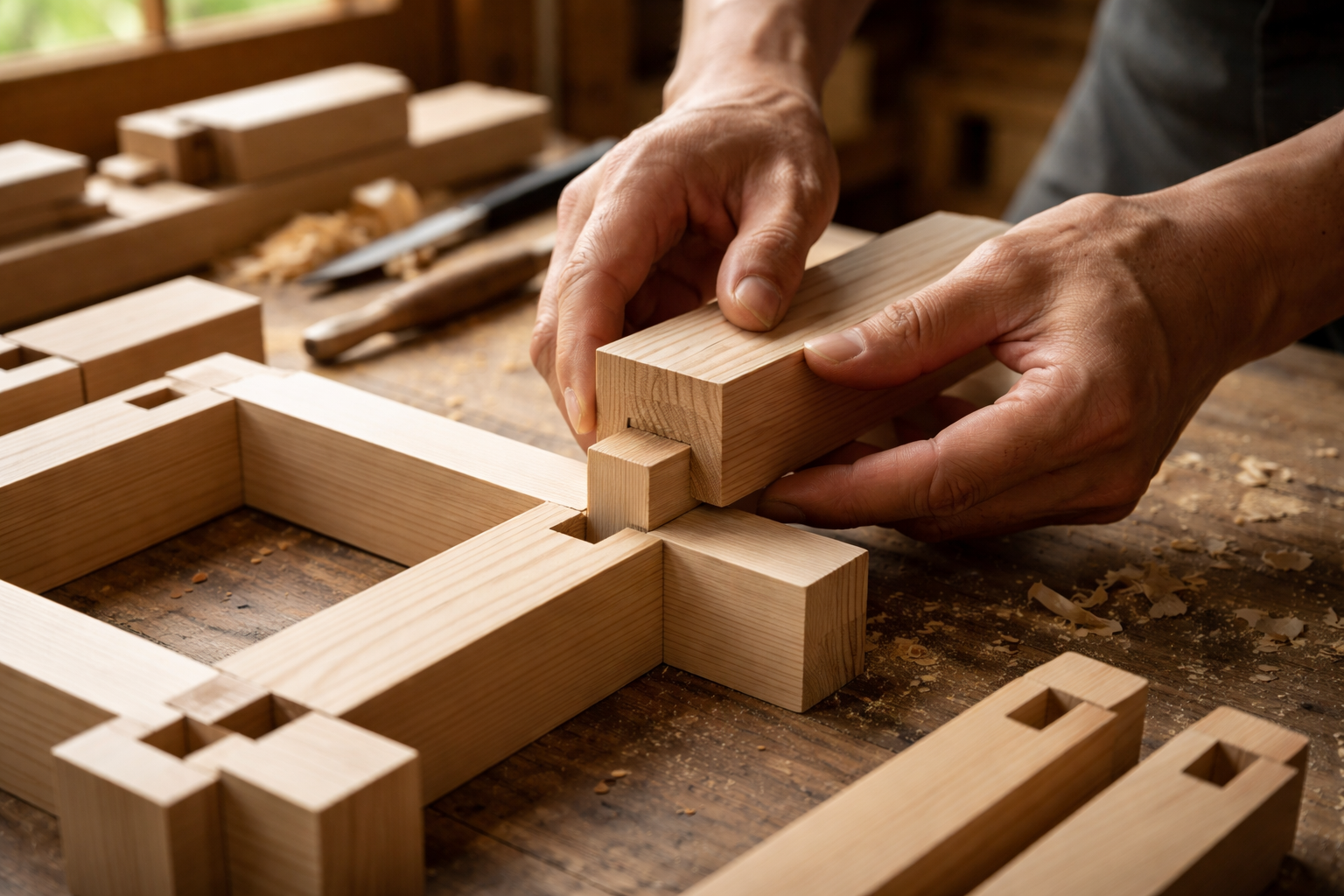
- Test Fitting: Unlike relying on glue to fill gaps, Japanese joints require a perfect, friction-fit. Test fit frequently, making minuscule adjustments until the joint slides together smoothly but firmly, often requiring a gentle tap with a mallet.
- Grain Direction Awareness: Always consider the wood’s grain. Cutting with the grain (rip cut) and across the grain (crosscut) requires different approaches and can significantly impact the joint’s strength and appearance.
The emphasis on hand tools and meticulous technique is what truly sets this craft apart. It’s a meditative process that fosters patience and a deep connection to the material. As you delve deeper, you’ll find that the rewards extend beyond functional structures to a profound sense of accomplishment and appreciation for this ancient art form.
The Enduring Appeal of Unfastened Connections in 2026
In an era dominated by rapid manufacturing and disposable goods, the principles of traditional Japanese wood joinery resonate more strongly than ever in 2026. The ability to create structures and furniture that are not only durable but also inherently beautiful, without the reliance on visible metal fasteners or excessive adhesives, aligns perfectly with contemporary values of sustainability, craftsmanship, and minimalist aesthetics.
The demand for handcrafted, authentic pieces with visible artistry continues to grow. Projects that incorporate sophisticated joinery, such as the ones discussed in this Introduction to Traditional Japanese Wood Joinery: Creating Strong and Beautiful Connections Without Fasteners, stand out. Imagine crafting a unique wooden gift box or a custom picture frame using a hidden Japanese joint; such items possess a narrative and a quality that mass-produced alternatives simply cannot match. For ideas on applying advanced joinery, explore Beyond the Basic Box: Advanced Joinery for Unique Wooden Gift Boxes.
Beyond aesthetics, the practical benefits remain significant. Joints that rely on mechanical fit rather than glue alone are often more resistant to environmental changes like humidity fluctuations, which can stress and break adhesive bonds. Furthermore, the inherent design allows for potential disassembly and repair, extending the lifespan of an object and supporting a circular economy ethos.
This craft is not just for grand temples; it’s accessible for smaller, everyday projects. From elegant wooden candle holders to intricate wall-mounted coat racks, incorporating a Japanese joint can elevate the simplest item into a work of art. For inspiration, consider Wall-Mounted Coat Racks: Functional Art for Entryways with Hidden Hardware. The journey into Japanese joinery is one of continuous learning and refinement, offering endless possibilities for creative expression and a deeper appreciation for the timeless strength of wood.
Conclusion
Traditional Japanese wood joinery represents a pinnacle of woodworking artistry and engineering, offering a compelling alternative to modern fastener-dependent construction. This Introduction to Traditional Japanese Wood Joinery: Creating Strong and Beautiful Connections Without Fasteners has touched upon its underlying philosophy, introduced fundamental joints like the half-lap and mortise and tenon, and outlined the essential tools and techniques required.
Embracing this ancient craft is more than just learning new ways to connect wood; it’s about cultivating patience, precision, and a profound respect for materials. In 2026, as woodworkers increasingly value authenticity and durability, the elegance of unfastened connections offers an unparalleled opportunity to infuse projects with unique strength and beauty.
Actionable Next Steps:
- Invest in Quality Hand Tools: Start with a good Japanese pull saw and a set of sharp chisels. Quality tools are an investment that pays dividends in accuracy and enjoyment.
- Practice Fundamental Joints: Begin with the half-lap joint. Cut it repeatedly until you can achieve a tight, accurate fit consistently. Then move on to basic mortise and tenon.
- Study and Observe: Seek out resources, books, and videos dedicated to Japanese joinery. Observe how master craftsmen use their tools and approach their work.
- Start Simple Projects: Apply your newfound skills to small projects. Even a simple frame or a small box can be greatly enhanced by a well-executed unfastened joint. Consider exploring Profitable Beginner Woodworking: Picture Frames, Cutting Boards, and Kitchen Products that Sell Fast for ideas.
- Embrace Patience: This craft demands patience. Do not rush. Each cut, each paring stroke, contributes to the final precision of the joint.
By delving into the world of traditional Japanese wood joinery, you’re not just learning a technique; you’re connecting with centuries of wisdom and craftsmanship, ready to create pieces that will stand strong and beautiful for generations to come.