
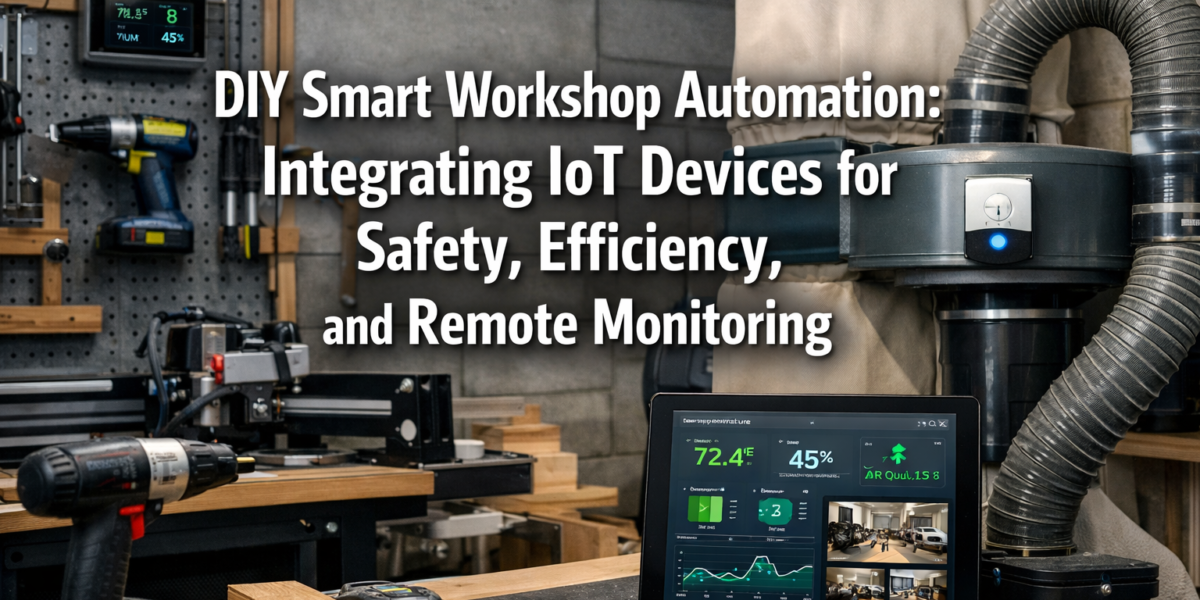
A startling 87% of workshop accidents could be prevented with better real-time monitoring and automation. For the dedicated craftsperson, a workshop is a sanctuary for creativity, but it often comes with inherent risks from dust, noise, and powerful machinery. This article dives into the practical world of DIY Smart Workshop Automation: Integrating IoT Devices for Safety, Efficiency, and Remote Monitoring, transforming traditional workspaces into intelligent, responsive environments. By leveraging the Internet of Things (IoT), woodworkers can not only mitigate hazards but also streamline operations and maintain peace of mind, even when away from their tools.
Key Takeaways
- Enhanced Safety: IoT sensors can provide real-time alerts for air quality, smoke, and tool status, preventing accidents and promoting a healthier workspace.
- Improved Efficiency: Smart lighting, automated dust collection, and tool tracking systems optimize workflow, saving time and reducing manual intervention.
- Remote Monitoring: Access to camera feeds, environmental data, and device controls from anywhere offers peace of mind and proactive management.
- Cost-Effective Solutions: Many IoT devices are affordable and easy to integrate, making smart automation accessible for DIY enthusiasts.
- Scalable Customization: Start with basic automations and gradually expand your smart workshop capabilities to fit your evolving needs.
Enhancing Safety with IoT in Your Workshop
Safety is paramount in any woodworking environment. Integrating IoT devices can act as an extra layer of vigilance, providing real-time data and automated responses to potential dangers. This proactive approach to workshop safety ensures a healthier and more secure creative space.
Air Quality Monitoring and Dust Collection Automation
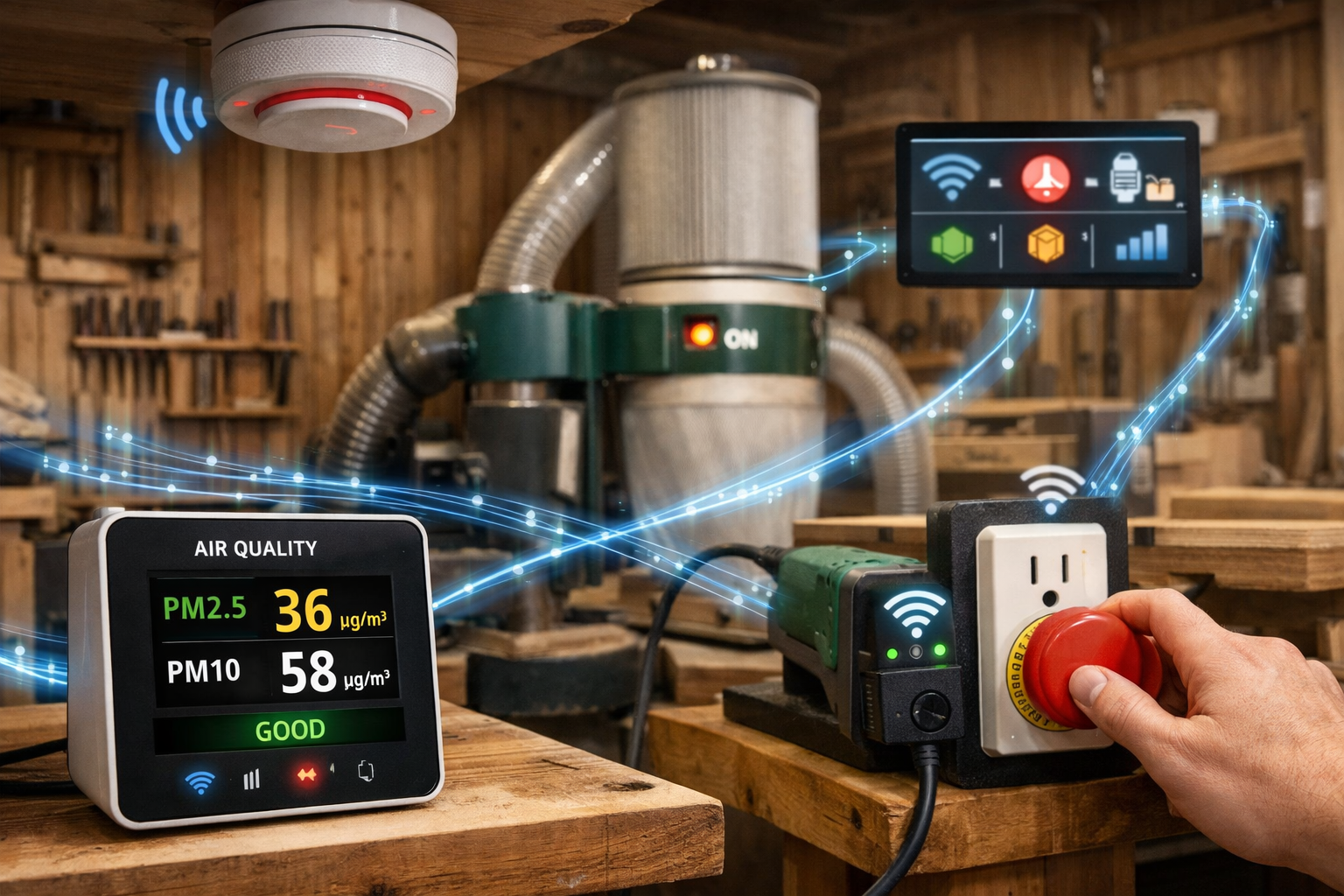
One of the most significant health risks in a woodworking shop is fine particulate dust. Prolonged exposure can lead to serious respiratory issues. IoT-enabled air quality sensors can continuously monitor the concentration of airborne particles. When dust levels exceed a predefined threshold, these sensors can:
- Trigger Smart Dust Collectors: Automatically activate your dust collection system or air filtration units.
- Send Alerts: Notify you via a smartphone app or smart speaker to don a respirator or take a break.
- Control Ventilation: Integrate with smart thermostats or smart vents to improve airflow when needed.
For instance, a particulate matter (PM2.5) sensor linked to a smart plug can power on your dust collector the moment you start sawing or sanding. This automation eliminates the need to manually switch on the system and ensures consistent air quality control.
| Device Type | Key Function | Integration Example |
|---|---|---|
| PM2.5 Air Quality Sensor | Detects fine airborne particles | Activates smart dust collector/air purifier when dust rises |
| Smart Plug | Controls power to tools/appliances remotely/automatically | Powers dust collector, turns off idle tools |
| Smart Smoke Detector | Detects smoke and carbon monoxide | Sends alerts, triggers smart lights/sirens |
| Smart CO Detector | Monitors carbon monoxide levels | Alerts occupants, activates ventilation |
Fire and Hazard Detection
Beyond dust, the risk of fire from electrical faults or spontaneous combustion of oily rags is a serious concern. Modern smart smoke and carbon monoxide (CO) detectors offer significant advantages over traditional alarms:
- Remote Notifications: Receive instant alerts on your phone, even if you’re not in the workshop.
- Interconnected Systems: If one alarm goes off, all linked alarms can sound, ensuring everyone is aware.
- Integration with Smart Lighting: In an emergency, smart lights can flash or change color to guide occupants to exits.
- Temperature Monitoring: Some devices can track temperature, alerting you to abnormal heat increases that might precede a fire.
Consider integrating a smart smoke detector with your workshop’s overall smart home system. If an alarm sounds, it could automatically unlock doors, flash exterior lights, or even shut down power to specific circuits, enhancing emergency response.
Smart Tool Monitoring and Safety Controls
IoT can also make your power tools smarter and safer.
- Smart Power Strips/Plugs: Connect high-draw tools to smart plugs. These can be scheduled to turn off automatically after a certain period of inactivity, preventing accidental restarts or phantom power draw. They can also be remotely shut off in an emergency.
- Tool Usage Tracking: For shared workshops or educational settings, simple IoT tags can track tool checkout and return, ensuring accountability.
- Proximity Sensors (Future/Advanced DIY): While more complex, motion or proximity sensors could, in theory, trigger warnings or even temporary power shutdowns if a hand or body part gets too close to a running blade (though this requires significant engineering and should not replace traditional safety measures).
These integrations exemplify how DIY Smart Workshop Automation: Integrating IoT Devices for Safety, Efficiency, and Remote Monitoring can significantly reduce risks and create a safer working environment. For more tips on maintaining safety with power tools, check out our guide on Beginner’s Guide to Essential Woodworking Jigs: Improve Accuracy and Safety for Common Cuts.
Boosting Efficiency and Productivity with Smart Automation
A smart workshop isn’t just about safety; it’s also about working smarter, not harder. IoT devices can automate mundane tasks, optimize resource usage, and provide insights that lead to greater efficiency and productivity.
Smart Lighting Systems
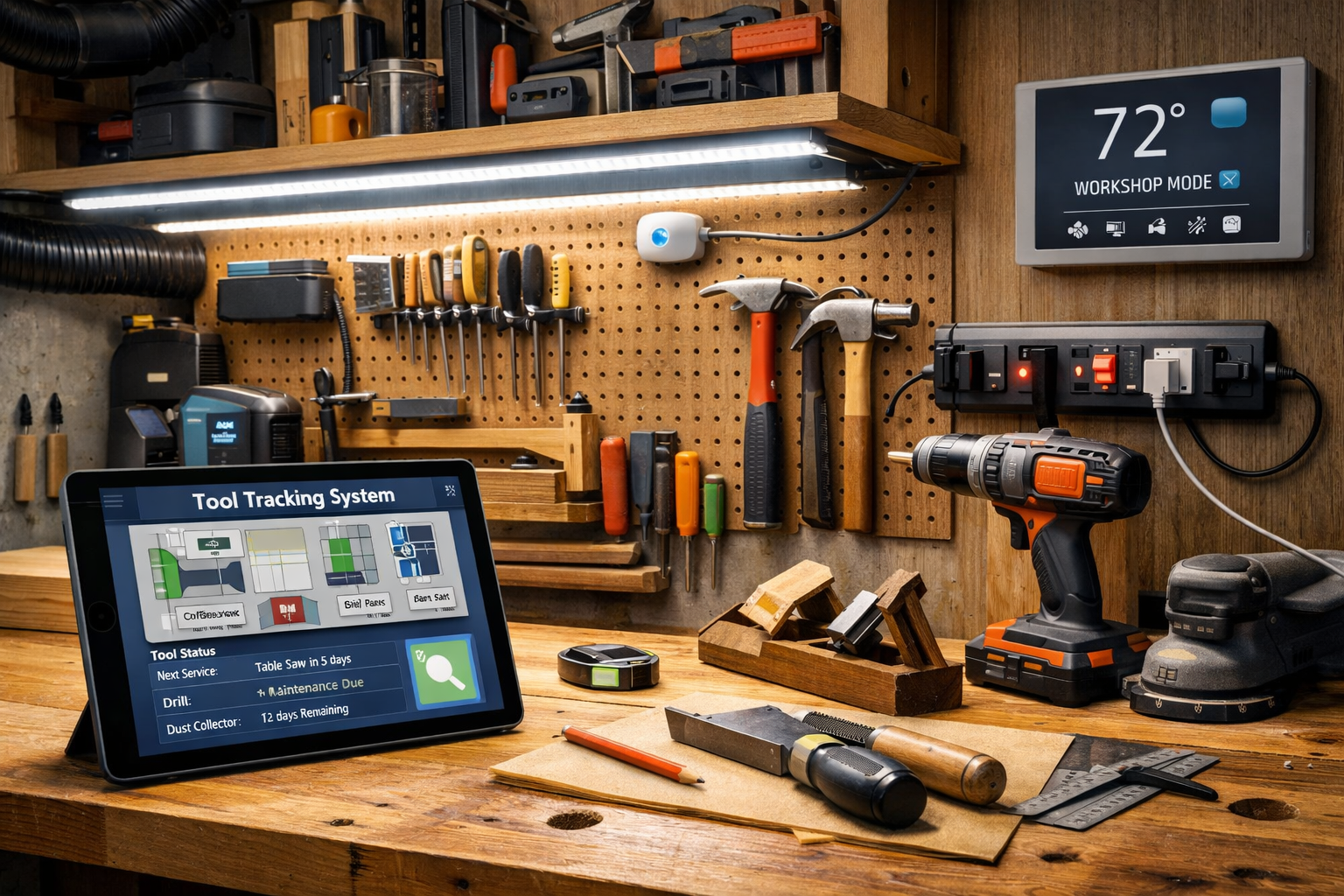
Proper lighting is crucial for precision work and reducing eye strain. Traditional workshop lighting often involves rows of fluorescent tubes or fixed LEDs, which may not adapt to different tasks. Smart lighting offers dynamic control:
- Adaptive Brightness: Sensors can detect ambient light and adjust workshop lights to maintain optimal illumination.
- Task-Specific Scenes: Program different lighting “scenes” for various tasks—e.g., bright, cool white for detailed joinery versus warmer, softer light for finishing work.
- Motion Activation: Lights can turn on automatically when you enter and off when you leave, saving energy.
- Voice Control: Easily adjust lighting without interrupting your workflow by using voice commands.
Imagine walking into your workshop, and the lights slowly brighten to your preferred setting. Or, as you transition from cutting to sanding, a simple voice command changes the illumination to reduce shadows and highlight dust. This not only boosts productivity but also reduces energy consumption.
Automated Climate Control
Maintaining a consistent temperature and humidity level is important for both your comfort and the longevity of your wood stock and tools. Extreme fluctuations can lead to wood movement and tool corrosion.
- Smart Thermostats: Integrate with your HVAC system to maintain optimal temperatures, often learning your schedule and conserving energy.
- Smart Hygrometers: Monitor humidity levels and can trigger smart dehumidifiers or humidifiers to protect your materials.
- Ventilation Control: Link climate sensors to smart fans or vents to improve airflow during dusty operations or high temperatures.
By keeping your workshop environment stable, you protect your valuable materials and create a more comfortable working condition. Learn more about optimizing your workspace with ergonomic solutions: Creating Ergonomic Workshop Furniture: Building Custom Workbenches,.
Tool and Material Tracking
Losing track of tools or running out of essential materials can halt a project. IoT can help keep your workshop organized:
- Bluetooth Trackers: Attach small Bluetooth tags to frequently misplaced hand tools (e.g., tape measures, chisels). Use an app to locate them quickly.
- Inventory Management (Advanced): For larger workshops, RFID tags or barcode systems can be integrated with smart shelves to track stock levels of wood, hardware, and consumables. When stock is low, the system can send reorder alerts.
- Automated Tool Check-Out/In: In shared spaces, IoT can automate the process of logging tool usage, ensuring tools are returned and identifying who used them last.
This level of DIY Smart Workshop Automation: Integrating IoT Devices for Safety, Efficiency, and Remote Monitoring minimizes downtime and maximizes the time you spend actually crafting. Efficient storage solutions are also key; consider our insights on Smart Workshop Storage Solutions: Maximizing Small Spaces with.
Remote Monitoring and Control for Peace of Mind
The ability to check in on your workshop from anywhere offers an unparalleled level of peace of mind. Whether you’re at work, on vacation, or simply in another part of your house, IoT enables you to stay connected and in control.
Live Camera Feeds and Security
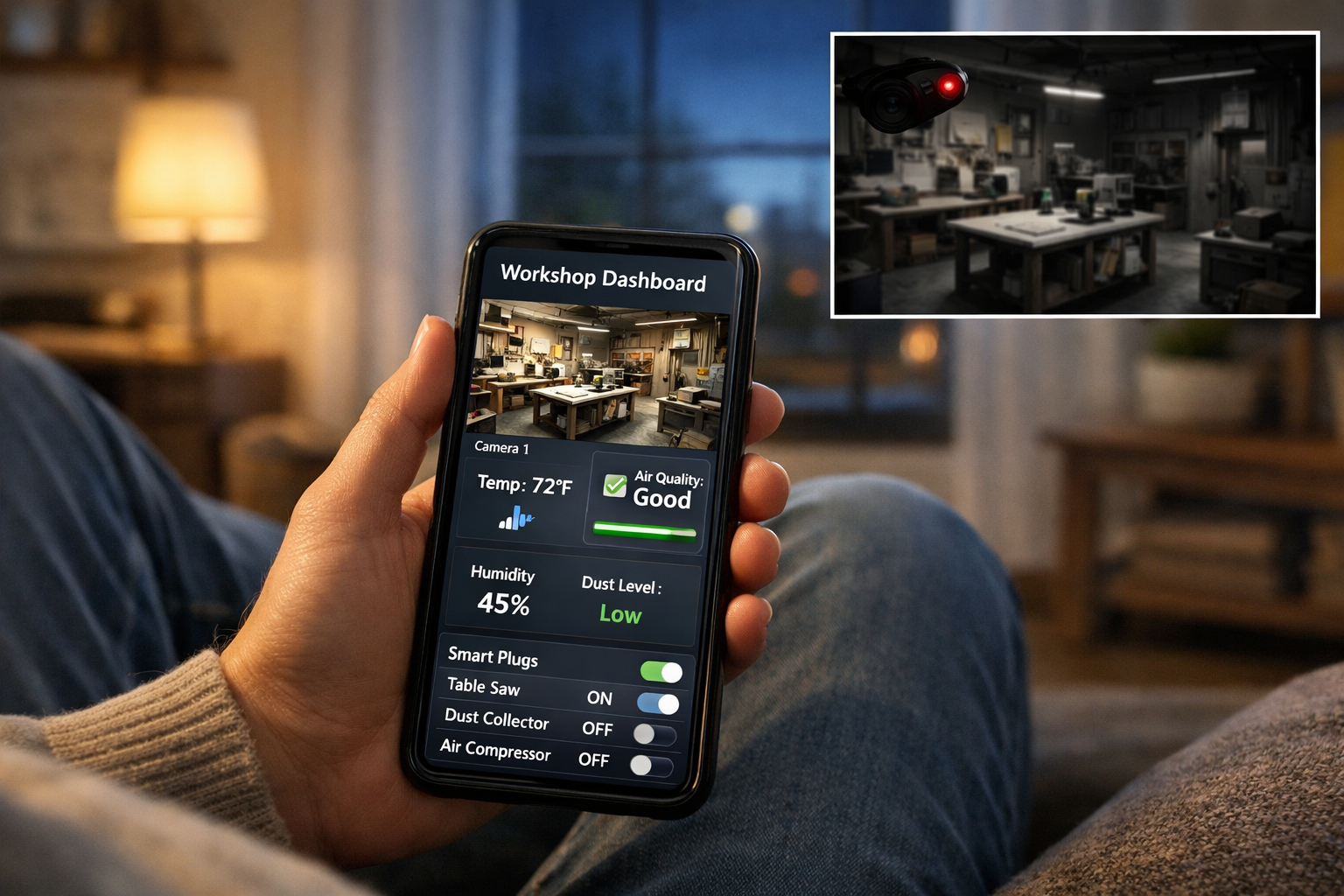
Installing smart security cameras in your workshop allows you to:
- Visual Verification: See what’s happening in real-time. Did you leave a tool running? Is there an unexpected visitor?
- Motion Detection Alerts: Receive notifications if there’s any movement in your workshop after hours.
- Two-Way Audio: Communicate with anyone in the shop, or simply deter intruders with a verbal warning.
- Recorded Footage: Review events, which can be invaluable for security or even for reviewing your own work processes.
A smart camera positioned to overlook your main workbench or entry point provides crucial visual oversight.
Environmental Monitoring from Afar
Beyond security, remote monitoring extends to environmental factors.
- Temperature and Humidity Checks: Verify that your climate control systems are working correctly, protecting your wood and tools from extreme conditions.
- Air Quality Reports: Confirm that your dust collection or air purification systems are effective, or that levels are safe before your next session.
- Water Leak Detection: Place smart leak sensors near sinks, water heaters, or any potential water source. Get an immediate alert if a leak is detected, preventing costly damage to your workshop and projects.
These capabilities mean you can proactively address issues, such as a sudden drop in temperature during a cold snap, or a spike in humidity that could warp your valuable lumber.
Remote Device Control
The power to control devices remotely is a cornerstone of smart automation.
- Power On/Off: Forgot to turn off the radio or a charging station? Use your smartphone to switch off smart plugs remotely.
- Appliance Scheduling: Schedule your air purifier to run for a few hours before you arrive, ensuring clean air upon entry.
- Lighting Control: Turn lights on or off, or adjust scenes, directly from your phone. This is particularly useful for making the workshop appear occupied for security purposes.
This level of remote control offered by DIY Smart Workshop Automation: Integrating IoT Devices for Safety, Efficiency, and Remote Monitoring not only enhances security but also optimizes energy consumption. Imagine receiving a notification that your dust collector ran for an hour after you left – you can simply tap your phone to turn it off, saving energy and preventing unnecessary wear.
Getting Started with DIY Smart Workshop Automation in 2026
Embarking on your smart workshop journey doesn’t require a complete overhaul. Start small, identify your most pressing needs (safety, efficiency, or monitoring), and gradually build out your system.
Choosing the Right Devices and Platform
- Identify Your Needs: What problems are you trying to solve? (e.g., “I need better dust control,” “I want to know if my workshop is secure.”)
- Research Compatible Devices: Look for devices that work with common smart home ecosystems (e.g., Amazon Alexa, Google Home, Apple HomeKit, or dedicated platforms like Home Assistant). Compatibility is key for seamless integration.
- Prioritize Simplicity: Start with easy-to-install devices like smart plugs, smart bulbs, and basic sensors.
- Consider Connectivity: Most IoT devices use Wi-Fi, Zigbee, or Z-Wave. Wi-Fi is often simplest, but Zigbee/Z-Wave can be more reliable for larger setups with many devices.
Simple Automation Projects for Beginners
- Automated Dust Collection: Smart plug + PM2.5 sensor. When dust rises, dust collector turns on.
- Smart Lighting: Smart bulbs/light strips + motion sensor. Lights on when you enter, off when you leave.
- Remote Security Camera: Standalone Wi-Fi camera with motion alerts.
- Climate Monitoring: Smart thermometer/hygrometer that sends alerts if limits are exceeded.
Remember to prioritize devices that offer robust security features and regular firmware updates to protect your network. As you become more comfortable, you can explore more advanced integrations and custom automations using platforms like IFTTT (If This Then That) or Home Assistant for greater control.
Conclusion
The integration of IoT devices in a woodworking workshop is no longer a futuristic concept but a practical reality for 2026. By embracing DIY Smart Workshop Automation: Integrating IoT Devices for Safety, Efficiency, and Remote Monitoring, woodworkers can create spaces that are not only safer and more efficient but also offer unprecedented peace of mind through remote oversight. From automating dust collection to monitoring environmental conditions and securing your tools, the benefits are clear and tangible. Start with a few key devices, expand as your needs grow, and transform your workshop into an intelligent hub where creativity thrives, unburdened by unnecessary risks or inefficiencies.
Actionable Next Steps:
- Assess Your Current Workshop: Identify 1-2 key areas where IoT could make the biggest impact (e.g., dust, security, lighting).
- Choose a Starting Project: Begin with a simple, impactful automation like a smart plug for your dust collector or a smart camera for security.
- Research Compatible Devices: Investigate devices that integrate well with a common smart home ecosystem.
- Install and Test: Follow manufacturer instructions carefully and thoroughly test your new smart automations.
- Expand Gradually: Once comfortable, gradually add more IoT devices and create more complex automation routines.
References
- U.S. Department of Labor. (2019). Safety and Health Topics: Woodworking. OSHA.
- Smart Home World. (2023). The Future of DIY Automation: Trends and Technologies.
- IoT Agenda. (2024). What is IoT (Internet of Things)?.
SEO Meta Title: DIY Smart Workshop Automation: IoT for Safety & Efficiency SEO Meta Description: Transform your woodworking workshop with DIY smart automation. Integrate IoT devices for enhanced safety, efficiency, and remote monitoring in 2026.