
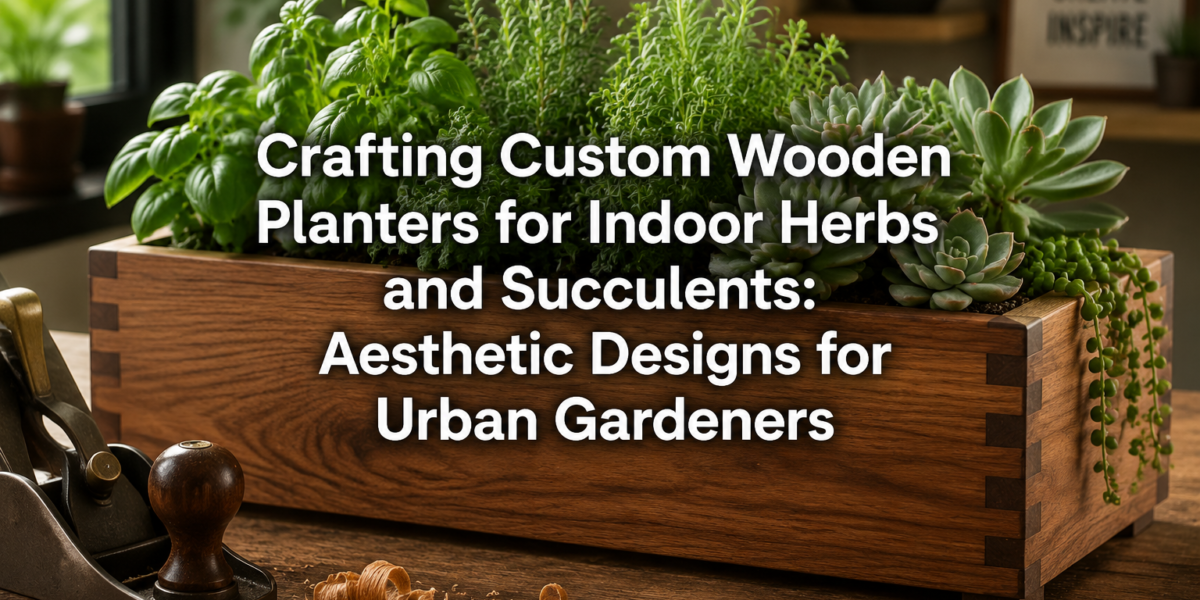
Statistics reveal that indoor gardening has surged by over 30% in urban areas since 2020, with a notable preference for self-grown herbs and resilient succulents. This growing trend isn’t just about cultivating greenery; it’s about integrating nature seamlessly into limited living spaces. For many urban dwellers, mass-produced plastic containers simply don’t align with their aesthetic aspirations or their desire for sustainable, personalized home decor. This article delves into the art and practicality of Crafting Custom Wooden Planters for Indoor Herbs and Succulents: Aesthetic Designs for Urban Gardeners, focusing on moisture-resistant wood choices, optimal drainage solutions, and beautiful designs that elevate modern interiors.
Key Takeaways
- Wood Selection is Crucial: Choose moisture-resistant woods like cedar, redwood, or cypress for durability and longevity in indoor planter environments.
- Optimal Drainage is Non-Negotiable: Implement proper drainage holes and consider false bottoms or liner systems to prevent root rot and ensure plant health.
- Design for Aesthetics & Function: Blend form and function by creating planters that complement your home decor while providing an ideal growing environment.
- Protection and Maintenance Extend Life: Apply food-safe, water-resistant finishes and perform regular maintenance to protect your wooden planters from moisture damage.
- Sustainability Matters: Utilize reclaimed wood or sustainably sourced timber for an eco-conscious approach to your urban gardening projects.
Selecting Materials and Ensuring Durability for Indoor Use
The foundation of any successful wooden planter project, especially for indoor applications, lies in the intelligent selection of materials. Unlike outdoor planters exposed to the elements, indoor planters contend with consistent humidity from watering, potential spills, and the critical need to prevent water damage to interior surfaces. Crafting Custom Wooden Planters for Indoor Herbs and Succulents: Aesthetic Designs for Urban Gardeners demands a thoughtful approach to wood choice and construction.
Choosing Moisture-Resistant Woods
Not all wood is created equal when it comes to moisture exposure. For indoor planters, selecting woods with natural resistance to decay and rot is paramount. These woods often contain natural oils and compounds that repel water and inhibit fungal growth.
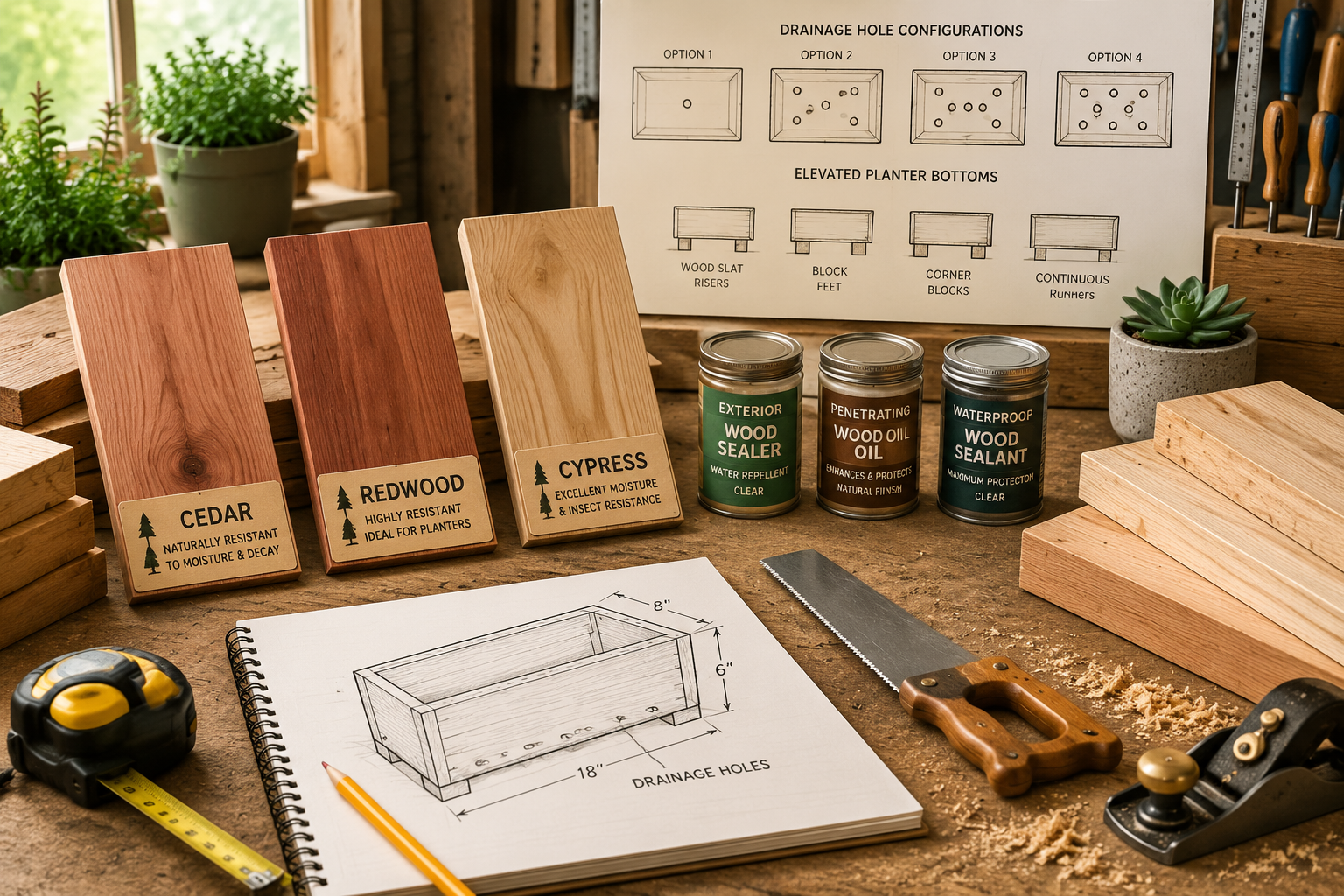
- Cedar: A top contender, cedar is lightweight, naturally aromatic, and highly resistant to moisture, rot, and insects. Its distinctive grain adds a beautiful aesthetic. Both Western Red Cedar and Eastern Red Cedar are excellent choices.
- Redwood: Known for its exceptional durability and resistance to decay, redwood is another premium option. It has a beautiful reddish-brown hue that deepens with age.
- Cypress: Often used in boat building due to its water resistance, cypress contains cypressene, a natural preservative. It’s a sturdy and attractive wood.
- Teak: While more expensive, teak is unparalleled in its water resistance and durability, making it a luxurious choice for high-end planters. Its natural oils protect it from moisture and pests.
- Treated Lumber (with caution): Pressure-treated lumber is chemically treated for outdoor use and may not be suitable for indoor herb or vegetable planters due to concerns about chemical leaching. If used, ensure it is rated for indoor or food-contact use, or line it thoroughly.
For those interested in exploring sustainable material sourcing, Sourcing and Restoring Urban Harvested and Reclaimed Wood: Quality, Character, and Sustainability offers valuable insights into finding character-rich materials.
Implementing Effective Drainage Solutions
Without proper drainage, even the hardiest plants will suffer from root rot. This is a critical factor often overlooked in aesthetic designs.
Essential Drainage Holes
Every planter must have drainage holes at the bottom.
- Size: Aim for holes at least 1/2 inch in diameter.
- Quantity: For a typical 12-inch planter, 3-5 holes are usually sufficient. Larger planters will require more.
- Placement: Distribute them evenly across the bottom surface to ensure uniform water exit.
Elevating the Planter Bottom
To prevent water from pooling directly against the bottom wood, consider these methods:
- Feet/Risers: Add small wooden feet or rubber risers to the corners of the planter. This lifts the planter slightly, allowing air to circulate and water to drain freely from the holes, preventing moisture from getting trapped between the planter and the surface it rests on.
- False Bottoms: Construct a false bottom using a slatted piece of wood or a plastic grid, creating a small reservoir below the soil level. This ensures the soil isn’t constantly sitting in water.
Liner Systems
A waterproof liner is an excellent way to protect the wood from direct contact with moist soil and water, significantly extending the planter’s lifespan.
- Heavy-Duty Pond Liner: This flexible, non-toxic material is easy to cut and staple into place. Ensure the liner has its own drainage holes aligned with those of the wooden planter.
- Plastic Sheeting: Thick plastic sheeting (at least 6 mil) can also be used. Again, ensure drainage holes are made in the liner.
- Galvanized Metal Insert: For a more robust and permanent solution, a custom-fitted galvanized metal insert can be used. These often come with pre-drilled drainage holes.
“The true artistry in crafting a wooden planter isn’t just in its outward beauty, but in the unseen engineering that safeguards both the plant and the wood from the detrimental effects of moisture.”
When building, understanding Understanding Wood Movement: How to Design and Build Furniture That Lasts Through Seasonal Changes is also beneficial, even for smaller projects like planters, to anticipate how wood reacts to environmental changes.

Aesthetic Designs for Urban Gardeners: Form Meets Function
For urban gardeners, space is often at a premium, and every item in their home serves a dual purpose: functional and aesthetic. Crafting Custom Wooden Planters for Indoor Herbs and Succulents: Aesthetic Designs for Urban Gardeners means creating pieces that are not only practical vessels for plants but also integral elements of interior design.
Popular Design Styles and Inspiration
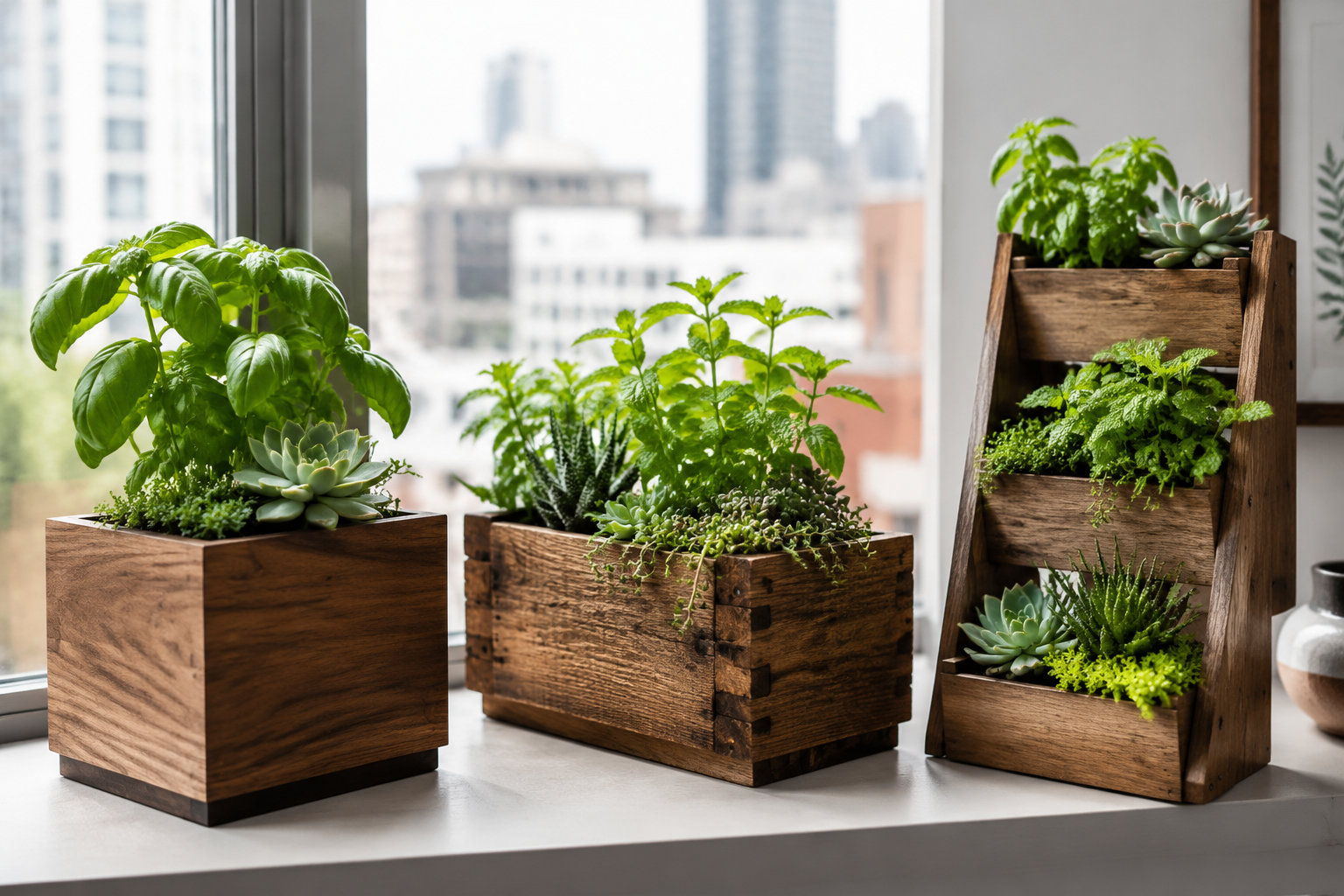
- Minimalist & Modern: Clean lines, geometric shapes, and a lack of ornamentation define this style. Think rectangular boxes, sleek cubes, or elongated troughs in light-colored woods like maple or birch, or stained darker to match contemporary furniture. These can sit elegantly on windowsills or minimalist shelves.
- Rustic & Farmhouse: Embracing natural imperfections, rougher textures, and a more weathered look. Reclaimed wood is perfect here, showcasing knots and distressed finishes. Designs might include simple box planters, trough-style herb gardens, or small wooden crates.
- Mid-Century Modern: Characterized by organic shapes, tapered legs, and a blend of natural materials. Planters might feature a clean wooden box elevated on slender, angled legs, often in walnut or teak tones.
- Bohemian/Eclectic: Mix and match various textures, patterns, and global inspirations. Consider planters with carved details, vibrant painted accents, or macrame hangers for a free-spirited vibe.
Integrating Planters into Small Urban Spaces
- Vertical Planters: For truly limited spaces, vertical designs are a game-changer.
- Tiered Planters: Stacked boxes or shelves allow for multiple plants in a compact footprint. These can be freestanding or wall-mounted.
- Wall-Mounted Pockets/Shelves: Small, individual wooden pockets or shelves can be mounted directly onto a wall, creating a living art display. This is ideal for succulents or small herbs.
- Ladder Planters: A freestanding ladder-like structure with shelves at different heights offers both utility and visual interest.
- Window Box Planters: Maximize natural light by designing custom wooden window boxes that fit perfectly onto your interior window sills. Ensure they have appropriate drainage and drip trays.
- Built-in Solutions: For the ambitious urban gardener, integrate planters directly into furniture, such as a coffee table with a recessed planter section or a shelf unit with dedicated plant bays.
- Modular Designs: Create individual planter modules that can be rearranged or combined to form larger configurations as needed. This flexibility is perfect for evolving urban living.
For further inspiration on creative woodworking for home decor, consider Crafting Custom Wooden Record Player Consoles: Integrating Modern Audio with Mid-Century Design or DIY Smart Home Integration with Custom Wooden Enclosures: Concealing Tech for a Seamless Aesthetic. These articles demonstrate how woodworking can merge functionality with sophisticated design.

Construction Techniques and Finishing for Longevity
Once the design and wood selection are complete, the next phase in Crafting Custom Wooden Planters for Indoor Herbs and Succulents: Aesthetic Designs for Urban Gardeners involves precise construction and protective finishing. These steps are crucial for the planter’s structural integrity and its ability to withstand the moist indoor environment.
Essential Tools and Techniques
- Measuring and Cutting: Accuracy is key. Use a measuring tape, pencil, and a miter saw or circular saw for precise cuts. A speed square or combination square helps ensure straight and square cuts.
- Joinery: For planters, strong and simple joinery is often best.
- Butt Joints with Screws/Glue: The simplest method, reinforced with waterproof wood glue and weather-resistant screws. Pre-drill pilot holes to prevent splitting.
- Dado Joints: For more robust connections, dado joints offer excellent strength, particularly for attaching bottoms or internal dividers.
- Pocket Hole Joinery: A popular technique for quick, strong, and hidden joints. A pocket hole jig makes this process straightforward.
- For advanced joinery techniques that add decorative flair, Hand Tool Joinery for Visible Wood Joints: Dovetails, Mortise and Tenon, and Box Joints as Design Features in Furniture and Small Projects provides detailed guidance.
- Drilling Drainage Holes: Use a spade bit or hole saw for clean, appropriately sized drainage holes.
- Sanding: Smooth surfaces are not only aesthetically pleasing but also make finishing easier and more effective. Start with coarser grit (e.g., 80 or 100) and progress to finer grits (e.g., 180 or 220) for a silky finish.
Applying Protective Finishes
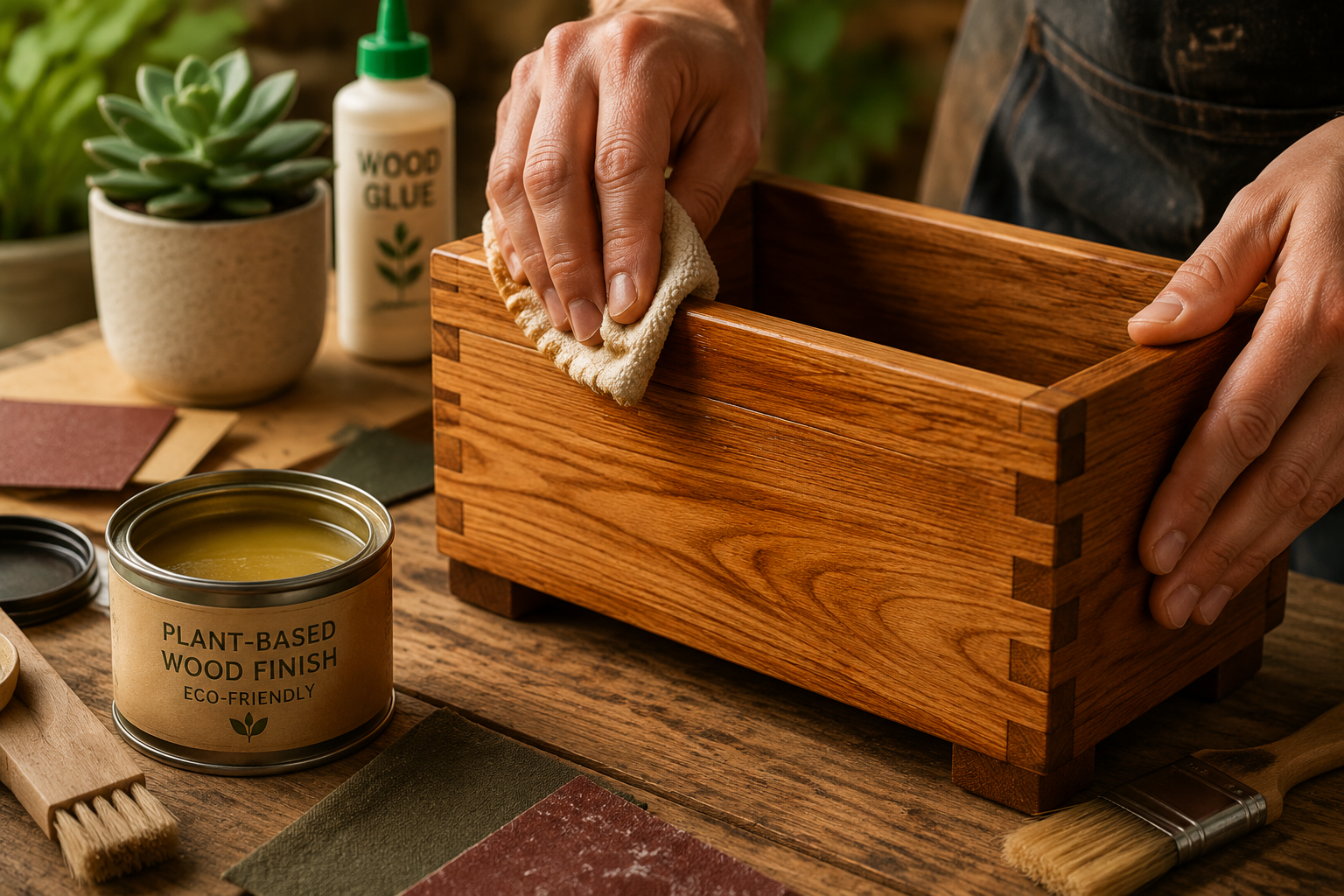
The right finish protects the wood from water, enhances its natural beauty, and extends the planter’s life. Always choose finishes that are safe for indoor use and, if planting edible herbs, food-safe.
Types of Finishes
- Polyurethane (Water-Based): Offers excellent water resistance and durability. Water-based options dry faster, have low VOCs, and minimal odor, making them ideal for indoor projects. Apply multiple thin coats, sanding lightly between coats.
- Spar Urethane: Designed for marine use, spar urethane is highly flexible and resistant to water and UV light, though UV resistance is less critical indoors. It provides a very durable, protective layer.
- Natural Oils (Tung Oil, Linseed Oil): These penetrate the wood, enhancing its natural grain and offering some water resistance. They require more frequent reapplication but are excellent for a natural, low-sheen finish and are generally food-safe once cured. Ensure they are pure oils, not oil/varnish blends if food safety is a concern.
- Food-Safe Sealants: For herb planters, look specifically for sealants labeled as food-grade or food-safe. Mineral oil is a simple, non-toxic option, but offers less protection than a hard-curing finish.
- Epoxy Resin: For ultimate water protection, particularly for the interior, a thin coat of food-safe epoxy resin can create a fully waterproof barrier.
Application Best Practices
- Clean Surface: Ensure the wood is clean, dry, and free of dust after sanding.
- Apply Evenly: Use a good quality brush or foam applicator, applying thin, even coats.
- Follow Manufacturer’s Instructions: Adhere to drying times and recoat windows specified by the product manufacturer.
- Ventilation: Work in a well-ventilated area, even with low-VOC products.
- Cure Time: Allow ample time for the finish to fully cure before introducing soil and plants. This can take several days to weeks, depending on the product.
For a deeper dive into finishing techniques, explore articles on High Gloss Wood Finishing Techniques, Maple Wood Finishing Techniques, or Unique Wood Finishing Techniques to achieve a truly professional look. Remember, the investment in time and quality materials for finishing will protect your handcrafted planter for years to come.

Conclusion
Crafting Custom Wooden Planters for Indoor Herbs and Succulents: Aesthetic Designs for Urban Gardeners is a rewarding endeavor that beautifully marries the practicality of home gardening with the artistry of woodworking. By carefully selecting moisture-resistant woods, meticulously integrating effective drainage systems, and designing with urban aesthetics in mind, gardeners can create unique, durable, and visually appealing planters that transform their living spaces. The effort put into precise construction and the application of appropriate protective finishes ensures these wooden creations stand the test of time, becoming cherished elements of an indoor oasis.
Embrace the joy of personalizing your green space in 2026. Start with a simple design, experiment with different wood types, and gradually build your skills to create increasingly complex and stunning pieces. Not only will your plants thrive, but your custom planters will serve as a testament to your craftsmanship and commitment to sustainable, beautiful living. Begin your project today and cultivate both plants and pride in your urban dwelling!