
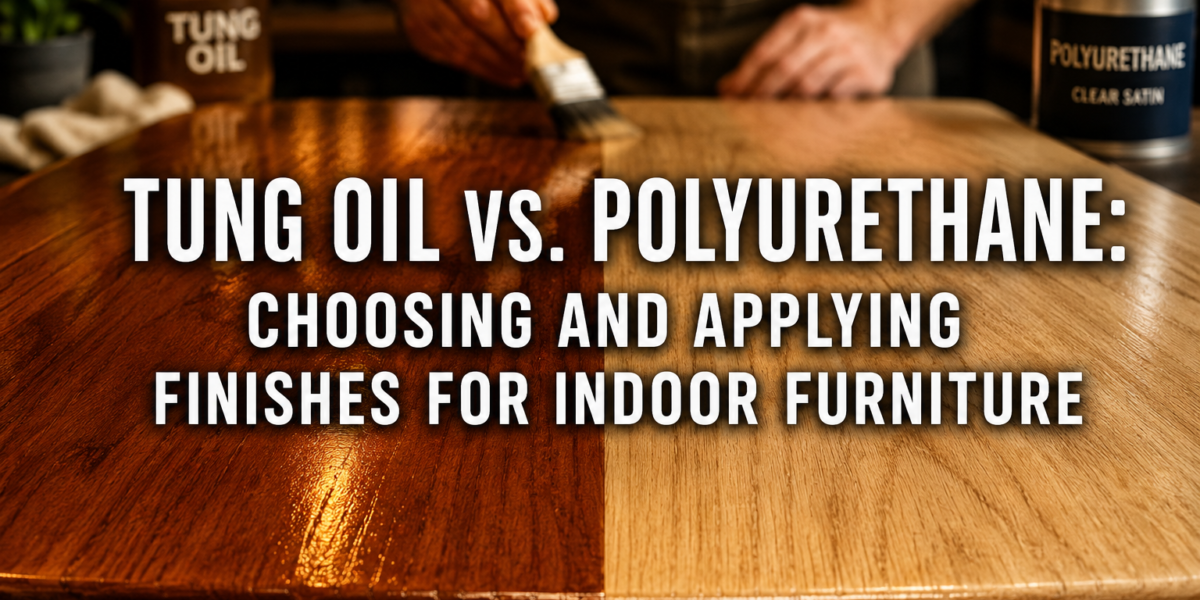
Over 80% of furniture enthusiasts in 2026 confess to feeling overwhelmed when selecting the ideal finish for their indoor woodworking projects. The choice between finishes like tung oil and polyurethane isn’t just about aesthetics; it profoundly impacts a piece’s longevity, maintenance, and the very essence of its interaction with daily life. For high-use items like dining chairs and kitchen cabinets, where both visual appeal and robust protection are paramount, understanding the nuances of “Tung Oil vs. Polyurethane: Choosing and Applying Finishes for Indoor Furniture” is not merely helpful—it’s essential for crafting pieces that endure and delight for years.
Key Takeaways
- Tung Oil penetrates wood, offering a natural, matte, water-resistant finish that enhances grain with easy spot repair.
- Polyurethane forms a durable, plastic-like film on the surface, providing superior abrasion and chemical resistance.
- The choice hinges on desired appearance, required durability (e.g., chairs vs. decorative accents), and maintenance expectations.
- Proper wood preparation, including sanding, is critical for optimal adhesion and finish quality for both options.
- Applying multiple thin coats for either finish generally yields better results than fewer thick coats.
Understanding Tung Oil: Natural Beauty and Penetrating Protection
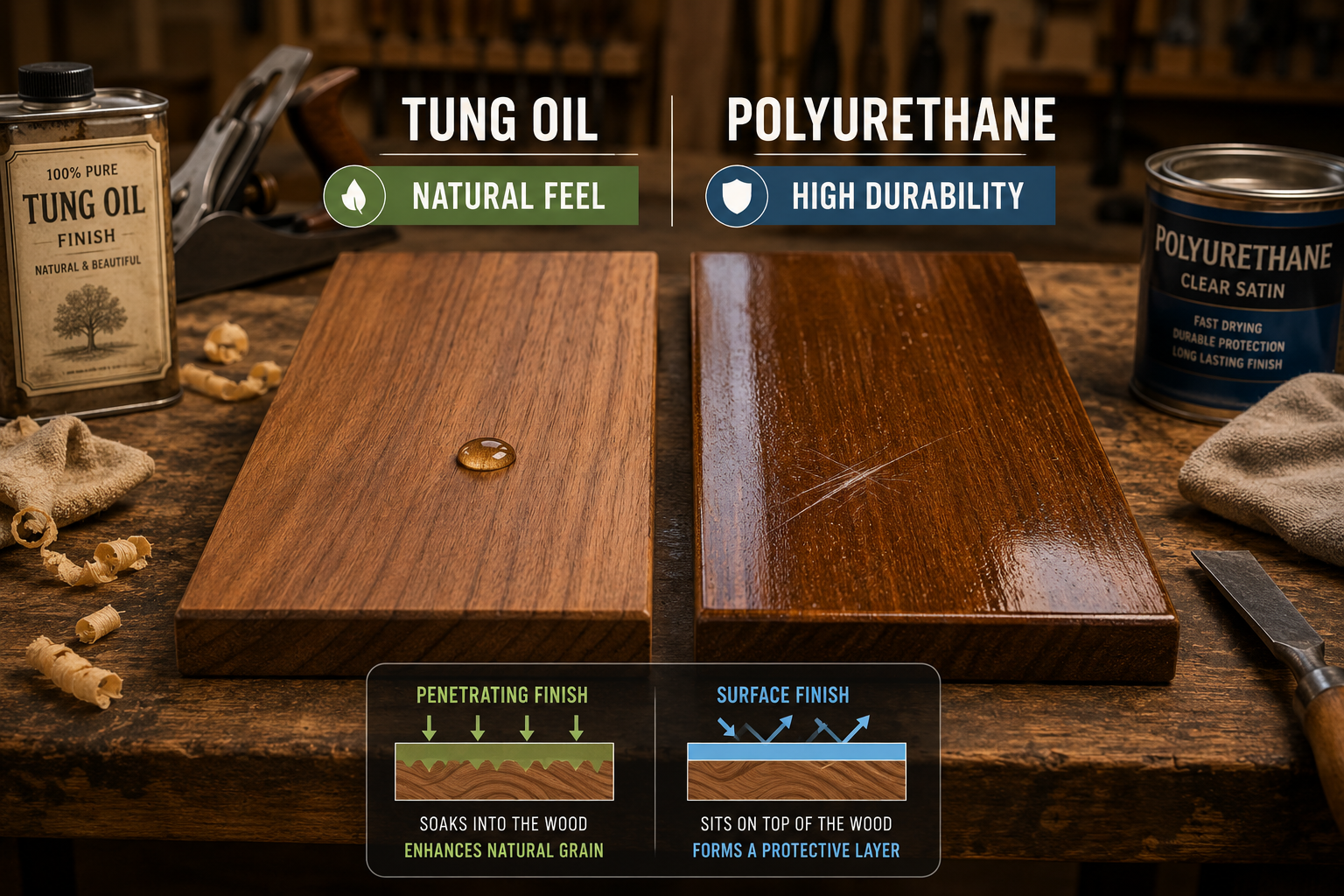
Tung oil, derived from the nut of the tung tree (Vernicia fordii), stands as a classic choice for woodworkers seeking a natural, hand-rubbed finish. Unlike film-forming finishes, pure tung oil penetrates deeply into the wood fibers, curing within them to create a water-resistant barrier. This process enhances the wood’s natural color and grain, imparting a soft, warm luster rather than a glossy, plastic-like surface.
Characteristics of Tung Oil
Tung oil is celebrated for its ability to bring out the inherent beauty of wood without masking its texture.
- Appearance: It offers a beautiful, low-sheen, natural look that makes the wood “pop.” The grain is deepened, and the wood’s true character shines through.
- Durability & Protection: While offering good water resistance, especially when fully cured over several weeks, it’s not as scratch or abrasion-resistant as polyurethane. However, its penetrating nature means minor scratches often don’t break through a surface film, making them less noticeable. Tung oil also allows the wood to breathe and expand/contract more naturally.
- Repairability: One of tung oil’s greatest advantages is its repairability. Scratches or worn spots can often be spot-repaired by simply re-applying oil to the affected area, then buffing it in. This blends seamlessly with the existing finish.
- Application: Pure tung oil is typically applied in very thin coats, often thinned with a natural solvent like citrus solvent, and rubbed into the wood. This can be a time-consuming process, requiring multiple coats and ample drying time between applications.
- Health & Safety: Pure tung oil is food-safe once cured, making it an excellent choice for cutting boards, wooden bowls, and kitchen tables. It has a mild, nutty odor that dissipates as it cures.
- Maintenance: Regular reapplication, perhaps annually for high-use items, helps maintain its protective qualities and aesthetic.
When considering “Tung Oil vs. Polyurethane: Choosing and Applying Finishes for Indoor Furniture,” tung oil excels in situations where a natural feel and easy repair are prioritized. For instance, a beautifully crafted live edge slab table might benefit from tung oil to truly showcase its organic contours and grain. Explore more about Live Edge Slab Selection and Preparation: From Raw Material to Finished Showpiece to understand how this natural finish complements such pieces.

Applying Tung Oil for Indoor Furniture
Achieving a professional tung oil finish requires patience and a methodical approach.
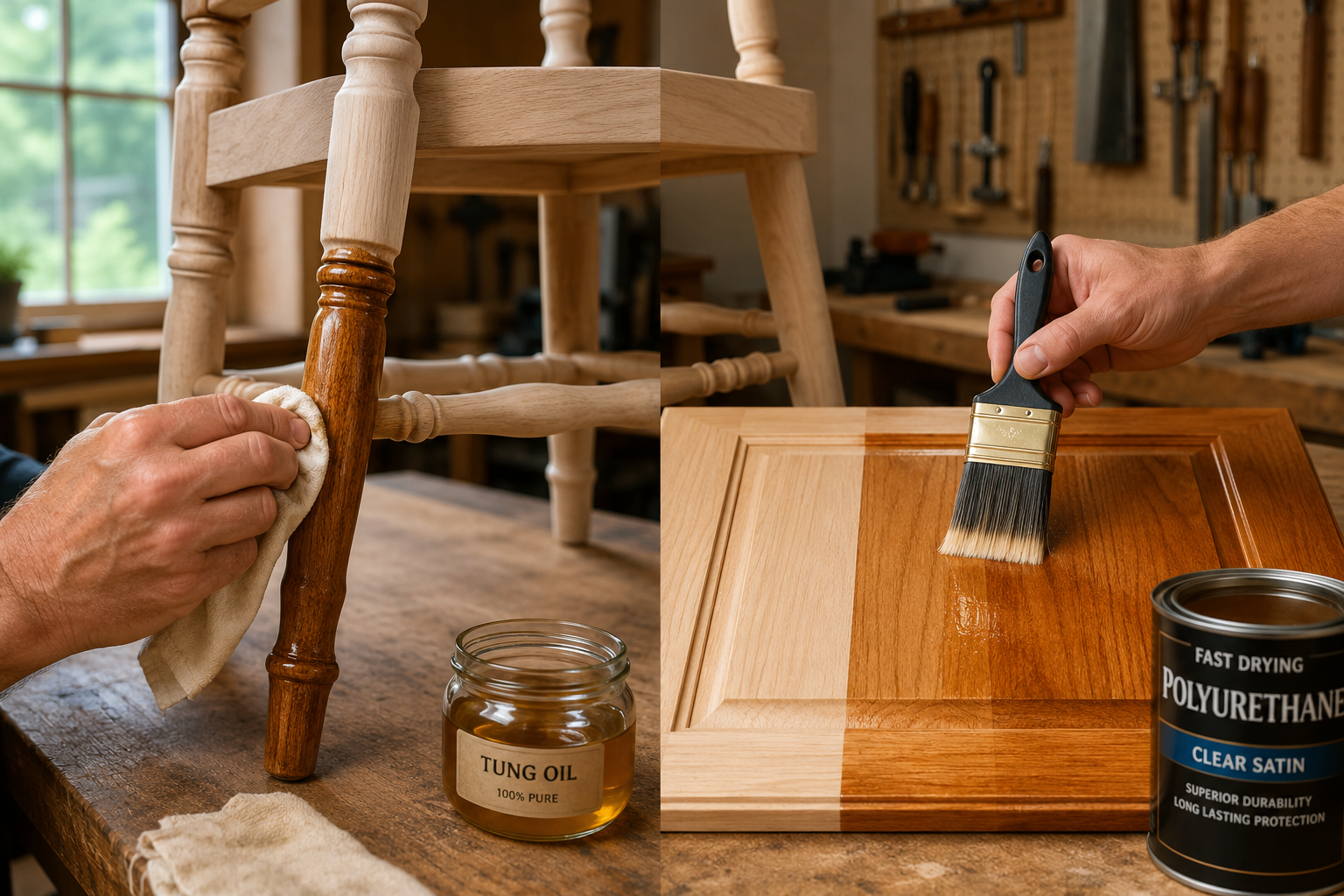
- Preparation is Key: Start with thoroughly sanded wood. Gradually sand from coarse to fine grits (e.g., 120, 180, 220, 320), wiping away dust between grits. The smoother the surface, the better the tung oil will penetrate and the more lustrous the final finish.
- First Coat – Diluted Penetration: For the first coat, many recommend diluting pure tung oil 50/50 with a natural solvent like mineral spirits or citrus solvent. This helps the oil penetrate deeper. Apply generously with a lint-free cloth, allowing it to soak in for 20-30 minutes.
- Wipe Off Excess: CRITICAL STEP: After the soaking time, wipe off ALL excess oil completely. Any oil left on the surface will become gummy and tacky, failing to cure properly.
- Subsequent Coats – Undiluted: For subsequent coats, use undiluted tung oil. Apply thinly, allow to penetrate for 10-15 minutes, and wipe off ALL excess.
- Drying and Curing: Allow at least 24 hours between coats, or longer in humid conditions. Tung oil cures by oxidation, so good ventilation is important. Expect 3-5 coats for good protection, though some projects might benefit from more. Full cure can take several weeks.
- Buffing: After the final coat has cured, you can buff the surface with a clean, soft cloth or fine steel wool (0000 grade) for a smoother feel.
Pro Tip: For a slightly more durable tung oil finish, consider “polymerized” tung oil, which has been heated to partially pre-cure it, resulting in a slightly harder film and faster drying times. However, it still retains the natural aesthetic.
Polyurethane: The Powerhouse of Protection
Polyurethane is a synthetic, plastic-based resin that forms a durable, protective film on the surface of the wood. It’s available in oil-based and water-based formulas, each with distinct characteristics. Widely favored for its exceptional resistance to scratches, abrasions, and chemicals, polyurethane is often the go-to for furniture that sees heavy daily use.
Characteristics of Polyurethane
Polyurethane offers robust protection, making it a staple in many workshops.
- Appearance: Polyurethane is available in various sheens, from ultra-matte to high-gloss. Oil-based polyurethanes tend to impart a warm, amber tone to wood, which deepens over time, while water-based versions remain clear, allowing the wood’s natural color to dominate. It creates a visible film on the surface.
- Durability & Protection: This is polyurethane’s strong suit. It forms a hard, continuous barrier that is highly resistant to impacts, scratches, heat, and many common household chemicals. This makes it ideal for dining tables, kitchen cabinet doors, and chairs—pieces that face spills and wear daily.
- Repairability: Unlike tung oil, polyurethane is difficult to spot repair. Damage to the film typically requires sanding down the entire affected surface and re-applying a new coat. Attempting to touch up often results in visible patches.
- Application: Polyurethane can be applied with a brush, foam applicator, roller, or by spraying. Water-based polyurethanes dry faster and have less odor, while oil-based versions have longer open times, allowing for smoother application but take longer to cure. Sprayable water-based polyurethane can offer a remarkably smooth finish. Find out more about Sprayable Water-Based Polyurethane: A Step-by-Step Guide.
- Health & Safety: Both types have volatile organic compounds (VOCs). Oil-based polyurethane has a strong odor and requires good ventilation. Water-based options have lower VOCs and less odor but still necessitate proper air circulation.
- Maintenance: Polyurethane requires minimal maintenance beyond regular cleaning. It generally does not need reapplication for many years, depending on wear.
For “Tung Oil vs. Polyurethane: Choosing and Applying Finishes for Indoor Furniture,” polyurethane offers unmatched resilience. When Building Statement Furniture Pieces: Designing and Construct coffee tables or console tables that need to withstand spills and daily impacts, polyurethane is often the superior choice for surface protection.
Applying Polyurethane for Indoor Furniture
Proper application of polyurethane ensures a long-lasting, beautiful finish.
- Preparation: As with tung oil, sanding is crucial. Finish sanding with 220-grit sandpaper for most applications. Thoroughly clean the surface to remove all dust, oils, and contaminants.
- First Coat: Apply a thin, even coat using a high-quality synthetic brush for water-based polyurethane or a natural bristle brush for oil-based. Avoid overworking the finish, as this can introduce bubbles. For vertical surfaces, start from the bottom and work up to prevent drips.
- Drying and Sanding: Allow the first coat to dry completely according to the manufacturer’s instructions (usually 2-4 hours for water-based, 6-24 hours for oil-based). Lightly sand the entire surface with 220-320 grit sandpaper or a fine sanding sponge. This creates a “tooth” for the next coat to adhere to, ensuring a strong bond.
- Clean and Recoat: Remove all sanding dust with a tack cloth or vacuum before applying subsequent coats. Apply 2-3 more thin coats, repeating the drying and light sanding process between each.
- Final Cure: While the surface may be dry to the touch in hours, polyurethane typically takes 30 days to fully cure and achieve its maximum hardness. During this period, treat the furniture gently and avoid heavy use or placing heavy objects on it.
Pro Tip: For a super smooth finish, lightly sand the final dried coat with 600-grit sandpaper, then buff with a soft cloth or automotive polishing compound. This can create a glass-like feel.
Choosing the Right Finish and Application Strategy
The decision between “Tung Oil vs. Polyurethane: Choosing and Applying Finishes for Indoor Furniture” ultimately comes down to a balance of desired aesthetic, required durability, and willingness to undertake maintenance. There’s no single “best” finish; only the best finish for a particular piece and its intended use.
Factors to Consider
- Project Type:
- High-Use Surfaces (Dining Tables, Coffee Tables, Kitchen Cabinets): Polyurethane typically offers the necessary protection against spills, scratches, and daily wear. Its hard film is a robust barrier.
- Decorative Pieces (Picture Frames, Sculptures, Wood Carvings): Tung oil can enhance the natural beauty of the wood without imposing a heavy film, allowing the intricate details of Advanced Wood Carving Techniques for Decorative Furniture Accents: to shine through.
- Chairs and Stools: This is a gray area. Seat bottoms might benefit from the repairability of tung oil, while backrests and legs could use polyurethane’s durability.
- Desired Aesthetic:
- Natural, Hand-Rubbed Look: Choose tung oil for a finish that feels like wood, not plastic, and highlights the grain with a subtle sheen.
- Glossy or Satin, Uniform Finish: Polyurethane provides a consistent, protective layer that can be high-gloss, semi-gloss, or satin.
- Maintenance & Repair:
- Easy Spot Repair: Tung oil allows for simple repairs, ideal for pieces that might see minor wear.
- Low Maintenance, High Protection: Polyurethane offers long-term protection with minimal reapplication needed, though repairs are more involved.
- Application Process:
- Patience for Deep Penetration: Tung oil requires more coats and longer curing times, but the hands-on rubbing process can be very satisfying.
- Faster Application, Strong Film: Polyurethane applications are generally quicker, but careful attention to dust-free environments and even coats is necessary.
Combining Finishes for Optimal Results
For some indoor furniture, a hybrid approach can be the ideal solution. Consider applying tung oil first to bring out the wood’s natural color and grain, allowing it to fully cure, and then topping it with a few coats of water-based polyurethane for added surface protection. This strategy allows you to gain the aesthetic benefits of tung oil and the protective qualities of polyurethane. This is especially useful for pieces like a dining table where the top needs extreme durability, but you might want the legs to have a more natural feel.
For projects like Crafting Profitable Wooden Benches: From Entryway Seats to G, you might use a penetrating oil finish for the seat to enhance comfort and repairability, and then apply a more robust polyurethane to the frame and legs for structural protection.
Conclusion
Navigating the choice between tung oil and polyurethane for indoor furniture finishes doesn’t have to be daunting. By understanding their unique properties, application methods, and considering the specific needs of your project, you can make an informed decision that enhances both the beauty and longevity of your woodworking creations. Whether you lean towards the natural, repairable elegance of tung oil or the robust, low-maintenance protection of polyurethane, proper preparation and careful application are paramount to achieving a professional-grade finish. In 2026, the demand for finely finished, durable indoor furniture remains strong, and mastering these finishes sets your craftsmanship apart. Choose wisely, apply meticulously, and enjoy furniture that truly stands the test of time.