
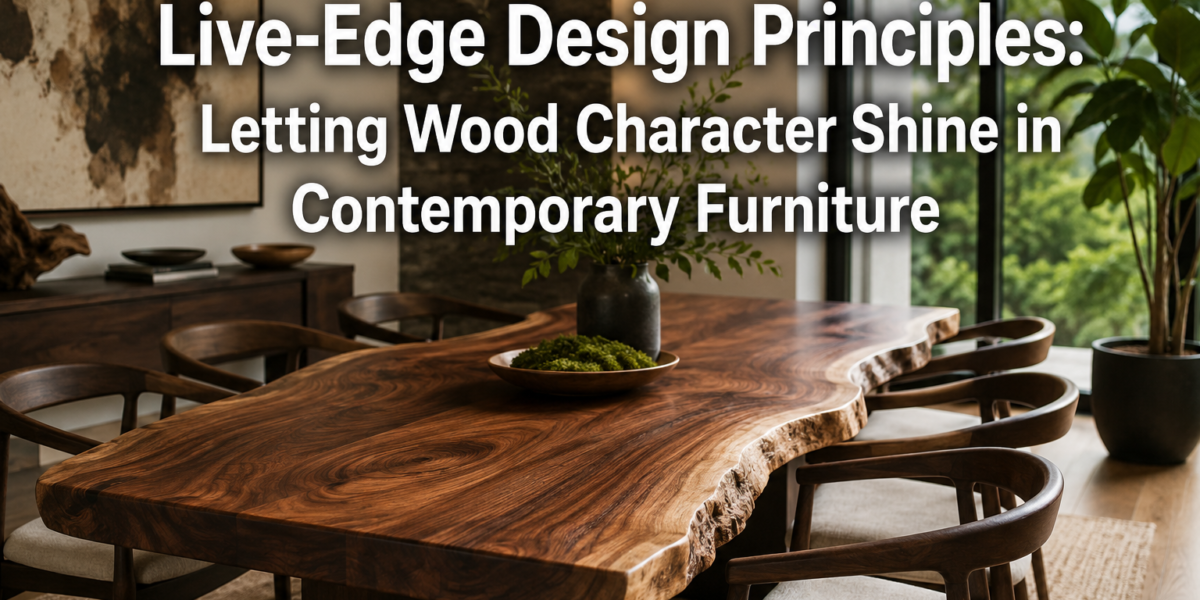
The average piece of mass-produced furniture tells a story of efficiency, standardization, and often, compromise. In stark contrast, a live-edge creation whispers tales of ancient forests, unique growth patterns, and the undeniable artistry of nature itself. This inherent individuality is precisely why Live-Edge Design Principles: Letting Wood Character Shine in Contemporary Furniture has captivated designers, woodworkers, and discerning homeowners in 2026. Far from being a fleeting trend, live-edge furniture embodies a profound design philosophy rooted in authenticity, sustainability, and a deep respect for the raw material. It challenges the conventional notions of perfection, inviting the natural, untamed beauty of the wood to become the central aesthetic statement, transforming a simple slab into a functional work of art.
Key Takeaways
- Live-edge design emphasizes preserving the wood’s natural, organic edges and unique characteristics.
- Careful slab selection is crucial, focusing on species, grain, color, and natural features like knots and cracks.
- Stabilization techniques, including epoxy fills and butterfly keys, are essential for structural integrity and aesthetic enhancement.
- The design process involves harmonizing the wood’s organic form with contemporary bases and finishes.
- Live-edge furniture is positioned as premium craft through meticulous execution, sustainable sourcing, and storytelling.
Understanding Live-Edge Design Principles: Letting Wood Character Shine
At its core, live-edge design is about celebration. It’s a deliberate choice to retain the original, organic edge of the tree slab, including the bark (though often removed during finishing), sapwood, and all the natural undulations, knots, and grain patterns that tell the wood’s unique life story. This isn’t merely about leaving a rough edge; it’s about integrating these natural elements thoughtfully into a refined, functional piece of furniture. The philosophy dictates that the wood itself should be the primary designer, with the craftsman’s role being to enhance and support its inherent beauty.
This approach stands in direct opposition to traditional woodworking, where edges are often squared off, planed, and meticulously matched for uniformity. Live-edge pieces intentionally break this mold, introducing an organic, fluid counterpoint to the clean lines and geometric forms prevalent in contemporary design. The result is furniture that possesses a striking visual tension—a juxtaposition of raw nature and sophisticated craftsmanship—that makes each piece distinctly one-of-a-kind.
The Art of Slab Selection: Identifying the Right Character
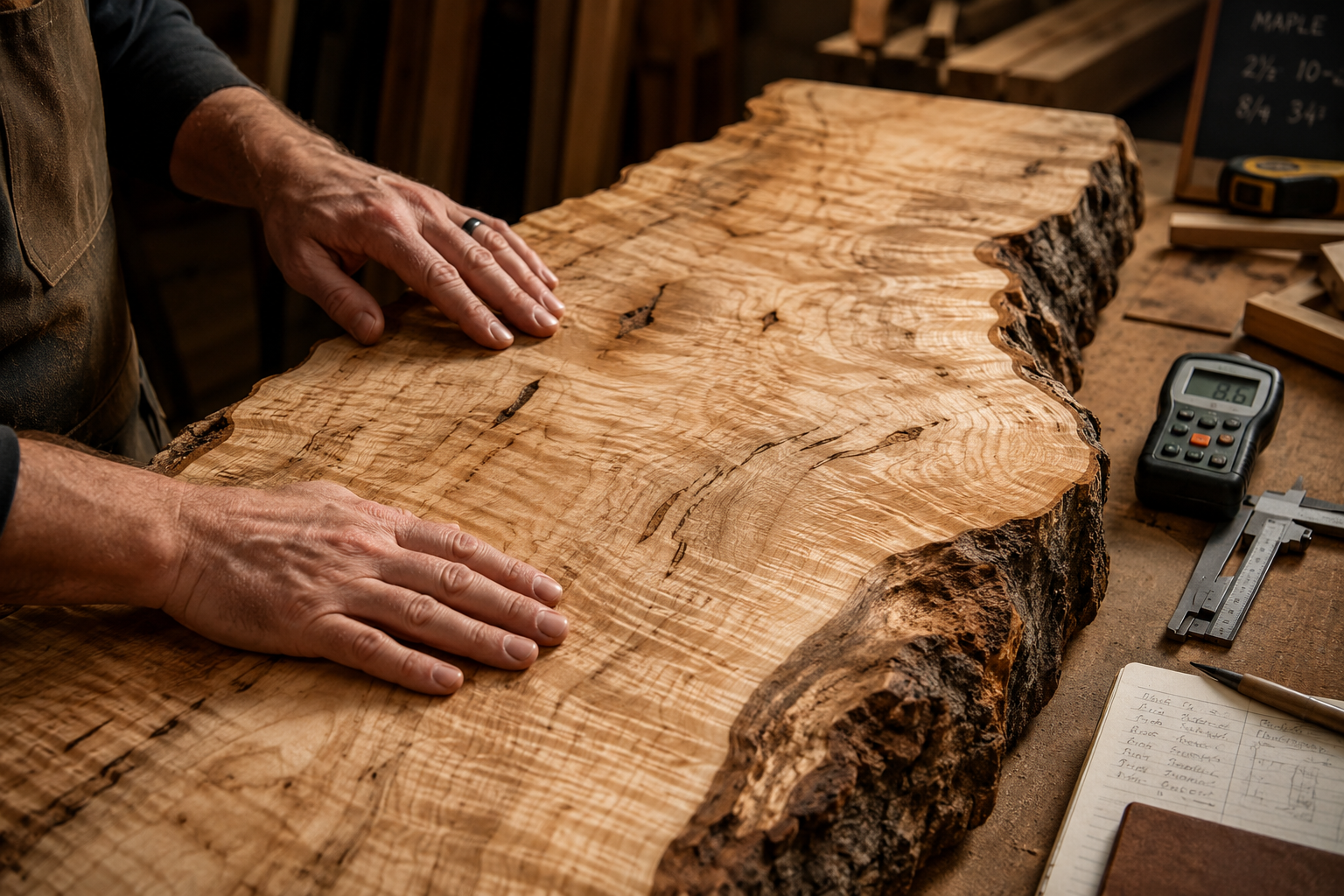
The journey of creating a compelling live-edge piece begins long before any tools touch the wood; it starts with the careful selection of the slab itself. This is perhaps the most critical step in upholding Live-Edge Design Principles: Letting Wood Character Shine in Contemporary Furniture. A well-chosen slab already possesses the inherent beauty and structural integrity required for a lasting showpiece.
When selecting a live-edge slab, several factors come into play:
- Wood Species: Different species offer distinct grain patterns, colors, and natural characteristics.
- Walnut: Prized for its rich, dark brown hues and often dramatic grain, including crotch figure and burls. It’s stable and carves well.
- Maple: Ranges from creamy white to light brown, offering figure like ‘curly’ or ‘bird’s eye’ patterns. It’s dense and durable.
- Oak: Known for its prominent open grain and durability, ideal for rustic or robust designs.
- Cherry: Features warm, reddish-brown tones that deepen with age, offering a finer, more subtle grain.
- Exotic Woods: Some, like Monkeypod or Suar, offer vast sizes and incredible contrasting colors and grains.
- Natural Edges: The character of the live edge is paramount. Look for interesting curves, undulations, and variations that will form the aesthetic focal point. Avoid edges that are overly deteriorated or infested.
- Grain Pattern and Figure: Examine the slab for unique grain patterns (e.g., straight, curly, spalted, quilted, burled) that will enhance its visual appeal. The way the wood grew tells its story, and this story is central to live-edge design.
- Size and Thickness: These dimensions dictate the potential applications. A thicker slab offers more stability and presence, while length and width must suit the intended furniture piece (e.g., dining table, console, coffee table). For more on preparing these slabs, see our guide on Live Edge Slab Selection and Preparation: From Raw Material.
- Defects and Inclusions: Unlike traditional woodworking, where defects are often avoided, certain inclusions like knots, cracks, and voids can add immense character to a live-edge piece. The skill lies in how these are managed and stabilized rather than hidden.
Technical Execution: Stabilizing and Refining the Natural Edge
The raw beauty of a live-edge slab often comes with inherent challenges: cracks, voids, and susceptibility to movement. The technical execution of stabilizing and refining these natural elements is what transforms a rough piece of wood into a durable, heirloom-quality furniture item. This meticulous process ensures longevity while preserving the raw character that defines the aesthetic.
Edge Stabilization Techniques
Before any finishing work, the structural integrity of the slab must be addressed.
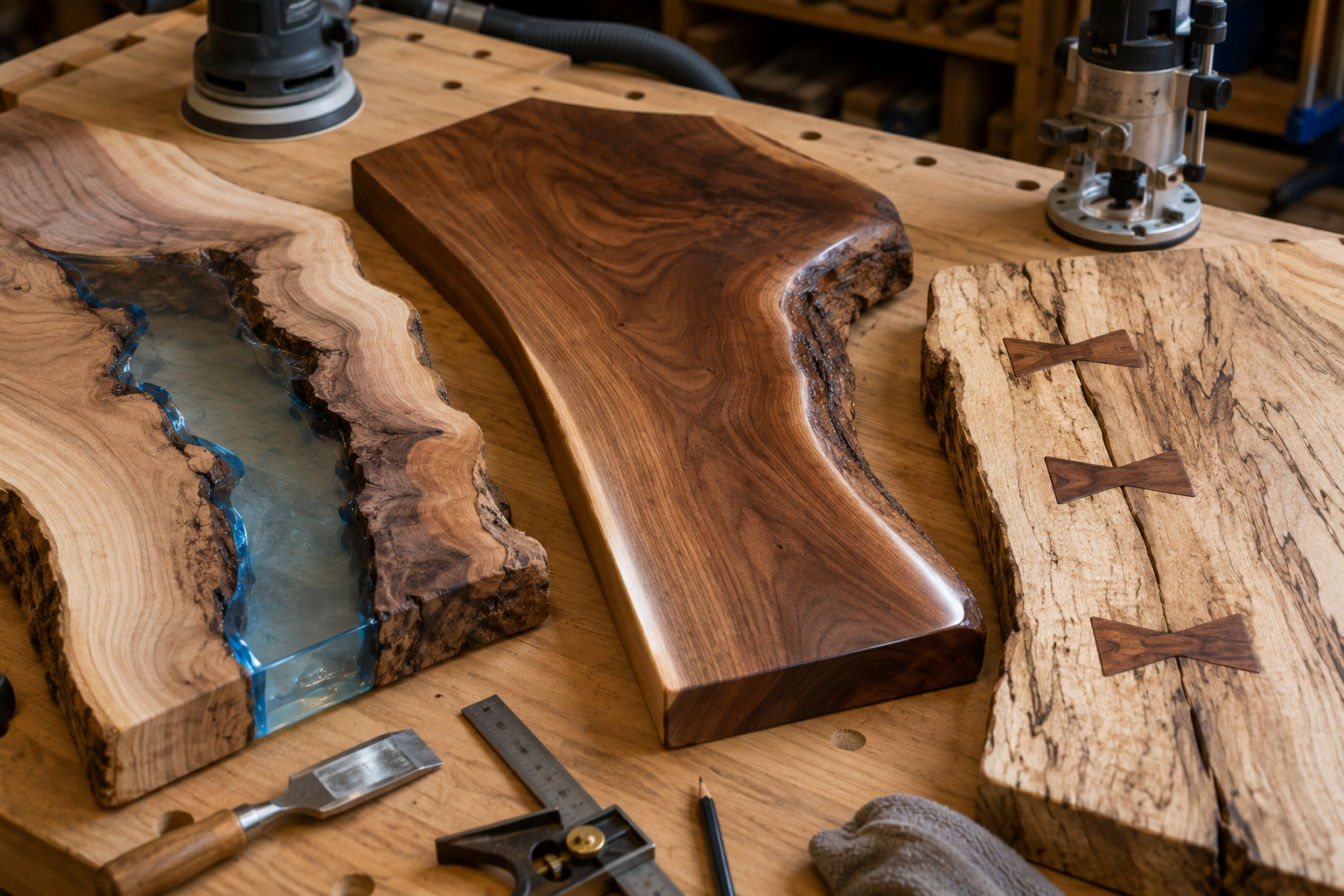
- Epoxy Resin Fills:
- Purpose: To fill natural voids, cracks, and insect damage, preventing further splitting and creating a smooth, durable surface. Clear epoxy maintains transparency, showcasing the wood’s internal features, while tinted epoxy can introduce a subtle color accent.
- Process: Clean the void thoroughly. Tape off the underside to prevent leakage. Mix and pour epoxy in layers, allowing each to cure. Sand flush.
- Application: Essential for river tables or larger voids.
- Butterfly Keys (Bowties):
- Purpose: These decorative and functional inlays, often contrasting wood, are placed across cracks to prevent them from spreading further. They become a design feature in themselves.
- Process: Route or chisel a butterfly-shaped mortise across the crack. Fashion a corresponding butterfly key from a stable wood species. Glue and tap the key into place, then sand flush.
- Application: Ideal for wide cracks where aesthetic reinforcement is desired.
- Reinforcement with Metal Rods:
- Purpose: For larger, deeper cracks or areas prone to significant movement, hidden metal rods (e.g., steel or carbon fiber) can be epoxied into routed channels on the underside of the slab.
- Process: Route a shallow channel perpendicular to the crack on the underside. Insert the rod with epoxy, ensuring it’s flush with the surface.
- Application: Provides robust, invisible structural support.
Refining the Live Edge
Once stabilized, the live edge needs careful refinement to be both beautiful and practical.
- Bark Removal: While some prefer to keep the bark, it often harbors insects, can be unstable, and tends to flake off over time. For most furniture, bark is meticulously removed using chisels, wire brushes, or even power tools with care.
- Sanding and Smoothing: The edge is then meticulously sanded, often starting with coarse grits (80-100) and progressing through finer grits (up to 220-320 or even higher) to achieve a smooth, tactile finish. This process highlights the natural contours without losing the organic feel.
- Finishing: A durable finish is crucial for protecting the wood and enhancing its natural beauty.
- Oils (e.g., tung oil, Danish oil): Penetrate the wood, offering a natural look and feel, enhancing grain depth. Requires reapplication.
- Polyurethane/Varnish: Creates a harder, more protective surface, resistant to moisture and abrasion. Available in various sheens.
- Epoxy Finishes (flood coats): For a glass-like, highly durable, and moisture-resistant surface, especially popular for dining and coffee tables.
This blend of structural reinforcement and refined finishing ensures that the live-edge piece remains a functional and beautiful part of a home for generations. For guidance on sourcing, consider Sustainable Wood Sourcing for the Modern Woodworker: Beyond Reclaimed.
Integrating Live-Edge with Contemporary Furniture Design
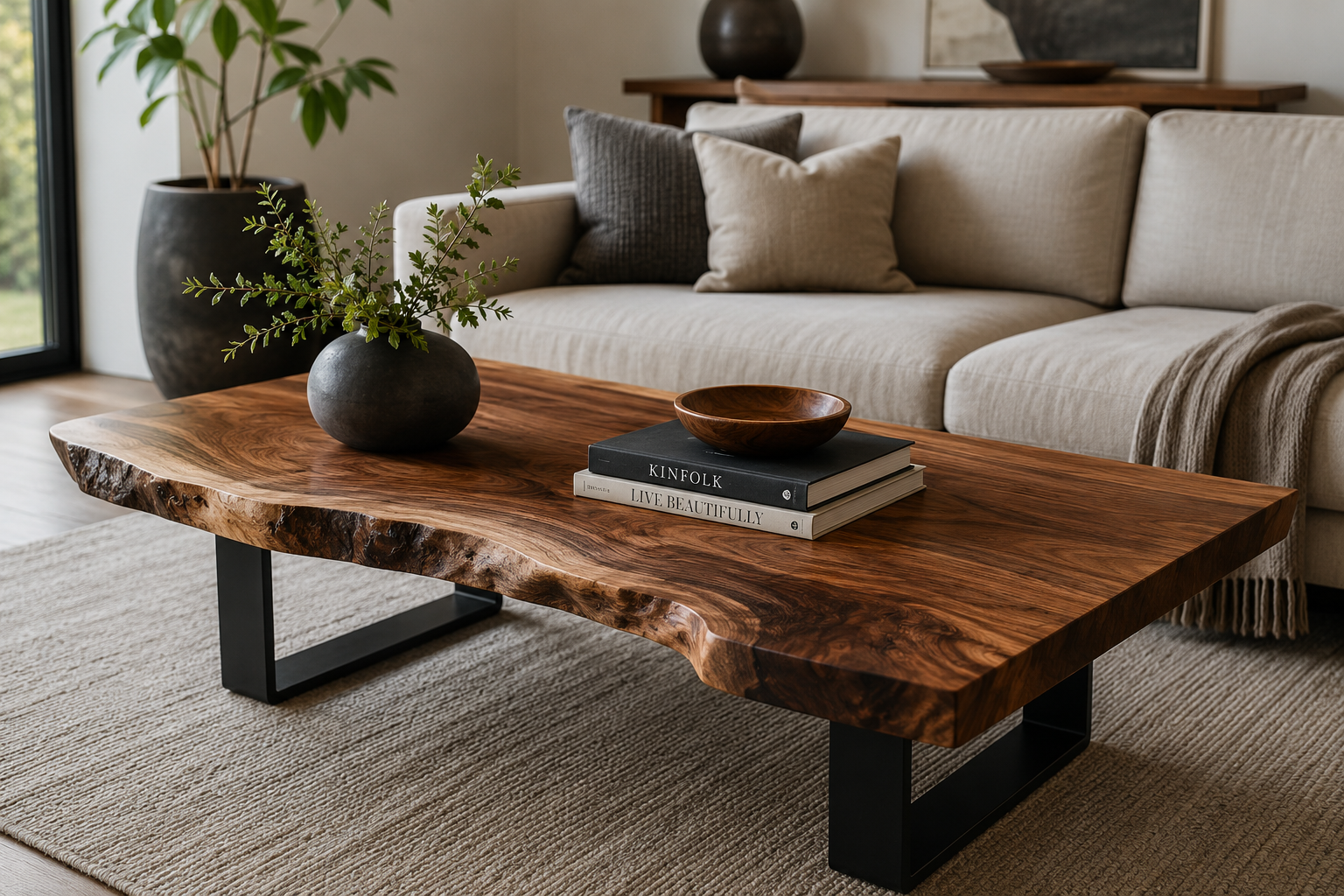
The essence of Live-Edge Design Principles: Letting Wood Character Shine in Contemporary Furniture lies not just in the slab itself, but in how it is thoughtfully integrated into modern interiors. This involves a delicate balance between the organic, untamed beauty of the wood and the sleek, often minimalist aesthetics of contemporary design. The goal is to create a harmonious piece that stands out as a focal point without overwhelming the space.
The Contrast Principle: Harmonizing Nature and Modernity
Contemporary design often favors clean lines, geometric shapes, and a restrained color palette. When introducing a live-edge element, the contrast becomes a powerful design tool.
- Bases and Legs: The choice of base material and design is critical.
- Metal (Steel, Iron, Aluminum): Popular choices for legs, often powder-coated in matte black, brushed steel, or polished chrome. Their industrial, geometric forms provide a stark, elegant contrast to the organic wood top.
- Acrylic/Glass: For an almost invisible support, creating the illusion of a floating slab, enhancing the focus on the wood.
- Minimalist Wood Bases: Clean, straight-lined wooden bases, often in a contrasting or complementary wood species, can also provide a grounded, yet modern feel.
- Proportion and Scale: The natural contours of the live edge dictate the overall proportion. Designers must consider how the width, length, and particularly the varying depth of the live edge will interact with the room’s dimensions and other furniture. A thick, dramatic slab might suit a large dining area, while a more refined live edge would be appropriate for a console table in a narrow entryway. Our article on Building Statement Furniture Pieces: Designing and Construct offers valuable insights here.
- Finishing Choices: The finish applied to the wood significantly influences its perceived modernity. A high-gloss epoxy finish can lend a sleek, almost futuristic look, while a matte oil finish can emphasize a more natural, tactile quality, both capable of fitting into contemporary settings depending on the desired effect.
| Design Element | Live-Edge Characteristics (Focus) | Contemporary Integration (Contrast) |
|---|---|---|
| Edges | Organic, irregular, unique contours | Clean, straight lines from bases/frames |
| Materials | Natural wood (walnut, maple, oak, etc.) | Steel, glass, concrete, minimalist wood |
| Form | Fluid, asymmetrical, raw | Geometric, symmetrical, refined |
| Color/Texture | Varied grain, knots, natural hues | Monochromatic, smooth, uniform |
| Overall Aesthetic | Earthy, unique, story-rich | Sleek, sophisticated, uncluttered |
Crafting a Narrative: Positioning as Premium Craft
In a market saturated with mass-produced items, live-edge furniture, when executed well, differentiates itself as premium craft. This positioning is achieved through several avenues:
- Transparency in Sourcing: Emphasizing the origin of the wood—whether from sustainably managed forests, salvaged urban trees, or reclaimed sources—adds significant value and appeal. This resonates with consumers increasingly focused on environmental responsibility. Explore Sourcing and Restoring Urban Harvested and Reclaimed Wood: Quality, Character, and Sustainability for more details.
- Artisan Storytelling: Each slab has a unique history, and the craftsman’s journey in transforming it is part of the product’s narrative. Sharing details about the wood species, its age, the specific challenges overcome during stabilization, and the design philosophy elevates the piece beyond mere utility.
- Meticulous Craftsmanship: The visible quality of joinery, the flawless finish, and the attention to detail in every aspect of the build speak volumes. When a piece is visibly well-made, it reinforces its premium status.
- Customization and Bespoke Service: Offering clients the ability to select their own slab, influence the base design, and specify finishes transforms the purchase into a collaborative, personal experience, further enhancing its perceived value.
By skillfully blending the raw beauty of the natural world with the precision and elegance of modern design, live-edge furniture transcends mere functionality. It becomes a statement piece, a conversation starter, and a testament to the enduring appeal of truly unique, handcrafted items in the contemporary home of 2026. For those looking to build such pieces, our guide on High-Demand Woodworking Projects for 2026: Coffee Tables, Wi offers current market insights.
Conclusion
Live-edge furniture represents a powerful intersection of nature, art, and functionality. By adhering to the core Live-Edge Design Principles: Letting Wood Character Shine in Contemporary Furniture, woodworkers and designers can create pieces that are not only visually stunning but also deeply meaningful. The journey from selecting a unique slab to stabilizing its natural imperfections and integrating it with a modern aesthetic is a testament to the craft’s ability to honor the material while meeting contemporary demands.
The allure of live-edge design lies in its inherent authenticity and the one-of-a-kind narrative each piece carries. As we move through 2026, the demand for distinctive, sustainably sourced, and handcrafted furniture continues to grow. Embracing these principles ensures that live-edge creations remain highly sought-after, offering enduring beauty and a connection to the natural world within our modern living spaces. For anyone venturing into this craft, mastering these principles is key to producing premium pieces that captivate and last.