
Despite the proliferation of mass-produced kitchen accessories, a growing segment of consumers in 2026 actively seeks bespoke, handcrafted solutions that offer both superior utility and unique aesthetic appeal. This demand creates a significant opportunity for woodworkers skilled in Designing Knife Blocks and Kitchen Organizers: High-Margin Projects That Combine Utility with Artistic Expression. These projects move beyond simple storage, transforming everyday kitchen items into focal points that enhance a home’s interior, allowing woodworkers to command premium prices and explore diverse design variations from minimalist modern to rustic ornate.
Key Takeaways
- Custom knife blocks and kitchen organizers offer high-margin potential due to their blend of utility, artistic design, and personalization.
- Selecting appropriate wood species and understanding their characteristics is crucial for both functionality and aesthetic appeal.
- Integrating diverse design elements, from minimalist to rustic, allows for broad market appeal and showcases woodworking skill.
- Mastering joinery techniques, especially those that are visually appealing, enhances both structural integrity and artistic value.
- Thoughtful finishing, branding, and understanding market trends are essential for maximizing profitability in this niche.
The Foundation of Form and Function: Designing Knife Blocks and Kitchen Organizers
The allure of custom kitchen solutions lies in their ability to perfectly integrate into a specific space while reflecting personal style. For woodworkers, Designing Knife Blocks and Kitchen Organizers: High-Margin Projects That Combine Utility with Artistic Expression presents a lucrative avenue to apply craftsmanship, creativity, and problem-solving. Unlike generic, off-the-shelf items, custom pieces can accommodate unique kitchen layouts, specialized knife collections, or particular organizational needs, offering a level of bespoke functionality that mass-produced items cannot match.
Wood Selection: Character, Durability, and Aesthetics
The choice of wood is paramount. It influences not only the durability and food-safety aspects but also the aesthetic character of the finished piece. Different wood species offer varying grain patterns, colors, and densities, each lending itself to a particular design philosophy.
Hardwoods for Durability and Classic Appeal:
- Walnut: Known for its rich, dark brown color and striking grain, walnut is excellent for elegant, high-end knife blocks and organizers. Its density offers good resistance to knife dulling.
- Maple: A lighter, dense wood with a fine, even grain, maple is highly durable and food-safe, making it ideal for minimalist designs or those requiring a neutral palette. It also takes finishes beautifully.
- Cherry: Cherry wood darkens beautifully with age, offering a warm, reddish-brown hue. Its fine texture and moderate hardness make it a popular choice for pieces that evoke classic sophistication.
- Oak: Both Red and White Oak offer distinctive grain patterns. White Oak, in particular, is highly water-resistant, making it suitable for kitchen environments. Its robust character lends itself well to rustic or mission-style designs.
Exotic and Reclaimed Woods for Unique Expression:
- Bamboo: Technically a grass, bamboo offers a sustainable and unique striped grain. It’s surprisingly hard and stable, fitting well into modern, eco-conscious designs.
- Acacia: Known for its diverse color variations and distinct grain, acacia can range from light amber to dark brown, often with contrasting patterns. It’s hard and water-resistant, making it excellent for visually striking pieces.
- Reclaimed Wood: Sourcing and restoring urban-harvested and reclaimed wood offers unparalleled character and sustainability. Old barn wood or salvaged timbers can be transformed into organizers with a rich narrative, perfect for rustic or industrial-chic kitchens. This approach can also reduce material costs significantly, boosting margins on projects like these or even for upcycled pallet projects with premium positioning.
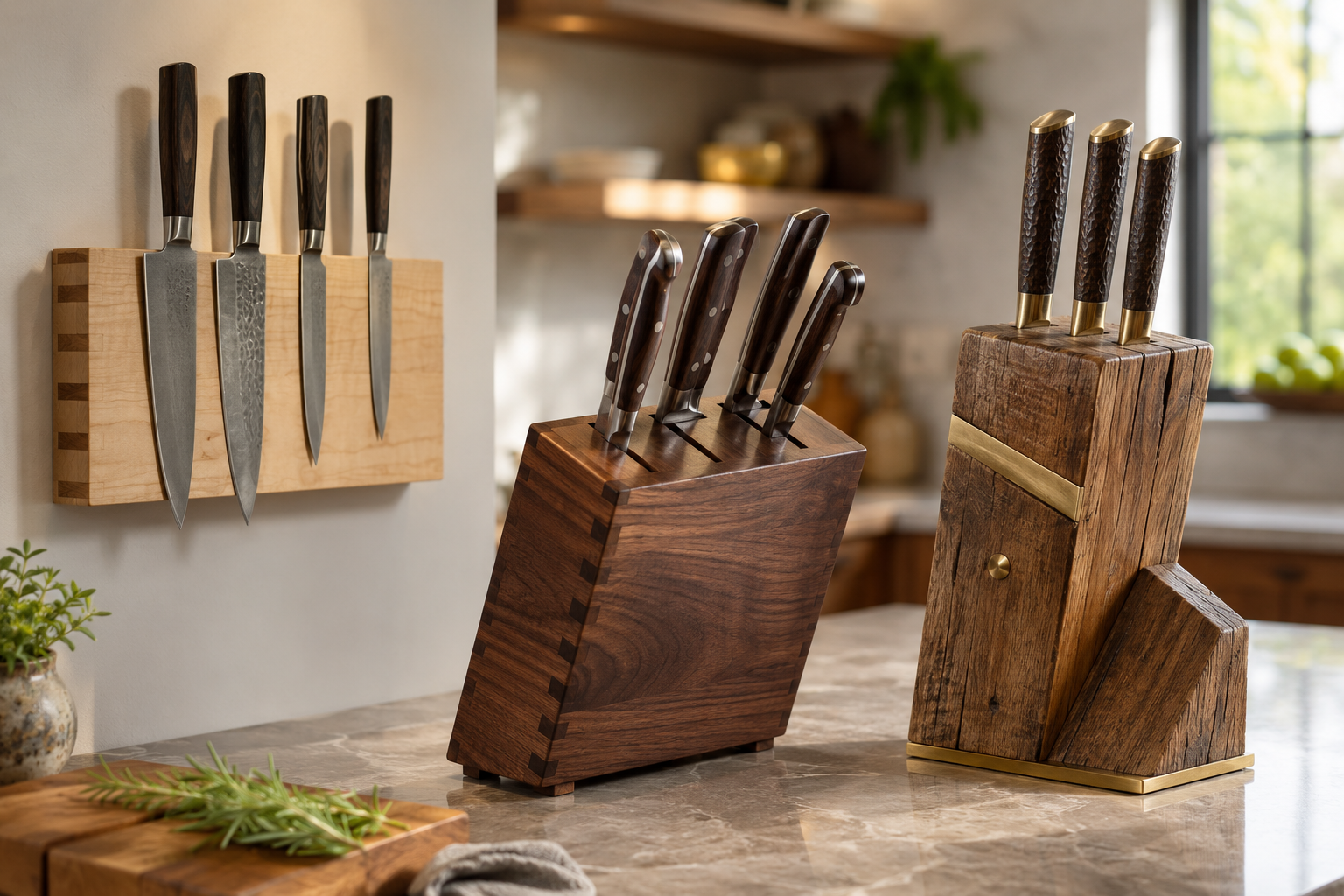 Knife block designs in maple, walnut, and oak
Design Approaches: From Minimalist to Ornate
The artistic expression in these projects is often defined by the chosen design style.
- Minimalist Modern: Characterized by clean lines, geometric shapes, and an absence of excessive ornamentation. These designs often prioritize functionality and simplicity, using subtle joinery and a limited palette of materials. Magnetic knife strips hidden within sleek wooden panels or modular drawer inserts exemplify this style.
- Rustic Ornate: Embraces natural imperfections, rough textures, and a connection to traditional craftsmanship. Live-edge slabs, exposed joinery, and natural oil finishes enhance the organic feel. Imagine a knife block crafted from a single piece of live-edge walnut, or an organizer featuring hand tool joinery for visible wood joints.
- Transitional/Hybrid: Blends elements of both modern and traditional styles. This could involve a streamlined form with classic wood species, or a rustic piece incorporating contemporary metal accents. This flexibility allows for broader appeal.
Mastering Joinery and Functionality for High-Margin Organizers
The true value in handcrafted kitchen organizers goes beyond aesthetics; it lies in their thoughtful functionality and robust construction. Expert joinery not only ensures durability but also acts as a visual design element, elevating the perceived value and allowing for higher profit margins.
Essential Joinery Techniques
For knife blocks and kitchen organizers, precision joinery is critical. It determines strength, longevity, and the overall quality of the piece.
- Dovetail Joints: Often considered the hallmark of fine woodworking, dovetails offer exceptional mechanical strength and a beautiful, classic appearance. They are perfect for constructing robust knife block bases or the sides of a utensil drawer organizer. Mastering dovetail joinery for drawers can significantly enhance the premium feel of your organizers.
- Mortise and Tenon Joints: Another traditional and strong joint, ideal for connecting perpendicular pieces, such as the uprights and base of a multi-tiered spice rack or the framework of a hanging pot rack.
- Dadoes and Rabbets: These are excellent for creating shelves, dividers, and back panels in organizers. They provide good strength and are relatively straightforward to cut with a table saw or router.
- Magnetic Inserts: For knife blocks, incorporating rare-earth magnets offers a sleek, blade-friendly alternative to traditional slots. Concealing these magnets within the wood requires precision routing and careful consideration of wood thickness. Our guide on DIY wooden knife blocks custom designs for modern kitchens with safety-focused joinery offers more insights.
Integrating Functionality with Artistic Expression
The best designs seamlessly merge utility with visual appeal.
- Knife Slots and Protection: Traditional knife blocks use precisely cut slots to hold knives. The angles and dimensions must accommodate various blade types safely. For a high-margin project, consider innovative slot designs that cradle the blade without dulling it, or integrate removable inserts for easy cleaning. Ensuring food-safe glues and finishes is paramount.
- Custom Compartments and Dividers: Kitchen organizers gain value from tailored storage solutions. Think about adjustable dividers for silverware drawers, custom-shaped slots for specific kitchen gadgets, or tiered shelves for spices. These elements demonstrate a deep understanding of the client’s needs.
- Hidden Features: Incorporating hidden compartments, pull-out shelves, or magnetic surfaces for small metallic items (like measuring spoons) adds a delightful element of surprise and enhances functionality.
- Material Contrasts: Combining wood with other materials like stainless steel (for a minimalist magnetic strip), brass (for decorative accents or feet), or even leather (for subtle pulls) can elevate the artistic dimension of the piece.
- Wall-Mounted Solutions: For smaller kitchens, wall-mounted organizers free up counter space. Consider DIY compact entryway organizers as inspiration for similar wall-mounted kitchen solutions, adapting the principles of space-saving and aesthetic appeal.
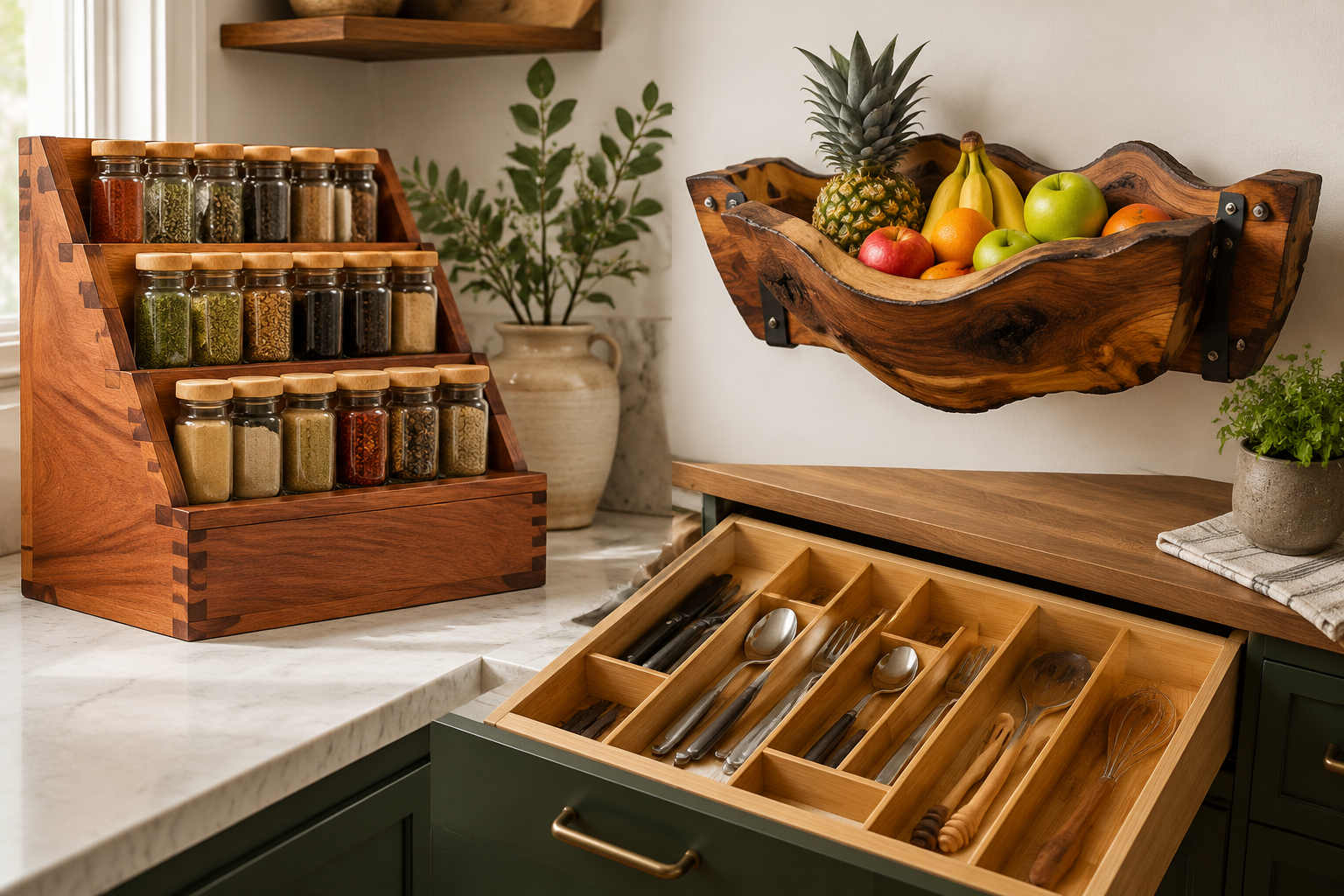 Innovative wooden kitchen organizers including spice rack and utensil drawer
Finishing, Marketing, and Profitability in 2026
Successfully Designing Knife Blocks and Kitchen Organizers: High-Margin Projects That Combine Utility with Artistic Expression requires not only woodworking skill but also a keen understanding of finishing, branding, and market positioning. In 2026, consumers are increasingly willing to pay a premium for products that tell a story, are sustainably sourced, and offer lasting quality.
Finishing for Durability and Beauty
The finish protects the wood and enhances its natural beauty, especially critical in a kitchen environment.
- Food-Safe Finishes: Given direct contact with kitchen utensils and potential food items, using food-safe finishes is non-negotiable. Mineral oil, tung oil, and certain waxes are popular choices. They penetrate the wood, offering protection while highlighting its grain.
- Durability: Kitchen environments expose wood to moisture, heat, and frequent cleaning. A durable finish is essential. Consider finishes like polyurethane or conversion varnish for surfaces that require maximum protection, ensuring they are properly cured and non-toxic. For detailed guidance, explore various oak wood finishing techniques or antique wood finishing techniques for a unique aesthetic.
- Sanding and Prep: No finish can hide poor surface preparation. Meticulous sanding through progressive grits is vital for a smooth, professional result that will command a higher price.
Pricing and Marketing Strategies
To realize the high-margin potential, strategic pricing and effective marketing are crucial.
- Value-Based Pricing: Price your pieces based on the perceived value, not just material and labor costs. Highlight the custom design, quality materials, expert craftsmanship, and the functional benefits.
- Showcasing Unique Selling Propositions (USPs): Emphasize aspects like sustainably sourced wood, unique joinery, bespoke design elements, and the hand-finished quality. For example, if you’re using locally sourced hardwoods or reclaimed materials, make that a key part of your product’s story.
- High-Quality Photography: Professional photographs that showcase the intricate details, wood grain, and functional elegance of your knife blocks and organizers are essential for online sales and portfolio building.
- Targeted Marketing: Identify your ideal customer—those who appreciate fine craftsmanship, custom solutions, and sustainable products. Market through online platforms popular with design-conscious consumers, local craft fairs, or collaborations with interior designers.
- Branding: Develop a strong brand identity that communicates the quality and ethos of your woodworking. A subtle brand mark or logo on each piece adds professionalism.
Maximizing Profitability
Several strategies can enhance the profitability of these projects.
- Material Sourcing: Establish relationships with local sawmills or suppliers for quality hardwoods. Utilizing cut-offs from larger projects for smaller organizers can also reduce material waste and cost. Exploring sustainable wood sourcing for the modern woodworker can also provide a cost advantage and a compelling narrative.
- Efficient Production: While custom, developing efficient workflows for common elements or repeatable designs can save time. Invest in quality tools and master techniques like power tool mastery for decorative wood projects to ensure precision and speed.
- Customization Options: Offer different wood species, finishes, and configurations as customizable options. This allows clients to feel more involved in the design process and justifies premium pricing.
- Bundling: Offer discounts for purchasing a matching set of kitchen organizers or bundling a knife block with a custom cutting board.
- Educational Content: Create content that educates potential customers about the value of handcrafted items, the different wood types, and the benefits of proper kitchen organization. This builds trust and positions you as an expert.
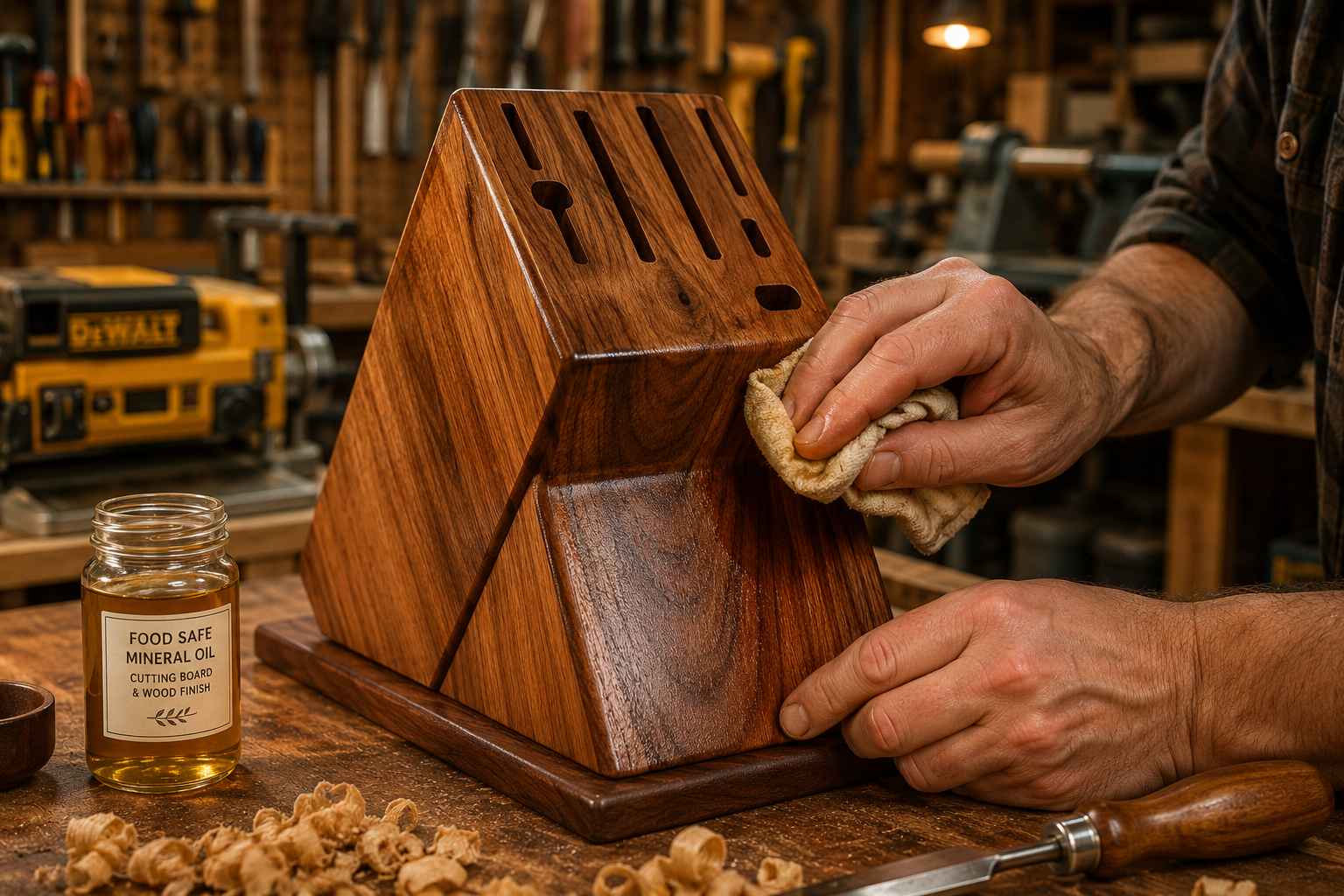 Woodworker applying finish to a handcrafted knife block
Conclusion
Designing knife blocks and kitchen organizers represents a fertile ground for woodworkers looking to combine practical utility with profound artistic expression. By focusing on quality materials, mastering precise joinery, and embracing diverse design aesthetics from minimalist to rustic ornate, craftsmen can create high-margin products that resonate with discerning clients in 2026. These projects are more than just storage solutions; they are functional art pieces that enhance a home’s narrative and showcase the timeless beauty of woodcraft.
To embark on this profitable journey, begin by refining your design concepts, experimenting with different wood species, and honing your joinery skills. Consider building a portfolio of diverse pieces to showcase your range. Explore local markets and online platforms to understand current demand and position your handcrafted items effectively. The demand for unique, high-quality, and functional home goods continues to grow, offering a significant opportunity for skilled woodworkers to thrive in this specialized niche.