
The average household spends nearly $2,000 annually on home furnishings, a figure that often rises when professional cabinetry and custom pieces are factored in. For aspiring DIYers and those looking to stretch their home improvement budget further, understanding how to leverage materials like EPL (Engineered Wood Products) and plywood can unlock significant savings and creative potential. This article serves as a comprehensive guide to EPL and Plywood Projects: Budget-Friendly Furniture and Cabinetry for Beginners, demonstrating how these versatile materials can transform your living space without breaking the bank, all while nurturing valuable woodworking skills in 2026.
Key Takeaways
- Cost-Effectiveness and Accessibility: EPL and plywood offer an economical alternative to solid lumber, making woodworking accessible for beginners.
- Versatility in Applications: These materials are ideal for a wide range of projects, from simple shelving to complex cabinetry.
- Ease of Use: Their consistent dimensions and stable nature simplify cutting, joining, and finishing processes for novices.
- Durability and Stability: Modern EPL and plywood are engineered for strength and resistance to warping, ensuring long-lasting projects.
- Essential Skill Development: Engaging with these materials helps beginners build foundational woodworking skills without significant initial investment.
Understanding EPL and Plywood: Foundations for Budget-Friendly Furniture
Engineered Wood Products (EPL) and plywood are manufactured wood materials renowned for their stability, strength, and affordability. Unlike solid wood, which is cut directly from timber, these products are created by bonding wood fibers, veneers, or strands with adhesives under heat and pressure. This manufacturing process makes them incredibly consistent, resisting warping and splitting, which are common challenges with solid wood, especially for beginners.
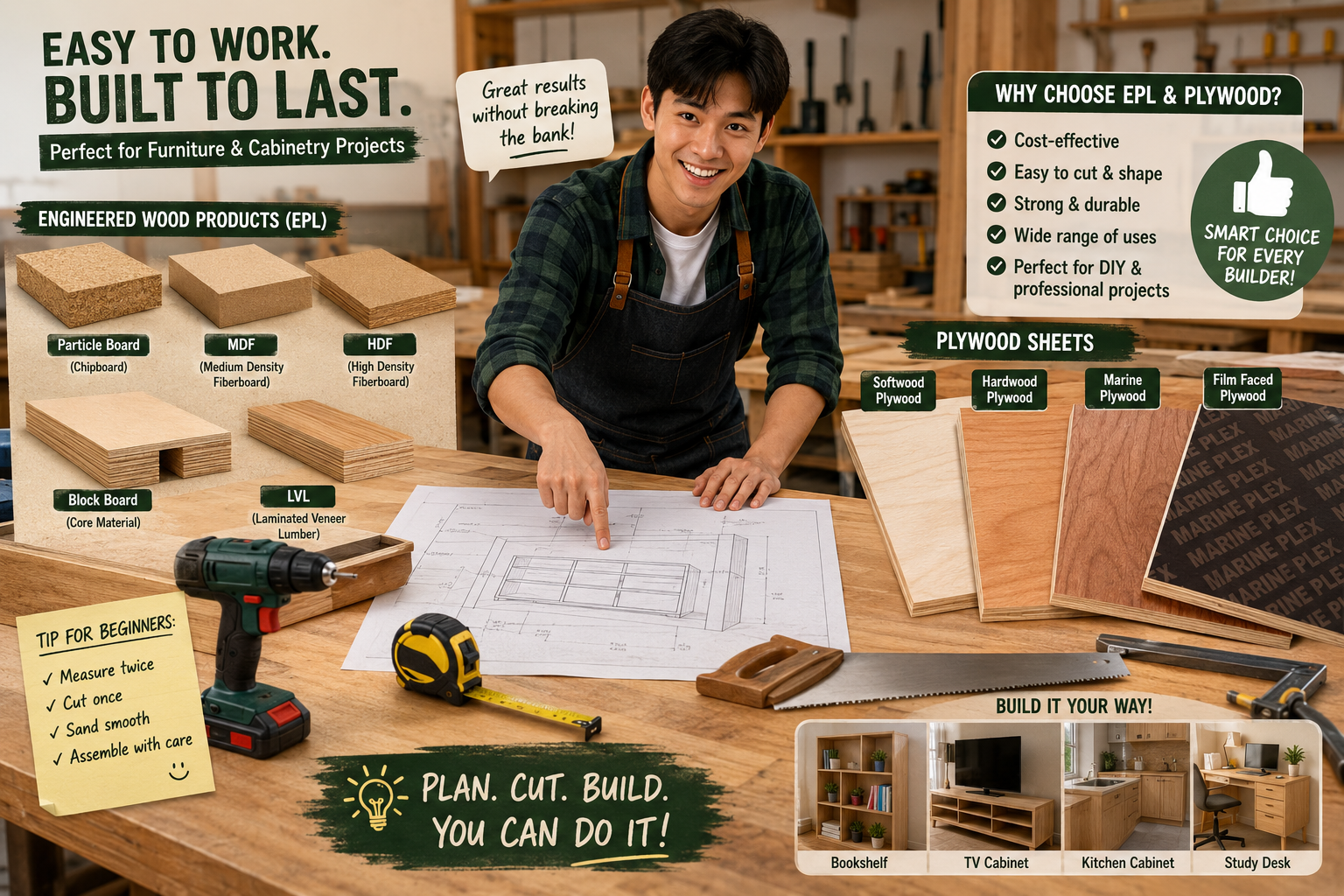
Plywood, perhaps the most familiar of these, consists of thin layers (plies) of wood veneer glued together with adjacent layers having their wood grain rotated up to 90 degrees to one another. This cross-graining technique gives plywood exceptional strength and dimensional stability. Available in various grades and wood types, it’s a go-to for EPL and Plywood Projects: Budget-Friendly Furniture and Cabinetry for Beginners.
Engineered Wood Products (EPL) encompass a broader category, including:
- Particleboard/Chipboard: Made from wood particles (chips, shavings) compressed with resin. It’s the most budget-friendly option, often used as a core material for laminate furniture.
- MDF (Medium-Density Fiberboard): Composed of fine wood fibers, resin, and wax. MDF has a very smooth surface, making it excellent for painting and routing intricate designs. It’s denser and more uniform than particleboard.
- OSB (Oriented Strand Board): Similar to particleboard but uses larger, rectangular wood strands arranged in layers, often used in construction but can be repurposed for robust, utilitarian furniture.
| Material Type | Pros | Cons | Ideal Projects for Beginners |
|---|---|---|---|
| Plywood | High strength, good screw retention, variety of finishes | Can be heavy, edges may require finishing, varying quality grades | Shelving, basic cabinets, workbenches, storage boxes |
| MDF | Very smooth surface, excellent for painting, consistent density | Heavy, poor screw retention on edges, sensitive to moisture | Painted furniture, routed designs, drawer bottoms, cabinet doors |
| Particleboard | Most affordable, lightweight (compared to MDF) | Low strength, poor screw retention, susceptible to moisture damage | Interior cabinet parts, temporary furniture, laminate cores |
| OSB | Very strong, cost-effective for large panels, moisture resistant | Rough surface, not aesthetically pleasing without covering, heavy | Utility shelving, workshop cabinets, heavy-duty work surfaces |
Choosing the right material depends on your project’s requirements, desired finish, and budget. For most beginners aiming for furniture and cabinetry, plywood (especially cabinet-grade or sanded plywood) and MDF will be your primary allies. For more advanced techniques like edge joining plywood, understanding the material’s properties is crucial.
Essential Tools and Techniques for EPL and Plywood Projects: Budget-Friendly Furniture and Cabinetry
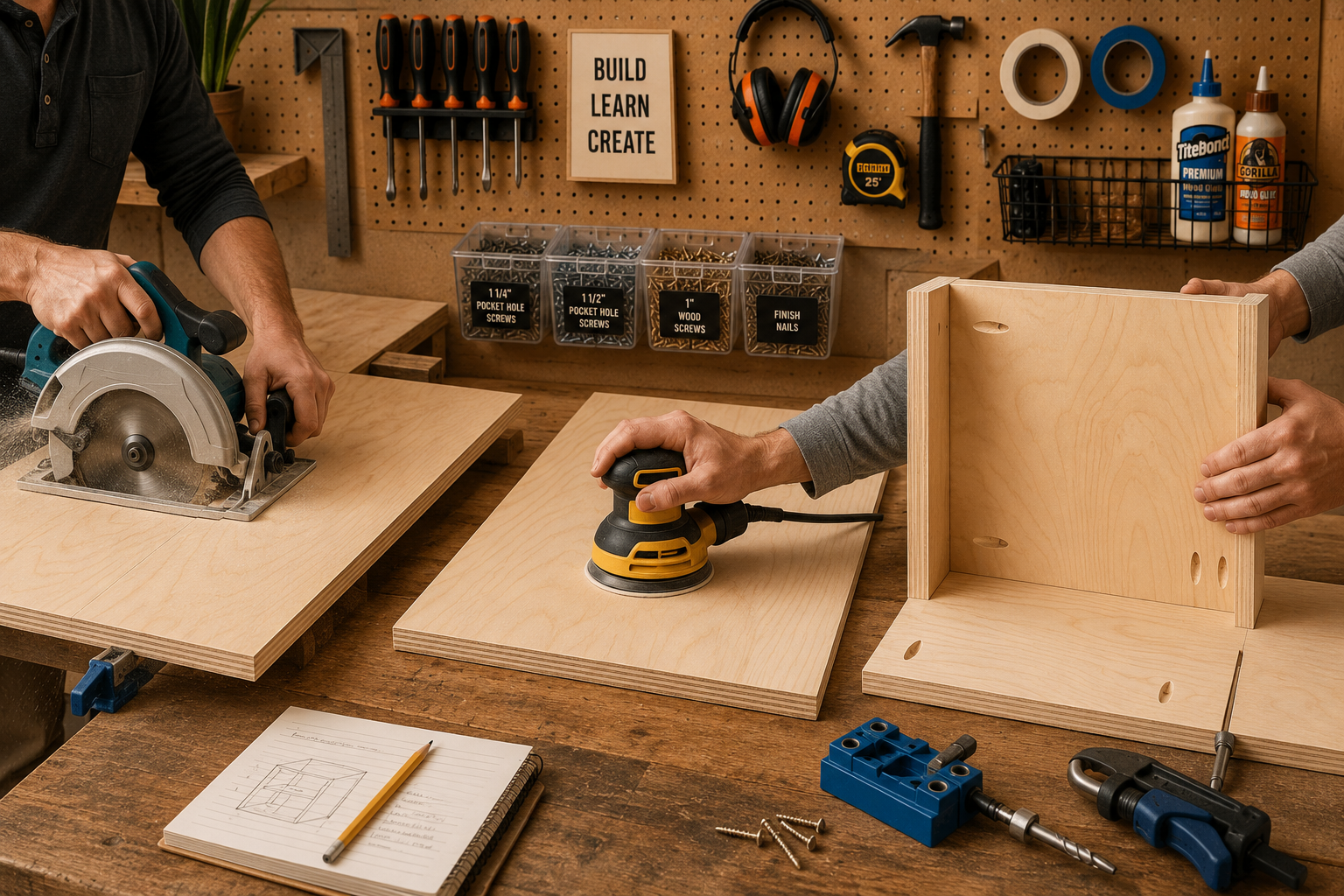
Embarking on EPL and Plywood Projects: Budget-Friendly Furniture and Cabinetry for Beginners doesn’t require a fully-stocked professional workshop. A few key tools and mastering some fundamental techniques will set you up for success.
Basic Tool Kit for Plywood and EPL
- Measuring Tools: Tape measure, combination square, straight edge (a long metal ruler or a factory edge of a plywood sheet).
- Cutting Tools:
- Circular Saw: Essential for making straight cuts on large sheets. A guide rail or a homemade cutting jig will significantly improve accuracy.
- Jigsaw: For curved cuts or internal cutouts.
- Utility Knife: Useful for scoring veneer before cutting to prevent tear-out.
- Drilling Tools:
- Cordless Drill: Indispensable for pre-drilling holes and driving screws.
- Drill Bit Set: Including twist bits for pilot holes and a countersink bit for flush screw heads.
- Clamping: Essential for holding pieces together during assembly and gluing. Bar clamps, F-clamps, and spring clamps are all useful.
- Sanding: Sandpaper (various grits from 80 to 220), sanding block, or an orbital sander.
- Safety Gear: Safety glasses, ear protection, and dust mask.
Fundamental Techniques for Beginners
- Accurate Measuring and Marking: “Measure twice, cut once” is the golden rule. Use a sharp pencil and double-check all dimensions.
- Straight Cuts: For plywood, achieving straight cuts is paramount. Use a circular saw with a straight edge or a cutting jig. Clamp your material securely to prevent movement. For cleaner cuts and reduced tear-out on veneered plywood, score the cut line with a utility knife first.
- Joining Methods:
- Screws and Glue: The simplest and most robust method for beginners. Pre-drill pilot holes to prevent splitting, especially near edges. Wood glue adds significant strength to any joint.
- Pocket Holes: A highly effective and relatively easy joinery method using a pocket hole jig. This allows you to create strong, concealed joints quickly, perfect for constructing frames and panels in furniture and cabinetry.
- Butt Joints with Reinforcement: While a simple butt joint (two flat edges glued together) isn’t strong on its own, adding wood glue and screws or dowels can make it robust for non-structural applications. For alternatives, explore hand tool joinery for visible wood joints.
- Finishing Edges: Plywood edges, particularly, can look unfinished. Options include:
- Edge Banding: Iron-on or pre-glued veneer tape that covers the raw edge.
- Solid Wood Trim: Gluing thin strips of solid wood to the edges for a more refined look.
- Routing: Shaping the edge with a router to create a decorative profile. Learn more about mastering the router table.
- Sanding and Finishing: Proper sanding prepares the surface for painting or staining. Start with a coarser grit (80-100) to remove imperfections, then move to progressively finer grits (120, 150, 220) for a smooth finish. For finishing, consider paint, varnish, or a clear coat depending on the desired aesthetic and durability.
Beginner-Friendly EPL and Plywood Projects: Budget-Friendly Furniture and Cabinetry Ideas
With an understanding of materials and basic techniques, beginners can confidently tackle a variety of appealing and functional EPL and Plywood Projects: Budget-Friendly Furniture and Cabinetry. These projects are designed to build confidence and skills without requiring extensive experience or specialized tools.
Simple Storage Solutions
Storage is often the first need in any home, and plywood excels here.
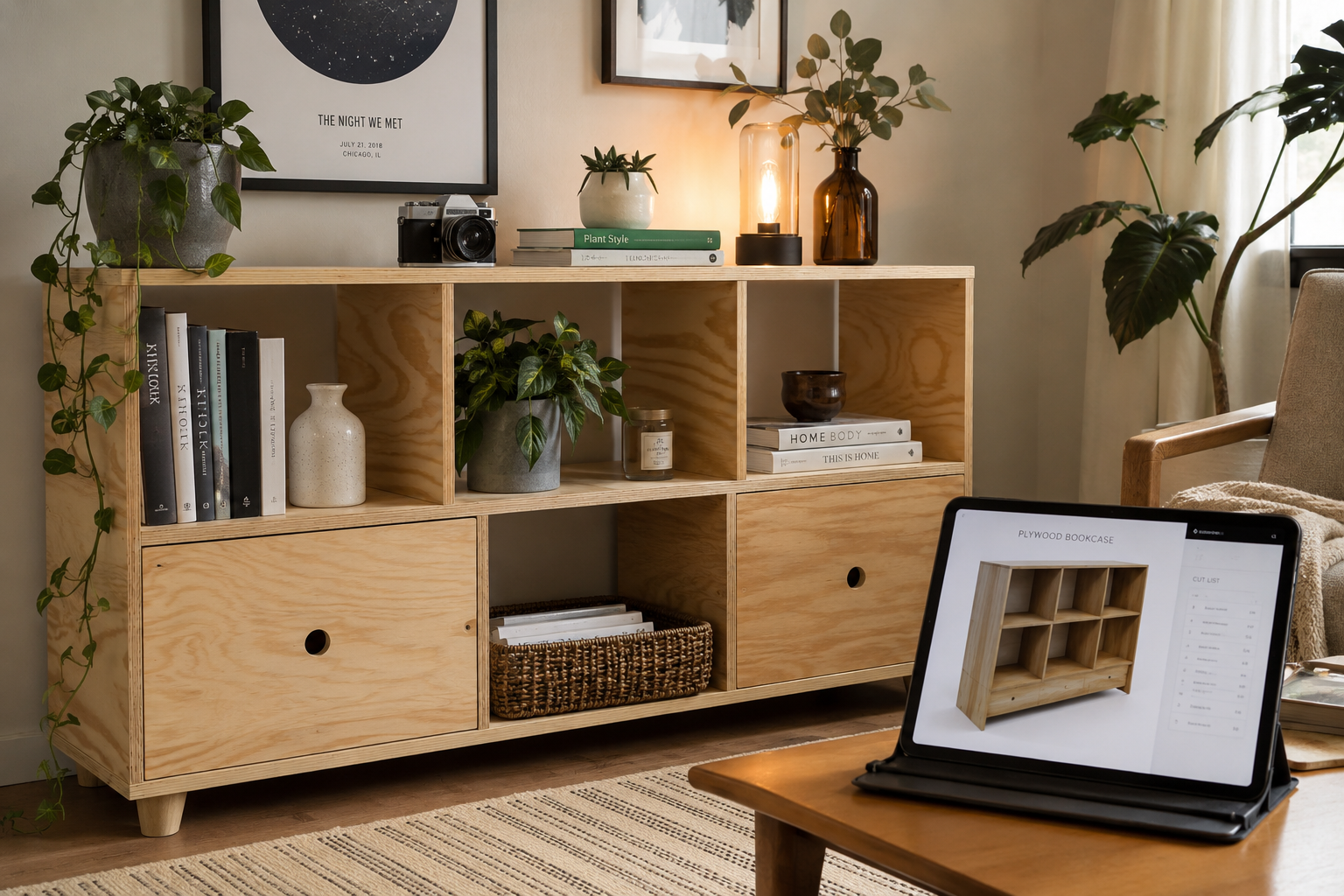
- Basic Shelving Units: From floating shelves to freestanding bookcases, plywood provides the strength and stability required. A simple cube shelving unit can be made with just a circular saw, drill, screws, and glue. For advanced ideas, consider custom floating shelves.
- Storage Boxes/Chests: Perfect for toys, linens, or tools. These can be simple butt-jointed boxes reinforced with glue and screws, or more elegant versions using pocket holes.
- Workshop Cabinets: If you’re building a workshop, sturdy cabinets made from plywood or OSB are ideal for organizing tools and supplies. These don’t need to be aesthetically perfect and serve as excellent practice.
Functional Furniture Pieces
- Bedside Tables/End Tables: A simple box design or a minimalistic table with a small drawer can be easily constructed. MDF is a great choice here if you plan to paint the piece for a smooth finish. Explore end table mastery: 5 designs from rustic to mid-century modern for inspiration.
- Coffee Tables: Designs can range from a simple rectangular slab with legs to more intricate multi-level designs. Plywood’s large sheet size allows for generous tabletops.
- Small Bookcases or Display Units: These allow for more complex joinery practice without overwhelming scale. Consider a modular design where units can be stacked or rearranged.
- Desk Organizers or Craft Caddies: Smaller scrap pieces of plywood or MDF are perfect for creating DIY modular desk organizers or caddies to hold pens, tools, or craft supplies. This is a great way to use up offcuts and practice precision cutting.
Entry-Level Cabinetry
- Kitchen Base or Wall Cabinets: Start with a basic rectangular box, using pocket holes or screws and glue for assembly. Focus on creating sturdy carcasses. Doors can be added later, perhaps made from MDF for a smooth, paintable surface.
- Bathroom Vanity Bases: Similar to kitchen cabinets, a simple vanity base can significantly upgrade a bathroom. Ensure to apply a water-resistant finish.
- Utility Room Storage: Cabinets for laundry rooms or garages can be constructed with less emphasis on aesthetics, allowing beginners to perfect their joinery and assembly techniques.
Tips for Success
- Start Small: Begin with projects like a simple shelf or a small storage box to build confidence before moving to larger items.
- Follow Plans: Utilize free plans available online or woodworking books. They often include cutting lists and step-by-step instructions specifically for plywood.
- Practice Cuts: Before cutting into your main material, practice on scrap pieces to get a feel for your tools and ensure accuracy.
- Embrace Imperfections: As a beginner, not every joint will be perfect. Learn from your mistakes and view them as opportunities for growth.
- Finishing Touches: Don’t underestimate the power of a good finish. Painting or veneering can elevate even the simplest plywood piece. Explore various wood finishing techniques to find what suits your project best.
Conclusion
Embarking on EPL and Plywood Projects: Budget-Friendly Furniture and Cabinetry for Beginners is a rewarding journey that combines creativity, practicality, and significant cost savings. These versatile materials provide an accessible entry point into woodworking, allowing you to furnish your home with custom pieces tailored to your needs and aesthetic preferences. From simple shelving units to functional cabinetry, the consistent nature and affordability of plywood and engineered wood products empower beginners to develop foundational skills and transform their living spaces.
The key to success lies in understanding the materials, mastering basic tools and techniques, and starting with achievable projects. As you gain confidence, you can explore more complex designs and even personalize your creations with various finishes. In 2026, the DIY spirit continues to thrive, and with EPL and plywood, you have the perfect foundation to join the ranks of successful home woodworkers. Begin your journey today and discover the satisfaction of building something beautiful and functional with your own hands.
SEO Meta Title: EPL & Plywood Projects: Budget Furniture & Cabinetry for Beginners SEO Meta Description: Unlock budget-friendly home decor with EPL and plywood. Learn to build furniture and cabinetry with this beginner’s guide to easy, affordable DIY woodworking.