
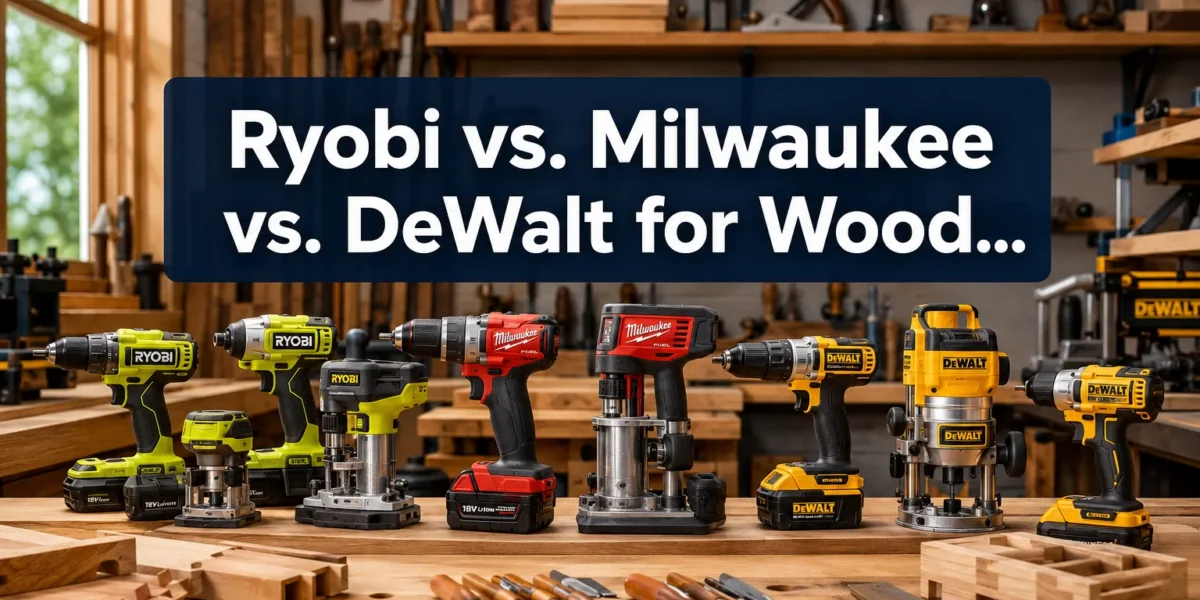
Seasoned woodworkers understand that tool selection is not merely a matter of brand loyalty; it’s about aligning a tool’s capabilities with specific project demands and a shop’s evolving workflow. In the nuanced world of wood joinery, where precision, power, and consistency are paramount, the choice between popular titans like Ryobi, Milwaukee, and DeWalt can significantly impact project quality and efficiency. This article dives into the “Ryobi vs. Milwaukee vs. DeWalt for Wood Joinery Tasks: Which Brand Is Best for Drilling, Routing, and Mortising?”, dissecting their offerings not by badge color, but by how effectively their tools integrate into real-world woodworking scenarios for beginners, hobbyists, and professionals alike.
Key Takeaways
- Ryobi excels in value and accessibility: Ideal for beginners and hobbyists, offering a broad 18V ONE+ system for light to medium joinery tasks.
- Milwaukee targets professionals with performance: Its M18 FUEL line delivers exceptional power and advanced features for demanding, continuous joinery work.
- DeWalt provides a balanced prosumer option: Offers a strong combination of reliability, power, and a wide tool selection suitable for both serious hobbyists and jobsite professionals.
- Consider ecosystem and future expansion: The long-term value often lies in a brand’s battery platform and the breadth of its compatible tools.
- Specialized tools are key: For dedicated joinery tasks like mortising, assess each brand’s specific offerings beyond general drills and routers.
Understanding the Landscape: Ryobi vs. Milwaukee vs. DeWalt for Wood Joinery Tasks
Choosing the right power tool brand for wood joinery, particularly for critical operations like drilling, routing, and mortising, involves more than just picking a color. It’s about evaluating the ecosystem, power, precision, and specialized tools each brand offers relative to your specific woodworking needs in 2026. While all three brands, Ryobi, Milwaukee, and DeWalt, are highly regarded, they cater to different segments of the market with distinct strengths.
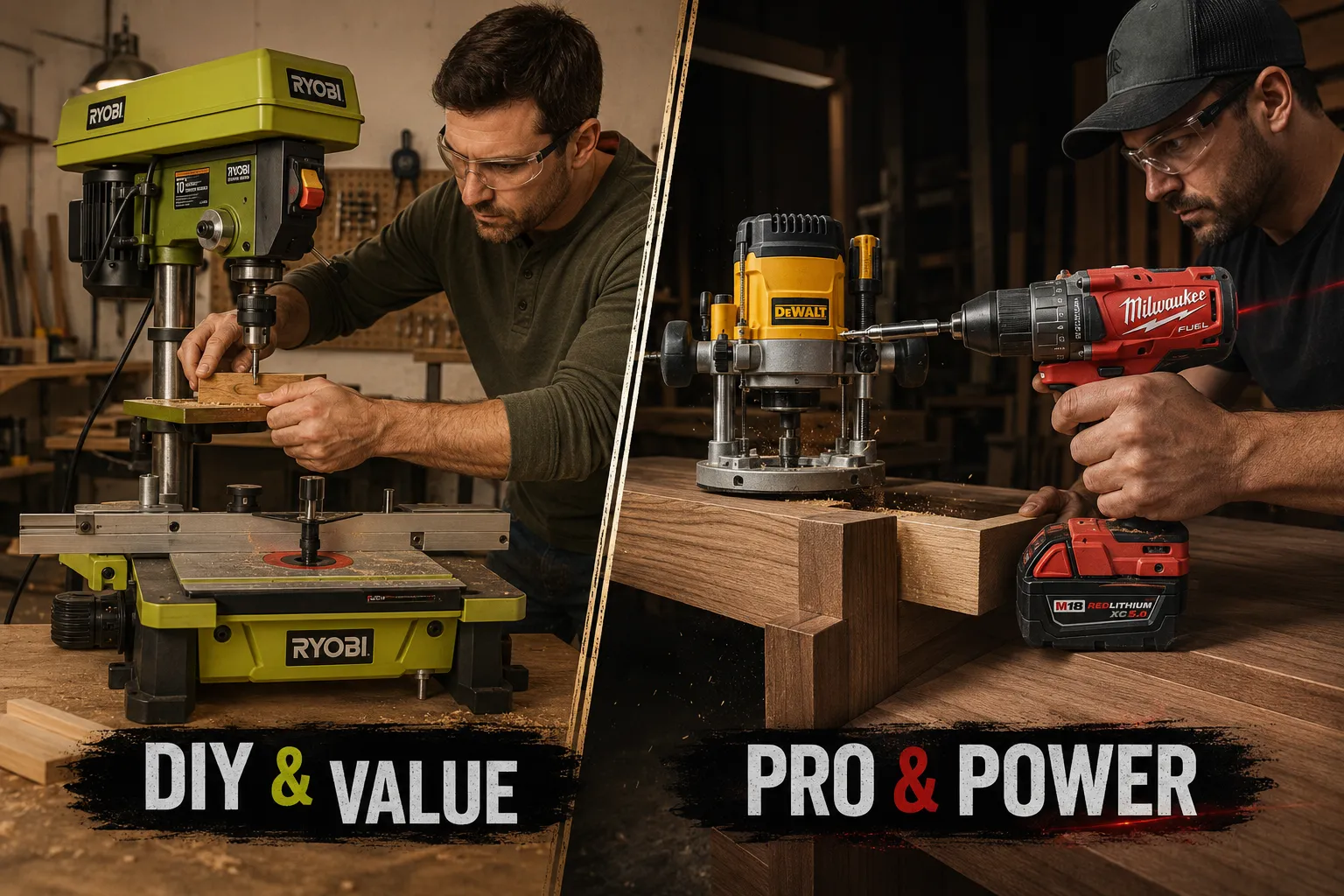
Ryobi, often found at home improvement centers, carves out its niche as the accessible, value-driven option. Its 18V ONE+ system boasts an impressive array of over 280 compatible tools, making it highly attractive for beginners, DIY enthusiasts, and those who need a diverse set of tools without a significant financial outlay. For basic drilling and routing in softwoods or for less demanding projects, Ryobi offers reliable performance. However, for continuous, heavy-duty joinery, especially in hardwoods, its tools might occasionally fall short in terms of sustained power and precision compared to its more professional-grade counterparts.
Milwaukee, on the other end of the spectrum, is a premium brand primarily targeting professional tradespeople. Its M18 FUEL line is synonymous with cutting-edge technology, exceptional power, and durability. For woodworkers who rely on their tools daily for intricate and demanding joinery, such as crafting complex dovetail joints for drawers or precise mortise and tenon joints for furniture, Milwaukee’s tools often provide the consistent performance and advanced features required. Their routers are known for robust motors, and their drills offer superior torque and control, which are vital for accuracy in joinery.
DeWalt positions itself as a strong contender for both serious hobbyists and professional woodworkers. Often seen on job sites, DeWalt’s 20V MAX and FLEXVOLT systems offer a robust balance of power, durability, and a comprehensive tool lineup. Their tools are known for their ergonomic designs, reliability, and widespread availability. For wood joinery tasks like drilling precise pilot holes, executing clean router profiles, or performing repetitive mortising, DeWalt provides a dependable and powerful solution that can handle a wide range of materials and project scales. This makes DeWalt a solid middle-ground for those looking for professional-grade performance without necessarily needing Milwaukee’s top-tier innovations or budget constraints.
Deep Dive into Joinery Tasks: Drilling, Routing, and Mortising Performance
When evaluating “Ryobi vs. Milwaukee vs. DeWalt for Wood Joinery Tasks: Which Brand Is Best for Drilling, Routing, and Mortising?”, it’s crucial to break down performance by the specific demands of each operation. The nuances of drilling precise holes, routing intricate profiles, and cutting clean mortises highlight the strengths and weaknesses of each brand. For an overview of essential techniques, explore our guide to mastering wood joinery techniques.
Drilling Performance
- Ryobi: For general drilling, such as pilot holes, pocket holes, or through-holes in softwoods and thinner stock, Ryobi’s drills are perfectly adequate. They offer good ergonomics and sufficient power for casual use. However, when drilling larger diameter holes, especially with Forstner bits or in dense hardwoods, users might notice a decrease in torque and potentially shorter battery life under load.
- Milwaukee: Milwaukee’s M18 FUEL drills are powerhouses. They excel in drilling large holes, driving screws, and handling continuous, high-torque applications. Features like POWERSTATE brushless motors and REDLINK PLUS intelligence ensure maximum performance and protection against overload. For precision joinery where consistent hole depth and diameter are critical, Milwaukee drills provide unwavering performance.
- DeWalt: DeWalt’s 20V MAX drills offer excellent power and speed. They are well-regarded for their reliability in a variety of drilling tasks, from everyday pilot holes to more demanding applications. Many models include hammer drill functions, which, while not directly for wood joinery, speak to their robust build. Their drills strike a good balance, offering ample power for most woodworking tasks without the premium price of Milwaukee’s top-tier models.
Routing Capabilities
- Ryobi: Ryobi offers a range of routers, including trim routers and full-size plunge routers. For edge detailing, small dadoes, or light decorative work, they perform admirably. Their trim routers are particularly popular for their compact size and affordability. However, for heavy stock removal, deep dadoes, or routing harder woods for extended periods, they may experience bogging down or vibrations, impacting the smoothness of the cut.
- Milwaukee: Milwaukee’s M18 FUEL routers are designed for professional use. They deliver exceptional power, precise depth adjustments, and smooth operation, even with large bits or in dense materials. The brushless motors provide efficiency and durability, and features like variable speed control are crucial for achieving optimal results across different wood types and bit profiles. For intricate router joinery, such as raised panels or complex edge treatments, Milwaukee tools offer superior control and finish quality.
- DeWalt: DeWalt’s routers are highly respected in the woodworking community. Their compact trim routers, as well as their full-size models, provide excellent power and precision. Features like soft start, variable speed, and robust depth adjustment mechanisms make them versatile for a wide array of routing tasks, from flush trimming to cutting mortises with a mortising jig. They often offer a good balance of power, control, and durability, making them suitable for both detailed joinery and larger routing projects. When building projects like a modern plywood record console, a reliable router is indispensable for precise dados and rabbets.
Mortising Options
Mortising, the process of cutting a cavity for a tenon, is a specific joinery task that benefits greatly from specialized tools or highly capable standard tools.
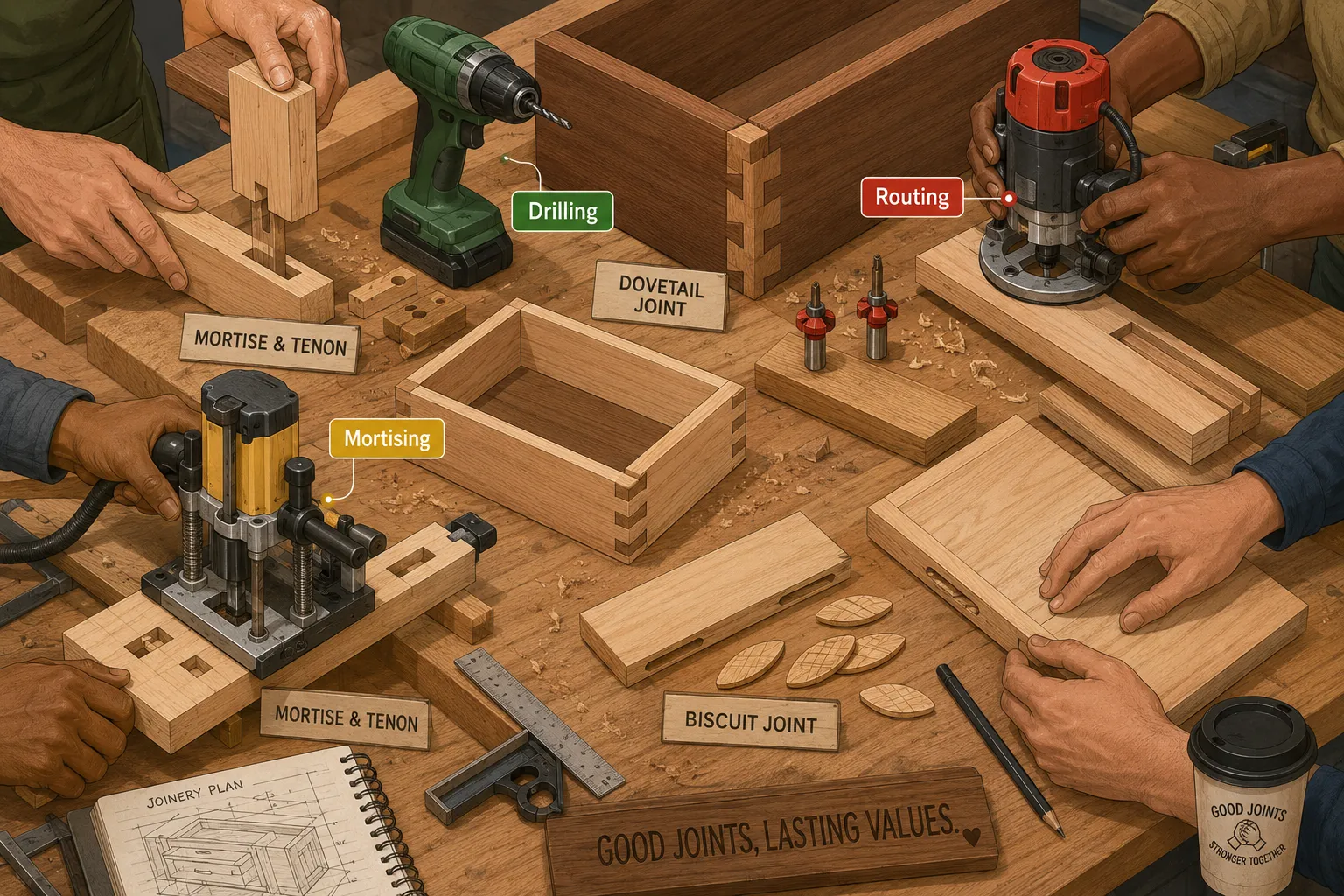
- Ryobi: Ryobi does not typically offer dedicated mortising machines. For mortising with Ryobi tools, one would rely on their routers with a mortising jig or their drills with auger bits. While possible for occasional, lighter work, this approach might lack the precision and efficiency of a dedicated setup for repetitive mortises.
- Milwaukee: While Milwaukee also doesn’t have a broad line of dedicated benchtop mortisers, their high-power routers, when paired with a quality mortising jig, can perform excellent mortising. Their drills are also capable of clearing out waste effectively after marking the mortise boundaries. The consistent power and control of Milwaukee tools help maintain accuracy throughout the mortising process.
- DeWalt: DeWalt, through its DWMHT72400 heavy-duty mortiser, offers a dedicated solution for benchtop mortising, appealing to serious woodworkers and professionals. This tool provides precise and clean mortises, which are crucial for strong, aesthetically pleasing mortise and tenon joints. Even without the dedicated machine, DeWalt’s robust routers, combined with appropriate jigs, are highly effective for router-based mortising. The brand’s focus on job site durability means their tools can handle the sustained stress of mortising tasks.
Ecosystem, Ergonomics, and Value: Making Your Final Choice
Beyond raw power and specialized performance in drilling, routing, and mortising, the decision of “Ryobi vs. Milwaukee vs. DeWalt for Wood Joinery Tasks: Which Brand Is Best for Drilling, Routing, and Mortising?” hinges on several other critical factors. These include the overall tool ecosystem, ergonomics, battery technology, and long-term value, all of which contribute to a holistic woodworking experience.
The Ecosystem Advantage
One of the most compelling arguments for sticking with a single brand for your cordless tools is the battery ecosystem. All three brands offer extensive battery platforms, but their scale and focus differ:
- Ryobi 18V ONE+: This system is incredibly vast, offering tools for woodworking, automotive, lawn and garden, and more. If you’re looking to equip your entire home and workshop with battery-powered tools on a budget, Ryobi is unparalleled. The sheer number of compatible tools means you can add a new tool without investing in new batteries or chargers, providing significant long-term value for hobbyists.
- Milwaukee M18/M12 Systems: Milwaukee’s focus is on professional performance. Their M18 system is robust for heavy-duty tasks, while the M12 line offers compact solutions for lighter, more intricate work, which can be useful for certain joinery details. The batteries are designed for demanding use, offering advanced electronics for performance and longevity. Investing in Milwaukee means buying into a system built for demanding job sites and continuous professional use.
- DeWalt 20V MAX/FLEXVOLT: DeWalt’s ecosystem strikes a balance. The 20V MAX platform is incredibly popular and offers a wide range of tools for construction and woodworking. The FLEXVOLT system provides revolutionary batteries that can power both 20V MAX and higher-voltage 60V MAX tools, offering exceptional versatility for tools that demand more power, such as large miter saws or table saws, which can be part of a comprehensive workshop setup. This flexibility is a major advantage for woodworkers who need both cordless portability and the power of corded tools.
Ergonomics and User Experience
Ergonomics play a vital role, especially during long woodworking sessions.
- Ryobi: Generally, Ryobi tools are designed for comfortable use by a broad audience. They tend to be lighter, which can be a benefit for extended handheld routing or drilling. The grip textures are usually comfortable, though some users might find them less refined than professional-grade tools.
- Milwaukee: Milwaukee tools are engineered for professional comfort and endurance. Their grips are often highly contoured, well-balanced, and designed to minimize fatigue during prolonged, heavy-duty use. The weight distribution on their more powerful tools is typically optimized for control and stability.
- DeWalt: DeWalt is known for its excellent ergonomics. Their tools often feature rubber overmolds, well-placed handles, and balanced designs that reduce user fatigue. The overall feel is sturdy and confidence-inspiring, making them a favorite for tasks requiring precision and extended handling.
Price Point and Long-Term Value
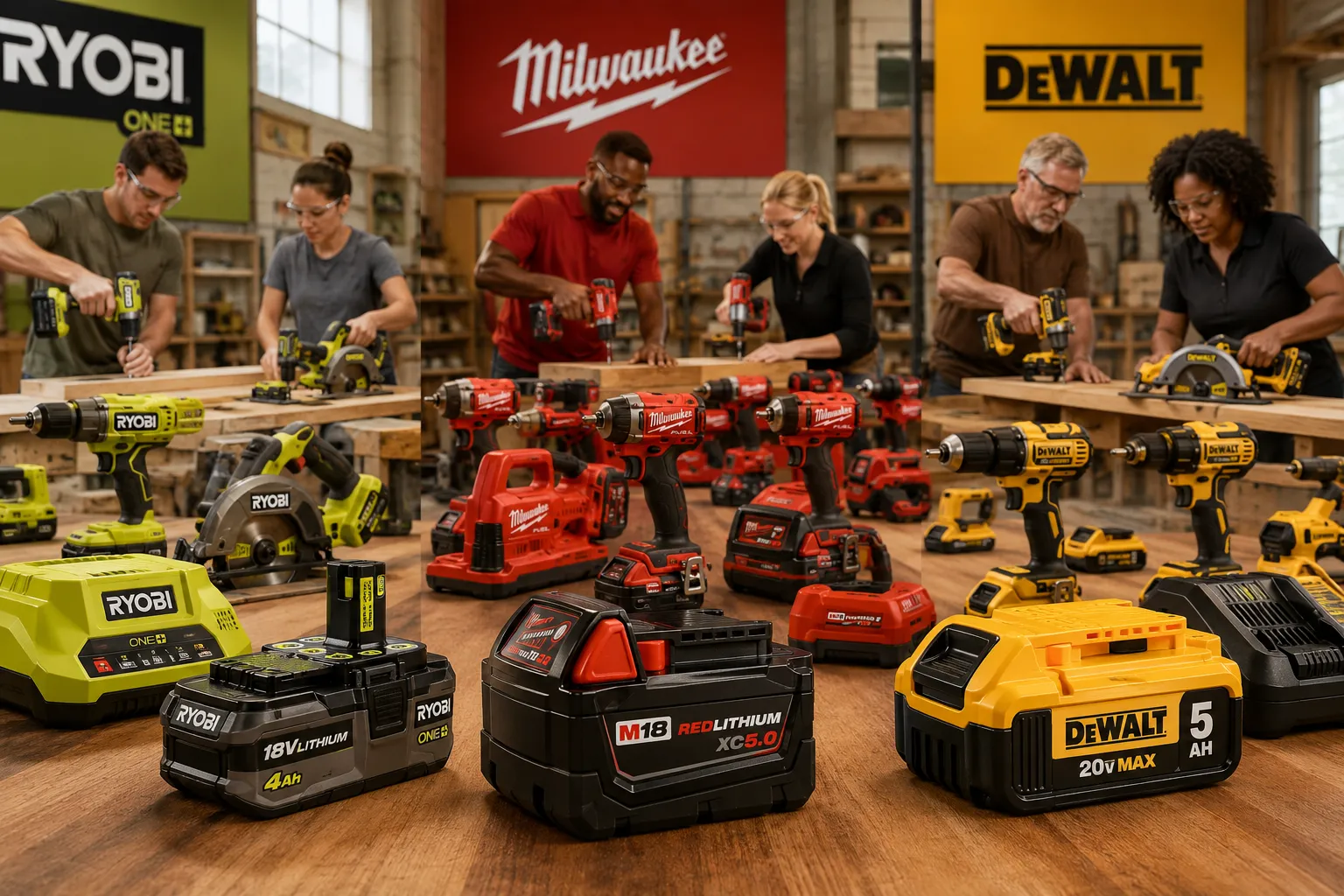
- Ryobi: Without a doubt, Ryobi offers the best entry-level price point. Their tools are significantly more affordable, making them an excellent choice for beginners building their first tool collection or hobbyists on a budget. The value proposition is high due to the extensive ONE+ system, where one set of batteries can power a vast array of tools.
- Milwaukee: Milwaukee represents a premium investment. Their tools come with a higher price tag, but this is justified by their superior performance, advanced technology, durability, and professional-grade features. For those who earn a living with their tools or demand the absolute best in performance and reliability for their woodworking, the long-term value in terms of productivity and longevity is significant.
- DeWalt: DeWalt sits comfortably in the mid-to-high range. They offer professional-grade tools at a price point that is more accessible than Milwaukee, yet still a step up from Ryobi. Their balance of performance, durability, and a strong ecosystem makes them a strong long-term investment for serious hobbyists and professionals who want reliable, high-performing tools without breaking the bank. For constructing durable pieces like a DIY woodworking bench, the reliability of DeWalt tools is a key factor.
Conclusion
The question of “Ryobi vs. Milwaukee vs. DeWalt for Wood Joinery Tasks: Which Brand Is Best for Drilling, Routing, and Mortising?” doesn’t have a single universal answer. It largely depends on your specific needs, budget, and the scope of your woodworking projects in 2026.
- Choose Ryobi if: You are a beginner, a DIY enthusiast, or primarily work on lighter, less frequent projects. Its affordability and vast 18V ONE+ ecosystem offer unmatched value for casual use and general household tasks.
- Opt for Milwaukee if: You are a professional woodworker, tackle demanding projects regularly, or prioritize maximum power, precision, and cutting-edge technology. The M18 FUEL line is built for continuous, heavy-duty performance and unparalleled durability.
- Select DeWalt if: You are a serious hobbyist or a professional seeking a powerful, reliable, and ergonomic tool system that balances performance with a broader accessibility in price. DeWalt provides a robust ecosystem that excels across a wide range of woodworking and job site tasks.
Ultimately, consider not just the individual tool, but the entire ecosystem. Will your chosen brand support your future expansion into other tools, such as specialized saws, sanders, or even outdoor equipment? By aligning your workflow with the strengths of each brand, you can make an informed decision that enhances your wood joinery capabilities and brings your creative visions to life.
SEO Meta Title: Ryobi vs. Milwaukee vs. DeWalt for Wood Joinery (2026) SEO Meta Description: Compare Ryobi, Milwaukee, & DeWalt for drilling, routing, and mortising in 2026. Find the best brand for your wood joinery tasks and workshop.