
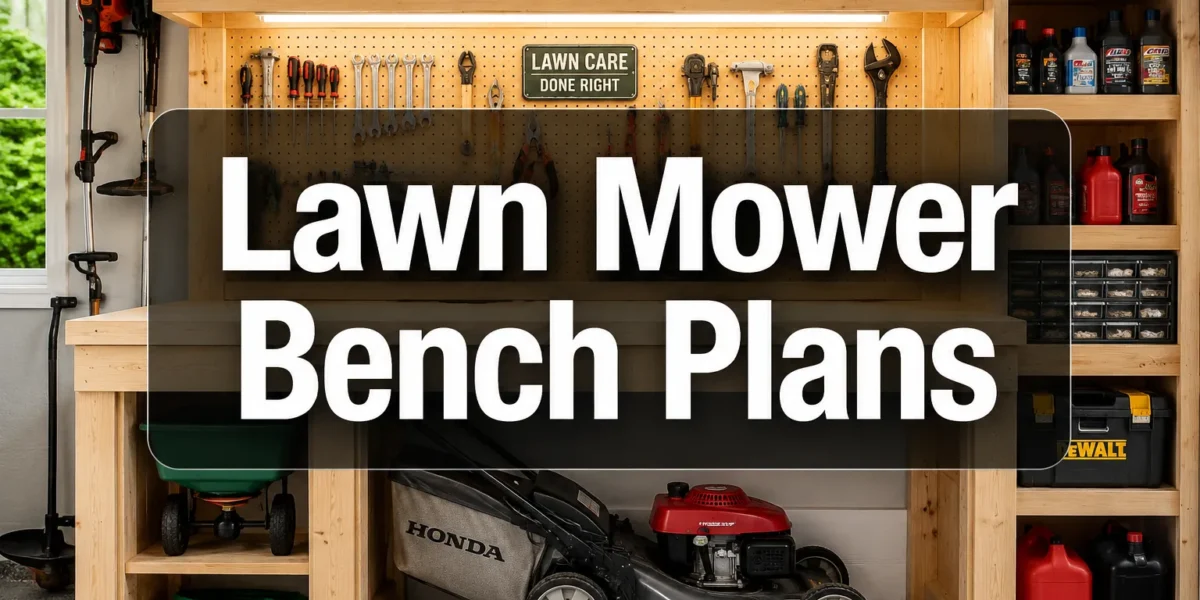
The average homeowner spends nearly 50 hours annually on lawn care, much of which involves preparing and maintaining their lawn mower. Yet, for many, the garage where this essential equipment resides remains a cluttered battlefield of tools, oil cans, and spare parts. This disorganization not only wastes valuable time but also risks damaging equipment and hindering proper maintenance. Constructing a dedicated woodworking bench specifically designed for lawn mower storage and maintenance offers a powerful solution, transforming a chaotic space into an efficient, organized hub for tool care and garage organization. This article provides comprehensive insights into the woodworking plans for such a bench, emphasizing its role in improving efficiency, protecting equipment, and streamlining maintenance tasks in 2026.
Key Takeaways
- A custom-built woodworking bench vastly improves garage organization and lawn mower accessibility.
- Integrating storage solutions like shelves, drawers, and hooks keeps tools and supplies readily available.
- Ergonomic design features facilitate easier and safer lawn mower maintenance tasks.
- Selecting durable, moisture-resistant wood and applying protective finishes extends the bench’s lifespan.
- Customizing the bench to specific garage dimensions and equipment ensures optimal utility and space utilization.
Designing Your Woodworking Plans for a Lawn Mower Storage and Maintenance Bench
The foundation of an effective lawn mower bench lies in thoughtful design that balances storage, functionality, and durability. Before cutting the first piece of lumber, consider the specific needs of your lawn mower and the tools you use for its upkeep. A well-designed bench is more than just a flat surface; it’s a multi-functional workstation that enhances your overall garage organization.
Essential Design Considerations
When developing your woodworking plans, several critical factors should guide your design decisions.
- Size and Footprint: Measure the dimensions of your lawn mower, including height, width, and length. The bench must accommodate the mower for storage, preferably underneath, and provide ample workspace on top. Also, assess the available space in your garage, ensuring the bench fits without obstructing other essential areas.
- Material Selection: For a sturdy and long-lasting bench, opt for durable wood. Plywood (minimum 3/4-inch thick for surfaces), 2x4s, and 4x4s (for legs) are common choices. Consider moisture resistance, especially if your garage is prone to humidity fluctuations, or if the mower will be stored wet. Treated lumber or exterior-grade plywood can offer enhanced protection.
- Weight Capacity: Lawn mowers are heavy. The bench must be robust enough to support the mower’s weight, plus any tools or supplies stored on or within it. Strong joinery techniques, such as mortise and tenon, through-tenon, or robust dado and rabbet joints, are crucial. While these traditional methods offer superior strength, simpler construction using screws and construction adhesive can also be highly effective for beginners, provided adequate bracing is included. For general woodworking benches, learn more about building a DIY woodworking bench for beginners.
- Ergonomics and Accessibility: The working height of the benchtop is vital. A comfortable height, typically around 34-36 inches, reduces strain during maintenance tasks. Consider features like a pull-out ramp or a designated lower storage area for easily sliding the mower in and out.
- Integrated Storage: This is where the bench truly shines in terms of garage organization. Think beyond just a flat top.
- Under-bench Storage: A primary bay for the lawn mower itself.
- Shelving: For oil, fuel additives, filters, spark plugs, and other consumables.
- Drawers: For smaller tools like wrenches, screwdrivers, and specialty mower tools.
- Pegboard or Tool Holders: Along the back or sides of the bench for hanging frequently used tools. For ideas on maximizing vertical storage, see crafting custom magnetic tool holders and organizers.
- Waste Bins/Rag Holders: Incorporating these helps maintain a clean workspace.
Sketching and Prototyping
Before committing to cuts, create detailed sketches or 3D models. This allows you to visualize the bench, refine dimensions, and identify potential issues. Consider building a small-scale cardboard prototype if you are unsure about the design. This step can save significant time and material in the long run.
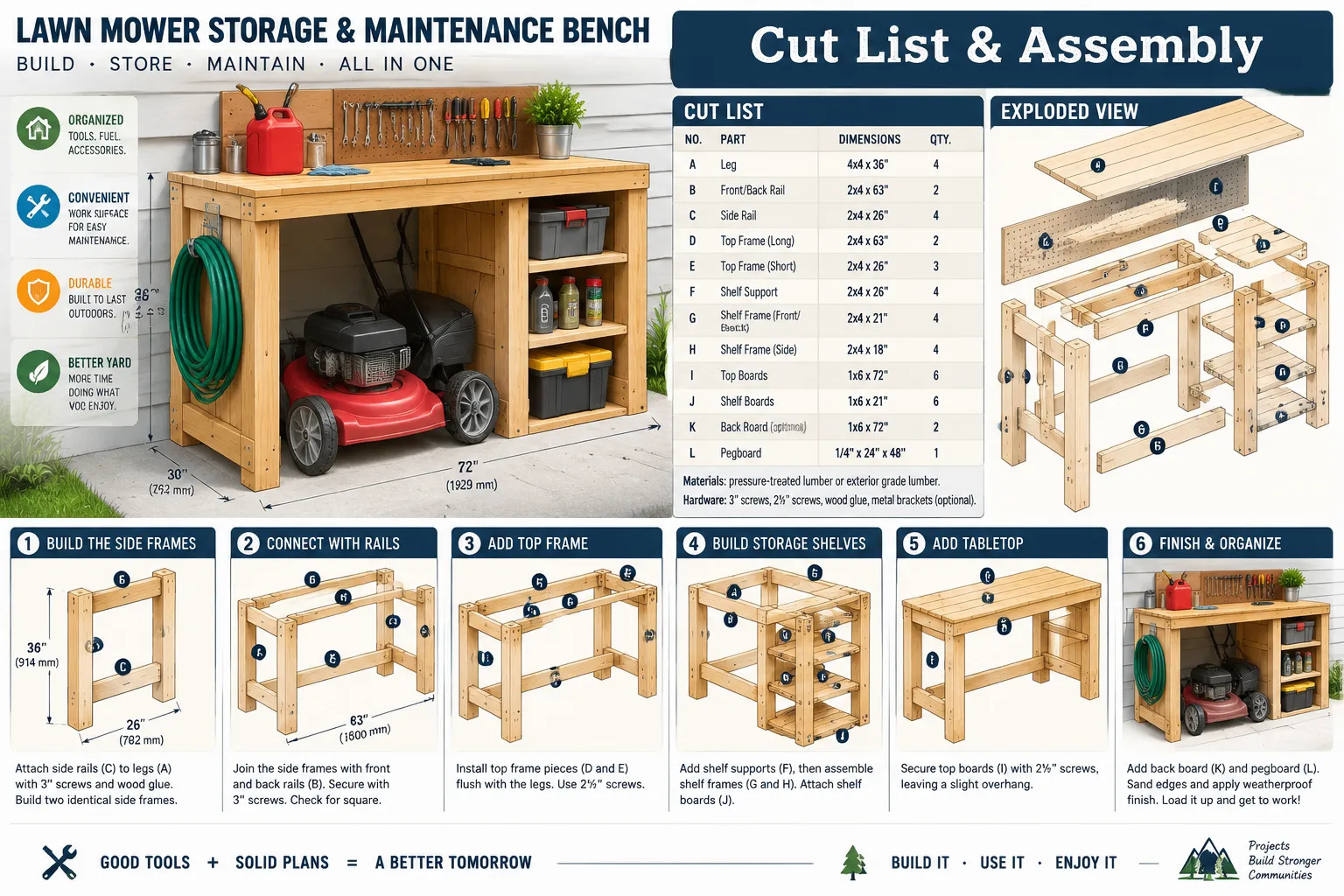
The image below illustrates a typical layout for woodworking plans, highlighting the key components and their arrangement for optimal functionality.
Building the Bench: A Step-by-Step Approach to Garage Organization and Tool Care
Once your woodworking plans are finalized, the construction phase begins. This process involves careful measurement, accurate cutting, and secure assembly. Precision in each step ensures a sturdy, functional, and aesthetically pleasing bench that will serve your garage organization needs for years.
Materials and Tools Required
- Lumber: Plywood (3/4-inch for top/shelves), 2x4s, 4x4s (or suitable alternatives based on design).
- Fasteners: Wood screws (various lengths), wood glue, bolts/lag screws if heavy-duty connections are needed.
- Hardware: Drawer slides, cabinet hinges, caster wheels (optional for mobility), hooks, pegboard.
- Woodworking Tools:
- Circular saw or table saw for cutting larger pieces.
- Miter saw for precise crosscuts.
- Drill/driver for pilot holes and fasteners.
- Router (optional, for edge profiles or dados).
- Clamps, measuring tape, square, level.
- Safety glasses, hearing protection, dust mask.
Construction Steps
- Cut the Lumber: Using your detailed cut list from the woodworking plans, carefully cut all wooden components to size. Label each piece to avoid confusion during assembly.
- Assemble the Frame:
- Start with the main leg assemblies. Join 4×4 legs with 2×4 stretchers to form the side frames. Use wood glue and robust screws, or traditional joinery if you possess the skills.
- Connect the side frames with front and back stretchers to create the main rectangular base. Ensure all connections are square and secure. This forms the foundational structure.
- Install the Benchtop:
- Attach the 3/4-inch plywood benchtop to the top stretchers of the frame. Use wood glue and screws, ensuring the surface is flush and level. This will be your primary workspace.
- Construct and Install Storage:
- Under-bench Mower Bay: Depending on your design, this might involve simply leaving an open space or building a reinforced lower shelf. If using a ramp, ensure it integrates seamlessly.
- Shelving Units: Build and install shelves within the frame. Support them with cleats screwed into the frame’s legs or sides.
- Drawers: Construct drawer boxes using joinery appropriate for your skill level (e.g., butt joints with screws and glue, or dovetails for advanced builders). Install drawer slides and then mount the drawers into their designated compartments.
- Tool Holders: Attach pegboard to the back or sides, or install custom wooden tool holders. Consider integrating bespoke wooden solutions for modern garages to maximize space, as discussed in integrating smart storage and organization with bespoke wooden solutions for modern garages and workshops.
- Finishing Touches:
- Sanding: Smooth all surfaces and edges to prevent splinters and prepare for finishing.
- Sealing/Finishing: Apply a durable finish to protect the wood from moisture, oil, and grease. Polyurethane, spar varnish, or exterior-grade paint are excellent choices for a workshop environment. Apply multiple coats for maximum protection.
Enhancements and Customization
- Caster Wheels: Adding heavy-duty locking caster wheels makes the bench mobile, allowing you to move it for cleaning or reconfiguring your garage layout.
- Integrated Power Strip: Install a power strip on the back or side of the bench for convenient access to power tools and charging stations.
- Lighting: Mount a small LED light strip beneath an upper shelf or along the back for better visibility during maintenance tasks. For further ideas, consider DIY smart workshop lighting.
- Vise Mount: If you frequently work on small engine components, consider permanently mounting a small bench vise to one corner of the benchtop.
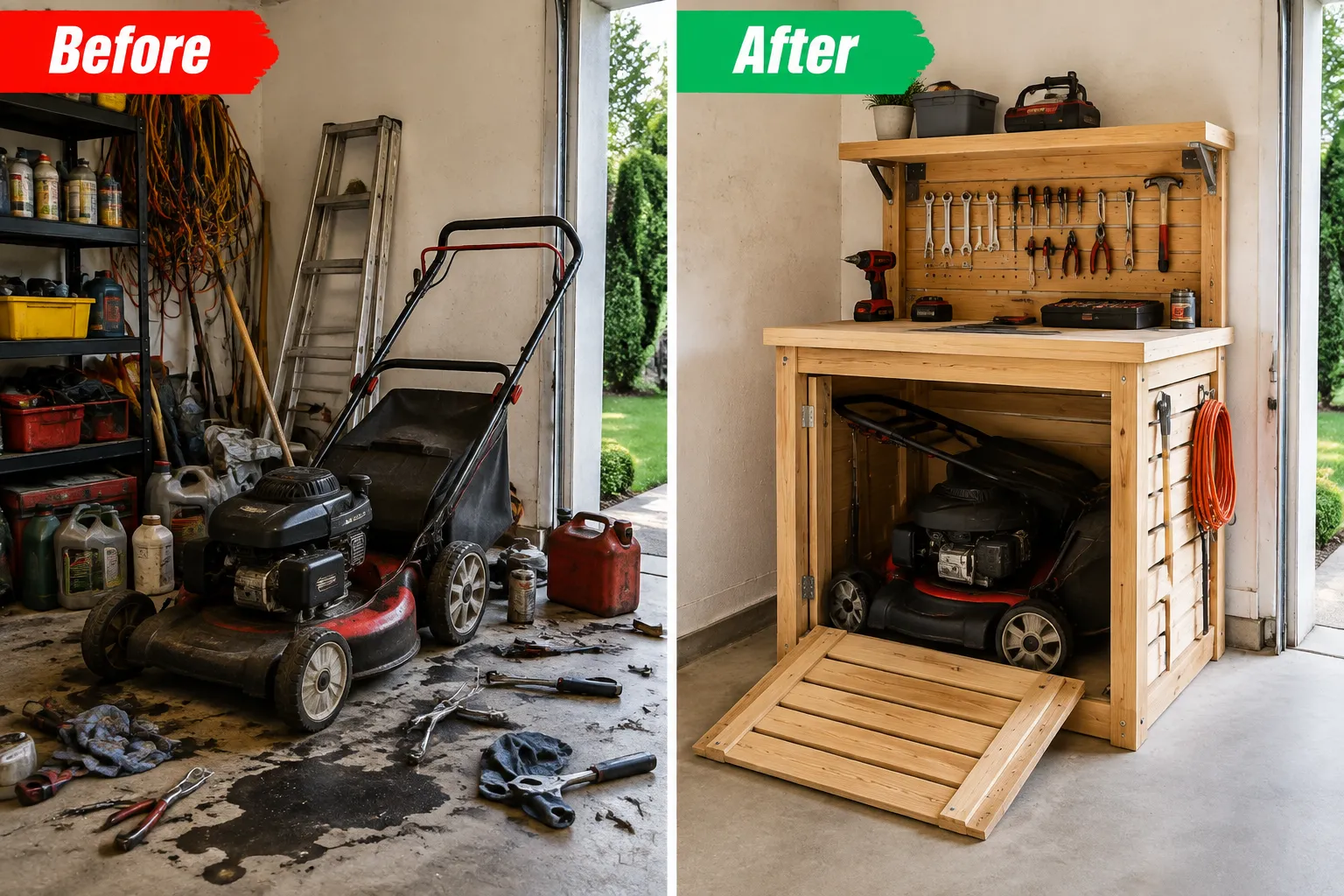
The contrast between a disorganized workspace and a well-structured one is striking. The image below visually compares a cluttered garage before and after the implementation of a dedicated lawn mower storage and maintenance bench.
Maximizing Garage Organization and Tool Care with Your New Bench

With your woodworking plans realized and the lawn mower storage and maintenance bench proudly standing, the real benefits of enhanced garage organization and streamlined tool care come to fruition. This section explores strategies to fully leverage your new workspace, ensuring longevity for both your tools and your lawn mower.
Efficient Lawn Mower Storage
The primary function of this bench is to provide a dedicated home for your lawn mower. By storing it beneath the workbench, you reclaim valuable floor space that might otherwise be cluttered.
- Easy Access: Design the under-bench bay to allow for easy maneuverability of the mower. If your mower is heavy, a slight ramp (either built-in or removable) can be invaluable.
- Protection: Storing the mower in a defined space protects it from accidental bumps or damage from other garage activities.
- Cleanliness: Integrate a shallow tray or mat beneath the mower bay to catch any oil drips, grass clippings, or fuel spills, making cleanup much simpler and preventing stains on your garage floor.
Streamlined Maintenance Workflow
The ergonomic design and integrated storage of the bench directly contribute to a more efficient and enjoyable maintenance routine.
- Tools at Hand: With tools organized on pegboards, in drawers, or on shelves, you spend less time searching and more time working. This is crucial for tasks like changing spark plugs, checking oil, or sharpening blades. Learn about essential hand tools for every woodworker that could be stored here.
- Ergonomic Workspace: Performing maintenance at a comfortable standing height reduces back strain and fatigue, encouraging more regular upkeep. The sturdy bench provides a stable platform for wrenching, filing, and other tasks.
- Dedicated Supplies: Keep all your lawn mower-specific consumables (oil, air filters, fuel stabilizer, grease guns) within easy reach. This prevents you from starting a task only to discover you’re missing a key item.
- Proper Disposal: If your bench includes integrated waste bins, they can be used for oily rags, old filters, and other maintenance byproducts, promoting a cleaner and safer workshop environment.
Enhancing Tool Longevity
Proper tool care is an often-overlooked aspect of woodworking and general home maintenance. Your new bench supports this by providing a structured environment.
- Organized Storage: When tools have a designated spot, they are less likely to be misplaced, damaged, or subjected to rust due to improper storage.
- Cleanliness: Having a dedicated workspace for messy tasks helps keep other areas of your garage clean. The durable, sealed surface of the workbench is easy to wipe down, preventing accumulation of grime and preventing its transfer to other tools.
- Visibility: Tools stored on pegboards or in shallow drawers are easily visible, reminding you to clean and maintain them after each use.
- Protection from Elements: Storing tools indoors, off the floor, and in organized compartments protects them from dust, moisture, and temperature fluctuations that can cause rust or degradation.
By integrating this well-thought-out bench into your garage, you’re not just building a piece of furniture; you’re investing in a more organized, efficient, and enjoyable approach to home and tool maintenance in 2026. This ultimately extends the life of your equipment and enhances your productivity. The below image captures a moment of active, efficient tool care, demonstrating the practical advantages of the custom-built bench.
Conclusion
Constructing a dedicated woodworking bench for lawn mower storage and maintenance is an investment that pays significant dividends in garage organization, efficiency, and equipment longevity. By following well-designed woodworking plans, you can create a sturdy, ergonomic workstation that not only provides a secure home for your lawn mower but also centralizes all your essential tools and supplies. This transforms a potentially chaotic chore into a streamlined process, ensuring your lawn care equipment remains in top condition for years to come. In 2026, a well-organized workspace is more than just an aesthetic preference; it’s a productivity imperative.
Actionable Next Steps:
- Assess Your Space: Measure your garage and lawn mower dimensions carefully.
- Sketch Your Design: Create detailed plans, incorporating the storage and ergonomic features that best suit your needs.
- Gather Materials and Tools: Source durable lumber and ensure you have the necessary woodworking equipment.
- Build with Precision: Follow your plans diligently, prioritizing squareness, stability, and secure joinery.
- Implement Organization: Once built, stock your bench with tools and supplies, establishing a system that makes maintenance a breeze.
References
- Fine Woodworking. (2020). Working Wood 2020: The Essential Shop Guide. Taunton Press.
- Lasko, M. (2018). The Workbench Book: A Craftsman’s Guide to Workbenches for All Trades and Purposes. Sterling Publishing.
- Schwartz, P. (2019). The Workbench Design Book: The Workbench Collection for Every Purpose. Fox Chapel Publishing.
SEO Meta Title: Woodworking Plans: Lawn Mower Storage & Maintenance Bench SEO Meta Description: Build a DIY woodworking bench for lawn mower storage and maintenance. Optimize garage organization and tool care with these comprehensive plans for 2026.