
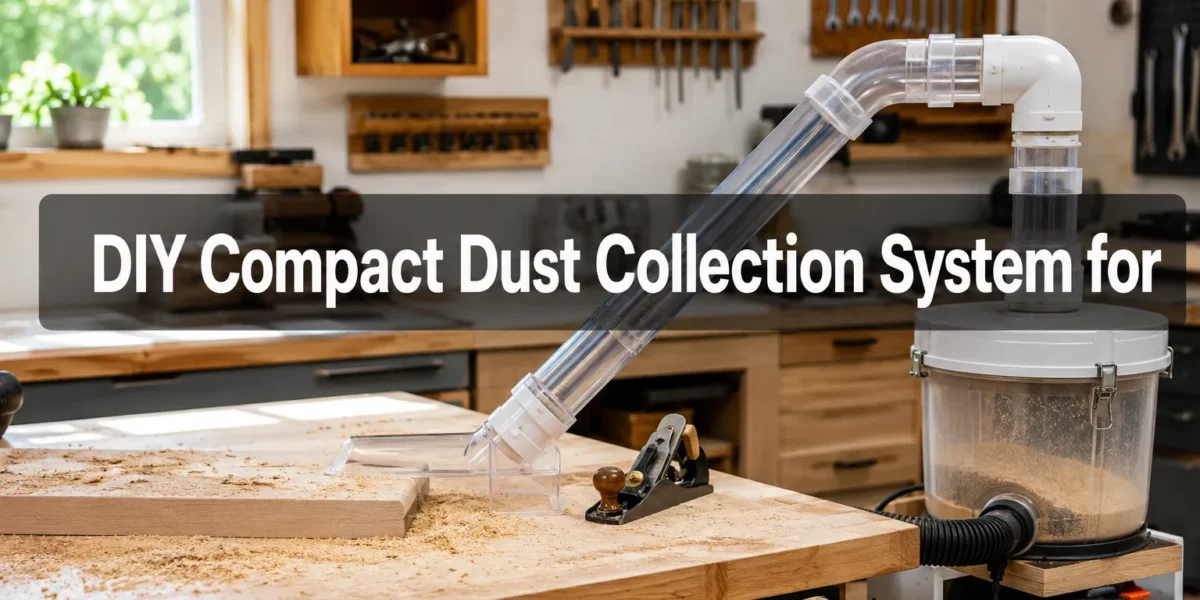
The average small woodworking shop generates surprising amounts of airborne dust, a silent, pervasive threat to both health and equipment. Even hobbyists often underestimate the cumulative impact of fine wood particles on respiratory systems, not to mention the decreased efficiency and accelerated wear on tools. Crafting an effective yet compact dust collection system is not merely a convenience; it is an essential investment in workshop longevity and personal well-being. This guide will walk you through building a DIY Compact Dust Collection System for Small Workshops: Building Cyclone Separators and Portable Collectors designed to address these challenges head-on in 2026.
Key Takeaways
- Health and Equipment Protection: Effective dust collection is crucial for mitigating health risks from airborne particulates and extending the lifespan of woodworking tools.
- Two-Stage Filtration Superiority: Combining a cyclone separator with a fine-particle filter significantly improves dust separation efficiency and reduces filter clogging compared to single-stage systems.
- Customizable for Small Spaces: DIY solutions offer the flexibility to design compact, portable systems that fit the unique constraints of limited workshop environments.
- Cost-Effective Solution: Building your own system can be substantially more affordable than purchasing commercial units, often utilizing readily available materials.
- Enhanced Workshop Environment: A cleaner workshop leads to better visibility, improved morale, and more precise woodworking outcomes.
Understanding the Need for a DIY Compact Dust Collection System for Small Workshops
The sheer volume of sawdust produced by common woodworking operations, from a table saw slicing through plywood to a random orbital sander finishing a workpiece, can quickly overwhelm a small workshop. Traditional shop vacuums, while useful for localized cleanup, are often inefficient at capturing the finer, more hazardous dust particles and quickly clog filters. Dedicated dust collectors are effective but can be bulky and expensive, making them unsuitable for many small-scale operations.
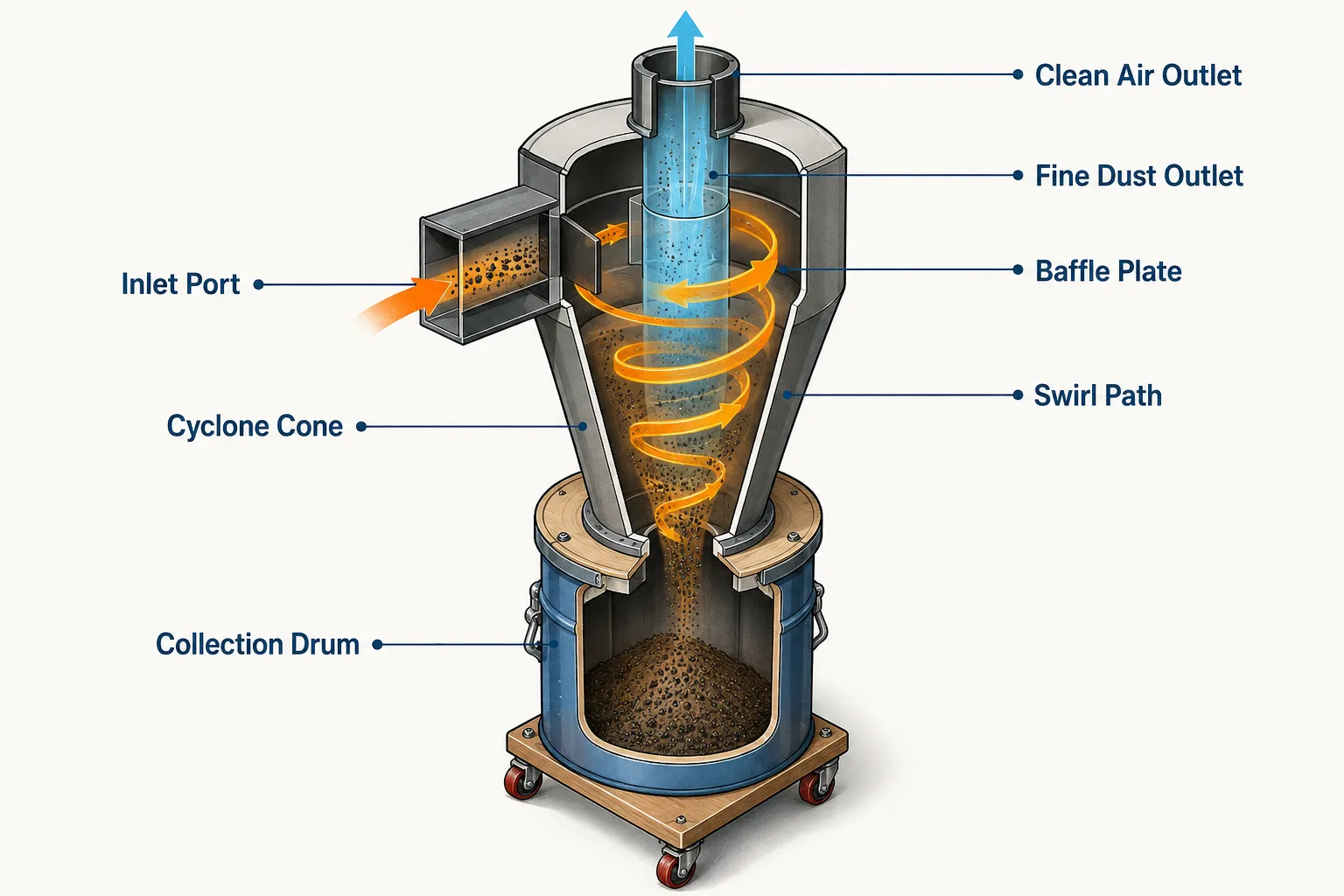
This is where a custom-built, compact system shines. By focusing on a DIY Compact Dust Collection System for Small Workshops: Building Cyclone Separators and Portable Collectors, woodworkers gain the advantages of superior dust removal without sacrificing precious space or breaking the bank. The core principle involves a two-stage approach: a cyclone separator to remove the bulk of the larger chips and dust, followed by a fine-particle filter to capture the microscopic, respirable dust that poses the greatest health risk.
The benefits extend beyond mere cleanliness. A clear, dust-free environment improves visibility, reducing the risk of accidents. It also prevents sawdust from accumulating in tool motors and mechanisms, a common cause of premature wear and failure. Furthermore, the ability to build and customize your system means it can be tailored to your specific tools and workshop layout, integrating seamlessly rather than being an obstacle. This aligns well with the philosophy of maximizing efficiency in a confined area, much like optimizing DIY plywood storage solutions maximizing space and organization in small workshops or building a compact multi functional woodworking bench for apartment dwellers maximizing small spaces.
Building a DIY Cyclone Separator: The First Stage of Dust Control
A cyclone separator is the heart of an effective two-stage dust collection system. Its primary function is to remove 90-99% of wood chips and larger dust particles from the airstream before they reach the main filter. This prevents the fine filter from quickly clogging, maintains consistent suction, and dramatically extends the filter’s lifespan.
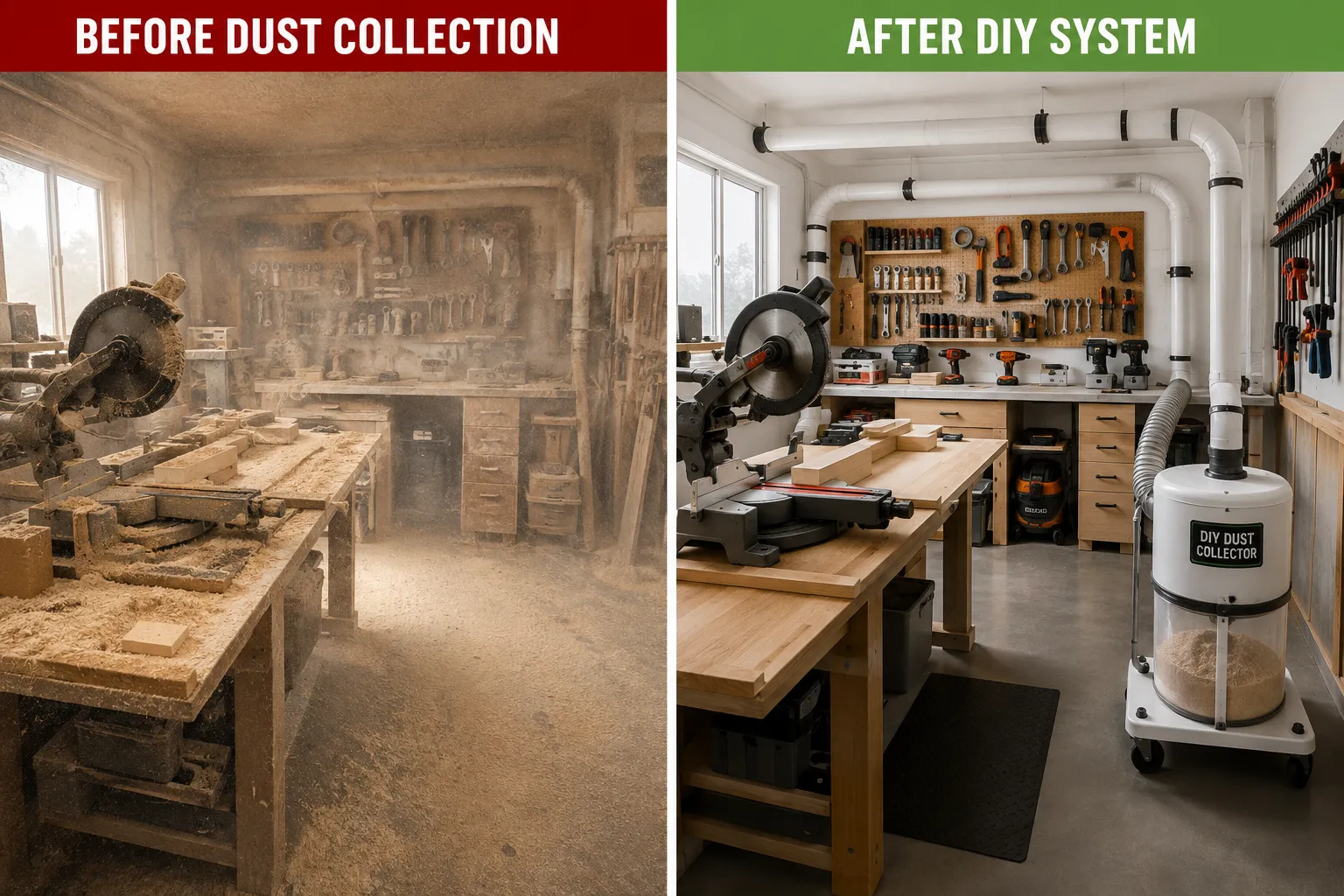
The principle is simple: dust-laden air enters the cylindrical chamber tangentially, creating a vortex. Centrifugal force pushes heavier particles to the outer wall, where they lose velocity and fall into a collection drum below. The cleaner air, now largely free of heavy debris, continues upwards through the center of the vortex and exits to the fine filter.
Essential Components for a DIY Cyclone Separator
| Component | Description | Typical Material |
|---|---|---|
| Cyclone Body | Main chamber, usually conical at the bottom, creating the vortex. | Plywood, Sheet Metal, Plastic |
| Inlet Port | Tangential opening for dust-laden air to enter. | PVC pipe, Sheet Metal Duct |
| Outlet Port | Central opening for cleaned air to exit to the filter. | PVC pipe, Sheet Metal Duct |
| Baffle Plate | Optional internal plate to aid separation (often integrated into cone design). | Plywood, Sheet Metal |
| Collection Drum | Airtight container below the cyclone to catch separated debris. | Plastic Drum (e.g., 55-gallon), Metal Bin |
| Lid/Seal | Airtight seal between cyclone body and collection drum. | Plywood, Rubber Gasket |
Construction Steps for a Basic Plywood Cyclone Separator
- Design and Planning: Numerous free plans are available online, often for plywood construction due to ease of cutting and assembly. Focus on proportions for efficient separation relative to your shop vacuum or dust collector motor. Critical dimensions include inlet/outlet sizes and cone angle.
- Cut Plywood Components: Using a router or jigsaw, cut the cylindrical and conical sections. For the cone, multiple trapezoidal pieces can be joined. Precision is key for an airtight seal.
- Assemble the Cone and Cylinder: Use wood glue and screws to join the plywood pieces. Ensure all seams are tight.
- Install Inlet and Outlet Ports: Cut holes for your chosen ducting (e.g., 2.5-inch or 4-inch PVC). The inlet should enter tangentially, usually near the top of the cylindrical section. The outlet should be a standpipe extending downwards into the cyclone, preventing dust from short-circuiting.
- Create an Airtight Seal for the Drum: Design a lid for your collection drum that mates perfectly with the bottom of the cyclone body. A foam or rubber gasket is essential. Cam-locks or clamps can secure the lid.
- Test for Leaks: Before use, connect your vacuum/collector and check for air leaks using a smoke test or by feeling for drafts. Seal any leaks with silicone caulk or weatherstripping.
This primary stage significantly reduces the load on your secondary filter, ensuring that even your portable dust collection system remains effective for longer periods.
Building Portable Collectors and Integrating Your DIY System
Once you have an efficient cyclone separator, the next step is to integrate it into a portable collector system that can move around your small workshop. This typically involves mounting the cyclone, a vacuum or dedicated dust collector motor, and a fine-particle filter onto a mobile cart.
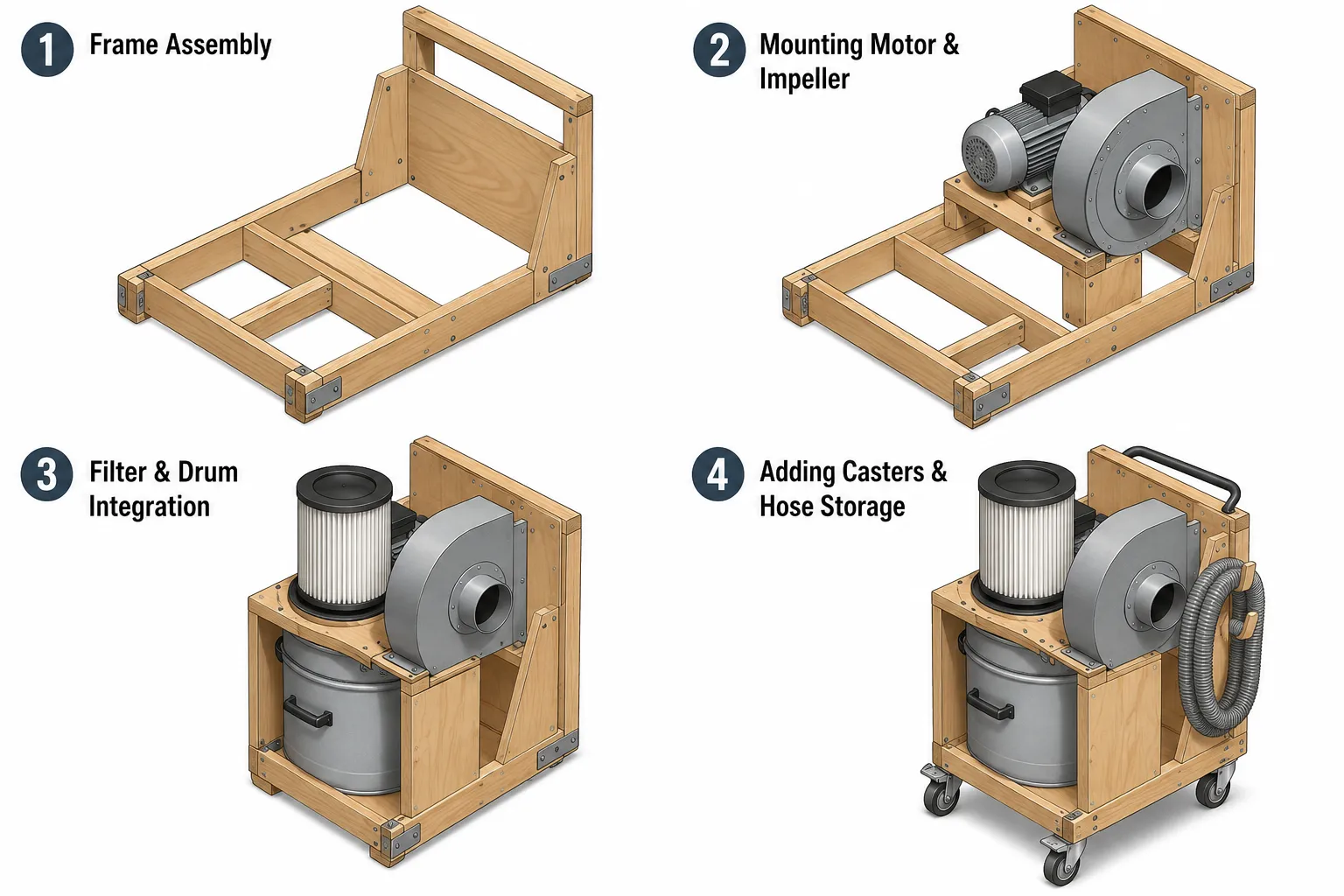
The key to portability in a small space is a compact footprint and durable casters. Think about how the system will interact with your various tools, from a table saw to a portable miter saw stand with integrated dust collection and outfeed support.
Designing a Portable Collector Cart
- Frame Construction: Build a robust base and frame from plywood, 2x4s, or steel angle. The frame must securely hold the weight of the cyclone, collection drum, motor, and filter. Consider vertical stacking to minimize floor space.
- Mounting the Cyclone and Drum: Position the cyclone directly above the collection drum. Ensure easy access to empty the drum. The cyclone can be permanently mounted to the cart’s frame.
- Selecting a Motor/Fan Unit:
- Shop Vacuum: For light-duty, intermittent use, a good quality shop vacuum (6+ peak HP) can be connected to the clean air outlet of the cyclone. The vacuum’s filter will act as your fine-particle filter.
- Dedicated Dust Collector Motor: For more continuous or heavy-duty use, consider an actual dust collector motor and impeller (e.g., 1HP-1.5HP). These move higher volumes of air and are designed for fine dust.
- Integrating the Fine Filter:
- Cartridge Filter: If using a dedicated motor, a pleated cartridge filter (e.g., 1 micron or 0.5 micron) is ideal. Build an enclosure or mounting system for it downstream of the motor.
- Bag Filter: A filter bag can also be used, but cartridge filters generally offer better filtration and easier cleaning.
- Adding Casters: Heavy-duty, locking casters (at least 3-inch diameter) are crucial for easy movement and stability. Two swivel casters and two fixed casters work well.
- Hose Management: Incorporate hooks or a hose reel for storing flexible dust collection hoses, preventing tripping hazards and keeping the workshop tidy. This is important for maintaining an organized small workshop heating and cooling solutions efficient and safe diy approaches for year round comfort.
Ducting and Connection Strategies
Flexible hoses (e.g., 2.5-inch or 4-inch diameter) are essential for connecting the portable system to various tools. Quick-connect fittings and blast gates allow you to direct suction efficiently to the tool currently in use.
- Tool Connections: Use adapters to match your dust collector hose to the dust ports on your power tools. Many tools, especially portable ones, benefit from custom-made shrouds or dust hoods to maximize collection efficiency.
- Blast Gates: Install blast gates at each tool connection point. These manually open and close the airflow, ensuring maximum suction at the active tool.
- Hose Storage: Design the cart with dedicated space for hoses to prevent tangles and optimize accessibility. This helps maintain the overall organization and efficiency of your maximizing your tiny woodshop: ultra-compact layouts for garage and shed spaces under 200 sq ft setup.
Maintenance of Your DIY Compact Dust Collection System
Regular maintenance is key to sustained performance.
- Empty the Collection Drum: Frequently empty the collection drum of your cyclone separator. If it fills too high, the cyclone’s efficiency will drop, and dust will pass through to your fine filter.
- Clean/Replace Fine Filter: Follow the manufacturer’s recommendations for cleaning or replacing your fine-particle filter. A clean filter ensures optimal airflow and filtration.
- Check for Leaks: Periodically inspect all connections and seams for leaks, sealing them as necessary. Even small leaks can significantly reduce suction power.
By carefully planning and executing these steps, you can create a highly effective DIY Compact Dust Collection System for Small Workshops: Building Cyclone Separators and Portable Collectors that keeps your workspace clean, your tools healthy, and your lungs safe.
Advanced Considerations and Customizations for Your DIY System
Once the basic DIY Compact Dust Collection System for Small Workshops: Building Cyclone Separators and Portable Collectors is operational, several advanced considerations and customizations can further enhance its performance and convenience in 2026.
Automated Switching
For added convenience, consider integrating an automated switching system. These devices detect when a tool is turned on (by sensing current draw) and automatically activate the dust collector. This eliminates the need to manually turn on/off the collector with each tool use, improving workflow and ensuring dust collection is always engaged. Systems are available for both 120V and 240V tools.
Air Filtration for Ambient Dust
While a direct-source dust collection system handles the majority of dust, fine particles can still escape into the ambient air, especially during sanding or aggressive milling. An overhead ambient air filter can significantly improve overall air quality. These can also be DIY projects, often involving a box fan, MERV 13 furnace filters, and a simple enclosure. Positioning it to draw air across the main workspace is crucial.
Noise Reduction
Dust collectors, even smaller shop vacuums, can be noisy. Incorporating sound-dampening measures can make your workshop a more pleasant environment.
- Enclosures: Building an insulated enclosure around the motor/fan unit can significantly reduce noise. Use materials like MDF, acoustic foam, or mass-loaded vinyl. Ensure adequate airflow for motor cooling.
- Hose Material: Smooth-wall PVC piping generally produces less noise than corrugated flexible hose over long runs.
- Vibration Isolation: Place rubber mats or vibration-damping pads under the motor unit and casters to reduce resonant noise transferred to the floor.
Fine-Tuning Ducting and Airflow
Optimizing ducting is critical for maximum efficiency.
- Minimize Bends: Each bend in your ducting creates turbulence and reduces airflow. Use as few bends as possible, and prefer long, sweeping curves over sharp 90-degree elbows.
- Proper Diameter: Ensure your ducting diameter is appropriate for your collector’s motor. Too small a diameter restricts airflow, while too large a diameter can reduce air velocity to the point where heavy chips settle in the ducts. For most DIY portable systems using a shop vacuum, 2.5-inch hose is common, while larger systems might use 4-inch.
- Rigid vs. Flexible: Use rigid ducting (e.g., thin-gauge sheet metal or PVC pipe) wherever possible, reserving flexible hose for short connections to tools where movement is necessary. Rigid ducting offers less airflow resistance.
- Central Collection Point: If your workshop layout allows, consider a fixed central collection point with branches to various tools, and then connect your portable unit to this central point.
These enhancements transform a basic dust collection system into a professional-grade solution perfectly adapted for the demands of a small workshop. Just as you might customize a building a compact and ergonomic workbench for small workshops maximizing space and efficiency or building ergonomic workshop storage solutions custom cabinets and organizers for health and efficiency, fine-tuning your dust collection ensures every aspect of your workspace supports optimal performance and safety.
Conclusion
Building a DIY Compact Dust Collection System for Small Workshops: Building Cyclone Separators and Portable Collectors is a highly rewarding project that significantly upgrades any woodworking space in 2026. From protecting your health by capturing harmful airborne particulates to preserving your valuable tools from premature wear, the benefits are clear and immediate. By understanding the principles of two-stage filtration with a cyclone separator and designing a portable, customizable collector, even those with limited space and budget can achieve professional-level dust management.
The journey from a dusty, inefficient workshop to a clean, productive environment begins with informed design and careful construction. The adaptability of DIY solutions allows for continuous improvement, from integrating automated switches to fine-tuning ducting for optimal airflow. Take the initiative to create a healthier, safer, and more enjoyable woodworking experience by investing your time in this essential upgrade.
Actionable Next Steps:
- Assess Your Needs: Catalog your most-used tools and their dust port sizes. Estimate the typical volume of dust you generate.
- Research Plans: Explore various free DIY cyclone and portable collector plans online (e.g., from woodworking forums, YouTube, or project sites) to find a design that suits your skills and available materials.
- Gather Materials: Compile a shopping list of plywood, PVC pipe, a collection drum, a motor/fan unit (or shop vacuum), and a fine-particle filter.
- Start Building: Tackle the cyclone separator first, then proceed to the portable cart and integration with your tools.
- Test and Refine: Once built, rigorously test your system for leaks and airflow, making adjustments as needed for peak performance.
References
- Wood Magazine. (2014, October 30). Build a cyclone dust separator. Wood Magazine.
- The Wood Whisperer. (2007, May 1). Cyclone dust separator. The Wood Whisperer.
- Fine Woodworking. (n.d.). Dust collection for the small shop. Fine Woodworking.
SEO Meta Title: DIY Compact Dust Collection System for Small Workshops: Build Yours SEO Meta Description: Learn to build a DIY compact dust collection system for small workshops in 2026. Master cyclone separators and portable collectors for a cleaner, healthier workspace.