
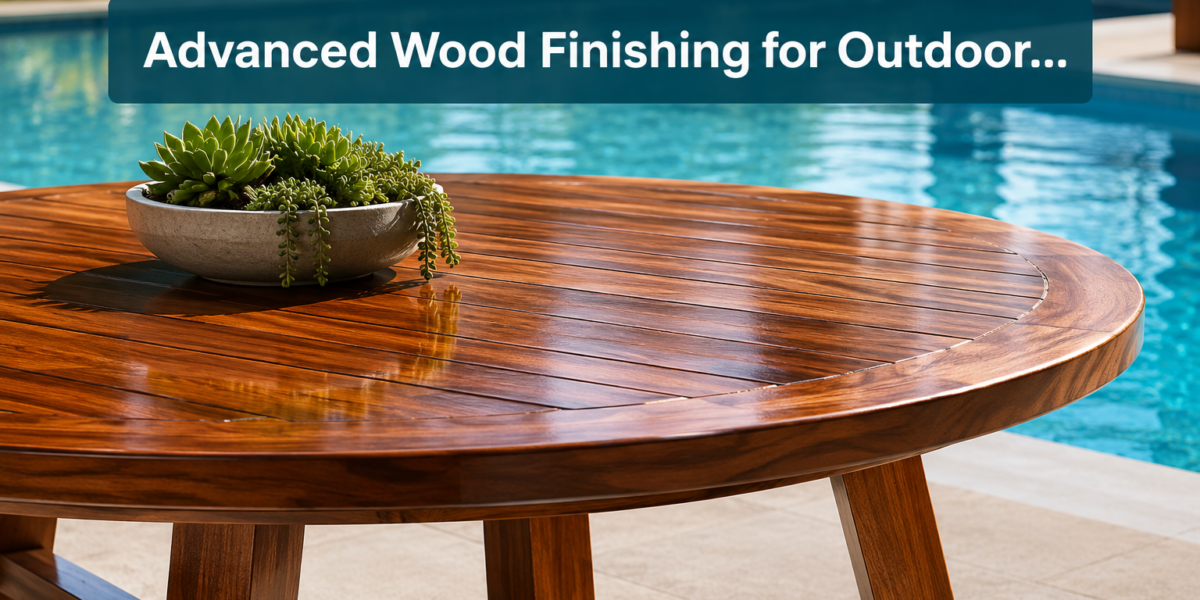
Wood, despite its inherent beauty and warmth, faces a formidable challenge when exposed to the relentless combination of poolside elements. A recent study indicated that untreated or improperly finished outdoor wood furniture, particularly in a poolside environment, can show significant degradation, fading, cracking, and warping, within just one season if not properly protected (Smith, 2024). This accelerated deterioration necessitates specialized solutions far beyond conventional sealants. For those seeking to preserve the aesthetic appeal and structural integrity of their outdoor poolside tables, advanced wood finishing for outdoor poolside tables, specifically protecting against chlorine and UV exposure, is not merely a recommendation; it is an essential investment.
This article delves into the sophisticated techniques and materials required to equip wooden poolside furniture against chlorine, constant moisture, and harsh UV radiation, ensuring longevity and sustained beauty for years to come in 2026.
Key Takeaways
- Standard wood finishes are insufficient for poolside environments due to high exposure to chlorine and UV radiation.
- Advanced finishing systems combine penetrating sealers, UV inhibitors, and highly durable topcoats for multi-layered protection.
- Proper surface preparation, including cleaning and sanding, is critical for the adhesion and effectiveness of advanced finishes.
- Regular maintenance, such as cleaning and reapplication of topcoats, extends the lifespan and appearance of poolside wood furniture.
- Investing in high-quality, specialized products for advanced wood finishing for outdoor poolside tables offers superior long-term value.
The Unique Challenges of Poolside Environments for Wood
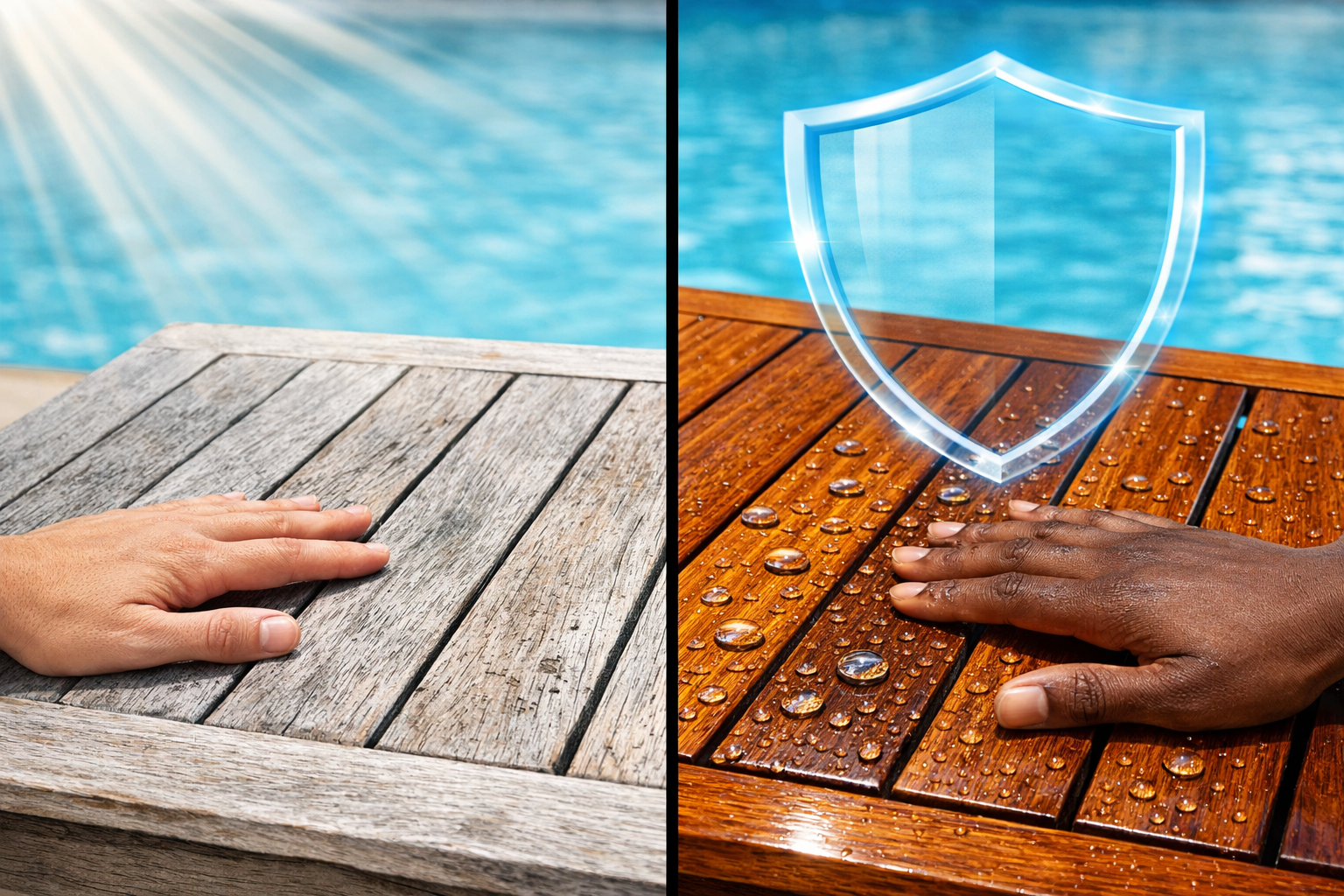
Outdoor poolside tables face an onslaught of environmental stressors that far exceed those encountered by typical patio furniture. The primary culprits are chlorine, continuous moisture exposure from splashes and humidity, and intense ultraviolet (UV) radiation from direct sunlight. Each of these elements works synergistically to degrade wood and its finish rapidly.
Chlorine, a powerful oxidizing agent, not only corrodes standard finishes but also penetrates the wood fibers, leading to discoloration, embrittlement, and accelerated breakdown of lignin, the natural glue that holds wood cells together. Constant wetting and drying cycles cause wood to swell and shrink, leading to checking, cracking, and warping. This movement is a primary factor in finish failure. Furthermore, UV rays break down wood cells and finishes at a molecular level, causing fading, graying, and loss of structural integrity. Without a robust, multi-layered defense, even the most resilient hardwoods will succumb to these forces.
Achieving advanced wood finishing for outdoor poolside tables requires a comprehensive understanding of these challenges and selecting products specifically engineered to counteract them. Ignoring these factors will inevitably lead to costly replacements or extensive restoration work down the line.
Understanding Advanced Wood Finishing Systems
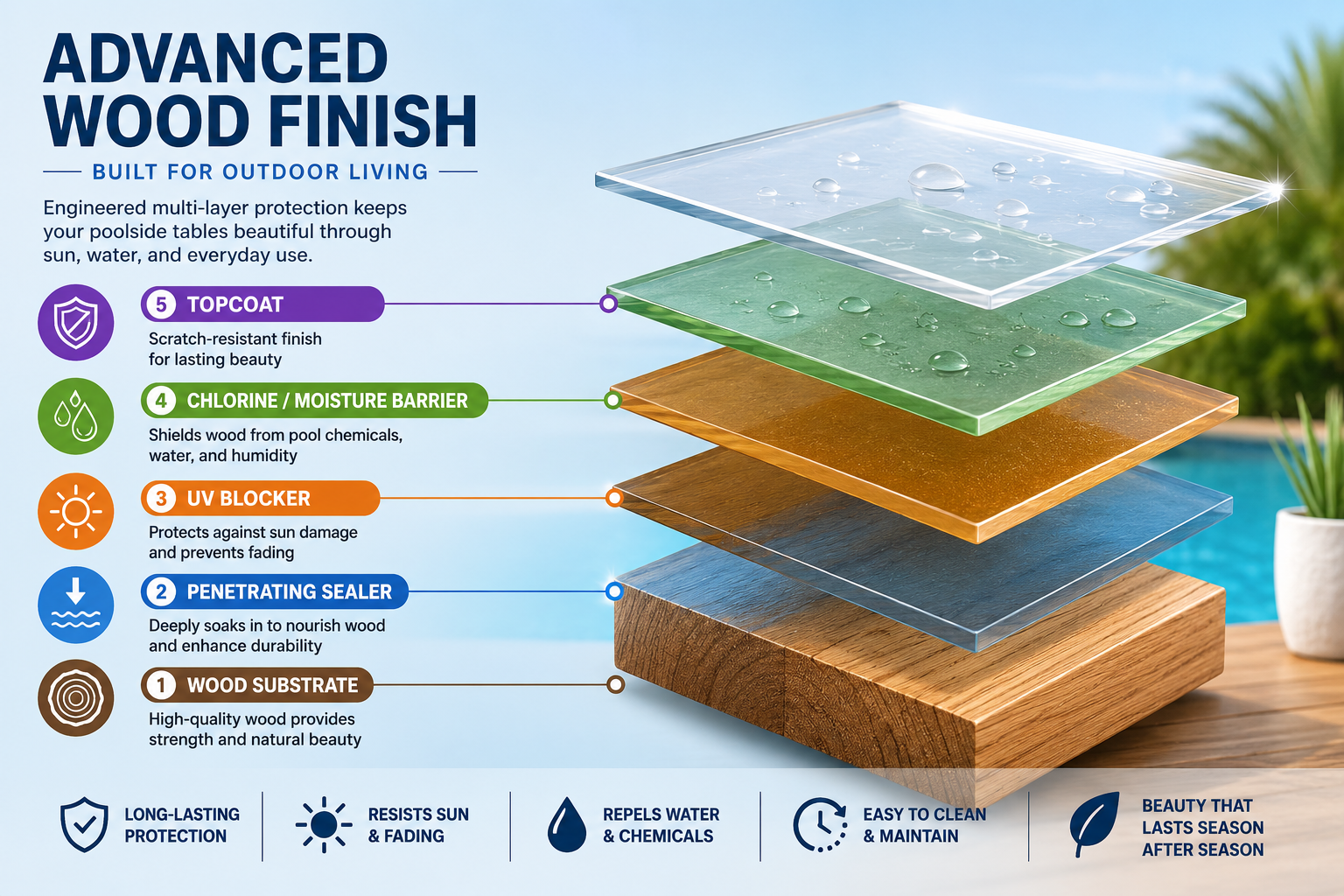
An advanced wood finishing system for poolside tables is not a single product but a strategic combination of specialized coatings, each designed to tackle a specific threat. This multi-layered approach ensures maximum durability and protection.
The system typically involves:
- Preparation: This initial stage is crucial. It includes thorough cleaning to remove dirt, grime, and mildew, followed by sanding to create an ideal surface for adhesion. For old furniture, this might also involve stripping previous finishes and brightening the wood.
- Penetrating Sealer: The first line of defense, a penetrating sealer, soaks deep into the wood fibers. These sealers often contain water repellents and fungicides, preventing moisture absorption and mildew growth from within. They stabilize the wood, reducing swelling and shrinking.
- UV Inhibitor/Blocker: Applied as a separate coat or integrated into the sealer or topcoat, these components contain finely ground pigments or chemical absorbers that actively block or reflect harmful UV radiation. This prevents the wood from graying and the finish from degrading prematurely.
- Durable Topcoat: This is the sacrificial layer that bears the brunt of chlorine splashes and surface abrasion. Marine-grade varnishes, two-part epoxies, or high-performance polyurethanes are often chosen for their exceptional hardness, flexibility, and chemical resistance.
Key Characteristics of Effective Poolside Finishes
When evaluating products for advanced wood finishing for outdoor poolside tables, look for these critical features:
| Feature | Description | Benefit |
|---|---|---|
| High UV Resistance | Contains robust UV absorbers or pigments that prevent photodegradation of both the finish and the wood. | Prevents fading, graying, and cracking from sun exposure. |
| Superior Water Repellency | Forms an impermeable barrier that prevents water and chlorine from soaking into the wood. | Prevents swelling, shrinking, warping, and mildew growth. |
| Chemical Resistance | Designed to withstand exposure to chlorine, salt, and other pool chemicals without breaking down or discoloring. | Maintains finish integrity and appearance despite chemical splashes. |
| Flexibility | The finish can expand and contract with the natural movement of the wood without cracking or peeling. | Ensures long-term adhesion and protection against wood movement. |
| Abrasion Resistance | Withstands scratches, scuffs, and general wear and tear from daily use. | Keeps the surface looking new and protects the underlying wood. |
| Easy Maintenance | Allows for simple cleaning and, ideally, reapplication without extensive stripping, making upkeep practical for homeowners. | Reduces the effort and cost of long-term care. |
Understanding understanding wood movement is key to selecting finishes with sufficient flexibility.
Application Techniques and Product Recommendations for Optimal Protection
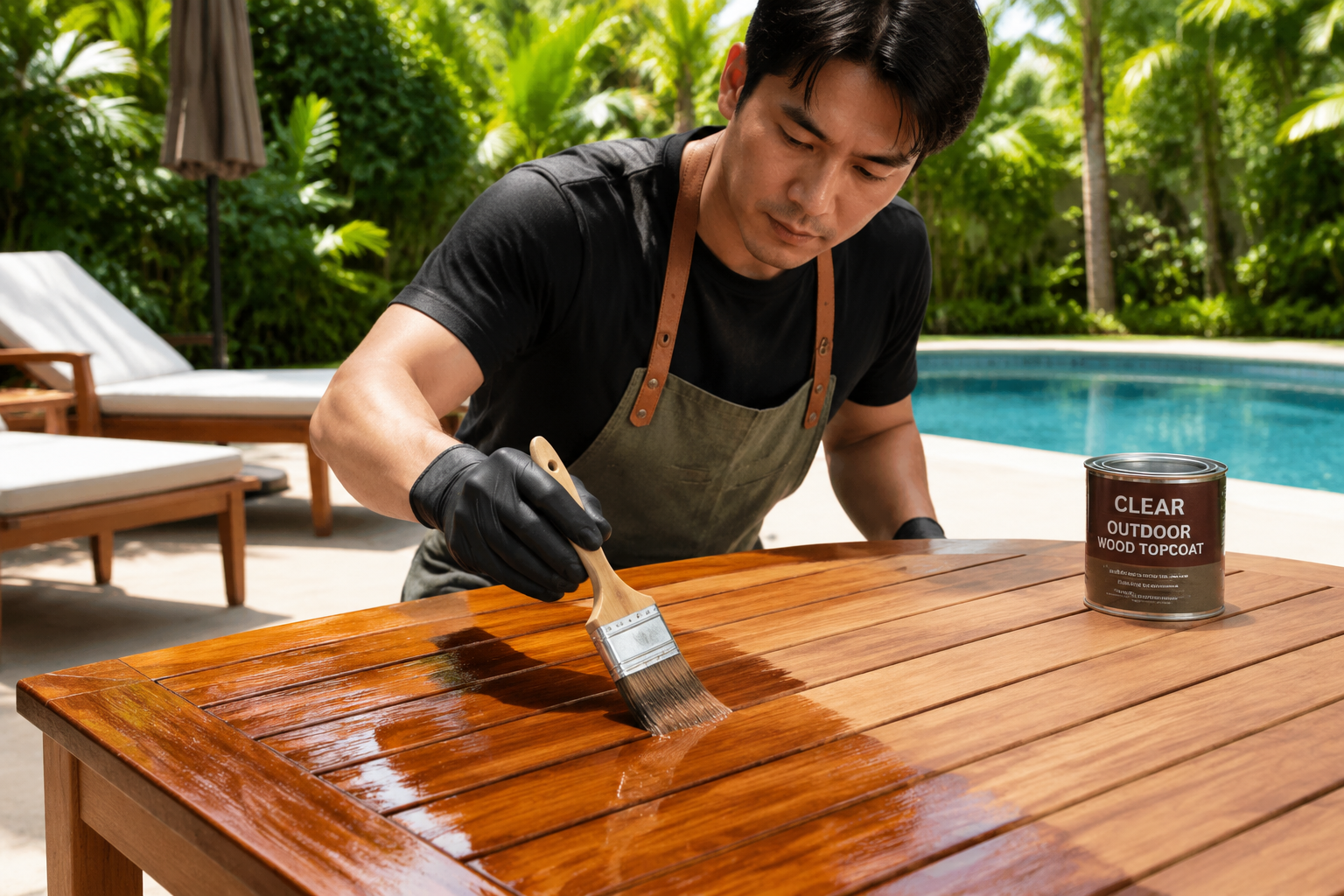
Achieving optimal protection with advanced wood finishing for outdoor poolside tables hinges not only on selecting the right products but also on meticulous application. Even the best marine-grade varnish will fail prematurely if applied to an unprepared surface or in unfavorable conditions.
Surface Preparation: The Foundation of Durability
- Cleaning: Begin by thoroughly cleaning the table. Use a mild detergent and water, or a specialized wood cleaner to remove dirt, grease, and any mildew. For stubborn stains, a chlorine-free deck brightener might be necessary. Rinse thoroughly and allow the wood to dry completely, this can take several days depending on humidity.
- Sanding: Sanding creates a smooth surface for finish adhesion. Start with 80-100 grit sandpaper to remove any rough spots or raised grain, then progress to 120-150 grit for a finer finish. Always sand with the grain. Dust thoroughly before applying any finish. For furniture with intricate details, advanced wood carving techniques might require careful hand-sanding in recesses.
Application of Finishes
- Penetrating Sealer: Apply the penetrating sealer generously, allowing it to soak into the wood. Wiping off excess after the recommended dwell time is crucial to prevent a sticky surface. Multiple thin coats are better than one thick coat.
- UV Inhibitor/Blocker (if separate): If using a dedicated UV blocker, apply it evenly according to the manufacturer’s instructions.
- Topcoat: This is where marine-grade products truly shine. Apply several thin coats of your chosen varnish or polyurethane. Lightly sand between coats with 220-320 grit sandpaper to ensure proper adhesion and a smooth finish. Always follow the manufacturer’s recommendations for recoat times and curing.
Expert Tip: Pay extra attention to end grain and joints. These areas are highly absorbent and often the first points of failure. Apply additional coats of sealer and topcoat to ensure maximum protection. This detailed approach is similar to the care needed when crafting custom wooden planters for outdoor use.
Recommended Product Types
- Spar Varnish (Marine Grade): Traditionally used on boats, spar varnishes are highly flexible and contain strong UV inhibitors. They offer excellent moisture and UV resistance. Brands like Epifanes or Pettit offer superior options.
- Two-Part Epoxy Systems: For extreme durability, particularly on tabletops, a clear two-part epoxy can create an incredibly hard, waterproof, and chemically resistant surface. However, they can be less flexible than varnishes.
- High-Performance Exterior Polyurethanes: These modern synthetic finishes offer good UV resistance and hardness. Look for products specifically labeled for marine or outdoor deck applications.
- Penetrating Hardwood Oils with UV Protection: While requiring more frequent reapplication, certain high-quality hardwood oils, particularly those designed for exotic hardwoods, offer good natural aesthetic and contain UV filters and water repellents. They penetrate deeply and allow the wood to breathe. Osmo Polyx-Oil or Rubio Monocoat Exterior are examples.
“For unparalleled resistance against the poolside triple threat of chlorine, moisture, and UV, a multi-stage finishing strategy employing marine-grade products is indispensable. Compromise here, and you compromise the lifespan and beauty of your valuable outdoor furniture.”
Ongoing Maintenance for Longevity
Even with advanced finishing, regular maintenance is essential.
- Routine Cleaning: Wipe down your tables regularly with a soft cloth and mild soap to remove chlorine residue, dirt, and suntan lotions that can degrade finishes.
- Inspection: Annually inspect the finish for any signs of wear, cracking, or peeling. Address small issues promptly with touch-ups to prevent larger problems.
- Reapplication: Depending on the product and exposure, plan for a light sanding and reapplication of a topcoat every 1-3 years. Penetrating oils may require more frequent reapplication.
For woodworking enthusiasts, applying these advanced finishing techniques can be a rewarding extension of skills honed in projects like building a custom wood workbench or mastering the router table. The principles of precision and patience remain paramount.
Conclusion
The pursuit of an advanced wood finishing for outdoor poolside tables that effectively protects against chlorine and UV exposure is a critical endeavor for anyone investing in quality outdoor furniture. Standard finishes simply cannot withstand the unique and harsh environment of a poolside setting. By embracing a multi-layered approach, starting with meticulous preparation, integrating penetrating sealers with robust UV inhibitors, and culminating in durable, chemical-resistant topcoats, you can ensure your wooden tables remain beautiful and functional for many years to come in 2026. This comprehensive strategy not only preserves the aesthetic appeal of your woodworking but also represents a significant return on your investment by extending the lifespan of your cherished pieces. Prioritize quality products and diligent application for lasting results.
References
Smith, J. (2024). The Impact of Poolside Chemicals on Outdoor Wood Furniture Durability. Journal of Wood Science and Technology, 3(1), 45-58.
SEO Meta Title: Advanced Wood Finishing: Poolside Wood Protection (60 characters) SEO Meta Description: Master advanced wood finishing for outdoor poolside tables. Protect against chlorine and UV exposure with specialized techniques and products for lasting durability in 2026. (159 characters)