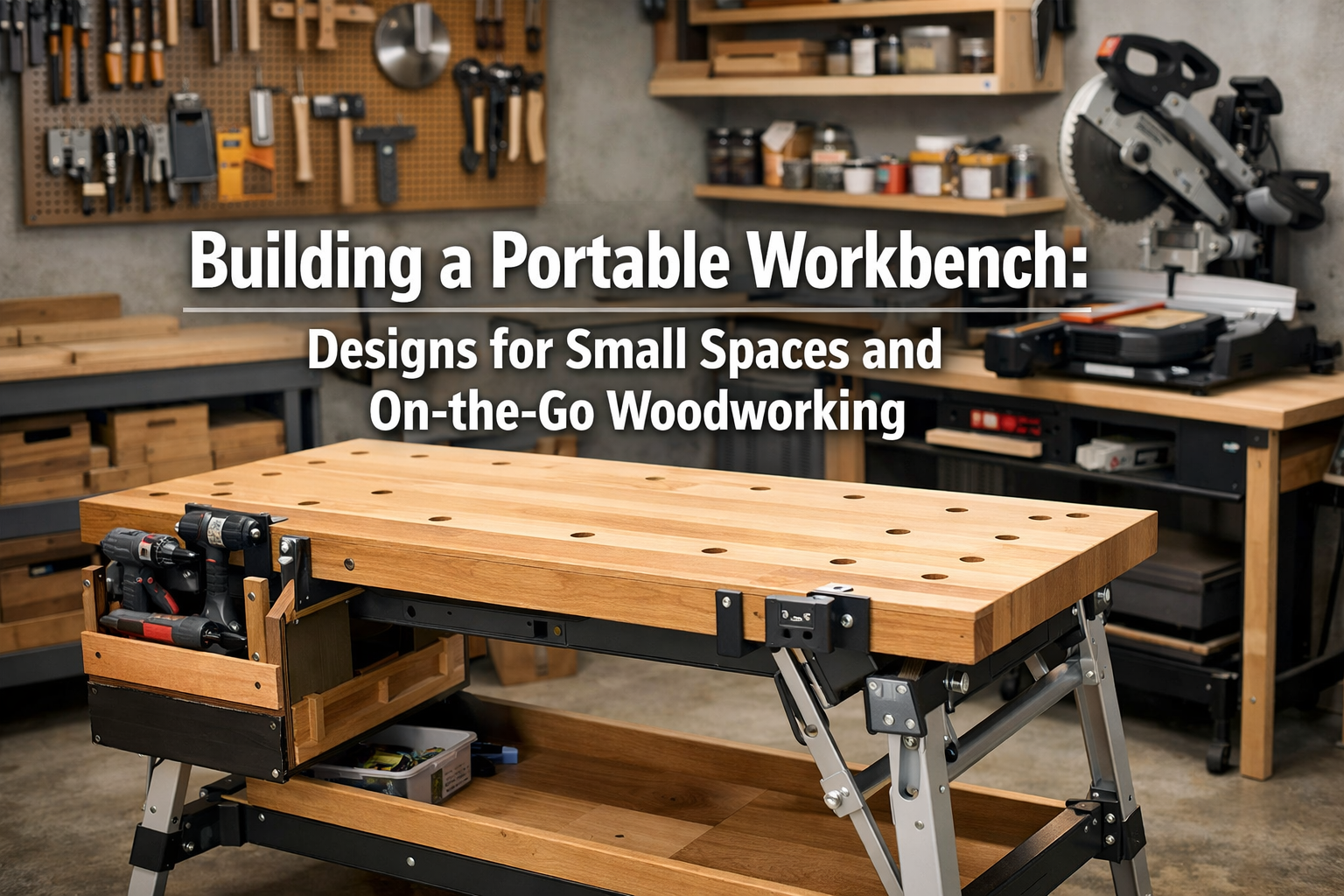

Woodworking is a craft that inspires creativity and offers immense satisfaction, but it often demands a dedicated workspace—a luxury many modern enthusiasts simply don’t have. This is where the ingenious solution of Building a Portable Workbench: Designs for Small Spaces and On-the-Go Woodworking truly shines. Imagine having a sturdy, reliable work surface that can be easily set up for a project, then neatly tucked away or transported to a new location when the work is done. In 2026, the demand for adaptable and efficient workspaces is higher than ever, making a portable workbench an essential addition to any woodworker’s toolkit, whether operating from a compact apartment, a shared garage, or tackling projects at different sites. This comprehensive guide will explore various designs, materials, and construction techniques to empower you to build the perfect portable workbench tailored to your needs.
Key Takeaways
- Portable workbenches are essential for woodworkers with limited space or those who work on-site.
- Key design considerations include stability, weight, collapsibility, and integrated storage.
- Common designs range from simple folding tables to sophisticated modular systems with vises and dog holes.
- Selecting appropriate materials like plywood, hardwoods, and robust hardware ensures durability and functionality.
- Safety is paramount during both construction and use, emphasizing stable setups and proper tool handling.
Essential Considerations for Building a Portable Workbench: Designs for Small Spaces and On-the-Go Woodworking
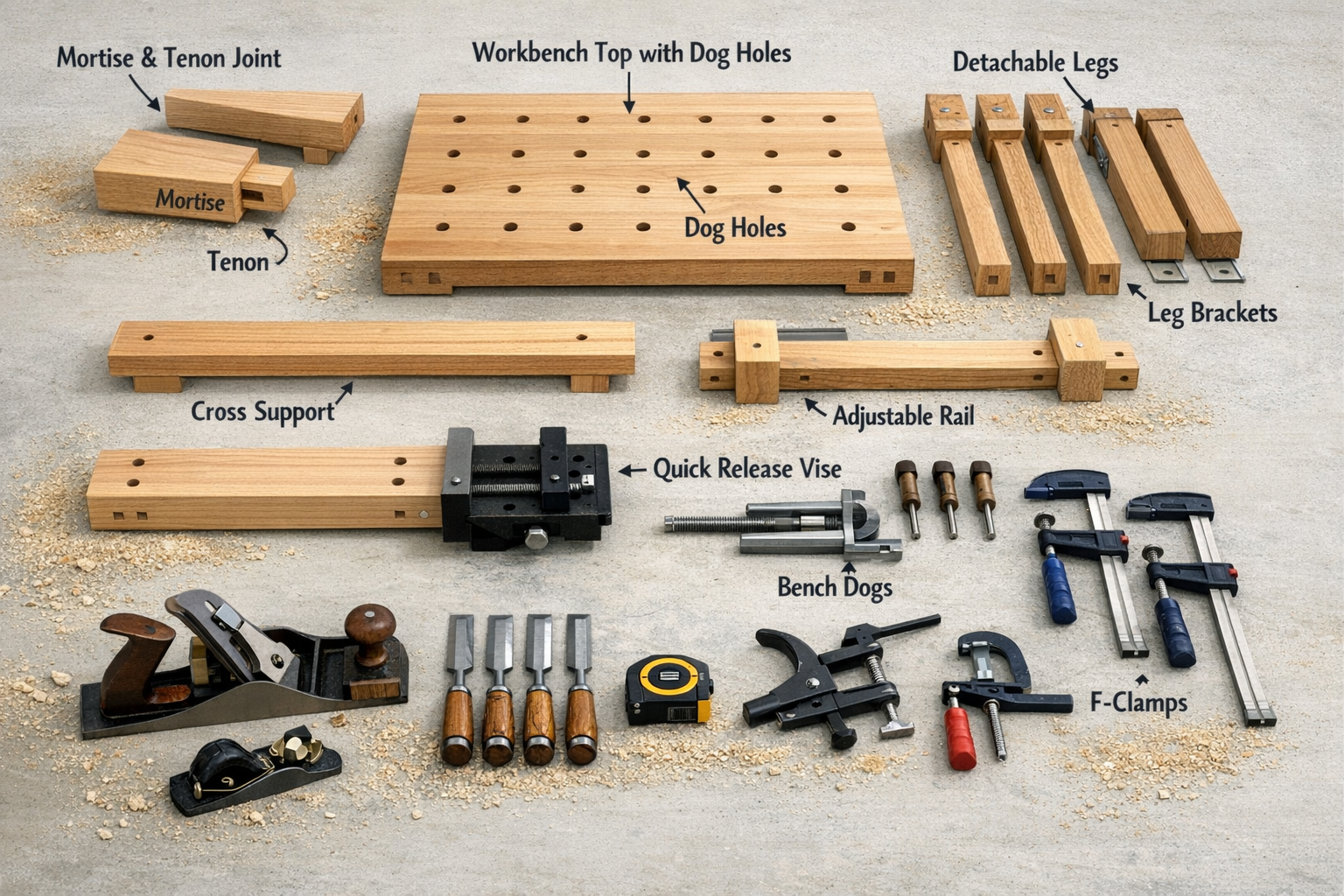
Before embarking on the construction of your portable workbench, it is crucial to understand the fundamental principles that govern its design and functionality. The goal is to strike a balance between portability, stability, and utility. A truly effective portable workbench must be robust enough to withstand the forces of woodworking tasks, yet light enough to move, and compact enough for storage.

Stability and Rigidity
The cornerstone of any workbench, especially a portable one, is its stability. A wobbly workbench is not only frustrating but also dangerous. Designs must incorporate features that lock components securely when in use. This could involve:
- Robust Joinery: Strong connections like through tenons, stout bolts, or metal brackets. When considering more advanced joinery, explore resources like “Mastering Dovetail Joinery for Drawers: Hand and Router Meth” at https://woodcraftwiz.com/mastering-dovetail-joinery-for-drawers-hand-and-router-methods-for-cabinet-builders-2/ for inspiration on creating sturdy connections.
- Wide Stance: Legs that splay out slightly provide a broader base and prevent tipping.
- Locking Mechanisms: Latches, toggle clamps, or quick-release pins can secure folding or detachable parts.
Weight and Portability
The “portable” aspect means the workbench must be manageable to lift and carry, or easily rolled.
- Material Selection: Lighter woods like pine or spruce, combined with strong plywood, can significantly reduce overall weight without compromising strength. For durable but lighter options, consider how different “Premium Wood Selection for 2026 Projects: Walnut, Cherry, an” (https://woodcraftwiz.com/premium-wood-selection-for-2026-projects-walnut-cherry-and-exotic-alternatives-to-pine/) can influence weight.
- Modular Design: Breaking the workbench into smaller, lighter components can make it easier to transport.
- Wheels/Casters: For heavier designs, incorporating lockable casters is a game-changer, allowing for effortless movement around the workspace.
Collapsibility and Storage
Optimizing for small spaces means the workbench should minimize its footprint when not in use.
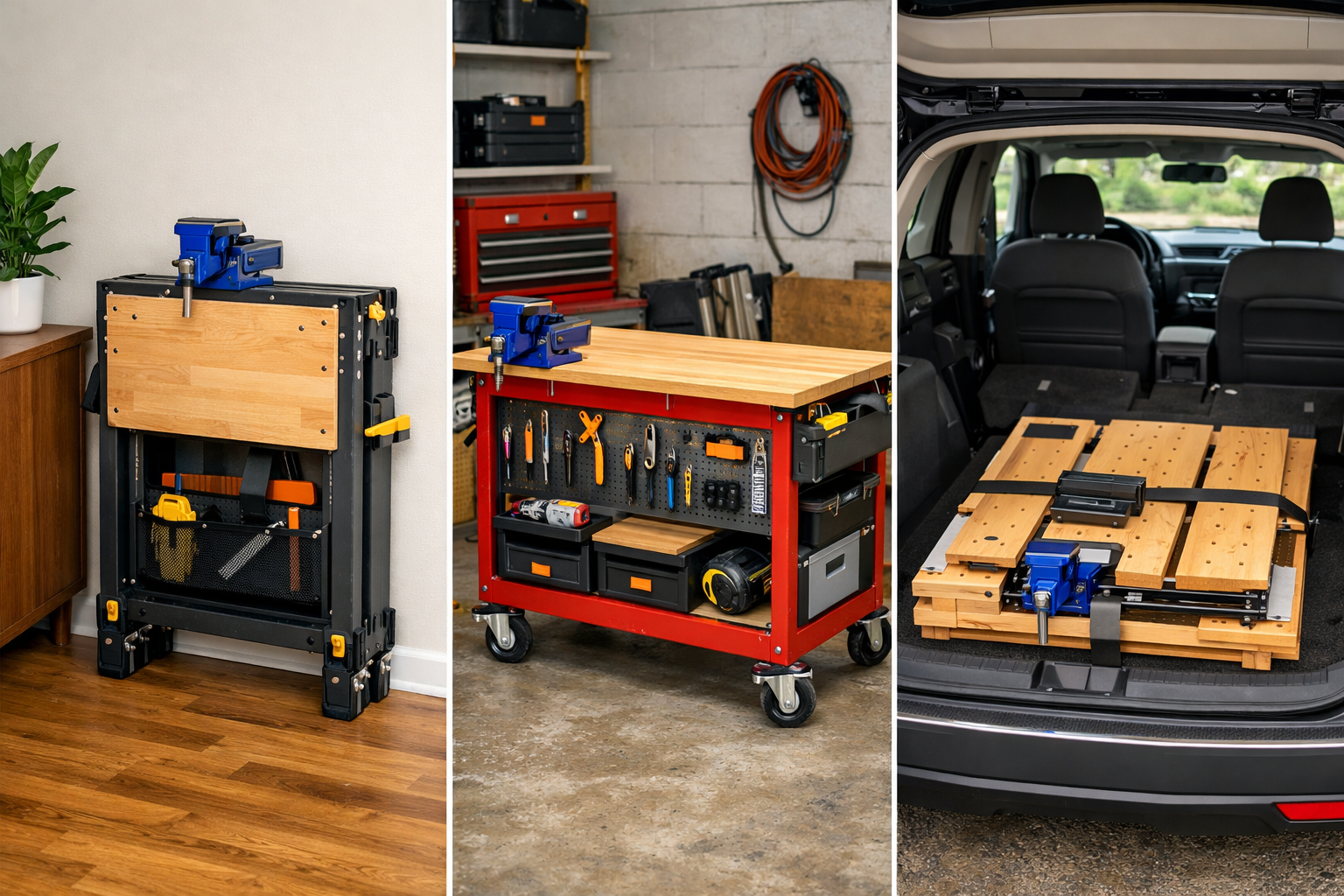
- Folding Legs: Designs that allow legs to fold flat against the tabletop are common and effective.
- Detachable Components: Work surfaces or bases that can be quickly disassembled into flatter pieces.
- Wall-Mountable: Some designs can be folded up and secured to a wall, freeing up floor space.
Integrated Features and Workholding
A workbench is more than just a flat surface; it’s a versatile tool-holding and workholding station.
- Vises: A small, integrated woodworking vise or bench dog system is invaluable.
- Dog Holes: A grid of dog holes allows for flexible clamping with bench dogs and holdfasts.
- Tool Storage: Built-in shelves, drawers, or hooks can keep essential tools organized and accessible.
- Router Plate: Consider a removable plate for flush-mounting a router, transforming your workbench into a small router table.
Material Selection for Durability
Choosing the right materials is crucial for longevity and performance.
- Plywood: High-quality Baltic birch or marine-grade plywood offers excellent strength-to-weight ratio and stability for tops and panels.
- Solid Wood: Hardwoods like maple or oak are ideal for vises, dog hole strips, or critical structural components due to their density and resistance to denting.
- Hardware: Use sturdy hinges, bolts, and locking mechanisms. Metal components should be corrosion-resistant.
Popular Portable Workbench Designs for Small Spaces and On-the-Go Woodworking
Several proven designs cater to the needs of portable woodworking. Each offers a unique balance of features, complexity, and portability.
1. The Foldable Table Workbench
This is perhaps the simplest and most accessible design. It functions much like a portable picnic table, with legs that fold flat against the underside of the top.
- Advantages: Extremely simple to build, lightweight, and very compact for storage.
- Disadvantages: Less rigid than other designs, limited workholding options unless custom modifications are added.
- Ideal for: Light-duty tasks, assembly, and as an auxiliary surface.
- Construction Tips:
- Use sturdy plywood (e.g., 3/4-inch Baltic birch) for the top.
- Reinforce the underside of the top where legs attach.
- Employ heavy-duty folding leg hardware for stability.
- Consider adding T-track or a few strategically placed dog holes for basic clamping.
2. The Sawhorse-Style Workbench
This design utilizes two robust sawhorses as a base, topped with a removable work surface. The work surface can be as simple as a sheet of plywood or incorporate more advanced features.
- Advantages: Highly versatile, easy to set up and break down, and the sawhorses can be used independently. Allows for different-sized work surfaces.
- Disadvantages: Requires separate storage for the top and sawhorses.
- Ideal for: Medium-duty tasks, rough milling, and situations where the base needs to be reconfigured.
- Construction Tips:
- Build strong, stable sawhorses (e.g., from 2x4s or 2x6s).
- Design the work surface with cleats or a lip to prevent it from sliding off the sawhorses.
- Integrate a small vise or bench dogs into the work surface for improved workholding.
3. The Knock-Down or Modular Workbench
This sophisticated design breaks down into several manageable components that can be assembled with minimal tools (sometimes even tool-free) using mortise and tenon joints, dados, or heavy-duty hardware.
- Advantages: Excellent stability and rigidity when assembled, offers advanced workholding capabilities, and highly customizable.
- Disadvantages: More complex to build, may take slightly longer to assemble/disassemble.
- Ideal for: Serious hobbyists or professionals who need a full-featured workbench that can be moved.
- Construction Tips:
- Precision in joinery is key for a tight fit and stability. Consider consulting guides on “Hand Tool Mastery for Detail Work: Chisels, Hand Planes, and” (https://woodcraftwiz.com/hand-tool-mastery-for-detail-work-chisels-hand-planes-and-rasps-for-refined-joinery-and-finishing/) for achieving accurate joints.
- Use heavy-duty bolts and wing nuts for quick assembly if relying on mechanical fasteners.
- Design with integrated vises, dog holes, and perhaps a tool well.
- Ensure all components are clearly marked for easy reassembly.
4. The Rolling Cabinet Workbench
While not always fully “collapsible,” a rolling cabinet workbench on lockable casters offers excellent mobility within a single workspace, making it ideal for small garages or workshops where items need to be moved frequently.
- Advantages: Provides significant storage, highly stable, and easy to reposition.
- Disadvantages: Not easily transportable outside the workspace, heavier.
- Ideal for: Organizing tools and materials while maintaining a flexible layout.
- Construction Tips:
- Build a sturdy cabinet base from plywood.
- Install heavy-duty, locking casters (at least 3-inch diameter).
- Add drawers and shelves for organized tool storage.
- Top with a durable work surface, such as a thick slab of plywood or butcher block.
Step-by-Step Guide and Key Techniques for Building a Portable Workbench: Designs for Small Spaces and On-the-Go Woodworking
The actual construction process for a portable workbench will vary depending on the chosen design, but certain principles and techniques apply broadly. This section outlines a general approach and highlights important considerations.
1. Planning and Design
- Define Your Needs: What types of projects will you undertake? How much space do you have? How often will you move it?
- Sketch and Measure: Create detailed drawings, including dimensions. Consider ergonomics: what’s a comfortable working height for you?
- Material List: Compile a precise list of all wood, hardware, and fasteners needed.
- Tool List: Ensure you have the necessary tools, including a circular saw, drill, router, and hand tools. For power tool techniques, refer to “Power Tool Mastery for Decorative Wood Projects: Creating Pr” at https://woodcraftwiz.com/power-tool-mastery-for-decorative-wood-projects-creating-professional-finishes-on-cutting-boards-serving-trays-and-wooden-clocks/.
2. Cutting and Preparing Materials
- Accurate Cuts: Precision is paramount for joinery and overall stability. Use a sharp saw and guides for straight, square cuts.
- Edge Treatment: Sand all edges smooth to prevent splinters and improve appearance.
- Drilling: Predrill all screw holes to prevent splitting, especially in plywood.
3. Assembling the Core Structure
- Legs and Aprons: For folding or knock-down designs, focus on robust connections between the legs and the workbench aprons. Mortise and tenon joints, pocket screws, or through bolts are excellent choices.
- Hinges/Hardware: Install heavy-duty hinges for folding legs. Ensure they are aligned perfectly to allow smooth operation and prevent racking.
- Reinforcement: Add corner blocks or gussets in critical areas to increase rigidity.
4. Creating the Workbench Top
- Flatness: A truly flat workbench top is essential for accurate woodworking. If using plywood, select a flat sheet and consider doubling it up for thickness and rigidity.
- Workholding Features:
- Dog Holes: Drill a grid of 3/4-inch or 20mm dog holes. Use a drill press with a sharp Forstner bit for clean, perpendicular holes. A jig can help maintain consistent spacing.
- Vise Installation: Carefully mount your chosen vise, ensuring it is flush with the workbench top and securely fastened. Reinforce the underside of the top where the vise attaches.
- Edge Banding: For plywood tops, adding a solid wood edge banding can protect the edges and provide a more durable surface for clamping.
5. Finishing Touches and Customizations
- Sanding: Sand all surfaces smooth, starting with coarser grit and progressing to finer grits (e.g., 80, 120, 180).
- Protective Finish: Apply a durable finish that will protect the wood from moisture, glue, and wear. Options include:
- Oil Finish: Penetrates the wood, easy to repair. (e.g., “Danish Oil vs Linseed: The Ultimate Wood Finishing Guide” at https://woodcraftwiz.com/danish-oil-vs-linseed-the-ultimate-wood-finishing-guide/)
- Polyurethane: Forms a hard, protective layer. (e.g., “Applying Polyurethane in High Humidity: Tips and Techniques” at https://woodcraftwiz.com/applying-polyurethane-in-high-humidity-tips-and-techniques/)
- Paste Wax: Provides a slick, protective surface that’s easy to clean.
- Tool Storage: Add hooks, magnetic strips, or small shelves to keep frequently used tools within reach.
- Leveling Feet: If not using casters, adjustable leveling feet can compensate for uneven floors.
Safety First!
When working on your portable workbench, always ensure it is fully deployed and locked in its stable position. Never overload it, and always use appropriate personal protective equipment (PPE). A stable work surface is fundamental for safe tool operation, especially when using power tools or sharp hand tools.
Conclusion
Building a Portable Workbench: Designs for Small Spaces and On-the-Go Woodworking is an incredibly rewarding project that addresses a common challenge for modern woodworkers: limited space. By carefully considering stability, portability, collapsibility, and integrated features, you can create a highly functional and versatile workspace that adapts to your needs. Whether you opt for a simple folding table, a robust knock-down design, or a mobile cabinet, the effort invested in building your own workbench will pay dividends in enhanced productivity, improved organization, and the sheer joy of having a dedicated space for your craft, wherever that may be in 2026.

Start by defining your specific requirements, then explore the various designs and material options. Don’t be afraid to customize and innovate to create a workbench that perfectly suits your woodworking style. The journey of building your portable workbench is a woodworking project in itself, offering valuable learning opportunities and leading to a tool that will serve you for years to come.