
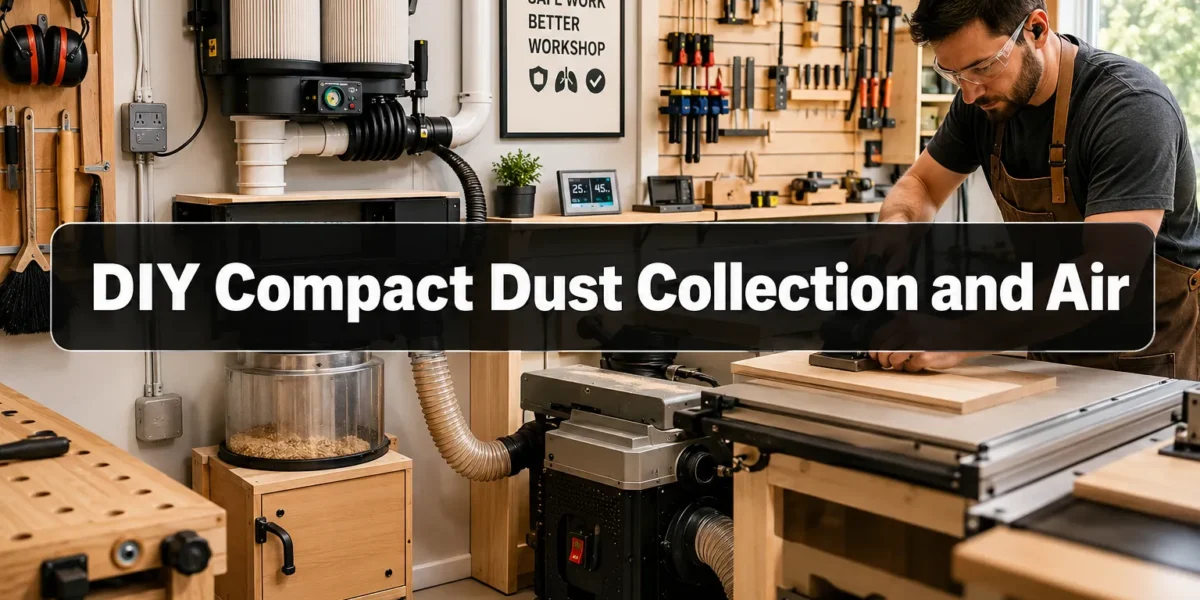
Over 80% of small-scale woodworkers and DIY enthusiasts operate in spaces smaller than 200 square feet, often battling persistent airborne dust and fine particulates. This environment, while compact, presents unique challenges for maintaining clean air and workshop safety. Successfully implementing DIY Compact Dust Collection and Air Filtration for Micro Workshops: Solutions for Sub-200 sq ft Spaces is not merely a convenience; it is a critical health imperative, directly impacting respiratory well-being and the longevity of sensitive equipment. This article will guide you through designing and building efficient, space-saving systems tailored for these confined areas, ensuring a productive and safe working environment.
Key Takeaways
- Micro-workshops require specialized dust collection and air filtration solutions due to limited space.
- DIY systems offer cost-effective and customizable alternatives to commercial units.
- Prioritize source capture, followed by ambient air filtration, to effectively manage airborne particulates.
- Understanding filter ratings (MERV, HEPA) is crucial for selecting components that ensure proper air quality.
- Regular maintenance and strategic placement are vital for the efficiency and safety of compact systems.
Understanding the Unique Challenges of Micro Workshops
Working in a sub-200 sq ft space means every inch counts, and inefficiencies are magnified. Traditional dust collection systems designed for larger workshops are often too bulky, too loud, or too power-hungry for these constrained environments. Fine wood dust, especially from sanding or sawing, can remain suspended in the air for hours, posing significant health risks suchibilities such as asthma and other respiratory issues, as well as creating a fire hazard. Furthermore, dust settles on tools, increasing wear and tear and compromising the quality of finished projects.
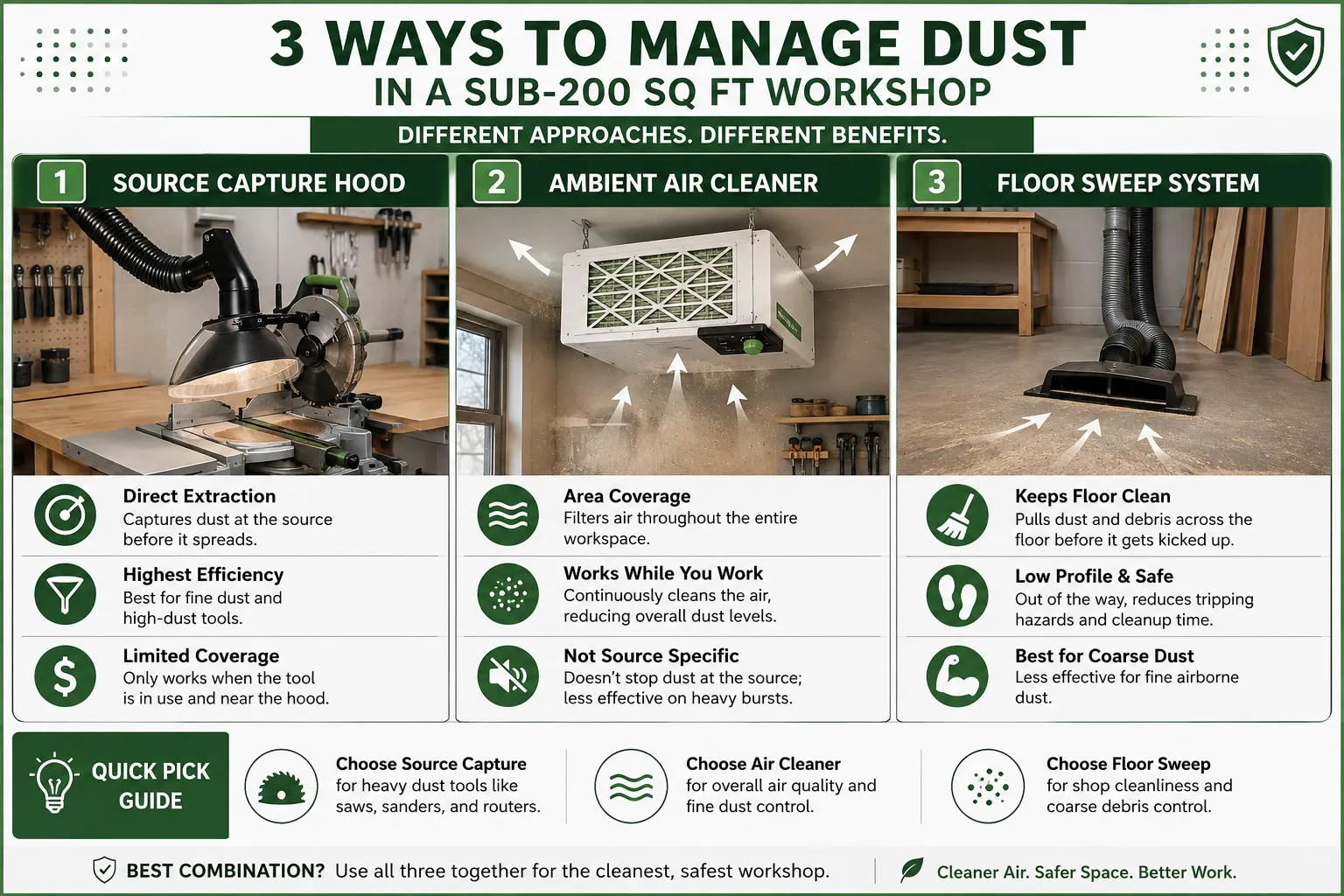
The key to effective dust management in these compact areas lies in a multi-pronged approach:
- Source Capture: Collecting dust directly at the point of generation.
- Ambient Air Filtration: Cleaning the overall air in the workshop.
- Workshop Layout Optimization: Arranging tools and systems to maximize efficiency and minimize dust spread.
Ignoring these challenges can lead to a less enjoyable, less safe, and less productive workshop experience in 2026. Therefore, carefully planning your DIY Compact Dust Collection and Air Filtration for Micro Workshops: Solutions for Sub-200 sq ft Spaces is a fundamental step for any serious small-space artisan.
Designing DIY Compact Dust Collection Systems for Small Footprints
Effective dust collection in a micro-workshop starts with a well-designed system that addresses the “big chips” and the “fine dust” separately. A two-stage approach is often the most efficient for DIY setups, separating larger debris before the finer particles reach the main filter.
The Cyclone Separator: Your First Line of Defense
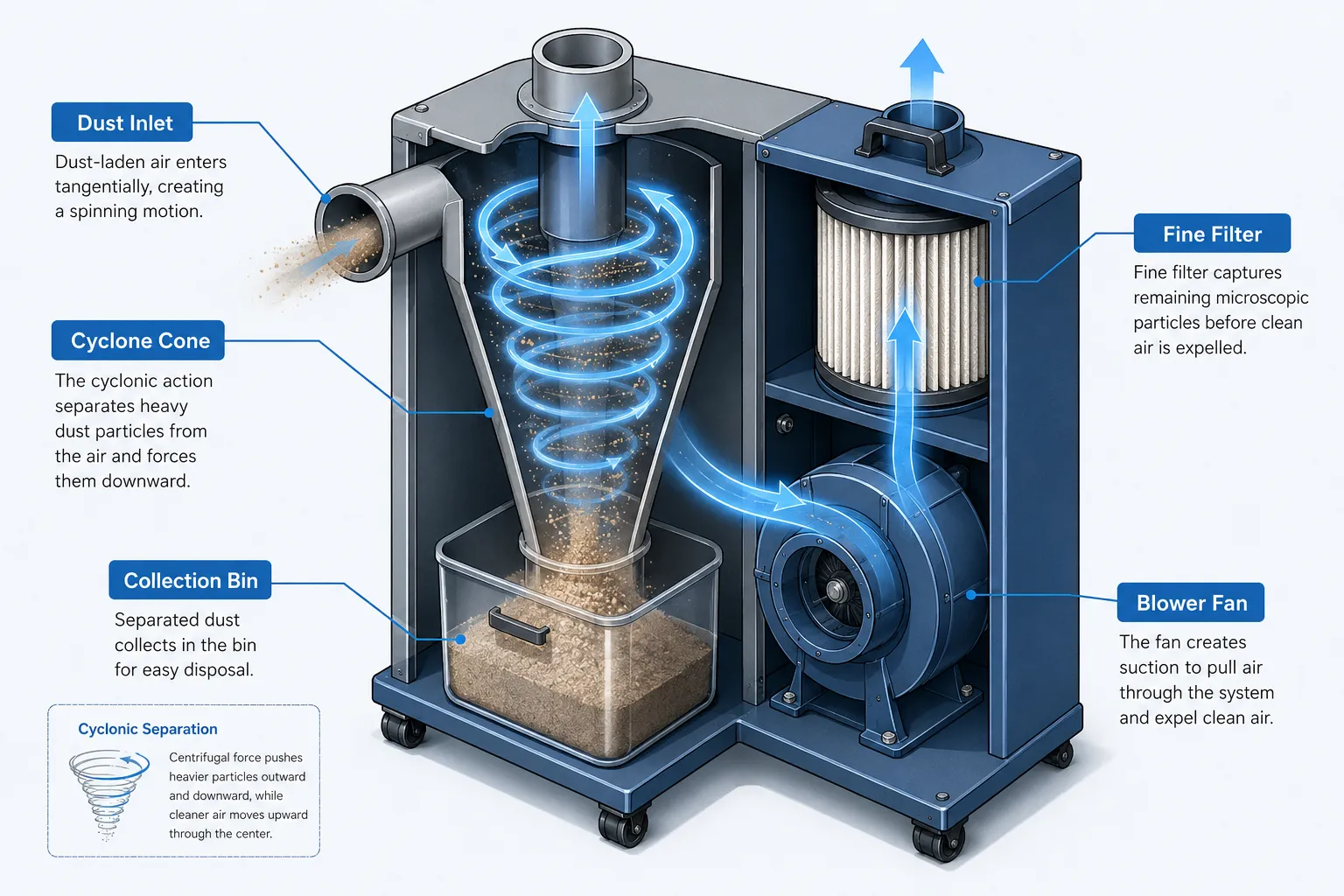
A DIY cyclone separator is an excellent starting point for compact dust collection. It uses centrifugal force to spin the dust-laden air, dropping heavier particles into a collection bin before the air moves on to a filter or vacuum. This significantly reduces the load on your fine filters, prolonging their life and maintaining suction power.
Key Components for a DIY Cyclone:
- Cyclone Cone: Can be purchased as a kit (e.g., Oneida Dust Deputy, Clear Vue Cyclones) or fabricated from sheet metal or sturdy plastic.
- Collection Bin: A sealed 5-gallon bucket or a larger drum. Ensuring an airtight seal is crucial for efficiency.
- Inlet and Outlet Ports: Typically 2-4 inch diameter, matching your shop vacuum or dust collector hose.
- Mounting: A stable base or wall mount to keep the unit secure.
Building a mobile version of this system, perhaps on a small dolly, can further enhance its utility in tight spaces, allowing you to move it directly to the tool generating the most dust. For ideas on how to integrate such mobility, consider exploring concepts from Building A Mobile Dust Collection Cart For Any Workshop Design Filtration Portability.
Powering Your DIY Dust Collector: Shop Vac vs. Dedicated Blower
For micro-workshops, a high-quality shop vacuum often serves as the core power unit for dust collection, especially when paired with a cyclone separator.
Shop Vac Advantages:
- Portability: Easy to move between tools.
- Versatility: Can be used for general shop clean-up.
- Cost-Effective: Many workshops already own one.
Shop Vac Considerations:
- Noise: Can be loud, requiring hearing protection.
- Filter Clogging: Rapid filter clogging without a pre-separator.
- Airflow: May not provide enough sustained airflow for larger dust-producing tools like planers or jointers.
For those requiring more robust airflow, repurposing a small furnace blower or a dedicated dust collector motor can provide increased suction power. However, these generally require more space and careful wiring. Regardless of your power source, ensuring adequate airflow (measured in Cubic Feet per Minute, CFM) is crucial for capturing dust effectively. For a small woodworking shop, a minimum of 300-450 CFM is often recommended for point-of-source capture for smaller tools, with higher CFM for larger machinery.
Implementing DIY Compact Air Filtration for Clean Breathing
While source capture deals with the bulk of the dust, ambient air filtration is essential for removing the fine particles that inevitably escape and remain suspended in the air. These are the most dangerous particles, invisible to the naked eye, that can linger for hours.
The Box Fan Filter: An Accessible Solution
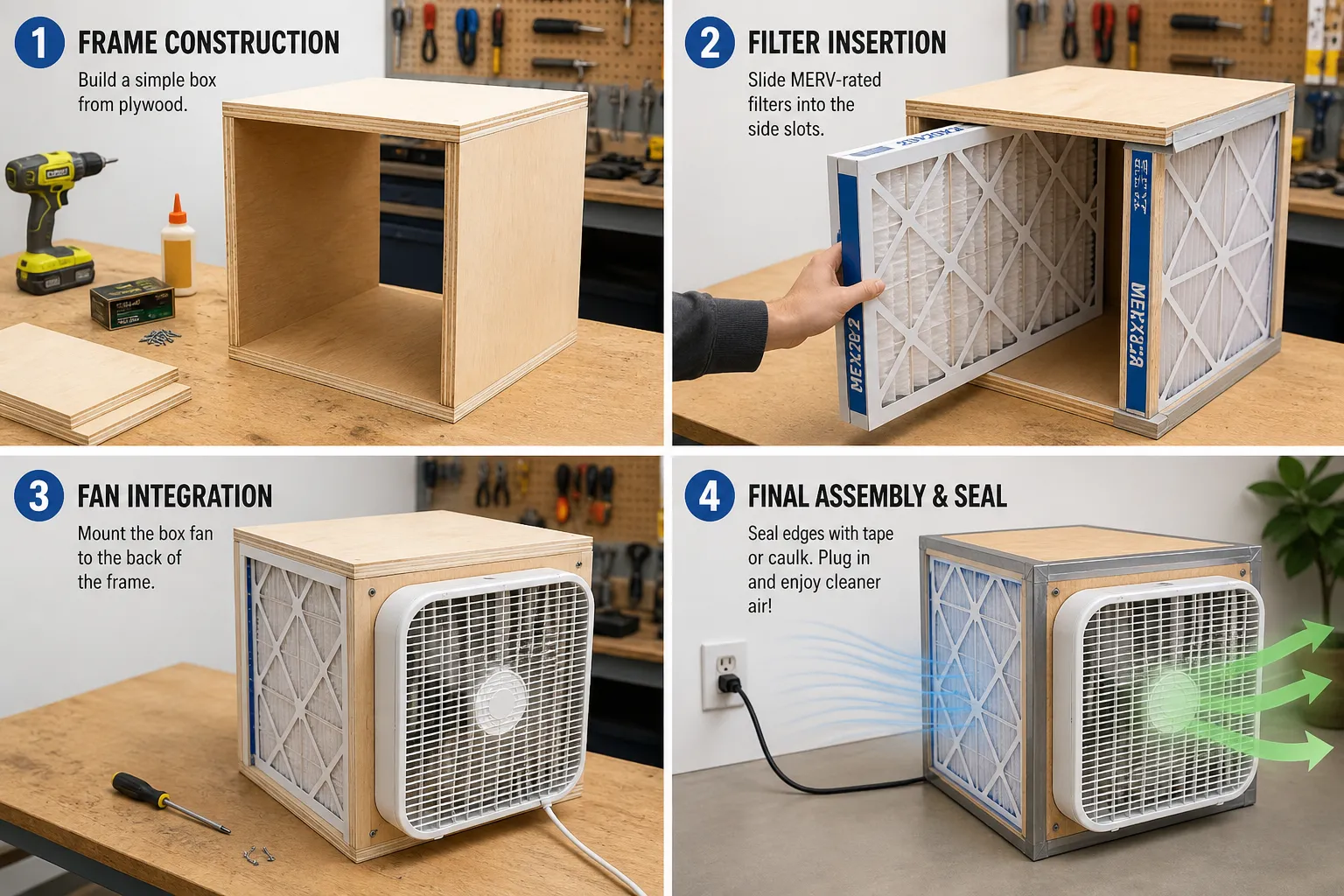
One of the simplest and most cost-effective DIY solutions for ambient air filtration is the “box fan filter.” This involves attaching high-quality furnace filters to a standard box fan.
Steps for a Basic Box Fan Filter:
- Select a Fan: A standard 20×20 inch box fan is ideal.
- Choose Filters: Use MERV 11-13 rated furnace filters. For enhanced filtration, some DIYers create a cube by attaching four filters around the fan.
- Secure Filters: Use duct tape, bungee cords, or a simple wooden frame to create an airtight seal between the filters and the fan. Ensure the filters are oriented correctly according to their airflow arrows.
For those seeking a more integrated and aesthetically pleasing solution, building a permanent enclosure for your box fan and filters can be beneficial. This enclosure can be hung from the ceiling or mounted on a wall, saving precious floor space. When considering such modifications, remember that DIY Smart Workshop Storage Solutions Maximizing Space And Organization For Every Tool can offer valuable insights into optimizing your workshop layout.
Understanding Filter Ratings: MERV, HEPA, and Beyond
The effectiveness of your air filtration system hinges on the quality of your filters.
| Filter Rating | Particle Size Captured (Microns) | Common Applications |
|---|---|---|
| MERV 8 | 3.0 – 10.0 | Basic residential furnaces, capturing lint, dust mites |
| MERV 11 | 1.0 – 3.0 | Better residential, commercial buildings, capturing pet dander, mold spores |
| MERV 13 | 0.3 – 1.0 | Hospitals, superior residential, capturing bacteria, smoke, finer dust |
| HEPA | 0.3 (99.97%) | Medical facilities, clean rooms, capturing viruses, all fine particulates |
For woodworking, a MERV 11 or MERV 13 filter is generally recommended for ambient air filtration to capture the harmful fine dust particles. While HEPA filters offer the highest level of filtration, they can be more expensive and may restrict airflow more significantly, requiring a more powerful fan.
Aim for a system that can filter the air in your workshop at least 5-10 times per hour. To calculate your workshop’s air volume, multiply its length x width x height (in feet). Then divide the CFM of your filtration unit by this volume to determine the air changes per hour (ACH). For example, a 10x15x8 ft workshop has an air volume of 1200 cubic feet. A 300 CFM air filter would provide 15 ACH (300 CFM / 1200 sq ft = 0.25 changes per minute * 60 minutes = 15 ACH), which is excellent.
Optimizing Layout and Maintenance for Enhanced Performance
Even the most efficient DIY Compact Dust Collection and Air Filtration for Micro Workshops: Solutions for Sub-200 sq ft Spaces will falter without proper placement and consistent maintenance. In a small space, strategic layout is paramount.
Strategic Placement for Maximum Effect
- Source Capture: Position your dust collection hose as close as possible to the cutting or sanding action. Consider building custom shrouds or adapters for specific tools that lack adequate dust ports.
- Ambient Air Filtration: Place your air filter unit where it can draw in dusty air and circulate clean air effectively, often high up or in a corner, avoiding direct obstruction. For larger micro-workshops, two smaller units placed strategically can be more effective than one central unit. When considering efficient placement, insights from Creating Ergonomic Workshop Layouts Maximizing Space And Workflow In Small To Medium Sized Woodworking Shops can be very beneficial.
- Ducting and Hoses: Minimize the length of hoses and ducting, and avoid sharp bends, which significantly reduce airflow. Use the largest diameter hose practical for your tools to improve efficiency. Rigid ducting is generally more efficient than flexible hoses due to less internal resistance.
Essential Maintenance Practices
Consistent maintenance is the backbone of any effective dust collection and air filtration system.
- Empty Collection Bins Regularly: Allowing the collection bin of your cyclone or shop vac to overfill will reduce suction and potentially cause blowback.
- Clean/Replace Filters:
- Dust Collector Pre-filters: If you use a pleated filter on your dust collector, clean it frequently using compressed air (outdoors) or a filter cleaning tool.
- Ambient Air Filters: Inspect MERV-rated filters monthly and replace them every 1-3 months, depending on usage. Dirty filters restrict airflow and become ineffective.
- Check for Leaks: Periodically inspect all connections, hoses, and seals for leaks. Even small leaks can drastically reduce system efficiency.
- Inspect Blower/Fan: Ensure the fan blades are free of dust and debris, which can imbalance the motor and reduce performance.
For DIY enthusiasts constantly seeking to optimize their workspace, considering how modular designs can enhance functionality and adaptability is key. This philosophy extends beyond dust collection, informing projects like those discussed in Modular Furniture Design For Woodworkers Building Multi Functional Pieces That Adapt To Modern Living Spaces. By integrating compact, mobile solutions, even the smallest workshop can become a highly functional and safe environment.
Advanced DIY Considerations for Micro Workshops
For those looking to take their DIY Compact Dust Collection and Air Filtration for Micro Workshops: Solutions for Sub-200 sq ft Spaces to the next level, there are several advanced concepts to explore.
Automated Systems and Smart Controls
Integrating smart technology can make your dust collection more convenient and efficient.
- Remote Switches: Connect your dust collector or shop vac to a remote switch that activates when you turn on a specific tool.
- Dust Sensors: While more complex to DIY, commercial dust sensors can trigger ambient air purifiers when particulate levels rise above a certain threshold.
- Timer Controls: Set your ambient air filtration unit to run for a specific period after you finish working to ensure all suspended dust settles and is captured.
These “smart” upgrades, even in their simplest forms, can significantly improve the usability and effectiveness of your systems. More advanced integration ideas can be found in resources like Diy Smart Workshop Upgrades Integrating Ai And Iot For Enhanced Precision And Safety.
Noise Reduction Strategies
Compact workshops often mean that noisy dust collection systems are right next to you. Reducing noise is vital for a comfortable working environment.
- Enclosures: Building a sound-dampening enclosure around your shop vacuum or blower can significantly reduce noise levels. Use materials like MDF or plywood lined with acoustic foam. Ensure proper ventilation to prevent overheating.
- Isolation: Place the dust collector on rubber mats or vibration-dampening feet to reduce noise transmission through the floor.
- Ducting Design: Smooth, rigid ducting with gradual bends creates less turbulence and therefore less noise than flexible hoses with sharp turns.
By addressing these advanced considerations, you can create a truly optimized, quiet, and safe micro-workshop, making your woodworking and DIY projects more enjoyable and productive in 2026.
Conclusion
Creating an effective DIY Compact Dust Collection and Air Filtration for Micro Workshops: Solutions for Sub-200 sq ft Spaces is an essential investment in your health, your tools, and the quality of your work. By embracing a two-stage approach, starting with efficient source capture via a DIY cyclone and complementing it with a robust ambient air filtration system like a box fan filter, you can drastically reduce airborne dust. Remember to choose appropriate MERV-rated filters, optimize your workshop layout for maximum airflow, and commit to a consistent maintenance schedule. These DIY solutions offer a flexible, cost-effective path to a cleaner, safer, and more enjoyable micro-workshop. Take the next step today to transform your small space into a healthier, dust-free haven for creativity.
SEO Meta Title: DIY Compact Dust Collection & Air Filtration for Micro Workshops
SEO Meta Description: Learn to build efficient DIY compact dust collection and air filtration solutions for micro workshops under 200 sq ft, ensuring a clean and safe workspace in 2026.