

The average small woodworking shop wastes an estimated 15% of its productive time searching for tools, clearing space, or reconfiguring setups for different tasks. This inefficiency directly impacts profitability and project timelines, particularly for woodworkers engaged in batch production. Addressing this challenge head-on, this guide delves into EPL Work Table Plans: Space-Saving Assembly and Production Tables for Efficient Batch Woodworking. These designs are not merely benches; they are strategically engineered systems built to maximize every square inch of your workspace, streamline your workflow, and boost your output for repeatable projects in 2026.
Key Takeaways
- EPL (Efficient Production Layout) work tables are modular, space-saving solutions designed for batch woodworking.
- They integrate features like adjustable height, specialized jigs, and built-in storage to enhance productivity.
- Customizing EPL plans allows for tailored setups that optimize workflow for specific woodworking tasks.
- Implementing these tables significantly reduces setup times and improves consistency in repetitive operations.
- Building your own EPL work tables can be a cost-effective way to elevate workshop efficiency and output.
The Core Concept of EPL Work Table Plans: Space-Saving Assembly and Production Tables for Efficient Batch Woodworking
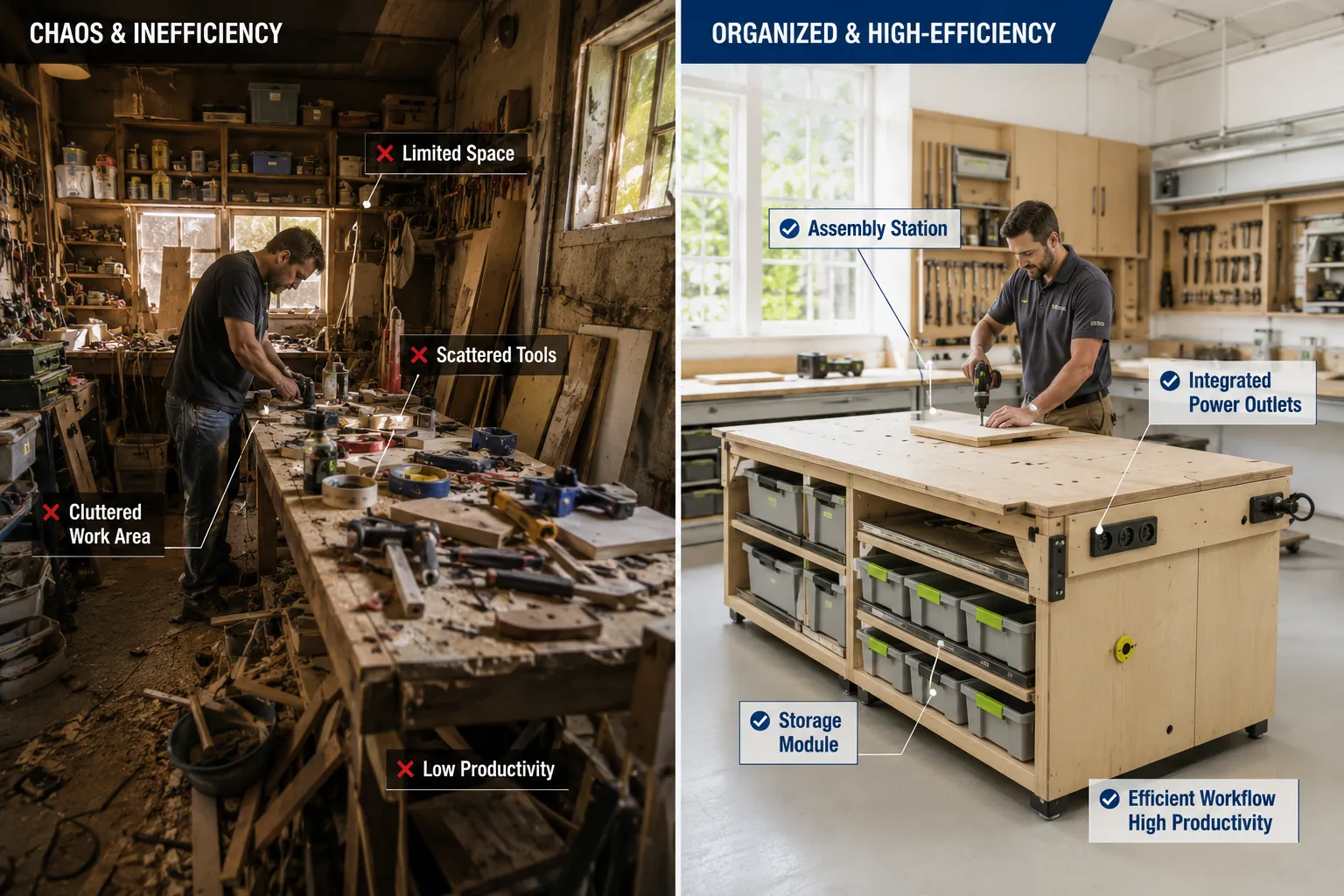
EPL work table plans revolve around the principle of modularity and focused functionality. Instead of a single, bulky workbench attempting to serve all purposes, an EPL system breaks down the woodworking process into distinct, manageable stations. Each station, built from space-saving work table plans, is optimized for a specific phase of production, be it cutting, assembly, finishing, or specialized joinery. This approach is particularly beneficial for batch woodworking, where efficiency and repeatability are paramount.
Think of it as creating a mini-production line within your workshop. By having dedicated tables that can be easily reconfigured or moved, you minimize wasted motion, reduce clutter, and ensure that the right tools and jigs are always within arm’s reach for the task at hand. This system allows a woodworker to transition smoothly from one batch task to the next, significantly improving throughput and quality control.
Why Modular Design Matters
Modular design is the cornerstone of effective EPL work tables. It offers several critical advantages:
- Adaptability: Modules can be rearranged, added, or removed to suit different project requirements or workshop sizes. A small shop might utilize a single, multi-function module that transforms, while a larger operation could have several dedicated stations.
- Space-Saving: Many EPL designs incorporate features like folding extensions, nesting tables, or vertical storage, making them ideal for compact workshops. For ideas on maximizing limited room, consider exploring efficient small workshop layouts for 2026 mobile tool stations and dust collection upgrades.
- Scalability: As your production needs grow, you can simply build or acquire more modules, expanding your capabilities without overhauling your entire setup.
- Specialization: Each module can be tailored with specific fixtures, clamping systems, or tool mounts. For example, one module might be equipped with a specialized jig for dovetail joints, while another has a dedicated area for sanding.
Investing time in designing and building these tables using EPL Work Table Plans: Space-Saving Assembly and Production Tables for Efficient Batch Woodworking is an investment in your shop’s future. It transforms a reactive, often chaotic, workspace into a proactive, highly organized production hub.
Essential Features of High-Efficiency EPL Work Tables
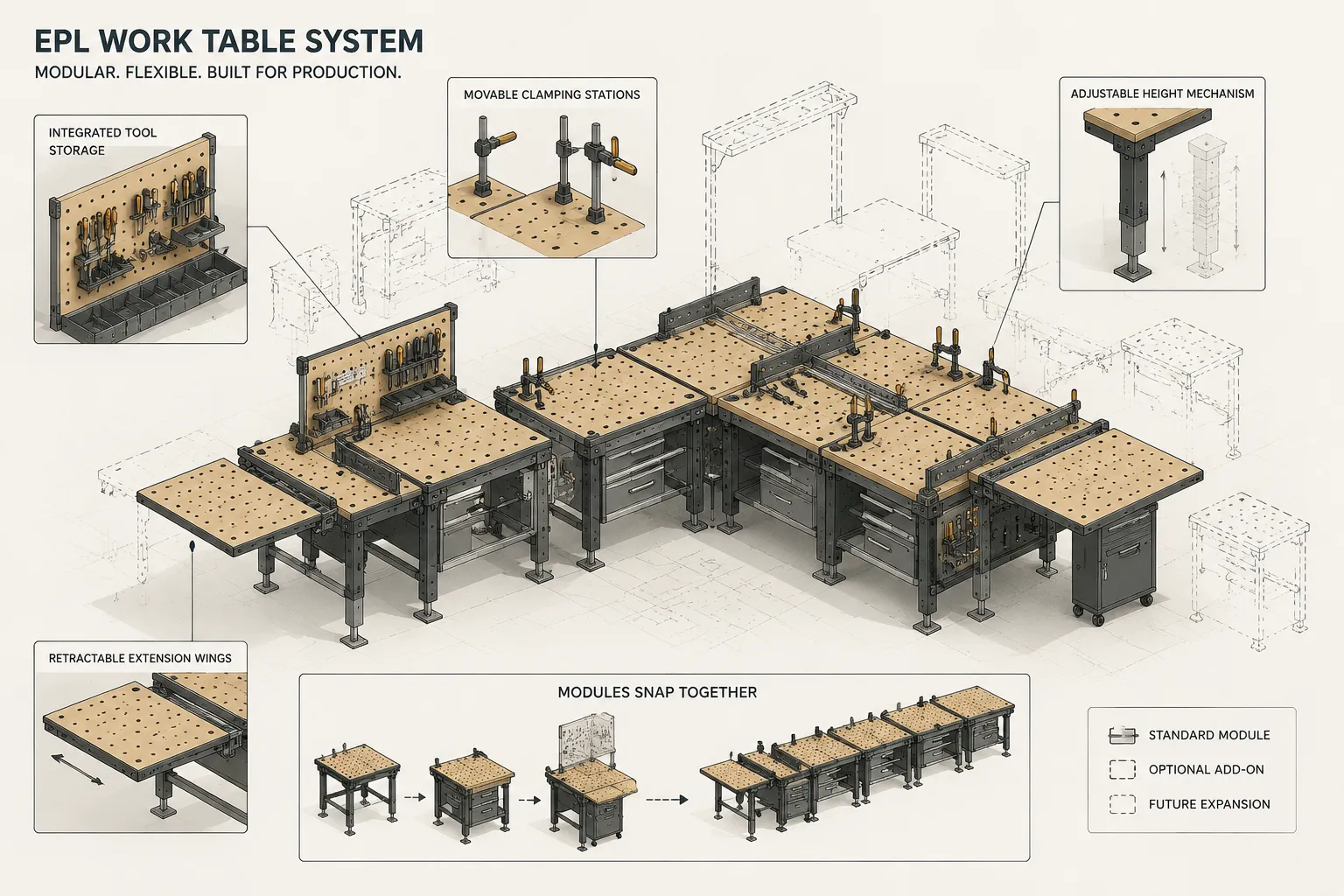
When considering or building your EPL work tables, several key features contribute directly to enhanced productivity and space-saving. These aren’t just conveniences; they are strategic elements designed to optimize every step of your woodworking process.
Integrated Storage and Organization
Clutter is the enemy of efficiency. High-performance EPL tables incorporate smart storage solutions directly into their design. This can include:
- Drawers and Cabinets: For frequently used hand tools, fasteners, and supplies.
- Shelving: Open shelves for quick access to jigs, templates, or partially assembled components.
- Pegboards or Tool Walls: Mounted directly to the back or sides of the table, keeping cutting tools, measuring devices, and power tool accessories within reach. Consider how DIY modular desk organizers custom solutions for a clutter free woodworking workspace can be adapted for a workbench.
- Custom Holders: Specific slots or holsters for drills, sanders, or specialized cutters.
By integrating storage, you eliminate the need to walk to a separate tool chest, saving precious time and maintaining focus on the task at hand.
Adjustable Height and Ergonomics
Working at an uncomfortable height leads to fatigue and reduces precision. Adjustable height mechanisms allow you to set the table to the optimal working height for different tasks and for your specific body.
- Crank or Electric Lifts: Offer seamless height adjustment for various operations, from detailed assembly (higher table) to heavy planing (lower table).
- Fixed Height for Specific Tasks: Some tables might be designed for a permanent height, such as a dedicated outfeed table for a 12 inch Craftsman table saw features advantages and woodworking tips.
Ergonomics are crucial for sustained productivity and preventing injuries. An ergonomic workstation means less strain and more consistent, high-quality work over longer periods.
Specialized Jigs and Fixtures Integration
For batch woodworking, repeatable accuracy is vital. EPL tables excel when designed with specific jig and fixture integration in mind.
- T-Track Systems: Embedded into the tabletop, these allow for quick and secure clamping, as well as mounting various jigs like stop blocks for repetitive cuts.
- Dog Holes: A grid of holes for bench dogs and hold-downs, offering versatile clamping options across the entire surface.
- Router Plate Inserts: For tables dedicated to routing operations, a flush-mounted router plate transforms the table into a DIY router table build precision safety and custom features for advanced woodworking operations.
- Dedicated Assembly Zones: Areas on the table with alignment fences or specific clamping patterns for quickly assembling multiple identical parts.
The ability to quickly set up and tear down jigs for repetitive tasks makes a significant difference in a batch production environment.
Mobility and Flexibility
Even stationary work tables can benefit from elements that enhance mobility and flexibility.
- Heavy-Duty Casters: Lockable, swivel casters allow tables to be easily moved around the shop, repositioned for different workflows, or stored against a wall when not in use. This is particularly useful for smaller shops that need to adapt their layout frequently.
- Folding or Retractable Extensions: Maximizes surface area only when needed, then folds away to save space. For examples of maximizing space, consider building a DIY folding console table: maximizing space and.
- Interlocking Systems: For modular tables, a robust and easy-to-use interlocking mechanism allows different units to be securely joined together or separated quickly.
The ultimate goal of EPL Work Table Plans: Space-Saving Assembly and Production Tables for Efficient Batch Woodworking is to create a dynamic workspace that adapts to your projects, rather than forcing your projects to adapt to a rigid workspace.
Designing and Building Your Own EPL Work Tables for Batch Woodworking
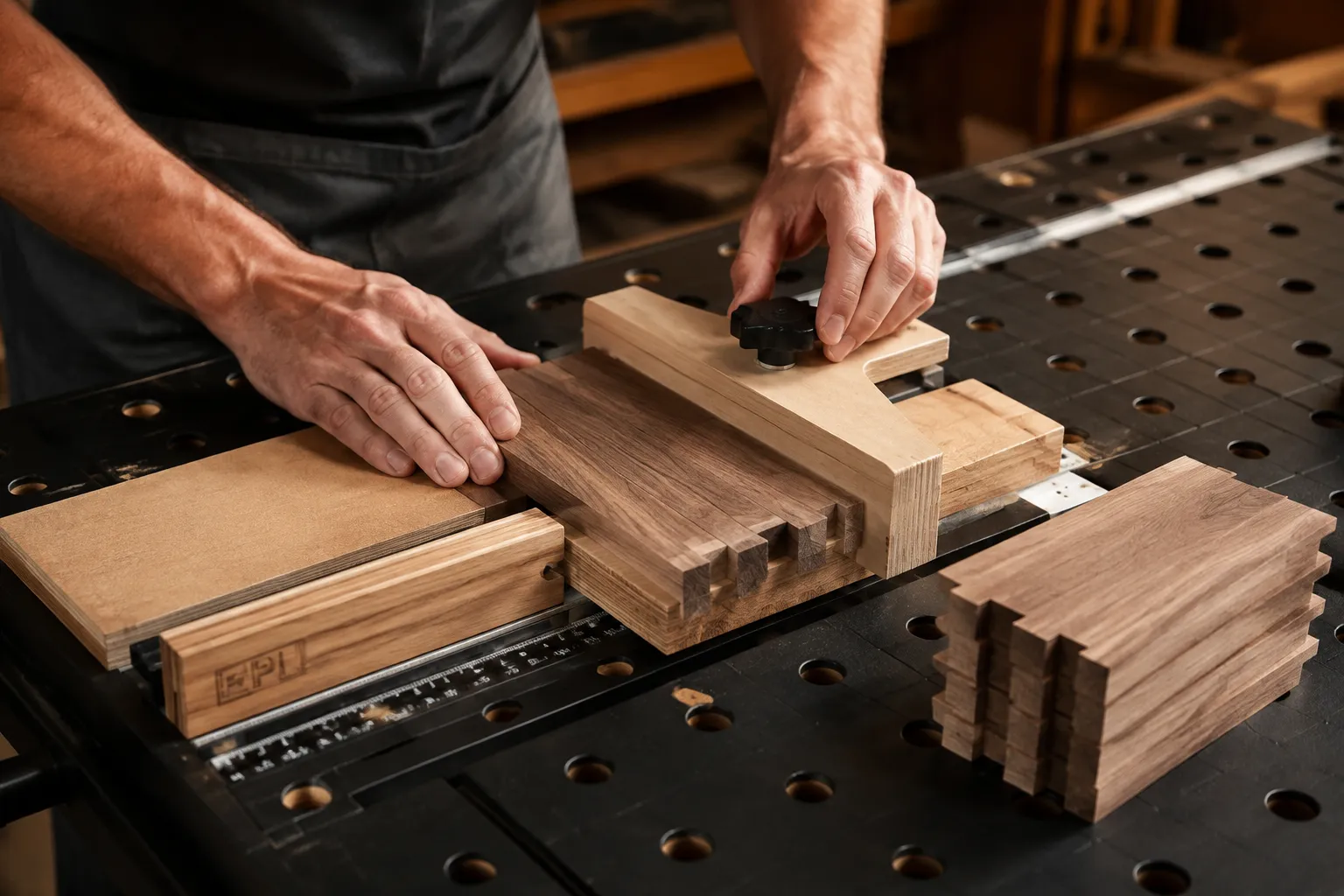
The process of designing and building your own EPL work tables is a rewarding endeavor that directly translates into a more efficient and enjoyable woodworking experience. It allows for complete customization to your specific needs, tools, and project types.
Step-by-Step Design Process
Analyze Your Workflow: Before drawing a single line, observe your current woodworking process.
- What tasks do you perform most often?
- Where are the bottlenecks?
- What tools do you use for each step?
- Which operations are repetitive (ideal for batching)?
- What are the dimensions of the items you produce in batches?
This analysis will inform the number of modules you need and the specialized features for each.
Define Module Functions: Based on your workflow analysis, designate specific functions for each potential table module.
- Cutting Station: For repetitive cuts with a miter saw or a Ts2412 Ridgid table saw unveiling advantages features and more and associated outfeed support.
- Assembly Station: Flat, stable surface with clamping options for joinery and glue-ups.
- Finishing Station: A dust-free area, possibly with a downdraft table for sanding or a dedicated space for applying finishes.
- Specialized Tool Station: For a drill press, mortiser, or a dedicated Mastering the Router Table: Beyond Edge Profiling for Advanced Joinery and Precision Cuts setup.
Sketch Layouts and Dimensions: Start with rough sketches of your workshop space and how these modules could fit.
- Consider different configurations: L-shape, U-shape, inline, or individual mobile units.
- Determine optimal table dimensions based on your materials and typical project sizes.
- Plan for clearances around machines and pathways for movement.
Detail Features for Each Module: Flesh out the specific features for each table.
- What type of top material (MDF, plywood, hardwood)?
- What kind of clamping system?
- Where will storage be integrated?
- Do you need power outlets, air hoses, or dust collection ports? For inspiration, review building a portable dust collection system for small workshops DIY solutions for clean air and safety.
- Will it be mobile (casters) or stationary?
Material Selection: Choose materials that match your budget and functional requirements.
- Frame: Plywood, 2x4s, or steel tubing for heavy-duty applications.
- Tops: MDF (good for jigs, easily replaceable), plywood (durable, cost-effective), or solid hardwood (most durable, heaviest).
- Hardware: Heavy-duty casters, drawer slides, T-tracks, and leveling feet.
Building Tips for Durability and Precision
- Measure Twice, Cut Once: This age-old adage is especially critical for work tables where flatness and squareness are paramount.
- Strong Joinery: Use robust joinery methods like mortise and tenon, dadoes, or pocket screws combined with glue for maximum strength. For beginners, review mastering wood joinery techniques: essential methods for strong and.
- Leveling Feet: Even with casters, leveling feet are essential for ensuring a perfectly flat and stable work surface on uneven shop floors.
- Edge Banding/Protection: Protect plywood edges with banding or hardwood strips to prevent chipping and improve durability.
- Clear Finish: Apply a durable finish to the tabletop to protect against spills and wear, ensuring easy cleanup.
Building your own EPL Work Table Plans: Space-Saving Assembly and Production Tables for Efficient Batch Woodworking is an iterative process. Start with a core module, test it, and then refine your design and expand as needed. The flexibility of DIY allows for continuous improvement and optimization.
Conclusion
Implementing EPL Work Table Plans: Space-Saving Assembly and Production Tables for Efficient Batch Woodworking in your shop is more than just adding new furniture; it’s a strategic upgrade to your entire production methodology. By embracing modularity, integrating specialized features, and optimizing for workflow, woodworkers can dramatically reduce wasted time, enhance precision, and increase overall output for batch projects in 2026. This approach allows even the smallest workshops to operate with the efficiency of larger production facilities, transforming challenges of space and time into opportunities for streamlined creativity and profitability.
Start by assessing your current workspace and identifying areas for improvement. Sketch out designs that directly address your pain points and leverage the principles of efficient layout. The investment in building or adapting these tables will pay dividends in the form of a more organized, productive, and enjoyable woodworking experience. Your ideal workspace, optimized for efficient batch production, is within reach.