
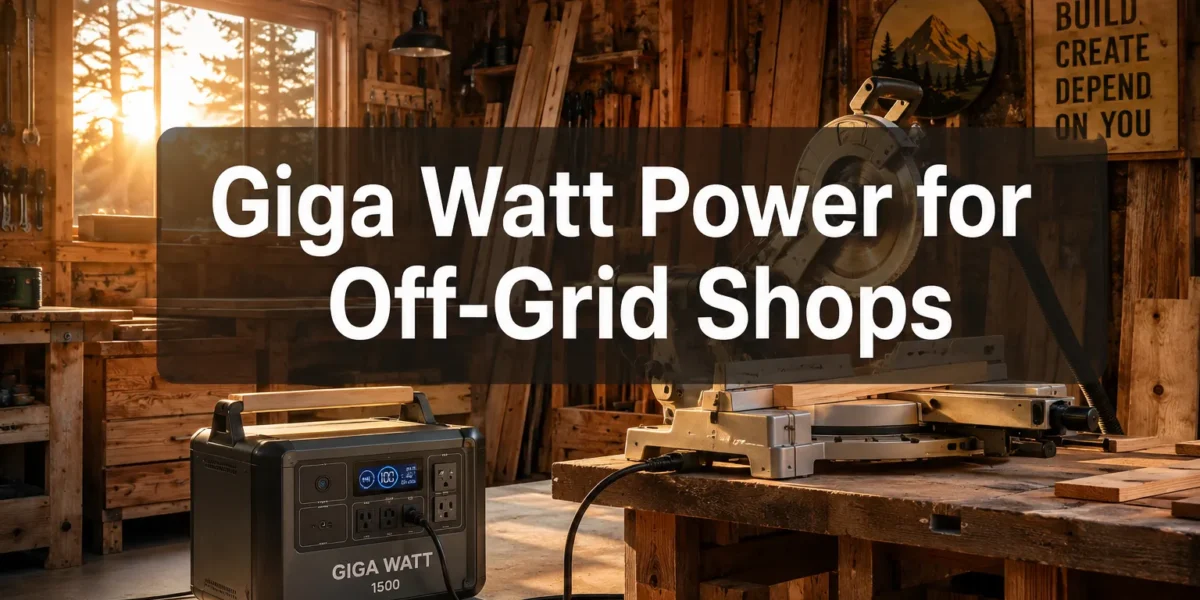
The dream of a secluded woodworking haven, far from the hum of city life and the constraints of a grid connection, is often stifled by one critical question: how do you power your essential tools? By 2026, the answer for many skilled artisans and hobbyists alike lies in advanced portable power solutions. This article will explore how Giga Watt Portable Power Stations for Off-Grid Woodshops: Powering Tools in Remote Workshop Setups are transforming remote woodworking, making it possible to run everything from miter saws to dust collectors, regardless of your location.
Key Takeaways
- Giga Watt portable power stations offer a robust and reliable energy source for remote and off-grid woodworking, eliminating reliance on traditional grid power.
- Selecting the right power station involves understanding your tools’ wattage requirements, battery chemistry (LiFePO4 is superior), and inverter type (pure sine wave is essential).
- These stations can power a wide array of woodworking tools, from handheld devices to larger stationary equipment, with careful consideration of surge capacity.
- Solar charging capabilities extend operational time indefinitely, making Giga Watt stations a sustainable choice for truly off-grid setups.
- Proper management of power consumption and strategic tool usage are key to maximizing the efficiency and runtime of your portable power station.
The Allure of Off-Grid Woodworking and the Giga Watt Solution
For many woodworkers, the ideal workshop isn’t a cramped garage but a spacious, tranquil retreat nestled in nature. Such a setting offers unparalleled peace, inspiration, and freedom from noise complaints. However, this vision quickly encounters the practical hurdle of electricity. Traditional generators are noisy, fuel-dependent, and emit fumes, detracting from the very serenity sought. This is where Giga Watt Portable Power Stations for Off-Grid Woodshops: Powering Tools in Remote Workshop Setups emerge as the game-changer in 2026.
These advanced power stations are essentially large, high-capacity battery packs equipped with AC outlets, DC ports, and USB chargers, all driven by a sophisticated inverter. Unlike gas generators, they operate silently, produce zero emissions, and require no fossil fuels (especially when paired with solar panels). Their portability means you can take your workshop power wherever your woodworking passion leads you, whether it’s building a remote cabin or crafting furniture deep within your property.
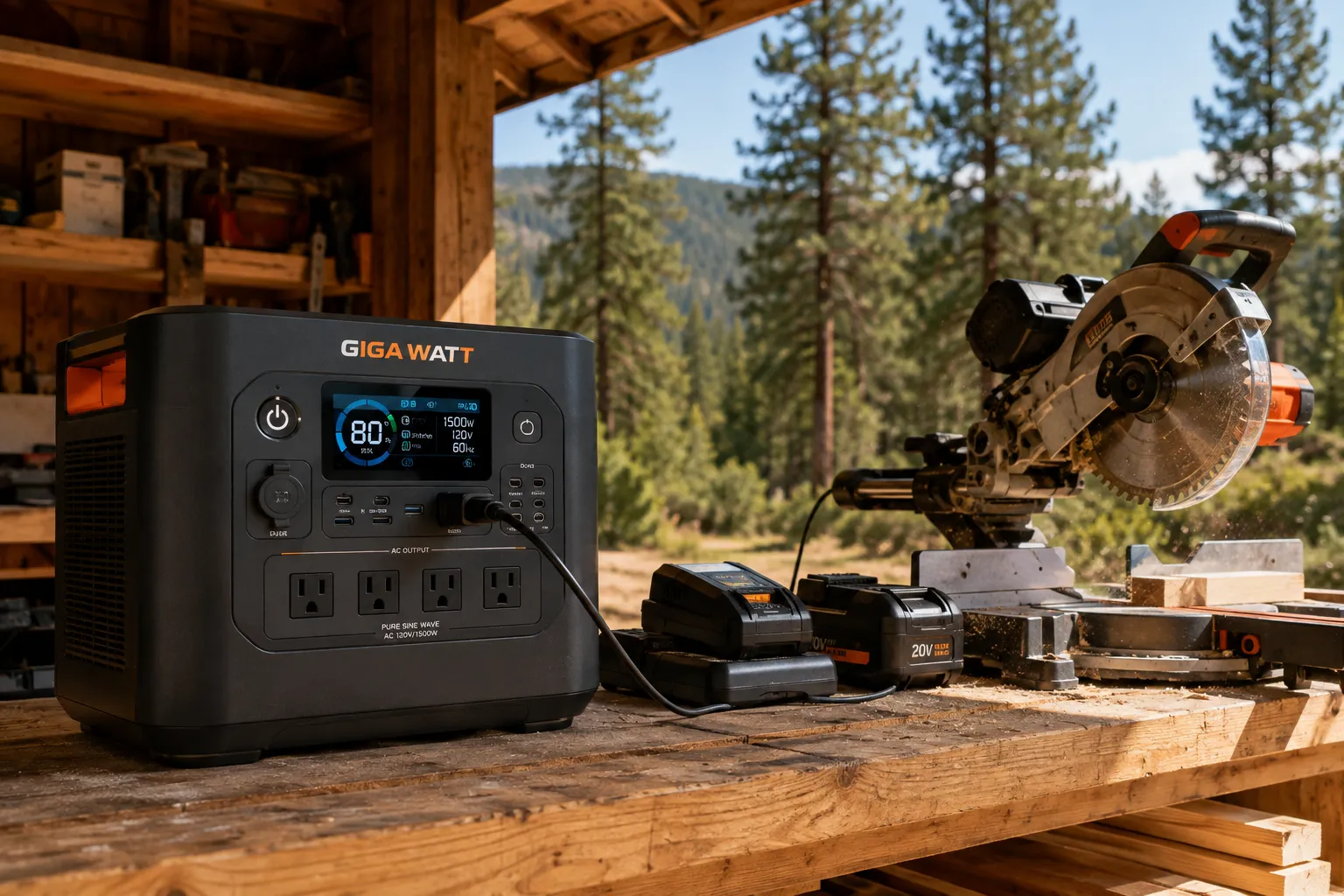
Why Giga Watt Stands Out for Woodworkers
Giga Watt has established itself as a leader in portable power, particularly for demanding applications like woodworking. Their units are designed with robust construction, capable of handling the rigors of a workshop environment. Key features often include:
- High Output Wattage: Essential for powering high-draw tools like table saws, miter saws, and routers.
- Pure Sine Wave Inverters: Crucial for sensitive electronics and power tools, ensuring clean, stable power that prevents damage and optimizes performance.
- LiFePO4 Battery Chemistry: Offers a longer lifespan, greater safety, and more charge cycles compared to older lithium-ion technologies, a significant advantage for long-term workshop use.
- Fast Charging Options: Many Giga Watt stations support rapid AC charging, and solar input capabilities allow for continuous, sustainable power generation.
Choosing a Giga Watt portable power station means investing in reliability and performance, ensuring your tools receive the consistent power they need to operate efficiently and safely. For those looking to protect their investment, consider learning about building a DIY portable power station enclosure to provide an extra layer of protection against workshop dust and debris.
Selecting the Right Giga Watt Portable Power Station for Your Woodshop
The diverse range of woodworking tools, each with its unique power requirements, necessitates a thoughtful approach when choosing a Giga Watt portable power station. The goal is to match the station’s capabilities with your workshop’s demands, ensuring uninterrupted operation for your projects.
Understanding Your Tools’ Power Needs
Before selecting a power station, compile a list of all the power tools you intend to use off-grid. For each tool, note its running wattage and surge wattage.
Running Wattage: The continuous power a tool draws during operation. Surge Wattage: The momentary spike in power a tool draws when it first starts up. This can be significantly higher than the running wattage, especially for tools with electric motors.
| Tool Type | Average Running Wattage | Average Surge Wattage |
|---|---|---|
| Orbital Sander | 200 – 300 W | 400 – 600 W |
| Corded Drill | 400 – 700 W | 800 – 1500 W |
| Jigsaw | 500 – 700 W | 1000 – 1400 W |
| Router (Handheld) | 700 – 1200 W | 1400 – 2400 W |
| Miter Saw | 1200 – 1800 W | 2400 – 3600 W |
| Table Saw (Small/Mid) | 1500 – 2500 W | 3000 – 5000 W |
| Dust Collector (Small) | 700 – 1500 W | 1400 – 3000 W |
Note: These are average values; always check your specific tool’s rating plate.
Your Giga Watt power station must have an inverter capable of handling the highest surge wattage of any single tool you plan to run, as well as sufficient continuous wattage for all tools running simultaneously (if applicable). Many woodworkers opt for models with at least a 2000W continuous output and 4000W surge capability to cover most common workshop tools.
Battery Capacity and Chemistry
Battery capacity, measured in Watt-hours (Wh) or Kilowatt-hours (kWh), dictates how long your power station can run your tools. To estimate runtime, divide the battery capacity by the tool’s running wattage. For example, a 2000Wh station running a 500W orbital sander could theoretically last 4 hours (2000Wh / 500W). However, factors like inverter efficiency losses and intermittent tool usage will affect actual runtime.
Giga Watt utilizes LiFePO4 (Lithium Iron Phosphate) batteries, which are a superior choice for woodworking applications due to their:
- Longevity: Rated for thousands of charge cycles, offering years of reliable service.
- Safety: Less prone to thermal runaway compared to other lithium chemistries.
- Stability: Performs well across a wider temperature range.
Look for a Giga Watt model with a capacity that aligns with your typical work sessions. For full-day operations or heavy-duty tools, a 2-3 kWh capacity or higher is often recommended.
Maximizing Efficiency and Tool Compatibility for Off-Grid Woodshops
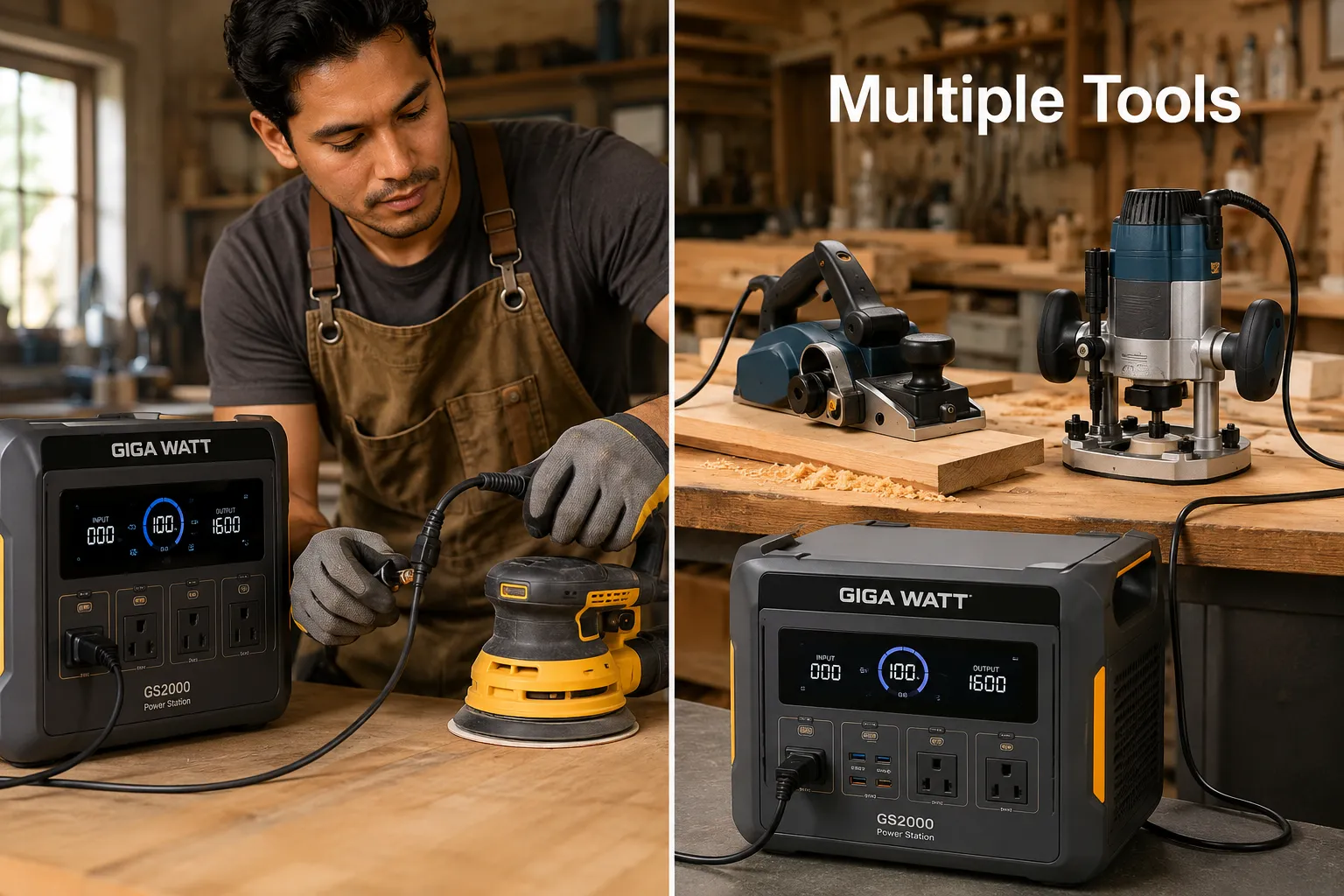
Optimizing the use of your Giga Watt Portable Power Stations for Off-Grid Woodshops: Powering Tools in Remote Workshop Setups involves smart tool selection, careful power management, and leveraging renewable energy.
Compatible Woodworking Tools
The capabilities of modern Giga Watt stations mean a broad range of woodworking tools are now viable for off-grid use.
Handheld Power Tools:
- Orbital sanders, belt sanders, random orbit sanders
- Corded drills and impact drivers
- Jigsaws, circular saws, reciprocating saws
- Routers (both fixed base and plunge)
- Hand planers
Stationary or Larger Tools (with adequate power station capacity):
- Miter saws (especially 10-12 inch models)
- Small to medium-sized table saws (ensure surge wattage is handled)
- Band saws
- Dust collectors (smaller workshop models)
- Air compressors (for pneumatic tools, requires significant surge capacity)
Tools that require careful consideration or may be less suitable for continuous off-grid use with a portable station include large industrial machinery like jointers, planers, or very high-horsepower table saws, unless you have multiple large Giga Watt stations or a very extensive solar setup.
Power Management Strategies
To get the most out of your Giga Watt station, employ these strategies:
- Stagger Tool Usage: Avoid running multiple high-draw tools simultaneously. If you’re using a miter saw, unplug the dust collector or orbital sander temporarily.
- Utilize Efficient Tools: Where possible, opt for high-efficiency brushless tools. While many cordless tools are battery-powered, for tools you intend to run directly from the Giga Watt station, efficiency matters.
- Monitor Power Consumption: Most Giga Watt stations feature a clear display showing input/output wattage and remaining battery life. Pay attention to these metrics to avoid unexpected power loss.
- Prioritize Tool Usage: Plan your woodworking tasks to group high-power operations (e.g., cutting with a table saw) and low-power operations (e.g., sanding).
- LED Lighting: Power your workshop lighting with energy-efficient LED fixtures.
- Insulation: If your remote workshop is enclosed, good insulation reduces the need for power-hungry heating or cooling. Learn more about maximizing workshop space and efficiency in articles like Maximizing Your Tiny Woodshop.
Integrating Solar Power
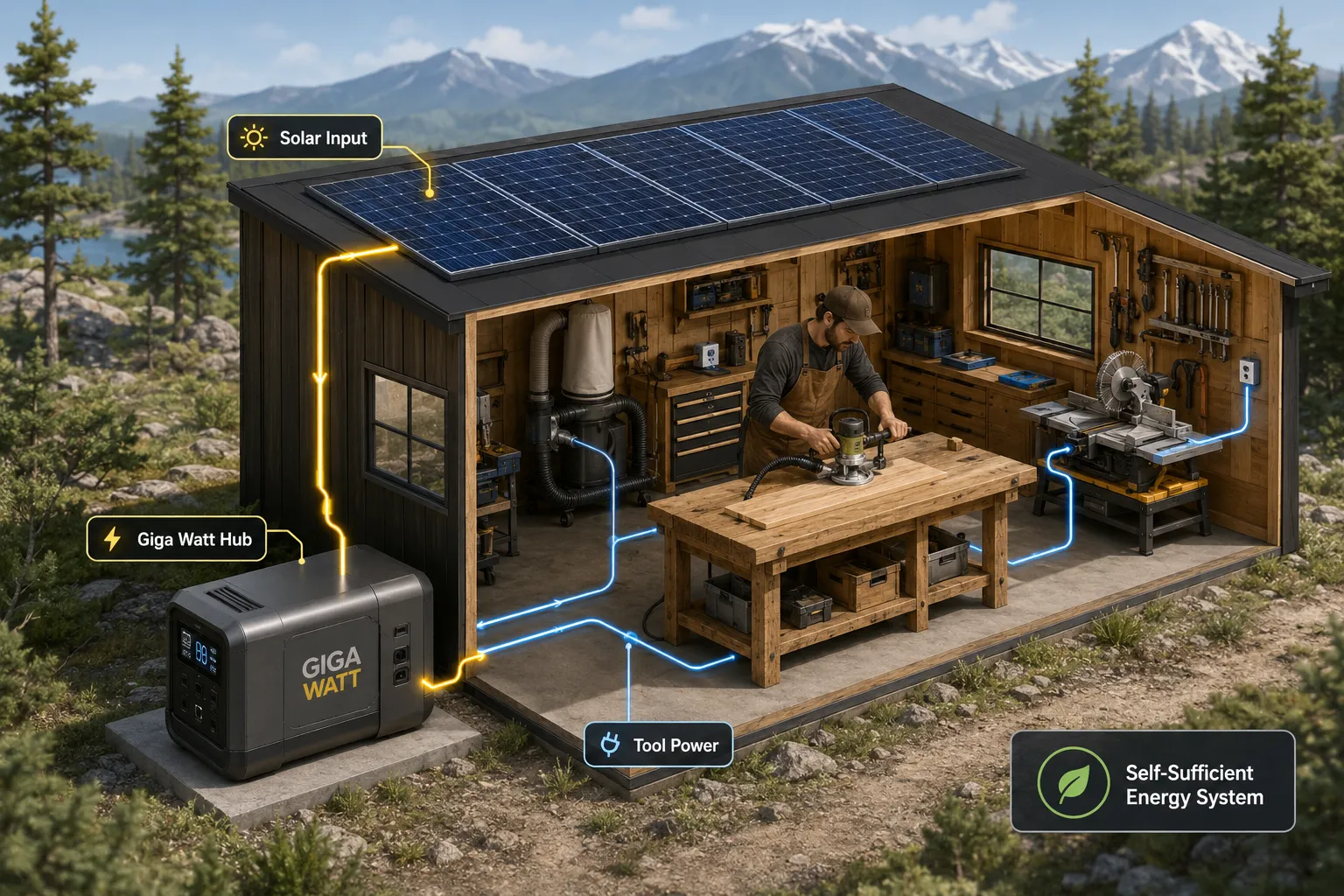
For true off-grid independence, integrating solar panels with your Giga Watt portable power station is essential. Most Giga Watt models come with dedicated solar input ports.
Considerations for Solar Integration:
- Panel Wattage: Match the solar panel wattage to the Giga Watt station’s maximum solar input. Higher wattage panels will charge faster.
- Panel Type: Monocrystalline panels are generally more efficient and perform better in varying light conditions.
- Placement: Position panels for maximum sun exposure throughout the day. Consider portable, foldable panels for flexibility or fixed panels for a permanent setup.
- Charge Controllers: Giga Watt stations typically have built-in MPPT (Maximum Power Point Tracking) charge controllers, optimizing solar charging efficiency.
By combining the robust power delivery of Giga Watt stations with the sustainable energy of solar panels, woodworkers can achieve near-limitless operational time, transforming a remote location into a fully functional and eco-friendly workshop. Consider also building robust storage solutions for your power tool accessories to keep your remote shop organized when not in use, as detailed in building a DIY modular storage system for power tool accessories.
Conclusion
The evolution of portable power technology, particularly Giga Watt Portable Power Stations for Off-Grid Woodshops: Powering Tools in Remote Workshop Setups, has opened up unprecedented possibilities for woodworkers. No longer confined by grid infrastructure, artisans can establish their workshops in inspiring, remote locations, confident that their essential power tools will remain operational. By carefully assessing power requirements, selecting a high-capacity Giga Watt unit with a pure sine wave inverter and LiFePO4 battery, and integrating sustainable solar charging, the dream of an off-grid woodworking paradise is well within reach in 2026. This technology not only offers freedom but also promotes a more sustainable and peaceful approach to craftsmanship.
To embark on your off-grid woodworking journey, start by cataloging your tools’ power needs, then research Giga Watt models that exceed those requirements. Explore solar panel options to complement your setup, and remember that smart power management will maximize your system’s efficiency and longevity. Embrace the silence, the fresh air, and the limitless creative potential that an off-grid Giga Watt-powered woodshop provides.