
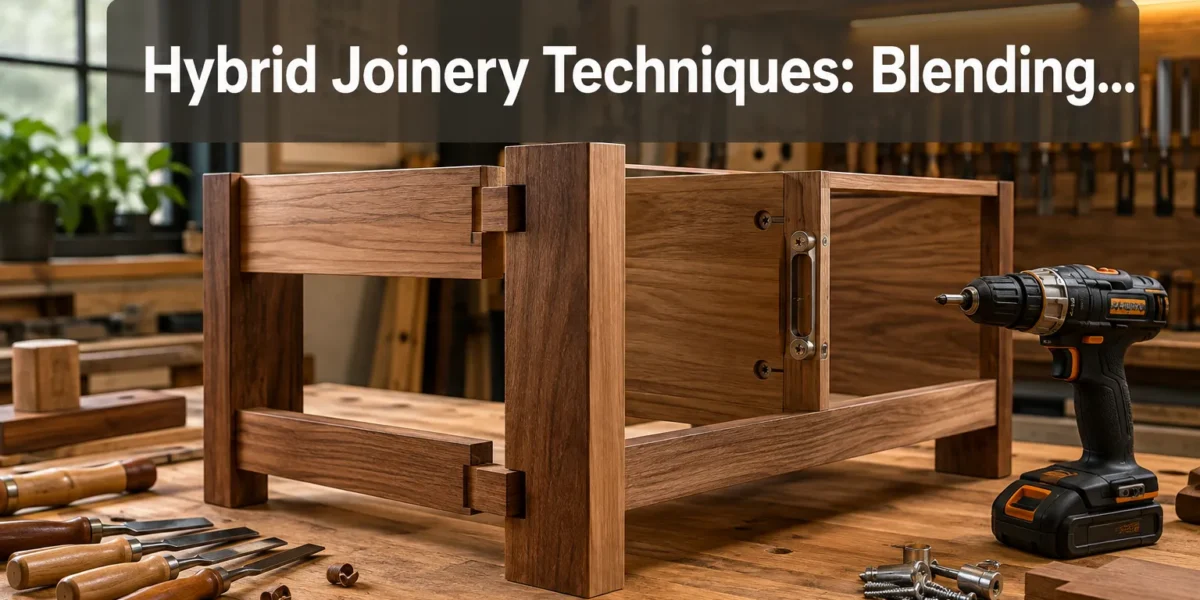
The average traditional woodworking joint, such as a mortise-and-tenon, can withstand immense shear and racking forces, often outperforming the wood fibers themselves. Yet, even these time-honored connections face new demands for faster assembly, enhanced dimensional stability across environments, and disassembly for modular designs. This evolving landscape has led to a powerful paradigm shift in craftsmanship: Hybrid Joinery Techniques: Blending Traditional Mortise-and-Tenon with Modern Hardware and Fasteners. This approach marries the inherent strength and aesthetic appeal of classic wood-on-wood joints with the practical advantages of contemporary metal hardware and advanced adhesives, offering woodworkers in 2026 unprecedented possibilities for durability, efficiency, and design flexibility.
Key Takeaways
- Hybrid joinery combines traditional wood joints like mortise-and-tenon with modern hardware for superior strength and efficiency.
- This method enhances structural integrity, allows for easier assembly/disassembly, and improves dimensional stability.
- Understanding the strengths of both traditional and modern elements is crucial for successful application.
- Careful selection of materials, tools, and techniques ensures both structural performance and aesthetic appeal.
- Hybrid techniques are applicable across various projects, from fine furniture to robust structural components.
The Foundation: Understanding Traditional Mortise-and-Tenon Joinery
The mortise-and-tenon joint stands as a pillar of traditional woodworking, renowned for its incredible strength and longevity. Historically, this joint, consisting of a rectangular tenon shaped on the end of one piece of wood that fits snugly into a corresponding rectangular mortise (hole) cut into another, was the backbone of furniture, doors, and timber frames for centuries. Its effectiveness lies in the large gluing surface area and the mechanical interlock that resists withdrawal and twisting forces. When properly executed, a well-fitted mortise-and-tenon joint, glued with traditional hide glue or modern PVA, can be stronger than the surrounding wood itself. Learning the nuances of this classic joint is fundamental to mastering woodworking, as highlighted in guides like Mastering Modern Hand Cut Joinery Adapting Classics For Live Edge And Modular Furniture.
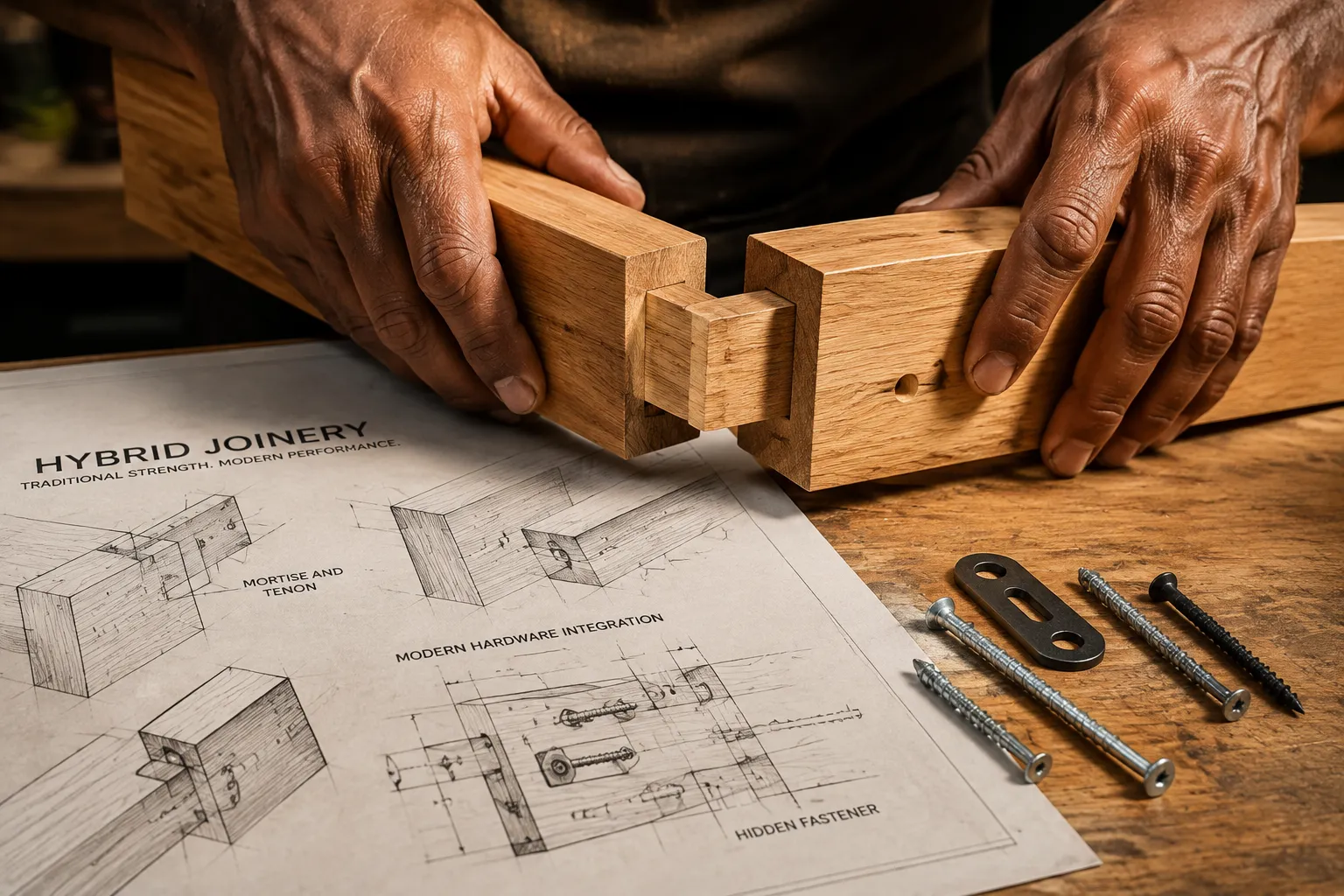
The appeal of mortise-and-tenon joinery isn’t solely functional; it’s also aesthetic. When visible, these joints speak volumes about craftsmanship and attention to detail. However, traditional methods can be labor-intensive, require high precision, and once glued, are typically permanent. This permanence, while desirable for some applications, can be a drawback for modular furniture, flat-pack designs, or items that need to be disassembled for transport or repair.
Advantages of Traditional Mortise-and-Tenon:
- Exceptional Strength: Resists racking, shear, and withdrawal forces.
- Large Gluing Surface: Maximizes adhesive bond.
- Aesthetic Appeal: Conveys quality and craftsmanship when exposed.
- Time-Tested Durability: Proven over centuries.
- Reduced Reliance on Metal: Pure wood construction for specific aesthetics.
Limitations:
- Labor-Intensive: Requires precise marking and cutting.
- Permanent: Difficult to disassemble once glued.
- Wood Movement: Can be affected by seasonal expansion and contraction if not carefully designed.
- Slower Assembly: Compared to mechanical fasteners.
Integrating Modern Hardware and Fasteners with Hybrid Joinery Techniques: Blending Traditional Mortise-and-Tenon with Modern Hardware and Fasteners
The core concept of Hybrid Joinery Techniques: Blending Traditional Mortise-and-Tenon with Modern Hardware and Fasteners is to strategically incorporate modern elements to enhance, rather than replace, the inherent strengths of traditional joints. This approach allows woodworkers to overcome the limitations of traditional methods while retaining their benefits. Modern hardware can provide instant clamping, allow for disassembly, add localized strength, or simplify certain aspects of construction.
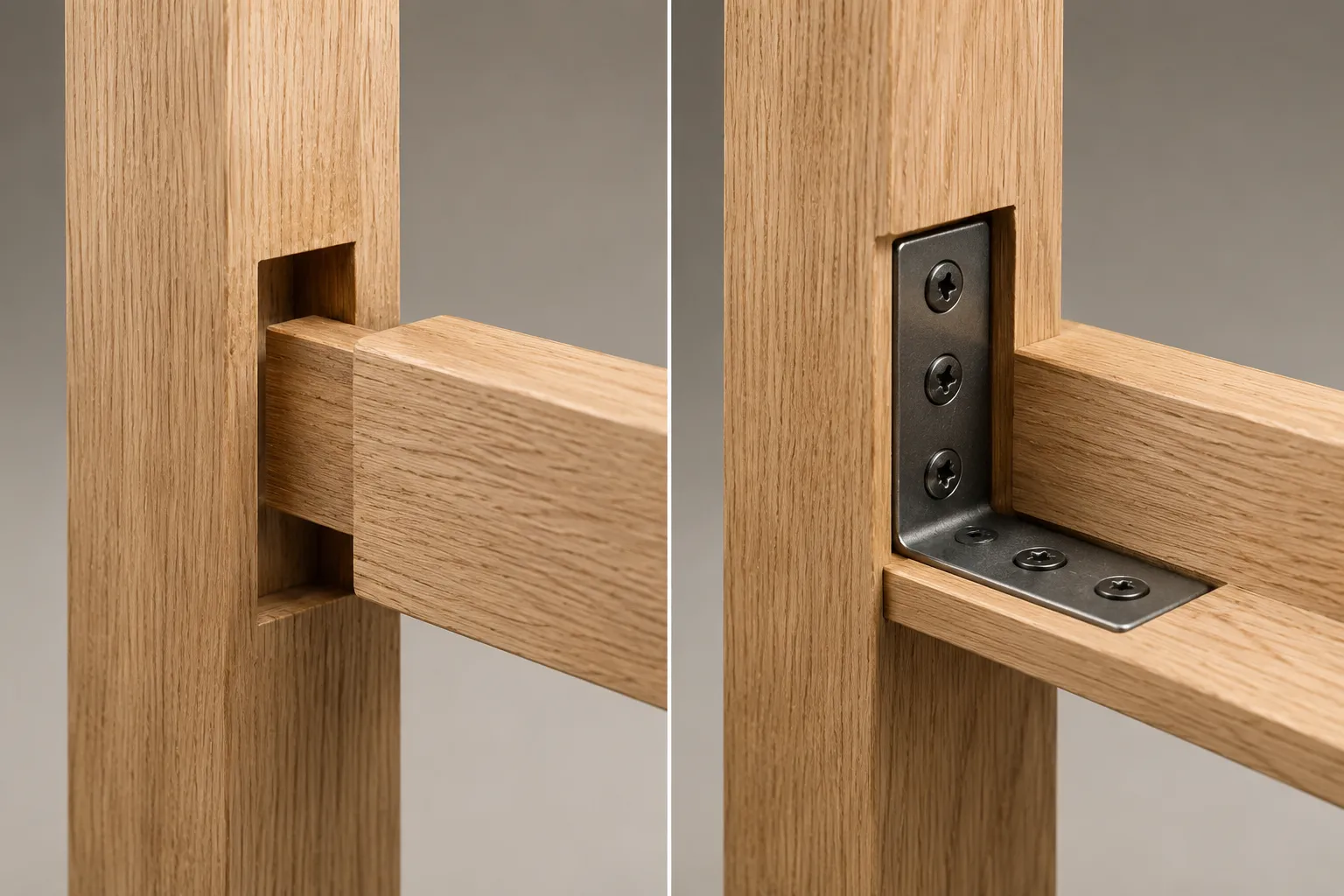
Consider the example of a sturdy bed frame or a large dining table. A traditional mortise-and-tenon provides excellent structural integrity. However, to allow for flat-packing or easier transport, adding bed rail fasteners, knockdown connectors, or threaded inserts can make the assembly and disassembly process straightforward and non-destructive. Similarly, in projects requiring extreme rigidity, a concealed metal bracket or screw added after the glued mortise-and-tenon can provide an additional layer of security and resistance to movement over time, especially in environments with fluctuating humidity.
Types of Modern Hardware and Fasteners:
- Threaded Inserts and Bolts: Ideal for creating strong, repeatable connections that can be easily assembled and disassembled. These are often hidden within the joint.
- Knockdown Connectors (Cam Locks, Cross Dowels): Specifically designed for flat-pack furniture, these allow for quick, tool-based assembly and disassembly without visible hardware on the finished surface.
- Metal Brackets and Plates: Used to reinforce stress points, often concealed or designed as an aesthetic feature.
- Structural Screws: High-strength screws can supplement glued joints, particularly in large assemblies or where heavy loads are anticipated.
- Advanced Adhesives: While not hardware, modern polyurethanes, epoxies, and even specialized wood glues offer superior bonding and gap-filling properties.
- Drawer Slides and Hinges: Often integral to modern furniture design, these allow for smooth operation and are carefully integrated into the overall joinery plan. For instance, creating custom wooden display cases for collectibles might combine precise mortise-and-tenons for the frame with modern hinges for access.
The blend is about intelligent application. It’s not about weakening a traditional joint with a poor fastener, but about amplifying its performance or adding new functionality. For example, a through tenon can be left exposed for aesthetic appeal, while a cross-dowel is drilled through it and the mortised piece, creating an incredibly strong, mechanical interlock that can also be disassembled. This fusion respects traditional craftsmanship while embracing modern engineering.
Practical Applications and Best Practices for Hybrid Joinery Techniques: Blending Traditional Mortise-and-Tenon with Modern Hardware and Fasteners
Implementing Hybrid Joinery Techniques: Blending Traditional Mortise-and-Tenon with Modern Hardware and Fasteners requires thoughtful design and execution. The goal is always to leverage the advantages of both approaches without compromising either. This often means designing the traditional joint for primary structural integrity and using hardware for secondary reinforcement, knockdown capability, or to address specific stress points.
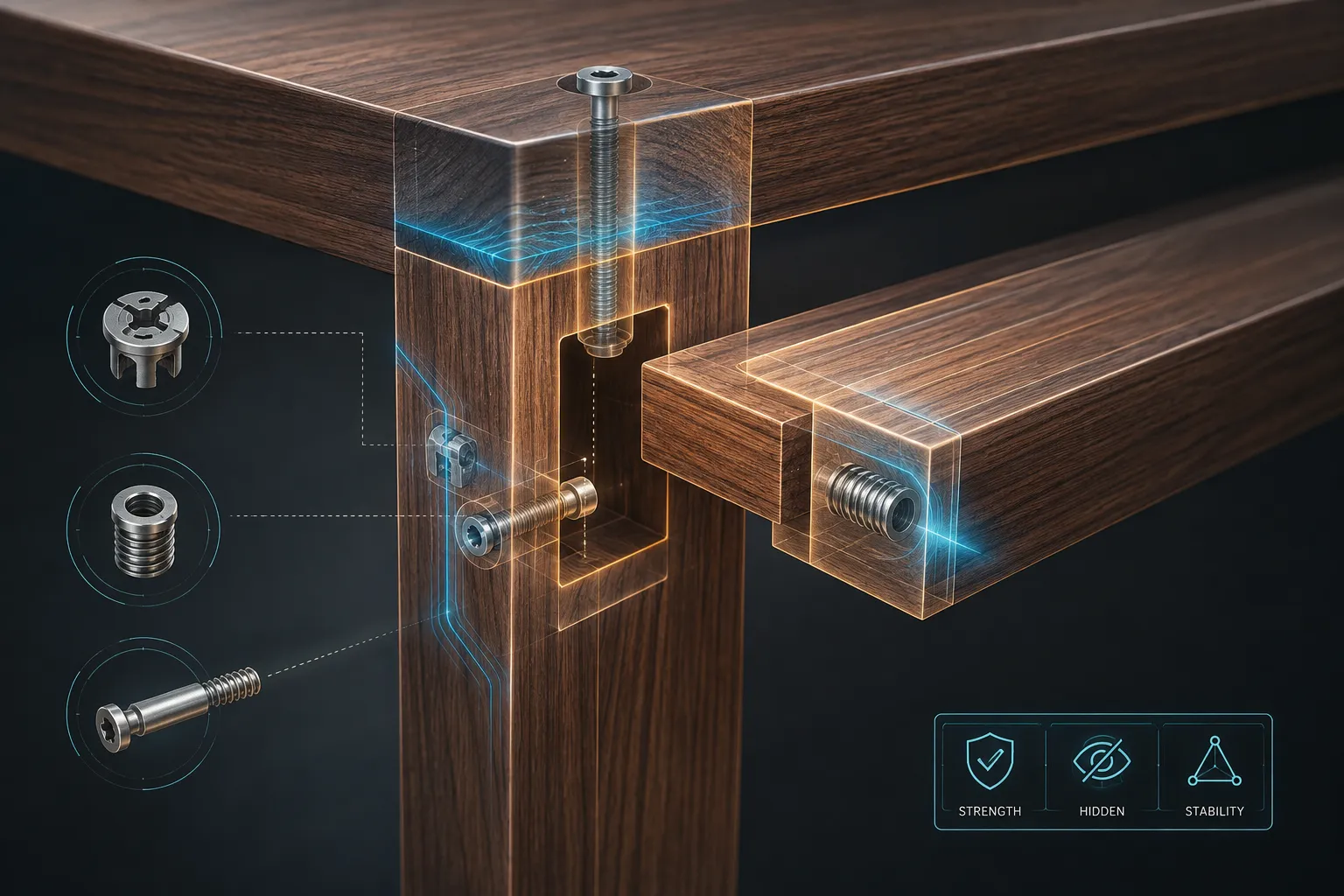
Consider a large, custom-built table. The apron-to-leg connections are prime candidates for hybrid joinery. A robust mortise-and-tenon joint forms the core, providing resistance to racking. To ensure it remains tight through seasonal wood movement or heavy use, the joint can be further secured with a discreet threaded insert and bolt passing through the tenon and into the leg. This allows for tightening if ever needed, or even full disassembly. Similarly, in projects like building a modern mid-century inspired entryway bench with integrated shoe storage and coat hooks, the frame could utilize traditional joinery for strength, while modern hardware ensures drawers or storage compartments function smoothly and can be accessed for maintenance.
Best Practices for Hybrid Joinery:
- Design for Purpose: Clearly define the primary function of each joint. Is it purely structural, or does it need to be demountable? This dictates the balance between traditional and modern elements.
- Concealment vs. Exposure: Decide if the hardware should be hidden for a clean aesthetic or exposed as a design feature. Hidden fasteners require careful planning to avoid weakening the wood.
- Wood Movement: Always account for wood expansion and contraction. Oversized holes for bolts or slotted screw holes can accommodate movement without stressing the joint.
- Material Compatibility: Ensure metal fasteners are compatible with the wood species, especially in outdoor applications, to prevent staining or corrosion. Stainless steel is often preferred.
- Pilot Holes: Drill appropriate pilot holes for all screws and bolts to prevent splitting and ensure maximum holding power.
- Tooling: Invest in the right tools. Precision jigs for mortise-and-tenon, along with accurate drilling guides for hardware, are essential. Resources like Mastering The Router Table Beyond Edge Profiling For Advanced Joinery And Precision Cuts can enhance your capability for both traditional and hybrid cuts.
- Test and Refine: For complex projects, prototype sections to test the strength and functionality of your hybrid joints before final assembly.
Case Studies in Hybrid Joinery:
- Dining Tables: Legs attached to aprons with mortise-and-tenon, reinforced with metal corner brackets or threaded inserts. This allows for seasonal adjustments and easier transport.
- Modular Shelving Units: Primary structural connections use traditional joinery for stability, while knockdown fasteners enable flexible configurations and easy storage.
- Outdoor Furniture: Mortise-and-tenon joints, often pinned with wooden pegs, are supplemented with stainless steel bolts and washers to withstand environmental stresses and allow for periodic tightening.
- Entryway Benches: A solid frame built with traditional joinery, integrating modern heavy-duty hinges and drawer slides for storage compartments. This blend is seen in projects like Building A Modern Mid Century Inspired Entryway Bench With Integrated Shoe Storage And Coat Hooks.
- Custom Charging Stations: Fine joinery for the main structure, with discreetly integrated hardware to mount charging components or secure cable management features, balancing elegance and modern utility. See: Custom Wood Charging Stations And Desk Organizers Blending Modern Tech With Timeless Craftsmanship.
The versatility of hybrid joinery means it can be applied to nearly any woodworking project in 2026, offering solutions that are both robust and adaptable.
Conclusion
The evolution of woodworking is not about abandoning the old for the new, but about intelligently combining proven techniques with modern innovations. Hybrid Joinery Techniques: Blending Traditional Mortise-and-Tenon with Modern Hardware and Fasteners represents a powerful methodology that empowers woodworkers to create stronger, more adaptable, and more efficient projects. By understanding the inherent strengths of traditional wood joints and strategically integrating the practical benefits of contemporary fasteners and hardware, craftsmen in 2026 can elevate their work to new levels of durability, functionality, and aesthetic appeal. Embrace this fusion, and discover a new realm of possibilities where the wisdom of the past meets the demands of the future.
SEO Meta Title: Hybrid Joinery: Mortise-and-Tenon Meets Modern Fasteners SEO Meta Description: Explore hybrid joinery techniques in 2026, blending traditional mortise-and-tenon with modern hardware for stronger, more efficient woodworking projects.