
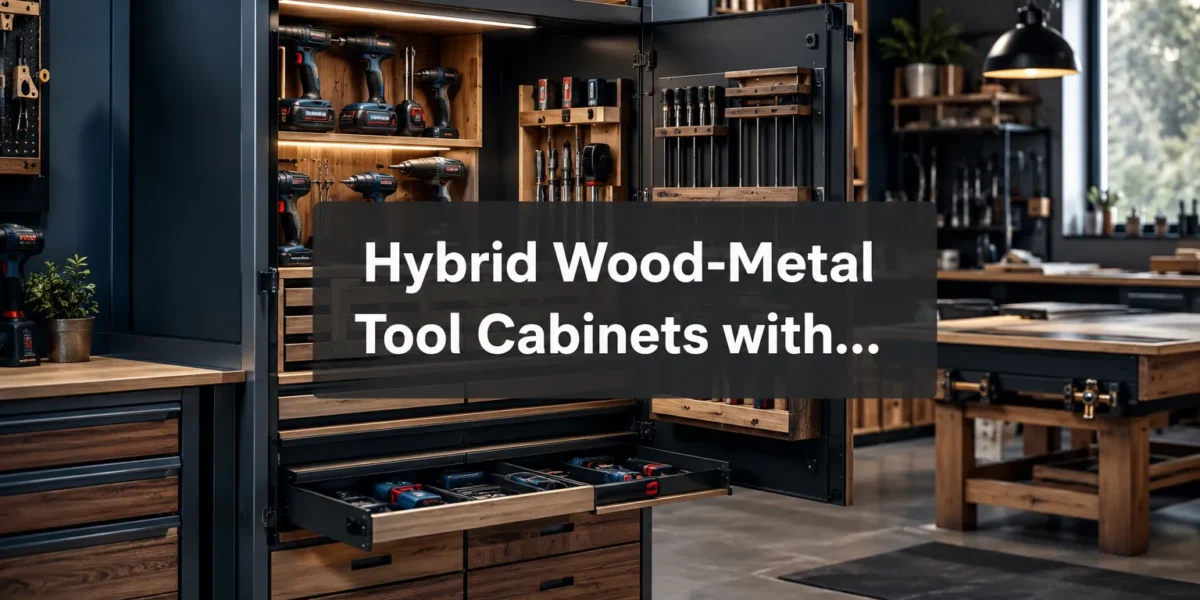
The average hobbyist woodworker spends nearly 15% of their workshop time searching for tools, a statistic that underscores the often-overlooked cost of disorganization. For those whose power tool collections are constantly expanding, a haphazard approach to storage quickly becomes a bottleneck to productivity and creativity. This is where the innovative solution of Hybrid Wood-Metal Tool Cabinets with Modular Inserts: Smart Shop Organization for Growing Power Tool Collections emerges as a game-changer. These cabinets offer a sophisticated blend of durability, aesthetics, and unparalleled customization, transforming chaotic workshops into havens of efficiency.
Key Takeaways
- Hybrid wood-metal cabinets combine the aesthetic appeal of wood with the robust strength of metal, offering superior durability and a professional look.
- Modular inserts are crucial for effective organization, allowing for customizable storage solutions that adapt to an evolving tool collection.
- Proper organization with these systems significantly boosts workshop efficiency, reduces tool damage, and saves valuable time.
- Investing in a hybrid system is a long-term solution, accommodating growth and protecting expensive power tools.
- Planning and strategic layout are essential for maximizing the benefits of modular, hybrid tool storage.
The Evolution of Workshop Storage: Hybrid Wood-Metal Tool Cabinets with Modular Inserts
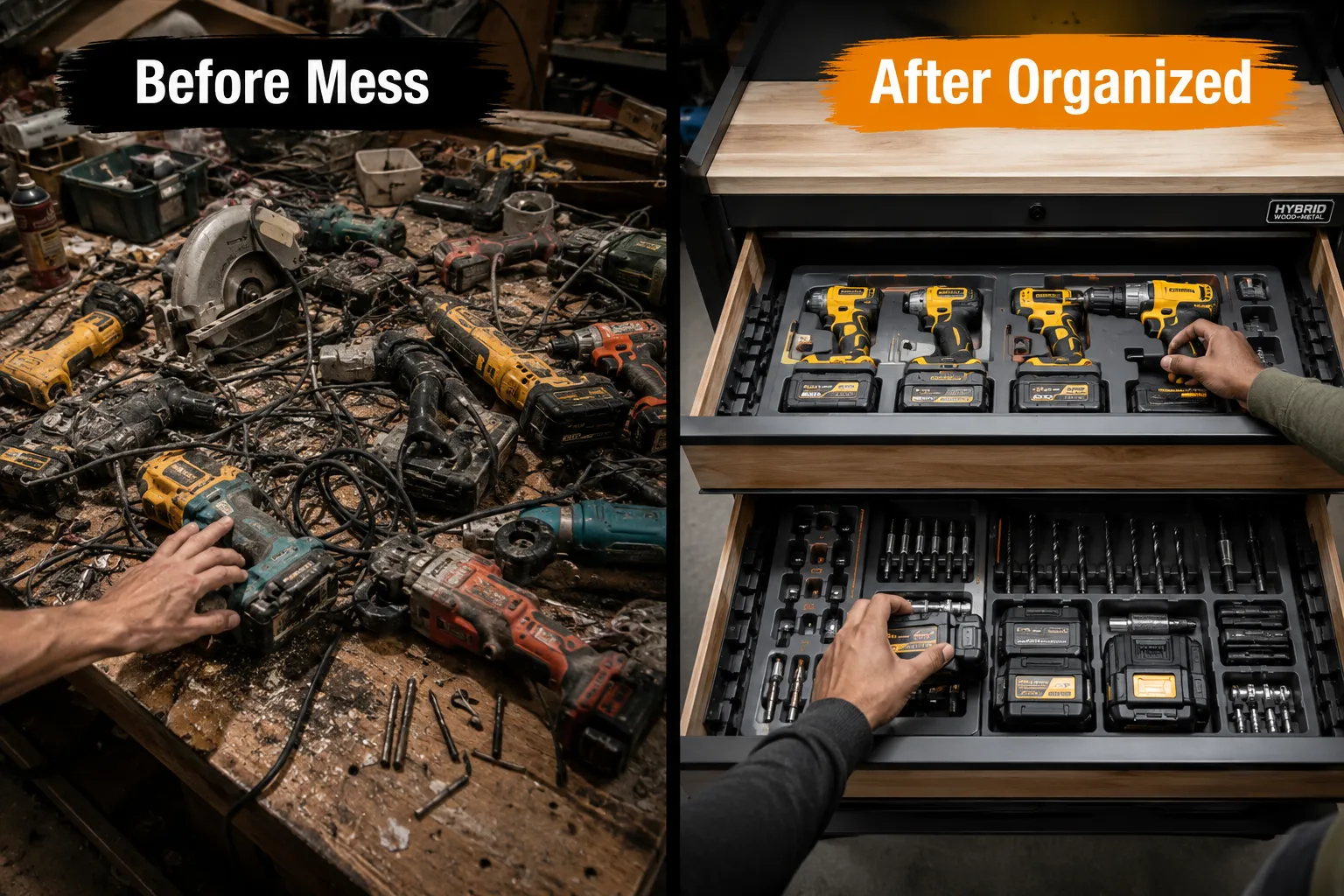 For decades, workshop storage largely consisted of either utilitarian metal lockers or traditional wooden cabinets. While functional, each had its limitations. Metal cabinets offered strength and security but often lacked visual warmth and customization options. Wooden cabinets provided aesthetic appeal and DIY potential but could fall short on sheer ruggedness and protection against heavy workshop use. The concept of Hybrid Wood-Metal Tool Cabinets with Modular Inserts: Smart Shop Organization for Growing Power Tool Collections marries the best of both worlds, creating a storage solution that is as robust as it is elegant, and as practical as it is adaptable.
Hybrid cabinets typically feature a sturdy metal frame or carcass, providing structural integrity, impact resistance, and sometimes even fire resistance. This metal skeleton is then complemented by wooden panels, drawer fronts, or worktops, adding a touch of classic woodworking warmth and often enhancing the overall finish. This blend makes them ideal for environments where tools are frequently handled, and spills or impacts are common.
The true genius, however, lies in the “modular inserts.” Traditional toolboxes and cabinets often force tools into pre-defined compartments, leading to wasted space or awkward arrangements. Modular inserts, ranging from custom-cut foam trays to adjustable dividers and dedicated organizers, allow for a dynamic and personalized approach to storage. Imagine a drawer perfectly fitted for your cordless drill, its various bits, and spare batteries, all labeled and easily accessible. This level of precision organization is not just about tidiness; it’s about optimizing workflow and protecting your valuable investments.
For hobbyists and professionals alike, a growing power tool collection presents a constant organizational challenge. New tools mean new shapes and sizes to store. Generic solutions quickly become inadequate. Hybrid wood-metal cabinets with modular inserts address this directly, offering scalable storage that can evolve with your needs. Whether you’re adding a new Ryobi power tool to your collection or reorganizing for a specific project, these systems provide the flexibility required to maintain an efficient and clutter-free workspace.
Designing Your Smart Shop Organization: Maximizing Modularity and Efficiency
 Effective shop organization doesn’t happen by accident; it’s a carefully planned process, especially when integrating Hybrid Wood-Metal Tool Cabinets with Modular Inserts: Smart Shop Organization for Growing Power Tool Collections. The design phase should focus on three core principles: accessibility, protection, and adaptability.
Strategic Layout and Tool Grouping
Before even purchasing a cabinet, assess your current tool collection and anticipate future additions. Categorize tools by frequency of use, type, and project. For instance, all drilling and driving tools (drills, impact drivers, bits, chargers) might occupy one dedicated drawer or section, while sanding tools and abrasives reside in another. Hand tools, frequently used, could be stored in the uppermost, most accessible drawers, or on a nearby DIY Clamp Rack and Tool Holder Wall.
Consider the workflow of your shop. Heavy machinery might have dedicated spots, but smaller power tools should be stored near where they are typically used. This minimizes movement and improves efficiency. If your shop is small, consider how your cabinet integrates with your overall maximizing your tiny woodshop layout.
Harnessing the Power of Modular Inserts
The modularity of these cabinets is their greatest asset. Here’s how to leverage it:
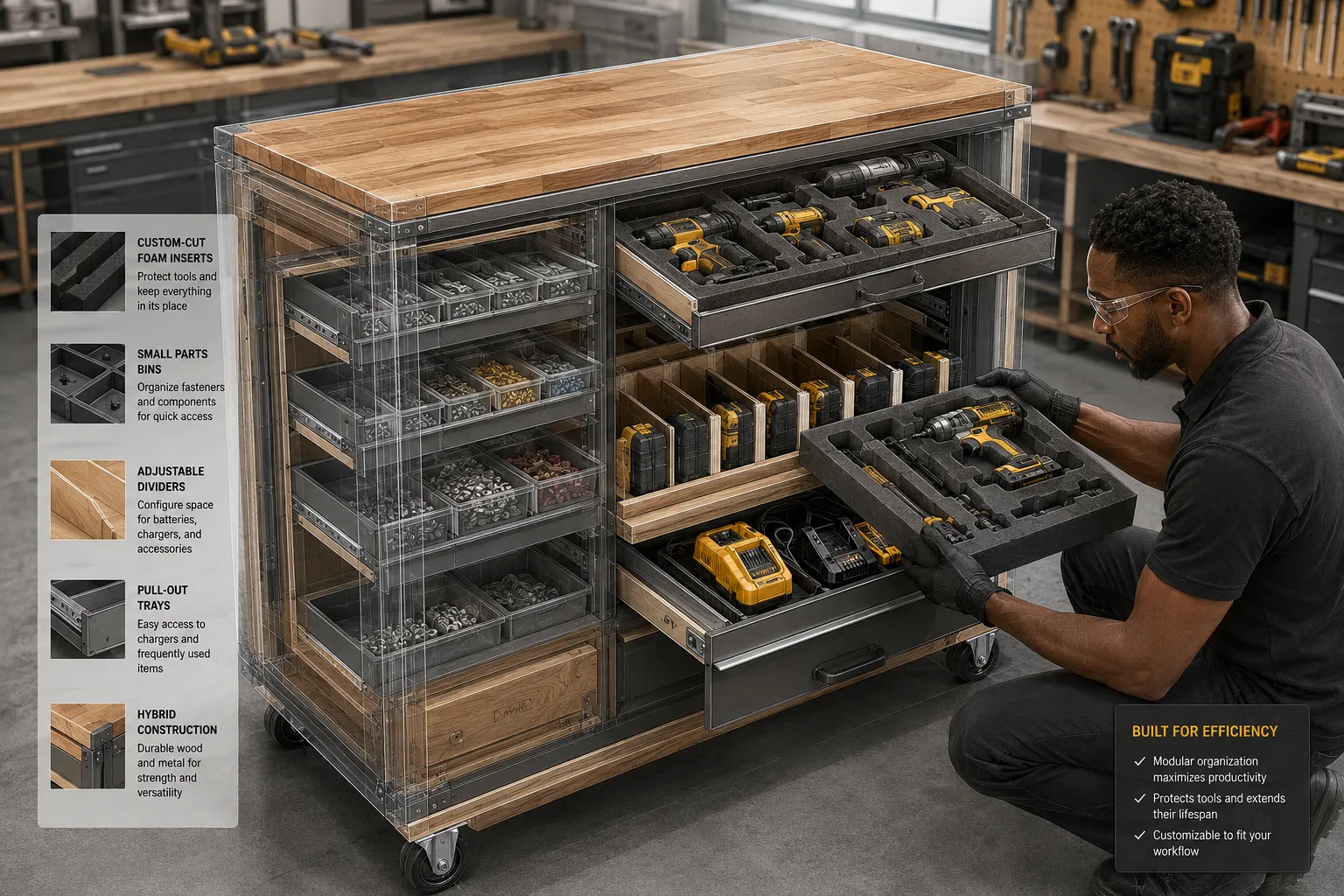
- Custom-Cut Foam: For high-value or delicate power tools, custom-cut foam inserts provide unparalleled protection. Tracing the outline of your tool and using specialized foam allows each item to have its own secure nest, preventing jostling, scratches, and damage. This is particularly useful for precision instruments or tools with many delicate attachments.
- Adjustable Dividers: Many modular systems come with adjustable dividers for drawers or shelves. These are excellent for segregating different sizes of fasteners, blades, or smaller hand tools, preventing them from mixing into a chaotic jumble.
- Bins and Trays: Clear plastic bins or metal trays can be nested within drawers to hold small parts like screws, nails, washers, or drill bits. Labeling these bins is critical for instant identification.
- Battery and Charger Stations: With the proliferation of cordless power tools, dedicated storage for batteries and chargers is essential. Modular inserts can include specific slots for different battery sizes and even integrated charging stations, keeping everything powered up and ready to go.
- Labeling Systems: Regardless of the insert type, clear and consistent labeling is paramount. Use durable labels (printed or handwritten) on drawer fronts, bin edges, and individual tool slots. This eliminates guesswork and ensures tools are returned to their proper place.
Implementing a thoughtful modular system not only keeps your tools pristine but also instantly reveals when a tool is missing, saving frustration and lost project time.
Beyond Storage: The Benefits of a Hybrid System for Growing Collections
 An investment in Hybrid Wood-Metal Tool Cabinets with Modular Inserts: Smart Shop Organization for Growing Power Tool Collections extends far beyond simple storage. It’s an investment in efficiency, tool longevity, and the overall enjoyment of your craft.
Enhanced Durability and Tool Protection
The hybrid construction offers superior protection for your valuable tools. The metal components provide rigidity and resistance against accidental impacts, moisture, and even pests. The wooden elements, often treated or finished, can offer a buffer against temperature fluctuations and contribute to a more stable environment for sensitive electronics in power tools. Tools stored correctly in custom-fit modular inserts are less likely to suffer damage from jostling, falling, or abrasive contact with other tools. This proactive protection extends the lifespan of your equipment, saving you money on repairs and replacements in the long run.
Improved Workflow and Productivity
Imagine needing a specific router bit. Instead of rummaging through a cluttered drawer, you open the clearly labeled “Routing Tools” drawer, and there it is, perfectly seated in its foam cutout. This immediate access dramatically cuts down on wasted time, allowing you to focus on the task at hand. A well-organized shop fostered by these cabinets promotes a smoother workflow, reduces frustration, and ultimately, makes you more productive. This is especially true in 2026, as woodworking trends lean towards greater efficiency and precision.
Scalability and Adaptability
As your skills grow and your projects become more ambitious, your tool collection will inevitably expand. A key advantage of the modular insert system is its scalability. You can easily reconfigure drawer layouts, add new foam cutouts, or swap out bins as your needs change. This eliminates the need to buy entirely new storage solutions every few years, offering a sustainable and cost-effective approach to workshop evolution. Whether you’re bringing in new corded tools or expanding your cordless battery platforms, the cabinets can be adapted to accommodate. This flexibility also makes them perfect for workshops that might transition from general woodworking to specialized crafts requiring unique tool sets.
Professional Aesthetic and Resale Value
Beyond practicality, hybrid cabinets elevate the aesthetic of any workshop. The combination of industrial strength and natural wood creates a sophisticated, professional look that can inspire creativity and pride in your workspace. This professional appearance is not just for your own satisfaction; if you ever sell your home or workshop, a well-organized and equipped space with high-quality storage solutions can significantly increase its appeal and perceived value. Furthermore, if you ever decide to sell the cabinets themselves, their quality construction and adaptability ensure a strong resale market. For those interested in building a DIY tool cabinet, incorporating these hybrid principles can guide your design choices.
Investing in Hybrid Wood-Metal Tool Cabinets with Modular Inserts: Smart Shop Organization for Growing Power Tool Collections is not just about tidying up; it’s about optimizing your entire woodworking experience. It protects your tools, streamlines your work, and creates a more enjoyable and efficient environment for years to come.
Choosing and Customizing Your Hybrid Cabinet System
Selecting the right hybrid wood-metal tool cabinet system and then customizing it to your specific needs is a critical step in achieving optimal shop organization. The market offers a range of options, from pre-built units to modular components designed for DIY integration.
Evaluating Pre-Built Hybrid Cabinets
When considering pre-built units, look for several key features:
- Construction Quality: Inspect the gauge of the metal, the type of wood used (plywood, solid wood, MDF with veneer), and the quality of joinery or welding. Robust drawer slides, ideally full-extension and ball-bearing, are essential for heavy tool loads.
- Drawer Configurations: Assess the number and depth of drawers. A mix of shallow drawers for hand tools and accessories, and deeper drawers for bulkier power tools, offers the most versatility.
- Worktop Material: Some cabinets come with integrated worktops. Consider materials like solid hardwood, stainless steel, or composite for durability and suitability for your tasks.
- Mobility: Wheels (casters) with locking mechanisms are a significant advantage, allowing you to reconfigure your shop or move tools closer to a project.
- Security: Good quality locks are important for protecting expensive power tools.
Research reputable manufacturers known for producing durable workshop furniture. Read reviews and compare specifications to find a system that aligns with your budget and requirements.
DIY Customization and Integration
For those who enjoy a hands-on approach, customizing or even building a significant portion of your hybrid system offers ultimate control. You might start with a sturdy metal cabinet carcass and then fabricate custom wooden drawer fronts, side panels, or a solid wood top. This approach allows you to match existing shop aesthetics or design unique features. Hybrid joinery tutorials blending classic joints with CNC and metal can provide inspiration for integrating these different materials seamlessly.
Key areas for DIY customization of modular inserts:
- Foam Inserts: Purchase dense foam sheets (e.g., Kaizen foam, tool foam) and use a sharp utility knife or hot wire cutter to create custom cutouts for each tool. Trace the tool’s outline, cut slightly inside the line, and create finger holes for easy retrieval.
- Wooden Dividers: Cut plywood or hardboard strips to size and create dado or groove joints to form adjustable grid systems within drawers. This allows for flexible compartment sizing.
- 3D Printed Organizers: For specific small tools or accessories, 3D printing custom inserts can be a highly effective solution in 2026. This allows for perfect fit and highly specialized organization.
- Magnetic Strips: Incorporate magnetic strips inside drawers or on cabinet doors for organizing small metal items like drill bits, hex keys, or small screwdrivers.
When integrating new tools, regularly review your organization system. Take tools out, lay them on a workbench, and re-evaluate the most efficient storage solution. This ongoing process ensures your Hybrid Wood-Metal Tool Cabinets with Modular Inserts: Smart Shop Organization for Growing Power Tool Collections remains effective as your collection and work habits evolve.
Maintaining Your Organized Workshop in 2026
Having invested in Hybrid Wood-Metal Tool Cabinets with Modular Inserts: Smart Shop Organization for Growing Power Tool Collections, the next step is maintaining that pristine level of organization. A well-organized shop isn’t a one-time achievement; it’s an ongoing discipline.
The “Return Tool to Place” Rule
The simplest and most effective maintenance strategy is the “return tool to place” rule. After every use, make it a habit to return the tool to its designated spot in the cabinet. This prevents tools from accumulating on workbenches, requiring a larger cleanup effort later. It also ensures that the tool is readily available for the next task. This discipline is particularly important for power tools, as leaving them out risks damage, dust accumulation, or even theft.
Regular Audits and Reorganization
Periodically, perhaps quarterly or semi-annually, dedicate time to an “organization audit.” This involves:
- Decluttering: Remove anything that doesn’t belong in the tool cabinet, scraps, unrelated project components, or trash.
- Cleaning: Wipe down tools, cabinet surfaces, and inserts. Dust and grime can accumulate, affecting tool performance and cabinet aesthetics. For wooden surfaces, consider a periodic conditioning or best lubricant for wood on wood to keep drawers gliding smoothly.
- Re-evaluating Layout: As your tool collection grows or your workflow changes, the optimal layout of your modular inserts might need adjustment. This is the time to create new foam cutouts for recently acquired tools, or rearrange dividers to better suit new accessories.
Investing in the Right Accessories
To truly maintain an organized system, consider additional accessories:
- Magnetic Tool Holders: Great for frequently used hand tools or bits that need to be within arm’s reach but off the workbench.
- Drawer Liners: Protect the bottom of your drawers and provide a non-slip surface for tools.
- Clear Lids for Bins: Keep small parts contained and visible.
By making organization a consistent habit, your hybrid wood-metal tool cabinets will not only protect your investment but also foster a more enjoyable, productive, and safer working environment in 2026 and beyond. A well-maintained, organized workshop is a hallmark of a skilled craftsperson, allowing creativity to flow uninterrupted by the search for a misplaced tool.
Conclusion
In an era where efficiency and customization drive productivity, Hybrid Wood-Metal Tool Cabinets with Modular Inserts: Smart Shop Organization for Growing Power Tool Collections represent a significant advancement for any workshop. By seamlessly blending the aesthetic warmth and workability of wood with the inherent strength and durability of metal, these cabinets offer a superior solution for housing and protecting your valuable power tools. The true transformative power, however, lies in their modularity. Custom-fit inserts and adaptable compartments ensure that every tool, accessory, and fastener has a designated, easily accessible home, drastically reducing wasted time and mitigating tool damage.
As your collection inevitably grows, these systems adapt and scale with your needs, making them a future-proof investment for both hobbyists and professional woodworkers. By prioritizing strategic layout, diligent maintenance, and intelligent customization, you can transform a chaotic workspace into a highly efficient, inspiring environment. Embrace the hybrid approach, and elevate your shop organization to a new standard in 2026, allowing you more time to create and less time to search.