
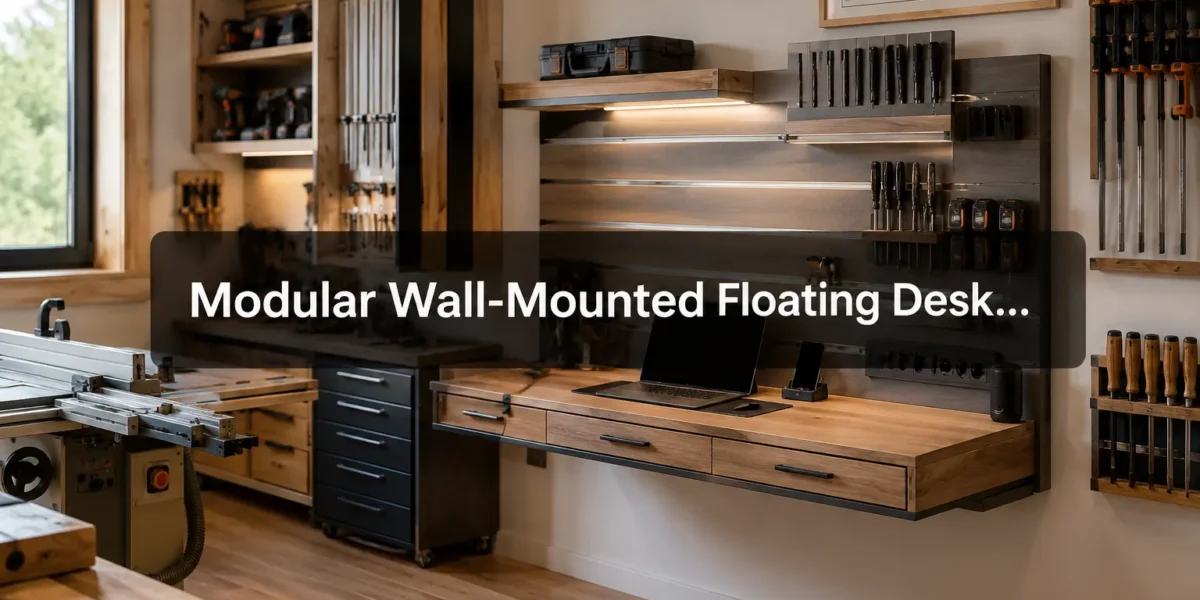
The average home woodshop, a place of creation and ingenuity, often battles a common enemy: clutter. Statistics show that woodworkers spend up to 20% of their project time simply searching for tools or dealing with disorganization. This inefficiency highlights a critical need for smarter workspace solutions. Enter Modular Wall-Mounted Floating Desk Systems for Home Woodshops: Cable Management and Accessory Docks. These innovative systems transform chaotic work areas into streamlined, highly functional spaces, ensuring every tool has its place and every cable is out of sight, maximizing both productivity and safety.
Key Takeaways
- Space Optimization: Wall-mounted floating desks free up valuable floor space, crucial for smaller home woodshops.
- Customization: Modular designs allow woodworkers to tailor their workspace precisely to their needs, adding or reconfiguring components as projects evolve.
- Integrated Cable Management: Dedicated channels and conduits eliminate tangled wires, improving safety and aesthetics.
- Accessory Docks: Built-in and attachable docks provide convenient, organized storage for frequently used tools, fasteners, and consumables.
- Enhanced Productivity: A well-organized, ergonomic workspace reduces search time, minimizes distractions, and fosters a more enjoyable creative environment.
The Foundation: Designing Your Modular Wall-Mounted Floating Desk System
Building an efficient home woodshop begins with a well-conceived layout. A Modular Wall-Mounted Floating Desk System for Home Woodshops: Cable Management and Accessory Docks serves as the centerpiece of such a design, offering unparalleled flexibility and organization. These systems are not merely desks; they are dynamic workstations that can adapt to the diverse demands of woodworking projects in 2026.
Why Go Modular and Wall-Mounted?
The benefits of a modular, wall-mounted approach are multifaceted:
- Maximized Floor Space: By eliminating legs, floating desks create an open area beneath, allowing for rolling cabinets, lumber storage, or simply more room to maneuver around larger projects. This is especially vital in compact home workshops.
- Customization and Scalability: Modular components, shelves, drawers, pegboard sections, and work surfaces, can be arranged, added, or removed. As your skill set grows or project types change, your workspace can evolve with you. For ideas on integrating custom storage, consider exploring designing modular and stackable woodcraft.
- Ergonomics: Wall mounting allows you to set the desk height precisely to your ergonomic needs, whether for standing or sitting work, reducing fatigue and improving comfort during long sessions.
- Stability: When properly installed into wall studs, these desks can offer surprising stability, crucial for tasks requiring precision or handling heavier materials.
- Cleanliness: Keeping the floor clear simplifies sweeping and dust collection, contributing to a healthier and safer working environment.
Essential Design Considerations
Before cutting your first piece of lumber, thoughtful planning is paramount.
- Weight Capacity: Determine the maximum load your desk will need to support. This influences material selection (e.g., plywood, solid hardwood) and mounting hardware. Plywood is often a cost-effective and strong choice for workshop furniture.
- Ergonomics: Measure your ideal working height. A good rule of thumb for standing desks is to have the work surface at elbow height. For a seated desk, ensure ample legroom and appropriate chair height.
- Material Selection:
- Plywood: Offers excellent stability, relatively light weight, and a smooth surface. Various grades are available, from utility to cabinet-grade.
- Solid Wood: Provides durability and a premium aesthetic but can be heavier and more expensive. For insights into wood species, consult the Beginner’s Guide to Wood Species: Hardwoods vs. Softwoods.
- MDF/Particle Board (with laminate): Economical but less durable for heavy workshop use, especially concerning moisture.
- Mounting Methods:
- French Cleats: A popular, robust, and easily customizable system. It involves two angled strips of wood, one mounted to the wall and the other to the back of the desk or module, allowing for easy removal and repositioning.
- Heavy-Duty Brackets: Metal or sturdy wood brackets secured directly into wall studs provide strong support.
- Track Systems: Commercial or DIY track systems (e.g., aluminum T-track) can offer adjustable height and placement for various modules.
When designing, consider the specific tasks you perform. Do you primarily use hand tools or power tools? Do you need a dedicated assembly area or space for a specific machine? Integrating these needs into the initial design ensures your floating desk system truly enhances your productivity.

Smart Cable Management for a Clutter-Free Woodshop
In a home woodshop, power tools, lighting, and charging stations invariably lead to a proliferation of cables. Unmanaged, these cables create trip hazards, obstruct workflow, and detract from the workspace’s efficiency. A Modular Wall-Mounted Floating Desk System for Home Woodshops: Cable Management and Accessory Docks excels in this area by integrating thoughtful solutions for taming the digital and electrical sprawl.
Principles of Effective Cable Management
Good cable management isn’t just about aesthetics; it’s about safety, efficiency, and longevity of equipment.
- Safety First: Loose cables are a significant tripping hazard and can snag on moving machinery. Proper management reduces these risks.
- Organized Workflow: When cables are out of the way, you have more clear workspace and fewer distractions.
- Equipment Protection: Cables that are properly routed and secured are less likely to be cut, pinched, or damaged, extending their lifespan.
- Ease of Maintenance: When troubleshooting or replacing equipment, neatly organized cables make identification and access much simpler.
- Dust Control: Cables tend to collect dust and sawdust. Enclosing them within channels or conduits makes cleaning easier and helps maintain air quality. For a deeper dive into workshop organization, refer to Workshop Organization for High-Volume Small-Project Production.
Integrated Cable Management Solutions
The modular design inherently lends itself to innovative cable management:
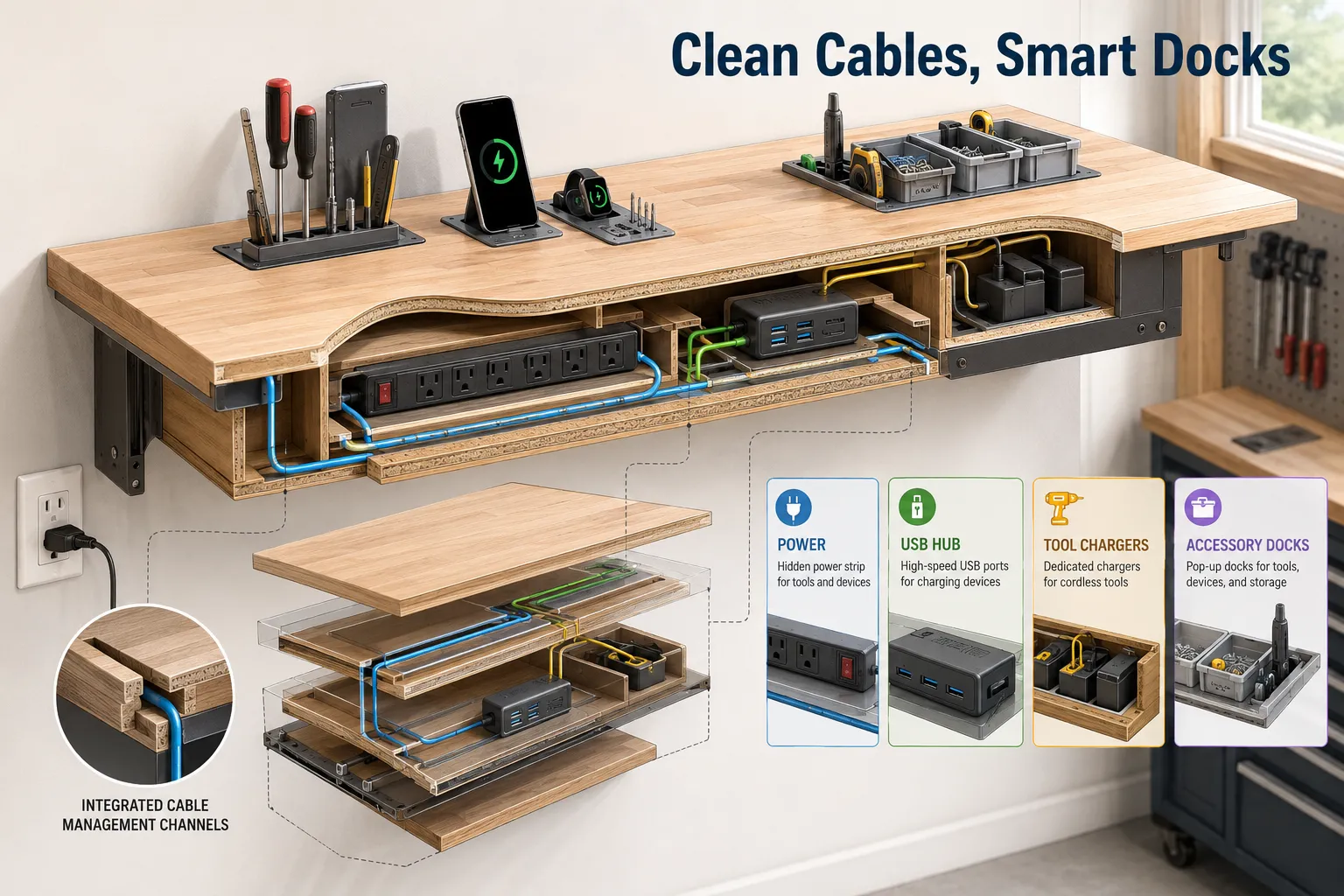
- Built-in Channels and Conduits: Design the desk structure with internal channels or removable back panels to route power cords, extension cords, and data cables. These can be simple dado cuts in plywood or custom-built enclosures.
- Cable Pass-Throughs: Strategically placed holes with grommets allow cables to pass from the surface down into the internal channels, keeping the desktop clear.
- Power Strips and USB Hubs: Mount power strips, surge protectors, and USB charging hubs discreetly underneath the desk surface or within an enclosed module. This keeps outlets accessible but hidden.
- Cable Sleeves and Wraps: Use flexible sleeves or wraps to bundle multiple cables together, especially for tools that move frequently.
- Magnetic Cable Clips: Small magnetic clips can hold individual cables in place along metal surfaces or embedded magnetic strips.
- Zip Ties and Velcro Straps: For more permanent bundling, zip ties are effective, while reusable Velcro straps offer flexibility for cables that need frequent adjustment.
Consider integrating a smart dust collection system. For example, a system that automatically activates when a tool is powered on can be paired with your desk for a truly modern woodshop. See Building a DIY Smart Workshop Dust Collection System for inspiration.
A comparison of common cable management methods:
| Method | Description | Pros | Cons | Best Use Case |
|---|---|---|---|---|
| Built-in Channels | Routing cables within the desk structure itself. | Cleanest aesthetic, maximum safety, integrated look. | Requires careful planning during construction, less flexible once built. | Permanent power/data lines to fixed tools or charging stations. |
| Cable Trays/Spines | Underside trays or flexible spines that gather cables. | Easy installation, good capacity, relatively flexible. | May be visible, can collect dust if not enclosed. | General power distribution, multiple devices. |
| Cable Sleeves/Wraps | Flexible tubes or wraps that bundle multiple cables. | Tidy, protects cables, good for tools that move slightly. | Less rigid than channels, can be bulky if too many cables. | Power tool cords, peripheral cables, temporary setups. |
| Adhesive Clips/Ties | Small clips or ties stuck to surfaces to hold cables. | Inexpensive, versatile, good for individual cable routing. | Adhesive may fail over time, clips can break, less robust for heavy cables. | Routing individual cables along edges, light-duty organization. |
By thoughtfully integrating cable management from the design phase, your modular floating desk will not only look professional but also function safely and efficiently.
Accessory Docks and Tool Storage for Enhanced Productivity
Beyond a clean desktop and managed cables, the true power of a Modular Wall-Mounted Floating Desk System for Home Woodshops: Cable Management and Accessory Docks lies in its ability to provide immediate access to frequently used tools and supplies. Accessory docks are custom-designed slots, holders, or containers that integrate seamlessly into the desk system, ensuring everything has its place.
The Importance of Accessible Storage
A common frustration in any workshop is the constant search for a specific drill bit, pencil, or measurement tool. Accessible storage solves this:
- Time-Saving: Tools are always within arm’s reach, eliminating wasted time searching.
- Reduced Clutter: Each item has a designated home, preventing tools from accumulating on the work surface.
- Improved Workflow: Smooth transitions between tasks are possible when necessary items are readily available.
- Safety: Keeping small tools organized reduces the chance of them getting lost or causing minor injuries.
- Tool Protection: Proper storage protects tools from damage, dust, and rust.
Integrating Accessory Docks
The modular nature of the desk allows for a variety of docking solutions, tailored to your specific tools and workflow.
- Custom Tool Holders:
- Drill Bit Organizers: Angled wooden blocks with drilled holes or magnetic strips for quick access.
- Pencil/Marker Holders: Vertical slots or cups integrated into the desk or side modules.
- Screwdriver Racks: Notched wooden strips or pegboard-style organizers.
- Chisel Racks: Protected slots to keep edges sharp and safe.
- For building more comprehensive tool storage, consider building a DIY modular storage system for power tool accessories.
- Fastener and Consumable Bins:
- Tilt Bins: Small bins that tilt out for easy access to screws, nails, washers, or sandpaper.
- Clear Drawer Units: Shallow drawers with dividers for organizing small components.
- Magnetic Strips: Ideal for holding small metal items like bits, small wrenches, or fasteners temporarily.
- Power Tool Docks:
- Charging Stations: Dedicated, enclosed areas with power outlets for cordless tool batteries, keeping them charged and organized.
- Specific Tool Cradles: Custom-cut recesses or cradles for frequently used power tools like drills, impact drivers, or orbital sanders, ensuring they are always ready for action.
- Universal Docking Plates:
- Pegboard Sections: Integrate a section of pegboard on the wall above or as part of a modular panel for versatile hanging storage.
- Slotted Panels: Use panels with slots for accepting various hooks, bins, or custom-made holders.
- For a modern take on workshop security and inventory, look into DIY Smart Tool Storage: Integrating RFID and Bluetooth for Inventory Management and Quick Access.
Designing for Your Workflow
The key to successful accessory integration is understanding your personal workflow.
- Tool Inventory: List all the hand tools, power tools, and consumables you use regularly at your desk.
- Frequency of Use: Prioritize items needed most often for the closest and most accessible docks.
- Grouping: Group related tools together (e.g., all measuring tools, all drilling accessories).
- Proximity: Place docks for tools you use constantly directly on or immediately next to the desk surface. Less frequently used items can go in slightly more out-of-the-way modules.
For instance, a frequently used drill might have its own charging dock integrated into a side cabinet, with its most common bits immediately adjacent. Sandpaper could be stored in labeled tilt bins, while pencils and marking gauges have simple vertical slots. This approach ensures a highly personalized and efficient workspace.

Conclusion
The evolution of the home woodshop in 2026 demands more than just a workbench; it calls for a dynamic, efficient, and adaptable workspace. Modular Wall-Mounted Floating Desk Systems for Home Woodshops: Cable Management and Accessory Docks provide precisely this solution. By prioritizing space optimization through wall mounting, integrating smart cable management to eliminate clutter and hazards, and designing thoughtful accessory docks for immediate tool access, woodworkers can transform their creative environment. This comprehensive approach not only enhances productivity and safety but also elevates the enjoyment of every project.
Begin by assessing your current workflow and inventory. Design your modular system with flexibility in mind, selecting materials and mounting methods that suit your needs. Implement robust cable management solutions from the outset. Finally, craft custom accessory docks that put every essential tool within reach. With a well-planned and executed modular floating desk system, your home woodshop will become a beacon of efficiency and inspiration, ready to tackle any woodworking challenge.