
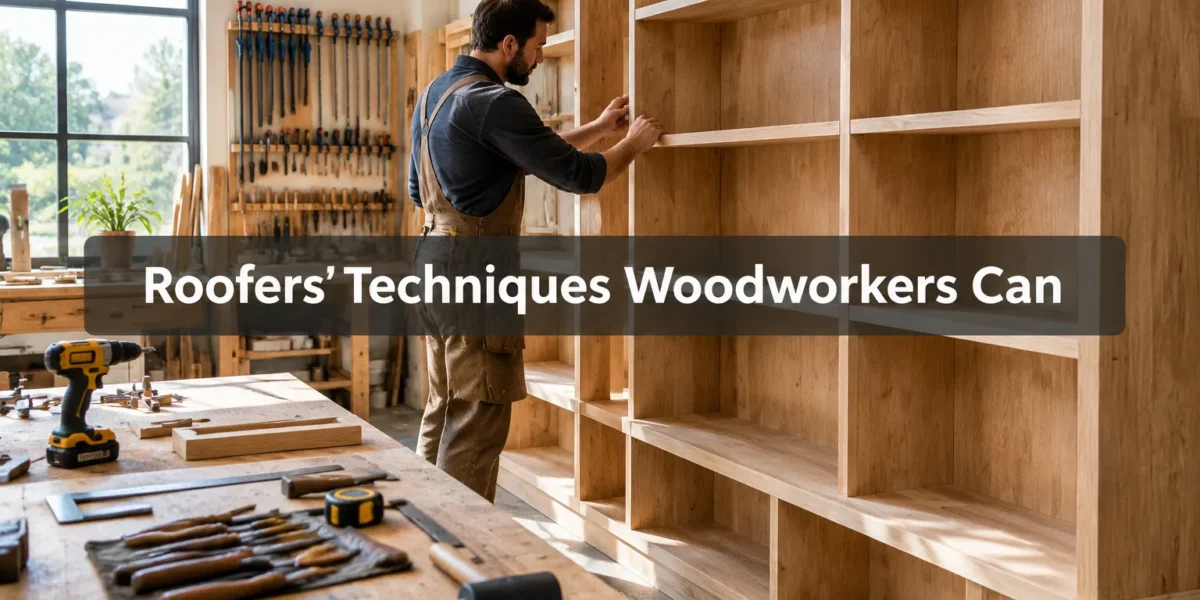
The construction industry, particularly roofing, offers a surprising wealth of logistical and safety lessons applicable to other trades. While the scale and materials differ dramatically, woodworkers tackling substantial projects, think towering bookcases, expansive dining tables, or intricate wall units, often confront challenges reminiscent of roofers: managing large, unwieldy materials, ensuring safety at elevated heights, and executing precise layouts over significant distances. This article explores essential Roofers’ Techniques Woodworkers Can Borrow: Layout, Safety, and Material Handling for Large Furniture Builds, offering practical strategies to enhance efficiency, accuracy, and workshop safety in 2026.
Key Takeaways
- Precision Layout at Scale: Adapt roofing’s methodical grid-based layout and string line techniques for accurate alignment and repeatable measurements on large woodworking projects, ensuring squareness and consistency across expansive surfaces.
- Elevated Work Safety: Implement multi-level staging, secure platforms, and a “clean zone” approach from roofing to safely assemble and finish tall or large furniture pieces, reducing fall risks and improving access.
- Efficient Material Flow: Borrow roofers’ strategies for material staging, hoisting, and sequential placement to minimize re-handling, prevent damage, and optimize workflow when dealing with heavy or bulky lumber and panels.
- Hazard Awareness & PPE: Adopt a comprehensive safety mindset, including detailed site assessment, appropriate personal protective equipment (PPE), and clear communication protocols, to mitigate risks inherent in large-scale woodworking.
Precision Layout Techniques for Large Woodworking Projects
Roofers are masters of precision over expansive and often uneven surfaces. Their work demands consistent spacing, perfect alignment, and accurate cuts across hundreds of square feet. Woodworkers can significantly benefit from adopting these systematic layout methods when building large furniture. The principles of establishing reference points, using long straightedges, and planning for sequential assembly are highly transferable.
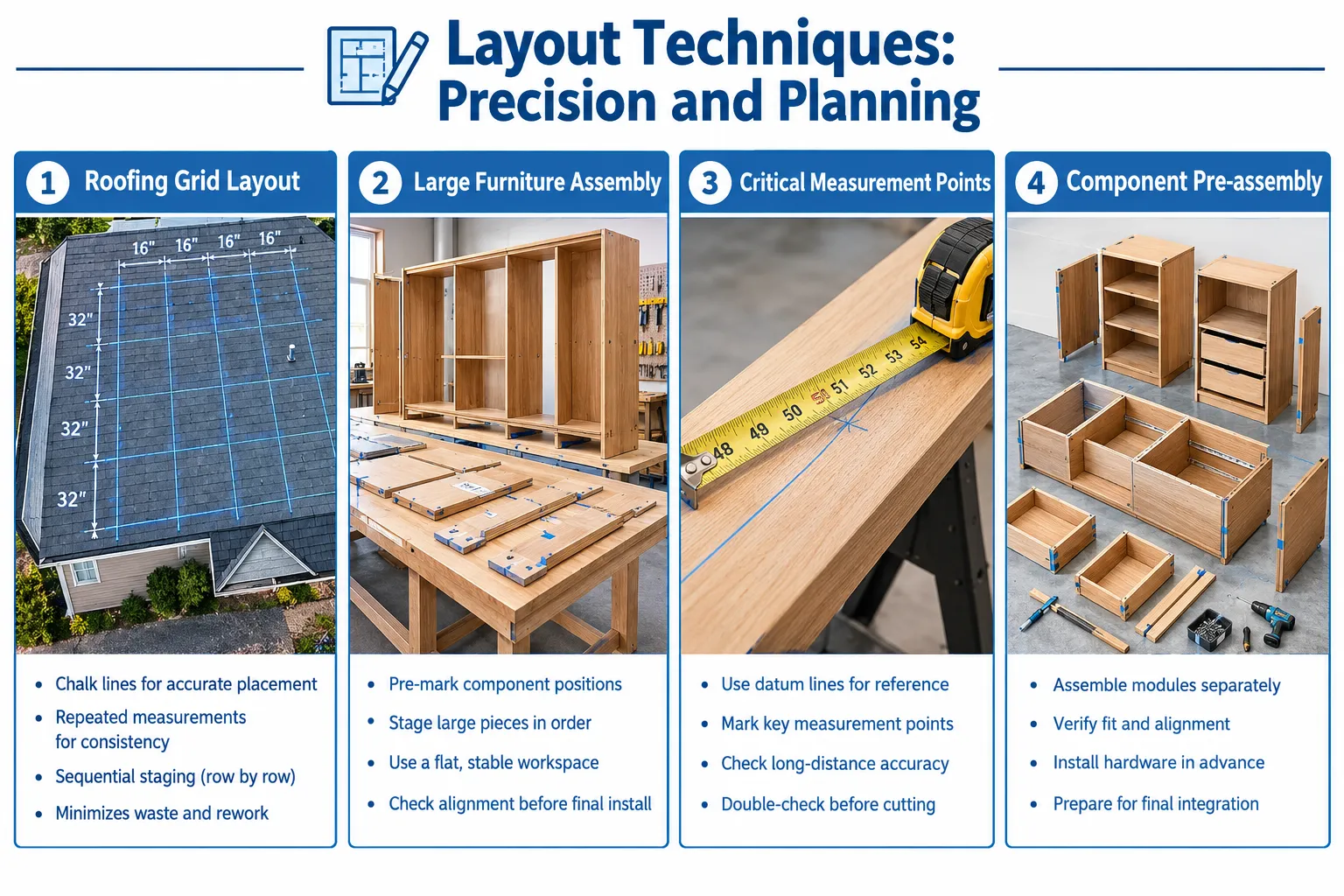
One primary technique is the establishment of a clear, consistent datum line or baseline. Roofers often square off a building’s perimeter before laying the first course of shingles. Similarly, for a large cabinet or wall unit, define a perfectly square and level base. This initial accuracy becomes the foundation for all subsequent measurements and alignments. Use a laser level or a builder’s square and a long straightedge to establish this base on your shop floor or workbench, ensuring it perfectly represents the footprint of your final piece.
Another invaluable method is grid-based layout. Roofers often snap chalk lines or use string lines to create a grid, ensuring courses are straight and uniform. For a large shelving unit or a multi-panel cabinet, marking out a grid directly onto the shop floor or a large work surface can guide the placement of uprights, shelves, and dividers. This visual aid helps to maintain parallel lines, consistent spacing, and overall squareness, especially when working with components that are too large to fit on a conventional workbench. This approach helps in visualizing the final form and identifying potential errors before cuts are made or joints are committed.
“The rigor of a roofer’s layout ensures that minor errors don’t compound into major structural problems. Woodworkers building big pieces face the same challenge; a small miscalculation at the base can lead to significant issues at the top.”
Consider using story poles or layout rods, a technique where measurements and critical marks are transferred from a drawing to a physical piece of wood or metal. This allows for quick, repeatable, and accurate marking of multiple identical components without constantly consulting a tape measure. For projects with many shelves or repetitive joinery, a story pole becomes an indispensable tool. When constructing intricate joinery for large pieces, tools and techniques covered in “Mastering The Router Table Essential Jigs Safety And Advanced Techniques For Precision Joinery And Edges” can be integrated into this methodical layout process for enhanced precision.
Furthermore, roofers plan their workflow by staging materials for optimal access, often marking cuts and sequences in advance. Woodworkers can apply this by dry-fitting major components on the floor to check fit and alignment before final assembly. This pre-assembly phase, common in large timber framing or boat building, allows for adjustments to be made easily and provides a visual check against the layout marks.
Safety Protocols for Elevated Work and Heavy Lifting in Large Furniture Builds
Working on large furniture pieces often necessitates reaching, bending, and sometimes even climbing to access higher sections or manage bulky components. These scenarios introduce risks similar to those faced by roofers: falls, musculoskeletal injuries from improper lifting, and hazards from falling tools or materials. Adopting robust safety protocols is paramount in 2026.
Roofers frequently work on sloped, elevated surfaces, necessitating strict fall protection and secure footing. While woodworkers typically work indoors, assembling a tall wardrobe, a wall-to-wall library, or a large media center can involve working at heights that strain reach or require temporary elevation. Instead of balancing on unstable chairs or ladders, consider purpose-built, stable platforms or scaffolding, even for indoor use. These provide a larger, more secure footprint than a typical stepladder, reducing the risk of falls and improving access to high points for joinery, sanding, or finishing.
When working with heavy panels or solid lumber, the risk of strain injuries is significant. Roofers routinely hoist heavy bundles of shingles. Woodworkers can learn from their emphasis on mechanical advantage and proper lifting techniques.
Key Safety Considerations:
- Stable Platforms: Use sturdy, non-slip work platforms or rolling scaffolds when working above shoulder height. Ensure they are locked and level.
- Clear Work Zones: Maintain a “clean zone” around the project area, free from trip hazards, loose tools, or scraps. This prevents accidental falls and allows for safe movement of large components.
- Lifting Aids: Invest in lifting aids such as panel dollies, rolling carts, or even simple leverage bars for moving heavy sheets of plywood or solid wood slabs. For exceptionally heavy pieces, consider a gantry crane or a block and tackle system, especially if working alone.
- Team Lifts: Never hesitate to ask for help when lifting heavy or awkward pieces. Coordinate lifts with clear communication. Proper lifting technique involves bending the knees, keeping the back straight, and lifting with the legs.
- Personal Protective Equipment (PPE): Beyond eye and ear protection, consider reinforced gloves when handling rough lumber, and non-slip footwear. For projects involving extensive sanding or finishing, respiratory protection is crucial. Ensuring proper safety equipment, such as a Craftsman Riving Knife or a Bork Riving Knife, is fundamental for safe machine operation.
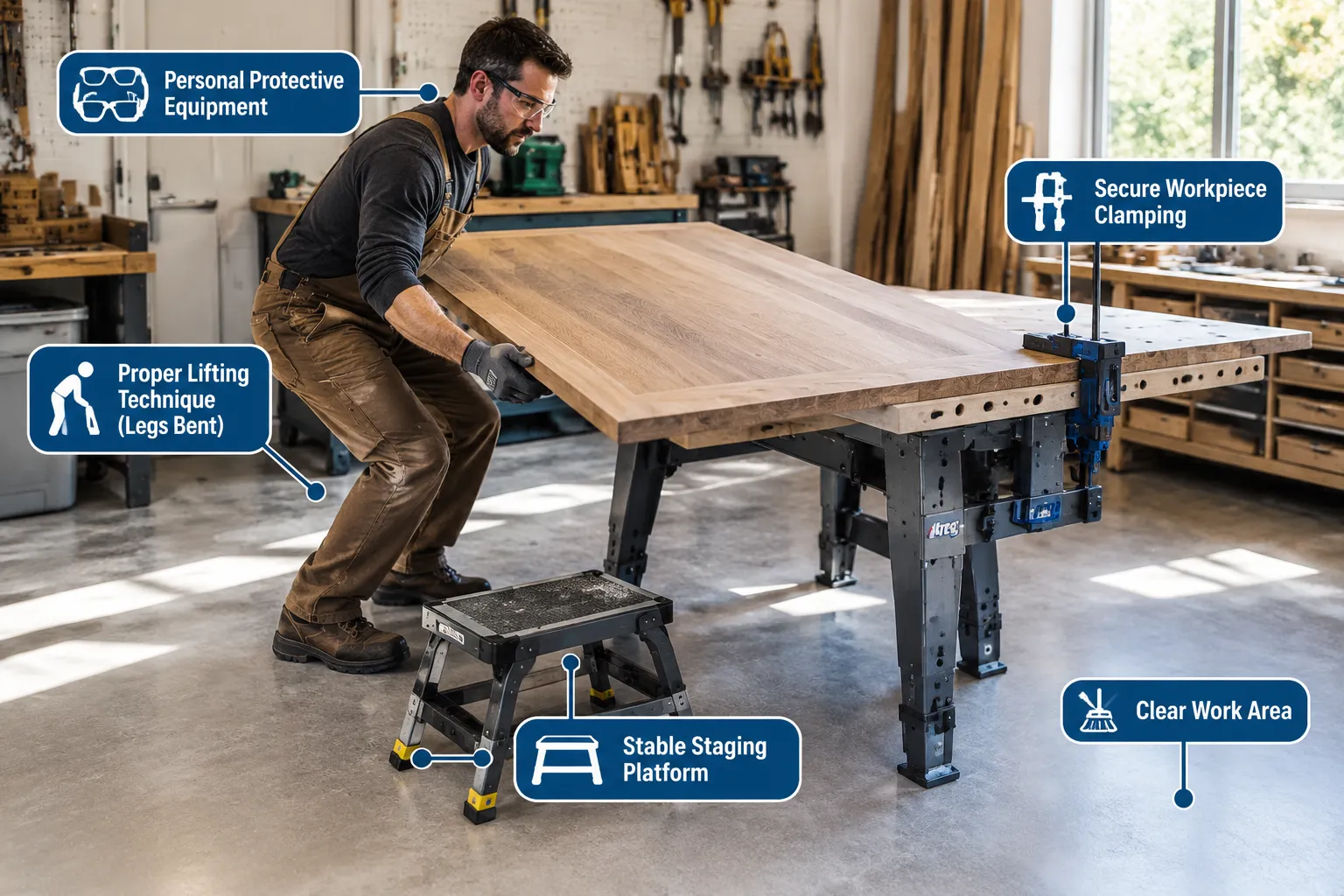
When operating power tools on large stock, safety becomes even more critical. Cutting oversized sheets on a table saw or router table demands careful planning and external support to prevent kickback or loss of control. Techniques for precision and safety, such as those for ripping 2x4s into 1x4s, highlight the need for stable setups and careful material handling. Always ensure large workpieces are properly supported and clamped before making cuts, using roller stands or outfeed tables to manage material during operations.
Material Handling: Efficient Movement and Storage for Large Furniture Builds
The efficient handling of materials is where roofers truly excel. They deal with bulky, heavy, and often fragile materials that must be moved, staged, and installed with minimal damage and maximum efficiency. For woodworkers constructing large furniture, the lessons in logistics are incredibly valuable.
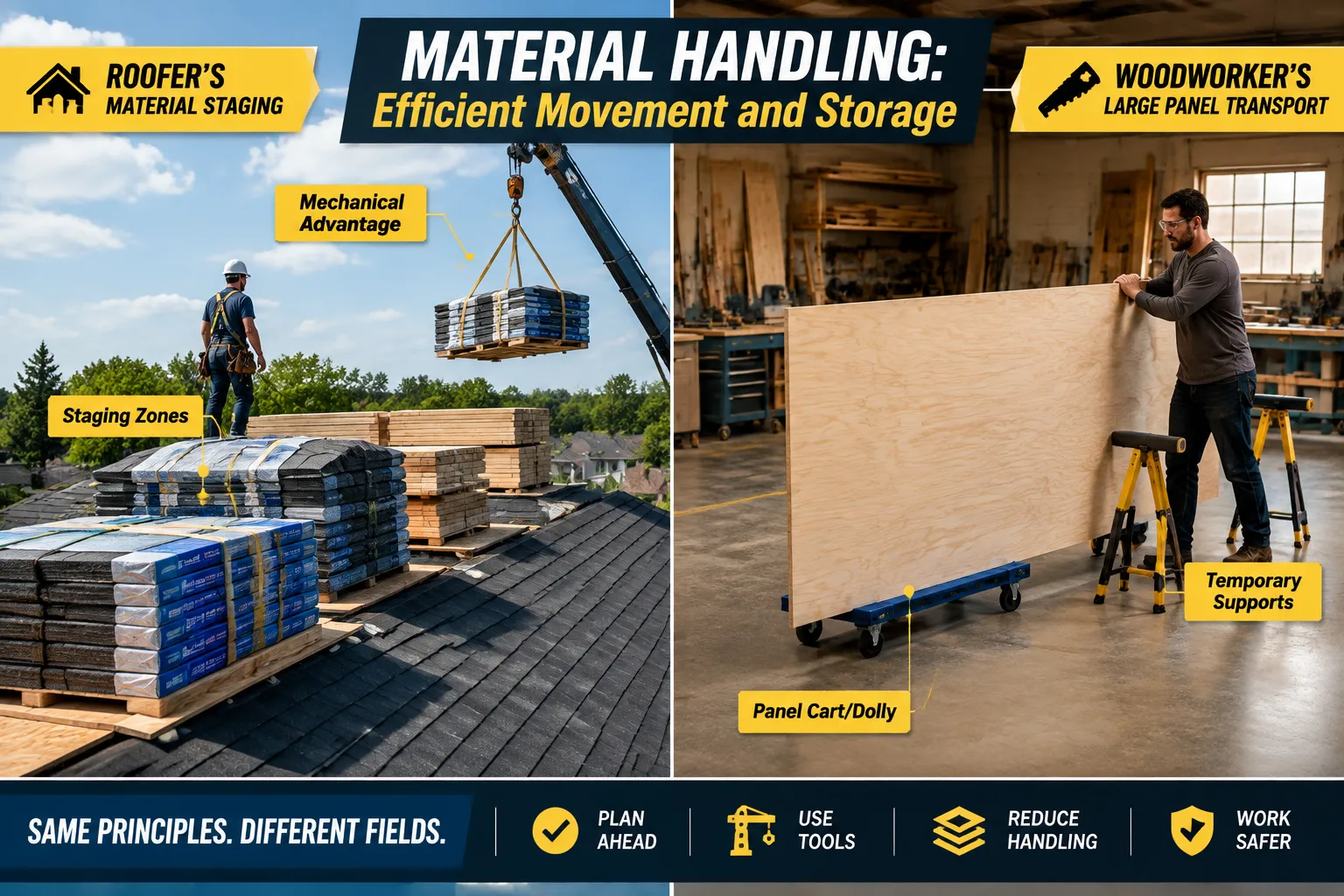
Roofers often have materials delivered directly to the rooftop or use specialized hoists to move bundles of shingles and lumber. This “just-in-time” and “just-in-place” approach minimizes the need for repeated handling, which reduces labor and the risk of damage. Woodworkers can adopt similar strategies.
Strategies for Optimized Material Handling:
- Strategic Staging: Before beginning a large build, plan where lumber and sheet goods will be stored and processed. If possible, have large panels delivered as close to your cutting area as possible. Create temporary staging areas that allow easy access without cluttering the main workspace. For example, if you’re building a large entertainment unit, organize your plywood sheets, solid wood stock, and hardware into distinct zones around your primary workbench or assembly area.
- Minimizing Re-handling: Every time a piece of lumber or a panel is moved, there’s a risk of dinging, scratching, or dropping it. Roofers stage materials in the sequence they will be used. Woodworkers can pre-cut and pre-finish components in batches, then move them to a dedicated assembly area only when needed, reducing unnecessary movement.
- Utilizing Mechanical Advantage: Investing in tools like panel carts, wheeled lumber racks, or even a simple set of furniture dollies can make a huge difference when moving heavy sheets of plywood (like those used for 1/2 plywood cabinets) or long lengths of solid lumber. These tools allow one person to move what would typically require two or more, safely and efficiently. Overhead hoists or chain falls, common in metalworking shops, can also be adapted for lifting and positioning very heavy furniture components or solid wood slabs, like those used for live edge wood slabs.
- Protecting Materials: Roofers often use blankets or tarps to protect materials from weather and damage during staging. For woodworkers, using moving blankets, cardboard sheets, or foam pads can protect large, finished surfaces during assembly, especially when maneuvering them into final position or performing joinery on delicate components. Protecting your materials is especially important before applying dark wood finishing techniques or other intricate finishes.
Consider the “flow” of your workshop. Can materials move from raw stock to cutting, then to joinery, assembly, and finally finishing with minimal backtracking? This linear or U-shaped flow, often seen in production environments, significantly improves efficiency for large projects. For example, a dedicated area for cutting large sheet goods with an outfeed table and panel saw can feed directly into a joinery station, then into an assembly zone with ample clear space.
Conclusion
The specialized skills honed by roofers, precision layout over challenging terrain, rigorous safety protocols for elevated work, and efficient material logistics for bulky items, offer a practical blueprint for woodworkers embarking on large furniture builds. By consciously applying these Roofers’ Techniques Woodworkers Can Borrow: Layout, Safety, and Material Handling for Large Furniture Builds, craftsmen can transform daunting projects into manageable, safer, and more accurate undertakings.
In 2026, as woodworking projects become increasingly ambitious, integrating these cross-disciplinary lessons is not just about efficiency; it’s about elevating craftsmanship and ensuring a safer working environment. Embrace methodical planning, invest in stable support systems, and optimize your material flow to conquer even the grandest designs with confidence and precision.
SEO Meta Title: Roofers’ Techniques for Large Furniture Builds: Layout & Safety
SEO Meta Description: Learn how woodworkers can borrow roofers’ techniques for precise layout, enhanced safety, and efficient material handling on large furniture projects in 2026.