
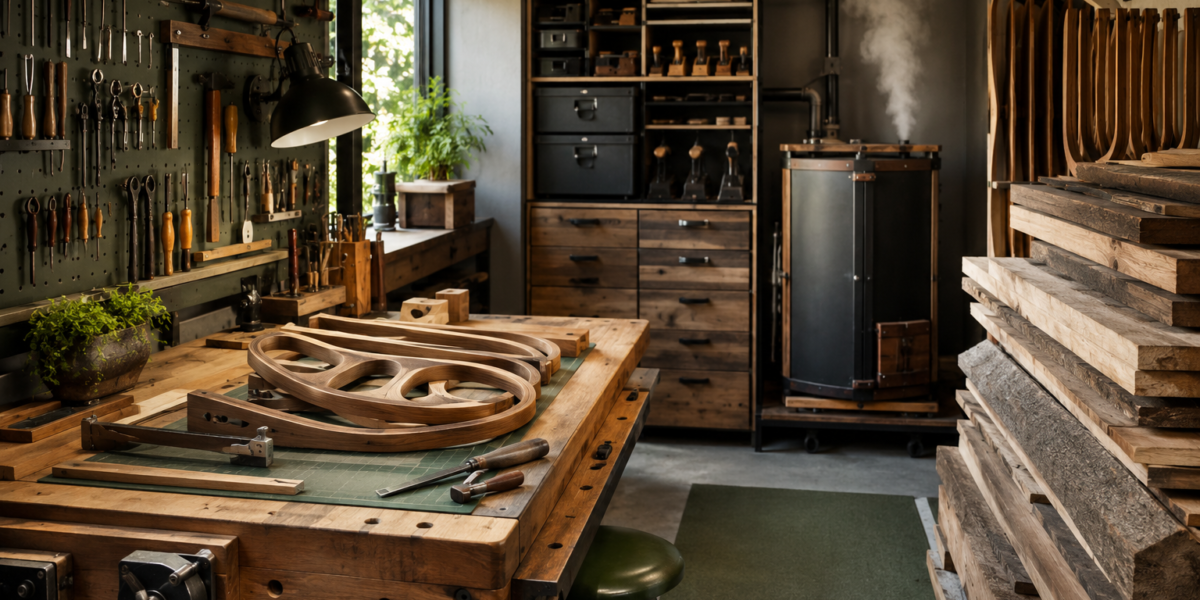
The average woodworking hobbyist in a cramped urban apartment might only dream of processing live edge slabs or mastering intricate steam bends. Yet, in 2026, the paradigm has shifted: limitations are now the bedrock of innovation. This article delves into “Small Workshop Hacks for 2026: Efficient Setups for Reclaimed Wood and Steam Bending,” demonstrating how even the most modest spaces can be transformed into highly productive zones for these increasingly popular and sustainable woodworking techniques. We’ll explore ingenious layouts, multi-functional tools, and smart storage solutions that empower urban makers to embrace green woodworking and maximize the use of every offcut, turning small workshops into powerhouses of creativity and efficiency.
Key Takeaways
- Maximize Vertical Space: Employ wall-mounted storage and multi-tiered shelving to keep floors clear for working with larger materials like reclaimed wood and live edge slabs.
- Embrace Multi-Functional Tools: Invest in tools that perform several tasks, reducing the need for multiple single-purpose machines in a compact environment.
- Modular and Portable Solutions: Prioritize workbenches and jigs that can be easily moved, folded, or reconfigured to adapt to different project stages, especially for steam bending setups.
- Efficient Workflow Planning: Design your workshop layout to support a logical flow for processing reclaimed wood, from cleaning and milling to finishing, minimizing unnecessary movement.
- Sustainable Material Management: Implement strategies for sorting and storing offcuts, ensuring that even small scraps from reclaimed wood projects are utilized.
Optimizing Layouts for Reclaimed Wood Processing in Small Workshops
Working with reclaimed wood in a small workshop presents unique challenges, primarily due to the material’s often irregular shapes, embedded hardware, and the mess generated during initial processing. However, with thoughtful planning in 2026, these challenges become opportunities for clever space utilization. The key is to create dedicated, albeit flexible, zones for each stage of reclaimed wood preparation.
The first step in any efficient small workshop setup is establishing a robust and adaptable workbench. A compact and ergonomic workbench is crucial, often acting as the central hub for multiple operations. For reclaimed wood, this workbench needs to be sturdy enough to handle heavy timber and capable of being easily cleaned. Consider designs with integrated vises or quick-clamping systems that can secure irregularly shaped pieces without dominating the entire surface. Mobile workbenches on locking casters are invaluable, allowing you to move your primary workspace closer to your material pile or a dust extraction unit as needed. Read more about building a compact and ergonomic workbench for small workshops.
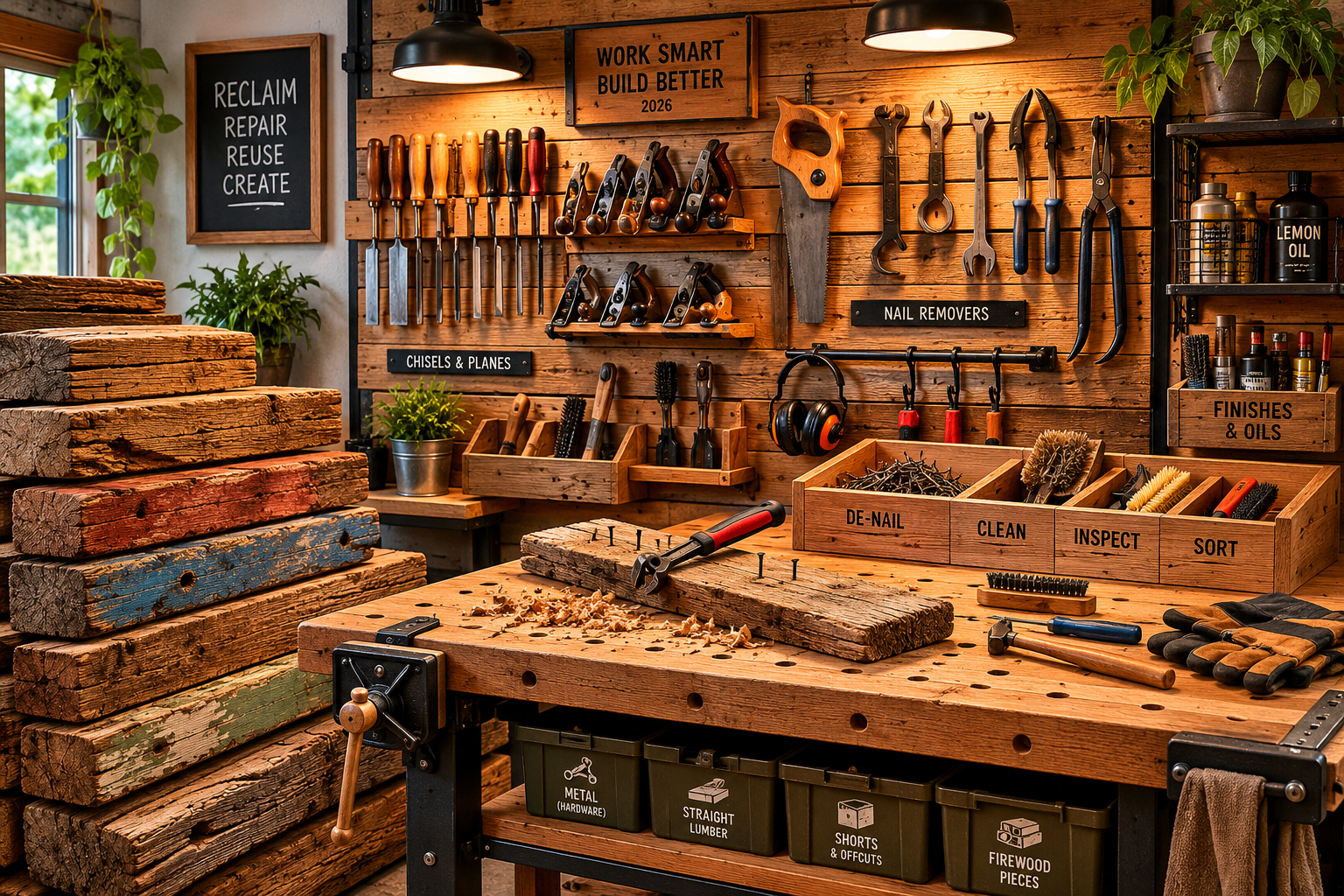
For the initial assessment and de-nailing of reclaimed wood, a separate, perhaps smaller, designated area is beneficial. This keeps the mess of dirt, rust, and debris contained. A simple, heavy-duty sawhorse setup or a dedicated ‘dirty’ bench with a disposable surface (e.g., MDF or plywood scraps) can be ideal. Essential tools for this stage include metal detectors, various pry bars, nail removers, and wire brushes. Storing these tools on a pegboard directly above or adjacent to this dirty zone ensures they are always at hand. When sourcing reclaimed and salvaged wood, efficient processing space makes a significant difference.
Once cleaned, the milling process for reclaimed wood requires precision. In a small space, a track saw can often replace a full-sized table saw for breaking down longer, wider boards, offering accuracy without the massive footprint. Benchtop planers and jointers, though compact, still demand careful placement to ensure adequate infeed and outfeed support. Consider building collapsible outfeed tables or using roller stands that can be stowed away. Vertical storage for these machines, or placing them on mobile carts, further enhances flexibility.
Smart Storage for Reclaimed Wood
Effective storage is paramount for “Small Workshop Hacks for 2026: Efficient Setups for Reclaimed Wood and Steam Bending.” Reclaimed wood, especially larger live edge slabs, can consume significant floor space. Vertical storage is the ultimate space-saver.
- Wall-Mounted Racks: Heavy-duty wall racks, either fixed or French cleat systems, can hold a surprising amount of timber. Categorize by size or species for quick retrieval.
- Under-Bench Storage: Utilize the space under your workbench for shorter pieces, offcuts, and project-specific wood.
- Mobile Lumber Carts: For larger collections, a vertical lumber cart on casters allows you to roll your material out of the way when not in use.
- Offcut Management: In 2026, sustainability is key. Implement a system for sorting offcuts by size. Small bins for pieces under 12 inches, shelves for medium offcuts, and dedicated spots for larger ‘keepers’ ensure minimal waste. These smaller pieces can be turned into profitable scrap wood projects that sell in 2026.
“A well-organized small workshop isn’t just about tidiness; it’s about eliminating friction from your workflow, making every cut and joint more efficient, especially when dealing with the unique demands of reclaimed materials.”
Efficient Steam Bending Setups in Confined Spaces
Steam bending, a classic woodworking technique experiencing a resurgence in 2026 for its organic forms and material efficiency, can seem daunting in a small workshop. The need for a steam box, a steam source, and forming jigs often leads woodworkers to believe it requires extensive space. However, innovative “Small Workshop Hacks for 2026: Efficient Setups for Reclaimed Wood and Steam Bending” prove otherwise.
Compact Steam Box Designs
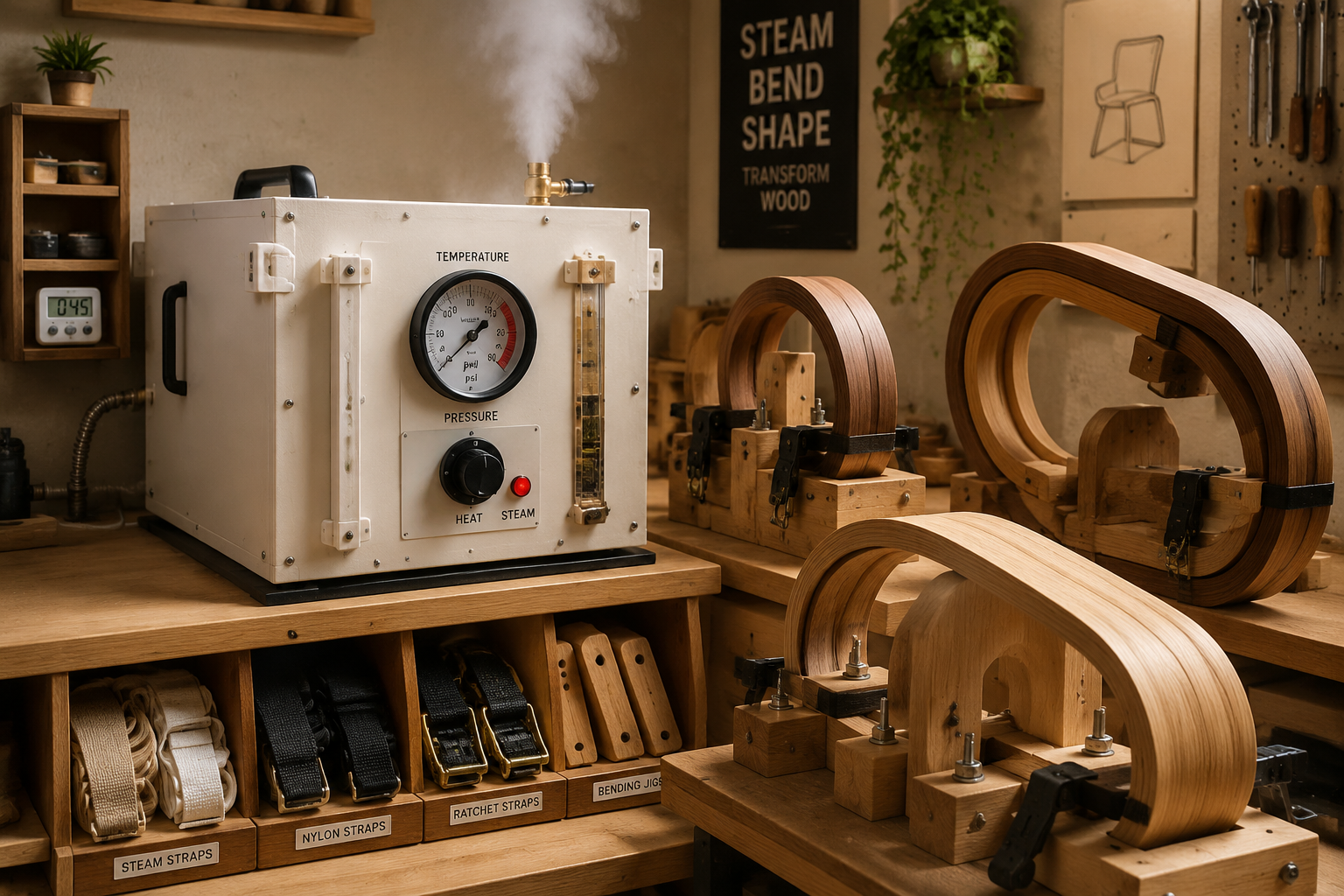
The core of any steam bending setup is the steam box. For small workshops, compact, insulated designs are crucial.
- PVC Tube Steam Box: For smaller pieces, a length of large-diameter PVC pipe with caps on either end makes an excellent, inexpensive, and easily storable steam box. A hole drilled near the bottom allows for steam entry, and another small hole near the top acts as a vent for temperature regulation.
- Plywood or Insulated Panel Box: For longer or wider pieces, a square or rectangular box made from plywood, lined with insulation (e.g., rigid foam board), can be effective. This can be built as a modular unit that disassembles for storage or designed to stand vertically against a wall when not in use. Ensure all joints are sealed to prevent steam leakage and maintain consistent temperatures.
- Portable Steam Source: Instead of a large boiler, consider using an electric wallpaper steamer or a small pressure cooker with a hose attachment as your steam generator. These are compact, relatively inexpensive, and can be stored away when not in use.
Key Considerations for Steam Box Placement:
- Ventilation: Steam bending creates a lot of moisture. Ensure your workshop has adequate ventilation, perhaps a window fan or an exhaust system, to prevent humidity buildup and potential mold growth.
- Proximity to Bending Forms: Position your steam box close to your bending forms and clamping area to minimize the time the hot wood is exposed to cool air, which can cause it to stiffen prematurely.
- Water and Electricity Access: Your steam source will require water and power, so plan your setup accordingly.
Bending Forms and Clamping Solutions
The space taken up by bending forms and clamps can be more of a challenge than the steam box itself.
- Universal Bending Jig: Design a modular bending jig that can accommodate various curves and shapes. This might involve a sturdy base with adjustable pins or blocks that can be reconfigured for different projects.
- Scrap Wood Forms: Utilize offcuts and scrap wood to create custom forms for specific bends. These can be glued up from multiple layers for strength and then discarded or recycled once the project is complete. This aligns perfectly with the ethos of turning shop scraps into design features.
- Clamping Strategy: A wide assortment of clamps is necessary. Consider integrating clamping points directly into your workbench or creating dedicated clamp racks that keep them organized and accessible. F-clamps, band clamps, and specialized bending clamps are all valuable.
| Steam Bending Component | Small Workshop Solution | Benefits for 2026 |
|---|---|---|
| Steam Box | PVC tube, Insulated Plywood (collapsible/vertical) | Minimal footprint, easy storage |
| Steam Source | Electric wallpaper steamer, small pressure cooker | Portable, low cost, dual-purpose |
| Bending Forms | Modular jig, scrap wood forms | Reconfigurable, cost-effective |
| Clamping | Integrated workbench clamps, dedicated clamp racks | Organized, efficient setup/teardown |
By adopting these compact and flexible solutions, even the smallest workshops can successfully incorporate steam bending, allowing for the creation of beautiful, flowing designs in reclaimed wood and beyond.
Tool Organization and Multi-Purpose Workstations for 2026
The true genius of “Small Workshop Hacks for 2026: Efficient Setups for Reclaimed Wood and Steam Bending” lies in meticulous tool organization and the creation of multi-purpose workstations. Every inch counts, and preventing clutter is not just about aesthetics—it’s about safety, efficiency, and maximizing creative output.
Vertical Storage: The Ultimate Space Saver
Vertical storage solutions are the bedrock of any small workshop.
- French Cleat System: This highly adaptable system allows you to create custom holders for virtually any tool or jig. It’s perfect for organizing hand tools, power tool accessories, and even small jigs used in steam bending or reclaimed wood processing. The flexibility means you can reconfigure your wall layout as your projects or tool collection evolves.
- Pegboards: A classic for a reason, pegboards are inexpensive and excellent for smaller hand tools, measuring devices, and frequently used items.
- Shelving and Cabinets: Install shelves above your workbench or in unused wall spaces. Closed cabinets are ideal for keeping dust-sensitive tools clean and out of sight. Remember to go vertical, building upwards to take advantage of wall height. For more ideas, explore DIY Smart Workshop Storage Solutions.
Multi-Purpose Tools and Workstations
In 2026, the trend for small workshops is towards tools that can perform multiple functions or be easily adapted.
- Router Table Integration: Instead of a standalone router table, consider a workbench extension or a compact insert for your table saw that doubles as a router table. This saves valuable floor space. For advanced techniques, understanding mastering the router table is invaluable.
- Benchtop Multi-Tools: Some manufacturers offer compact machines that combine functions like sanding, grinding, and sharpening. While they may not replace dedicated machines for heavy use, they can be excellent for occasional tasks.
- Portable Power Tools: Track saws, orbital sanders, and compact drills are inherently space-saving as they can be stored away when not in use. Even a compact band saw can be a game-changer for cutting curves in reclaimed wood and preparing pieces for steam bending. Learn about mastering the band saw.
- Mobile Workstations: Building a workbench on heavy-duty locking casters is a revelation. It allows you to reconfigure your shop for different tasks (e.g., pulling it into the center for large assemblies, pushing it against a wall for specific machine use), greatly enhancing your workshop’s adaptability.
Dust Collection and Safety in Compact Environments
Working with reclaimed wood can generate a significant amount of dust and debris, especially if you’re sanding or milling. Steam bending also introduces moisture.
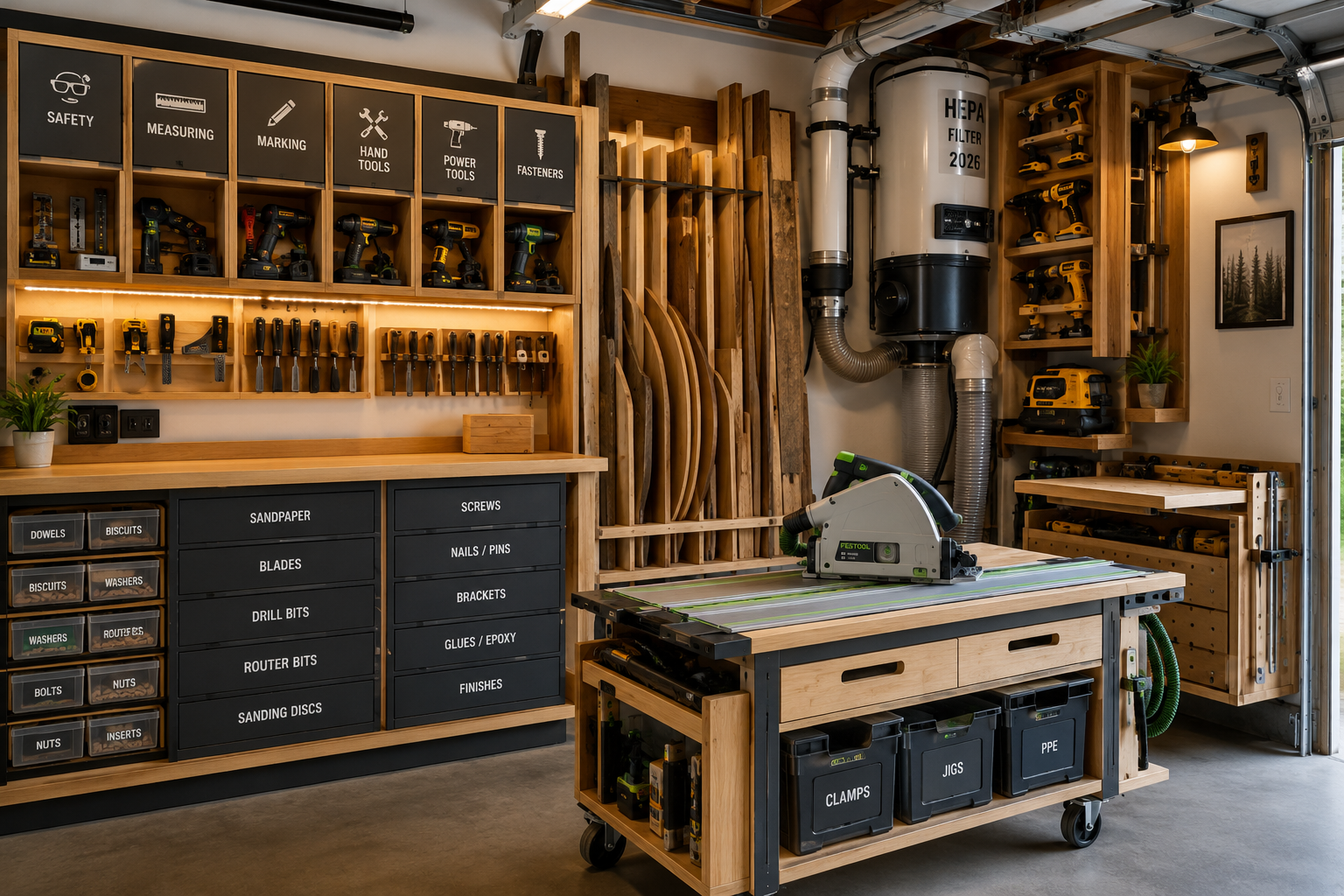
- Compact Dust Collector: Invest in a small, efficient dust collector or a shop vacuum with a HEPA filter. Ensure it has good suction and can be easily moved or connected to various tools.
- Air Filtration: An ambient air filter can dramatically improve air quality, particularly important in a sealed, small space.
- Personal Protective Equipment (PPE): Always wear safety glasses, hearing protection, and a dust mask or respirator. In a small space, airborne particles can concentrate quickly.
- Fire Safety: Keep a fire extinguisher readily accessible, especially when working with steam or electrical tools.
By thoughtfully organizing tools, embracing multi-functional equipment, and prioritizing safety, small workshops in 2026 can become highly productive and enjoyable spaces for working with reclaimed wood and mastering the art of steam bending.
Conclusion
The journey into “Small Workshop Hacks for 2026: Efficient Setups for Reclaimed Wood and Steam Bending” reveals that spatial constraints are not limitations but catalysts for ingenuity. By embracing vertical storage, modular work surfaces, multi-purpose tools, and meticulous organization, woodworkers can transform even the most compact areas into highly efficient and productive spaces. The trends of 2026 emphasize sustainability and thoughtful design, making reclaimed wood and steam bending not just practical, but also economically viable and creatively fulfilling within a small footprint.
For those eager to elevate their woodworking craft within a limited space, the next steps involve a critical assessment of your current layout, identifying areas for vertical expansion, and investing in flexible tools that serve multiple functions. Experiment with compact steam box designs and modular bending forms. By implementing these strategic hacks, you can unlock a surprising amount of potential in your small workshop, turning ambitious projects like crafting furniture from reclaimed timber or introducing elegant curves through steam bending into achievable realities.