
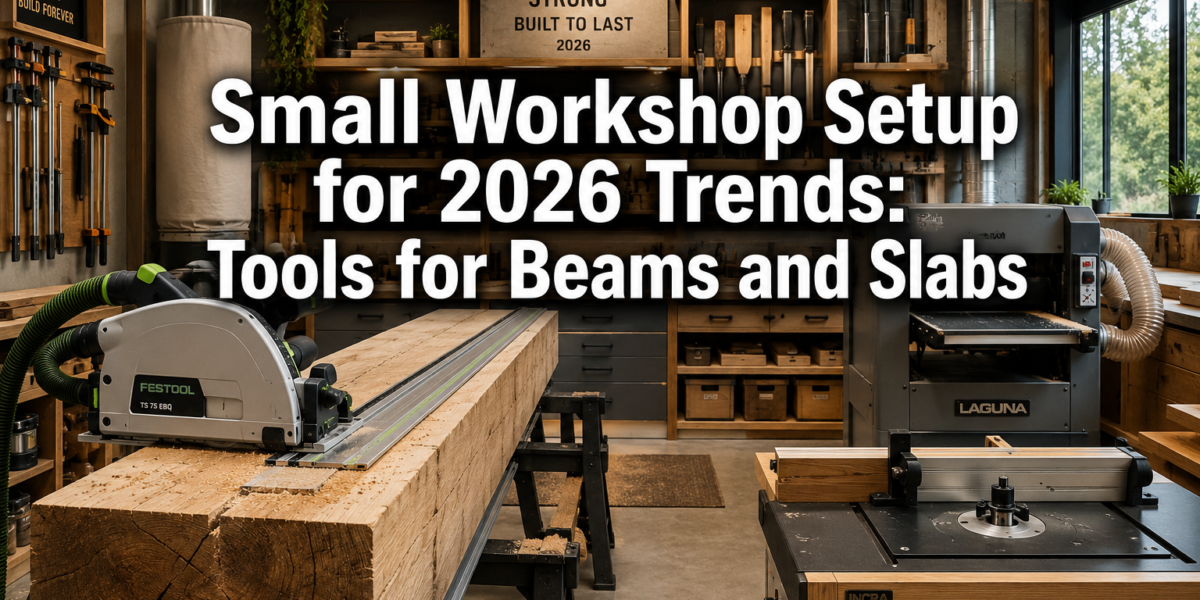
The year 2026 marks a pivotal shift for small workshop owners, driven by a growing demand for bespoke, high-quality timber elements like box beams and live-edge slabs. Far from being a luxury of sprawling industrial spaces, creating these impressive pieces is now entirely feasible within a compact footprint. This guide illuminates the essential tools and strategic setup required for a small workshop to master these significant trends, ensuring efficiency, precision, and profitability. The focus isn’t just on power, but on intelligent design and space-saving techniques that empower makers to tackle ambitious projects.
Key Takeaways
- Prioritize Space-Saving Power Tools: Opt for track saws, portable planers, and router sleds that deliver precision and power without requiring vast dedicated floor space.
- Invest in Specialized Joinery: Equip your workshop with tools for robust joinery (e.g., mortisers, doweling jigs, high-quality chisels) essential for assembling large timber components like box beams.
- Embrace Effective Dust Collection: A comprehensive, possibly smart, dust collection system is crucial for safety, tool longevity, and maintaining a clean workspace when working with significant wood volumes.
- Optimize Workholding and Workbenches: Flexible workholding solutions, such as dog holes and clamps, along with mobile workbenches, are vital for securely handling large, unwieldy materials in a small area.
- Leverage Digital Tools for Design: Utilize software for precise project planning, material estimation, and visualizing complex joinery, maximizing material use and minimizing errors.
Essential Power Tools for Beams and Slabs in a Small Workshop Setup for 2026 Trends
Optimizing a compact workshop for working with beams and slabs in 2026 demands a strategic selection of power tools. The goal is maximum capability within minimal space, prioritizing precision and versatility. Forget the oversized industrial machinery; modern solutions offer comparable results in a more manageable form.
Track Saws: Precision Cutting for Large Panels and Timbers
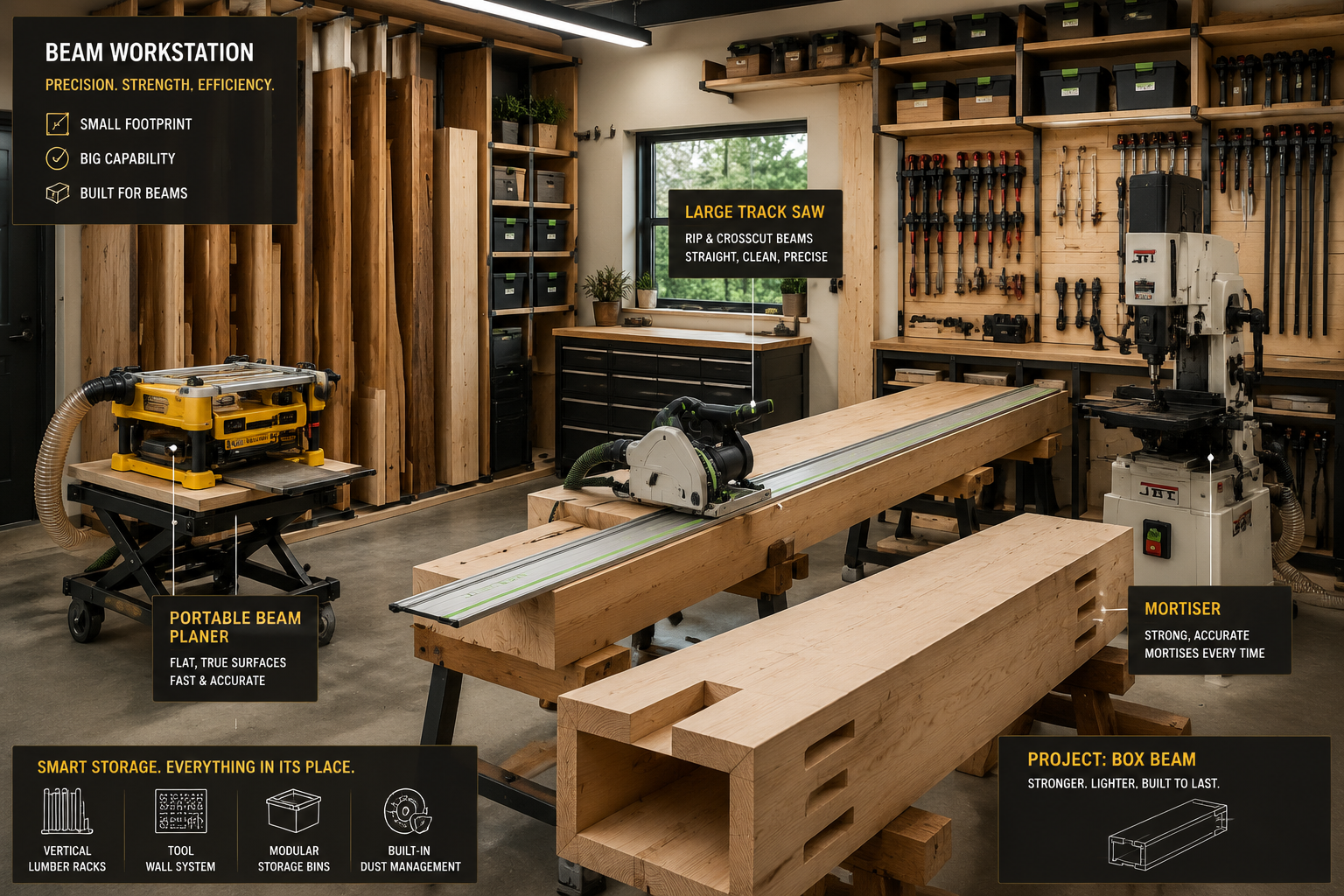
A track saw is arguably the most indispensable tool for working with large material in a small shop. Unlike a traditional table saw, which requires you to move the material through the blade, a track saw brings the blade to the material. This makes it ideal for accurately cutting full sheets of plywood or long lengths of timber, which would be impossible or unsafe on a small table saw.
- Benefits: Exceptional accuracy, clean cuts, minimal chip-out, safer operation for large pieces.
- Key Features to Look For: Long guide rails (extendable if possible), powerful motor, effective dust extraction, plunge-cut capability.
- Applications: Breaking down sheet goods for box beams, squaring ends of live-edge slabs, making precise dados and grooves.
Portable Planers: Flattening and Dimensioning Slabs
For live-edge slabs, a portable planer is essential for achieving a consistent thickness and smooth surface. While a full-sized jointer and planer combo would be ideal, a quality portable planer (like a 13-inch benchtop model) paired with a router sled setup can achieve remarkable results.
- Setup: Construct a sturdy router sled jig. This involves creating rails and a carriage that allows your router to traverse the entire surface of the slab, flattening it progressively.
- Considerations: Look for a planer with a strong motor to handle hardwoods and a good cutterhead (helical cutterheads offer superior finish and quieter operation, though they are often more expensive).
- Tip: For very wide slabs, flattening with a router sled first is crucial before running through a portable planer, as the planer’s width capacity will be limited.
Routers and Router Tables: Versatility for Joinery and Edge Profiling
A powerful router, either handheld or mounted in a mastering the router table can perform a myriad of tasks essential for beams and slabs.
- Handheld Router: Ideal for template routing, chamfering edges of slabs, cutting mortises for joinery, and creating decorative profiles.
- Router Table: Offers greater control and safety for smaller pieces, creating consistent profiles, and cutting precise joinery like rabbets and dados for box beam construction. For beginners, a beginner’s guide to CNC routers might also be helpful for exploring advanced capabilities, though it’s a larger investment.
Portable Mortisers and Doweling Jigs: Robust Joinery for Beams
When assembling large timber elements like box beams or furniture frames from slabs, strong, precise joinery is paramount.
- Portable Mortiser: A dedicated mortiser creates perfect square or rectangular holes for tenons, offering superior strength and alignment compared to traditional methods for large workpieces.
- Doweling Jigs: For quick and strong butt joints or panel alignment, a self-centering doweling jig is invaluable. It ensures accurate placement of dowel pins, providing reinforcement and preventing joint creep during glue-up. For more insights on joinery, consider exploring doweling jigs: a comprehensive guide.
Space-Saving Joinery & Workholding Solutions for Small Workshop Setup for 2026 Trends
Working with large, heavy materials in a confined space requires intelligent workholding and efficient joinery stations. The days of needing a massive dedicated bench for every task are over. Modern small workshops thrive on modularity and multi-functionality.
The Modular Workbench: Core of Your Operations
A portable workbench is a game-changer for a small shop. It should be heavy enough to remain stable but equipped with casters for easy repositioning.
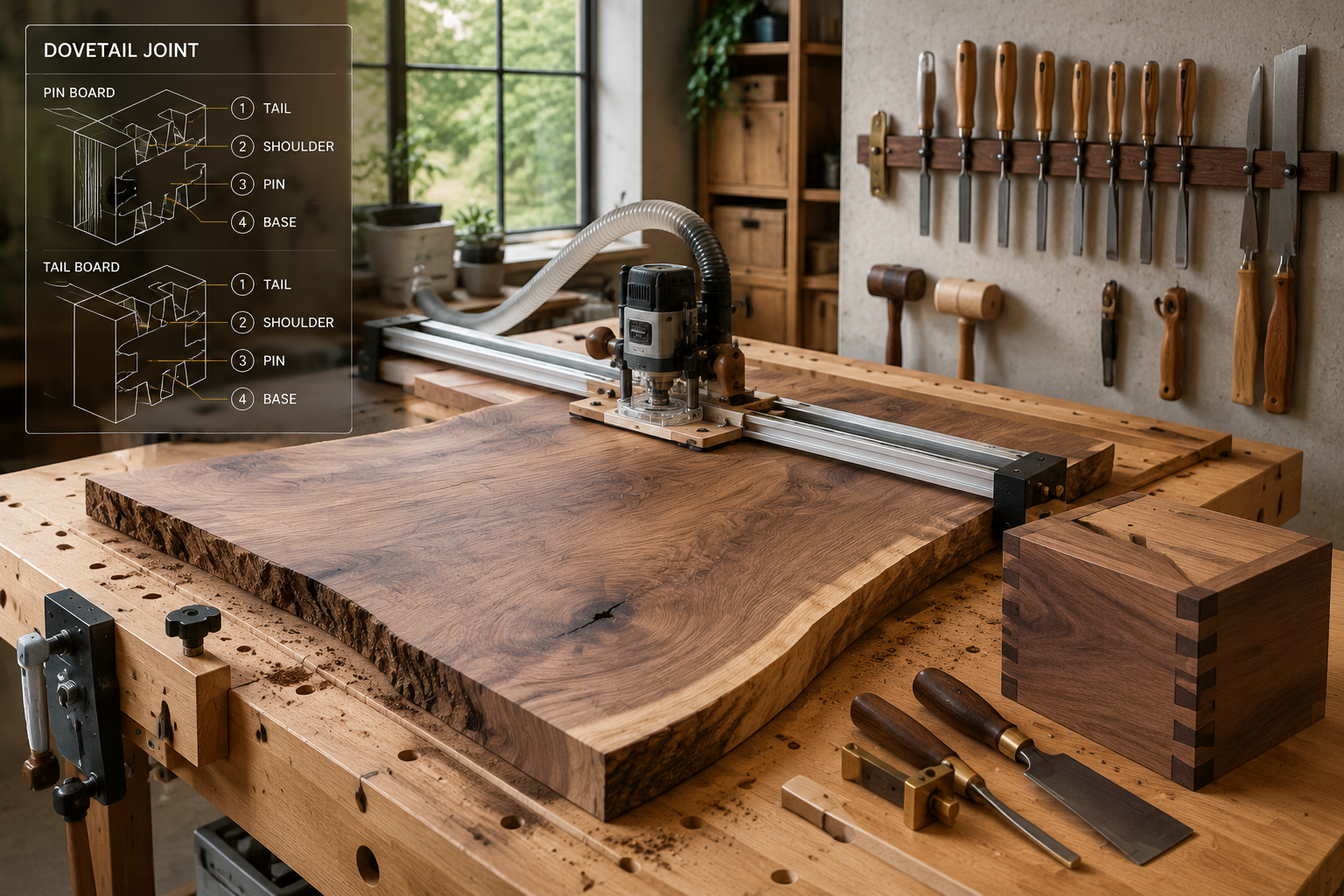
- Dog Holes: Integrate a grid of dog holes into your workbench surface. These holes, typically 3/4 inch or 20mm, allow for the use of bench dogs, clamps, and holdfasts, providing incredibly flexible and secure workholding for irregularly shaped slabs or long beams. This is a superior alternative to traditional vises for large pieces.
- Integrated Clamping Systems: Beyond dog holes, consider t-track systems or dedicated workbench vises that can be repositioned. The ability to clamp material securely from multiple angles is critical for safety and precision.
- Folding Extensions: Design your workbench with folding or pull-out extensions to temporarily increase surface area when needed, then retract to save space.
Dedicated Joinery Station for Beams and Slabs
Even without dedicated space for every tool, you can create a highly efficient joinery station.
- Miter Saw Station: A well-built miter saw station with integrated outfeed support is essential for accurate cross-cutting. Ensure it has ample storage beneath for jigs and accessories. The ideal miter saw height is crucial for ergonomic operation.
- Chisel and Hand Plane Storage: Keep your hand tools organized and readily accessible. A wall-mounted tool rack or a dedicated drawer in your workbench for chisels, planes, and marking tools streamlines joinery tasks. For detailed joinery techniques, especially visible ones, check out hand tool joinery for visible wood joints.
- Glue-Up Jigs: For box beams, specialized glue-up jigs or clamping cauls ensure squareness and even pressure along long joints. These can be simple shop-made fixtures that store compactly when not in use.
Storage Solutions: Maximizing Vertical and Mobile Space
Effective storage is the backbone of any small workshop.
- Vertical Lumber Racks: Store long beams and slab offcuts vertically to reclaim floor space.
- Mobile Tool Carts: Mount smaller tools like a portable planer or router table insert onto mobile carts. This allows you to bring the tool to the material or move it out of the way when not in use. Explore building a mobile dust collection cart for an example of smart mobility.
- Modular Storage Systems: Implement modular drawers, shelves, and cabinets. Systems like those described in DIY smart workshop storage solutions or building modular wood storage systems allow for flexible configuration as your needs evolve.
Optimizing for Efficiency and Safety: The Smart Small Workshop Setup for 2026 Trends
Beyond tools and storage, the modern small workshop for 2026 prioritizes efficiency and safety through intelligent design and technology. Working with large pieces of wood generates significant dust and requires careful handling.
Advanced Dust Collection: A Non-Negotiable Investment
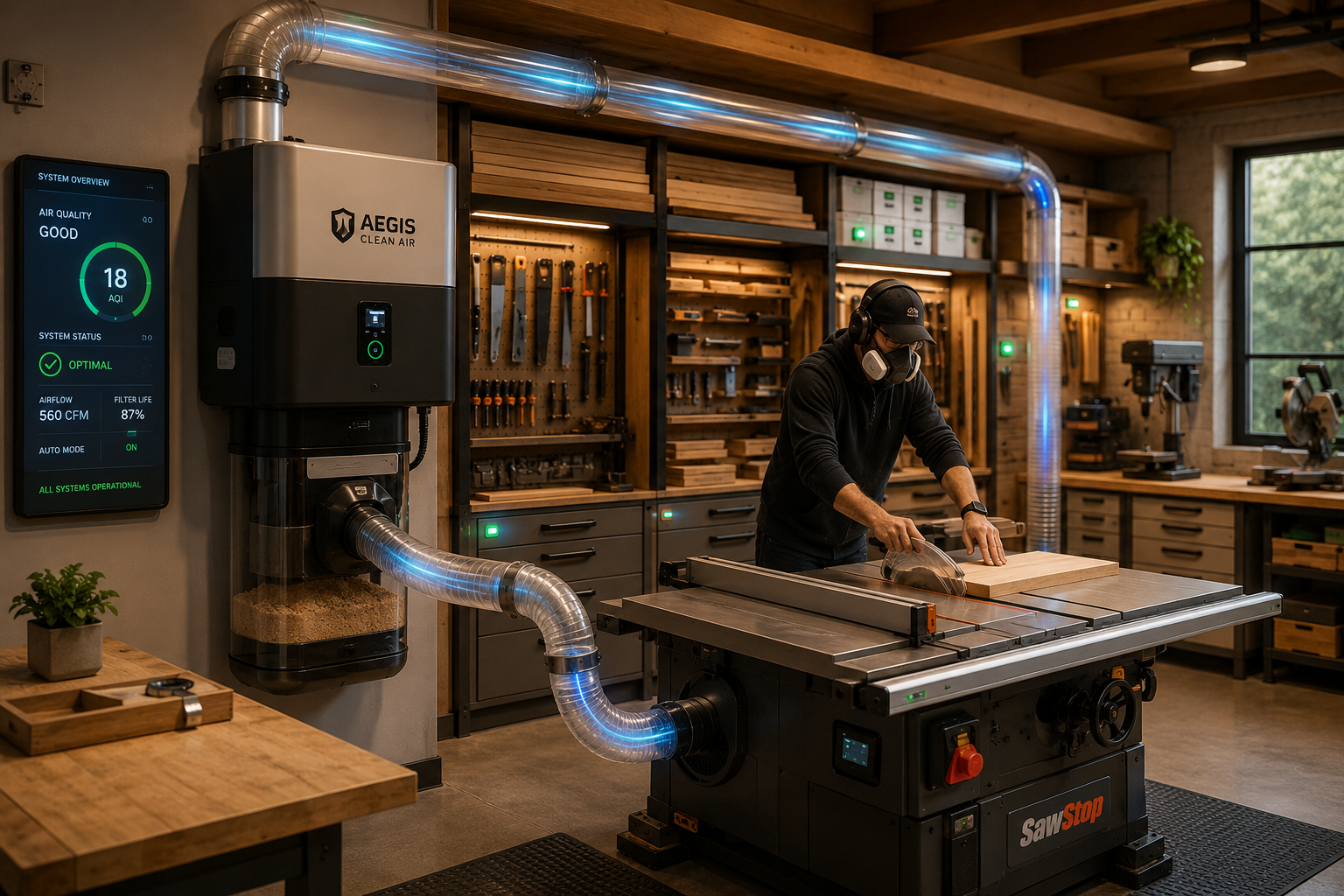
Working with beams and slabs generates copious amounts of sawdust and chips. A robust dust collection system isn’t just about cleanliness; it’s critical for air quality, tool longevity, and safety.
- Two-Stage Systems: For a small shop, a two-stage system (cyclone separator combined with a fine particle filter) is highly recommended. The cyclone removes larger debris before it reaches the filter, extending filter life and maintaining suction.
- Automated Dust Collection: Consider integrating IoT sensors that automatically activate your dust collector when a tool is turned on. This ensures dust is captured immediately and saves energy. For DIY enthusiasts, building a DIY smart workshop dust collection system provides excellent guidance.
- Air Filtration: Supplement your dust collector with an ambient air filter to capture the fine dust particles that escape direct tool capture, ensuring a healthier breathing environment.
Material Handling and Workflow
Moving heavy beams and slabs in a small space requires thoughtful planning.
- Heavy-Duty Casters: Equip all mobile bases, workbenches, and tool carts with high-quality, locking casters that can handle significant weight.
- Infeed/Outfeed Support: Use roller stands or adjustable outfeed tables to support long or wide material when cutting or planing. These can be quickly deployed and stowed.
- Clear Pathways: Always maintain clear pathways around your primary workstations. The ability to maneuver large pieces without obstruction reduces the risk of accidents and improves workflow.
Digital Integration and Planning
Leverage technology to optimize your projects from conception to completion.
- CAD/CAM Software: For complex box beam designs or intricate slab joinery, computer-aided design (CAD) software can help visualize and plan precise cuts, minimizing waste and errors.
- Project Management Apps: Use simple apps to track material costs, project timelines, and task lists, especially when handling multiple client projects.
- Digital Measurement Tools: Laser measures and digital calipers can provide quick, accurate measurements, crucial for ensuring tight tolerances on large assemblies.
Safety First
Regardless of shop size or project complexity, safety remains paramount.
- Personal Protective Equipment (PPE): Always use safety glasses, hearing protection, and a dust mask or respirator when operating machinery.
- Tool Maintenance: Regularly inspect and maintain your tools. Sharp blades and bits are safer and more efficient.
- Emergency Preparedness: Have a well-stocked first-aid kit and know the location of emergency shut-offs for all power tools.
Conclusion
The pursuit of ambitious woodworking projects, such as crafting intricate box beams and stunning live-edge slab furniture, is no longer limited to expansive professional workshops in 2026. With a strategic focus on space-saving tools, intelligent workholding, and advanced safety systems, any small workshop can become a powerhouse of high-demand craftsmanship. The key lies in selecting versatile machinery like track saws and portable planers, designing modular and mobile workstations, and implementing comprehensive dust collection.
By embracing these trends and optimizing your setup, you’re not just building projects; you’re building a highly efficient, safe, and profitable woodworking business. Start by assessing your current space, investing in the most impactful tools first, and continually refining your workflow. The future of woodworking is compact, precise, and accessible.
Actionable Next Steps:
- Audit Your Space: Measure your workshop and create a scaled floor plan to identify potential layouts for new tools and workstations.
- Prioritize Tool Acquisition: Based on the trends of box beams and live-edge slabs, decide which essential tools (e.g., track saw, portable planer, robust router) offer the highest immediate value for your projects.
- Enhance Workholding: Invest in bench dogs, high-quality clamps, and consider adding dog holes to your primary workbench.
- Upgrade Dust Collection: Plan for a two-stage dust collector and explore options for automated tool activation.
- Develop a Storage Strategy: Begin implementing vertical and mobile storage solutions to reclaim floor space and improve organization.
SEO Meta Title: Small Workshop Setup 2026: Tools for Beams & Slabs SEO Meta Description: Optimize your small workshop for 2026 trends! Discover essential tools for crafting beams & slabs efficiently, maximizing space & profit.