
The average homeowner spends over 10 hours annually on tree and shrub maintenance, a task often made arduous without the right equipment. For those engaged in serious woodworking or extensive property management, a reliable chainsaw is indispensable. This comprehensive Stihl Chainsaw Buyer’s Guide: Choosing the Right Model for Woodworking and Property Management aims to demystify the selection process, ensuring you acquire a tool perfectly suited to your specific needs for the current year, 2026. Stihl, a brand synonymous with German engineering and robust performance, offers a vast array of chainsaws, making an informed decision crucial for both efficiency and safety.
Key Takeaways
- Assess Your Needs: Before buying, evaluate the type and frequency of tasks (e.g., light pruning, firewood, felling trees, milling) to determine the necessary power, bar length, and features.
- Understand Power Sources: Choose between gasoline (most powerful, portable), electric corded (emission-free, consistent power), and battery (convenient, quieter, low maintenance) based on portability, noise, and environmental considerations.
- Prioritize Safety Features: Always look for chain brakes, anti-vibration systems, handguards, and good ergonomics to ensure safe and comfortable operation.
- Consider Bar Length and Engine Size: Match bar length to the diameter of wood you’ll cut, and engine displacement (cc or volts) to the intensity of the work.
- Invest in Accessories and Maintenance: Factor in costs for personal protective equipment (PPE), fuel/oil, replacement chains, and sharpening tools for long-term performance and safety.
Understanding Your Needs: The Foundation of This Stihl Chainsaw Buyer’s Guide: Choosing the Right Model for Woodworking and Property Management
Before diving into specific models, a critical self-assessment of your intended use cases will serve as the bedrock of your decision. Are you a weekend warrior clearing fallen branches, a dedicated woodworker processing lumber, or a property manager tackling larger-scale land maintenance? Each scenario demands a different set of features and power.
Common Use Cases:
- Light Pruning and Yard Work: For occasional trimming of small branches (up to 8 inches in diameter), clearing brush, or cutting small logs for kindling, a lightweight, easy-to-handle model is ideal. Portability and ease of starting are paramount here.
- Firewood Processing: If you’re cutting logs (8 to 18 inches) for firewood, you’ll need a saw with more power and a longer bar. Reliability and consistent performance over longer periods are key.
- Felling Small to Medium Trees: This requires a significant step up in power and bar length. Safety features become even more critical, as does operator experience.
- Storm Cleanup and Property Maintenance: A versatile saw capable of handling varied tasks, from limbing to bucking medium-sized logs, will be beneficial. Durability and power are essential.
- Woodworking and Milling: For serious woodworkers, a powerful and precise saw might be used for breaking down large logs into slabs. This often involves specialized attachments and a very robust engine. For specific woodworking projects that sell, a reliable chainsaw can be the first step in material preparation.
Factors to Consider:
- Frequency of Use: Occasional use warrants a simpler, less expensive model, while frequent, heavy use requires a professional-grade, durable machine.
- Types of Wood: Softwoods are easier to cut than hardwoods. If you’re consistently felling oak or maple, you’ll need more power.
- Operator Experience: Beginners should start with smaller, easier-to-manage saws with robust safety features. Experienced users can handle more powerful and complex models.
Understanding these variables will help narrow down Stihl’s extensive lineup, ensuring your investment is well-placed for 2026.
Stihl Chainsaw Power Sources: Gas, Electric, and Battery Options
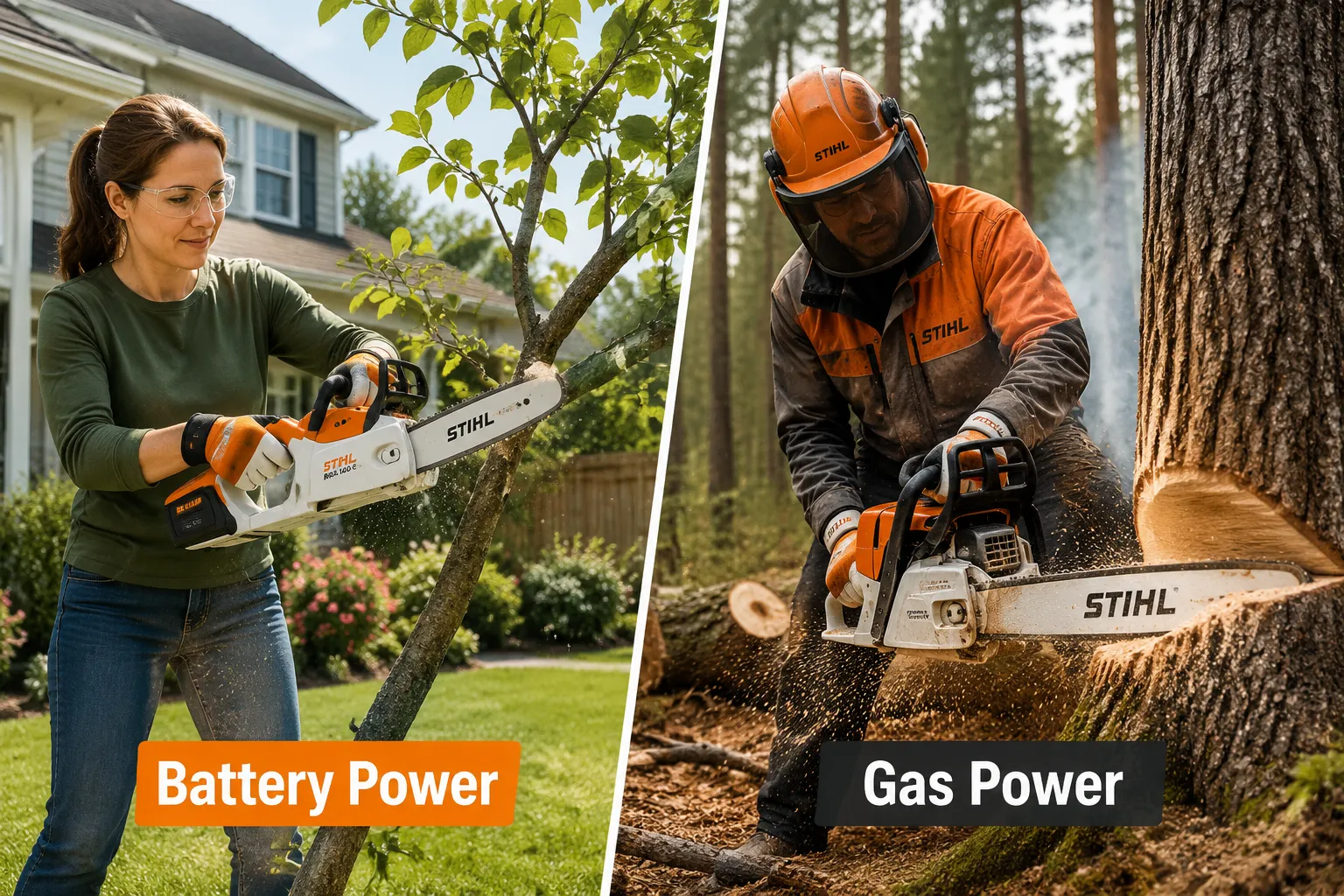
Stihl offers chainsaws across three primary power platforms, each with distinct advantages and disadvantages. Your choice of power source will significantly impact the saw’s performance, portability, and maintenance requirements.
Gasoline-Powered Chainsaws
These are the traditional workhorses, known for their raw power and unrestricted mobility.
Pros:
- Maximum Power: Best for felling large trees, processing dense hardwoods, and extended use.
- Unlimited Mobility: No cords or battery life concerns; ideal for remote locations.
- Wide Range of Sizes: Available from compact models for homeowners to professional-grade forestry saws.
Cons:
- Noise and Emissions: Louder and produce exhaust fumes.
- Maintenance: Require fuel mixing, spark plug changes, air filter cleaning, and more regular servicing.
- Weight: Generally heavier than electric or battery models.
- Starting: Can sometimes be harder to start, especially in cold weather.
Ideal User: Professional loggers, arborists, serious firewood processors, and property owners with large, remote areas to maintain.
Key Stihl Series: MS (e.g., MS 170, MS 250, MS 462 R C-M). The MS series represents the backbone of Stihl’s gasoline line, offering models tailored from occasional use to heavy-duty professional tasks.
Electric (Corded) Chainsaws
Electric corded chainsaws are a good option for those working close to a power outlet.
Pros:
- Instant Start: Simply plug in and go.
- Low Noise and Emissions: Much quieter and produce no exhaust.
- Low Maintenance: No fuel or engine issues; simply keep the chain sharp and oiled.
- Lighter Weight: Easier to handle for prolonged periods.
Cons:
- Limited Mobility: Restricted by the length of the extension cord.
- Power Limitations: Generally less powerful than gas saws, better suited for lighter tasks.
- Cord Hazard: The extension cord can be a tripping hazard or accidentally cut.
Ideal User: Homeowners for light yard work, pruning, or cutting small firewood in areas with easy access to power.
Key Stihl Series: MSE (e.g., MSE 141, MSE 210 C-BQ).
Battery-Powered Chainsaws
The fastest-growing segment, battery chainsaws offer a blend of convenience and power.
Pros:
- Cordless Freedom: Excellent mobility without the noise and emissions of gas saws.
- Low Noise and Emissions: Similar to corded electric, but with added portability.
- Low Maintenance: Minimal upkeep, no fuel mixing.
- Easy Start: Push-button starting.
- Increasing Power: Modern battery technology allows for impressive power output, even for felling small trees.
Cons:
- Run Time/Battery Life: Limited by battery charge; extra batteries are often needed for extended work.
- Initial Cost: Often higher upfront cost for batteries and charger.
- Weight (with Battery): Can be heavier than corded electric, but often lighter than comparable gas saws.
Ideal User: Homeowners, property managers, and even professionals needing quiet, portable tools for limbing, pruning, and light to medium-duty felling, especially in noise-sensitive areas.
Key Stihl Series: MSA (e.g., MSA 120 C-BQ, MSA 220 C-B). Stihl’s AK and AP battery systems provide scalable power for various needs.
Essential Features and Specifications: Making an Informed Choice in This Stihl Chainsaw Buyer’s Guide: Choosing the Right Model for Woodworking and Property Management
Once you’ve decided on the power source, it’s time to delve into the specific features and specifications that differentiate Stihl models and impact their performance for tasks like preparing wood for crafting acoustic wood panels or general property maintenance.
Bar Length
The guide bar length dictates the maximum diameter of wood a chainsaw can cut in a single pass.
- 10-14 inches: Best for light pruning, limbing, and small firewood. Ideal for electric and smaller battery/gas saws.
- 16-18 inches: Versatile for most homeowner tasks, including cutting firewood and felling small to medium trees. This is a common choice for a general-purpose saw.
- 20-24 inches: For felling larger trees, bucking substantial logs, and professional property maintenance.
- 25+ inches: Professional use for very large trees, milling, and heavy-duty forestry work.
Rule of Thumb: Your bar length should be at least 2 inches longer than the diameter of the wood you typically cut.
Engine Displacement (cc) / Motor Voltage (V)
- Gasoline Saws: Measured in cubic centimeters (cc). Higher cc generally means more power.
- 30-40 cc: Light-duty homeowner saws.
- 40-60 cc: Mid-range homeowner and farm/ranch saws, good for firewood and medium trees.
- 60+ cc: Professional-grade saws for heavy-duty work.
- Electric/Battery Saws: Power is often indicated by voltage (e.g., 36V, 60V) or wattage. Higher voltage typically translates to more power and longer run times.
Weight
Chainsaw weight affects maneuverability, fatigue, and safety. Lighter saws are easier to handle for extended periods, especially overhead. Heavier saws typically indicate more powerful engines and longer bars, suitable for ground-level, heavy cutting.
Safety Features
Stihl is renowned for its commitment to safety. Look for these critical features:
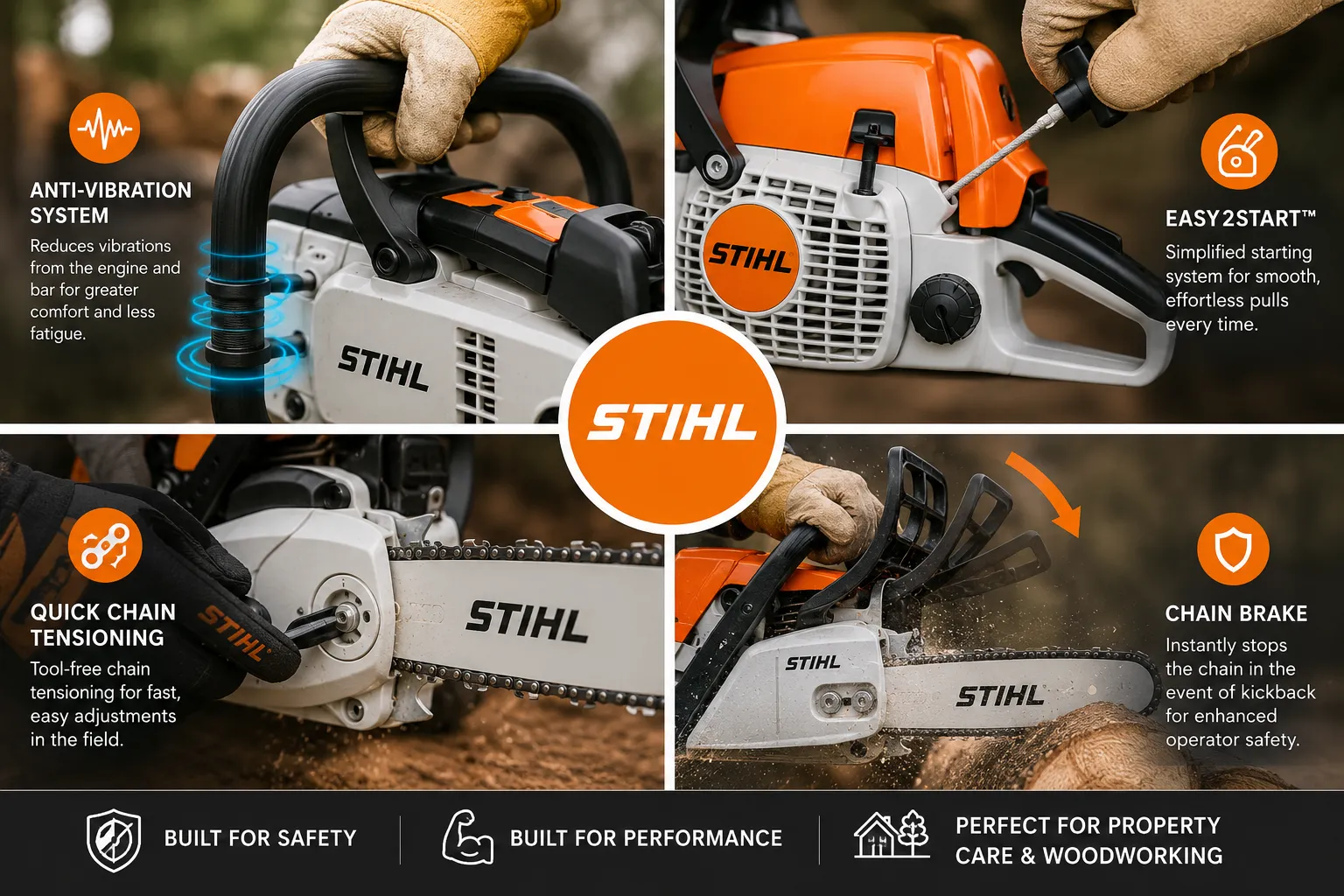
- Chain Brake: Stops the chain almost instantly in the event of kickback. This is arguably the most important safety feature.
- Anti-Vibration System: Reduces vibrations transmitted to the operator, lessening fatigue and the risk of “white finger” syndrome, making tasks like processing wood for a DIY motorized camera slider more comfortable.
- Master Control Lever: Combines choke, start, run, and stop functions into one easy-to-use lever.
- Quick Chain Adjuster: Allows for tool-less chain tensioning, improving safety and convenience.
- Captured Bar Nuts: Prevents loss of bar nuts when changing the bar or chain.
Ergonomics and User Comfort
- Handle Design: Comfortable, anti-slip handles are crucial.
- Balance: A well-balanced saw is easier to control and less fatiguing.
- Easy2Start System (Stihl specific): Reduces the effort required to start gasoline saws.
Stihl Chainsaw Models for Specific Needs in 2026
With a clear understanding of your requirements and the available features, let’s explore some popular Stihl models and series that align with common woodworking and property management needs for the current year, 2026.
For Light-Duty Homeowner Use (Pruning, Small Firewood)
- Stihl MS 170 / MS 171 (Gasoline): An entry-level, lightweight, and compact gas chainsaw. Excellent for occasional pruning, limbing small branches, and cutting firewood up to 12 inches. Known for its reliability and ease of use.
- Stihl MSA 120 C-BQ / MSA 140 C-BQ (Battery): Part of Stihl’s AK System. These saws are incredibly lightweight, quiet, and feature tool-less chain tensioning (Quick Chain Adjuster) and a powerful 36V battery. Perfect for suburban homeowners who value convenience and low noise.
For Mid-Range Homeowner / Farm & Ranch Use (Firewood, Medium Trees)
- Stihl MS 250 (Gasoline): A popular choice, often called the “farm and ranch” saw. It offers a good balance of power (45.4 cc) and weight, making it suitable for felling small to medium trees (up to 16-18 inches bar) and extensive firewood cutting.
- Stihl MS 271 Farm Boss (Gasoline): A step up in power and durability from the MS 250 (50.2 cc). Designed for more demanding tasks, including felling larger trees and heavy-duty firewood processing. It’s a robust workhorse for serious homeowners or small property owners.
- Stihl MSA 220 C-B (Battery): A high-performance battery chainsaw that rivals many mid-range gas saws. With Stihl’s AP System 36V battery, it’s capable of tackling significant firewood jobs and felling small trees while maintaining low noise and zero emissions. Ideal for those seeking gas-like power without the maintenance.
For Heavy-Duty Woodworking / Property Management (Large Trees, Milling)
- Stihl MS 362 R C-M (Gasoline): A professional-grade saw (59.0 cc) with Stihl’s M-Tronic engine management system, which automatically adjusts fuel delivery for optimal performance. Excellent for felling larger trees, bucking big logs, and demanding property cleanup. Its power-to-weight ratio is impressive.
- Stihl MS 462 R C-M (Gasoline): A true professional saw (72.2 cc), often considered one of the best for felling and bucking large timber. Extremely powerful, yet surprisingly light for its class. Equipped with M-Tronic for consistent performance, it’s the choice for arborists, loggers, and those doing serious log milling or clearing vast tracts of land. For serious woodworkers, breaking down large logs is essential, and a saw like this, along with guidance on restoring vintage woodworking hand tools, ensures all tools are ready for the task.
- Stihl MS 881 (Gasoline): Stihl’s largest and most powerful chainsaw (121.6 cc). This is a specialized tool for felling the largest trees, heavy-duty milling, and professional forestry applications. It requires significant experience and strength to operate.
Choosing the right model involves balancing power, weight, bar length, and budget with your specific tasks. Consider visiting a Stihl dealer to handle different models and get personalized advice.
Accessories, Safety Gear, and Maintenance
Your Stihl chainsaw is just one component of a safe and efficient operation. Proper accessories, safety gear, and routine maintenance are equally critical.
Personal Protective Equipment (PPE)
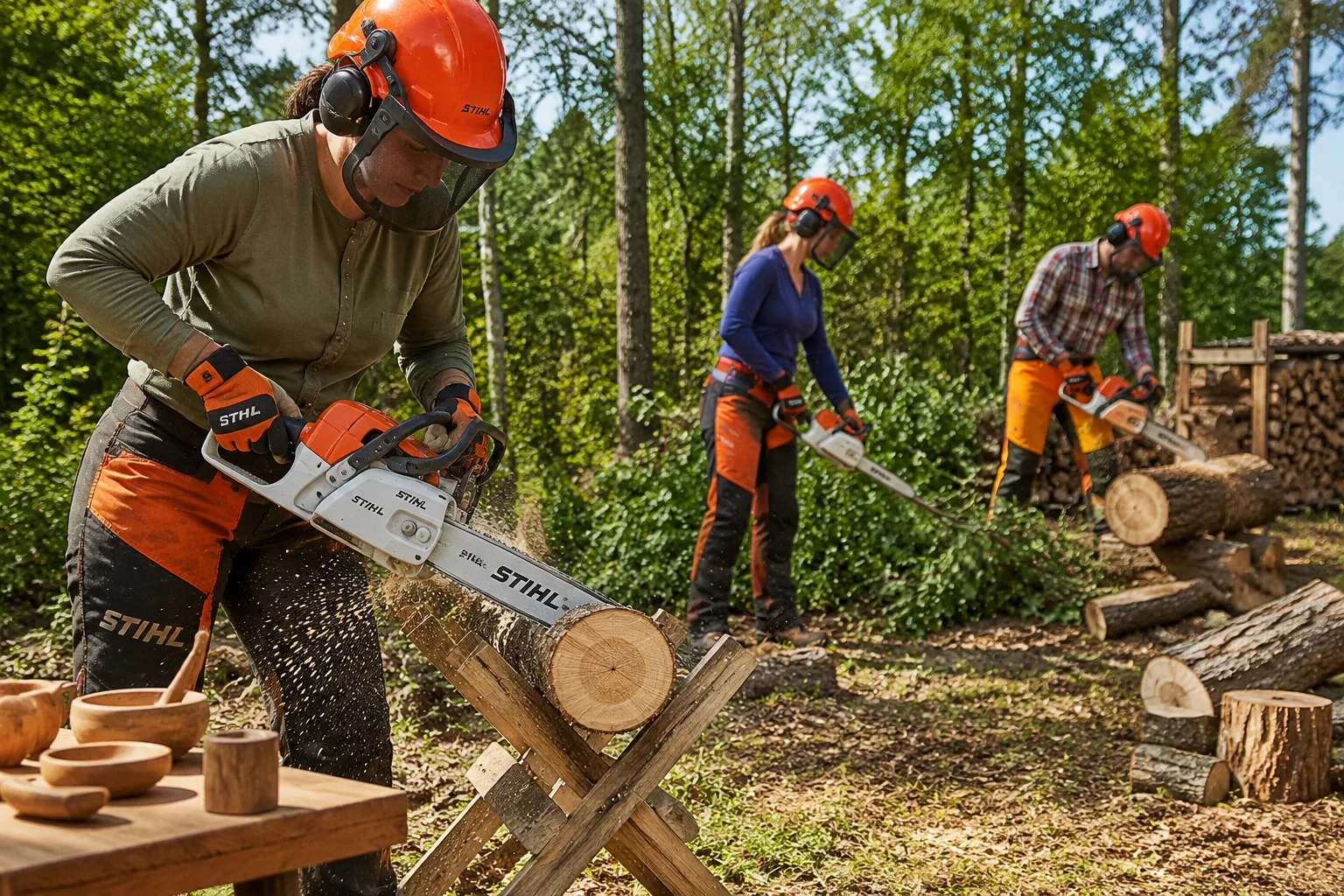
Never operate a chainsaw without appropriate PPE. This is non-negotiable for your safety.
- Helmet System: Includes a hard hat, face shield, and hearing protection.
- Chainsaw Protective Pants/Chaps: Made with special material designed to stop a chain in case of accidental contact.
- Work Gloves: Provide grip and protection.
- Steel-Toe Boots: Protect your feet from falling objects and saw contact.
Essential Accessories
- Fuel Can/Battery & Charger: For gasoline saws, a proper mixed-fuel can. For battery saws, ensure you have enough batteries and a reliable charger.
- Bar and Chain Oil: Chainsaws consume oil to lubricate the chain and bar. Always use Stihl’s recommended bar and chain oil.
- Extra Chains: Chains wear out and get dull. Having spare, sharp chains on hand minimizes downtime.
- Sharpening Kit: Maintaining a sharp chain is paramount for efficiency and safety. A proper hand tool sharpening kit is essential.
- Wedge: Used for felling larger trees to guide their fall.
- First-Aid Kit: Always have one readily accessible when working with chainsaws.
Maintenance Tips
Regular maintenance extends the life of your chainsaw and ensures safe operation.
- Chain Sharpening: A dull chain is dangerous and inefficient. Sharpen frequently or replace.
- Chain Tension: Keep the chain properly tensioned, not too tight, not too loose.
- Bar Maintenance: Clean the guide bar groove and check for burrs. Flip the bar regularly to ensure even wear.
- Air Filter: Clean or replace the air filter on gas saws to ensure proper engine breathing.
- Spark Plug: Check and replace the spark plug on gas saws periodically.
- Cleanliness: Keep the chainsaw clean, especially the cooling fins and air intake.
- Storage: Store your chainsaw properly, especially during off-season. Drain fuel from gas saws if storing for extended periods.
For those serious about sustainable wood finishing and long-term project planning, proper tool maintenance is an extension of that sustainable philosophy.
Conclusion
Choosing the right Stihl chainsaw for woodworking and property management in 2026 is an investment in efficiency, safety, and long-term performance. By carefully assessing your specific needs, understanding the differences between gasoline, electric, and battery power, and prioritizing essential features like bar length and safety mechanisms, you can confidently select a model that will serve you reliably for years to come. Remember to always prioritize safety by wearing appropriate PPE and adhering to maintenance schedules. With the right Stihl chainsaw in hand, you’ll be well-equipped to tackle any task, from felling timber to meticulously preparing wood for your next craft. Visit your local authorized Stihl dealer to experience these tools firsthand and receive expert advice tailored to your unique requirements.
SEO Meta Title: Stihl Chainsaw Buyer’s Guide: Choosing the Right Model for 2026 SEO Meta Description: Explore our Stihl Chainsaw Buyer’s Guide for 2026. Choose the perfect model for woodworking, property management, and more. Compare gas, battery, and electric options.