
The notion that serious woodworking demands a sprawling workshop and industrial-grade machinery is a common misconception. In reality, a vast number of stunning projects, from custom cabinetry to bespoke furniture, begin in compact spaces with carefully selected tools. For anyone with limited square footage but big ambitions, the humble table saw stands as the undisputed king of the workshop, offering unparalleled precision for ripping, crosscutting, and joinery. This article is dedicated to [Choosing the Best Table Saw for Your Small Workshop: Features, Brands, and Safety Essentials] in 2026, ensuring your investment empowers rather than overwhelms your creative space.
Key Takeaways
- Size and Portability are Paramount: Prioritize jobsite or compact benchtop table saws for small workshops, ensuring they fit both your workspace and storage constraints.
- Essential Features Matter: Look for a reliable motor, a robust fence system, adequate rip capacity, and good dust collection for efficient and accurate work.
- Top Brands Offer Quality: DeWalt, Bosch, SawStop, and Skil are leading brands offering excellent table saws suitable for small workshops, each with distinct advantages.
- Safety is Non-Negotiable: Always use blade guards, push sticks, and hearing/eye protection. Consider advanced safety features like SawStop’s flesh-sensing technology.
- Optimize Your Workspace: Plan your workshop layout to accommodate your table saw, allowing for material handling and efficient workflow, even in confined areas.
Understanding Table Saw Types for Small Workshops
When [Choosing the Best Table Saw for Your Small Workshop: Features, Brands, and Safety Essentials], the first step is to understand the different types available and how they fit into a confined space. Not all table saws are created equal, especially when space is a premium.
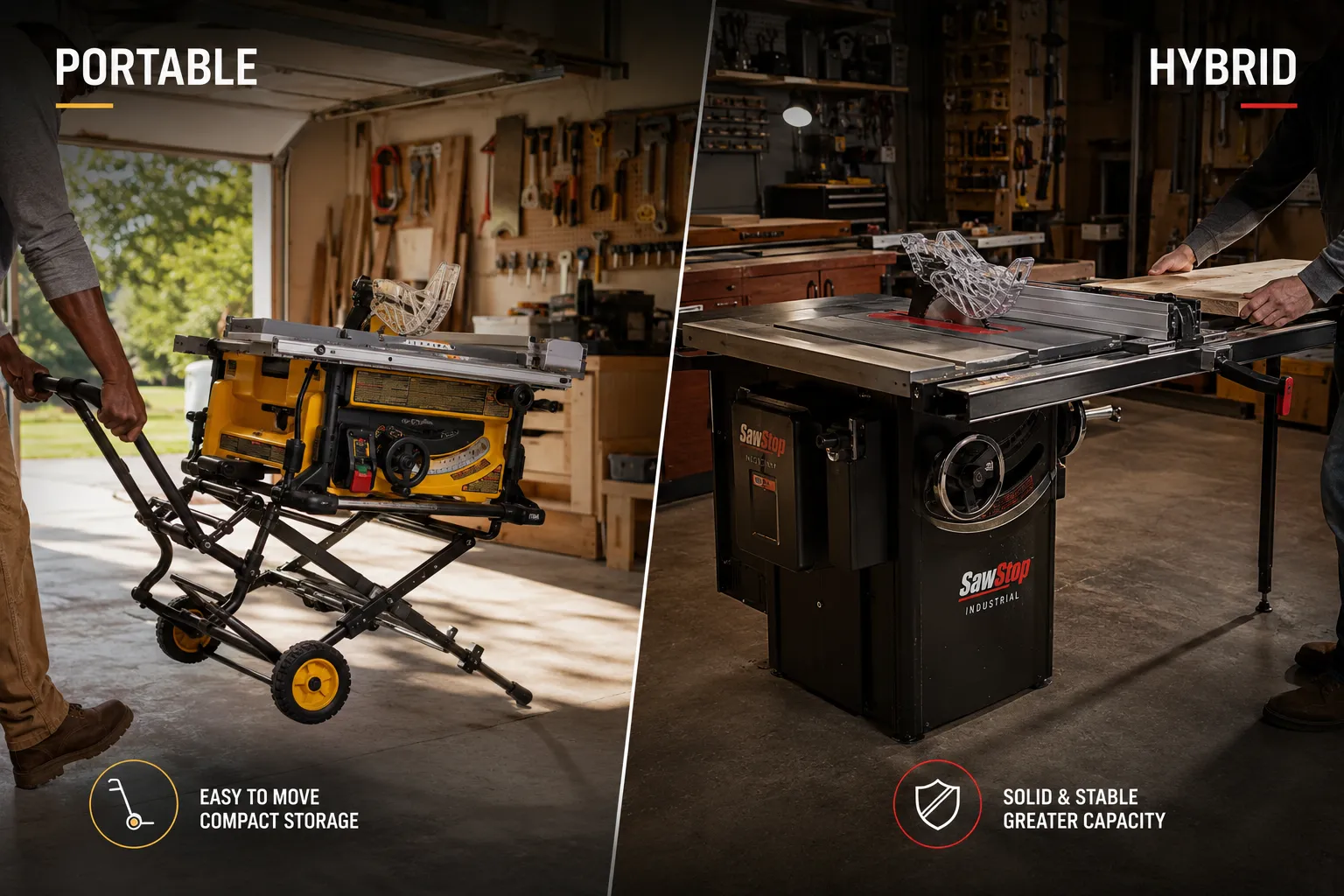
Here are the primary types suitable for small workshops:
- Benchtop Table Saws: These are the smallest and most portable option. They are designed to sit on a workbench or a dedicated stand. They are ideal for hobbyists, DIYers, and those with extremely limited space. While lightweight and easy to store, they often have smaller motors, less robust fences, and limited rip capacity compared to larger models. However, for cutting sheet goods and smaller lumber pieces, they can be highly effective.
- Jobsite Table Saws: A step up from benchtop models, jobsite saws are designed for portability and durability. They typically feature powerful motors, larger tables, and more stable stands (often collapsible with wheels). These saws strike an excellent balance between portability and performance, making them a popular choice for small workshops where they can be rolled out for use and then stored away. They offer better rip capacity and more accurate fences than most benchtop models.
- Compact Cabinet Saws/Hybrid Saws: While often larger, some manufacturers offer “compact” or “hybrid” versions of cabinet saws that might fit into a moderately sized small workshop. These saws offer superior power, precision, and dust collection, along with robust cast-iron tables. They are less portable but provide a significant upgrade in performance for serious woodworkers. If you have a dedicated, albeit small, space and prioritize precision above all else, a compact hybrid saw might be worth considering.
The key is to match the saw type to your available space, the type of projects you undertake, and your budget. For many small workshop owners, a jobsite table saw offers the sweet spot.
Essential Features to Prioritize for Small Workshop Table Saws
Once you’ve narrowed down the type of table saw, it’s crucial to examine the specific features that will make your work efficient, accurate, and safe. These features are critical when you’re [Choosing the Best Table Saw for Your Small Workshop: Features, Brands, and Safety Essentials].
Motor Power and Blade Size
For a small workshop, a 10-inch blade is standard and perfectly adequate for most tasks. Motor power is expressed in horsepower (HP) or amperage (amps).
- Benchtop saws: Often have universal motors with 15 amps, providing sufficient power for most everyday cuts.
- Jobsite saws: Typically feature 15-amp universal motors, which can handle ripping 2x material and sheet goods effectively.
- Hybrid saws: May have 1.5 to 2 HP induction motors, offering smoother operation and the ability to cut thicker hardwoods with ease.
Consider the types of wood and thickness you’ll be cutting. If you primarily work with plywood and softwoods, a 15-amp universal motor is usually sufficient. For dense hardwoods, more horsepower is beneficial.
Fence System and Rip Capacity
The fence system is arguably the most critical component for accuracy on a table saw.
- Quality Fence: Look for a fence that is rigid, locks securely at both ends, and remains parallel to the blade throughout its travel. Cheap fences can flex or misalign, leading to inaccurate cuts and potential kickback.
- Rip Capacity: This refers to the maximum width of material you can cut between the blade and the fence. For small workshops, a rip capacity of 24 to 30 inches is generally adequate for breaking down most sheet goods (like a 4×8 sheet of plywood cut in half). Some jobsite saws offer extendable outfeed tables or fence rails to increase rip capacity when needed. For tips on maximizing space around your saw, check out our guide on Small Workshop Setup for Table Saw Projects: Using Saw Bench Tables.
Dust Collection
Wood dust is a significant health hazard and a nuisance. Good dust collection is essential.
- Dust Port Size: Most benchtop and jobsite saws have 2-1/2 inch dust ports, suitable for connection to a shop vacuum.
- Hybrid saws: Often feature 4-inch dust ports, designed for more powerful dedicated dust collectors.
- Under-Table Shrouding: Look for saws with effective shrouding around the blade to direct dust efficiently to the port. Integrating a Building A Portable Dust Collection System For Small Workshops Diy Solutions For Clean Air And Safety is a smart move for any small workshop.
Portability and Storage
For a small workshop, the ability to move and store your saw easily is key.
- Weight and Footprint: Evaluate the saw’s weight and dimensions. Can you lift it onto a shelf? Will it fit in a corner when not in use?
- Wheeled Stands: Jobsite saws with integrated, collapsible wheeled stands are highly convenient. These allow you to set up the saw quickly and roll it away just as fast.
- Storage Solutions: Consider how the saw’s accessories (fence, miter gauge, push sticks) store on the unit itself. Good on-board storage prevents lost parts.
Top Brands and Models for Small Workshop Table Saws in 2026
The market for table saws is competitive, with several reputable brands offering excellent options for small workshops. When considering [Choosing the Best Table Saw for Your Small Workshop: Features, Brands, and Safety Essentials], these brands consistently deliver quality and innovation.
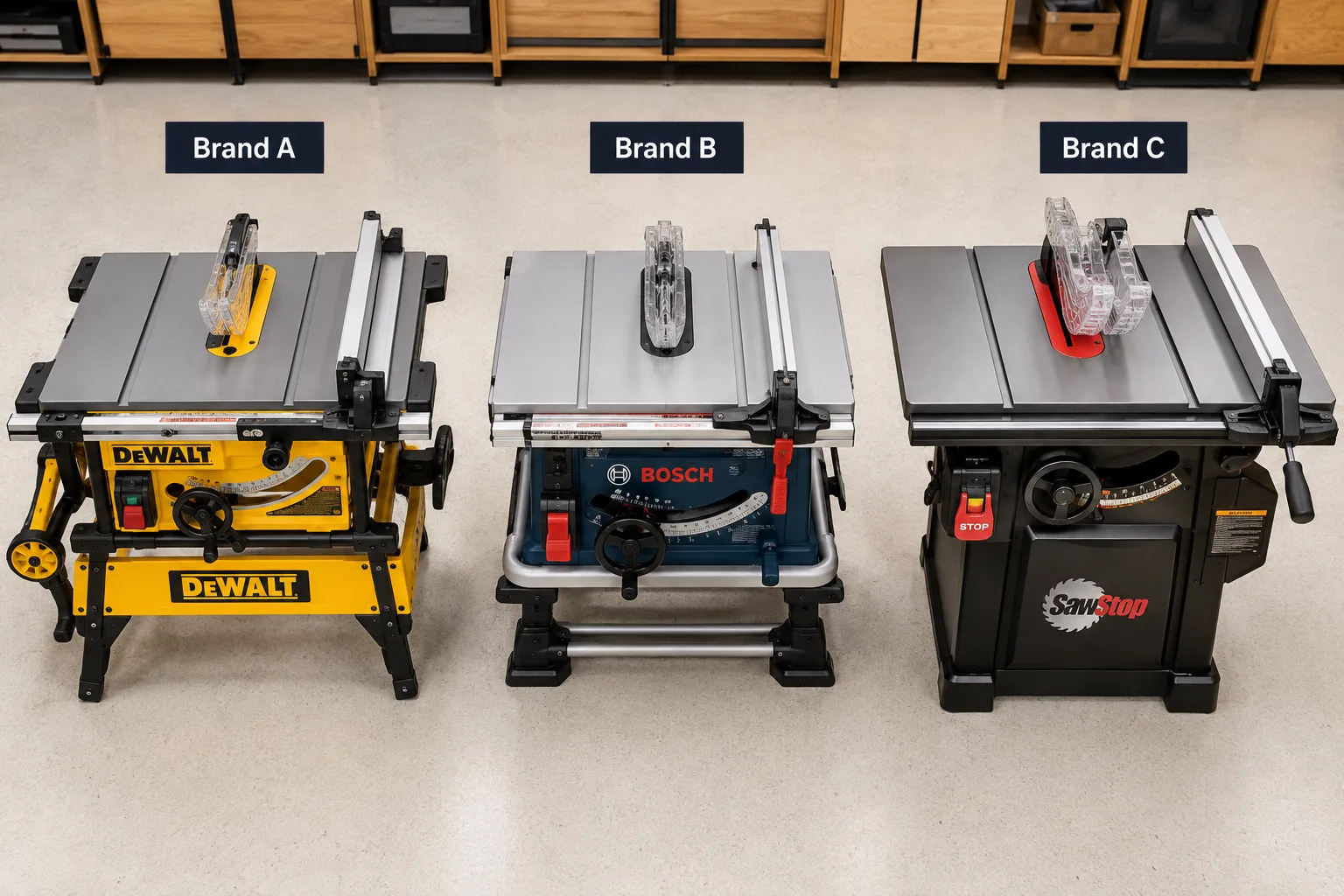
Here are some of the leading contenders:
DeWalt
DeWalt is a powerhouse in power tools, and their jobsite table saws are incredibly popular for a reason. They combine robust performance with excellent portability.
- Popular Models: The DeWalt DWE7485 and DWE7491RS are prime examples. The DWE7485 is a compact 8-1/4 inch saw perfect for tight spaces, offering excellent power and rip capacity for its size. The DWE7491RS features a larger 10-inch blade, a rolling stand, and an impressive 32.5-inch rip capacity, making it a favorite for those who need more capability without sacrificing portability.
- Key Strengths: DeWalt saws are known for their powerful motors, rack-and-pinion fence systems (which are exceptionally accurate and easy to adjust), and durable construction.
Bosch
Bosch offers high-quality jobsite table saws known for their precision and innovative features.
- Popular Models: The Bosch GTS1031 and the 4100-10 (with Gravity-Rise Stand) are excellent choices. The GTS1031 is ultra-compact and rugged, designed for quick setup and transport. The 4100-10 provides a larger table, a powerful motor, and the Gravity-Rise wheeled stand, which is one of the easiest and most stable stands on the market.
- Key Strengths: Bosch saws often feature Soft-Start technology, constant response circuitry for consistent power under load, and robust cast aluminum tops.
SawStop
While often pricier, SawStop is unparalleled in safety innovation. Their saws feature a revolutionary flesh-sensing technology that stops the blade almost instantly upon contact with skin.
- Popular Models: For small workshops, the SawStop Jobsite Saw PRO is the most relevant option. It combines the brand’s legendary safety with the portability and features of a high-end jobsite saw.
- Key Strengths: The unmatched safety system is the primary draw. Beyond that, SawStop saws are also incredibly well-built, precise, and durable, offering excellent overall performance. The investment is often justified by the peace of mind it provides.
Skil
Skil offers budget-friendly options that still provide good performance for many hobbyists and DIYers.
- Popular Models: The Skil SPT99-11 and the Skil 3400 (if still available, though often an older model, a testament to its reliability) are solid choices. The SPT99-11 is a worm-drive table saw, providing exceptional power and torque, making it a great option for cutting tough materials. You can find more details on models like the Skil 3400 Table Saw Features Setup Operation And Troubleshooting.
- Key Strengths: Skil saws often represent excellent value, providing strong motors and decent rip capacity for their price point. Their worm-drive models offer unique advantages in power delivery.
When choosing, consider reviews, specific features, and how each model aligns with your project needs and budget. For instance, if you are considering other brands or specific models, a look into “Harvey Table Saw Reviews” or “TS2412 Ridgid Table Saw” might offer more perspective.
Safety Essentials for Operating a Table Saw in a Small Workshop
No discussion about [Choosing the Best Table Saw for Your Small Workshop: Features, Brands, and Safety Essentials] is complete without a deep dive into safety. A table saw is one of the most dangerous tools in any shop, and safety protocols become even more critical in a confined space where quick movements or awkward stances can lead to accidents.
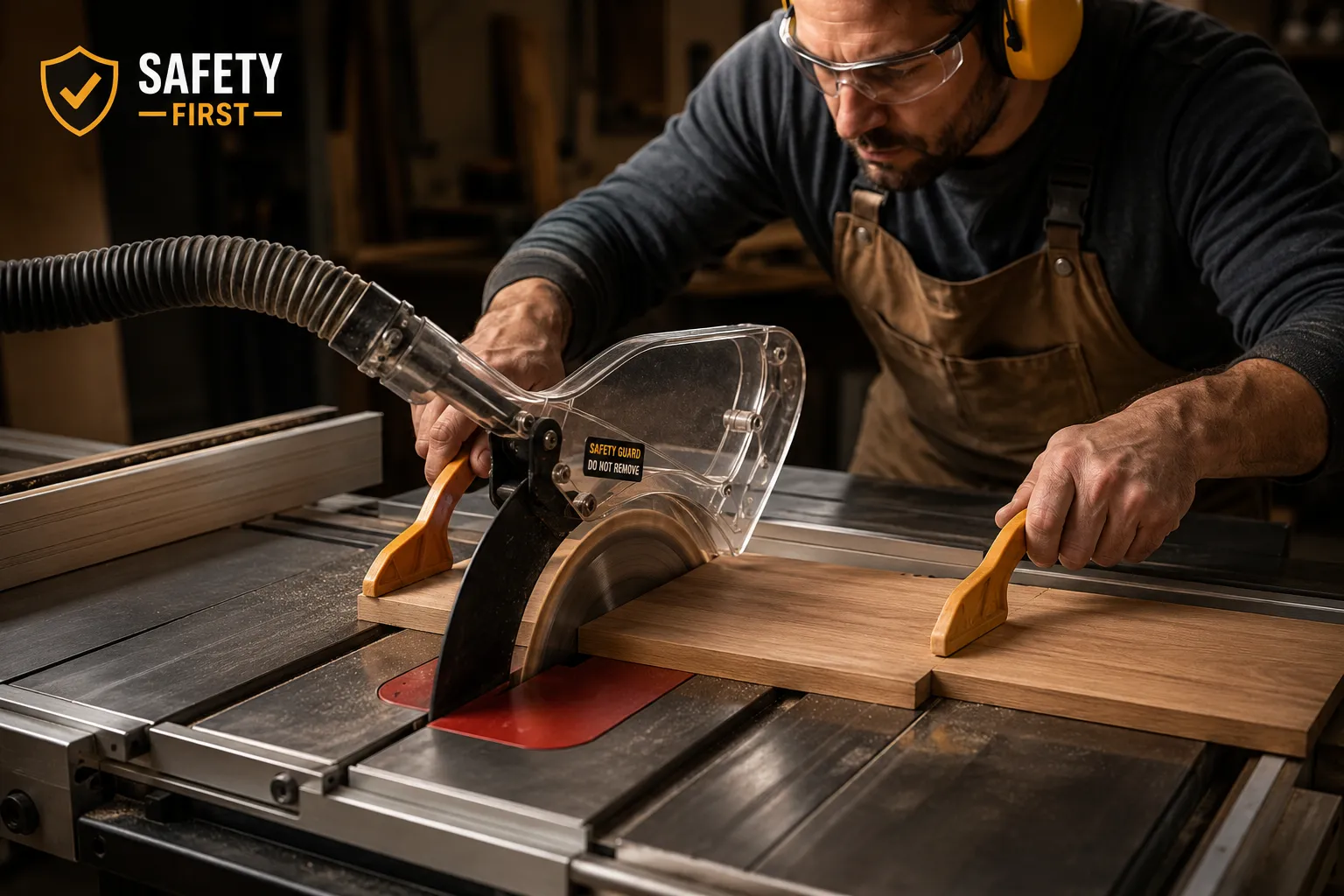
Always Use Personal Protective Equipment (PPE)
- Eye Protection: Always wear safety glasses or a face shield. Wood chips and dust can fly at high speeds.
- Hearing Protection: Table saws are loud. Earplugs or earmuffs are essential to prevent long-term hearing damage.
- Dust Mask/Respirator: Fine wood dust is a carcinogen and respiratory irritant. A dust mask or respirator is crucial, especially when working with woods like oak, walnut, or exotic species.
- Appropriate Clothing: Avoid loose-fitting clothing, jewelry, or long hair that could get caught in the spinning blade.
Understand and Utilize Safety Features
Most modern table saws come equipped with several safety features that must always be used:
- Blade Guard: This clear plastic shield covers the top of the blade, preventing hands from accidentally touching it and minimizing kickback. Never remove it unless absolutely necessary for a specific cut (e.g., dados), and reinstall it immediately afterward.
- Riving Knife/Splitter: Located directly behind the blade, the riving knife moves with the blade and prevents the kerf from closing and pinching the blade, which is a primary cause of kickback. Always ensure it is properly aligned.
- Anti-Kickback Pawls: These toothed devices grab the wood if it tries to kick back, holding it against the table.
- Push Stick/Push Block: Never use your bare hands to push small pieces of wood through the blade, especially near the end of a cut. Always use a push stick or push block to maintain control and keep your hands away from the blade. For a small workshop, having multiple types of push sticks (long, narrow, push blocks) can be highly beneficial.
Proper Techniques and Workshop Layout
Even with safety features, improper technique or a cluttered workspace can lead to accidents.
- Maintain a Clear Workspace: Ensure the area around your table saw is free of clutter. This is especially important in a small workshop where space is already limited. Keep the floor clear to prevent tripping.
- Adequate Support: Always support your workpiece fully before, during, and after the cut. For long boards or large sheet goods, use an outfeed table, roller stands, or a dedicated wooden work table.
- Body Positioning: Stand to the side of the blade, not directly behind it, to avoid being in the path of potential kickback. Maintain a stable stance.
- Never Reach Over the Blade: If a piece gets stuck or you need to clear off-cuts, turn off the saw and wait for the blade to stop completely before reaching near it.
- Crosscutting vs. Ripping: Use your miter gauge for crosscuts and the fence for rips. Never use both the fence and the miter gauge simultaneously unless using a sled specifically designed for this purpose, as it creates a high risk of binding and kickback. For building other workshop essentials, you might consider our guide on Building Your First Router Table Essential Features And Diy Construction For Precision Routing.
- Electrical Safety: Ensure your saw is plugged into a properly grounded outlet. Do not overload circuits, especially in older workshops.
By adhering to these safety essentials, you can minimize risks and enjoy precise, efficient woodworking in your small workshop.
Conclusion
[Choosing the Best Table Saw for Your Small Workshop: Features, Brands, and Safety Essentials] in 2026 is a critical decision that impacts your project quality, efficiency, and safety. While limited space presents challenges, it doesn’t mean compromising on capabilities. By focusing on compact types like benchtop or jobsite saws, prioritizing essential features such as a reliable motor, accurate fence, and good dust collection, and selecting a reputable brand, you can find a table saw that perfectly suits your needs.
Above all, never overlook safety. Always wear appropriate PPE, utilize your saw’s safety mechanisms, and practice safe operating techniques. A well-chosen table saw, coupled with a disciplined approach to safety, will transform your small workshop into a highly productive and enjoyable woodworking haven, allowing you to create precision pieces for years to come.
Meta Title: Best Table Saw for Small Workshop: Features & Safety (2026) Meta Description: Choosing the best table saw for your small workshop in 2026. Explore essential features, top brands, and critical safety tips for precise woodworking.
table saw, small workshop, jobsite table saw, benchtop table saw, table saw features, woodworking safety, DeWalt table saw, Bosch table saw, SawStop, Skil table saw, dust collection, rip capacity, workshop layout