
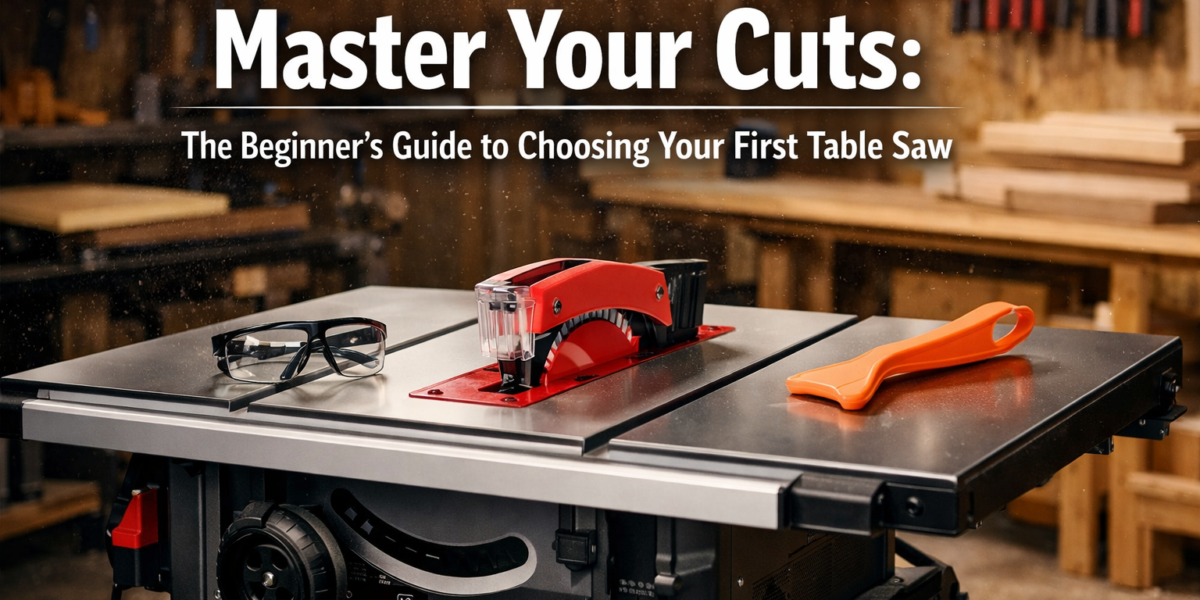
Fewer than one in a thousand new woodworkers truly understand the critical differences between table saw types before their first purchase, often leading to frustration or, worse, safety hazards. For anyone embarking on their woodworking journey, selecting the right foundational tools is paramount. This article, The Beginner’s Guide to Choosing Your First Table Saw: Features, Safety, and Essential Accessories, aims to demystify this process, ensuring your entry into woodworking is both productive and safe in 2026.
Key Takeaways
- Understand Table Saw Types: Differentiate between jobsite, contractor, hybrid, and cabinet saws to match your needs and budget.
- Prioritize Safety Features: Always look for a blade guard, riving knife/splitter, and anti-kickback pawls.
- Essential Accessories are Non-Negotiable: Invest in push sticks, featherboards, and a quality crosscut sled for accuracy and safety.
- Consider Workspace and Power: Evaluate your available space and electrical supply before making a decision.
- Dust Collection is Crucial: Plan for effective dust management to maintain a clean and healthy workshop environment.
Understanding Table Saw Types: The Beginner’s Guide to Choosing Your First Table Saw
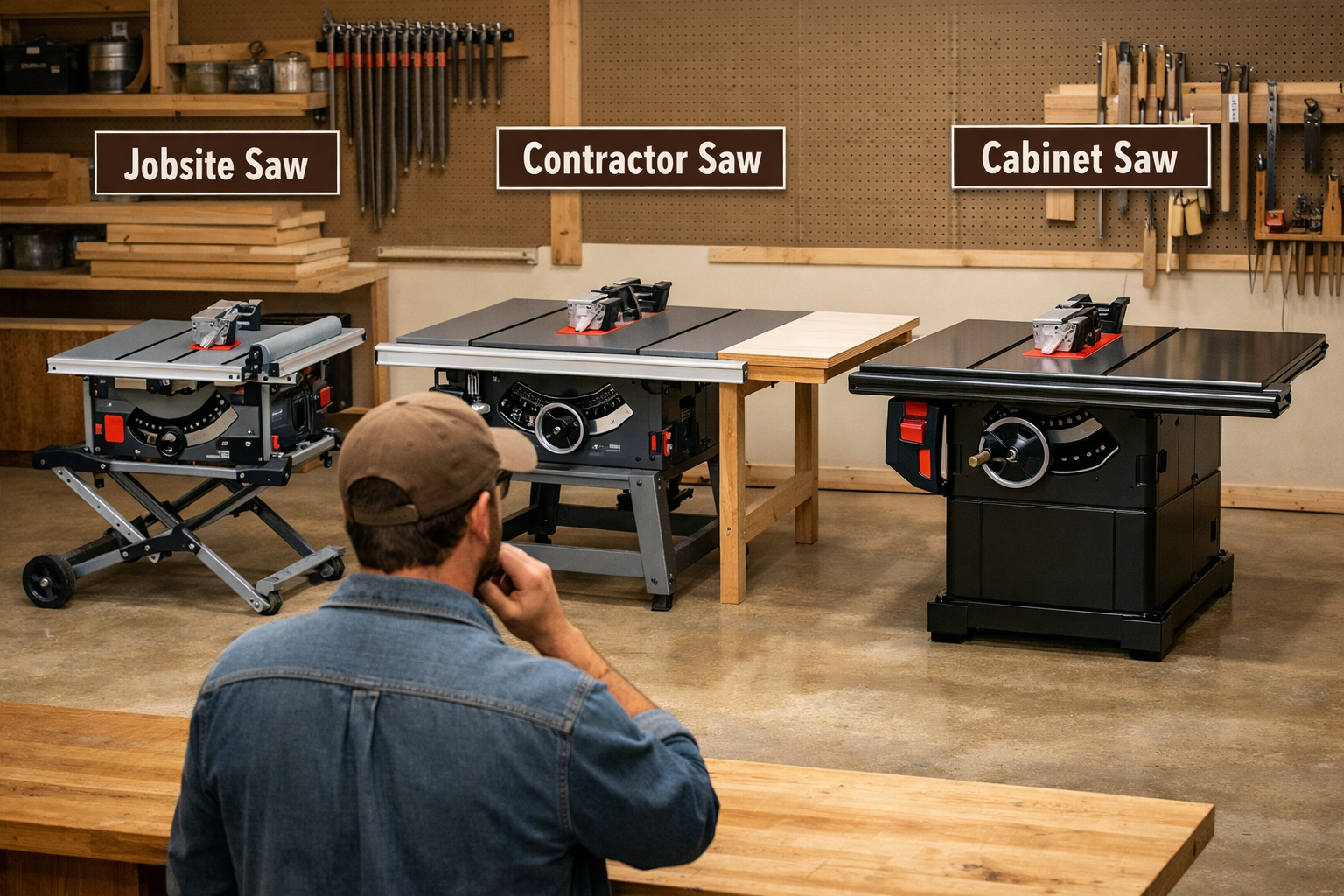
The journey of selecting your first table saw begins with understanding the different types available. Each type caters to distinct needs, budgets, and workshop environments. Making an informed choice ensures your saw aligns with your woodworking aspirations.
Jobsite Table Saws
Jobsite saws are typically compact, portable, and designed for easy transport between work locations. They often come with a folding stand and are powered by universal motors, making them suitable for construction sites or small, occasional workshop tasks.
- Pros: Highly portable, relatively inexpensive, good for rough cuts.
- Cons: Less precise than larger saws, smaller rip capacity, often louder.
- Best For: DIY enthusiasts with limited space, contractors needing portability, those on a strict budget.
Contractor Table Saws
Stepping up from jobsite saws, contractor saws offer a more robust experience. They usually feature open-stand designs, larger cast-iron tables, and belt-drive induction motors. While heavier than jobsite saws, they can still be moved with relative ease.
- Pros: More powerful and quieter than jobsite saws, better precision, larger rip capacity.
- Cons: Heavier and less portable, may require a dedicated 240V circuit for some models.
- Best For: Serious hobbyists, small workshops with some space, those needing more power and precision for regular use.
Hybrid Table Saws
Hybrid saws bridge the gap between contractor and cabinet saws. They often combine the enclosed base cabinet of a cabinet saw with the lighter weight and motor configuration (sometimes belt-drive, sometimes direct-drive) of a contractor saw. They usually offer better dust collection than contractor saws.
- Pros: Good balance of power, precision, and cost; improved dust collection; often enclosed base for stability.
- Cons: More expensive than contractor saws, still not as heavy-duty as cabinet saws.
- Best For: Dedicated hobbyists, aspiring professional woodworkers, those seeking a balance of features without the full expense of a cabinet saw.
Cabinet Table Saws
Cabinet saws represent the pinnacle of table saw design for most small workshops. They feature heavy cast-iron tops, powerful enclosed induction motors (often 3-5 HP), and exceptional dust collection. Their weight and sturdy construction lead to minimal vibration and superior precision.
- Pros: Unmatched power and precision, excellent dust collection, built for continuous heavy-duty use, quiet operation.
- Cons: Most expensive, largest footprint, often require 240V power.
- Best For: Professional woodworkers, serious enthusiasts who demand the best in terms of power, precision, and longevity.

Before making your final selection, consider the power requirements of your chosen saw and ensure your workshop’s electrical system can support it. Some larger contractor, hybrid, and most cabinet saws will demand a 240V circuit, which may require an electrician to install.
Crucial Safety Features: The Beginner’s Guide to Choosing Your First Table Saw
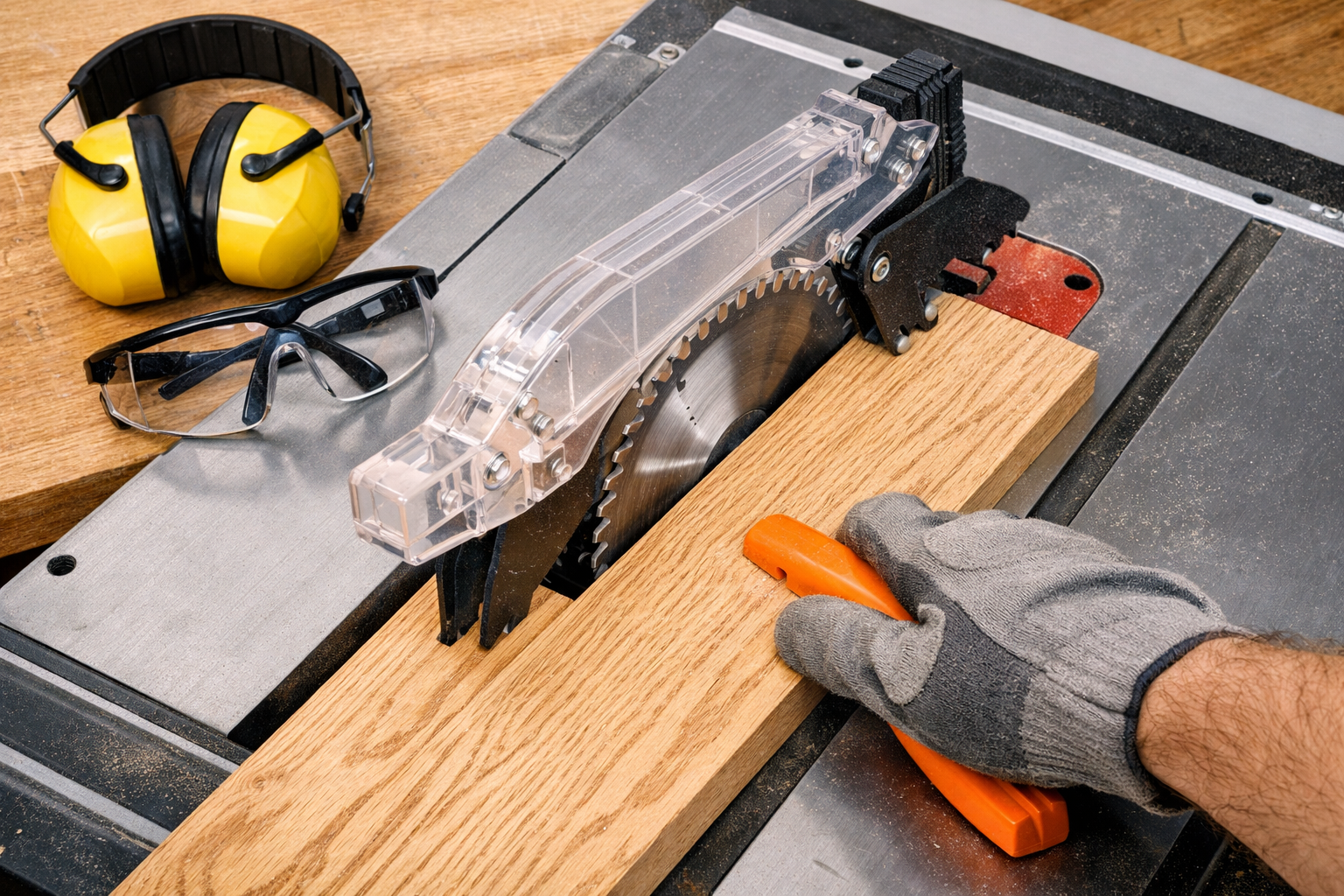
A table saw is arguably the most dangerous tool in a woodworking shop if not used properly. Therefore, prioritizing safety features is not just recommended, it’s absolutely essential. Familiarize yourself with these core safety mechanisms before making your purchase in 2026.
Blade Guard
A blade guard is a clear shield that covers the saw blade, protecting your hands from accidental contact. Modern blade guards are often designed to articulate, moving out of the way as wood passes through and then returning to cover the blade. While some woodworkers remove them for certain operations, they are crucial for general ripping and crosscutting.
Riving Knife or Splitter
This is one of the most important safety features. A riving knife is a safety device mounted behind the saw blade that rises and falls with the blade. It prevents the kerf (the slot cut by the blade) from closing in on the blade, which is the primary cause of kickback. A splitter serves a similar purpose but is typically fixed to the blade insert and does not move with the blade’s height. Always ensure your chosen saw has one of these.
Anti-Kickback Pawls
Located behind the blade and often integrated into the blade guard assembly, anti-kickback pawls are serrated teeth that dig into the wood if it attempts to move backward (kickback). This prevents the workpiece from being violently thrown back towards the operator.
Push Sticks and Push Blocks
While not built-in features of the saw itself, push sticks and push blocks are indispensable safety accessories. They keep your hands clear of the blade when feeding smaller workpieces or making cuts close to the fence. Always use them, especially when your hands would otherwise be within 6 inches of the blade. For more on essential jigs, which can enhance both safety and accuracy, refer to our guide on Beginner’s Guide to Essential Woodworking Jigs: Improve Accuracy and.
Emergency Stop Button
Many modern table saws feature an easily accessible, often oversized, paddle-style emergency stop button. This allows you to quickly shut off the saw in an emergency, or even with a knee or hip if your hands are occupied.
Dust Collection Port
While primarily for cleanliness, effective dust collection is also a safety feature. Excess sawdust can obscure your view of the blade, create slippery surfaces, and pose a fire hazard. A good dust collection system keeps your workshop cleaner and safer. Consider a system like those discussed in Building a DIY Smart Workshop Dust Collection System: Integrating IoT or Building a Mobile Dust Collection Cart for Any Workshop: Design, to complement your new table saw.

When comparing saws, scrutinize the quality and usability of these safety features. A poorly designed blade guard that is frequently removed is less effective than a well-integrated one that encourages its use. Never compromise on safety.
Essential Accessories for Accurate and Safe Cuts
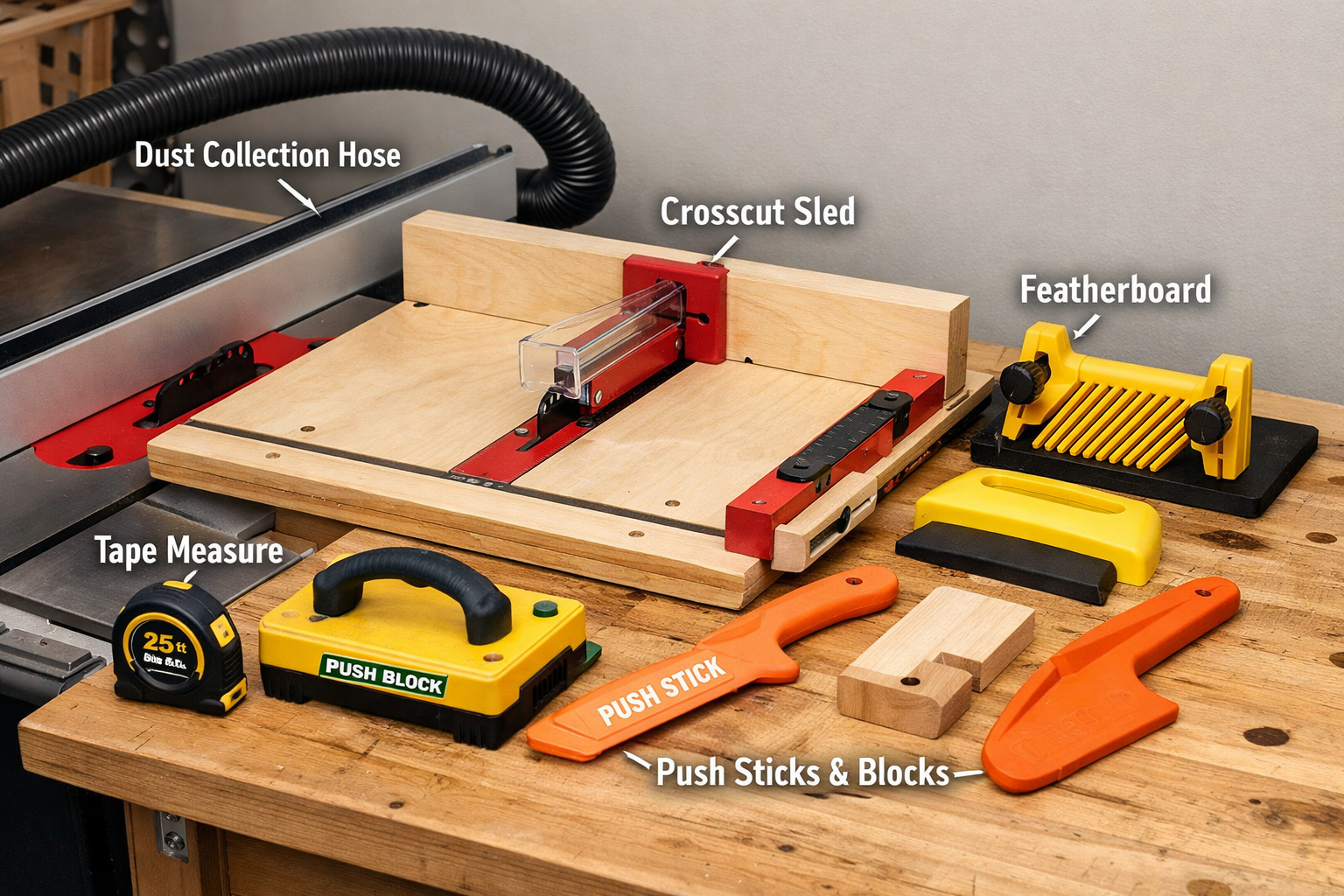
Having the right accessories can drastically improve the functionality, accuracy, and safety of your table saw. Don’t view these as optional add-ons; consider them integral to your table saw setup. This section on The Beginner’s Guide to Choosing Your First Table Saw: Features, Safety, and Essential Accessories highlights the must-haves.
High-Quality Blades
The blade that comes with your new table saw is often a general-purpose blade, suitable for basic cuts. For finer work, different blade types are crucial:
- Rip Blades: Fewer teeth, larger gullets, designed for efficient cutting with the grain.
- Crosscut Blades: More teeth, smaller gullets, designed for clean cuts across the grain.
- Combination Blades: A mix of both, offering a good balance for general-purpose use.
- Dado Blades: A specialized set of blades used to cut wide grooves or dadoes. While useful, they often require removing the riving knife, so exercise extreme caution.
For precision, it’s worth investing in good quality blades. They make a world of difference in cut quality and can even reduce kickback risk.
Crosscut Sled
A crosscut sled is a jig that slides in the miter slots of your table saw, allowing you to make perfectly square and highly accurate crosscuts on wider boards than your miter gauge would allow. It’s a fundamental accessory for any serious woodworker. Building one yourself can be a rewarding project and a great way to understand your saw better. For more on making precise cuts, our Beginner’s Guide to Essential Woodworking Jigs: Improve Accuracy and covers various jig builds.
Featherboards
A featherboard is a safety and accuracy device that holds a workpiece firmly against the table saw fence or table, preventing it from wandering or lifting during a cut. This ensures consistent cut width and helps prevent kickback. They are available in magnetic, miter slot, or clamp-on varieties.
Outfeed Support
When cutting long boards, especially sheet goods, supporting the workpiece as it exits the blade is critical for safety and preventing tear-out. This can be achieved with a dedicated outfeed table, roller stands, or even a sturdy workbench placed behind the saw. For ideas on creating your own workspace, check out https://woodcraftwiz.com/the-ultimate-guide-to-wooden-work-tables-choosing-building-and-maintaining-your-perfect-workspace-%f0%9f%a7%b0/.
Measuring and Marking Tools
Precision is key in woodworking. Essential measuring and marking tools include:
- Tape Measure: A good quality, accurate tape measure.
- Combination Square: For checking squareness and marking lines.
- Digital Angle Gauge: For precise blade angle settings.
- Pencils/Marking Knives: For clear, accurate layout lines.
Push Sticks and Push Blocks
Reiterating their importance from the safety section, investing in a variety of push sticks and blocks is crucial. They come in different shapes and sizes for various cutting scenarios, always keeping your hands safely away from the blade.

When purchasing accessories, always prioritize quality. Cheap, flimsy accessories can be a safety hazard and will hinder your accuracy. Think of these tools as investments in your woodworking journey.
Conclusion
Choosing your first table saw can feel like a daunting task, but by systematically evaluating the types, prioritizing essential safety features, and understanding the vital accessories, you can make a confident and informed decision. In 2026, the market offers a fantastic range of options, from the portable jobsite saw for occasional DIY projects to the robust cabinet saw for professional-grade work.
Remember, a table saw is an investment in your woodworking future. Take the time to research, compare models, and, if possible, test them out in person. Never compromise on safety; features like a riving knife, blade guard, and anti-kickback pawls are non-negotiable. Equip yourself with quality push sticks, featherboards, and a reliable crosscut sled. With the right table saw and a commitment to safe practices, you’ll be well on your way to creating precise cuts and beautiful projects for years to come. Your woodworking journey starts here – make it a safe and successful one!
SEO Meta Title: Beginner’s Guide: Choose Your First Table Saw Safely in 2026 SEO Meta Description: This beginner’s guide covers choosing your first table saw, crucial safety features, and essential accessories for accurate, safe woodworking in 2026.