
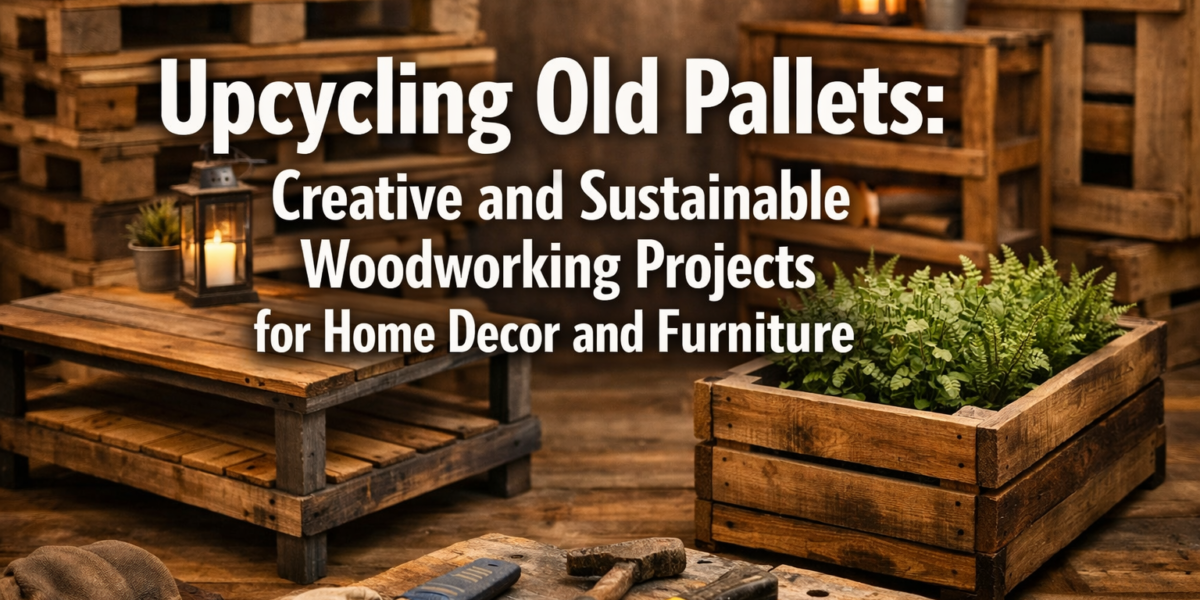
The estimated 450 million wooden pallets manufactured annually in the United States alone, many destined for landfills after a single use, present an unprecedented opportunity for sustainable craftsmanship. Far from being mere waste, these ubiquitous wooden structures are a treasure trove of reclaimed timber, ripe for transformation. This article delves into the rewarding world of Upcycling Old Pallets: Creative and Sustainable Woodworking Projects for Home Decor and Furniture, offering a comprehensive guide to converting discarded wood into stylish, functional, and eco-friendly pieces for your home. By embracing pallet upcycling, woodworkers not only contribute to waste reduction but also unleash their creativity, crafting unique items with character and a story.
Key Takeaways
- Pallet upcycling is a highly sustainable woodworking practice that diverts significant waste from landfills.
- Proper selection and safe dismantling of pallets are crucial first steps for any project.
- A wide array of creative home decor and furniture projects can be made from reclaimed pallet wood, from tables to wall art.
- Upcycled pallet projects offer a unique aesthetic and add character to any living space.
- This practice promotes resourcefulness and offers a cost-effective way to acquire wood for crafting.
The Foundation: Sourcing, Safety, and Preparation for Upcycling Old Pallets
Before diving into design, the success of any project involving Upcycling Old Pallets: Creative and Sustainable Woodworking Projects for Home Decor and Furniture hinges on proper material sourcing, understanding safety protocols, and meticulous preparation. Not all pallets are created equal, and some can pose health risks or be unsuitable for certain applications.
Sourcing Pallets Safely and Responsibly
Finding pallets is often the easiest part of the process, but identifying safe ones requires attention. Look for businesses that regularly receive shipments, such as warehouses, small retail shops, and construction sites, and always ask for permission before taking them. Most importantly, scrutinize the heat treatment stamp.
Decoding Pallet Stamps: A Critical Safety Measure
Pallets are typically stamped with codes that indicate their treatment method. This is vital for safety, particularly if the wood will be used indoors or for items that contact food.
| Stamp Code | Meaning | Suitability for Upcycling |
|---|---|---|
| HT | Heat Treated | Generally safe for all projects |
| MB | Methyl Bromide (Chemical Treatment) | Avoid. Toxic chemicals make it unsafe |
| DB | Debarked | Indicates bark removed, often seen with HT |
| EUR/EPAL | European Pallet Association licensed pallet | Usually HT, check for HT or MB specifically |
| IPPC Logo | International Plant Protection Convention logo | Indicates compliance with international standards |
Always choose HT (Heat Treated) pallets. Pallets stamped with “MB” (Methyl Bromide) are treated with a highly toxic pesticide and should never be used for woodworking, especially for furniture or items that might come into contact with people or food. Furthermore, inspect pallets for excessive staining, spills, or strong odors, which could indicate contamination from unknown chemicals or substances. For further insights into responsible wood sourcing, consider exploring resources on sustainable wood sourcing for the modern woodworker.
Safe Dismantling Techniques
Dismantling a pallet can be challenging due to nails driven deep and often bent. Proper tools and techniques are essential to prevent injury and preserve as much usable wood as possible.
Essential Tools for Pallet Dismantling
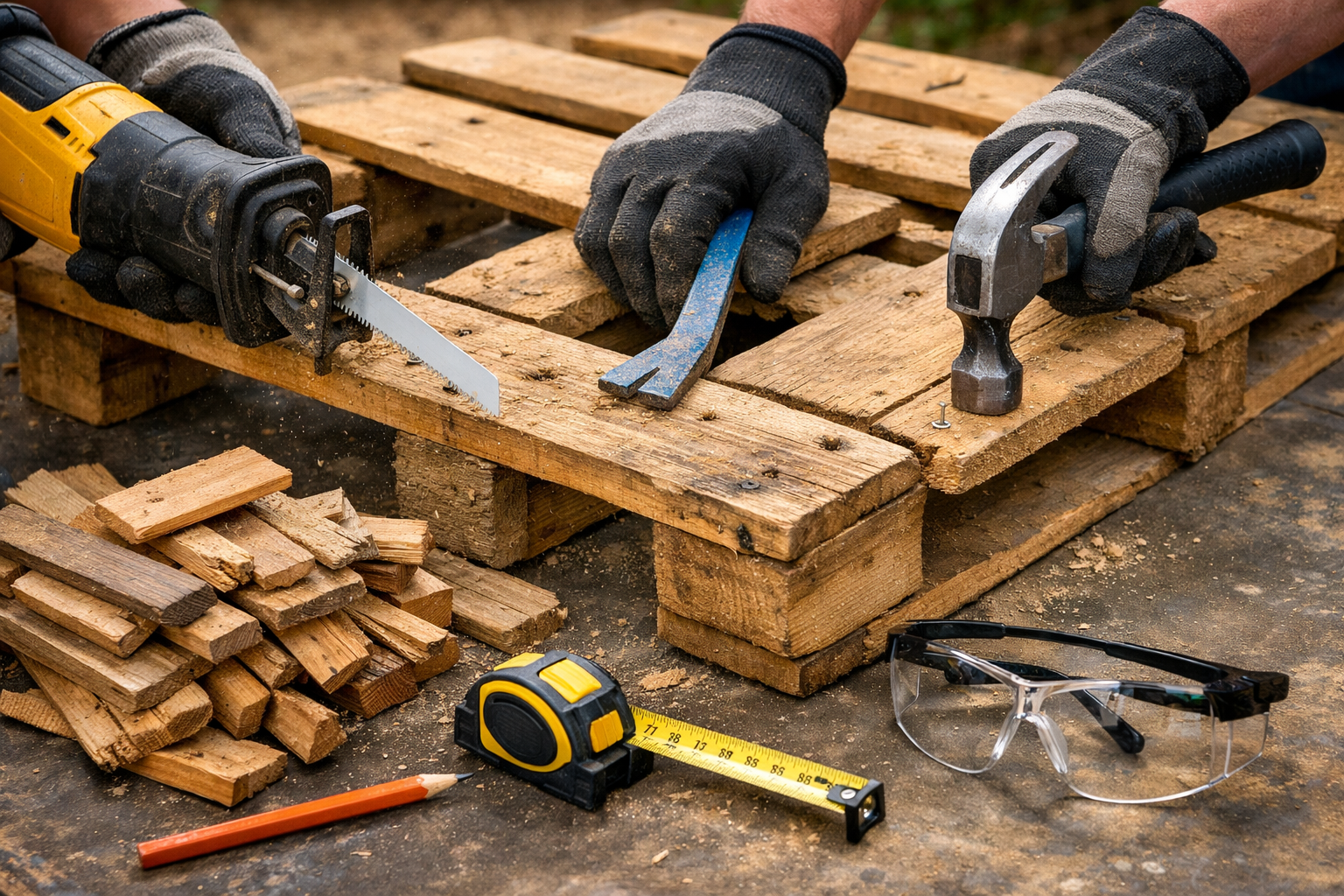
- Pry Bar or Pallet Buster: A dedicated pallet buster is highly effective, designed to remove boards with minimal damage. A heavy-duty pry bar works too.
- Hammer: For driving pry bar claws under boards or removing stubborn nails.
- Reciprocating Saw: Excellent for cutting through nails if boards are difficult to pry. Use a metal-cutting blade.
- Safety Gear: Gloves (heavy-duty work gloves), eye protection, and sturdy footwear are non-negotiable.
- Circular Saw or Jigsaw: For trimming rough edges or cutting boards to size after dismantling.
Step-by-Step Dismantling Process
- Assess the Pallet: Lay the pallet on a flat, stable surface. Identify any already loose or broken boards.
- Pry Boards Carefully: Start from the ends of the pallet. Slide the pry bar or pallet buster under a deck board near a stringer (the thicker support beams). Apply leverage to slowly lift the board. Repeat along the length of the board until it detaches.
- Cut Stubborn Nails: If a board won’t budge, position the reciprocating saw blade between the deck board and the stringer, cutting through the nails.
- Remove Nails from Boards: Once boards are free, use the claw of a hammer or a nail puller to extract any remaining nails. Be cautious of bent or broken nails.
- Clean and Prepare: Brush off dirt, cobwebs, and debris. Inspect each board for rot, cracks, or severe damage. Set aside viable planks for your projects. You can find more detailed information on assessing and handling reclaimed wood by visiting sourcing reclaimed and salvaged wood.
Inspiring Projects: Upcycling Old Pallets into Creative Home Decor
Once you have a stack of clean, safely sourced, and dismantled pallet wood, the possibilities for transforming it into unique home decor are vast. Upcycling Old Pallets: Creative and Sustainable Woodworking Projects for Home Decor and Furniture offers an unparalleled opportunity to infuse your living space with rustic charm, industrial chic, or even modern minimalist aesthetics.
Small-Scale Decor Projects
Even smaller pieces of pallet wood can be used to create charming and functional items.
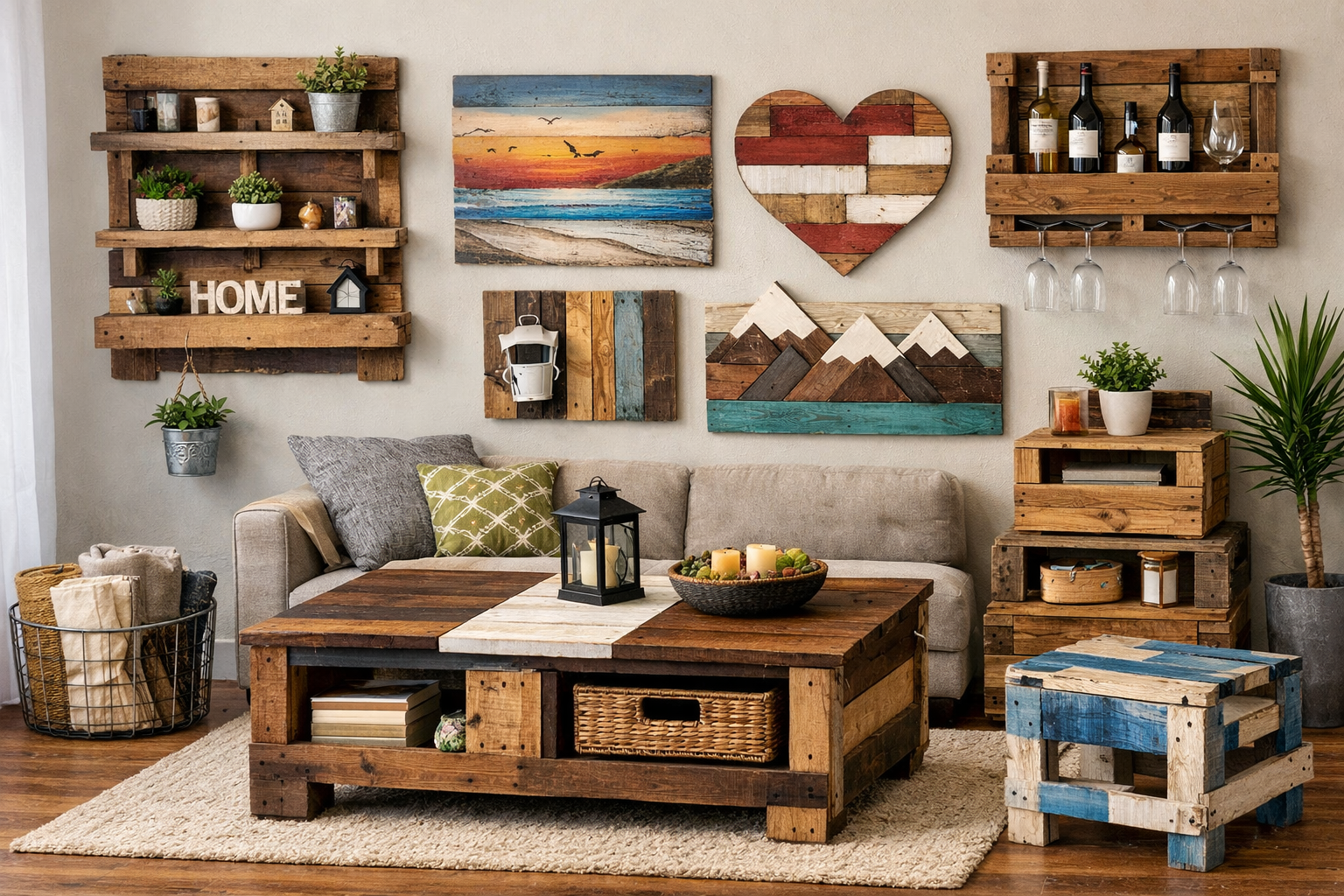
- Wall Art and Signs: Arrange pallet slats into abstract patterns, create a rustic canvas for painted designs, or cut them into shapes for decorative signs. Distressing the wood or adding a simple stain can enhance its character.
- Picture Frames: Cut narrow strips of pallet wood to create bespoke frames for photos or mirrors. The natural imperfections of the wood add a unique touch.
- Planters and Vertical Gardens: Assemble pallet slats into sturdy planter boxes for herbs or flowers. For a vertical garden, attach small boxes or shelves to a larger pallet frame, perfect for balconies or small yards.
- Coat Racks and Key Holders: Mount a cleaned pallet board to a wall, then add decorative hooks or knobs for an entryway coat rack or key holder.
- Floating Shelves: Utilizing thicker stringer pieces or carefully selected deck boards, craft sturdy robust floating shelves with hidden fasteners for displaying books, plants, or decorative items.
Medium to Large Furniture Projects
For those ready to tackle more ambitious builds, pallets provide an excellent, cost-effective material for furniture.
- Coffee Tables and End Tables: Pallets are practically pre-made for coffee tables. Stack two or three pallets, secure them, and add casters for mobility. A glass top can create a smooth surface while showing off the wood’s texture. Alternatively, dismantle pallets and build a custom design. For more ideas on table builds, explore high-demand woodworking projects for 2026: coffee tables, wine racks.
- Beds and Headboards: Create a rustic platform bed by arranging and securing multiple pallets. A pallet headboard can be a striking focal point, either left natural, painted, or upholstered.
- Bookcases and Shelving Units: Use pallet boards to construct open-backed bookcases or custom shelving for a pantry or garage. The varied width and texture of the wood add visual interest.
- Outdoor Furniture: Pallets are ideal for outdoor benches, lounge chairs, or patio seating. Ensure the wood is sealed with an appropriate exterior-grade finish to protect it from the elements. Crafting profitable wooden benches offers further inspiration.
- Dining Tables: While more challenging, a sturdy pallet wood dining table can be a statement piece. It often requires careful selection of flat, strong boards and robust joinery techniques. For general dining table construction, consider insights from craft your dream farmhouse dining table.
Finishing Touches and Sustainable Practices in Pallet Woodworking
The journey of Upcycling Old Pallets: Creative and Sustainable Woodworking Projects for Home Decor and Furniture extends beyond construction to the finishing process, which can dramatically alter the appearance and longevity of your creations. Moreover, embracing sustainable practices throughout the entire project enhances its eco-friendly impact.
Enhancing and Protecting Your Pallet Creations
The raw, rustic look of pallet wood is appealing to many, but proper finishing is crucial for durability and aesthetics.
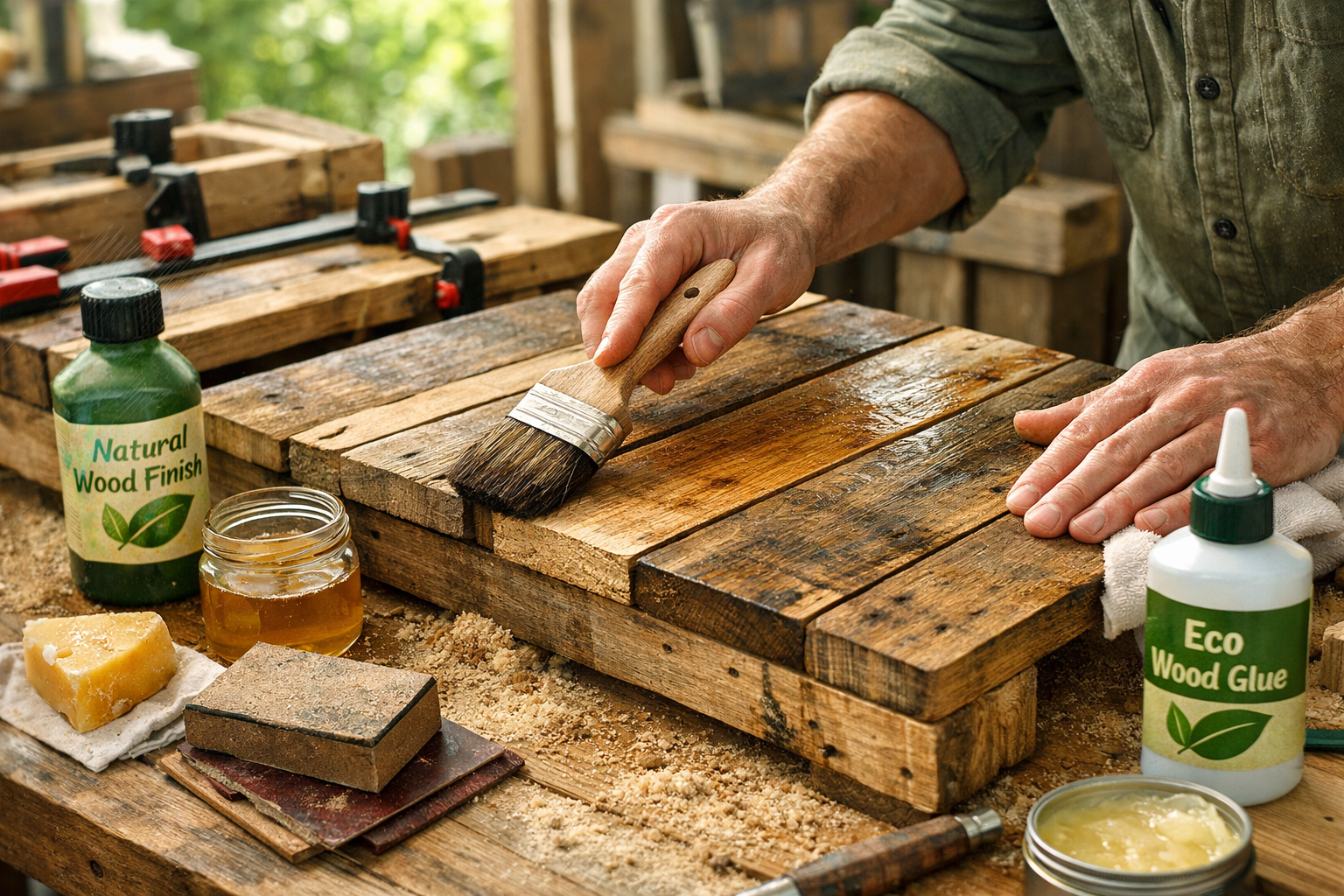
- Sanding: This is perhaps the most important step. Pallet wood is often rough and splintery. Start with a coarse grit (60-80) and progressively move to finer grits (120-220) for a smooth finish. For furniture that will be handled frequently, consider sanding up to 320 grit.
- Cleaning: After sanding, thoroughly clean the wood to remove all dust and debris. A tack cloth or a damp cloth followed by a dry one works well.
- Staining: Stains can enhance the natural grain of the wood or completely change its color. Test stains on scrap pieces of pallet wood first, as absorption can vary. For a truly rustic look, a light-colored stain or a gray wash can be effective.
- Painting: Pallet wood can be painted any color to match your decor. Primer is recommended, especially for outdoor projects, to ensure better adhesion and durability. Distressing techniques (sanding edges after painting) can add character.
- Sealing and Topcoats: A protective topcoat is essential for durability, especially for furniture.
- Polyurethane: A durable option for high-traffic items. Oil-based polyurethane offers a warmer tone, while water-based is clearer and quicker drying.
- Varnish: Offers excellent protection, often used for outdoor furniture.
- Wax or Oil Finishes: For a more natural, hand-rubbed look. These require more maintenance but highlight the wood’s texture beautifully.
- Eco-Friendly Options: Look for low-VOC (Volatile Organic Compounds) or natural oil finishes to maintain the sustainable aspect of your project. Learn more about various wood finishing techniques to find the best fit for your project.
Maximizing Sustainability and Minimizing Waste
Upcycling pallets is inherently sustainable, but further steps can reduce your environmental footprint.
- Zero-Waste Woodworking: Even small pallet scraps can be useful. Cutoffs can be used for coasters, small decorative items, or kindling. Explore ideas for maximizing profit from scrap wood or even turning turning shop scraps into design features.
- Tool Maintenance: Keep your tools sharp and well-maintained. A sharp blade works more efficiently and safely, reducing waste and extending tool life. For example, ensuring the ultimate guide to sharpening woodworking chisels and planes can make a significant difference.
- Thoughtful Design: Plan your projects carefully to optimize board usage and minimize waste from the outset. Consider modular designs that can adapt to varying pallet board lengths and widths.
- Community Engagement: Share your knowledge and encourage others to upcycle. Organize pallet-sharing initiatives in your local community to ensure useful wood doesn’t go to waste.
- Recycle Non-Wood Components: Ensure that all metal nails and staples removed from the pallets are collected and recycled appropriately.
By focusing on these finishing touches and sustainable practices, your upcycled pallet projects will not only be beautiful and functional but also embody a commitment to environmental responsibility.
Conclusion
The art of Upcycling Old Pallets: Creative and Sustainable Woodworking Projects for Home Decor and Furniture offers a compelling blend of environmental responsibility, creative expression, and practical skill development. As we navigate 2026, the global emphasis on sustainability continues to grow, making reclaimed wood projects more relevant and impactful than ever. From meticulously dismantling a discarded pallet to applying the final coat of finish on a custom coffee table or a unique piece of wall art, each step in the process contributes to a greener planet and a more personalized home.
This guide has provided the foundational knowledge to embark on your pallet upcycling journey, from safe sourcing and dismantling to inspiring project ideas and essential finishing techniques. The beauty of pallet wood lies in its raw, imperfect character, allowing you to create pieces that tell a story and add warmth to any space. Embrace the challenge, enjoy the creative process, and take pride in transforming what many consider waste into cherished, functional art. Start small, gain confidence, and soon you’ll be envisioning grander projects, all while contributing to a more sustainable future, one upcycled pallet at a time.
SEO Meta Title: Upcycling Old Pallets: Creative Sustainable Wood Projects SEO Meta Description: Discover how to upcycle old pallets into unique home decor and furniture in 2026. Learn safe dismantling, creative projects, and sustainable practices.