
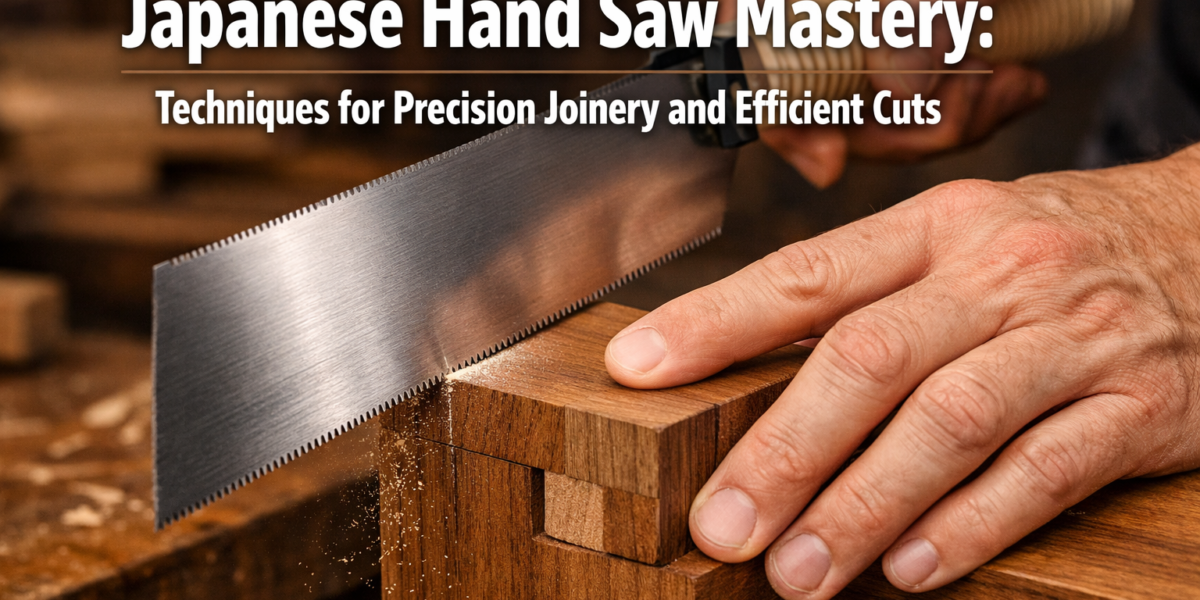
The art of woodworking demands precision, efficiency, and a deep understanding of tools. Among the myriad of cutting instruments, the Japanese hand saw stands out for its unique design and unparalleled performance. For those seeking to elevate their craftsmanship, mastering this tool is not merely an option, but a gateway to superior joinery and remarkably efficient cuts. This article delves into the core principles of Japanese Hand Saw Mastery: Techniques for Precision Joinery and Efficient Cuts, equipping woodworkers with the knowledge to harness the full potential of these exceptional saws.
Japanese pull saws, with their characteristic pull-stroke cutting action, offer advantages in control, accuracy, and reduced effort compared to their Western push-cut counterparts. By understanding the different types of saws, their appropriate applications, and the nuanced techniques involved, woodworkers can achieve results that are both aesthetically pleasing and structurally sound in 2026.
Key Takeaways
- Japanese saws cut on the pull stroke, offering superior control and thinner, more efficient kerfs.
- Selecting the right saw type (e.g., ryoba, dozuki, kataba) is crucial for specific tasks like cross-cutting, ripping, or joinery.
- Proper grip, body mechanics, and precise marking are fundamental to achieving accurate and clean cuts.
- Mastering specific techniques for dovetails, tenons, and other joinery types significantly improves project quality.
- Regular maintenance, including cleaning and occasional sharpening, ensures the longevity and performance of your Japanese hand saws.
Understanding the Japanese Hand Saw: Design and Fundamental Principles
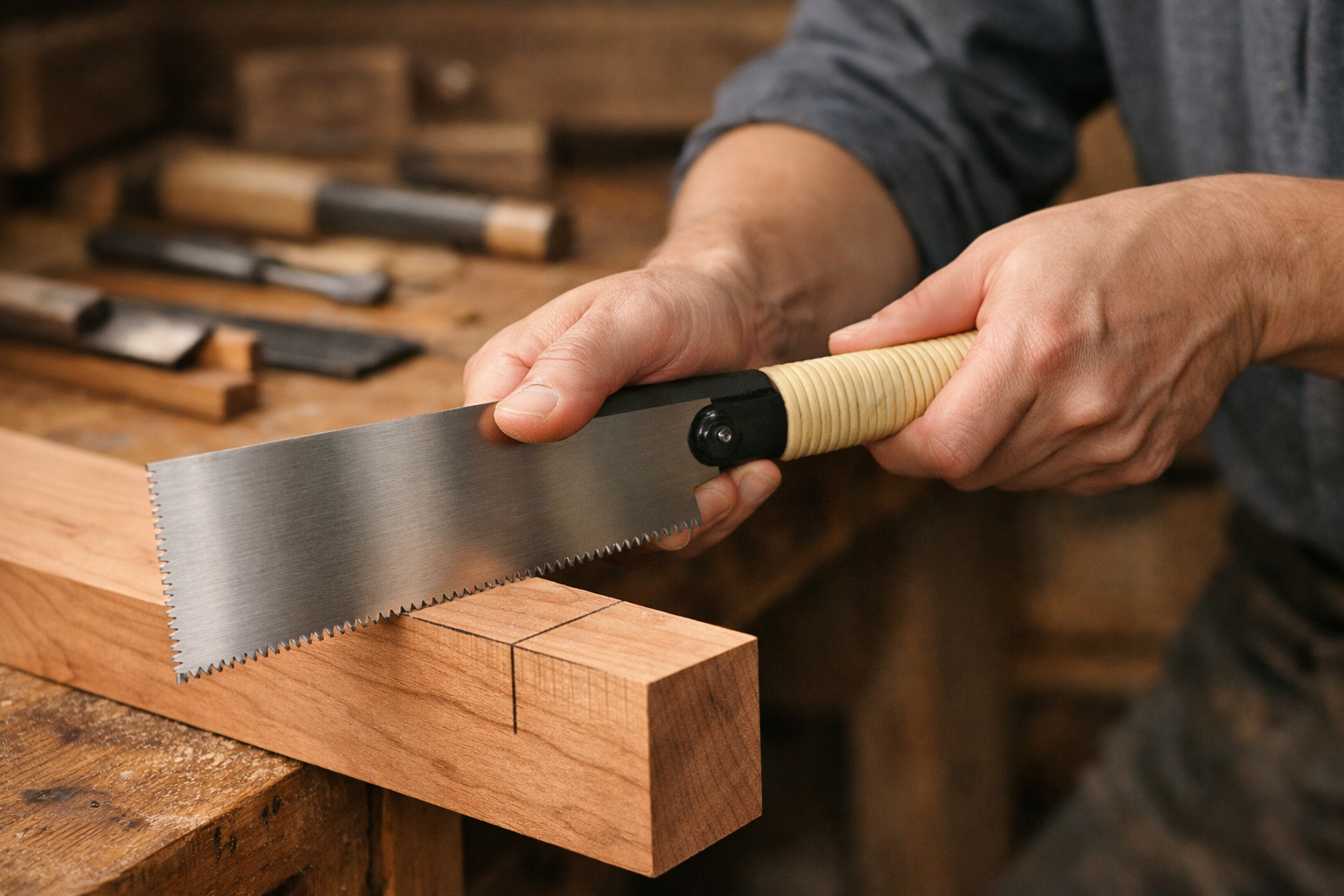
The distinctive feature of Japanese hand saws, often referred to as nokogiri, is their cutting action on the pull stroke. This design allows for thinner blades, as the blade is under tension during the cut, preventing buckling. Thinner blades translate to a finer kerf (the width of the cut), which means less material waste and less effort required to make a cut. This fundamental difference is key to Japanese Hand Saw Mastery: Techniques for Precision Joinery and Efficient Cuts.
There are several primary types of Japanese saws, each designed for specific tasks:
- Ryoba (両刃): This versatile double-edged saw features ripping teeth on one side (for cutting along the grain) and cross-cutting teeth on the other (for cutting across the grain). It’s an excellent all-around saw for many woodworking tasks.
- Dozuki (胴付鋸): Characterized by a reinforced back (spine) that stiffens the blade, dozuki saws have very fine teeth and are primarily used for precision joinery, such as cutting dovetails and tenons. The spine limits cutting depth but ensures extreme accuracy. For more on traditional joinery, explore Hand Tool Joinery for Visible Wood Joints: Dovetails, Mortis.
- Kataba (片刃): A single-edged saw without a reinforced back, kataba saws are often larger and used for deeper cuts, offering good flexibility for ripping and cross-cutting, especially in thicker stock where a dozuki‘s depth is insufficient.
Choosing the correct saw for the job is the first step in achieving mastery. For beginners, a good quality ryoba or a fine-toothed dozuki is an excellent starting point. A helpful resource for those new to these tools is the Beginner’s Guide to Japanese Hand Saws: Precision Cuts and Essential.
The Pull Stroke Advantage
The pull-stroke cutting action offers several significant benefits:
- Enhanced Control: By pulling the saw towards the body, the woodworker gains better control over the blade’s path. This results in straighter, more accurate cuts.
- Reduced Effort: The tension on the blade during the pull stroke means less force is required, leading to less fatigue over longer woodworking sessions.
- Thinner Kerf: As mentioned, thinner blades flex less when pulled, allowing for incredibly fine, clean cuts that require minimal cleanup.
“The Japanese pull saw transforms cutting from a brute-force exercise into a delicate, controlled dance of precision and finesse.” — Woodcraft Wiz Editor, 2026

Mastering Cutting Techniques for Precision Joinery
True Japanese Hand Saw Mastery: Techniques for Precision Joinery and Efficient Cuts lies in developing refined cutting techniques. This involves more than just pulling the saw; it encompasses body mechanics, precise setup, and understanding the nuances of each cut.
Proper Grip and Stance
A comfortable and stable grip is essential. For most Japanese saws, hold the handle with a relaxed but firm grip, allowing the saw to feel like an extension of your arm. The stance should be balanced, with your weight slightly forward, allowing your entire body, not just your arm, to contribute to the cutting motion.
- Starting the Cut: Always begin a cut carefully. Use your thumb or a small block of wood as a guide to start the kerf precisely on your marked line. Start with a few light, short pull strokes to establish the groove before applying more pressure.
- Maintaining the Line: Focus your gaze on the cutting line. Allow the saw to do the work; avoid forcing it. If the saw drifts, lighten the pressure and gently guide it back. For straight cuts, ensure your elbow is aligned with the saw blade, moving in a straight line.
- Through the Cut: As you progress, maintain a consistent rhythm and pressure. Let the weight of the saw contribute to the cut. For long rips, ensure the workpiece is well supported to prevent pinching the blade.
Techniques for Specific Joinery
Japanese saws excel at joinery, particularly dovetails and tenons.
Dovetail Joints
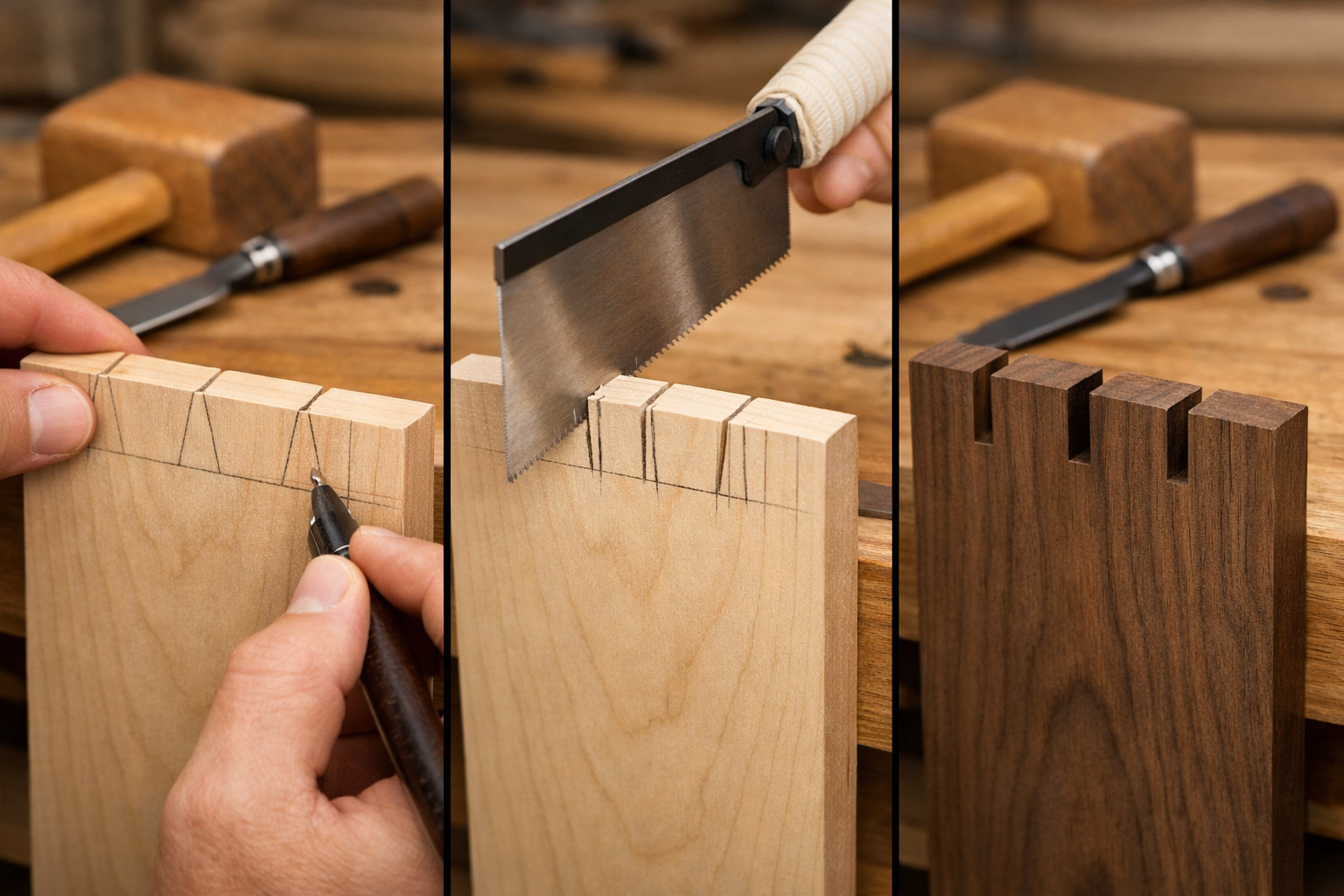
Dovetails are a hallmark of fine woodworking, known for their strength and beauty. Mastering them with a Japanese saw elevates the craftsmanship. For an in-depth guide, see Mastering Dovetail Joints with Hand Tools: A Step-by-Step Guide for.
- Marking Out: Accurate marking is paramount. Use a sharp pencil and a marking gauge to define your pins and tails.
- Cutting the Tails (or Pins): Secure the workpiece vertically in a vise. Use a dozuki saw for its fine teeth and rigid blade. Begin by carefully establishing the kerf on the waste side of your line.
- Angled Cuts: For the angled shoulder cuts, tilt the saw blade to match your layout line. The pull stroke provides excellent control over this angle.
- Vertical Cuts: For the baseline cuts, hold the saw perfectly vertical, ensuring the spine of the dozuki rests against a guide block if necessary for absolute squareness.
Mortise and Tenon Joints
Mortise and tenon joints are strong and widely used in furniture construction. While chisels are primary for the mortise, the tenon requires precise saw cuts.
- Shoulder Cuts: After marking your tenon, secure the workpiece horizontally. Use a ryoba or kataba saw (for deeper cuts) for the shoulder lines. Start with light pull strokes to establish a clean, square cut across the grain.
- Cheek Cuts: For the long rip cuts along the cheeks of the tenon, secure the workpiece vertically. Again, a ryoba or kataba is suitable. Keep your eye on the marked line and guide the saw smoothly. The pull stroke helps maintain a straight line over the length of the tenon.
| Saw Type | Primary Use | Ideal for Joinery | Advantages |
|---|---|---|---|
| Ryoba | General purpose, rip & cross-cut | Good for tenon cheeks | Versatile, two saws in one |
| Dozuki | Precision joinery, dovetails, tenons | Excellent (fine, rigid) | Ultra-fine kerf, high accuracy |
| Kataba | Deep cuts, ripping, cross-cutting | Good for deep tenons | Deeper cut capacity |
Remember to always cut on the waste side of your line. Aim for cuts so clean that minimal paring with a chisel is required.

Sharpening, Maintenance, and Advanced Considerations
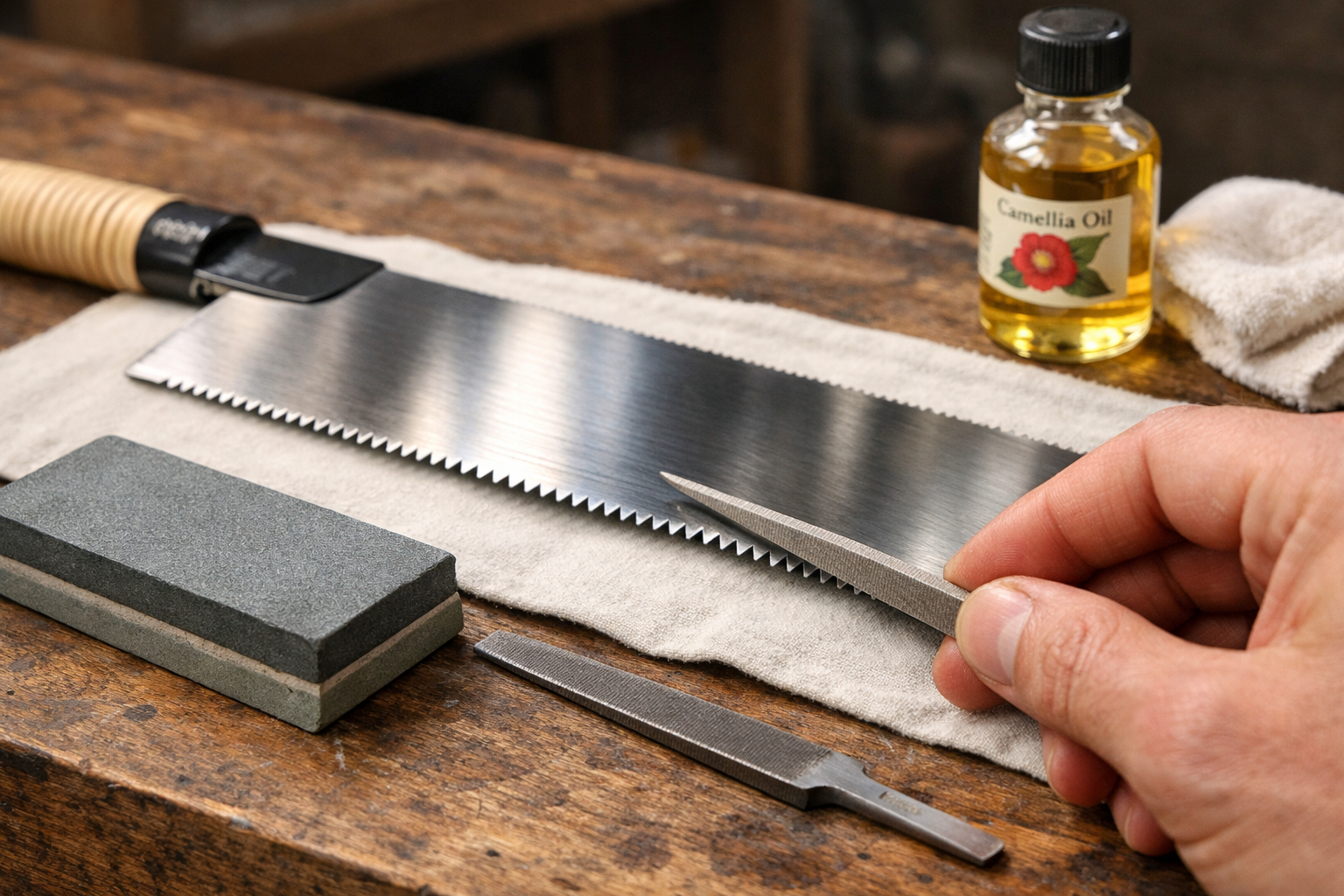
Proper care and maintenance are crucial for preserving the performance and longevity of your Japanese hand saws, cementing your Japanese Hand Saw Mastery: Techniques for Precision Joinery and Efficient Cuts. Unlike Western saws, many modern Japanese saws feature impulse-hardened teeth, which are extremely hard and stay sharp for a very long time but cannot be traditionally resharpened by hand. However, traditional Japanese saws (often more expensive) can be sharpened.
Cleaning Your Saws
After each use, especially when cutting resinous woods, clean your saw blade.
- Remove Sawdust: Use a stiff brush or compressed air to remove sawdust from the teeth.
- Remove Resin/Pitch: For stubborn resin, use a specialized saw blade cleaner or mineral spirits on a cloth. Avoid harsh abrasives that could damage the blade’s finish.
- Rust Prevention: After cleaning, apply a thin coat of camellia oil (or a similar rust preventative) to the blade, especially if storing it for an extended period. This is vital for maintaining the blade’s integrity.
Sharpening Traditional Saws
If you possess traditional, non-hardened Japanese saws, sharpening is a meticulous but rewarding process. It typically involves specialized saw files and an understanding of the intricate tooth geometry.
- Specialized Files: Japanese saws require specific triangular files, often with unique profiles, to properly sharpen the teeth.
- Tooth Geometry: Each tooth on a Japanese saw has a complex geometry with multiple bevels. Sharpening involves carefully filing each cutting edge at the correct angle. This is a skill that takes practice and patience.
- Setting the Teeth: Like Western saws, Japanese saws require “set” – where the teeth are bent slightly outwards alternately to the left and right – to create a kerf wider than the blade, preventing binding.
For most hobbyists and even many professionals in 2026, the convenience of replaceable blades or impulse-hardened teeth often outweighs the effort of traditional sharpening. However, understanding the principle of tooth geometry and set is part of the overall mastery.
Storage and Handling
Proper storage prevents damage and rust:
- Blade Guards: Always use blade guards or sheaths when storing your saws.
- Dry Environment: Store saws in a dry environment to prevent rust. Hanging them on a tool rack or in a dedicated cabinet is ideal. Check out our guide to Essential Hand Tools for Every Woodworker: A Comprehensive Guide to for more insights on tool care.
- Careful Handling: Avoid dropping saws or allowing blades to strike hard surfaces, as this can damage the fine teeth.
Advanced Considerations
As you grow in your Japanese Hand Saw Mastery: Techniques for Precision Joinery and Efficient Cuts, consider these points:
- Saw Horse and Workholding: Invest in stable saw horses or a robust workbench with effective clamping options. Good workholding is crucial for precise, safe cuts. Learn about building a sturdy foundation in Building a Custom Wood Workbench: Design Considerations and.
- Sawing Guides and Jigs: For repetitive or extremely critical cuts, consider using sawing guides or jigs. These can dramatically improve accuracy, especially for compound angles or precise depth stops. Our Beginner’s Guide to Essential Woodworking Jigs: Improve Accuracy and offers a great starting point.
- Reading the Grain: Understanding wood grain direction and how it affects cutting is vital. Cutting with the grain (ripping) and across the grain (cross-cutting) requires different approaches and saw types.

Conclusion
Japanese Hand Saw Mastery: Techniques for Precision Joinery and Efficient Cuts is a journey of continuous learning and refinement. By embracing the unique pull-stroke action, selecting the appropriate saw for each task, and meticulously practicing cutting techniques, woodworkers can unlock unparalleled precision and efficiency in their craft. The rewards are not just in the flawlessly executed joints and clean cuts but in the meditative satisfaction of working with a tool that demands and rewards respect.
Start with quality tools, dedicate time to practice, and cultivate patience. The feel of a sharp Japanese saw effortlessly slicing through wood, leaving a whisper-thin kerf, is an experience that every woodworker should aspire to achieve. Continue to explore, experiment, and refine your techniques, and you will undoubtedly achieve a profound level of Japanese hand saw mastery in your woodworking endeavors.
SEO Meta Title: Japanese Hand Saw Mastery: Precision Joinery & Efficient Cuts SEO Meta Description: Unlock Japanese hand saw mastery in 2026. Learn pull-saw techniques for flawless joinery, efficient cuts, maintenance, and expert tips for woodworkers.