
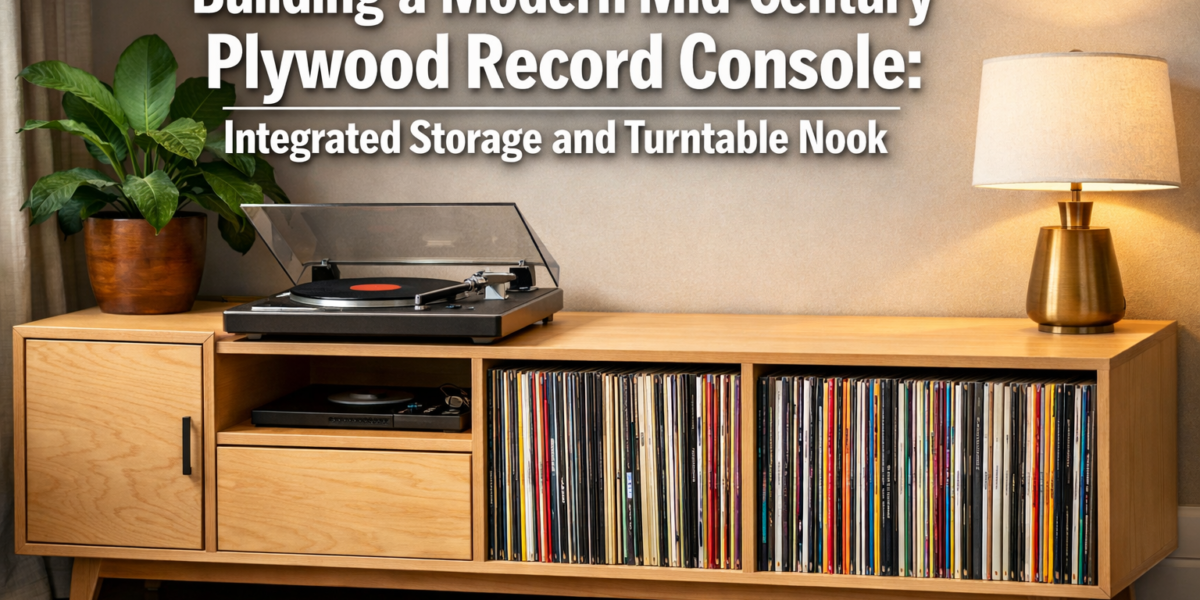
The resurgence of vinyl records and the enduring appeal of Mid-Century Modern design have converged, sparking a renewed interest in furniture that elegantly houses these cherished possessions. For the music enthusiast and design-conscious woodworker, there’s no project more rewarding in 2026 than Building a Modern Mid-Century Plywood Record Console: Integrated Storage and Turntable Nook. This article serves as your comprehensive guide to crafting a functional and stylish centerpiece that celebrates both your music collection and your woodworking skills.
This project goes beyond simple construction; it’s about blending timeless aesthetics with practical design, creating a piece that not only looks stunning but also enhances your listening experience. We’ll explore everything from selecting the right materials to executing precise joinery and applying a flawless finish, ensuring your record console becomes an heirloom-quality addition to your home.
Key Takeaways
- Design Integration: A modern mid-century plywood record console seamlessly blends aesthetics with practical storage for vinyl and a dedicated turntable nook.
- Plywood Advantages: High-quality Baltic birch or similar plywood offers excellent stability, strength, and a distinctive edge grain ideal for this style.
- Precision Joinery: Dadoes, rabbets, and dowel joints are crucial for structural integrity and a clean, professional finish.
- Thoughtful Dimensions: Proper sizing for both the turntable compartment and record storage is essential for functionality and future expansion.
- Finishing Touches: A well-applied finish protects the wood and enhances the console’s visual appeal, aligning with the mid-century aesthetic.
Designing Your Modern Mid-Century Plywood Record Console: Integrated Storage and Turntable Nook
The foundation of any successful woodworking project lies in meticulous design and planning. When embarking on Building a Modern Mid-Century Plywood Record Console: Integrated Storage and Turntable Nook, careful consideration of aesthetics, dimensions, and material choices is paramount. The Mid-Century Modern style is characterized by clean lines, organic shapes, and a minimalist approach, often highlighting the natural beauty of wood. Plywood, particularly high-quality Baltic birch, is an excellent choice for achieving this look due to its stability, strength, and distinctive layered edge grain.
Embracing Mid-Century Aesthetics with Plywood
Plywood’s layered edge, when left exposed, offers a unique visual texture that aligns perfectly with the honesty of materials often seen in Mid-Century Modern design. This eliminates the need for edge banding, allowing the material itself to be a design feature. The key is to select high-grade plywood with minimal voids and an attractive veneer face.
Key Design Elements:
- Clean Lines: Prioritize straight edges and simple geometric forms. Avoid ornate carvings or excessive detailing.
- Tapered Legs: Iconic of the era, tapered solid wood legs (often splayed slightly) lift the console, giving it a lighter, more elegant presence.
- Integrated Storage: The core of this design is seamless storage. Think about modular compartments for records and a perfectly sized nook for your turntable.
- Minimal Hardware: Opt for recessed pulls or handle-less doors/drawers with push-to-open mechanisms to maintain a sleek profile.
Essential Dimensions and Ergonomics
The functionality of your record console hinges on accurate measurements. Consider your specific turntable and amplifier dimensions. Leave ample room for ventilation around electronic components to prevent overheating.
Turntable Nook Considerations:
- Width & Depth: Measure your turntable, allowing an extra 1-2 inches (2.5-5 cm) on each side for easy placement and airflow.
- Height: Account for the dust cover being fully open. If your turntable has rear-facing cables, ensure enough depth for them to clear the back panel.
- Ventilation: Incorporate discreet vents or an open back design for heat dissipation, especially if placing an amplifier within the console.
Record Storage Specifications:
Vinyl records (LPs) are typically 12.375 inches (31.43 cm) square. To allow for easy browsing and prevent warping, each storage compartment should have specific internal dimensions:
| Dimension | Ideal Internal Measurement | Notes |
|---|---|---|
| Height | 13 inches (33 cm) | Allows for record sleeves and easy removal. |
| Depth | 13 inches (33 cm) | Ensures records are fully supported and not protruding. |
| Width | Variable | Dependent on desired capacity (e.g., 12-14 inches for ~50 LPs). |
Console Height: An ergonomic height for a record console usually places the turntable at a comfortable level for operating while standing or sitting. A height of 28-32 inches (71-81 cm) is generally considered ideal.
{{IMG_SLOT_1}}
A well-planned design phase will prevent costly errors and ensure the final product meets both your aesthetic and functional expectations. Consider sketching multiple layouts or using 3D modeling software to visualize your piece before cutting any wood. For more insights on blending modern audio with mid-century design, explore Crafting Custom Wooden Record Player Consoles: Integrating Modern.
Materials and Construction Techniques for a Durable Plywood Console
The choice of materials and the execution of joinery are critical for the longevity and aesthetic success of your Building a Modern Mid-Century Plywood Record Console: Integrated Storage and Turntable Nook. High-quality plywood combined with robust woodworking techniques will yield a piece that withstands the test of time.
Selecting the Right Plywood
Not all plywood is created equal. For a furniture piece like a record console, prioritize appearance and structural integrity.
- Baltic Birch Plywood: Often considered the gold standard for visible plywood applications. It features more plies than standard plywood, fewer voids in the core, and attractive, consistent grain on its face veneers. The edge grain is particularly clean and dense, perfect for an exposed-edge aesthetic.
- Appleply or similar hardwood plywood: These are also excellent choices, offering dense, void-free cores and a variety of hardwood veneers (maple, oak, walnut) on the faces.
- Thickness: 3/4 inch (19mm) plywood is ideal for the main carcase, providing sufficient strength and stability. Thinner 1/2 inch (12mm) plywood can be used for drawer bottoms or dividers if appropriate.
“The beauty of a modern plywood console lies in its honest presentation of materials. Let the layers of Baltic birch speak for themselves through clean cuts and exposed edges.”
Essential Joinery for Plywood Consoles
For strength and a clean appearance, several joinery techniques are particularly well-suited for plywood construction.
- Dadoes and Rabbets: These are the workhorses of plywood cabinetry. Dadoes (grooves cut across the grain) are excellent for shelves and dividers, providing strong mechanical joints without visible fasteners. Rabbets (grooves cut along the edge) are perfect for connecting side panels to top and bottom pieces, creating strong corners.
- Tip: Use a router or a dado stack on a table saw for precise, snug-fitting dadoes and rabbets.
- Dowel Joints: When connecting panels end-to-end or adding solid wood elements like legs, dowel joints offer good alignment and strength when combined with wood glue.
- Pocket Hole Joinery: While less traditional for visible areas in fine woodworking, pocket holes can be useful for concealed joints, such as attaching a back panel or internal support structures, especially where speed and strength are needed.
- Fasteners: For added strength and to hold parts during glue-up, consider using construction screws. Ensure they are appropriate for the plywood thickness and are pre-drilled to prevent splitting. Plugs can be used to conceal screw heads for a cleaner look.
Tools and Workshop Setup
A well-equipped workshop is essential for precision woodworking.
- Table Saw: Indispensable for accurately ripping and cross-cutting large plywood sheets. A high-quality blade for sheet goods is crucial to minimize tear-out.
- Router: With a straight bit, it’s perfect for cutting dadoes, rabbets, and flush-trimming edges. A router table significantly improves control and accuracy for these tasks. You can learn more about maximizing precision with router tables here.
- Clamps: You can never have too many clamps! Bar clamps, parallel clamps, and F-style clamps are vital for holding components tightly during glue-up.
- Measuring & Marking Tools: A reliable tape measure, combination square, marking knife, and pencil are fundamental for transferring your design to the wood accurately.
- Orbital Sander: Essential for preparing surfaces for finishing.
- Dust Collection: Plywood generates a lot of sawdust. A good dust collection system will keep your workshop clean and your lungs happy. Building a Mobile Dust Collection Cart for Any Workshop provides valuable guidance.
{{IMG_SLOT_2}}
For strong, lasting joints, always use high-quality wood glue. Our guide to The Ultimate Guide to Wood Glue offers comprehensive advice on selecting the right adhesive for your project. Remember, good joinery isn’t just about strength; it’s about achieving a clean, professional appearance that complements the Mid-Century aesthetic.
Finishing and Final Assembly of Your Record Console
With the core structure of your Building a Modern Mid-Century Plywood Record Console: Integrated Storage and Turntable Nook assembled, the final stages involve meticulous finishing and the attachment of hardware and legs. These steps are crucial for transforming your woodworking into a polished, functional piece of furniture that exemplifies Mid-Century Modern elegance.
Sanding and Edge Treatment
Sanding is perhaps the most critical step before applying any finish. For plywood, pay particular attention to the exposed edges.
- Start Coarse, Finish Fine: Begin with 120-grit sandpaper to remove any marks or imperfections from milling or assembly. Progress through 150-grit, 180-grit, and finally 220-grit for a silky-smooth surface.
- Edge Rounding: To soften the visual impact and tactile feel of the plywood edges, gently break them with a slight chamfer or a small round-over bit on a router, or by hand sanding. This adds a refined touch to the exposed plywood layers.
- Dust Removal: Before applying any finish, thoroughly clean all surfaces to remove every trace of sanding dust. Compressed air, a tack cloth, or a vacuum with a brush attachment works well.
Choosing the Right Finish
The finish you choose will protect the wood, enhance its natural beauty, and contribute significantly to the Mid-Century Modern aesthetic.
- Oil Finishes (Danish Oil, Tung Oil, Linseed Oil): These penetrate the wood, providing a natural, matte, or satin finish that enhances the grain without creating a thick film. They are easy to apply and repair, making them popular for a “wood feel” finish. Danish oil, in particular, offers good protection and a warm glow. For more on oil finishes, see Danish Oil vs. Linseed: The Ultimate Wood Finishing Guide.
- Polyurethane (Oil-Based or Water-Based): Offers excellent durability and protection against moisture and scratches. Oil-based polyurethane tends to amber slightly, which can complement the warm tones of plywood. Water-based options dry faster and stay clearer. Apply in thin coats, sanding lightly between each.
- Shellac: A natural finish that provides a beautiful, warm glow. It’s fast-drying and serves as an excellent sealer coat. It’s less durable than polyurethane but repairs easily.
Application Tips:
- Always test your chosen finish on a scrap piece of the same plywood.
- Apply finishes in a well-ventilated area.
- Follow the manufacturer’s instructions for drying times and recoating.
Attaching Legs and Hardware
The legs are often a defining feature of Mid-Century Modern furniture. Tapered solid wood legs, sometimes angled, are iconic.
- Leg Material: Hardwoods like walnut, maple, or oak complement plywood beautifully. You can also source pre-made tapered legs.
- Attachment: Use robust leg mounting plates or directly join the legs using mortise and tenon or dowel joints if you are making a more advanced design. Ensure secure attachment, as the console will bear significant weight from records.
- Hardware: For doors or drawers (if included), select high-quality hinges and drawer slides that operate smoothly. As mentioned, minimal or recessed hardware maintains the clean aesthetic.
Final Touches and Setup
Once the finish is cured, it’s time to integrate your music system.
- Cable Management: Plan for discreet cable routing. Drill holes in the back panel for power and audio cables. Consider adding cable ties or adhesive clips to keep wires tidy and out of sight.
- Turntable Placement: Gently place your turntable in its dedicated nook. Ensure it’s level for optimal performance.
- Record Organization: Arrange your vinyl collection within the integrated storage. Consider using dividers or categorizing your records for easy access.
- Acoustic Considerations: While primarily a furniture piece, ensure the console is stable and doesn’t introduce unwanted vibrations to your turntable. Felt pads on the legs can help isolate the console from the floor.
{{IMG_SLOT_3}}
By dedicating time to the finishing process and thoughtful assembly, you will complete a stylish and functional record console that is ready to become the heart of your home’s music experience. This project, Building a Modern Mid-Century Plywood Record Console: Integrated Storage and Turntable Nook, offers not just a piece of furniture, but a gateway to enjoying your vinyl collection in a beautifully designed setting.
Conclusion
Building a Modern Mid-Century Plywood Record Console: Integrated Storage and Turntable Nook is a deeply rewarding woodworking endeavor that combines practical utility with timeless design. As explored in this guide, the key to a successful project lies in meticulous planning, careful material selection, precise joinery, and a thoughtful finishing process. The inherent qualities of high-grade plywood, such as its strength and distinctive layered edges, make it an ideal material for capturing the essence of Mid-Century Modern aesthetics, ensuring your console is both robust and visually appealing.
By taking the time to design for your specific audio equipment, implementing durable construction techniques like dado and rabbet joints, and applying a protective and enhancing finish, you will create a piece of furniture that serves as a functional home for your vinyl collection and a striking focal point in your living space. This console is more than just storage; it’s a testament to the enduring appeal of analog music and classic design, handcrafted to become a cherished part of your home for years to come.
Actionable Next Steps
- Refine Your Design: Sketch out your console with precise dimensions, taking into account your specific turntable, amplifier, and record collection size.
- Source Materials: Acquire high-quality Baltic birch plywood and solid hardwood for legs.
- Gather Tools: Ensure you have access to essential tools like a table saw, router, and clamps.
- Practice Joinery: If new to dadoes and rabbets, practice on scrap pieces before cutting your primary material.
- Start Building: Follow a step-by-step process, taking your time with each cut and assembly stage.
SEO Meta Title: Build a Modern Mid-Century Plywood Record Console SEO Meta Description: Craft a stylish Mid-Century Plywood Record Console in 2026 with integrated storage and a turntable nook. Perfect for vinyl lovers and DIY enthusiasts.