
More than a third of urban dwellers worldwide reside in apartments, often confronting the challenge of limited living space. For those passionate about woodworking, this constraint isn’t a barrier but an invitation to innovate. This article delves into how DIY Woodworking for Small Apartments: Maximizing Functionality with Clever Foldable and Collapsible Furniture Designs can transform compact living areas into highly efficient, comfortable, and aesthetically pleasing homes in 2026. We’ll explore ingenious projects that save space without compromising on style or utility, empowering you to craft bespoke solutions that perfectly fit your unique needs.
Key Takeaways
- Small apartment living demands creative furniture solutions that fold, collapse, or nest to optimize space.
- DIY woodworking offers a cost-effective and customizable approach to crafting multi-functional furniture.
- Key design principles include understanding movement, weight distribution, and durable joinery techniques.
- Projects range from simple wall-mounted desks to complex Murphy beds and modular shelving systems.
- Proper material selection and finishing are crucial for longevity and aesthetic appeal in compact spaces.
The Imperative for Space-Saving Furniture in Small Apartments
The compact nature of modern apartment living, particularly in bustling urban centers, necessitates a thoughtful approach to interior design. Every square foot counts, making traditional, bulky furniture often impractical. This is where DIY Woodworking for Small Apartments: Maximizing Functionality with Clever Foldable and Collapsible Furniture Designs truly shines. Instead of purchasing generic, off-the-shelf items that may not fully utilize available space, DIY woodworking allows for custom solutions tailored to specific dimensions and functional requirements.
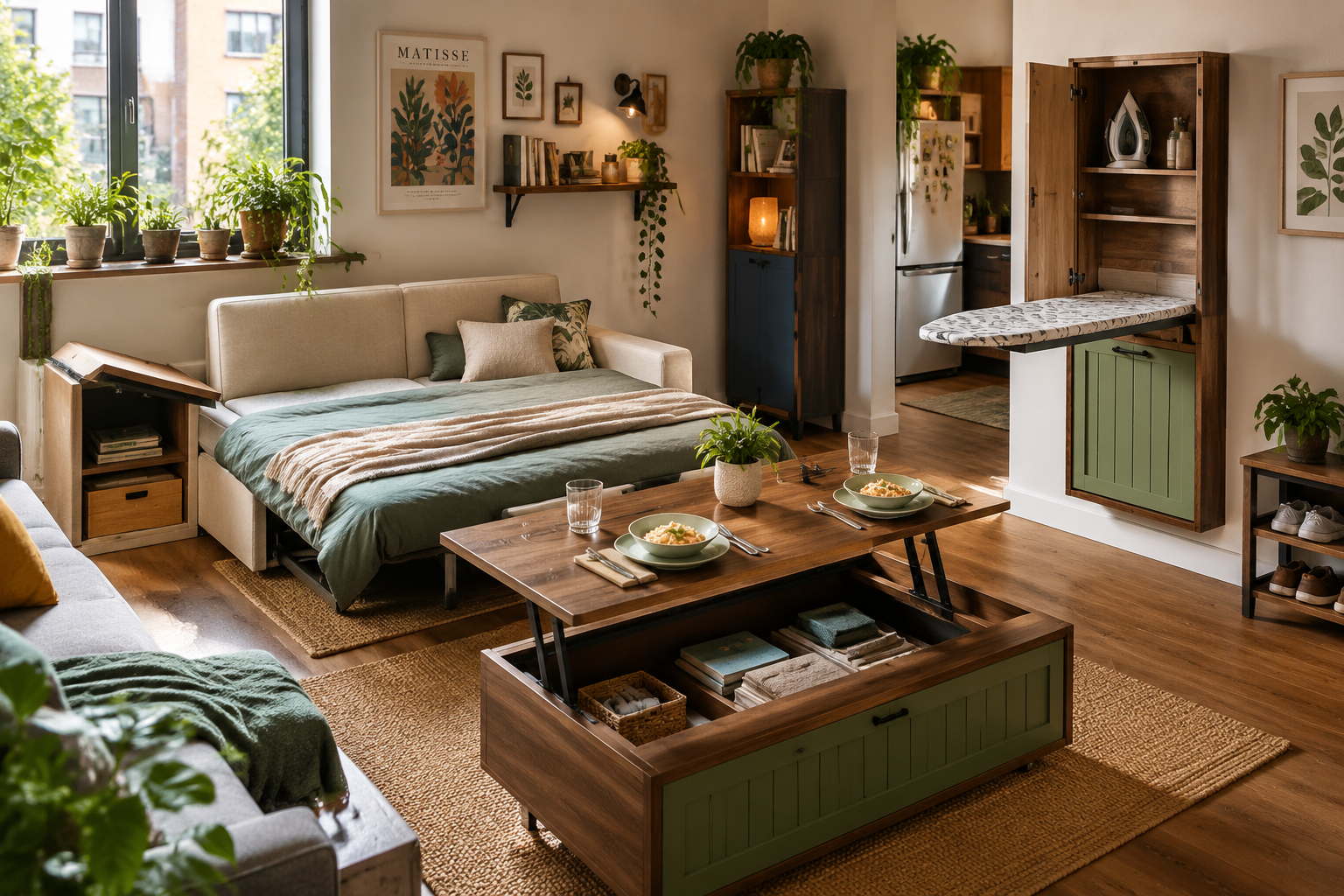
Consider the common challenges: a living room that needs to double as an office, a dining area that vanishes when not in use, or a bedroom requiring extra storage. Foldable tables, collapsible chairs, nesting stools, and wall-mounted shelves are not just space-savers; they are design statements that reflect ingenuity and personal style. These projects enhance versatility, allowing a single room to serve multiple purposes throughout the day.
Why Choose DIY for Small Spaces?
Opting for DIY woodworking offers several distinct advantages for small apartment dwellers:
- Customization: Create furniture that fits precise dimensions, matching existing decor and personal taste. Standard furniture often leaves awkward gaps or unused corners.
- Cost-Effectiveness: Building your own furniture can be significantly cheaper than buying custom-made pieces, especially when sourcing reclaimed or repurposed wood.
- Skill Development: Each project hones your woodworking skills, from joinery to finishing.
- Quality Control: You control the materials and construction, ensuring durability and longevity.
- Personal Expression: Infuse your personality into your living space with unique, handcrafted items.
For those looking to optimize their workshops for such projects, consider exploring building modular wood storage systems for small workshops to keep your tools and materials organized.
Designing and Planning Your Foldable and Collapsible Creations
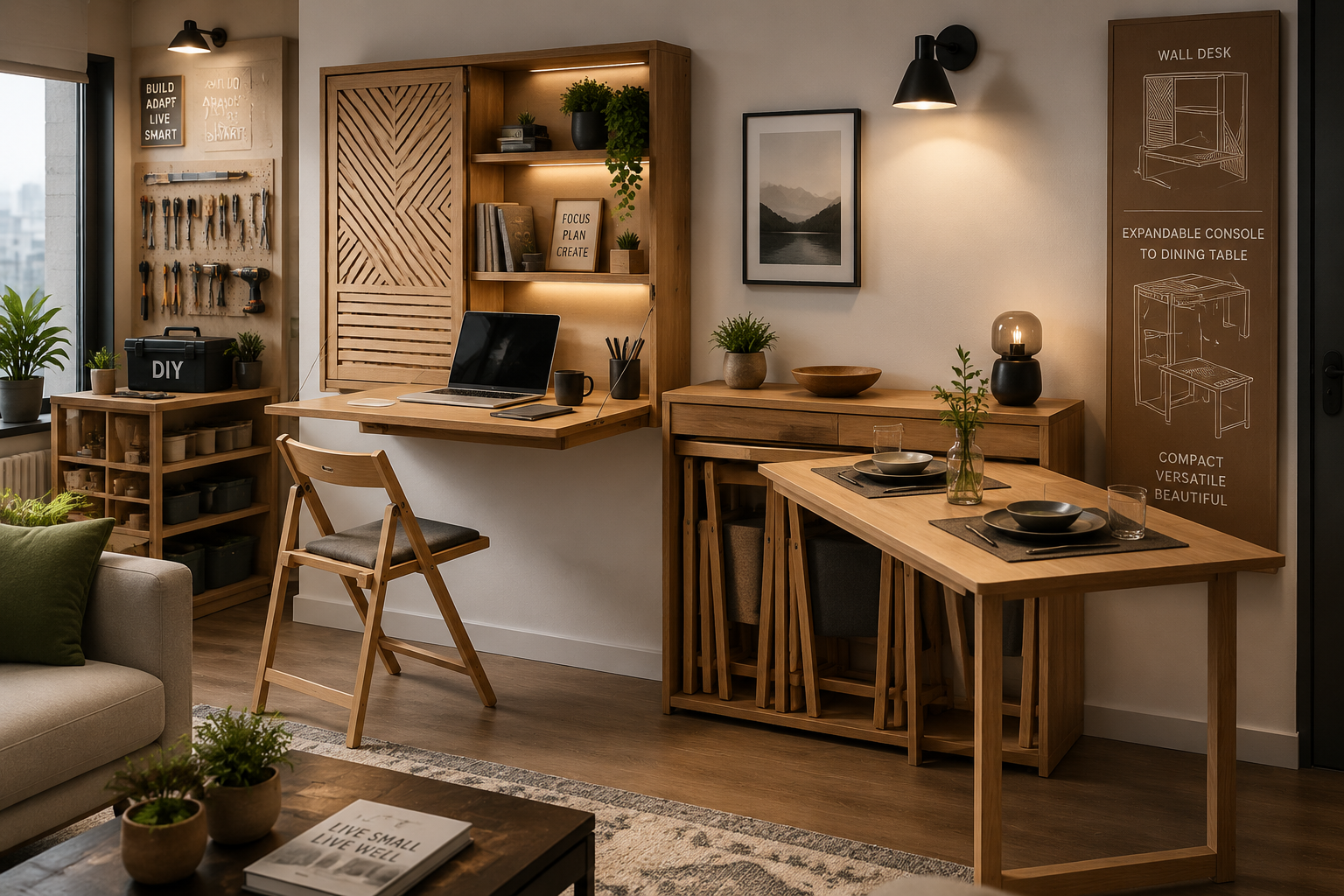
Successful DIY Woodworking for Small Apartments: Maximizing Functionality with Clever Foldable and Collapsible Furniture Designs begins with meticulous planning and smart design. Understanding the principles behind creating furniture that moves, folds, and stores efficiently is paramount. This involves sketching ideas, considering mechanics, and selecting appropriate materials.
Core Design Principles for Compact Furniture
When designing for small spaces, focus on these principles:
- Multi-Functionality: Can a single piece serve two or more purposes? (e.g., a coffee table that lifts to become a dining table, a bench with hidden storage).
- Collapsibility/Foldability: How can the item shrink when not in use? Think hinges, pivot points, and sliding mechanisms.
- Nesting/Stacking: Can multiple pieces fit inside or on top of each other? (e.g., nesting side tables, stackable stools).
- Wall-Mounting: Utilize vertical space to free up floor area. This can apply to desks, shelves, and even beds (like a Murphy bed).
- Lightweight Construction: While durability is important, lighter materials can make furniture easier to move and store.
- Simplicity: Elegant, minimalist designs often work best in small spaces, reducing visual clutter.
Essential Components and Mechanisms
To achieve the desired foldable or collapsible action, specific hardware and joinery techniques are crucial:
- Hinges: Heavy-duty, piano, or flush hinges are essential for folding panels, tabletops, and doors.
- Slides and Runners: For pull-out sections, drawers, or extending tabletops.
- Latches and Locks: To secure furniture in its open or closed position, preventing accidental collapses.
- Casters/Wheels: For mobile furniture that can be easily repositioned.
- Gas Struts/Springs: For assisted lifting mechanisms, particularly useful for Murphy beds or lifting tabletops.
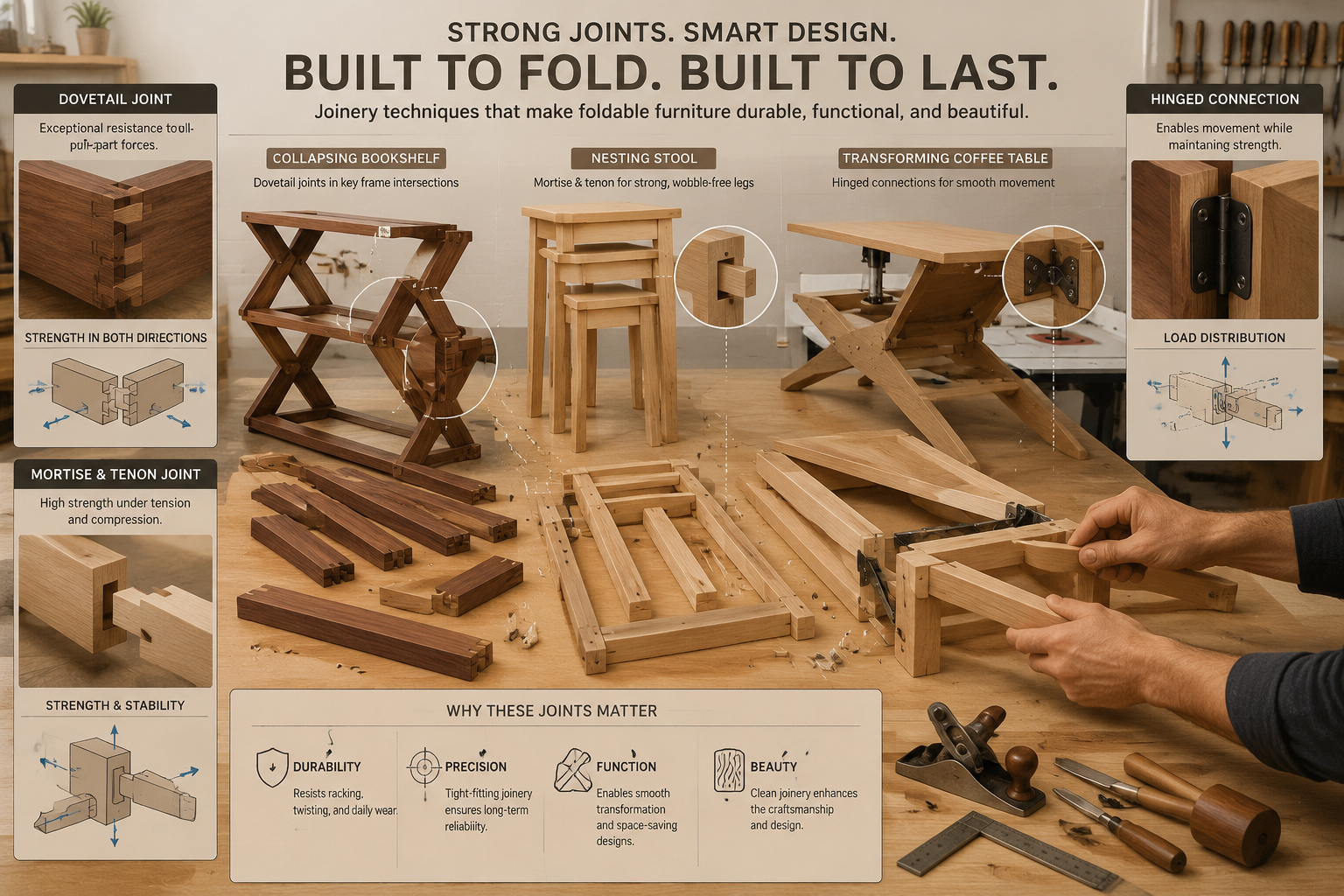
- Durable Joinery: Strong joints like mortise and tenon, dovetails, or reinforced butt joints ensure stability. For intricate designs, exploring mastering dovetail joinery for drawers can be highly beneficial.
| Furniture Type | Common Mechanism | Space-Saving Benefit |
|---|---|---|
| Wall-mounted desk | Folding hinges, support legs | Frees up floor space when closed |
| Collapsible dining table | Drop-leaf hinges, removable legs | Expands for dining, compacts for everyday use |
| Nesting stools/tables | Tapered legs, varying sizes | Stacks neatly, provides extra seating/surface |
| Murphy bed | Pivot mechanism, gas struts | Conceals bed, transforms room into other function |
| Modular shelving | Interlocking components | Reconfigurable, adapts to changing storage needs |
For larger projects like a Murphy bed, a dedicated guide like building a custom Murphy bed with integrated desk offers invaluable insights.
Material Selection
Choosing the right wood is vital. Plywood and MDF offer stability and are often more budget-friendly, suitable for painted finishes. Solid hardwoods like maple, oak, or cherry provide superior durability and aesthetic appeal, especially when stained or clear-coated. For projects that require a lighter touch, pine or even bamboo can be excellent choices. Always consider the weight-bearing requirements of your design when selecting materials.
Practical DIY Projects for Maximizing Apartment Space
Now, let’s explore some practical DIY Woodworking for Small Apartments: Maximizing Functionality with Clever Foldable and Collapsible Furniture Designs projects you can undertake. Each project emphasizes smart design to make the most of limited square footage.
1. The Fold-Down Wall Desk
A fold-down wall desk is a quintessential small-apartment solution. It provides a functional workspace when needed and neatly folds away when not in use, creating a clean, open living area.
- Materials: Plywood or solid wood for the desktop, sturdy hinges (piano hinge for strength), a support leg (folding or retractable), and wall-mounting hardware.
- Design Considerations:
- Size: Tailor the desk size to your specific needs and wall space.
- Integrated Storage: Add shallow shelves or compartments on the back of the desktop (which face the wall when closed) for pens, notebooks, or a tablet.
- Locking Mechanism: Ensure it locks securely in both open and closed positions.
- Stability: The support leg must be robust and properly angled.
2. Collapsible Dining Table
A dining table that can shrink or disappear is invaluable. Options include drop-leaf tables or designs where the legs fold flat.
- Materials: Solid wood or plywood for the tabletop, strong hinges, locking leg mechanisms, and a sturdy frame.
- Design Considerations:
- Leaf Mechanism: Drop-leaf designs are common, allowing one or both sides to fold down.
- Leg Folding: Legs can pivot inwards or detach entirely for compact storage.
- Portability: Consider adding small casters if the table needs to be moved frequently.
- Durability: Ensure the table can withstand regular use and support the weight of meals.
3. Nesting Side Tables or Stools
Nesting furniture is a simple yet effective way to gain versatility. A set of three tables or stools can provide multiple surfaces or seating options, then stack away into the footprint of the largest piece.
- Materials: Any preferred wood. Simple construction makes this an ideal project for beginners.
- Design Considerations:
- Tapering: Ensure the legs or frames taper slightly to allow one piece to fit inside another.
- Height Difference: Each piece needs to be progressively shorter to nest correctly.
- Stability: Even though they nest, each piece must be stable on its own.
- For decorative accents on these pieces, exploring advanced wood carving techniques for decorative furniture accents can add a touch of elegance.
4. Modular Wall Shelving or Storage Units
While not strictly “foldable,” modular shelving offers immense flexibility for small spaces, allowing you to reconfigure storage as needs change.
- Materials: Plywood, MDF, or solid wood panels.
- Design Considerations:
- Interlocking Joints: Design units that can lock together securely without permanent fasteners.
- Varied Sizes: Create different sized modules for books, decor, or hidden storage.
- Wall Anchoring: Ensure the units can be securely anchored to the wall for safety.
- This concept is similar to building modular wood storage systems for small workshops, but adapted for living spaces.
5. Ottoman with Hidden Storage and Tray Top
An ottoman is a versatile piece that can serve as extra seating, a footrest, and a coffee table (with a reversible tray top). Adding hidden storage multiplies its functionality.
- Materials: Plywood for the frame, soft wood for trim, upholstery fabric, foam, and small hinges for the lid.
- Design Considerations:
- Sturdy Frame: The internal frame must be strong enough for seating.
- Lid Mechanism: Hinged lid for easy access to storage.
- Tray Top: A removable or reversible lid with a flat, finished side for drinks/snacks.
- Mobility: Consider adding hidden casters for easy movement.
These projects demonstrate the power of DIY Woodworking for Small Apartments: Maximizing Functionality with Clever Foldable and Collapsible Furniture Designs. Each piece, thoughtfully designed and carefully built, contributes significantly to a more functional and enjoyable living environment. For more creative ideas that integrate into small living spaces, you might find inspiration in crafting custom wooden planters or even mastering wooden napkin holders: foldable designs for compact dining.
Conclusion
Embracing DIY Woodworking for Small Apartments: Maximizing Functionality with Clever Foldable and Collapsible Furniture Designs is more than just a hobby; it’s a strategic approach to creating a more livable and enjoyable small space. By designing and building your own multi-functional furniture, you unlock the potential of every square inch, transforming limitations into opportunities for innovation and personal expression. From fold-down desks to nesting tables and modular shelving, each project not only saves precious space but also infuses your home with unique character and craftsmanship. The satisfaction of utilizing a piece of furniture you’ve built yourself, knowing it perfectly suits your apartment’s specific needs, is unparalleled.
Actionable Next Steps:
- Assess Your Space: Identify areas in your apartment where space is underutilized or where a multi-functional piece could make a significant difference.
- Sketch and Plan: Before cutting any wood, draw out your designs, consider the mechanisms, and create a detailed cut list.
- Start Small: Begin with simpler projects like a fold-down shelf or nesting stools to build confidence and refine your skills.
- Invest in Quality Hardware: Good quality hinges, slides, and locking mechanisms are crucial for the longevity and smooth operation of foldable furniture.
- Prioritize Safety: Always wear appropriate safety gear and ensure your workspace is organized, especially when using power tools. For guidance on setting up an efficient workspace, check out building a custom wood workbench.
By taking these steps, you can embark on a rewarding journey of crafting a home that is both beautiful and highly efficient, perfectly suited to the demands of small apartment living in 2026.
SEO Meta Title: DIY Woodworking for Small Apartments: Foldable Furniture Designs SEO Meta Description: Maximize space in your small apartment with DIY woodworking. Learn to build clever foldable and collapsible furniture designs for ultimate functionality in 2026.