
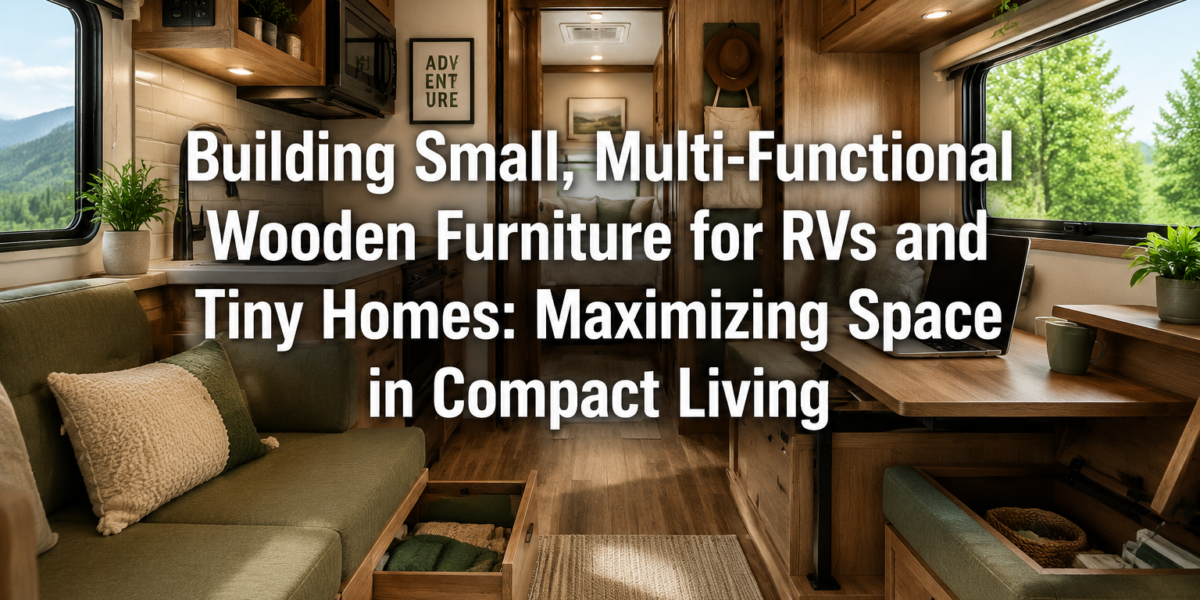
In a living space of just 200 square feet, every inch must earn its keep. This fundamental truth drives the entire philosophy behind Building Small, Multi-Functional Wooden Furniture for RVs and Tiny Homes: Maximizing Space in Compact Living. As more individuals embrace the freedom and efficiency of compact living, the demand for intelligently designed, space-saving furniture has surged. This article delves into the innovative woodworking designs that transform confined areas into highly functional and aesthetically pleasing homes on wheels or tiny foundations, showcasing projects for multi-functional furniture such as transforming tables, modular storage, and collapsible seating that optimize every inch.
The challenge isn’t merely to fit furniture into a small area, but to engineer pieces that adapt, morph, and serve multiple purposes, often imperceptibly. This requires a blend of creative design, precise joinery, and a deep understanding of material properties. For woodworkers, this niche offers a rewarding avenue for craftsmanship, pushing the boundaries of traditional furniture design to meet the unique demands of minimalist lifestyles in 2026.
Key Takeaways
- Necessity Breeds Innovation: Compact living demands furniture that performs multiple roles, leading to ingenious transforming designs.
- Material Selection is Crucial: Lightweight, durable woods and appropriate hardware are essential for RVs and tiny homes.
- Modular and Collapsible Designs: These principles underpin effective space maximization, allowing flexibility and adaptability.
- Precision and Joinery: High-quality joinery is vital for durability and smooth operation of multi-functional pieces.
- Ergonomics and Aesthetics: Furniture must not only be functional but also comfortable and visually appealing within a limited footprint.
The Principles of Maximizing Space Through Furniture Design
When designing for compact living, the overarching goal is to achieve maximum utility from minimal footprint. This isn’t just about making things smaller; it’s about making them smarter. The principles that guide Building Small, Multi-Functional Wooden Furniture for RVs and Tiny Homes: Maximizing Space in Compact Living revolve around versatility, modularity, and thoughtful integration.
Versatility: The Cornerstone of Compact Furniture
Every piece of furniture in an RV or tiny home should ideally serve at least two functions. A perfect example is a coffee table that expands into a dining table, or a bench that offers hidden storage. This duality reduces the need for separate items, freeing up valuable floor space. The trick lies in clever mechanisms – slides, hinges, and interlocking components – that allow for seamless transformation.
Consider a simple wooden bench. With internal compartments, it becomes a storage solution for linens or tools. Add a flip-top and a sturdy leg system, and it transforms into a small desk or workbench. This kind of adaptive design is fundamental.
 image showcasing a transforming wooden coffee table in a tiny home living area. The table is depicted](https://zsxkvszxbhpwnvzxdydv.supabase.co/storage/v1/object/public/generated-images/kie/a92b8583-a537-42ed-945b-3c561201d6c8/slot-1-1778388043247.png))
Modularity: Building Blocks for Flexible Living
Modular furniture systems are excellent for compact spaces because they can be reconfigured to suit different needs or even moved between different areas. Imagine stackable storage cubes that can be arranged as shelving, a room divider, or even temporary seating. This approach allows residents to customize their space on the fly.
Woodworkers can create individual modules using consistent dimensions and joinery, making them interchangeable. For instance, a series of identical wooden boxes could function as a bookshelf, then be rearranged to form a base for a bed, or even transported to become outdoor seating. This flexibility is invaluable in a dynamic environment like an RV. For ideas on constructing robust shelving systems, explore our guide on mastering shelf woodworking.
Collapsible and Fold-Away Designs
When a piece of furniture isn’t in use, the ideal scenario is for it to disappear, freeing up space entirely. Collapsible tables, fold-down desks, and murphy beds are prime examples. These designs utilize wall space or integrate into larger structures, becoming invisible when not needed.
The key to successful collapsible furniture is robust hardware and precise construction. Hinges, latches, and sliding mechanisms must withstand repeated use and the vibrations often experienced in RVs. Selecting the right wood is also critical; lightweight yet strong options are preferred. For projects that utilize reclaimed wood, ensuring structural integrity is even more important, and our article on sustainable finishes for reclaimed wood might offer valuable insights for durable, eco-friendly protection.
Essential Design Considerations and Woodworking Techniques
Building Small, Multi-Functional Wooden Furniture for RVs and Tiny Homes: Maximizing Space in Compact Living demands not only creativity but also a solid understanding of woodworking fundamentals, material science, and safety. Each design decision carries significant weight in confined environments.
Material Selection: Lightness, Strength, and Durability
The choice of wood is paramount. Heavy woods can reduce fuel efficiency in RVs and make furniture difficult to move. Plywood, particularly marine-grade or Baltic birch, is a popular choice due to its strength-to-weight ratio and stability. Solid woods like poplar, pine, or cedar offer beauty and relatively light weight.
| Wood Type | Pros | Cons | Best Use |
|---|---|---|---|
| Baltic Birch | Strong, stable, good for joinery, excellent finish | Can be expensive, heavier than some alternatives | Cabinetry, drawer boxes, structural components |
| Poplar | Lightweight, inexpensive, good for painting, takes stain well | Softer, can dent easily | Interior framing, painted surfaces |
| Pine | Lightweight, inexpensive, easy to work, rustic aesthetic | Prone to dents, can be knotty, less durable | Shelving, decorative panels |
| Cedar | Lightweight, aromatic, insect/rot resistant (outdoors), durable | Soft, can scratch easily, strong aroma might not suit all interiors | Closets, aromatic storage, outdoor accents |
| Bamboo Plywood | Sustainable, hard, stable, unique grain | More expensive, can be harder to cut cleanly | Tabletops, modern cabinetry |
Hardware selection is equally important. High-quality slides for drawers, heavy-duty hinges for fold-down tables, and robust latches are investments that pay off in longevity and smooth operation.
image featuring a detailed schematic or blueprint of a modular wooden storage unit designed for an RV. The illustration](https://zsxkvszxbhpwnvzxdydv.supabase.co/storage/v1/object/public/generated-images/kie/a92b8583-a537-42ed-945b-3c561201d6c8/slot-2-1778388077395.png))
Precision Joinery for Longevity and Smooth Operation
In multi-functional furniture, components often move, slide, or articulate. This means joinery must be strong enough to handle dynamic stress and precise enough to ensure smooth, snag-free operation. Traditional joinery methods like dovetails, mortise and tenon, and dadoes are excellent for their strength. However, for faster construction, pocket screws and concealed fasteners can be effective if combined with strong adhesives.
- Dovetail Joints: Ideal for drawers and cabinet boxes where strength and aesthetics are key.
- Mortise and Tenon: Excellent for frame construction, providing superior strength in load-bearing parts.
- Dadoes and Rabbets: Perfect for shelving, dividers, and back panels, offering robust support.
- Pocket Screws: Useful for quick assembly and hidden fastening, particularly for internal frames or less visible joints.
For more on advanced joinery techniques that enhance both strength and aesthetic appeal, consider reading about mastering modern hand-cut joinery.
Ergonomics and User Experience
Even in compact spaces, comfort and ease of use are non-negotiable. Furniture should be designed with the human body in mind. This includes appropriate heights for tables and seating, comfortable angles for backs, and easy access to storage. Test designs rigorously to ensure they are intuitive to use and don’t create awkward movements. For those interested in creating comfortable workshop pieces, our guide on creating ergonomic workshop furniture offers valuable insights that can be adapted for tiny living spaces.
Innovative Projects for Maximizing Space
The beauty of Building Small, Multi-Functional Wooden Furniture for RVs and Tiny Homes: Maximizing Space in Compact Living lies in the endless possibilities for creative solutions. Here are a few project ideas that exemplify the principles discussed.
Transforming Dining/Work Tables
A dining table that can shrink, expand, or even fold away entirely is a cornerstone of compact living.
- Slide-Out Tables: A small countertop can have a hidden table that slides out on heavy-duty rails, complete with fold-down legs.
- Gateleg Tables: These classic designs offer expandable surfaces by simply unfolding hinged leaves supported by swing-out legs.
- Wall-Mounted Fold-Down Desks: A simple hinged panel secured to the wall can serve as a desk or small dining surface, disappearing when not needed. These can be integrated beautifully with smart workshop storage solutions for a combined workspace and storage area.
Modular Storage and Seating
Storage that doubles as seating is a highly efficient use of space.
- Bench Seating with Lift-Top Storage: A built-in bench around a dining area can offer comfortable seating and vast storage underneath.
- Stackable Stools/End Tables: Simple wooden cubes can serve as extra seating, side tables, or be stacked to create shelves.
- Under-Bed Drawers/Cabinets: Maximizing the space beneath a bed with pull-out drawers or hinged compartments for clothes or supplies.
Murphy Beds and Convertible Sleeping Solutions
The murphy bed is the ultimate space-saver for sleeping areas, making the bed disappear during the day.
- Integrated Murphy Beds: Designs can integrate the bed frame seamlessly into a wall unit, revealing a desk or bookshelf when folded up.
- Sofa Beds/Daybeds: While not strictly woodworking, the frames for these can be custom-built to perfectly fit a tiny space, often incorporating hidden storage.
- Bunk Beds with Desks: For families, custom-built bunk beds can incorporate desks or play areas beneath the top bunk, utilizing vertical space effectively.
image showing a warm, inviting tiny home bedroom with a wooden murphy bed fully retracted, revealing a built-in desk and](https://zsxkvszxbhpwnvzxdydv.supabase.co/storage/v1/object/public/generated-images/kie/a92b8583-a537-42ed-945b-3c561201d6c8/slot-3-1778388046933.png))
Vertical Storage Solutions
In compact homes, “up” is often the most underutilized direction.
- Floor-to-Ceiling Shelving: Custom-built shelves that fit snugly against walls provide significant storage without taking up floor space.
- Overhead Cabinets: Above doors, windows, and in hallways, custom cabinets can house lesser-used items.
- Pegboards with Custom Attachments: A wooden pegboard can be a versatile storage solution for kitchens or workshops, allowing hooks and shelves to be reconfigured as needed. This concept is explored further in our article on building a custom wood workbench, which often includes integrated pegboard systems.
Conclusion
Building Small, Multi-Functional Wooden Furniture for RVs and Tiny Homes: Maximizing Space in Compact Living is more than just a woodworking niche; it’s a testament to ingenuity and efficiency. As the appeal of compact living continues to grow, so too will the demand for cleverly designed, durable, and aesthetically pleasing furniture that makes every square foot count. For woodworkers, this field offers immense creative satisfaction and practical challenges that hone skills in design, joinery, and material selection.
Whether you’re crafting a transforming dining table for an RV or a modular storage system for a tiny house, the focus remains on innovation, functionality, and precision. By embracing the principles of versatility, modularity, and collapsible design, woodworkers can create pieces that don’t just fit into small spaces, but truly enhance the quality of life within them. The future of compact living is built on smart design, and woodworkers are at the forefront of shaping that future in 2026.
Actionable Next Steps:
- Start Small: Begin with a single multi-functional piece, like a storage ottoman or a fold-down shelf, to practice the necessary techniques.
- Research Mechanisms: Investigate different hardware solutions (slides, hinges, gas struts) to understand their applications and limitations.
- Sketch and Plan: Thoroughly plan your designs, considering dimensions, transformations, and material cuts before you begin.
- Prioritize Safety: Always use appropriate safety gear and follow best practices when working with power tools and adhesives. For enhanced safety and precision in your workshop, consider integrating modern technologies as discussed in DIY Smart Workshop Upgrades: Integrating AI and IoT for Enhanced Precision and Safety.
- Seek Inspiration: Look at existing tiny home and RV designs for ideas, and adapt them to your specific needs and woodworking skill level.
References
- Duffield, J. (2020). Tiny House Design & Construction Guide. Tiny Nest.
- Shepherd, K. (2018). The Minimalist Home: A Room-by-Room Guide to a Decluttered, Refocused Life.
- Wood Magazine. (2023). Small Space Solutions: Maximizing Your Home’s Footprint. Meredith Corporation.