
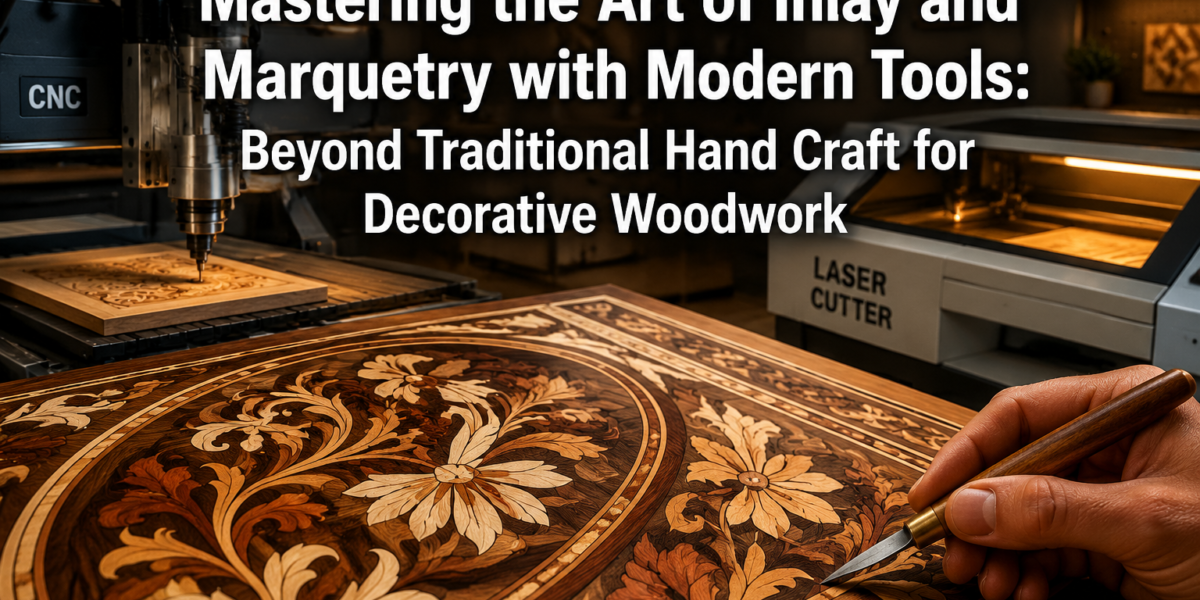
The average piece of handcrafted furniture saw its value increase by 10-15% annually between 2020 and 2025, a testament to the enduring appeal of bespoke woodwork. This surge isn’t solely driven by traditional methods; rather, a significant portion stems from artisans who are adept at Mastering the Art of Inlay and Marquetry with Modern Tools: Beyond Traditional Hand Craft for Decorative Woodwork. Far from replacing the seasoned hand, contemporary tools like CNC routers and laser cutters are elevating these ancient decorative techniques, allowing for unprecedented complexity, accuracy, and efficiency in creating stunning wood embellishments for furniture and art. This evolution isn’t just about speed; it’s about expanding creative horizons, enabling woodworkers to realize designs once deemed impossible.
Key Takeaways
- Modern tools such as CNC routers and laser cutters significantly enhance the precision and complexity achievable in inlay and marquetry.
- Integrating digital design software (CAD/CAM) streamlines the planning and execution phases, reducing errors and material waste.
- While modern tools offer efficiency, a foundational understanding of traditional hand craft techniques remains crucial for artistic judgment and finishing.
- The combination of old and new allows for the creation of intricate, multi-material designs previously unattainable, pushing the boundaries of decorative woodworking.
- Safety protocols and proper tool maintenance are paramount when operating advanced woodworking machinery to achieve optimal results and ensure longevity.
The Evolution of Inlay and Marquetry: Blending Ages of Craftsmanship
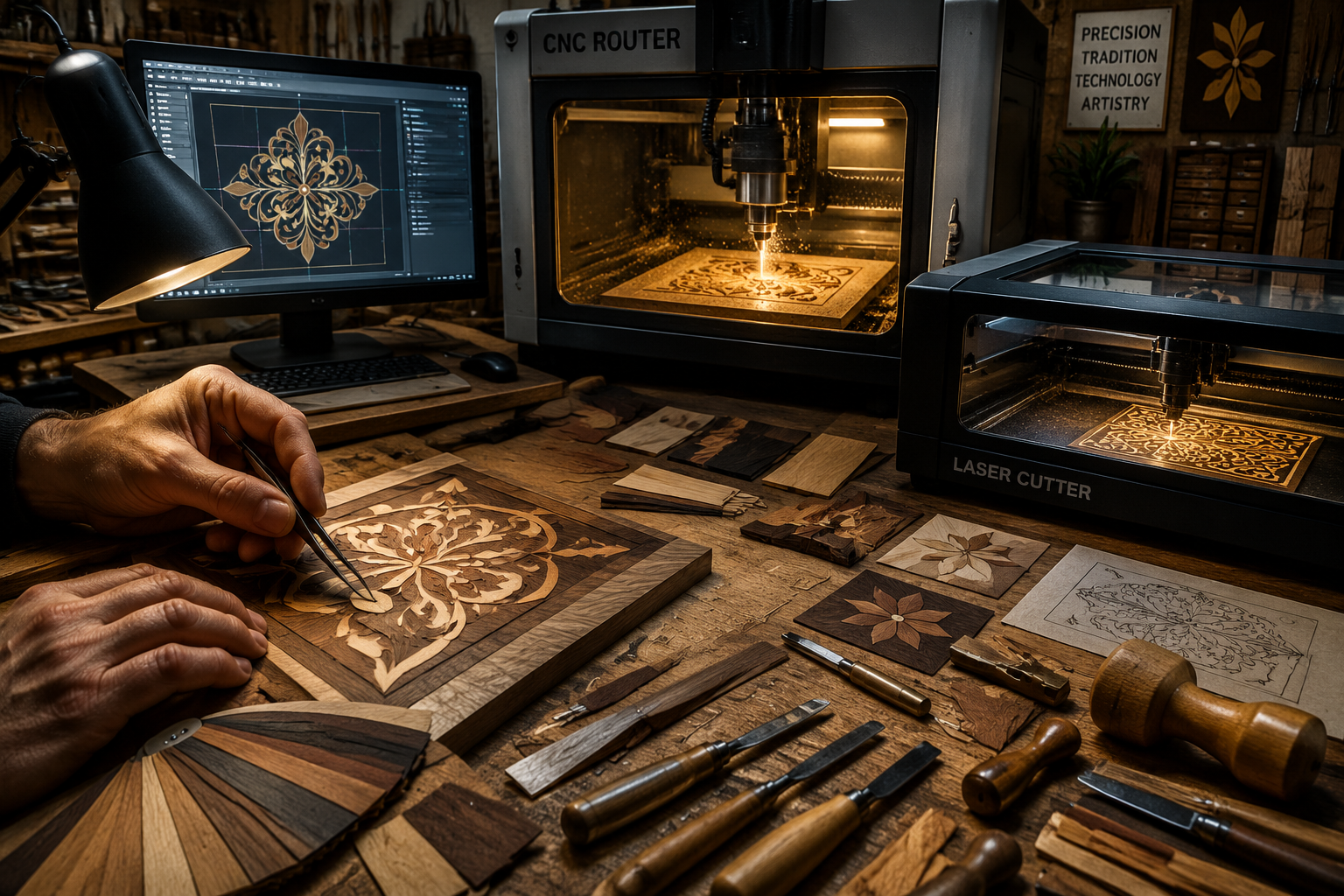
For centuries, inlay and marquetry have transformed ordinary wooden surfaces into extraordinary canvases of art. Inlay involves embedding contrasting materials flush into a solid wood substrate, while marquetry uses veneers to create pictorial or decorative patterns across a surface. Historically, these techniques relied entirely on meticulous hand cutting, often with a fretsaw, veneer saw, and a steady hand. The process was painstaking, requiring immense patience and skill, limiting designs to what could be practically cut by hand and often reserved for royalty or the wealthiest patrons.
Today, the landscape of decorative woodworking is experiencing a profound transformation. While the core principles of aesthetic design and material selection remain timeless, the advent of precision power tools has revolutionized the execution of these intricate arts. Mastering the Art of Inlay and Marquetry with Modern Tools: Beyond Traditional Hand Craft for Decorative Woodwork signifies a paradigm shift where artisans can achieve levels of detail and repeatability that were once unimaginable.
The Role of Digital Design and Fabrication
The journey into modern inlay and marquetry often begins long before a tool touches wood – it starts in the digital realm. Computer-Aided Design (CAD) software empowers woodworkers to conceptualize and refine their patterns with unparalleled precision.
Benefits of CAD for Inlay and Marquetry:
- Precision and Scale: Designs can be scaled accurately, replicated, and modified without affecting physical materials.
- Complex Geometries: Intricate curves, delicate lines, and interlocking patterns that would be incredibly difficult or impossible to cut by hand become feasible.
- Material Optimization: Software can help layout veneer pieces to minimize waste, a significant economic advantage when working with expensive, exotic woods.
- Visualization: Digital renderings allow artists to see the final product before any cutting begins, facilitating adjustments and client approvals.
Once a design is finalized in CAD, Computer-Aided Manufacturing (CAM) software translates it into instructions for modern fabrication tools. This is where the magic of the modern workshop truly shines.
Modern Fabrication Tools:
- CNC Routers: These computer-controlled machines can precisely carve recesses for inlay or cut complex marquetry pieces from veneer sheets. They excel at repetitive tasks and maintaining consistent depth and accuracy across large areas. A well-programmed CNC can replicate a design flawlessly, making it ideal for furniture series or architectural panels. For intricate joinery, a deeper understanding of tools like the router table can be immensely beneficial: Mastering the Router Table: Beyond Basic Edges for Precision Joinery.
- Laser Cutters: Offering even finer detail and cleaner edges, laser cutters are particularly adept at cutting thin veneers for marquetry. They can handle incredibly delicate patterns, fine text, and even engrave textures or shading onto wood surfaces. The laser’s ability to cut without physical contact eliminates tool marks and simplifies the cutting of fragile materials. For precision cuts and mastering detail work, understanding Hand Tool Mastery for Detail Work: Chisels, Hand Planes, and can complement these modern methods.
Integrating Traditional Skills
While modern tools automate much of the cutting, the art of inlay and marquetry still demands significant traditional woodworking expertise. The selection of materials, understanding wood grain, color matching, gluing techniques, and especially the finishing processes, remain firmly in the domain of the skilled artisan.
| Aspect of Craftsmanship | Modern Tools’ Contribution | Artisan’s Enduring Role |
|---|---|---|
| Cutting Precision | High | Material prep, fine tuning |
| Design Complexity | Very High | Artistic vision, aesthetics |
| Material Selection | N/A | Expert judgment |
| Assembly & Gluing | N/A | Skillful execution |
| Finishing | N/A | Sanding, polishing, sealing |
| Error Reduction | High | Problem-solving, correction |
A truly masterful piece of inlay or marquetry in 2026 will often be a collaboration between man and machine. The machine provides the accuracy and speed, while the human hand provides the soul, the artistic touch, and the discerning eye for perfection.
Modern Techniques and Workflows for Mastering the Art of Inlay and Marquetry
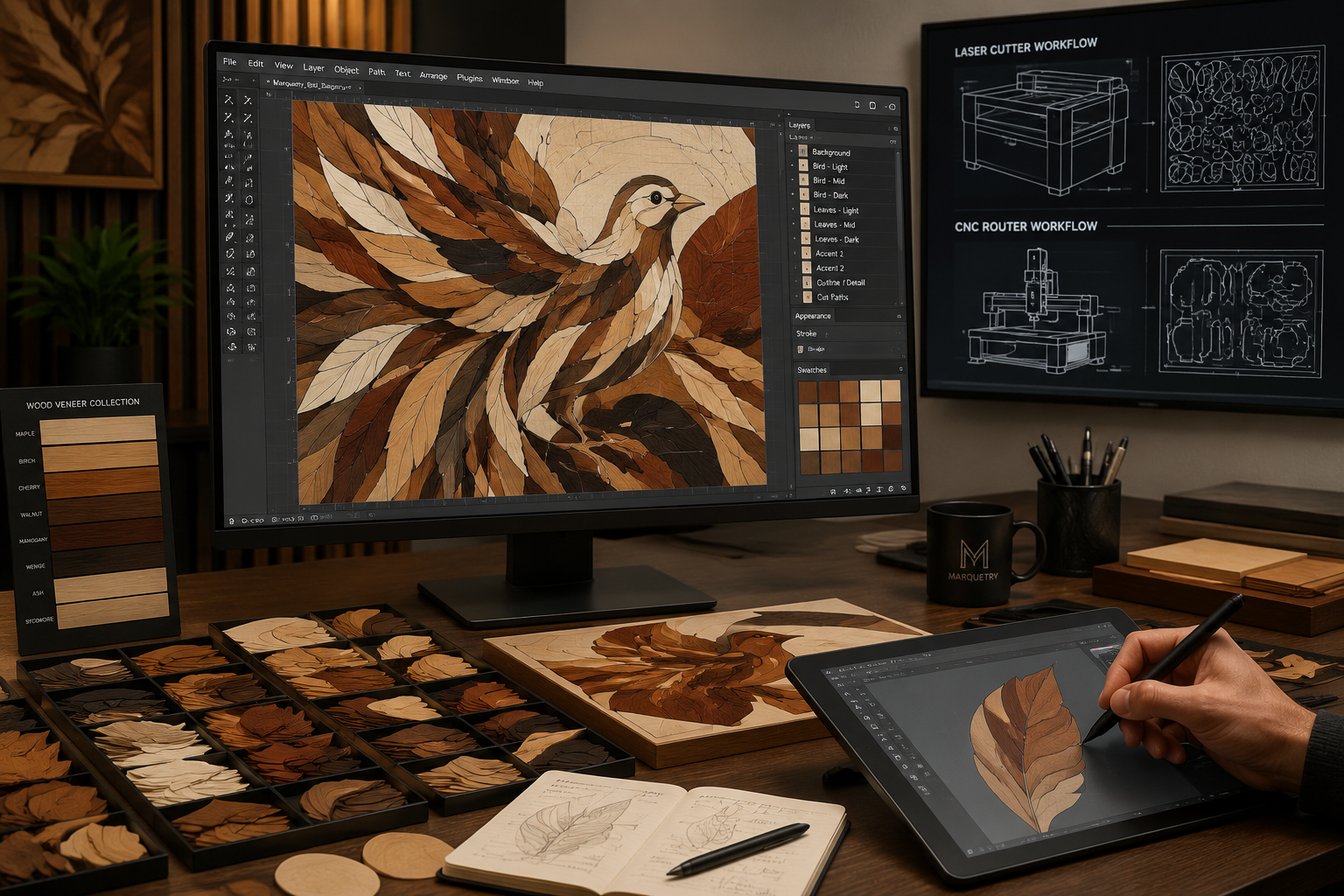
The journey from concept to a stunning finished piece involves a refined workflow that integrates digital planning with precise execution. This section delves into the practical aspects of utilizing modern tools effectively.
Design and Material Preparation
The foundation of any successful inlay or marquetry project lies in meticulous design.
Steps in Digital Design:
- Sketching and Concept Development: Begin with hand sketches or basic digital drawings to capture the initial idea.
- CAD Software Mastery: Transfer concepts into a vector-based CAD program (e.g., Adobe Illustrator, Inkscape, AutoCAD, VCarve Pro). This is where shapes are refined, dimensions are set, and layers for different materials are defined.
- Toolpath Generation (CAM): Export the vector design to CAM software. Here, toolpaths are created for the CNC router or laser cutter, specifying cutting depths, speeds, and the order of operations. Consider the nuances of wood species; for instance, understanding specific Mahogany Wood Finishing Techniques can influence material selection at this stage.
Material Selection and Preparation:
- Substrate Wood: Choose a stable, flat, and appropriately colored wood for the base. Ensure it’s perfectly planed and sanded.
- Veneers and Inlay Materials: Select veneers based on color, grain, and thickness. Exotic woods, mother-of-pearl, abalone, brass, or even synthetic materials can be used for inlay. Thinner veneers (0.6mm – 1mm) are ideal for marquetry.
- Adhesive Considerations: Different materials and techniques may require specific glues. For instance, traditional hide glue for marquetry offers reversibility, while modern PVA glues provide strong, permanent bonds.
Precision Cutting with CNC and Laser
This is where modern tools truly shine, translating digital designs into physical components.
Using a CNC Router for Inlay:
- Routing the Recess: The CNC router is programmed to carve a precise pocket in the substrate material, matching the exact shape and depth of the inlay piece. This ensures a perfectly flush fit.
- Cutting Inlay Pieces: The same CNC can then cut the inlay material (wood, metal, etc.) to fit the routed recess. This two-step process guarantees a high degree of accuracy.
- Router Bits: The choice of router bit is critical. Up-cut spiral bits are excellent for clearing chips, while down-cut bits provide a cleaner top edge. V-bits can be used for intricate details and chamfered edges. Understanding the broader applications of router tables can also be beneficial: Mastering the Router Table: Essential Jigs, Safety, and Advanced.
Using a Laser Cutter for Marquetry:
- Veneer Cutting: Laser cutters are ideal for cutting delicate veneer pieces for marquetry. The precise, narrow kerf (the width of the cut) means minimal material loss and incredibly tight joints.
- Stack Cutting: Multiple layers of veneer can often be cut simultaneously, especially with a powerful laser, increasing efficiency for multi-piece patterns.
- Engraving and Shading: Beyond cutting, lasers can engrave fine details, textures, or subtle shading onto veneer surfaces, adding another dimension to marquetry designs. This also extends to other craft items, such as Engraved Wooden Coasters with Custom Designs: Laser and Hand.
Safety First: Always operate CNC routers and laser cutters in well-ventilated areas, wearing appropriate personal protective equipment (PPE) such as eye protection, hearing protection, and respirators, especially when working with certain woods or burning materials with a laser.
Assembly and Finishing: The Artisan’s Touch
Once the components are cut, the artistry transitions back to the hands of the woodworker.
Assembly for Inlay:
- Test Fit: Always dry-fit the inlay pieces into their recesses to ensure a perfect fit. Minor adjustments might still be needed with a sharp chisel.
- Gluing: Apply a thin, even coat of glue to the recess and the back of the inlay piece. Carefully place the inlay, ensuring it’s fully seated.
- Clamping and Drying: Apply even pressure using clamps or weighted cauls to ensure good adhesion and a flush surface. Allow ample drying time.
Assembly for Marquetry:
- Taping (Traditional): For complex marquetry, pieces are often held together with veneer tape on the face side to keep the pattern intact during assembly.
- Pressing: Once assembled and glued to the substrate (often with a vacuum press or cauls), the marquetry panel needs consistent pressure to ensure a strong, flat bond.
- Sanding and Finishing: After the glue has thoroughly dried, the surface must be carefully sanded to be perfectly flush. Start with finer grits to avoid sanding through thin veneers. The final finish—oil, varnish, lacquer—will bring out the natural beauty and contrasting colors of the woods. Exploring various wood finishing techniques will be vital for achieving the desired aesthetic and protection.
Pushing Creative Boundaries with Modern Inlay and Marquetry
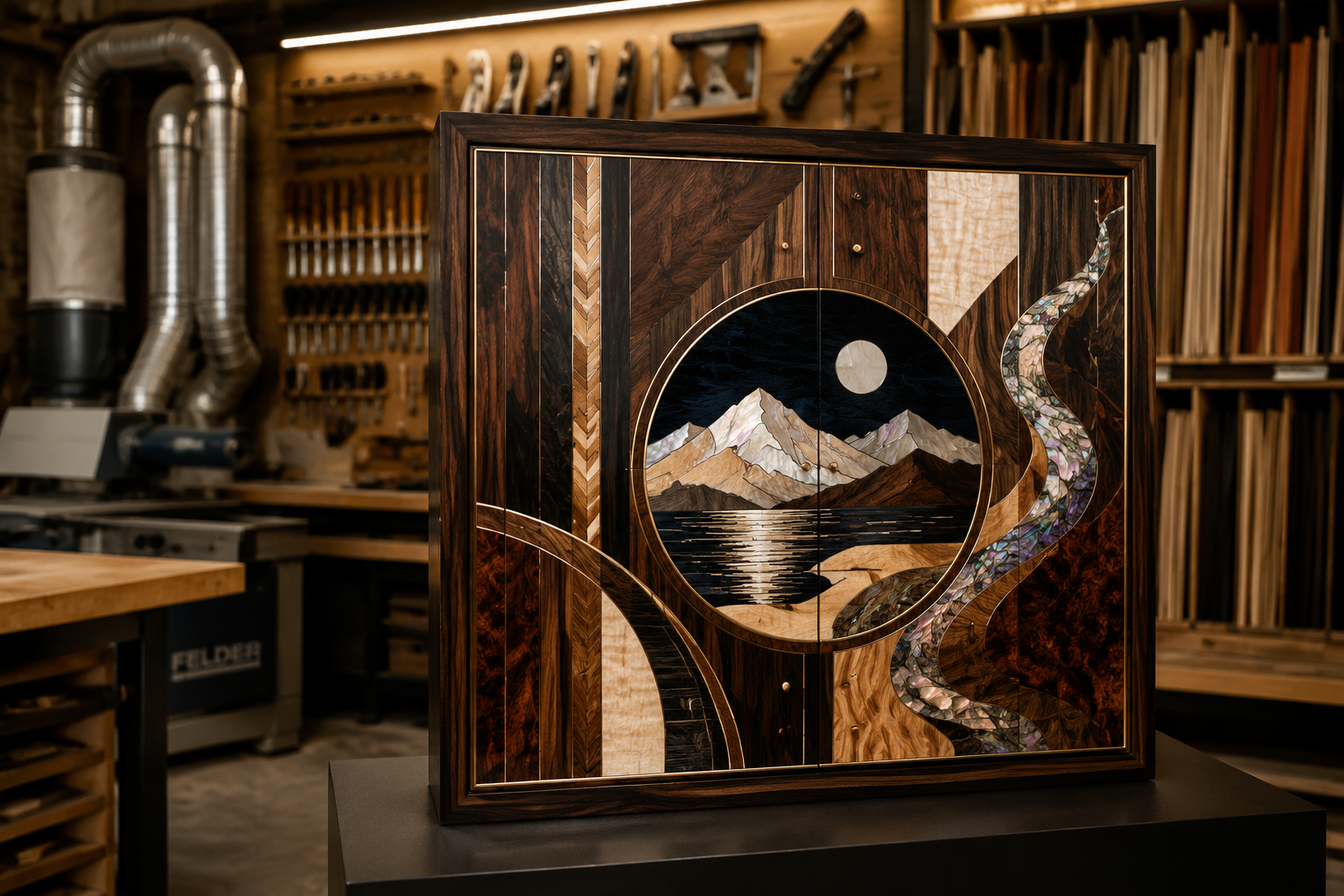
The fusion of traditional skills with cutting-edge technology isn’t just about efficiency; it’s about unlocking new creative possibilities. In 2026, artisans are creating pieces that would have been inconceivable even a few decades ago, truly demonstrating Mastering the Art of Inlay and Marquetry with Modern Tools: Beyond Traditional Hand Craft for Decorative Woodwork.
Multi-Material Integration
Modern tools facilitate the integration of diverse materials beyond wood. Imagine marquetry that combines delicate wood veneers with iridescent mother-of-pearl, gleaming brass accents, or even embedded semi-precious stones. Laser cutters can precisely cut these harder materials, allowing them to be incorporated seamlessly into a wooden design. This expands the textural and visual richness of decorative woodwork, offering a broader palette for artistic expression.
Intricate Geometries and Three-Dimensional Effects
With the precision of CNC routers, woodworkers can create inlays with varying depths, giving a subtle three-dimensional quality to their designs. Complex patterns, such as tessellations, fractals, or intricate geometric forms, can be executed with perfect symmetry and repeatability. This capability opens doors to highly sophisticated and visually engaging decorative elements for furniture, wall panels, and bespoke cabinetry. For those exploring unique design narratives in their interiors, consider Narrative Interiors Through Woodworking: Sourcing and Crafti.
Personalization and Customization
The speed and precision of modern tools make custom inlay and marquetry more accessible. From personalizing furniture with monograms or family crests to crafting intricate wall art featuring specific imagery, the ability to rapidly design and fabricate unique pieces caters to a growing demand for bespoke items. This allows artisans to offer highly individualized work without the prohibitive time costs of purely hand-cut methods.
The Future of Decorative Woodwork
As technology continues to advance, so too will the potential for inlay and marquetry. Imagine AI-assisted design software that suggests optimal veneer layouts or robotic arms that assist in the delicate placement of marquetry pieces. The core artistry will always remain, but the tools at the artisan’s disposal will become ever more powerful, enabling them to push the boundaries of creativity and craftsmanship further than ever before. For those looking to integrate technology in the broader workshop, consider DIY Smart Workshop Upgrades: Integrating AI and IoT for Enhanced.
The artisan who embraces both the time-honored techniques and the innovations of modern technology will be best positioned to thrive in the evolving world of decorative woodwork.
Conclusion
The journey of Mastering the Art of Inlay and Marquetry with Modern Tools: Beyond Traditional Hand Craft for Decorative Woodwork is one of continuous learning and adaptation. By thoughtfully integrating the precision and efficiency of CNC routers and laser cutters with the irreplaceable artistic judgment and finishing skills of traditional handcraft, woodworkers in 2026 are elevating decorative woodwork to unprecedented levels of complexity and beauty.
This symbiotic relationship between old and new not only preserves ancient art forms but also propels them into a dynamic future. For aspiring and experienced woodworkers alike, embracing these modern tools is not a compromise of tradition, but an expansion of possibilities. The intricate patterns, the seamless material integrations, and the boundless customization now achievable stand as a testament to this powerful evolution. Start by experimenting with simpler designs on scrap wood, investing in good software, and gradually incorporating these powerful machines into your workflow. The future of decorative woodworking is bright, precise, and breathtakingly beautiful.
SEO Meta Title: Mastering Inlay & Marquetry with Modern Wood Tools SEO Meta Description: Unlock precision and creativity in decorative woodworking! Learn to blend traditional inlay and marquetry with CNC routers & laser cutters in 2026.