
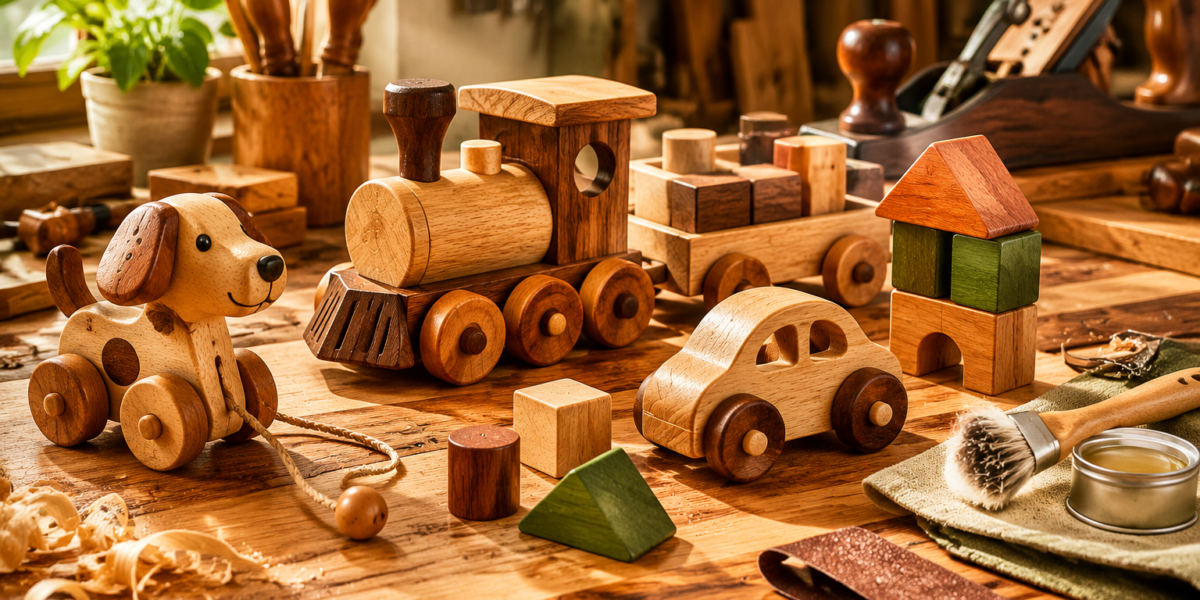
The average mass-produced plastic toy contains over 1,000 unique chemical compounds, many of which lack comprehensive safety testing for children. This stark reality underscores a growing desire among parents and woodworkers to create durable and engaging wooden toys for children, focusing on safety-conscious designs, natural finishes, and projects that inspire imaginative play for generations. Crafting DIY wooden toys for kids offers a unique opportunity to provide children with safe, durable, and aesthetically pleasing playthings that stand the test of time, free from questionable materials. In 2026, the resurgence of interest in handmade goods, coupled with increased awareness of environmental and health concerns, makes woodworking for children more relevant than ever.
Key Takeaways
- Prioritize Safety in Design: Always focus on rounded edges, appropriate sizing to prevent choking hazards, and robust construction to ensure durability.
- Choose Non-Toxic Materials: Select hardwoods like maple or cherry and use only child-safe, non-toxic finishes such as beeswax, linseed oil, or water-based paints.
- Embrace Simple, Classic Designs: Timeless toys like blocks, pull toys, and puzzles encourage open-ended, imaginative play and have enduring appeal.
- Invest in Quality Tools and Techniques: Proper tools and mastering basic woodworking skills are crucial for creating safe, high-quality wooden toys.
- Consider Sustainable Sourcing: Opt for sustainably harvested wood or reclaimed materials to minimize environmental impact.
Crafting Safe Designs for DIY Wooden Toys for Kids
Safety is paramount when embarking on any DIY wooden toy project for children. A poorly designed or constructed toy can pose significant risks. Therefore, careful planning and execution are essential, particularly when focusing on DIY Wooden Toys for Kids: Safe Designs, Non-Toxic Finishes, and Timeless Playtime Projects. The goal is to create items that are not only fun and engaging but also robust and free from hazards.
Essential Design Principles for Child Safety
Several core principles guide the design of safe wooden toys:
Choking Hazard Prevention:
- Small Parts Rule: Any component smaller than a standard toilet paper roll opening (approximately 1.25 inches or 3.17 cm in diameter) can be a choking hazard for children under three. Avoid these parts or ensure they are securely integrated.
- Secure Attachments: Components like wheels, axles, or decorative elements must be permanently and securely attached. Consider dowel joints, wood glue, and recessed hardware where appropriate.
- Smooth Transitions: Ensure there are no loose splinters or pieces that can break off during play.
Edge and Corner Treatment:
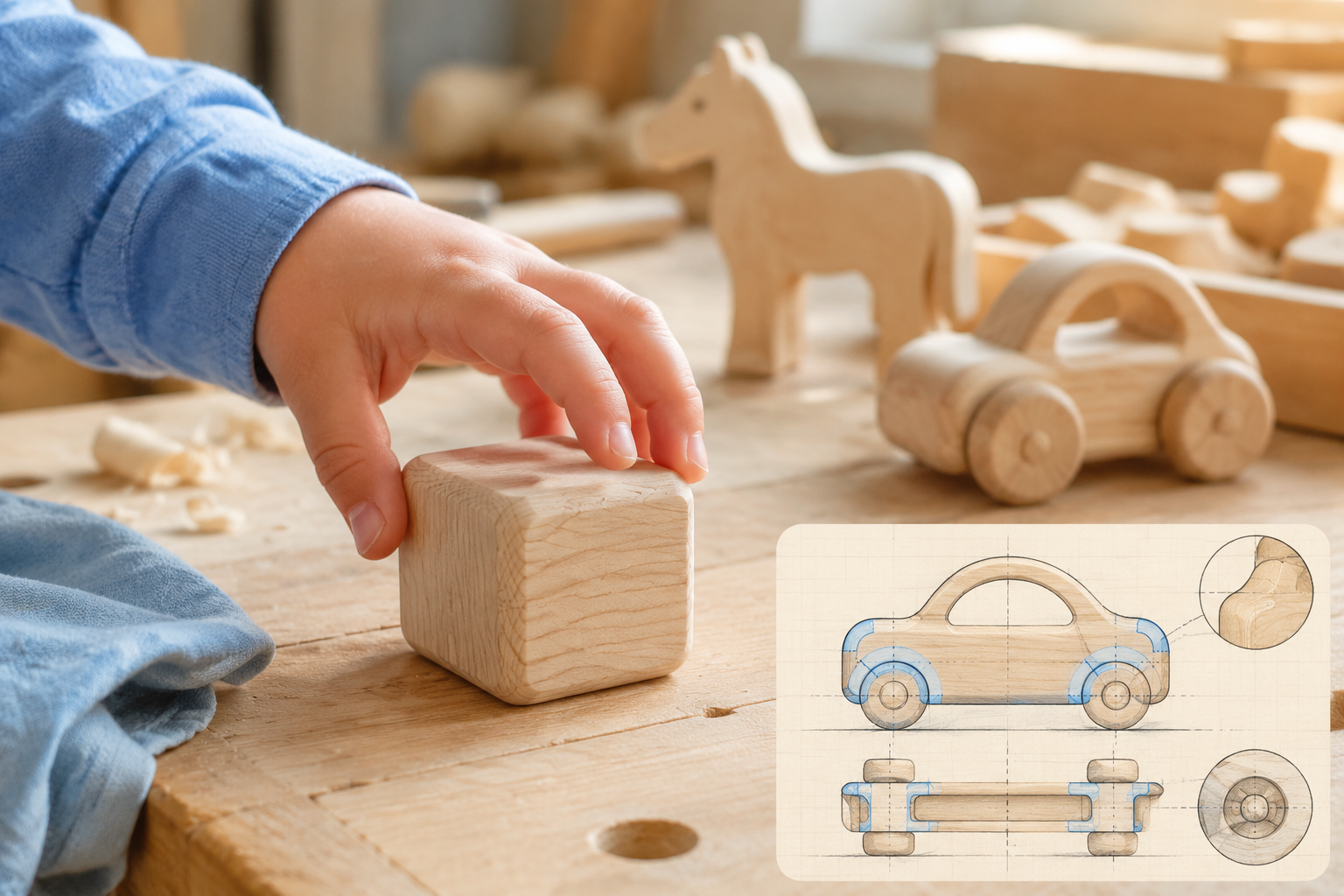
- Rounded Edges: All edges and corners should be sanded smooth and rounded over. A router with a round-over bit or extensive hand-sanding is critical. Sharp corners can cause cuts or scrapes.
- Consistent Smoothness: The entire surface of the toy must be meticulously sanded to a high grit (e.g., 220-grit or higher) to eliminate any rough patches or potential splinters.
Durability and Construction:
- Robust Joinery: Toys should withstand vigorous play. Use strong joinery techniques such as mortise and tenon, dowel joints, or robust dadoes. Simple butt joints with glue may not suffice for active toys.
- Solid Wood Choice: Select dense, durable hardwoods that resist denting and breaking. Maple, cherry, birch, and beech are excellent choices due to their strength and tight grain. Avoid softwoods like pine for primary toy construction as they can splinter easily or dent significantly.
- No Loose Fasteners: If screws or nails are used (though often best avoided in direct toy construction), they must be deeply recessed and covered with a wooden plug or filler.
Age Appropriateness
Understanding the age group for which a toy is intended is crucial. Toys for infants and toddlers require the strictest adherence to safety standards, particularly regarding choking hazards and non-toxic materials. Older children can handle toys with more intricate designs, but durability and smooth finishes remain important.
| Age Group | Key Safety Considerations | Example Projects |
|---|---|---|
| 0-12 Months | No small parts, smooth surfaces, non-toxic, easy to grasp, no sharp edges. | Rattles, grasping rings, simple blocks (large). |
| 1-3 Years | No small parts, very durable, smooth rounded edges, non-toxic, simple mechanisms. | Pull toys, large stacking blocks, simple shape sorters. |
| 3-5 Years | Durable, smooth, non-toxic, some smaller parts if securely attached, encourages imaginative play. | Wooden cars/trains, dollhouses, simple puzzles. |
| 5+ Years | Durable, non-toxic, can include more complex mechanisms or smaller, securely integrated parts. | Model airplanes, advanced puzzles, building sets. |
For those interested in enhancing their woodworking skills for intricate projects, exploring resources on power tool mastery for decorative wood projects can be beneficial, as many of the finishing techniques apply to toys as well.
Selecting Non-Toxic Finishes for Timeless Wooden Toys
Once a wooden toy is meticulously crafted and sanded, the choice of finish becomes critical. The finish must be durable, enhance the wood’s natural beauty, and, most importantly, be completely non-toxic and child-safe. This is a non-negotiable aspect of creating DIY Wooden Toys for Kids: Safe Designs, Non-Toxic Finishes, and Timeless Playtime Projects.
Understanding “Non-Toxic”
The term “non-toxic” can sometimes be vague. For children’s toys, it generally means that the product contains no harmful chemicals (like heavy metals, VOCs – Volatile Organic Compounds, or phthalates) that could leach out if a child puts the toy in their mouth. Look for finishes explicitly labeled “child-safe,” “food-grade,” or “toy-safe” that comply with international safety standards such as EN71-3.
Recommended Non-Toxic Finishes
Here are some of the most popular and safest finishing options for wooden toys:
Natural Oils:
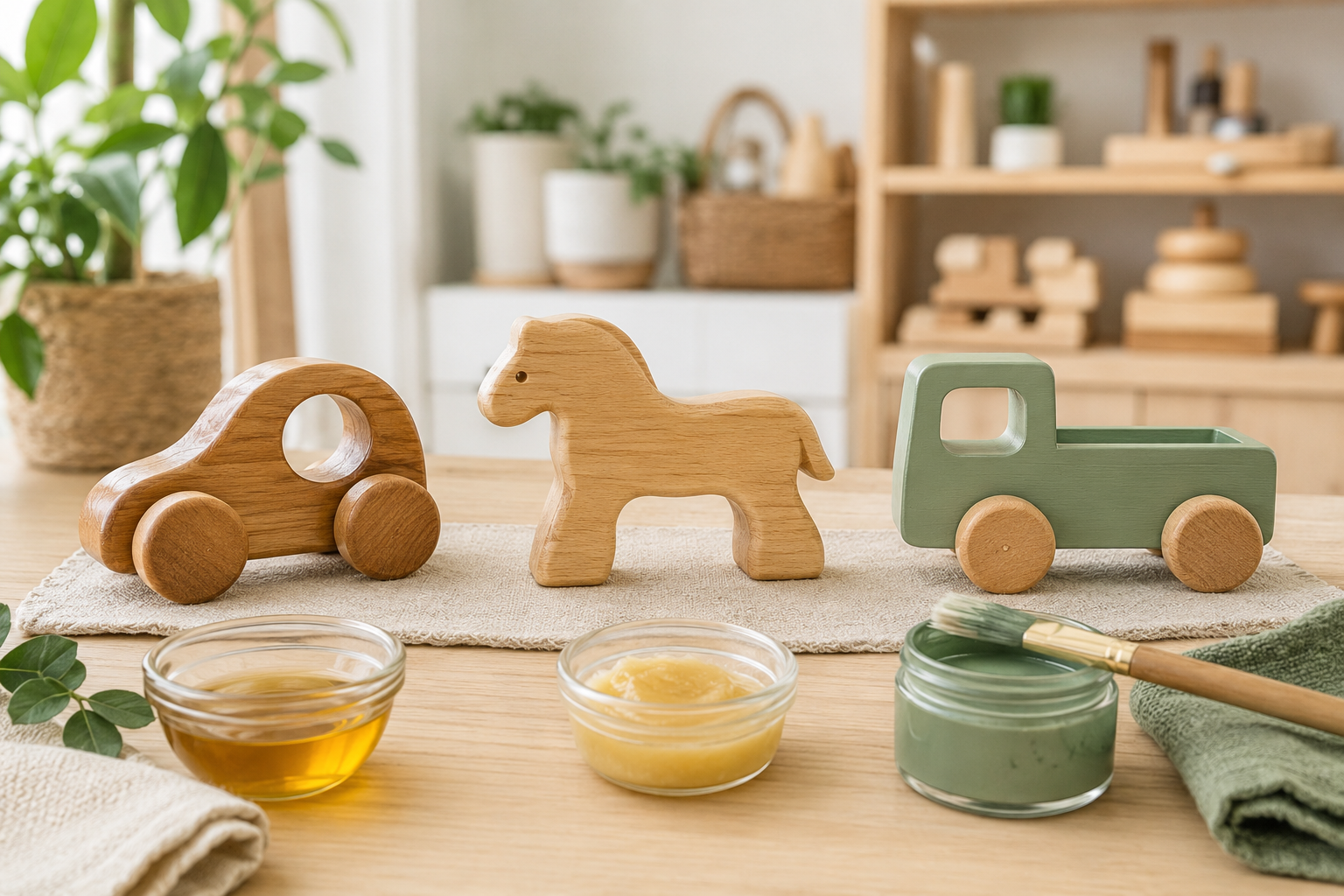
- Linseed Oil (Flaxseed Oil): Food-grade linseed oil (not boiled linseed oil, which often contains metallic dryers) is an excellent natural option. It penetrates the wood, enhancing its grain and providing a subtle, durable finish. It’s safe once fully cured.
- Tung Oil: Pure tung oil is another food-grade, penetrating oil. It offers good water resistance and a slightly harder finish than linseed oil. Like linseed oil, it must be fully cured before use.
- Application: Apply thin coats, wiping off excess after 15-30 minutes. Allow ample drying time between coats (24 hours or more) and a full cure (several weeks) before giving the toy to a child.
Waxes:
- Beeswax: Often mixed with a small amount of oil (like olive or jojoba oil) to make a paste wax, beeswax provides a protective, soft sheen. It’s completely natural and safe.
- Carnauba Wax: A harder vegetable wax, often blended with beeswax or oils for added durability.
- Application: Apply paste wax with a soft cloth, let it sit for a few minutes, then buff to a gentle shine. This finish may require reapplication over time.
Water-Based Paints and Lacquers:
- Milk Paint: A traditional, non-toxic paint made from milk protein (casein), lime, clay, and natural pigments. It creates a beautiful, matte finish and is food-safe when mixed without chemical additives.
- Water-Based Acrylic or Latex Paints (Child-Safe): Look for brands specifically labeled “child-safe,” “toy-safe,” or “low VOC/no VOC.” These paints are typically quick-drying and offer a wide range of colors. Always check the manufacturer’s safety data sheet (SDS) or product description for confirmation.
- Water-Based Polyurethane/Lacquer: For a harder, more protective surface, certain water-based polyurethanes or lacquers are formulated to be child-safe. Ensure they are certified according to toy safety standards.
- Application: Apply thin, even coats as per manufacturer instructions. Sand lightly between coats for a smooth finish.
Finishes to Avoid
- Oil-Based Polyurethanes and Varnishes: These typically contain harsh solvents and chemicals (VOCs) that are not safe for children, especially if ingested.
- Boiled Linseed Oil (BLO): Unless specifically stated as food-grade and free of metallic dryers, BLO often contains chemical additives to speed drying, making it unsuitable for children’s toys.
- Shellac: While derived from a natural resin, many shellac products are cut with denatured alcohol, which is toxic. If using shellac, ensure it is a “food-safe” grade cut with pure ethanol.
- Stains: Most wood stains contain pigments and chemicals that are not child-safe. If color is desired, opt for child-safe paints or natural dyes.
For a deeper dive into natural wood treatments, consider exploring general natural wood finishing techniques that can be adapted for toys.
Timeless Playtime Projects: Inspiring Creativity with Wooden Toys
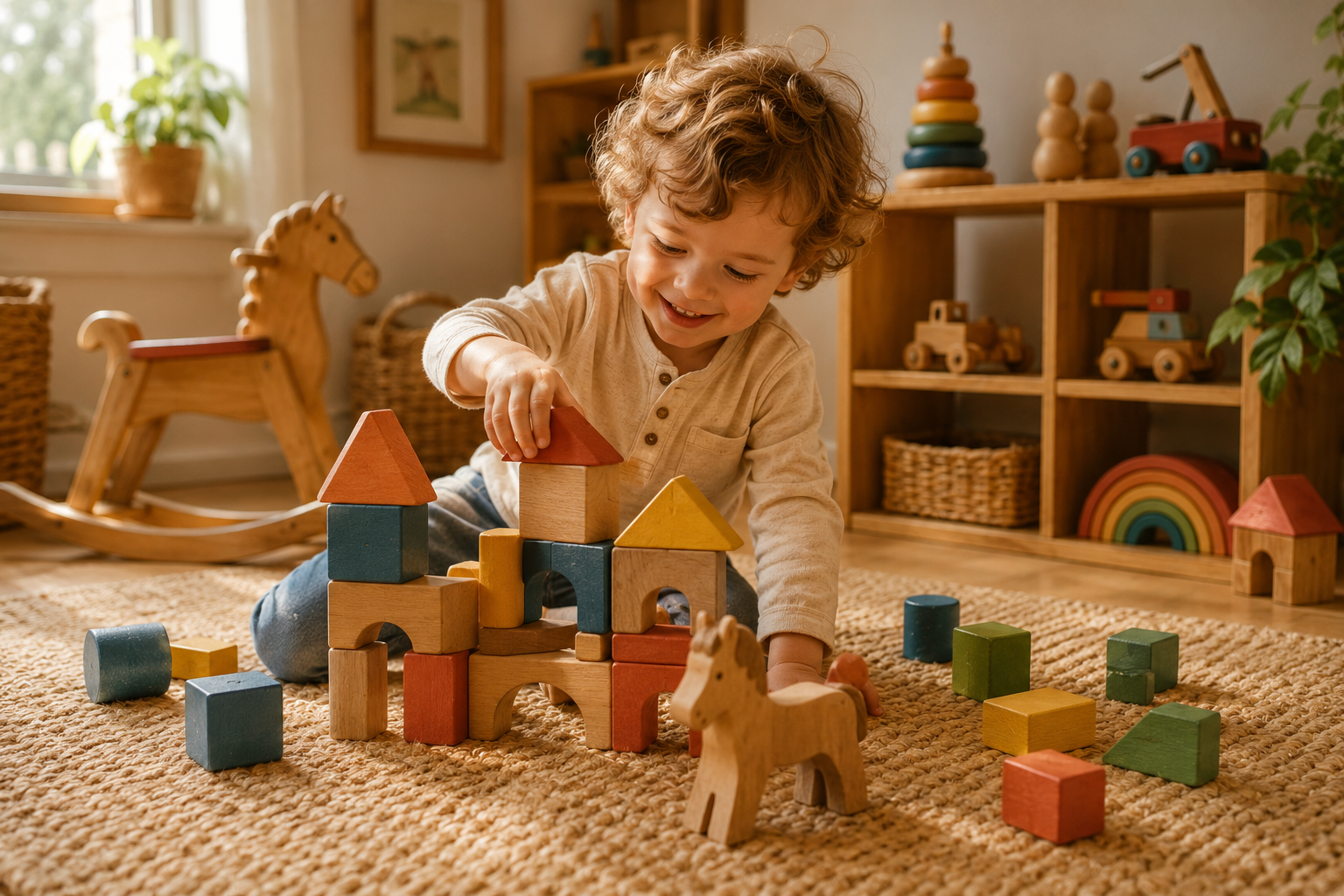
The true value of DIY Wooden Toys for Kids: Safe Designs, Non-Toxic Finishes, and Timeless Playtime Projects lies in their ability to foster imaginative and open-ended play. Unlike many electronic toys that dictate interaction, wooden toys invite children to create their own stories and scenarios, encouraging cognitive development and creativity.
Classic Wooden Toy Project Ideas
Here are several timeless wooden toy projects suitable for various skill levels, all emphasizing simplicity, durability, and imaginative potential:
Wooden Building Blocks:
- Concept: The quintessential open-ended toy. Blocks can be simple cubes, rectangles, or even more complex geometric shapes.
- Design Focus: Precision cuts for stable stacking, perfectly smooth and rounded edges.
- Materials: Hardwoods like maple or birch for weight and durability.
- Finishing: Natural oil or wax to preserve the wood’s feel, or child-safe water-based paints for vibrant colors.
- Tip: Consider a variety of sizes and shapes to encourage more complex structures.
Wooden Pull Toys:
- Concept: Simple animals or vehicles on wheels with a string for pulling. Great for toddlers learning to walk.
- Design Focus: Stable base, smooth-rolling wheels (ensure they are securely attached with dowels and not easily removable), rounded edges on the main body.
- Materials: Hardwood for the body, contrasting wood for wheels, cotton string.
- Finishing: Child-safe paint for features (eyes, patterns) and natural oil/wax for the body.
- Tip: Keep the design simple, focusing on one or two animal shapes like an elephant, duck, or dog.
Wooden Cars and Trucks:
- Concept: Miniature vehicles that can be pushed, pulled, or raced.
- Design Focus: Robust axles (dowel pins are excellent), securely attached wheels, smooth body contours, no small detachable parts.
- Materials: Hardwood for the body and wheels.
- Finishing: Natural oil/wax, or child-safe paints for details like windows or lights.
- Tip: Explore different vehicle types—cars, trucks, trains, even a simple boat—to create a collection. For those looking to refine their skills for smaller, more detailed wooden items, exploring introduction to wood carving for beginners might offer valuable techniques.
Simple Wooden Puzzles:
- Concept: Basic shape-matching puzzles for toddlers or interlocking jigsaw puzzles for older children.
- Design Focus: For toddlers, large, chunky pieces with easy-to-grasp knobs. For older children, well-fitting, interlocking pieces. All edges must be smooth.
- Materials: Plywood for the base, hardwood for puzzle pieces.
- Finishing: Child-safe paints for colors and images, sealed with natural oil or wax.
- Tip: Start with simple three-piece shape puzzles (circle, square, triangle) before moving to more complex designs.
Stacking Toys:
- Concept: Rings or shapes that stack onto a central dowel. Teaches hand-eye coordination and size differentiation.
- Design Focus: Securely mounted dowel, rings/shapes with perfectly centered holes, progressively sized pieces, no sharp edges.
- Materials: Hardwood for the base, dowel, and stacking pieces.
- Finishing: Child-safe paints for different colored rings, natural oil/wax for the base.
- Tip: Ensure the dowel is firmly seated in the base and has a safety stop on top (e.g., a larger ball or securely glued cap) to prevent rings from flying off.
When planning these projects, remember that crafting custom wooden gifts for the holiday season can be a rewarding endeavor, and many toy-making principles apply to other smaller wooden items. Consider reviewing crafting custom wooden gifts for the holiday season for inspiration on other small-scale woodworking. Moreover, for children interested in woodworking themselves, there are many resources for children’s woodwork projects, nurturing skills and creativity in 2026.
Tools and Techniques for Successful Wooden Toy Making
Successfully creating safe and beautiful DIY wooden toys requires the right tools and a grasp of fundamental woodworking techniques. Even simple projects can benefit from precision and attention to detail.
Essential Hand Tools
- Hand Saws: A small backsaw or Japanese pull saw for accurate cuts.
- Hand Planes: Block plane for chamfering edges and refining surfaces.
- Chisels: For cleaning out joints or shaping details.
- Files and Rasps: For initial shaping and smoothing curves.
- Sandpaper: A range of grits (from 80 to 220 or higher) is essential for achieving a perfectly smooth, splinter-free finish. Sanding blocks or sponges can aid this process.
- Clamps: Essential for holding pieces securely during gluing and assembly.
- Measuring and Marking Tools: Ruler, square, marking knife, pencil for accuracy.
Essential Power Tools (Optional, but greatly helpful)
- Bandsaw or Jigsaw: For cutting curves and intricate shapes. A bandsaw offers more precision and safety for smaller pieces.
- Router: With various bits (e.g., round-over bit) for shaping edges and creating consistent profiles. For safe and precise use, consider learning about choosing and using router tables.
- Drill Press: For drilling straight, accurate holes (e.g., for axles, dowel joints).
- Orbital Sander: Speeds up the sanding process, especially for larger surfaces.
Key Woodworking Techniques
- Accurate Cutting: Precision in cutting ensures pieces fit together tightly, creating stronger joints and a more professional appearance. Use stop blocks with saws for repeatable cuts.
- Effective Sanding: This cannot be overstated. Start with a lower grit to remove material, then progressively move to higher grits (e.g., 80, 120, 150, 180, 220). Always sand with the grain. Break any sharp edges thoroughly.
- Strong Joinery:
- Dowel Joints: Excellent for attaching wheels, joining two flat pieces, or reinforcing butt joints.
- Mortise and Tenon: While more advanced, it creates incredibly strong joints for structural toy components.
- Lap Joints: Simple yet strong, especially for perpendicular pieces.
- Wood Glue: Always use a strong, water-resistant wood glue (e.g., PVA glue) and ensure good clamping pressure for a solid bond.
Sourcing Sustainable Wood
Beyond safety, consider the environmental impact of your material choices.
- FSC Certified Wood: Look for wood certified by the Forest Stewardship Council, indicating it comes from responsibly managed forests.
- Reclaimed Wood: Old furniture, pallets (ensure they haven’t been chemically treated), or construction scraps can be excellent sources, providing unique character. Remember to thoroughly clean and check reclaimed wood for nails or hidden hazards. More on this can be found at sourcing and restoring urban harvested and reclaimed wood.
- Local Suppliers: Support local sawmills and woodworkers who often provide sustainably harvested timber.
By combining the right tools with thoughtful techniques and sustainable practices, you can create a legacy of beautiful, safe, and timeless wooden toys that will be cherished for years.
Conclusion
Crafting DIY wooden toys for kids offers a deeply rewarding experience, culminating in creations that are not only safer and more durable than many store-bought alternatives but also imbued with personal care and craftsmanship. By prioritizing safe designs—meticulously rounding edges, avoiding choking hazards, and ensuring robust construction—and committing to truly non-toxic finishes, woodworkers can provide children with playthings that stand the test of time. These timeless projects, from simple building blocks to imaginative pull toys, foster creativity and open-ended play, becoming cherished heirlooms rather than disposable fads.
As you embark on these woodworking adventures in 2026, remember that patience, precision, and an unwavering commitment to safety are your most valuable tools. The joy on a child’s face, coupled with the satisfaction of knowing you’ve created something beautiful and secure, is an unparalleled reward. Embrace the process, refine your skills, and build not just toys, but lasting memories and a legacy of thoughtful craftsmanship.
Actionable Next Steps:
- Start Simple: Begin with a basic project like wooden blocks or a simple pull toy to practice techniques.
- Research Finishes: Select a certified child-safe finish and read all application instructions carefully before starting.
- Prioritize Safety Checks: Before presenting any toy to a child, conduct thorough inspections for splinters, loose parts, and sharp edges.
- Explore Resources: Dive into woodworking books, online tutorials, and local workshops to expand your skill set and discover new project ideas.