
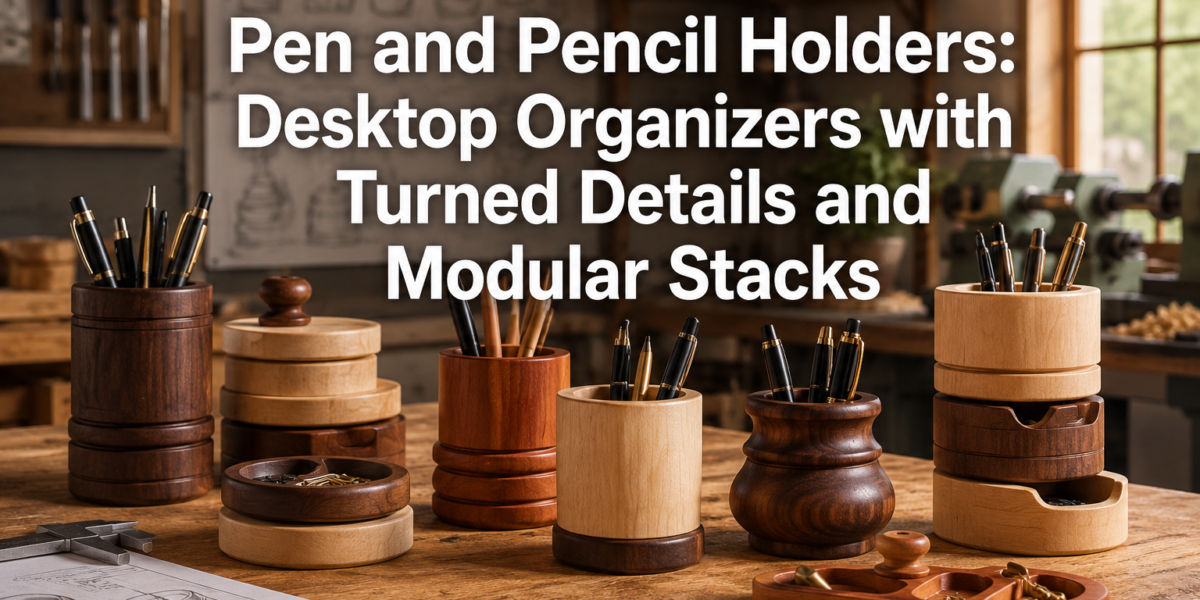
A cluttered desk, according to a recent productivity study, can reduce focus and increase stress levels by up to 40%. While many functional organizers exist, few blend the practical necessity of holding writing instruments with the refined elegance of handcrafted artistry. This article explores the world of Pen and Pencil Holders: Desktop Organizers with Turned Details and Modular Stacks, offering a deep dive into how these exquisite pieces transform a workspace from chaotic to cultivated, combining utility with bespoke craftsmanship.
Key Takeaways
- Pen and pencil holders with turned details elevate desktop aesthetics through classic woodworking techniques.
- Modular stacking designs offer flexible organization, allowing users to customize their workspace.
- The choice of wood and finishing techniques significantly impacts both the durability and visual appeal of these organizers.
- Thoughtful joinery is crucial for creating robust and adaptable modular components.
- These desktop accessories are not just functional but serve as statement pieces, reflecting an appreciation for artisan craft in 2026.
The Art of Turned Details in Pen and Pencil Holders: Desktop Organizers with Turned Details and Modular Stacks
The allure of turned details in woodworking is undeniable. This ancient craft, often associated with creating ornate furniture legs, bowls, and spindles, brings a unique sophistication to everyday objects. When applied to Pen and Pencil Holders: Desktop Organizers with Turned Details and Modular Stacks, turning transforms a simple container into a sculptural piece. The lathe allows a craftsman to create smooth curves, intricate fluting, and symmetrical designs that are impossible to achieve with standard carving or milling techniques.
What are Turned Details?
Turned details refer to the decorative and functional elements created by rotating a piece of wood on a lathe while cutting tools shape it. This process allows for perfect cylindrical forms, graceful tapers, and complex profiles. For pen and pencil holders, this can manifest in various ways:
- Classic Urn Shapes: Holders with a wider base that tapers upwards, often with a flared rim.
- Segmented Turning: Creating patterns by gluing together different types of wood before turning, resulting in striking visual contrasts. This technique is also popular for projects like wooden fruit bowls.
- Fluted and Reeded Designs: Adding vertical grooves (fluting) or raised ridges (reeding) for textural interest.
- Finials and Decorative Tops: Incorporating small, often pointed or rounded, decorative elements at the apex of a taller holder.
The beauty of turned details lies in their organic flow and tactile appeal. Running a hand over a smoothly turned piece of wood reveals the skill and precision of the artisan. These details add a layer of warmth and character that mass-produced plastic or metal organizers simply cannot replicate.

Selecting the Right Wood for Turned Pieces
The choice of wood is paramount, influencing not only the aesthetic but also the durability and workability of the turned holder. Hardwoods are generally preferred for their stability, fine grain, and ability to take a smooth finish.
| Wood Type | Characteristics | Best For |
|---|---|---|
| Walnut | Rich dark brown, excellent grain, takes fine detail. | Elegant, high-end holders. |
| Maple | Light, creamy color, dense, smooth finish, very durable. | Modern, minimalist designs, can be stained various colors. |
| Cherry | Reddish-brown, beautiful aging, distinct grain patterns. | Classic, warm-toned pieces that deepen in color over time. |
| Oak | Strong, prominent grain, durable. | Rustic or traditional styles, offers good contrast with finishes. |
| Exotic Woods | Varied colors, unique patterns (e.g., Purpleheart, Padauk). | Statement pieces, vibrant accents, highly decorative holders. |
Source: Woodcraft Magazine, 2023
Beyond aesthetics, the density and stability of the wood are crucial for successful turning. Wood movement, a natural process of expansion and contraction, can be managed with proper wood selection and seasoning. Understanding wood movement is vital for creating pieces that last.
Modular Stacks: Enhancing Functionality and Design
While turned details add beauty, modular stacking introduces a layer of dynamic functionality. Pen and Pencil Holders: Desktop Organizers with Turned Details and Modular Stacks gain significant versatility when designed with interchangeable components. This approach allows users to customize their desktop arrangement to suit their specific needs, whether for a minimalist setup or a comprehensive organizational hub.
Principles of Modular Design
Modular design involves creating components that can be assembled and reconfigured in various ways. For desktop organizers, this means:
- Interchangeability: Components can be swapped or rearranged without requiring special tools.
- Scalability: Users can add more modules as their needs grow, or remove them to simplify their setup.
- Customization: Different types of modules (pen holders, trays, small drawers, phone stands) can be combined.
A well-designed modular system often utilizes precise joinery to ensure stability and alignment. Techniques like rabbets, dados, and even simple interlocking mechanisms are employed. For those interested in advanced joinery, exploring guides on dovetail joints can provide inspiration for robust and aesthetically pleasing connections between modules.
Constructing Modular Stacks with Turned Details
Integrating turned details into modular stacks requires careful planning. A common approach is to have a base module (often a simple, stable block) and then stack turned elements on top, or embed turned sections within larger, rectilinear modules.
Consider these design possibilities for modularity:
- Stacked Cylinders: Multiple turned cylinders of varying heights and diameters can be designed to sit atop one another, perhaps with a small lip or recess to prevent slipping. One cylinder might hold pens, another pencils, and a shorter one might serve as a catch-all for small items.
- Base and Insert System: A wooden block base with precisely routed holes could accept individual turned inserts. This allows for quick changes to the holder types.
- Tray-and-Holder Combinations: Flat, shallow trays can serve as intermediate layers, providing space for paper clips or sticky notes, while supporting turned pen holders above or below. These are similar in concept to DIY compact entryway organizers but scaled for desktop use.
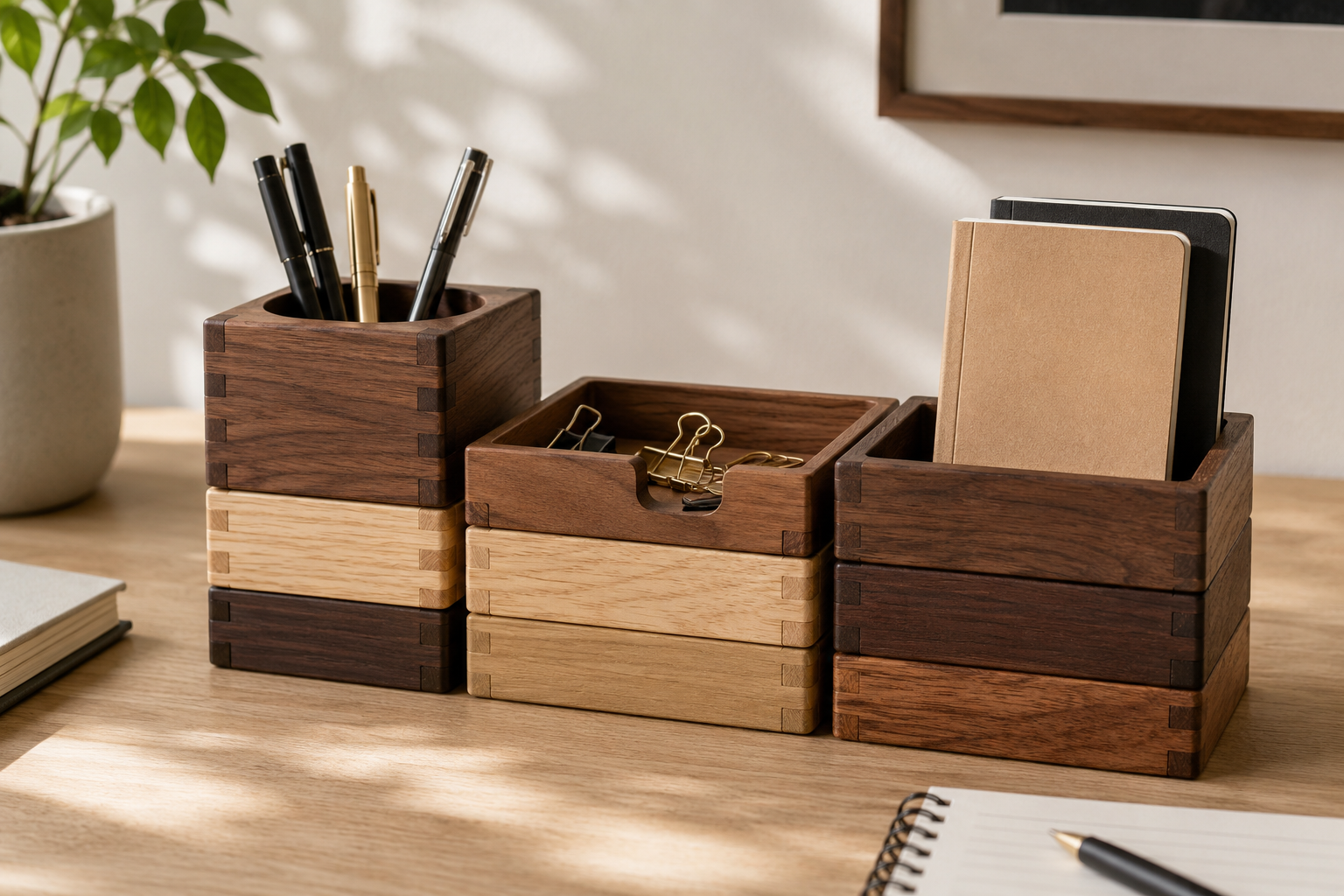
The appeal of modular organizers extends beyond mere tidiness. They embody a principle of adaptive design, reflecting the evolving needs of a modern workspace in 2026. This flexibility makes them an attractive option for both personal use and as thoughtful, handcrafted gifts. The ability to rearrange and expand also aligns with principles of building modular wood storage systems for larger workshop environments.
Joinery for Robust Modular Organizers
For modular units to stack securely and withstand daily use, appropriate joinery is crucial.
- Tongue and Groove: Creates a strong, stable connection, preventing lateral movement.
- Rabbets and Dados: Useful for creating recessed areas where one module can sit snugly atop another.
- Magnetic Connections: Small, embedded magnets can provide a satisfying click and secure hold for lighter modules, allowing for easy repositioning.
- Locating Pins/Dowel Rods: Simple wooden or metal pins can be used to align and secure stacked units, preventing accidental displacement. For optimal results, understanding how to master woodworking screws and other fasteners is important.
Table: Common Joinery for Modular Desktop Organizers
| Joinery Type | Description | Advantages | Considerations |
|---|---|---|---|
| Dowel Joints | Wooden pins fit into corresponding holes. | Simple, strong, good alignment. | Requires precise drilling. |
| Magnets (Embedded) | Small rare-earth magnets attract, holding modules. | Easy assembly/disassembly, clean aesthetic. | Strength depends on magnet size and wood thickness. |
| Rebated Edges | A recess cut along an edge to fit another piece. | Clean flush fit, provides stability. | Requires precise routing or cutting. |
| Tongue and Groove | A matching tongue and groove interlock. | Very strong, prevents sliding, hides fasteners. | More complex to cut accurately. |
Finishing Techniques for Durability and Aesthetics
The final step in crafting Pen and Pencil Holders: Desktop Organizers with Turned Details and Modular Stacks is applying a finish. The finish protects the wood, enhances its natural beauty, and contributes significantly to the piece’s longevity and tactile quality. A well-chosen finish can transform a good piece into an exceptional one.
Types of Finishes and Their Application
Different finishes offer varied levels of protection, appearance, and ease of application.
- Oil Finishes (e.g., Tung Oil, Linseed Oil):
- Appearance: Penetrates the wood, creating a natural, warm glow that highlights the grain.
- Protection: Moderate, offers good water resistance but less abrasion resistance than film finishes.
- Application: Wiped on, allowing for easy touch-ups. Multiple coats are often needed.
- Tactile Quality: Smooth, natural feel, not plasticky.
- Varnishes (e.g., Polyurethane, Spar Varnish):
- Appearance: Forms a durable film on the surface, available in various sheens (matte to high gloss).
- Protection: Excellent against abrasion, moisture, and chemicals.
- Application: Brushed or sprayed on. Dries harder and typically requires fewer coats than oil. Understanding the nuances of spray vs. brush polyurethane is key.
- Tactile Quality: Smooth, often glassy feel, can feel less natural than oil.
- Lacquer:
- Appearance: Dries quickly to a clear, hard film, available in different sheens.
- Protection: Good, though can be brittle.
- Application: Sprayed for best results. Dries very fast, allowing for multiple coats in a single day.
- Tactile Quality: Very smooth, often used for furniture.
- Wax Finishes (e.g., Carnauba Wax, Beeswax):
- Appearance: Adds a soft luster, enhances natural color.
- Protection: Minimal, primarily for aesthetic enhancement and slight water resistance.
- Application: Rubbed on and buffed. Often used over oil or shellac.
- Tactile Quality: Silky, warm, and very natural.
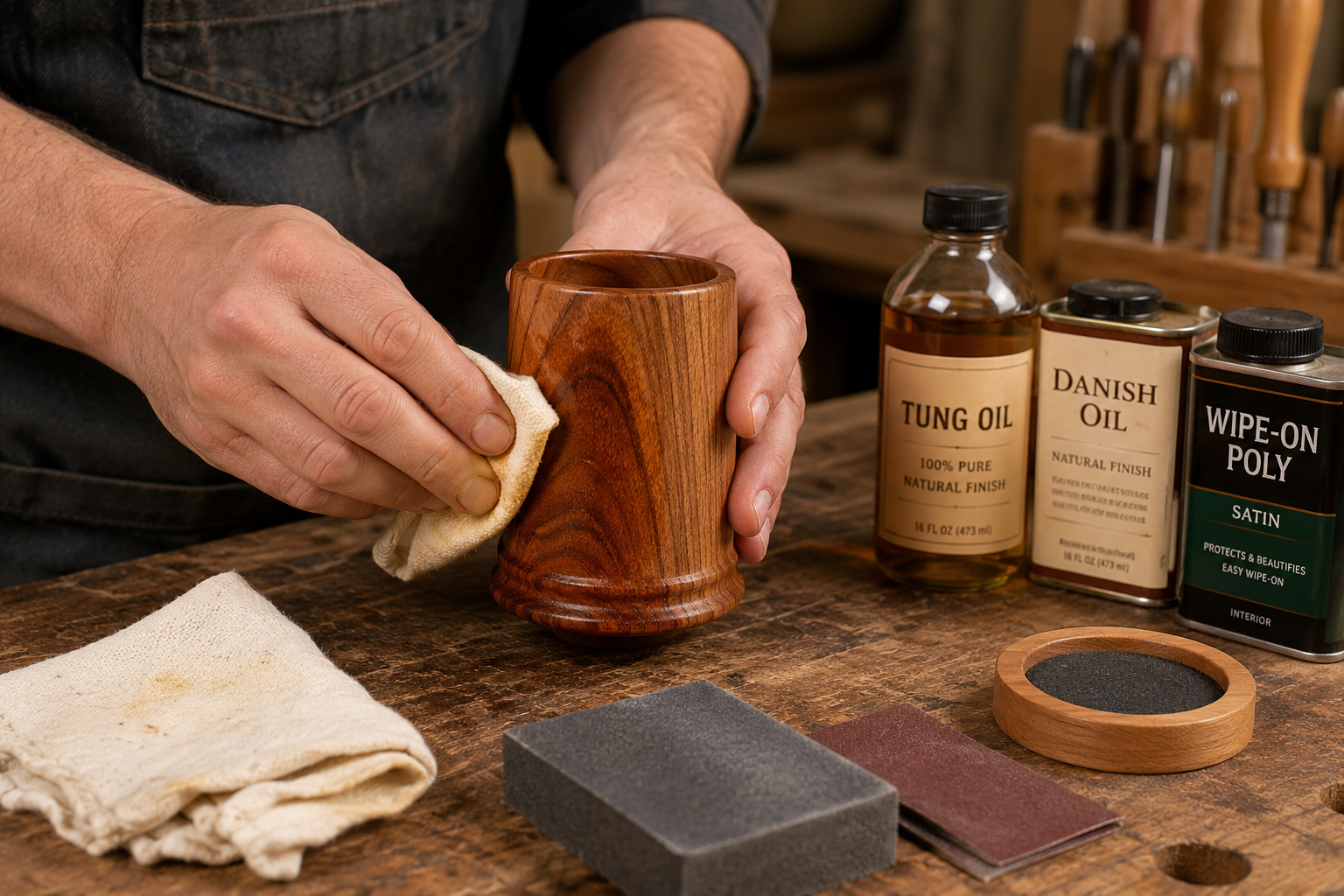
For turned details, a finish that penetrates the wood and accentuates its form is often preferred, though a durable film finish is excellent for high-traffic items. The choice ultimately depends on the desired aesthetic and level of protection. For instance, a natural oil finish aligns well with the “warm minimalism” aesthetic often sought in bespoke woodworking, as discussed in warm minimalism in woodworking.
Pre-Finishing Preparations
Regardless of the chosen finish, proper surface preparation is critical. This includes:
- Sanding: Gradual sanding through progressively finer grits (e.g., 120, 180, 220, 320) ensures a smooth surface for the finish to adhere to. For turned pieces, careful sanding is essential to maintain the crispness of the details.
- Dust Removal: Thoroughly cleaning the surface to remove all dust particles. A tack cloth or compressed air is effective.
- Conditioning (Optional): Some woods, particularly softwoods or those with uneven porosity, can benefit from a pre-stain conditioner to ensure even absorption of stain or finish.
Achieving a professional-quality finish requires patience and attention to detail. It is the final step that brings the craftsmanship of the turned details and the cleverness of the modular design to full fruition, resulting in a beautiful and highly functional desktop accessory for 2026.
Conclusion
Pen and Pencil Holders: Desktop Organizers with Turned Details and Modular Stacks represent a harmonious blend of traditional woodworking artistry and modern functional design. From the elegant curves sculpted on a lathe to the intelligent joinery that allows for flexible, customizable arrangements, these desktop accessories transcend mere utility. They become statement pieces that reflect an appreciation for craft, order, and aesthetic pleasure in the workspace.
For woodworkers, these projects offer a rewarding opportunity to hone skills in turning, joinery, and finishing. For individuals seeking to elevate their home or office environment, they provide an unparalleled combination of personalized organization and enduring beauty. As we move through 2026, the demand for such thoughtful, handcrafted items continues to grow, emphasizing quality and unique design over mass-produced uniformity. Investing in or creating these pieces is not just about organizing pens; it’s about crafting an inspiring and efficient workspace that truly reflects personal style and a commitment to quality.