
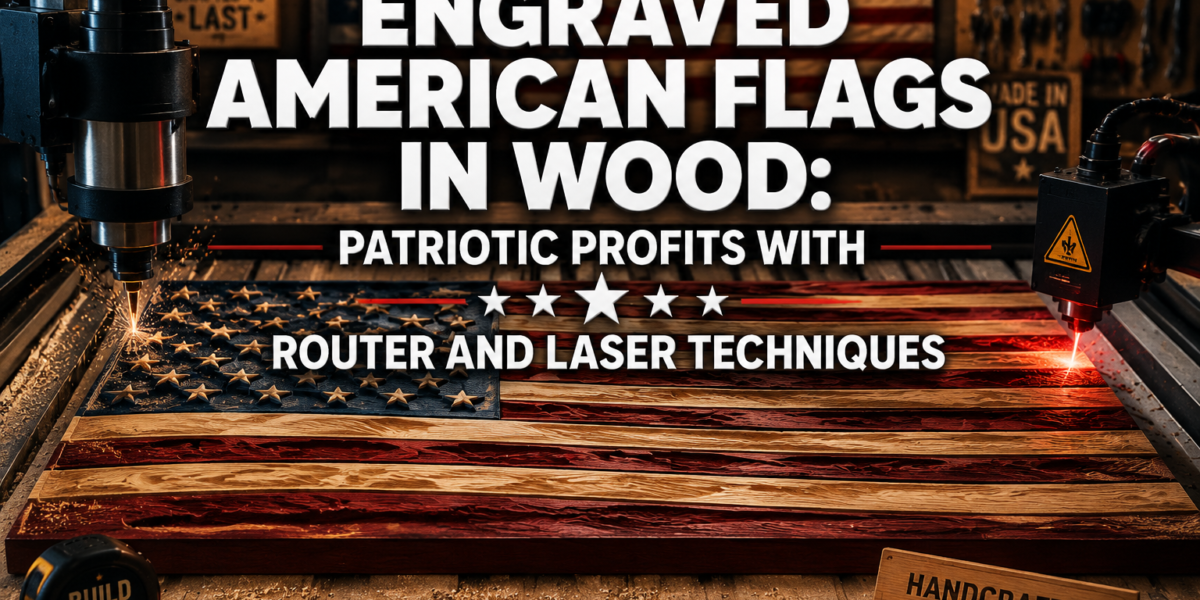
The mesmerizing glow of a laser etching wood, or the rhythmic hum of a CNC router carving precise channels, has captivated millions in viral woodworking videos. These aren’t just fascinating displays of craftsmanship; they represent a significant opportunity for artisans and small business owners to tap into a high-demand market: Engraved American Flags in Wood. Capitalizing on patriotic sentiment and the timeless appeal of handcrafted decor, this niche offers substantial profit potential, particularly when combining router and laser techniques to create dimensional, visually striking pieces from both scrap and new lumber. In 2026, the demand for unique, personalized items remains strong, and wooden flags, often layered with rich, varied stains, are at the forefront of this trend.
Key Takeaways
- Engraved American flags offer a profitable niche, leveraging both patriotic appeal and the demand for handcrafted items.
- Combining router and laser techniques allows for intricate, dimensional designs and efficient production.
- Strategic wood sourcing, including scrap wood, can significantly reduce material costs and increase profit margins.
- Layering stains and finishes creates depth and uniqueness, enhancing perceived value and market appeal.
- Effective marketing, personalization, and exploring various sales channels are crucial for maximizing profits in 2026.
The Allure of Engraved American Flags in Wood: Patriotic Profits with Router and Laser Techniques
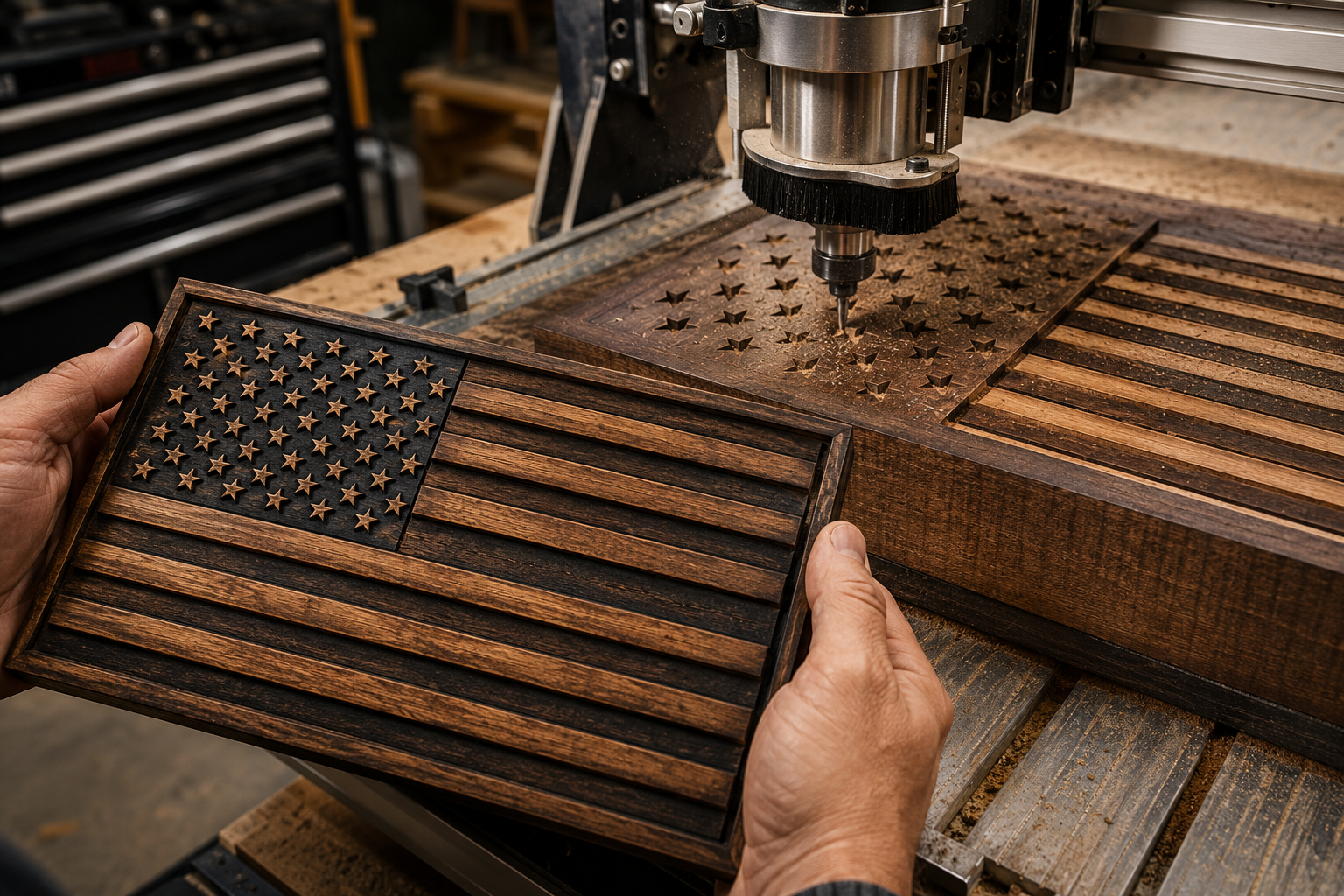
The market for patriotic decor has always been robust, but handcrafted items, especially those with a personal touch, command premium prices. Wooden American flags, in particular, offer a canvas for intricate designs and rich finishes that resonate deeply with customers. The appeal lies in their tangible representation of national pride, combined with the warmth and natural beauty of wood. Modern woodworking technology, specifically CNC routers and laser engravers, has revolutionized the production of these pieces, allowing for a level of detail and efficiency previously unimaginable. This blend of tradition and technology enables woodworkers to create stunning, high-quality flags that stand out in a crowded market.
Creating these flags involves a meticulous process, from selecting the right wood to applying multi-layered finishes that highlight the engraved elements. The dimensional aspect, often achieved through varying depths of carving or by assembling multiple pieces, adds a sculptural quality that elevates them beyond simple flat plaques. This focus on detail and quality is what transforms a piece of wood into a cherished heirloom, making it a highly desirable product for both personal display and gifting.
Why Wood? The Enduring Appeal
Wood provides a natural warmth and texture that synthetic materials cannot replicate. Each piece of wood has a unique grain pattern, making every flag distinct. This inherent individuality is a major selling point for customers seeking authentic, non-mass-produced items. Different wood species also offer varied aesthetics, from the light tones of maple to the deep hues of walnut, allowing for diverse product offerings.
Moreover, wood is a sustainable resource, especially when sourcing responsibly or utilizing reclaimed materials. This aligns with a growing consumer preference for eco-conscious products.
Benefits of Wood for Engraved Flags:
- Natural Aesthetics: Unique grain and texture.
- Durability: Long-lasting, can be passed down generations.
- Versatility: Accommodates various engraving and finishing techniques.
- Sustainability: Appeals to environmentally conscious consumers.
- Tactile Quality: Adds to the perceived value and sensory experience.
Router Techniques for Dimensionality and Precision
CNC routers are game-changers for creating Engraved American Flags in Wood. Unlike traditional hand carving, a CNC router can execute highly complex designs with unparalleled precision and repeatability. This is particularly beneficial for the star field and the stripes, ensuring consistency across multiple flags. The ability to control carving depth also allows for true dimensionality, giving the flag a carved, almost sculptural appearance rather than just a flat etching.
Designing for Router Carving
Effective flag design for CNC routing begins with CAD/CAM software. Programs like Vectric Aspire, Fusion 360, or Carbide Create allow woodworkers to design the flag’s elements—the star field, stripes, and border—as vectors. These vectors are then assigned toolpaths, specifying the type of cut, bit size, and depth. For instance, V-bits are excellent for crisp, detailed stars, while end mills are used for clearing larger areas or creating distinct channels for stripes.
Considerations for design:
- Scale: Flags can range from small desk ornaments to large wall hangings.
- Detail Level: The number of stars and the clarity of their edges are critical.
- Depth: Varied depths for stripes can create an impressive 3D effect.
- Customization: Incorporating personalized text, names, or insignia.
Choosing the Right Router Bits
The selection of router bits significantly impacts the final quality.
- V-bits: Ideal for carving intricate details like stars and fine lines, producing sharp, angled edges.
- Straight Bits (End Mills): Used for clearing material for stripes or recessed areas, creating flat bottom channels.
- Ball Nose Bits: Can be used for smoother, rounded contours if a less sharp edge is desired.
For optimal results, high-quality carbide bits are recommended for their durability and ability to maintain a sharp edge through extended use. Regular bit cleaning and replacement are essential for preventing tear-out and ensuring clean cuts. For more on maximizing precision, explore Mastering the Router Table: Beyond Basic Edges for Precision Joinery.
Wood Selection and Preparation
The type of wood impacts both the router’s performance and the flag’s final aesthetic. Common choices include:
- Pine: Affordable, easy to carve, but can be prone to tear-out and absorb stain unevenly.
- Poplar: Denser than pine, carves cleanly, and stains well.
- Maple: Hard and dense, produces very crisp details, but requires more powerful routing and sharper bits.
- Oak: Distinctive grain, can be challenging to carve finely, but offers a classic, rustic look.
Proper wood preparation is crucial. The wood should be flat and free of defects. Sanding to a fine grit (e.g., 220) before carving helps achieve a smooth finish and prevents grain tear-out during routing. Securing the workpiece firmly to the CNC bed is also critical for accuracy and safety.
Laser Techniques for Fine Details and Efficiency
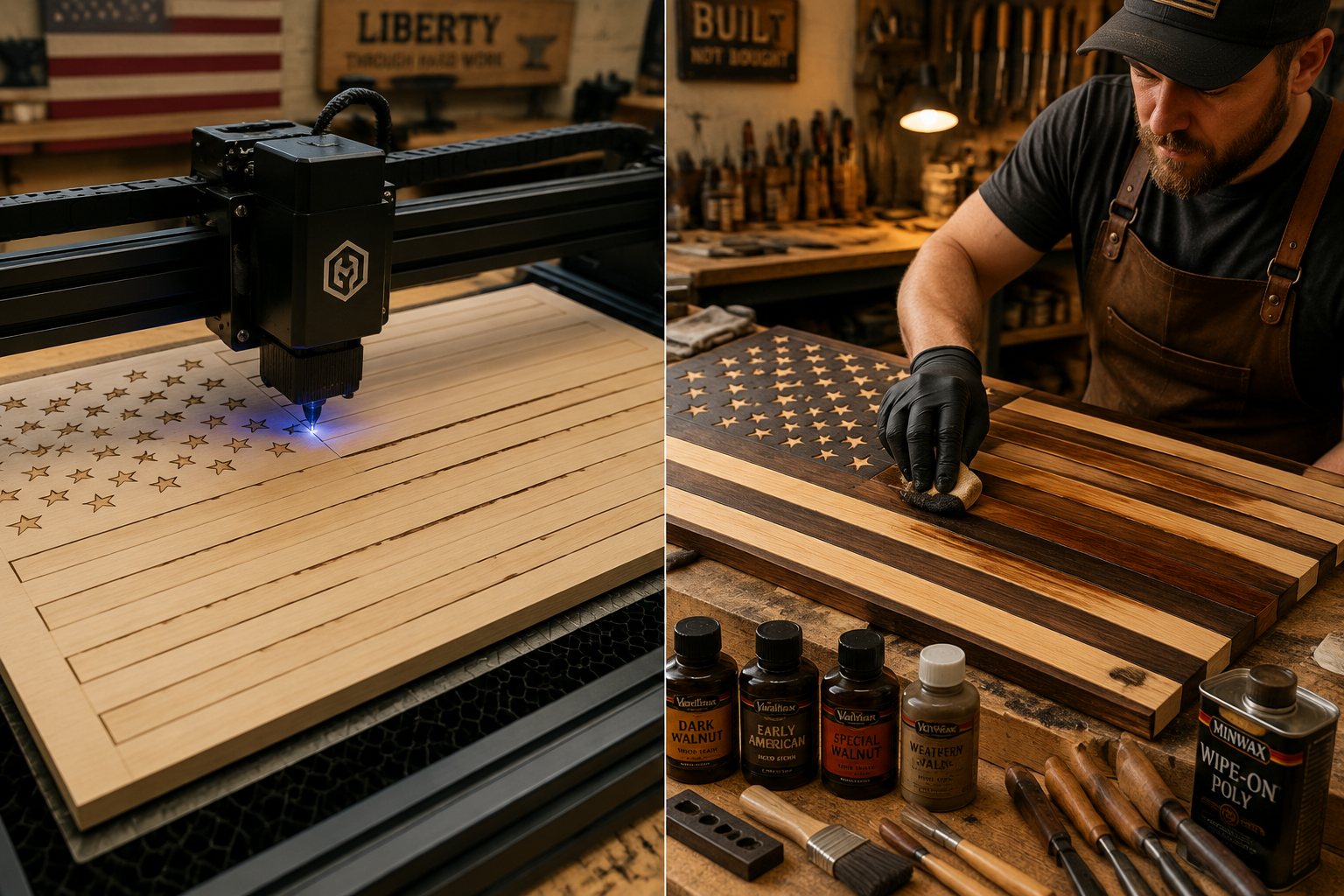
While routers excel at creating depth, laser engravers shine when it comes to intricate surface details, fine lines, and speed. Combining these two technologies allows for a synergistic approach to crafting Engraved American Flags in Wood, where routers handle the heavy lifting of dimension and lasers add the subtle, precise finishing touches.
Precision Etching with Lasers
Laser engravers use a focused beam of light to burn away or discolor the wood surface. This offers several advantages:
- Unrivaled Detail: Lasers can achieve incredibly fine lines and small text that would be impossible with a router. This is perfect for personalizing flags with names, dates, quotes, or military unit insignias.
- Speed: For surface etching, lasers are often faster than routers, especially for repetitive tasks like engraving many small stars or a detailed texture.
- No Physical Contact: Reduces wear and tear on tools and eliminates the possibility of tear-out.
Integrating Laser and Router Workflows
A common workflow involves:
- Router Carving: Use the CNC router to create the primary dimensional features, such as the recessed stripes and the outline of the star field.
- Laser Engraving: Once the dimensional carving is complete, transfer the piece to the laser engraver to add the stars, any custom text, or additional surface textures. This two-stage process leverages the strengths of each machine.
Alternatively, some artists use lasers for very shallow, crisp stripes and stars if the desired effect is less dimensional and more about surface contrast. The depth of laser engraving can be controlled by adjusting power and speed settings, allowing for subtle variations in tone and texture.
Staining and Finishing for Enhanced Depth
The magic truly happens in the finishing stages, especially when employing multi-layered staining techniques. This approach significantly increases the visual depth and perceived value of Engraved American Flags in Wood.
Steps for Multi-Layered Finishing:
- Base Stain: Apply a light base stain to the entire flag, allowing the wood grain to show through. This provides a foundation for subsequent colors.
- Color Stains: Use specific color stains for the stripes (red) and the star field (blue). Careful masking is often required to keep the colors crisp. Water-based stains can be easier to work with for layering as they dry quickly and clean up easily.
- Wipe-Back Technique: For the carved elements (stripes, stars), apply a darker stain or gel stain, and then immediately wipe it back, leaving the darker pigment only in the recessed areas. This dramatically enhances the contrast and makes the engraved details pop.
- Torch Finishing (Optional): For a rustic, “burnt” look, some woodworkers lightly torch the surface before or after initial staining. This technique requires caution and practice.
- Protective Topcoat: Finish with several coats of a durable clear coat, such as polyurethane or lacquer, to protect the wood and enhance the depth of the finish. Sand lightly between coats for a silky-smooth feel.
Consider exploring different wood finishes to achieve unique effects. For instance, ebonized wood can create striking contrasts when combined with natural wood tones. Understanding is ebonized wood food safe is not directly relevant here, but knowing about different wood finishes and their properties is always valuable.
A compelling finish can transform a simple piece of wood into a high-value product. Remember to experiment with scrap pieces to perfect your staining process before applying it to a finished flag.
Marketing and Selling Your Engraved American Flags
Creating beautiful Engraved American Flags in Wood is only half the journey; the other half is successfully bringing them to market and generating patriotic profits. In 2026, a multi-faceted approach combining online presence, local markets, and strategic partnerships is key.
Identifying Your Target Audience
Your primary audience will likely be:
- Veterans and Active Military Personnel: Individuals and families seeking to honor service.
- Patriotic Citizens: Those who display national pride in their homes or businesses.
- Gift Givers: People looking for unique, meaningful gifts for birthdays, holidays, or special occasions.
- Corporate Clients: Businesses seeking custom patriotic awards or decor.
Understanding who you’re selling to helps tailor your designs, marketing messages, and pricing strategies.
Pricing for Profit
Pricing engraved wooden flags requires careful consideration of material costs, labor (design, carving, finishing), overhead, and market demand.
- Material Costs: Wood (type, grade, size), stains, sealants, hardware.
- Labor: Calculate your hourly rate for design, machine time, and finishing.
- Overhead: Machine maintenance, electricity, workshop rent, marketing.
- Market Research: Look at competitors’ pricing for similar quality and complexity.
Don’t underprice your work. The craftsmanship, personalization, and use of advanced techniques justify a premium. A general rule of thumb is to aim for a profit margin of 50-70% after accounting for direct costs.
Marketing Strategies for 2026
- High-Quality Photography: Essential for online sales. Showcase the flag’s texture, depth, and finish with professional photos and videos.
- Online Presence:
- E-commerce Website: A dedicated site provides a professional storefront.
- Etsy/Shopify: Leverage established platforms to reach a wider audience.
- Social Media: Instagram, Facebook, and Pinterest are visual platforms perfect for showcasing your flags. Use relevant hashtags (e.g., #woodflag, #patrioticdecor, #veterangift, #madeinamerica). Viral videos showing the carving process can be highly effective.
- Local Markets:
- Craft Fairs and Artisan Markets: Direct sales, build relationships, gather feedback.
- Veterans’ Events: Connect directly with your core audience.
- Local Gift Shops: Explore wholesale opportunities.
- Personalization and Custom Orders: Offer options for custom text, logos, or sizes. This adds immense value and allows for higher price points.
- Bundle and Upsell: Offer complementary products like engraved wooden coasters with custom designs or display stands.
- Collaborate: Partner with military spouse groups, veteran organizations, or local businesses for cross-promotion.
Pull Quote:
“The true value of an engraved wooden flag isn’t just in the material or the labor, but in the story it tells and the sentiment it represents. Crafting these stories with precision and passion is the key to patriotic profits.”
Packaging and Shipping
Secure packaging is vital to ensure your flags arrive undamaged. Use sturdy boxes, appropriate cushioning, and clearly label packages as fragile. Factor shipping costs into your pricing strategy, offering transparent options to customers.
Advanced Techniques and Future Trends
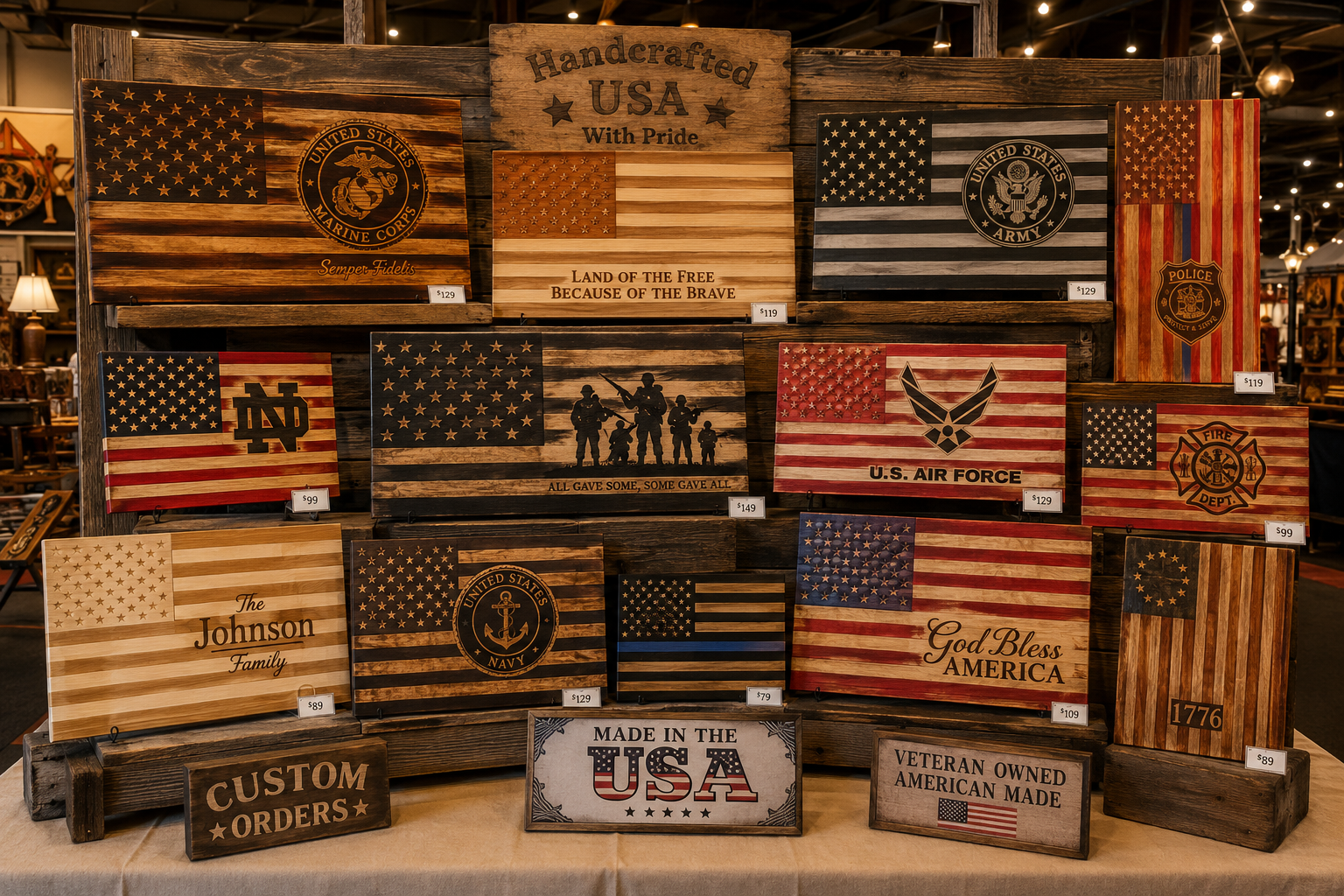
As the market evolves in 2026, staying ahead involves exploring advanced techniques and embracing new trends. Beyond standard flag designs, there’s potential for innovation that can further elevate your brand and profitability.
Incorporating Mixed Media
Consider integrating other materials into your wooden flags for unique effects.
- Resin Inlays: Use colored epoxy resin to fill engraved areas, adding vibrant color and a smooth, durable finish. This can be particularly striking for stars or custom text.
- Metal Accents: Small metal elements, such as brass stars or etched plaques, can add a touch of sophistication and contrast.
- LED Lighting: Embed LED strips behind the flag or within specific carved areas to create a dramatic backlighting effect, making the flag a true statement piece, especially for narrative interiors through woodworking.
Specialized Finishes
Experiment with finishes beyond traditional stains and polyurethanes.
- Distressing: Create a weathered, antique look using techniques like wire brushing, subtle sanding, or strategic denting before finishing.
- Milk Paint: Offers a matte, rustic appearance with a range of historical colors.
- Epoxy Coatings: A thick, clear epoxy layer can provide a high-gloss, glass-like finish that protects the wood and enhances color vibrancy.
Customization and Niche Markets
The ability to customize is a major advantage.
- Military Branches: Offer flags specific to different branches of the armed forces, incorporating their emblems or mottos.
- First Responders: Flags honoring police, firefighters, and medical personnel.
- Corporate Branding: Create flags with company logos for businesses to display.
- Sports Teams: Integrate team colors and logos, subject to licensing.
Offering these specialized products broadens your market reach and allows for higher profit margins due to increased perceived value and exclusivity. For other profitable woodworking ideas, consider high-demand woodworking projects for 2026.
Sustainable Practices
Customers increasingly value sustainability.
- Scrap Wood Utilization: Actively seek out and use reclaimed or scrap wood from other projects. This not only reduces waste but also provides unique material with character, lowering your material costs significantly. Upcycled pallet projects demonstrate the profitability of using free materials.
- Ethical Sourcing: If purchasing new wood, prioritize suppliers who practice sustainable forestry. Learn more about sustainable wood sourcing for the modern woodworker.
- Low-VOC Finishes: Use environmentally friendly stains and sealants to appeal to health-conscious consumers and minimize your environmental footprint.
By embracing these advanced techniques and responsible practices, woodworkers can not only create more stunning and unique Engraved American Flags in Wood but also establish a reputation as an innovative and ethical business, securing patriotic profits for years to come.
Conclusion
The creation of Engraved American Flags in Wood, leveraging both router and laser techniques, presents a compelling opportunity for patriotic profits in 2026. This niche combines timeless national pride with the enduring appeal of handcrafted wooden items. By mastering the precision of CNC routing for dimensional carving and the intricate detail of laser engraving for fine elements, woodworkers can produce high-quality, visually stunning flags. Strategic material sourcing, including the clever utilization of scrap wood, coupled with multi-layered staining and finishing, transforms raw timber into valuable pieces of art.
To succeed in this market, focus on delivering exceptional craftsmanship, offering personalized options, and implementing robust marketing strategies. Showcase your work with professional photography, establish a strong online presence, and engage with your target audience through local markets and social media. By continually innovating with advanced techniques like mixed media and specialized finishes, and by adhering to sustainable practices, you can differentiate your offerings and build a thriving business around these cherished symbols of national identity. Start experimenting with designs, refine your techniques, and carve out your share of this patriotic market.
References
- Duginske, M. (2007). The Router Handbook. Taunton Press.
- Koch, P., & Miller, J. (2018). The Laser Engraving Handbook: A Guide to the Art and Science of Laser Engraving. CreateSpace Independent Publishing Platform.
- Peters, R. (2015). CNC Routers for Woodworkers. Fox Chapel Publishing.