
Over 80% of North American bird species experienced population declines between 1970 and 2017, a stark reminder of the pressures facing our avian neighbors (Rosenberg et al., 2019). While habitat loss is a primary driver, providing suitable nesting sites in our backyards offers a tangible way to support local bird populations. However, a generic birdhouse often does more harm than good, attracting unwanted species or failing to protect vulnerable nestlings. The key to successful avian conservation at home lies in precise Birdhouse Design for Specific Species: Dimensions, Ventilation, and Predator-Proofing for Backyard Birders – a practice that ensures safety, comfort, and species attraction.
This comprehensive guide will move beyond superficial aesthetics to delve into the critical, science-backed elements of birdhouse design. By understanding the unique requirements of various cavity-nesting birds, you can transform your backyard into a vital sanctuary, offering optimal nesting conditions and contributing meaningfully to biodiversity.
Key Takeaways
- Species-Specific Design is Crucial: Generic birdhouses can be detrimental; tailor dimensions, entrance holes, and features to attract target species and deter others.
- Dimensions Matter: Entrance hole size, floor area, and cavity depth are vital for nesting success and predator exclusion.
- Ventilation and Drainage are Essential: Proper airflow prevents overheating, and drainage holes prevent moisture buildup, both critical for chick survival.
- Predator-Proofing is Non-Negotiable: Baffles, portal guards, and appropriate mounting locations protect eggs and nestlings from common threats like snakes, raccoons, and cats.
- Material Selection Influences Success: Durable, untreated wood offers insulation and longevity, providing a safe, natural environment.
Understanding Species-Specific Birdhouse Design for Backyard Birders
The concept of a “one-size-fits-all” birdhouse is a myth that can lead to nesting failures and even put birds at risk. Just as different birds build different types of nests, they also require specific parameters for artificial nest boxes. Tailoring your Birdhouse Design for Specific Species means considering their natural nesting habits, physical size, and vulnerability to predators.
For example, a tiny House Wren needs a small entrance hole to feel secure and prevent larger birds from taking over its nest. In contrast, a Northern Flicker, a larger woodpecker, requires a significantly bigger cavity and entrance to accommodate its size. Without these specific adjustments, a birdhouse may remain vacant or, worse, become a trap for a mismatching species.
Essential Dimensions for Common Cavity Nesters
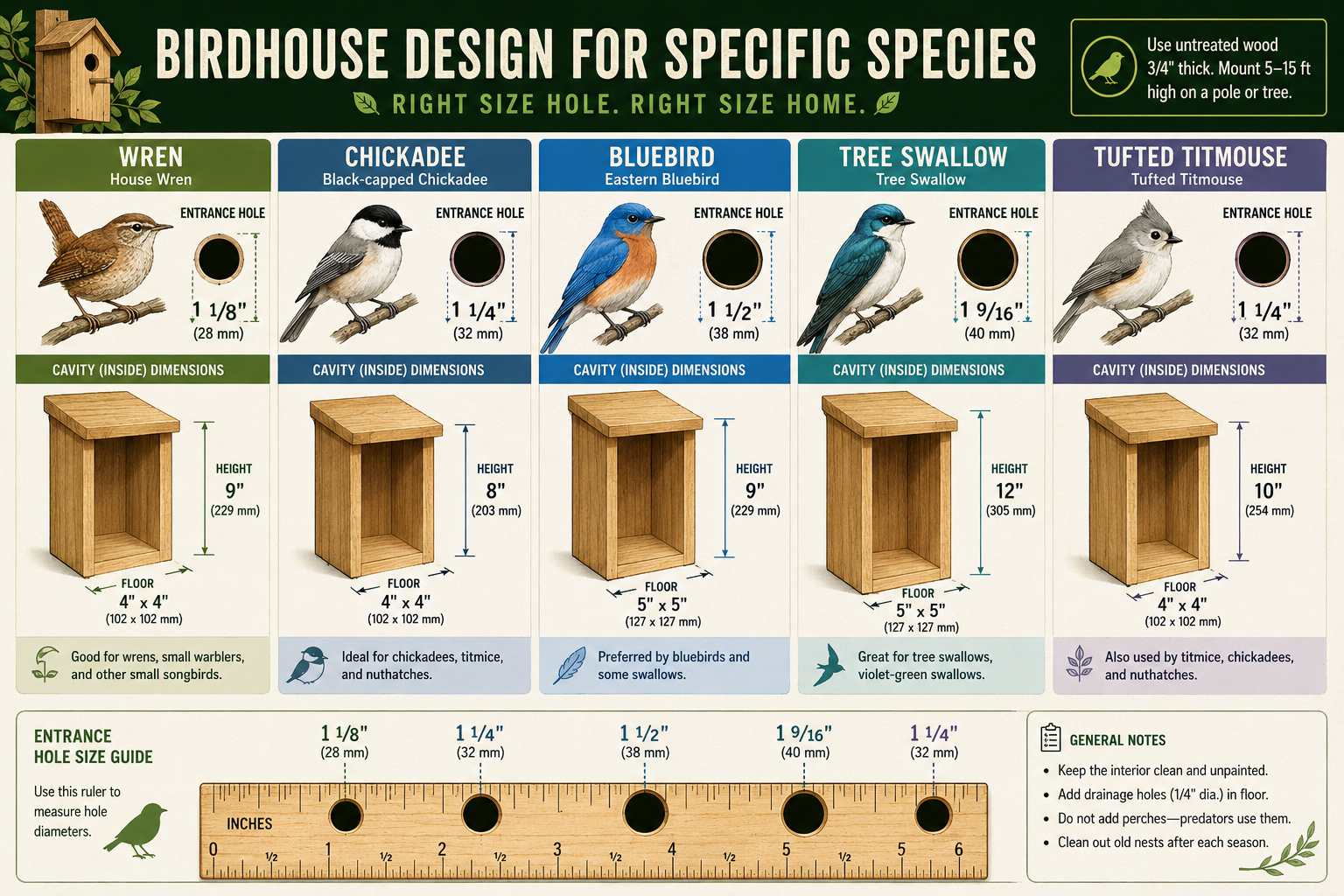
The following table outlines critical dimensions for some popular backyard cavity-nesting birds. These measurements are derived from extensive research and fieldwork by ornithologists and bird conservation organizations.
| Species | Entrance Hole Diameter (inches) | Floor Dimensions (inches) | Cavity Depth (inches) | Mounting Height (feet) |
|---|---|---|---|---|
| Eastern Bluebird | 1.5 | 5 x 5 | 8-10 | 5-7 |
| Tree Swallow | 1.5 | 5 x 5 | 8-10 | 5-7 |
| House Wren | 1-1.25 | 4 x 4 | 6-8 | 6-10 |
| Black-capped Chickadee | 1.125 | 4 x 4 | 8-10 | 5-15 |
| Prothonotary Warbler | 1.125 | 5 x 5 | 6 | 3-5 (over water) |
| Wood Duck | 3 x 4 (oval) | 10 x 10 | 10-14 | 10-20 |
| American Kestrel | 3 | 8 x 8 | 12-15 | 10-20 |
Entrance Hole Size: This is the most critical dimension. An entrance hole that is too large allows larger, more aggressive birds (like European Starlings or House Sparrows, both invasive species) to enter and usurp the nest. An entrance hole that is too small prevents the target species from entering. Consider adding a metal portal guard around the entrance to prevent squirrels or larger birds from widening the hole.
Floor Dimensions: The floor size provides adequate space for the nest and growing chicks. Too small, and the nest may be cramped; too large, and the birds may not feel secure.
Cavity Depth: This measurement is from the bottom of the entrance hole to the floor. Sufficient depth prevents predators from reaching into the nest to grab eggs or chicks.
Mounting Height: Different species prefer different heights for security and proximity to foraging areas. Bluebirds, for instance, prefer open areas and moderate heights, while chickadees may opt for higher, more secluded spots in wooded areas.
Choosing the right material is also essential. Untreated wood, such as cedar or redwood, is ideal because it provides insulation, is durable, and won’t release harmful chemicals. Avoid pressure-treated lumber, as the chemicals can be toxic to birds. For insights into working with wood effectively, including understanding its properties, you might find our guide on understanding wood movement helpful.
Optimizing Birdhouse Ventilation and Drainage
Beyond specific dimensions, the internal environment of a birdhouse is paramount for the health and survival of its occupants. Proper ventilation and drainage are non-negotiable elements of effective Birdhouse Design for Specific Species. Without them, nestlings can succumb to heat stress or disease from damp conditions.
The Importance of Airflow
Birds, especially nestlings, are highly susceptible to overheating. A birdhouse can become an oven on a hot sunny day if there isn’t adequate airflow.
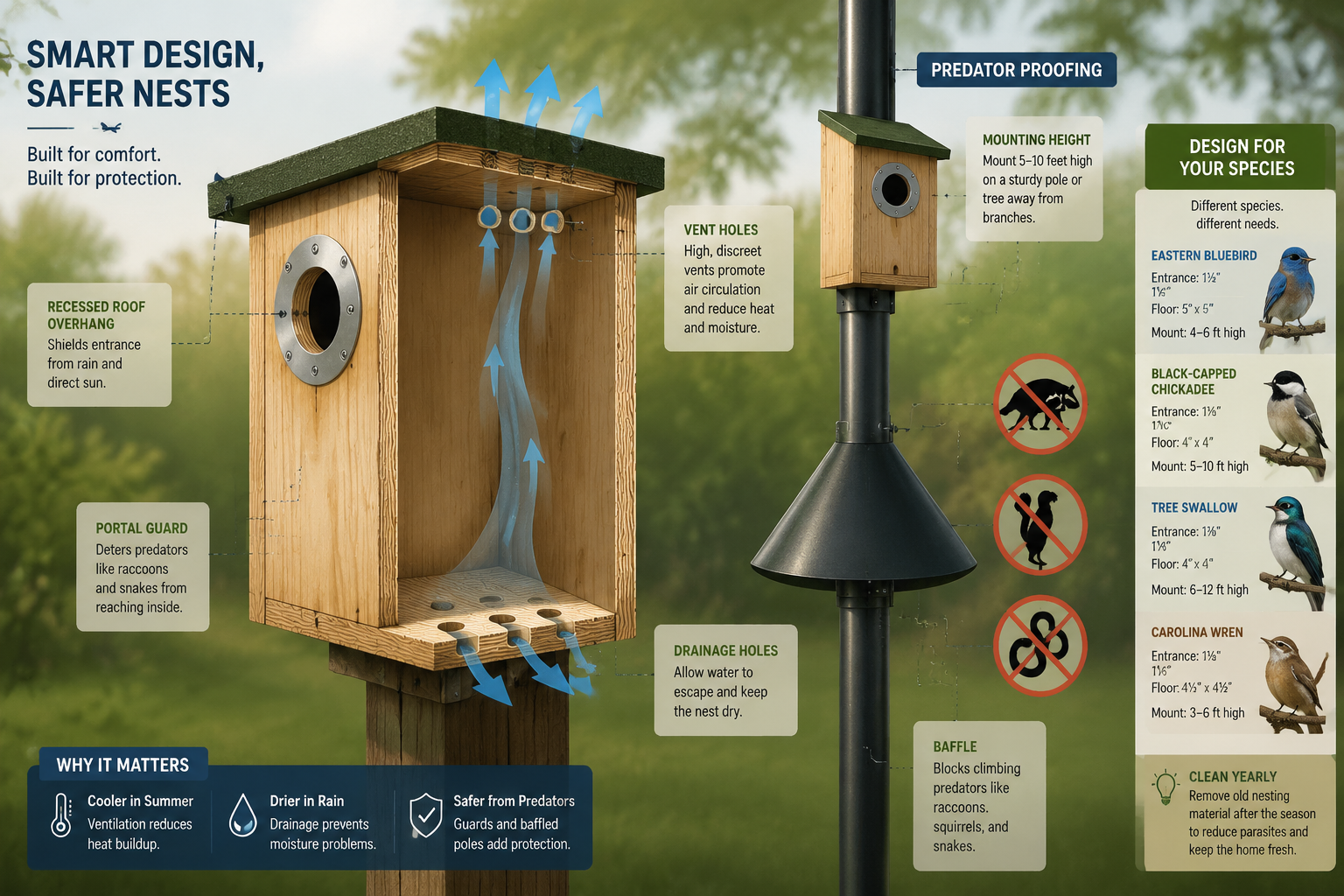
- Ventilation Holes: Incorporate small ventilation holes (1/4 to 3/8 inch in diameter) just under the roof line on the sides of the birdhouse. These should not be large enough for predators to exploit. These holes allow hot air to escape and fresh air to circulate, maintaining a more stable internal temperature.
- Recessed Roof: A slightly overhanging or recessed roof also helps to create a shaded area around the top of the box, reducing direct sun exposure to the ventilation holes and the upper part of the cavity.
- Material Choice: As mentioned, untreated wood breathes better than plastic or metal, which can heat up quickly and retain excessive warmth.
Ensuring Proper Drainage
Moisture inside a birdhouse is detrimental. Rainwater, condensation, or even prolonged humidity can lead to mold growth, chilling of eggs and nestlings, and the proliferation of parasites.
- Drainage Holes: Drill several 1/4 inch holes in each corner of the birdhouse floor. These allow any water that enters the box to drain out quickly, preventing puddling.
- Recessed Floor: Some designs feature a slightly recessed floor or a small gap where the floor meets the side walls, which can also aid in drainage and airflow.
- Tight Joints (Mostly): While drainage holes are essential, the overall construction should have tight-fitting joints to prevent large amounts of water from seeping into the main cavity. However, avoid making them airtight, as this hinders ventilation. For joinery techniques that balance tightness with wood’s natural properties, our article on mastering modern hand-cut joinery can offer valuable insights.
Tip for Cleaning: Remember that birdhouses need regular cleaning (typically after nesting season) to remove old nests and parasites. Design your birdhouse with a side or front panel that can be easily opened for access. Using sturdy, weather-resistant hinges and latches will ensure longevity.
“A well-ventilated and drained birdhouse isn’t just a luxury; it’s a necessity for nestling survival, directly impacting the success rate of breeding pairs in your backyard.”
Predator-Proofing Your Birdhouse: A Critical Design Element
Even the most perfectly dimensioned and ventilated birdhouse is useless if it cannot protect its inhabitants from predators. Predator-proofing is a non-negotiable aspect of Birdhouse Design for Specific Species: Dimensions, Ventilation, and Predator-Proofing for Backyard Birders. Neglecting this can lead to devastating outcomes for nesting birds.
Common predators include:
- Snakes (rat snakes, black snakes)
- Raccoons
- Squirrels
- Cats
- Larger birds (e.g., crows, jays, starlings, house sparrows)
Effective Predator-Proofing Strategies
Baffles: These are physical barriers designed to prevent climbing predators (snakes, raccoons, squirrels) from reaching the nest box.
- Cone Baffles: Typically made of metal, these are funnel-shaped and installed on the pole below the birdhouse. They should be at least 24 inches wide and mounted so their widest part is at least 4-5 feet off the ground.
- Stovepipe Baffles: These are cylindrical metal baffles that encircle the mounting pole. They should be at least 6-8 inches in diameter and 24-30 inches long. They are highly effective when installed correctly.
Entrance Hole Protection:
- Metal Portal Guards: A metal plate or ring fitted around the entrance hole prevents squirrels and woodpeckers from chewing and enlarging the hole, which would then allow larger predators to enter. The correct internal diameter of the guard is crucial to match the target species’ entrance hole requirement.
- Recessed Entrance: Some birdhouse designs feature an entrance hole that is recessed or tunnel-like, making it harder for predators to reach inside.
Mounting Location and Method:
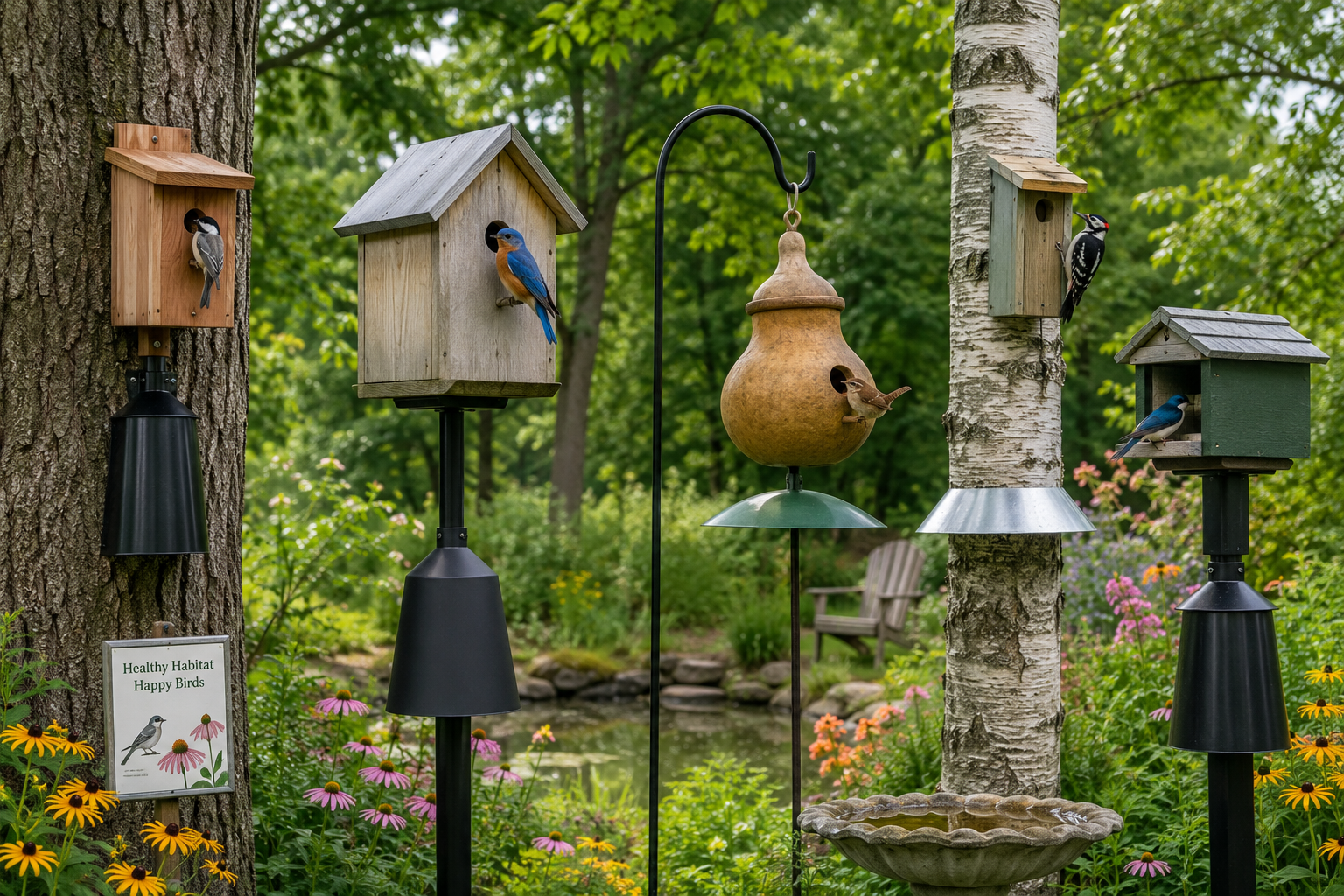
- Pole Mounting: Mounting a birdhouse on a smooth, metal pole is generally more effective than hanging it from a tree. Trees provide easy access for climbing predators.
- Away from Branches: Ensure there are no nearby branches or fences that predators can jump from directly onto the birdhouse. Maintain a clear radius of several feet.
- Visibility: While some birds prefer seclusion, many cavity nesters, like bluebirds, prefer boxes in open areas with scattered trees or shrubs nearby for perching. This also helps you monitor for predator activity.
- Avoid Perches: Do not include a perch directly below the entrance hole. While it might seem helpful, perches only aid predators and invasive species like House Sparrows. Native cavity-nesting birds do not need them; they can cling to the entrance hole.
Maintaining the Surrounding Area:
- Keep grass and weeds trimmed around the base of the pole to deter snakes and rodents.
- Regularly check for signs of predator activity and adjust your setup if necessary.
Building quality wooden structures for your backyard, including birdhouses, requires careful planning and execution. For those interested in enhancing their woodworking skills for such projects, exploring resources like “Crafting Custom Wooden Planters” or “Building a Compact and Ergonomic Workbench” can provide foundational knowledge in design and construction principles that apply to various outdoor projects.
Advanced Considerations for Birdhouse Placement and Monitoring
Once you’ve mastered the foundational aspects of Birdhouse Design for Specific Species: Dimensions, Ventilation, and Predator-Proofing for Backyard Birders, consider these advanced elements to maximize your success and contribution to local bird populations.
Optimal Orientation and Sun Exposure
The direction a birdhouse faces can impact internal temperature and protection from elements.
- South-East/East Facing: Generally, orienting the entrance hole towards the southeast or east provides beneficial morning sun while minimizing exposure to the harsh afternoon sun and prevailing winds, especially in colder climates. This helps warm the nest in the morning but prevents overheating later in the day.
- Shade vs. Sun: While some species, like bluebirds, tolerate full sun, most birds benefit from some shade during the hottest parts of the day. Consider placing boxes where they receive dappled sunlight or afternoon shade from nearby trees, but still in an open enough area to attract the target species.
Spacing Between Birdhouses
If you plan to install multiple birdhouses, consider the territorial nature of your target species.
- Intraspecific Spacing: Species like bluebirds are territorial and require considerable space between their nesting boxes (typically 100-300 feet). Placing boxes too close together will lead to competition and potential abandonment.
- Interspecific Spacing: You can often place birdhouses for different species closer together if their nesting habits and food sources don’t overlap significantly. For example, a bluebird box in an open field could be relatively close to a wren box in a shrubby area.
- Paired Boxes: For some species, such as Tree Swallows and Eastern Bluebirds, a “paired box” strategy can work. Two boxes are placed 10-20 feet apart. Bluebirds will often claim one, and Tree Swallows the other, as they are less competitive with each other than with their own kind.
Regular Monitoring and Maintenance
Your role as a backyard birder doesn’t end with installation. Regular, responsible monitoring is crucial.
- Observe from a Distance: Initially, watch from afar to ensure birds are investigating and utilizing the box.
- Weekly Checks: Once nesting activity begins, conduct brief weekly checks. This involves gently opening the access panel to observe the nest, eggs, or chicks.
- Timing is Key: Do this quickly and efficiently, preferably during the warmest part of the day when parents may be out foraging.
- Record Keeping: Keep notes on species, clutch size, hatching dates, and fledging success. This data can contribute to citizen science projects and help you refine your birdhouse strategies for 2026.
- Cleaning: After the nestlings fledge (leave the nest), or if a nesting attempt fails, clean out the old nest material to prepare the box for a potential second brood or the next nesting season. Remove any unhatched eggs carefully. For maintenance tips relevant to wooden projects, including cleaning and finishing, you might review resources on unique wood finishing techniques.
By meticulously applying these principles of Birdhouse Design for Specific Species, backyard birders can create truly inviting and safe homes, making a tangible difference in the lives of local wild birds.
Conclusion
Creating species-specific birdhouses is a deeply rewarding endeavor that transcends simply hanging a box in a tree. It involves a commitment to understanding the intricate needs of our avian friends, applying precise design principles for dimensions, ensuring optimal ventilation and drainage, and, critically, implementing robust predator-proofing measures. In 2026, with increasing awareness of ecological responsibility, backyard birding has evolved from a hobby into a significant act of conservation.
By moving beyond generic designs, you provide a sanctuary where birds can successfully raise their young, contributing directly to local biodiversity. Remember that a successful birdhouse is not just a structure; it is a meticulously planned environment designed to foster life and protect vulnerable nestlings. Embrace the challenge, enjoy the process of observing your feathered neighbors, and take pride in knowing you are making a genuine difference with every thoughtfully designed and carefully placed birdhouse.
Actionable Next Steps:
- Identify Your Target Species: Research common cavity-nesting birds in your region and choose one or two species to focus on.
- Gather Materials: Select durable, untreated wood (cedar, redwood, cypress) and necessary hardware.
- Build or Purchase Wisely: Construct a birdhouse following the specific dimensions, ventilation, and predator-proofing guidelines outlined for your chosen species. If purchasing, ensure it meets these critical criteria.
- Install Strategically: Mount your birdhouse at the correct height and orientation, using a baffled pole in an open, predator-free area.
- Monitor and Maintain: Regularly observe and clean your birdhouses to ensure ongoing success and health for your avian residents.
References
Rosenberg, K. V., Dokter, A. M., Blancher, P. J., Sauer, J. R., Smith, K. G., Smith, P. A., … & Marra, P. P. (2019). Decline of the North American avifauna. Science, 366(6461), 120-124.