
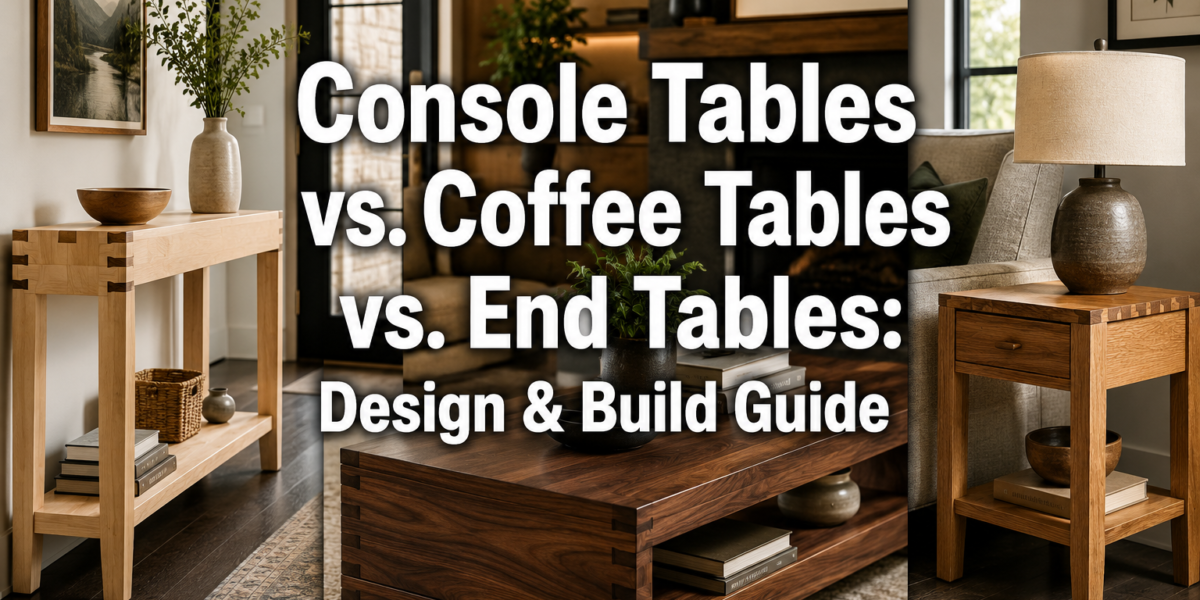
The difference between a perfectly proportioned coffee table and an awkwardly scaled one can define a living space. While all three — console tables, coffee tables, and end tables — serve as essential surface areas, their roles, typical dimensions, and optimal design considerations vary dramatically. Understanding these distinctions is crucial, not just for interior decorators, but especially for woodworkers looking to design and build the right table for each room in 2026. This article will meticulously explore “Console Tables vs. Coffee Tables vs. End Tables: How to Design and Build the Right Table for Each Room,” delving into their unique characteristics, ideal applications, and practical construction insights.
Key Takeaways
- Console tables are typically tall and narrow, ideal for entryways, hallways, or behind sofas for display and light storage.
- Coffee tables are lower and wider, serving as the central anchor of a living room, prioritizing accessibility and interaction.
- End tables are smaller and taller than coffee tables, designed to sit beside seating for convenience and personal items.
- Proportion and context are paramount; each table type requires specific dimensioning to fit its functional and aesthetic role.
- Careful material selection, joinery choices, and finishing techniques are essential for durability and visual appeal across all three types.
Console Tables vs. Coffee Tables vs. End Tables: Understanding Their Core Distinctions
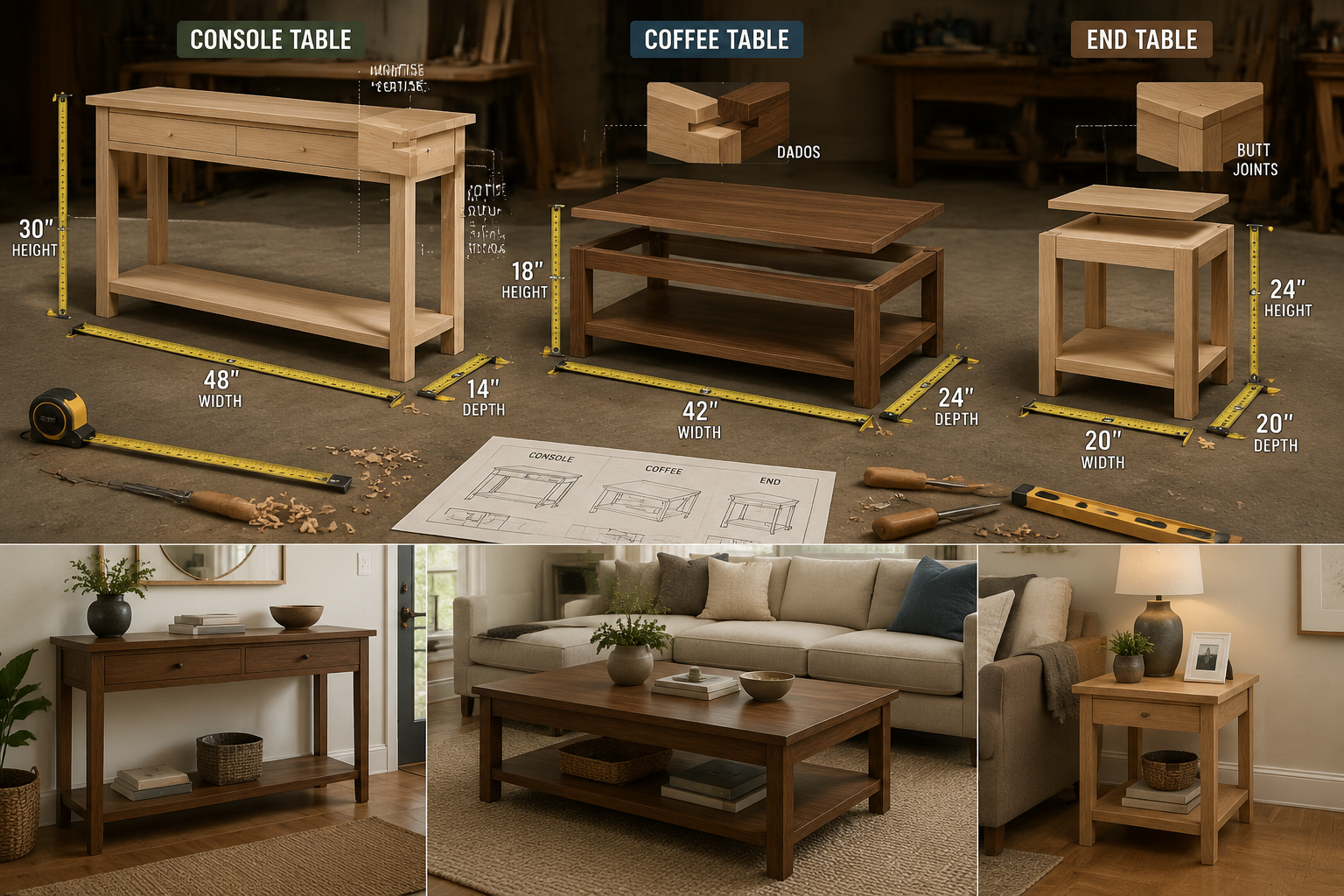
While superficially similar as flat surfaces supported by legs, console, coffee, and end tables are distinct in their fundamental design and purpose. Each is tailored to specific functional and aesthetic demands within a room. Recognizing these differences is the first step in successful furniture design and construction.
Console Tables: The Versatile Narrow Surface
Console tables are often the unsung heroes of transitional spaces. Characterized by their tall and narrow profile, they are designed to fit against walls without protruding excessively into walkways.
Typical Dimensions:
- Height: 28-34 inches (71-86 cm). This height allows them to align well with windowsills or serve as a comfortable surface for keys, mail, or decorative items when standing.
- Width: Highly variable, from 36 inches (91 cm) up to 72 inches (183 cm) or more, depending on the wall space.
- Depth: 12-18 inches (30-46 cm). Their shallow depth is their defining characteristic, allowing them to function in narrow spaces.
Ideal Room Placement:
- Entryways and Hallways: Perfect for catching keys, mail, and providing a spot for a lamp or decorative vase. They create an inviting first impression.
- Behind Sofas: When a sofa floats in the middle of a room, a console table can define the space, provide a surface for drinks or lamps, and hide the back of the sofa.
- Dining Rooms: Can serve as a buffet server or a display surface for art.
- Living Rooms: Against a wall for decorative display, or even as a compact workspace if designed appropriately. For ideas on integrating console tables into various room settings, explore “Console Tables That Wow: Build Sleek Entryway and TV Stand A” at https://woodcraftwiz.com/console-tables-that-wow-build-sleek-entryway-and-tv-stand-alternatives/.
Design and Build Considerations for Console Tables:
Given their height and narrowness, stability is paramount. Consider robust joinery like mortise and tenon joints or sturdy dowel joinery for legs and aprons. If building for an entryway, a shallow drawer for keys or a lower shelf for baskets can add functionality. The choice of wood can range from elegant hardwoods like walnut or cherry for a refined look to reclaimed wood for a rustic aesthetic.
Coffee Tables: The Living Room Anchor
The coffee table is arguably the most central piece of furniture in a living room, serving as a hub for social interaction, relaxation, and everyday convenience. Its design prioritizes accessibility from seated positions.
Typical Dimensions:
- Height: 16-20 inches (41-51 cm). This height should generally be similar to or slightly lower than the seat height of your sofa and chairs.
- Width: 36-48 inches (91-122 cm).
- Depth: 18-24 inches (46-61 cm).
- Proportion Rule: A common guideline is that the coffee table should be approximately two-thirds the length of your sofa.
Ideal Room Placement:
- Center of the Living Room: Directly in front of the main seating area, providing a communal surface for drinks, books, remotes, and decorative items.
- Lounge Areas: In open-plan spaces, it helps define the seating zone.
Design and Build Considerations for Coffee Tables:
Durability is key for coffee tables, as they often endure significant use. Strong joinery like half-lap joints, dados, or even a robust frame-and-panel construction for the top are excellent choices. Many coffee table designs incorporate storage, such as drawers, shelves, or lift-tops, making them highly functional. Material selection can greatly influence the room’s style; for instance, a live-edge slab can create a rustic focal point, while a sleek, minimalist design in a lighter wood like maple can enhance modern aesthetics. For inspiration on building various coffee table styles, check out DIY coffee table plans.
End Tables: The Personal Companion
End tables, also known as side tables, are designed for individual convenience, providing a personal surface next to a sofa, armchair, or bed.
Typical Dimensions:
- Height: 20-25 inches (51-64 cm). The top surface should ideally be within 1-2 inches of the armrest height of the adjacent seating for comfortable access.
- Width & Depth: 16-24 inches (41-61 cm) square or circular. They are compact to fit beside seating without obstructing traffic flow.
Ideal Room Placement:
- Next to Sofas or Armchairs: Provides a spot for a lamp, a drink, a book, or a phone.
- Bedside Tables: Functions as a nightstand, holding an alarm clock, lamp, and personal items.
- Small Accent Tables: Can fill an empty corner with a plant or sculpture.
Design and Build Considerations for End Tables:
End tables often have lighter construction than coffee tables but still require stable joinery. Tapered legs, turned legs, or simple box construction with internal bracing are popular. Since they are smaller, end tables are excellent projects for practicing new joinery techniques or experimenting with different wood types and finishes. They can also be a great opportunity to explore designs with small drawers or a bottom shelf for additional utility.
Designing and Building the Right Table for Each Room: Joinery and Materials
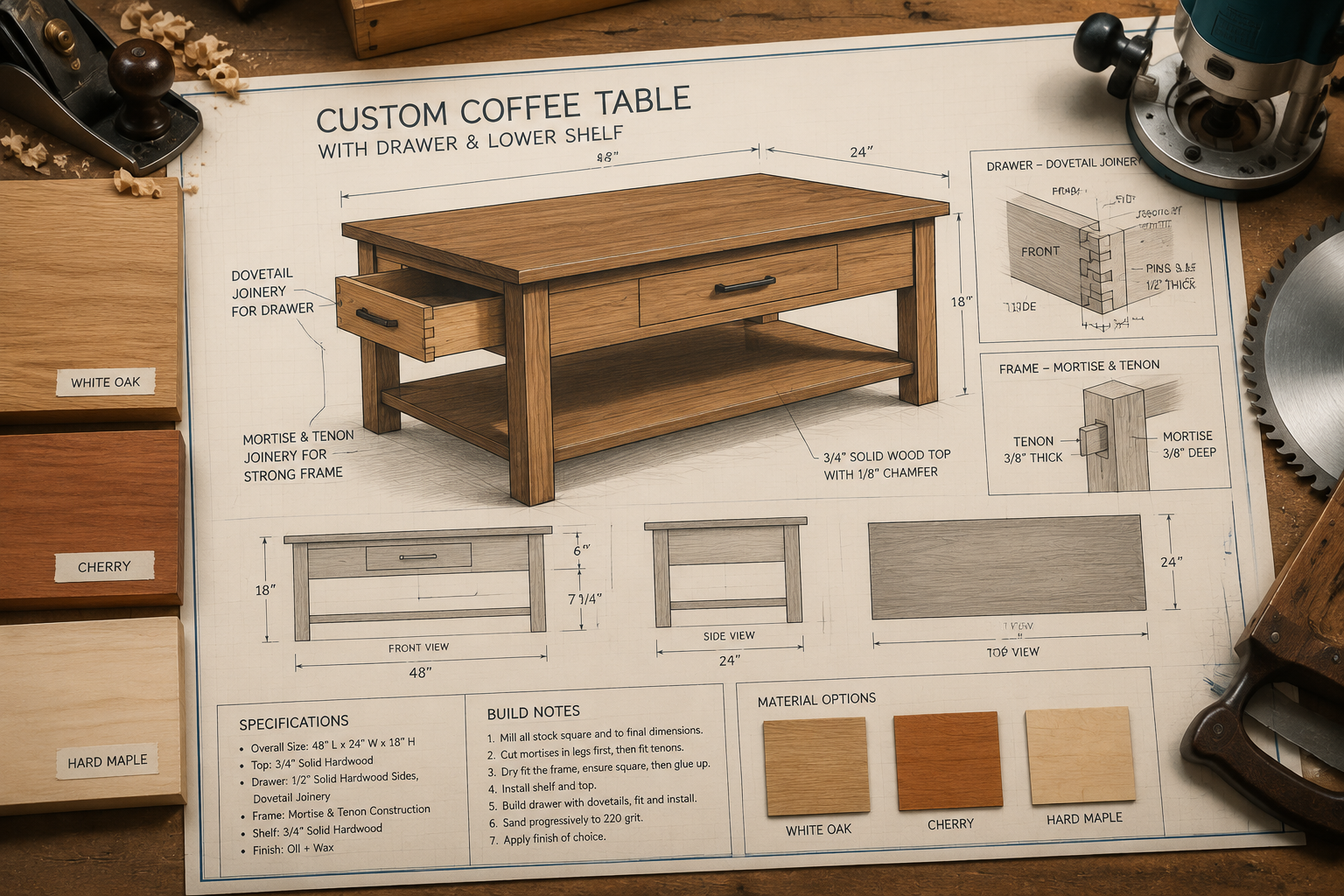
The process of designing and building a table goes beyond just dimensions; it encompasses material selection, joinery methods, and finishing techniques that define its durability, aesthetics, and overall integration into a space.
Choosing the Right Wood and Materials
The material choice dramatically impacts the table’s appearance, weight, and lifespan.
- Hardwoods (Oak, Maple, Walnut, Cherry): Excellent for durability and aesthetics. They are suitable for all three table types, offering distinct grain patterns and colors. Walnut and cherry are often chosen for fine furniture due to their rich hues and workability, while oak and maple offer robust strength and a classic look. For projects like a farmhouse dining table, sturdy hardwoods are essential (see “Craft Your Dream Farmhouse Dining Table: The Ultimate 2025 DIY Guide” at https://woodcraftwiz.com/craft-your-dream-farmhouse-dining-table-the-ultimate-2025-diy-guide-%f0%9f%8f%a1%e2%9c%a8-2/).
- Softwoods (Pine, Fir): More economical and easier to work with, ideal for rustic styles, painted finishes, or projects where extreme durability isn’t the primary concern. They are good choices for beginner projects or larger console tables where budget is a factor.
- Plywood/MDF: Can be used for tabletops (especially if veneered) or for interior shelves and drawers. Plywood edge joining requires specific techniques to look clean (https://woodcraftwiz.com/edge-joining-plywood-best-methods-and-tips/).
- Reclaimed Wood: Offers unique character and a sustainable option. It’s particularly well-suited for console tables or coffee tables with a rustic or industrial aesthetic. Sourcing and preparing reclaimed wood involves specific considerations (see “Sourcing Reclaimed and Salvaged Wood” at https://woodcraftwiz.com/sourcing-reclaimed-and-salvaged-wood-quality-assessment-restoration-and-safe-handling/).
Essential Joinery for Stability and Aesthetics
The joinery chosen directly impacts the table’s strength and visual appeal.
| Joinery Type | Best For | Benefits | Considerations |
|---|---|---|---|
| Mortise and Tenon | Legs to aprons for console, coffee, and end tables. Frame-and-panel construction. | Extremely strong, traditional, attractive when exposed. | Requires precision and specialized tools (mortising machine or router jig). |
| Dovetail Joints | Drawer construction (e.g., in console or end tables with storage). | Highest strength for tensile loads, highly decorative. | Time-consuming, requires skill (hand-cut) or a router jig. See “Mastering Dovetail Joints with Hand Tools” at https://woodcraftwiz.com/mastering-dovetail-joints-with-hand-tools-a-step-by-step-guide-for-flawless-wood-joinery/. |
| Pocket Hole Joints | Attaching aprons to legs, attaching table tops. Good for quickly assembling coffee or end tables where exposed joinery is not desired. | Fast, strong, requires minimal skill with a pocket hole jig. | Holes must be strategically placed to be hidden or plugged for aesthetic appeal. |
| Dowels/Biscuits | Edge-joining tabletops, attaching aprons to legs (less strong than mortise and tenon for legs/aprons but good for alignment). | Good for alignment, adds strength to butt joints. | Requires a doweling jig or biscuit joiner for accuracy. |
| Rabbet and Dado | Securing drawer bottoms or back panels, creating shelves within a console or end table. | Strong, clean, good for internal structures. | Best achieved with a router or dado blade on a table saw. (See “Mastering the Router Table” at https://woodcraftwiz.com/mastering-the-router-table-beyond-basic-edges-for-precision-joinery-and-custom-profiles/). |
Finishing Touches
The finish protects the wood and enhances its natural beauty.
- Oil Finishes: Penetrate the wood, providing a natural, matte look and feel. Easy to repair. Good for pieces where a tactile connection to the wood is desired.
- Varnish/Polyurethane: Form a durable, protective layer on the surface. Available in various sheens (satin, semi-gloss, gloss). Ideal for high-traffic surfaces like coffee tables.
- Lacquer: Dries quickly and builds a smooth, hard finish. Often used in professional furniture making.
- Paint: Offers endless color possibilities, suitable for softwoods or to achieve a specific decor style.
Consider the environment: for example, a console table in an entryway might benefit from a more durable finish to withstand keys and bags, while a coffee table definitely needs a resilient surface.
Integrating Console Tables vs. Coffee Tables vs. End Tables into Your Home’s Aesthetic
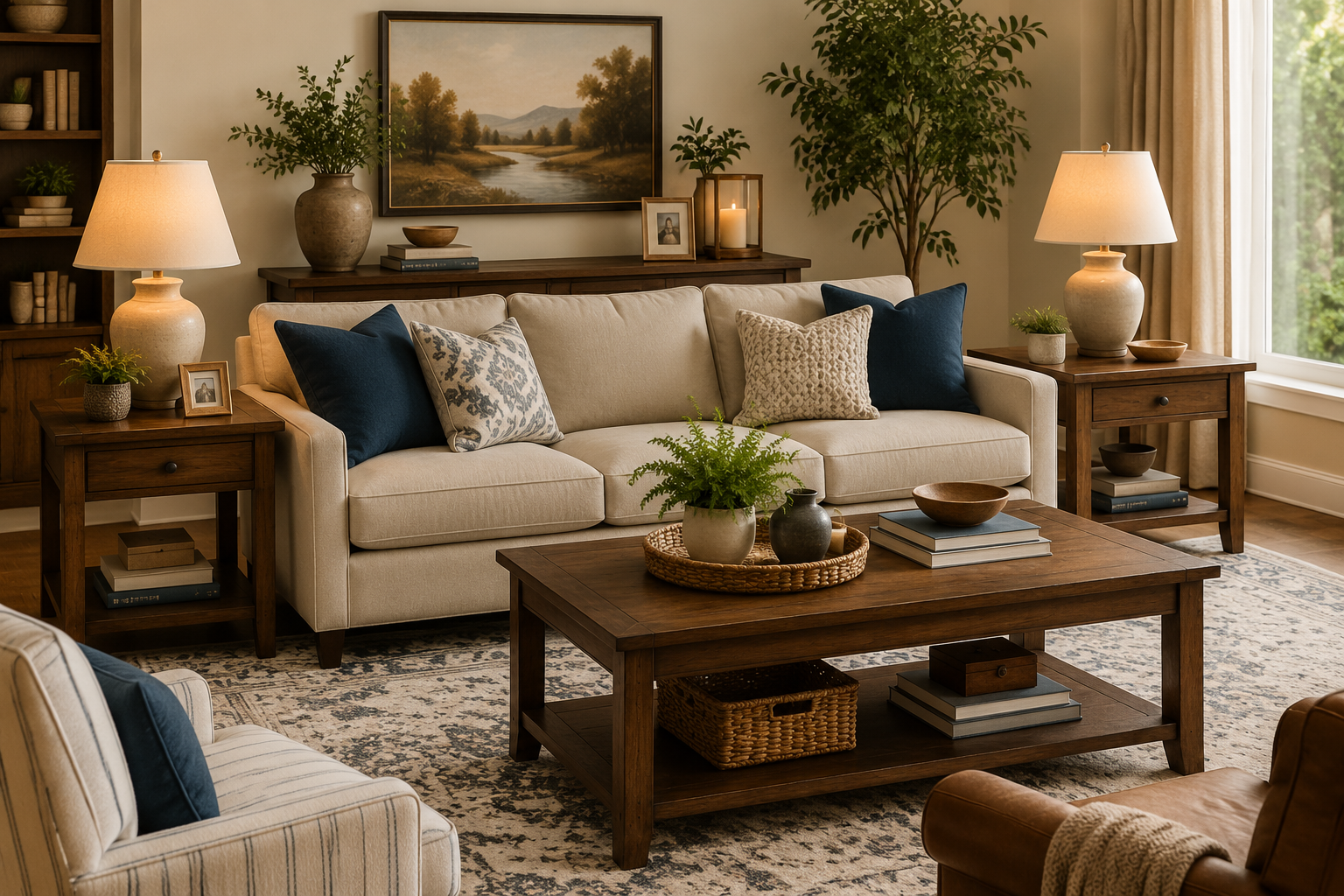
Beyond their individual functions and construction, the true art lies in how these tables harmonize within a room. Successfully integrating “Console Tables vs. Coffee Tables vs. End Tables: How to Design and Build the Right Table for Each Room” requires a keen eye for balance, scale, and overall aesthetic.
Achieving Harmony Through Proportion and Scale
The visual weight and size of each table must complement the other furniture in the room.
- Coffee Table as Focal Point: As the central element in the living room, the coffee table’s size should be proportionate to the sofa. A large sectional might require an oversized coffee table or a pair of smaller ones.
- End Table Balance: End tables should not overpower the armchairs or sofas they sit beside. Too large, and they make the seating look small; too small, and they appear insignificant.
- Console Table Integration: In an entryway, a console table should not block traffic. Behind a sofa, it should be slightly lower than the back of the sofa and no longer than the sofa itself.
Consider the Room’s Style:
- Modern/Minimalist: Clean lines, simple forms, and often lighter woods or mixed materials (wood with metal or glass). Joinery is usually hidden.
- Rustic/Farmhouse: Emphasizes natural wood grains, often reclaimed timber, and robust, visible joinery. Distressed finishes are common.
- Traditional: More ornate designs, richer wood tones, and classic joinery. Often features turned legs or carved details.
- Industrial: Combines wood with metal elements, favoring raw or distressed finishes.
Practical Layouts for Optimal Flow
Thinking about how people move around and use the tables is critical.
- Clear Pathways: Ensure there’s enough space (ideally 18-24 inches) between a coffee table and the surrounding seating for comfortable access and movement.
- Functionality:
- Coffee Table: Position so that drinks and snacks are easily reachable from all seating positions.
- End Tables: Place within arm’s reach of a chair or sofa. They are perfect for holding a reading lamp, thus contributing to task lighting.
- Console Tables: In entryways, leave space for coat hooks or a bench. If behind a sofa, ensure it doesn’t push the sofa too far into the room, creating an awkward pathway.
Styling for Visual Impact
Once built, how these tables are styled brings them to life.
- Console Table: Often hosts decorative items like artwork, mirrors, lamps, and a small plant. A tray can corral keys and mail.
- Coffee Table: Can feature a stack of books, a decorative tray, a candle, or a small sculpture. Avoid clutter to maintain its function.
- End Table: Typically holds a lamp, a coaster for drinks, and perhaps a small personal item like a remote or a phone.
By thoughtfully considering the specific needs of each room and the unique characteristics of console, coffee, and end tables, woodworkers can craft pieces that are not only beautiful but also perfectly suited to their environment. Building custom pieces offers the flexibility to achieve precise dimensions and aesthetic integration that off-the-shelf furniture rarely provides, creating truly personalized and functional living spaces in 2026.
Conclusion
Distinguishing between console tables, coffee tables, and end tables is fundamental for anyone looking to furnish a home thoughtfully or embark on a woodworking project. Each table type possesses a unique set of dimensions, functional requirements, and aesthetic roles within a room. Console tables are tall and narrow, perfect for entryways or behind sofas, emphasizing display and minimal footprint. Coffee tables are the lower, wider central anchors of living spaces, designed for accessibility and interaction. End tables are compact and positioned beside seating for personal convenience.
When designing and building these pieces in 2026, the choice of materials, joinery techniques, and finishing directly influences their durability, stability, and visual appeal. From robust mortise and tenon joints for a sturdy console to elegant dovetails for a coffee table drawer, and simpler joinery for an end table, each choice impacts the final product. By understanding these distinctions and applying sound woodworking principles, you can confidently design and build the right table for each room, ensuring both functional utility and cohesive interior design. The next step is to choose your project and start cutting, always remembering that precision in planning leads to perfection in execution.
SEO Meta Title: Console vs. Coffee vs. End Tables: Design & Build Guide SEO Meta Description: Master console, coffee, and end tables. Learn to design & build the right table for each room in 2026 with joinery, material, and styling tips.