
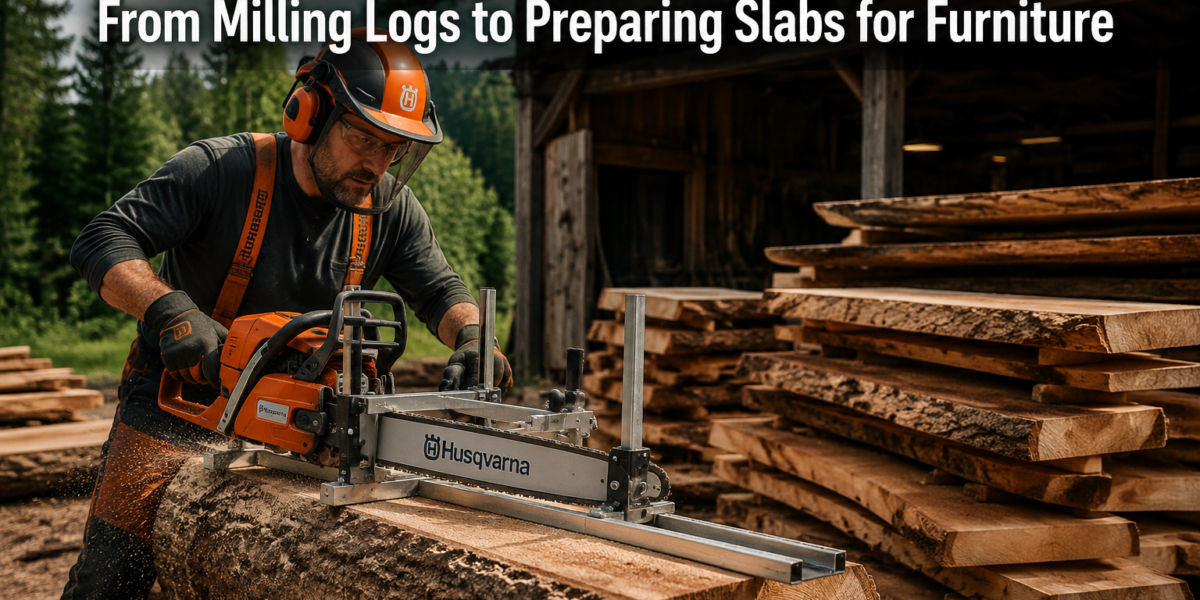
A single mature oak tree, standing tall for a century, can yield enough lumber to furnish an entire home. For woodworkers who dream of transforming raw timber into stunning furniture, the journey often begins long before a board ever touches a planer. It starts with the log itself. Mastering the initial stages—from felling to milling and preparing slabs—requires not just skill but also the right equipment. This is precisely where Husqvarna chainsaws for woodworkers: from milling logs to preparing slabs for furniture become an indispensable asset, offering the power, precision, and reliability needed to tackle these foundational tasks. In 2026, many artisans are embracing the complete process, taking control from forest to final finish, and Husqvarna is a key partner in this endeavor.
Key Takeaways
- Husqvarna chainsaws offer robust power and precision essential for primary log breakdown and milling.
- Specialized accessories like chainsaw mills convert standard chainsaws into portable sawmills for creating custom slabs.
- Proper safety protocols, including appropriate PPE, are paramount when operating chainsaws for milling and log preparation.
- Choosing the right chainsaw model and bar length is critical for efficient and safe slab cutting.
- Understanding wood characteristics and drying processes is vital for successful slab preparation for future furniture projects.
The Power of Husqvarna for Initial Log Processing and Milling
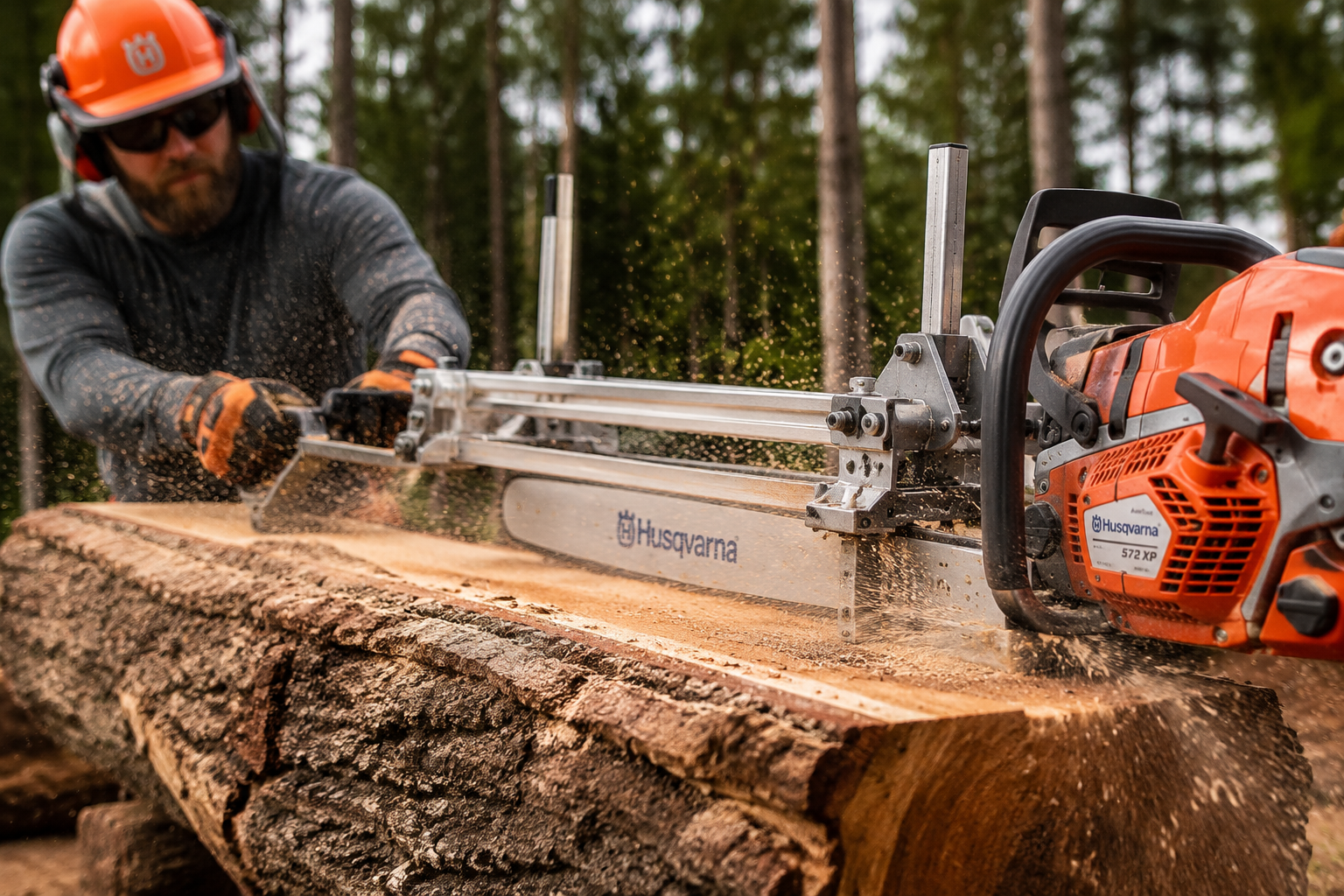
For serious woodworkers, the ability to source and mill their own lumber opens up a world of creative possibilities, especially when working with unique species or live-edge designs. Husqvarna chainsaws are renowned for their robust engines, durable construction, and ergonomic designs, making them ideal tools for the demanding work of bucking logs and initial milling. The process of converting a whole log into usable slabs requires significant power and a precise cutting action, and Husqvarna’s professional-grade models consistently deliver on these fronts.
Consider the common scenario of acquiring a large fallen tree. Before it can be brought into a traditional sawmill or even moved effectively, it often needs to be sectioned into manageable lengths. This is where a powerful Husqvarna chainsaw excels, making quick work of cross-cutting thick trunks. For those committed to creating unique pieces, sourcing reclaimed and salvaged wood can provide truly distinctive material, and a Husqvarna helps process these finds efficiently.
Essential Chainsaw Features for Milling
When selecting a Husqvarna chainsaw for milling, several features are paramount:
- Engine Displacement (cc) and Horsepower: Higher displacement and horsepower translate directly to more cutting power, which is crucial for long rips through dense hardwoods. Look for models in the 70cc to 90cc range or higher for serious milling.
- Bar Length and Type: A longer bar (24 inches or more) is necessary to cut wide slabs. For milling, a ripping chain (which has a shallower cutting angle, designed for cutting with the grain) significantly improves efficiency and produces a smoother finish compared to a standard cross-cut chain.
- Durability and Construction: Milling puts immense stress on a chainsaw. Husqvarna’s professional series are built with robust components designed to withstand prolonged heavy use.
- Vibration Dampening: Extended cutting sessions can lead to operator fatigue. Excellent vibration dampening systems, a hallmark of Husqvarna, help reduce this.
For woodworkers aiming to create bespoke live-edge furniture, the ability to custom-mill slabs from logs is invaluable. Chainsaw mills, often aftermarket attachments, clamp onto the chainsaw bar and ride along a guide rail or plank to ensure straight, consistent cuts. This transforms a powerful Husqvarna chainsaw into a portable sawmill, capable of producing wide, beautiful slabs right in your own yard or worksite. This direct approach ensures that you have control over the thickness and dimensions of your material, paving the way for unique projects like building live-edge dining tables with reclaimed wood.
Table: Recommended Husqvarna Chainsaw Series for Woodworkers
| Series | Engine Range (cc) | Bar Length (inches) | Key Advantages for Milling |
|---|---|---|---|
| 500 Series XP | 50-70 | 18-28 | Excellent power-to-weight, high RPM, X-Torq engine for efficiency |
| 300 Series (Professional) | 70-90+ | 20-36+ | Raw power, robust construction, ideal for large logs and sustained milling |
| 400 Series (Farm & Ranch) | 40-60 | 16-24 | Good all-rounder for smaller logs and initial bucking, less suitable for heavy milling |
Note: Always consult the manufacturer’s specifications for specific model capabilities and recommended bar lengths.
From Rough Logs to Dimensioned Slabs: The Milling Process with Husqvarna Chainsaws
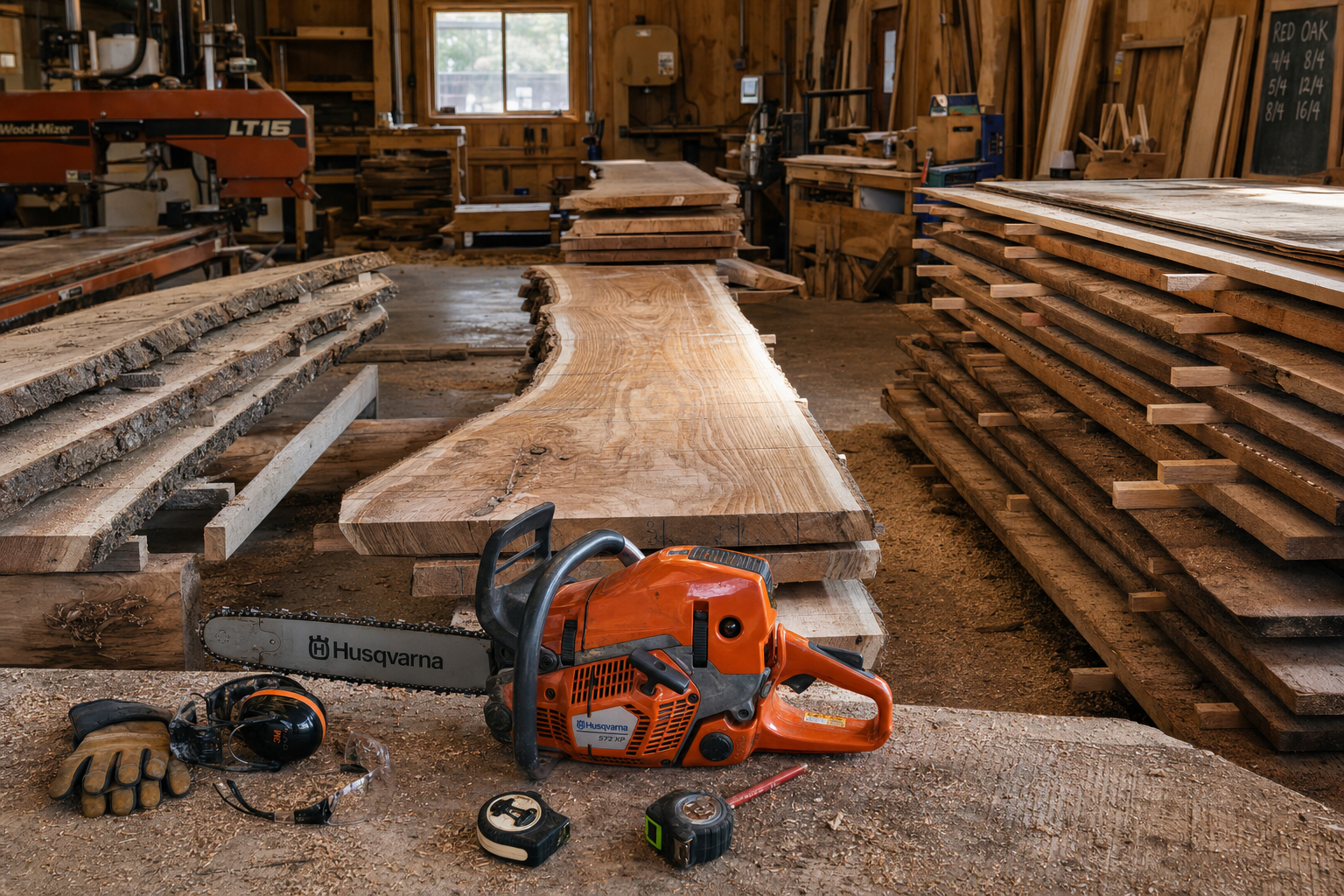
Once a log is bucked to length, the transformation into furniture-ready slabs begins. This stage, where woodworkers use Husqvarna chainsaws for woodworkers: from milling logs to preparing slabs for furniture, is where precision and technique truly matter. The goal is to maximize yield from the log while achieving consistent thickness and surface quality.
The primary setup for chainsaw milling involves a sturdy guide system. This can be as simple as a flat plank secured to the top of the log for the first cut, or a more elaborate jig system. The chainsaw, fitted with a milling attachment, then rides along this guide.
Steps for Effective Chainsaw Milling
- Log Preparation: Clean the log thoroughly to remove dirt, rocks, and debris, which can dull a chain quickly. Secure the log to prevent rolling during cutting.
- Establish a Flat Reference Surface: For the first cut, attach a flat, straight guide board to the top of the log. This creates the initial flat surface from which subsequent parallel cuts can be made.
- Attach the Milling Jig: Securely fasten your chainsaw milling attachment to your Husqvarna chainsaw. Ensure the ripping chain is properly tensioned.
- First Cut: Carefully make the first cut down the length of the log. This often creates the widest, most interesting “live edge” slab or a consistent reference face.
- Subsequent Cuts: Adjust the milling attachment to the desired slab thickness. Use the previously cut flat surface as your new guide for successive cuts. For example, if you aim for 2-inch thick slabs, you’ll set your mill to cut 2 inches below the last cut.
- Safety First: Always wear appropriate personal protective equipment (PPE), including a hard hat, hearing protection, safety glasses, cut-resistant gloves, and chainsaw chaps.
Milling your own slabs provides unparalleled control over the character of your lumber. You can preserve unique grain patterns, inclusions, or live edges that would typically be lost in a commercial mill. This is particularly appealing for projects focusing on live edge wood slabs where the natural contours of the tree are central to the design.
After milling, the freshly cut slabs will be heavy and wet. They need to be properly stickered (separated with small wooden strips) and air-dried or kiln-dried to reach an appropriate moisture content for furniture making. This drying process is crucial to prevent warping, cracking, and movement in the finished piece. Proper selection and preparation are vital, as highlighted in “Live Edge Slab Selection and Preparation: From Raw Material”.
Preparing Slabs for Furniture: Beyond the Initial Cut
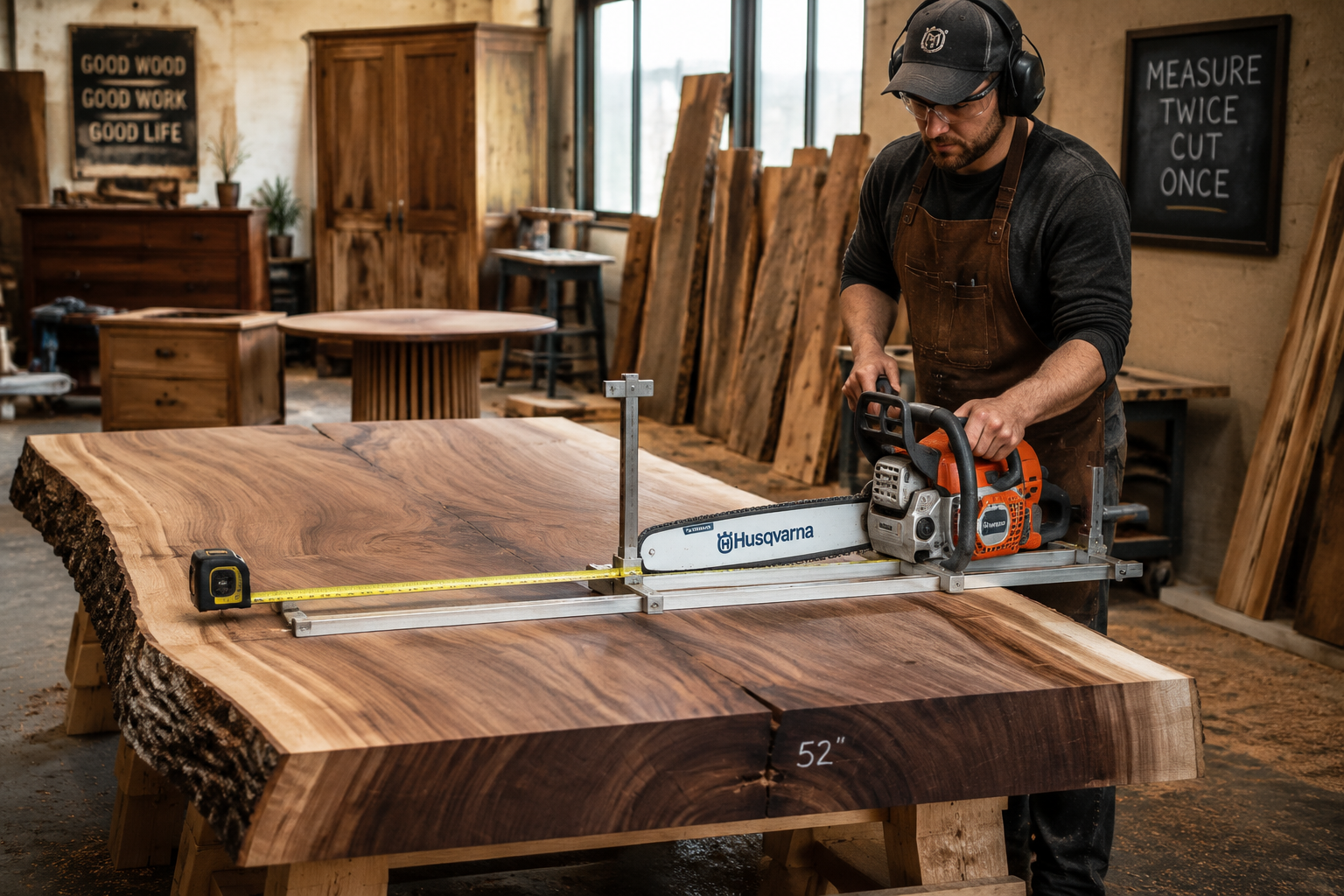
The journey from a raw log to a refined piece of furniture involves more than just milling. Once the slabs are cut and sufficiently dried, further preparation using Husqvarna chainsaws for woodworkers: from milling logs to preparing slabs for furniture can streamline the woodworking process. This involves tasks such as trimming ends, squaring edges, or even rough-shaping before finer tools are introduced.
While the milling attachment is removed, the power and precision of a Husqvarna chainsaw remain incredibly useful. For instance, trimming the ends of a large, heavy slab to a manageable length or squaring an edge before jointing can be efficiently done with a chainsaw, especially when dealing with dimensions too large for typical workshop saws.
Refining Slabs with a Chainsaw
- End Trimming: After drying, slabs often have checking or small cracks at the ends. A chainsaw can quickly and accurately trim these imperfections, preparing the slab for cross-cutting to final length.
- Rough Squaring: For very wide or irregularly shaped slabs, a chainsaw can be used to rough-square one or two edges, making it easier to handle on a jointer or planer for final surfacing. This initial rough cut reduces the amount of material that needs to be removed by more expensive and delicate machinery.
- Defect Removal: Large knots, areas of rot, or significant splits can be quickly removed with a chainsaw, saving time and wear on other tools.
- Initial Shaping: For projects like crafting profitable wooden benches or large building Adirondack chairs, a chainsaw can be used to rough out large curves or complex shapes before switching to band saws or hand tools for detailed work.
It is important to remember that chainsaw work at this stage is typically for rough preparation. The goal is to get the slab into a more manageable state, reducing the workload for subsequent precision tools like jointers, planers, and routers. For detailed finishing, tools like a router with a flattening jig are often employed to achieve a perfectly level surface. Understanding these complementary tools is part of power tool mastery for decorative wood projects.
Always ensure your chainsaw chain is sharp and properly tensioned for clean cuts. A dull chain will tear the wood, generate more heat, and increase the risk of kickback. Proper maintenance of your Husqvarna chainsaw is key to its longevity and safe operation.
Conclusion
The journey from a raw log to a beautifully crafted piece of furniture is deeply rewarding, and for many woodworkers, it begins with the powerful capabilities of a Husqvarna chainsaw. From the initial felling and bucking of timber to the precise art of milling custom slabs and finally preparing them for the workshop, Husqvarna chainsaws for woodworkers: from milling logs to preparing slabs for furniture provide the necessary power, reliability, and versatility. In 2026, embracing this comprehensive approach allows artisans unparalleled control over their materials, unlocking creative possibilities and yielding unique, high-quality results. By understanding the specific models, attachments, and safety protocols involved, woodworkers can confidently transform challenging raw materials into the foundational elements of their next masterpiece.
To embark on your own log-to-furniture journey, begin by assessing the scale of your projects and selecting a Husqvarna chainsaw with adequate power and bar length. Invest in a quality chainsaw milling attachment and, crucially, prioritize safety with proper PPE and training. With these tools and techniques, the forest can truly become your personal lumberyard.