
In the evolving landscape of interior design and woodworking, a significant shift has occurred. Where once delicate, minimalist floating shelves reigned supreme, 2026 marks the undeniable ascendance of Substantial Floating Shelves in 2026: Thicker Wood, Hidden Hardware, and Custom Joinery Techniques. These are not merely storage solutions but sculptural elements designed to appear as if extruded directly from the wall, offering unparalleled strength, visual weight, and a sophisticated aesthetic. This robust trend prioritizes both form and function, challenging conventional notions of shelf design and demanding a deeper understanding of materials, engineering, and craftsmanship.
Key Takeaways
- Substantial floating shelves in 2026 are defined by their increased thickness (2-4 inches or more) and the illusion of seamless wall integration.
- Hidden hardware, such as heavy-duty steel rods or internal metal frames, is crucial for achieving high load capacities and a clean aesthetic.
- Thicker wood allows for greater structural integrity, enabling shelves to support heavier items like books, pottery, or even small appliances.
- Custom joinery techniques, including mortise and tenon or dovetails, enhance both the strength and artisanal quality of the shelves.
- Proper planning, precise measurements, and understanding of wall construction are essential for safe and successful installation.
The Aesthetic and Structural Demands of Substantial Floating Shelves in 2026
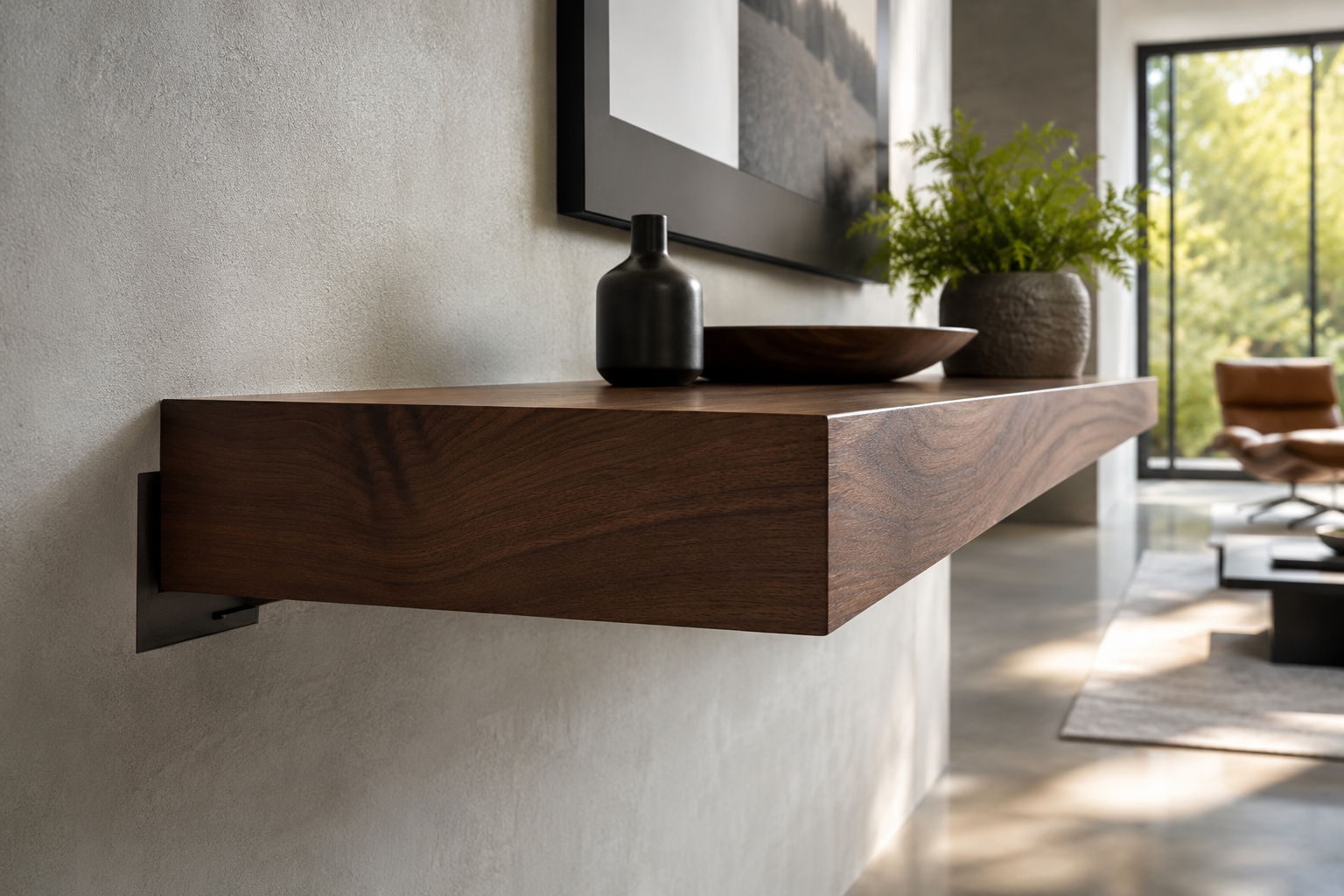
The appeal of substantial floating shelves in 2026 lies in their paradoxical nature: heavy-duty strength paired with an illusion of weightlessness. These shelves break away from flimsy designs, offering a bold visual statement that complements minimalist, industrial, or contemporary interior styles. They demand attention, anchoring a space while maintaining an uncluttered look. The key to this aesthetic is not just the chosen wood species, but its thickness, typically ranging from 2 to 4 inches, and often even more. This increased dimension provides a significant visual presence, allowing the natural beauty of the wood grain to shine through more prominently.
Beyond aesthetics, the thicker profile directly translates to enhanced structural integrity. Thicker wood is inherently more rigid and less prone to sagging or warping under load. This allows designers and homeowners to confidently display heavier items without concern for collapse or unsightly deflection. Consider a home library where books, often heavy in bulk, need robust support. A substantial floating shelf provides this, making it a functional and beautiful choice. The emphasis on high-quality, dense hardwoods such as oak, walnut, maple, or even exotic species further reinforces this strength and durability. These woods not only offer superior strength but also boast rich textures and colors that elevate the overall design.
The ‘extruded from the wall’ effect is achieved through meticulously hidden hardware. Unlike traditional shelves that rely on visible brackets or supports, substantial floating shelves use internal mounting systems that disappear entirely once installed. This creates a clean, uninterrupted line, reinforcing the illusion that the shelf is an integral part of the wall itself. This seamless integration is a hallmark of modern design, where simplicity and clean lines are paramount. The ability to customize shelf dimensions, from length to depth, further enhances their appeal, allowing for bespoke solutions that perfectly fit any space or design vision.
Why Thicker Wood Matters for Durability and Design
The choice of wood thickness is paramount when constructing substantial floating shelves. A minimum thickness of 2 inches is generally recommended, though many designs now push to 3 or 4 inches, especially for longer spans or heavier intended loads. This substantial profile serves several critical purposes:
- Increased Load Capacity: Thicker wood is less likely to flex or sag, distributing weight more effectively. This is crucial for displaying collections of books, heavy decorative items, or even small kitchen appliances.
- Enhanced Visual Impact: A thicker slab of wood makes a bolder statement. It transforms a simple shelf into a prominent design feature, showcasing the natural beauty and grain patterns of the timber.
- Structural Integrity for Hardware: Thicker wood provides more material for the hidden mounting hardware to bite into, ensuring a more secure and stable attachment to the wall. This is especially important for systems that involve drilling into the shelf itself.
- Resistance to Warping: While proper drying and acclimatization of wood are always necessary, thicker pieces can sometimes be more resistant to minor warping or cupping over time compared to thinner boards, contributing to the longevity of the shelf.
When selecting lumber for these projects, opting for solid hardwoods is a wise investment. Species like white oak, hard maple, walnut, or even cherry not only possess the necessary density and strength but also offer exquisite natural aesthetics that require minimal finishing to impress. For those looking for robust shelving solutions, exploring our guide on mastering shelf woodworking can provide further insights.
Mastering Hidden Hardware and Installation Techniques
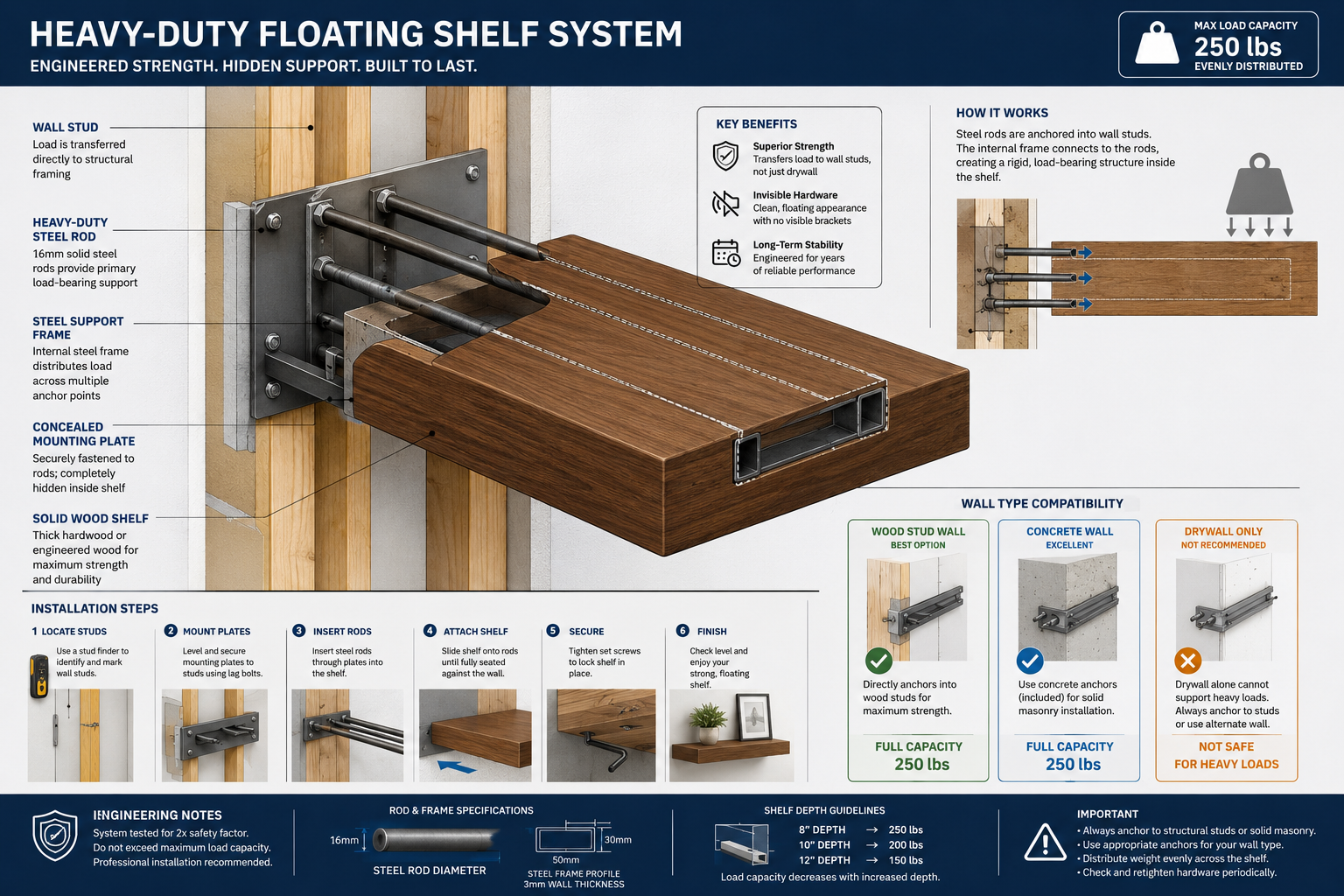
The magic of floating shelves, particularly the substantial ones, lies in their ability to appear unsupported. This illusion is made possible by sophisticated hidden hardware systems. In 2026, the market offers a range of innovative solutions designed to support significant weight while remaining completely invisible. Selecting the right hardware is as crucial as selecting the right wood.
Types of Hidden Hardware Systems
- Heavy-Duty Steel Rod Brackets: These are perhaps the most common and effective solution for substantial floating shelves. They consist of robust steel rods that are securely mounted into wall studs. The shelf itself is then drilled with corresponding holes and slides onto these rods. The fit must be snug to prevent wobble, and the rods must be long enough to provide ample support. Some advanced systems feature adjustable rods, allowing for slight leveling adjustments after installation.
- Internal Metal Frame Systems: For exceptionally long or heavy shelves, an internal metal frame might be used. This frame is typically custom-fabricated to fit inside the hollowed-out back of the shelf. It attaches directly to wall studs, and the wooden shelf then encases it, creating a seamless look. This method offers superior strength and rigidity.
- Torsion Box Construction with Mounting Plate: This technique involves creating a hollow shelf using a torsion box construction (a lightweight yet rigid framework). A metal mounting plate is then secured to the wall studs, and the torsion box shelf is affixed to this plate from within, usually with screws. This combines the strength of metal with the aesthetic of wood, while keeping the overall shelf weight manageable.
- Concealed Rail Systems: These systems use a sturdy rail that mounts to the wall. The shelf then hooks onto this rail using special hardware recessed into the back of the shelf. This allows for easier removal and reinstallation, which can be advantageous in some settings.
Proper installation of any hidden hardware system requires precision and an understanding of wall construction. Locating wall studs accurately is paramount, as anchoring into drywall alone will not support a substantial floating shelf. A stud finder is an indispensable tool. Drilling straight, level holes, whether into the wall or the shelf, is also critical for a perfectly aligned and stable installation.
Load-Bearing Calculations and Wall Anchorage
Understanding load-bearing capacity is vital for safety and functionality. The weight a substantial floating shelf can hold depends on several factors:
- Wood Type and Thickness: Denser hardwoods and thicker boards naturally support more weight.
- Hardware Type and Quality: Heavy-duty steel rods or internal frames are designed for higher loads.
- Number and Spacing of Brackets/Rods: More support points distributed evenly will increase capacity.
- Wall Construction: Anchoring into solid wood studs offers the strongest hold. Masonry walls (brick, concrete) also provide excellent anchorage, but require specialized fasteners. Drywall anchors, even heavy-duty ones, are generally insufficient for truly substantial floating shelves.
Basic Calculation Principle: While exact engineering calculations can be complex, a general rule of thumb for steel rod brackets is that a well-installed bracket anchored into a stud can typically support 20-30 pounds per rod, depending on the rod’s diameter and extension. Multiply this by the number of rods to get a rough estimate of the total shelf capacity. Always err on the side of caution and consult hardware specifications.
When planning, consider not just the weight of the items placed on the shelf but also the weight of the shelf itself. A thick, solid hardwood shelf can be surprisingly heavy. For complex projects or very heavy loads, consulting with a structural engineer or experienced carpenter is advisable. For those interested in precision and mastering tools, our guide on essential hand tools for every woodworker can be helpful for ensuring accuracy in installation.
Custom Joinery Techniques for Strength and Aesthetics
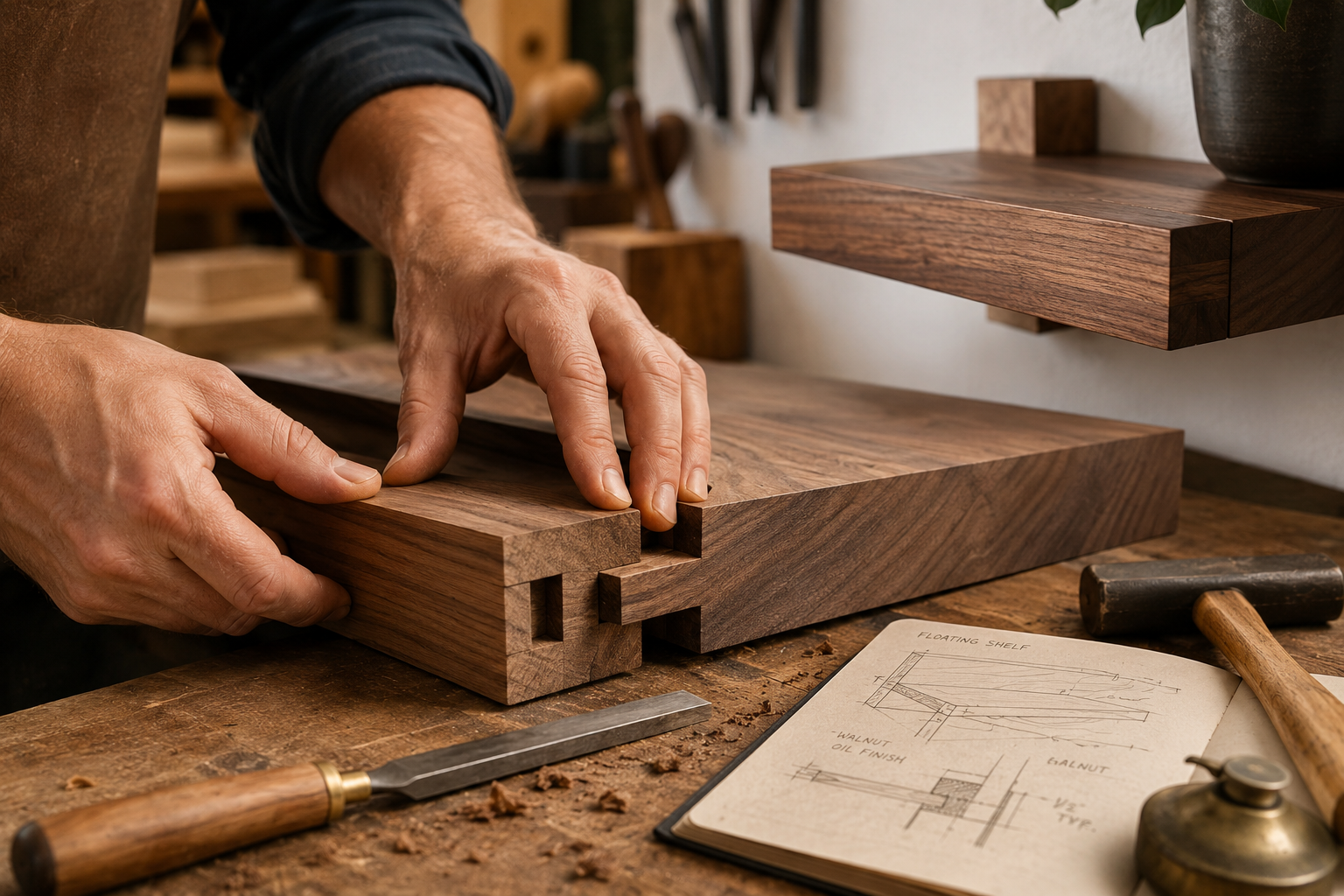
While hidden hardware provides the primary support, custom joinery techniques elevate substantial floating shelves from mere planks of wood to pieces of fine furniture. These techniques, often unseen by the casual observer, contribute significantly to the shelf’s internal strength, stability, and longevity. They also represent the pinnacle of woodworking craftsmanship, aligning with the trend of valuing artisanal quality in 2026.
Integrating Joinery for Structural Integrity
For shelves constructed from multiple boards (e.g., wider shelves made by gluing up narrower planks), strong joinery ensures the individual pieces act as a single, cohesive unit. This is particularly important for preventing warpage or separation over time, especially in fluctuating humidity.
Common joinery techniques that enhance structural integrity include:
- Biscuit Joints: While not as strong as other options, biscuits provide alignment and some shear strength when gluing up wide panels. They ensure the faces of the boards remain flush during clamping.
- Dominos or Dowels: These offer more strength than biscuits, providing excellent alignment and resisting racking. They are particularly useful for edge-to-edge glue-ups for wider shelves.
- Spline Joints: A thin strip of wood (the spline) inserted into grooves routed into the edges of two adjoining boards creates a strong, self-aligning joint that adds substantial gluing surface.
- Tongue and Groove: Similar to a spline, this joint features a projection (tongue) on one board fitting into a recess (groove) on another, offering a very robust and stable glue-up.
When shelves are built with a more complex structure, such as those with an integrated front lip or a mitered return for a seamless wrap-around look, specific joinery becomes critical. For example, a miter joint with a spline or a reinforced dado joint can ensure robust corners that won’t separate. Understanding and executing these techniques contributes to the “sculptural” quality of the shelves. For more on advanced joinery, explore hand tool joinery for visible wood joints, which showcases techniques applicable even when hidden for strength.
Finishing for Minimalist and Modern Spaces
The finish applied to substantial floating shelves is the final touch that dictates their aesthetic impact. In 2026, the trend leans towards finishes that enhance the natural beauty of the wood while providing durability and a tactile quality. The goal is often a “warm minimalist” aesthetic, balancing clean lines with the organic feel of natural materials.
- Natural Oil Finishes: Penetrating oil finishes (like hard wax oils or tung oil blends) are popular for their ability to bring out the depth and grain of the wood without creating a plastic-like film. They offer a natural, matte, or satin look that is both beautiful and easily repairable. This aligns perfectly with the desire for authentic materials. For more on natural finishes, check out our guide on natural wood finishing techniques.
- Matte Polyurethane or Varnish: For higher durability, especially in high-traffic areas or kitchens, a matte or satin polyurethane or varnish can provide excellent protection against moisture and wear. The key is to choose a product that doesn’t build up too much film, preserving the wood’s tactile feel.
- Staining (Subtly Applied): If a specific color tone is desired, stains can be used. However, for substantial floating shelves, the trend is often towards subtle stains that enhance the wood’s natural color rather than masking it. Gray washes, light browns, or even very dark, rich tones (like ebony on oak) are popular, depending on the overall interior palette.
- Clear Coats for Reclaimed Wood: If using reclaimed wood, a clear finish that highlights the wood’s character, imperfections, and history is often preferred. This approach adds narrative and soul to modern spaces, as discussed in reclaimed wood restoration.
Regardless of the finish chosen, meticulous surface preparation (sanding through progressively finer grits) is essential for a flawless result. The finish should protect the wood, allow for easy cleaning, and complement the shelf’s role as a sculptural, functional element in the space.
Conclusion
Substantial floating shelves in 2026 represent more than just a passing trend; they signify a return to robust craftsmanship, thoughtful design, and enduring quality in home furnishings. By embracing thicker wood, mastering hidden hardware, and employing custom joinery techniques, woodworkers and designers can create truly impactful pieces that stand the test of time, both structurally and aesthetically. These shelves are not merely places to put things; they are integral architectural features that enhance the character and functionality of any modern space.
The shift towards these robust, sculptural shelves reflects a desire for authenticity and durability in our living environments. For those embarking on such projects, meticulous planning, precise execution, and an appreciation for the materials are paramount. The result is a piece that feels “extruded from the wall,” a seamless blend of strength, minimalist design, and artisanal excellence.
Actionable Next Steps:
- Assess Your Needs: Determine the intended load and desired aesthetic for your floating shelves. This will guide your choice of wood thickness and hardware.
- Choose Your Wood Wisely: Invest in high-quality, dense hardwoods that offer both strength and beauty.
- Prioritize Hidden Hardware: Select a robust, invisible mounting system appropriate for the shelf’s size, weight, and your wall type.
- Consider Professional Assistance: For complex designs or very heavy loads, don’t hesitate to consult with experienced woodworkers or structural engineers.
- Focus on the Finish: Select a durable finish that enhances the wood’s natural beauty and complements your interior design.
SEO Meta Title: Substantial Floating Shelves in 2026: Thicker Wood & Hidden Hardware SEO Meta Description: Explore the 2026 trend of substantial floating shelves. Learn about thicker wood, hidden hardware, and custom joinery for robust, sculptural designs.