
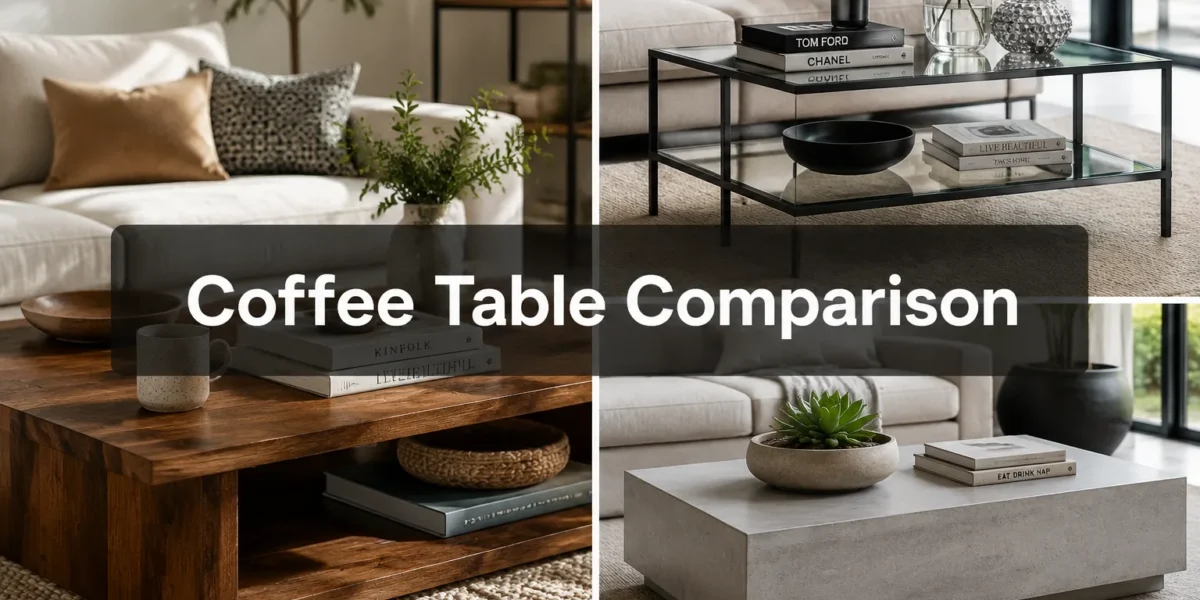
The notion that a living room’s centerpiece must be a traditional wooden coffee table is becoming increasingly outdated. In 2026, homeowners and designers are embracing a broader spectrum of materials, each offering unique aesthetic and functional properties. Comparing Coffee Tables: Wood vs. Metal, Glass, and Concrete for Your Living Room reveals that selecting the right material is not merely about style; it’s about understanding durability, maintenance, and how the table integrates with your overall interior design. From the timeless warmth of natural timber to the industrial edge of concrete, your choice can dramatically alter the feel and utility of your primary communal space.
Key Takeaways
- Wood offers unparalleled warmth and versatility: Known for its natural beauty, durability, and a wide range of styles from rustic to modern.
- Metal provides strength and contemporary flair: Ideal for industrial, minimalist, or eclectic designs, offering high durability and low maintenance.
- Glass creates an open, expansive feel: Excellent for smaller spaces or showcasing rugs, though requires more frequent cleaning and can be less durable.
- Concrete brings modern industrial sophistication: Extremely durable and low maintenance, but heavy and can appear austere if not balanced with other textures.
- Consider lifestyle and design: The best material choice depends on your household’s activity level, desired aesthetic, and willingness to perform maintenance.
The Timeless Appeal of Wood Coffee Tables
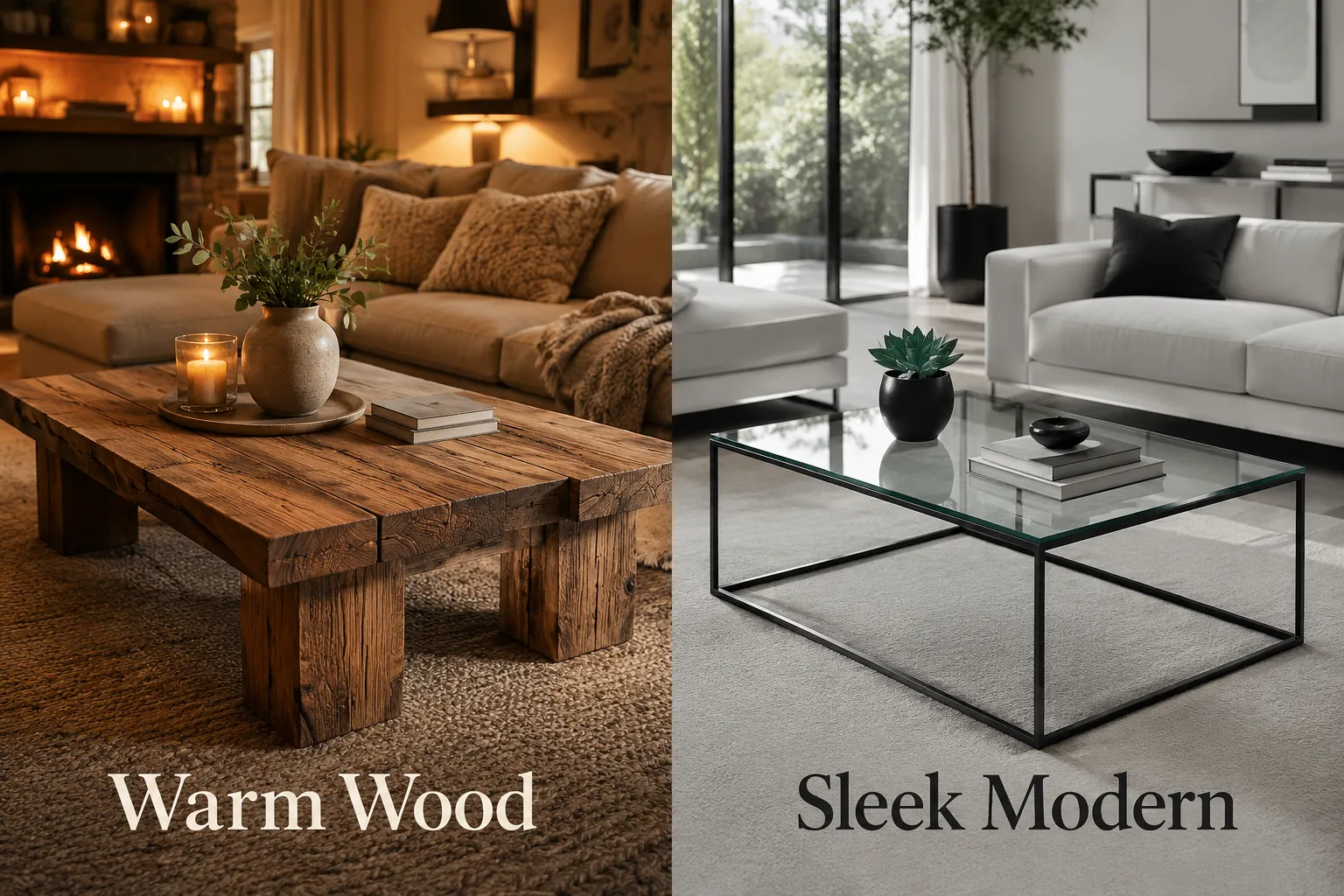
Wood has long been the quintessential material for coffee tables, and for good reason. Its inherent warmth, varied grain patterns, and natural textures bring an organic, inviting feel to any living room. The sheer diversity of wood types, from light maple and rich walnut to robust oak and exotic teak, allows for an incredible range of finishes and styles, making wood a highly versatile choice when [Comparing Coffee Tables: Wood vs. Metal, Glass, and Concrete for Your Living Room].
Aesthetic Versatility and Design
Wood coffee tables seamlessly adapt to various interior design themes. A rustic farmhouse aesthetic might feature a reclaimed barn wood table with a distressed finish, celebrating imperfections and history. For a minimalist or Scandinavian-inspired space, a light-colored wood like birch or ash, with clean lines and a smooth, matte finish, provides a serene anchor. Mid-century modern designs often utilize walnut or teak, highlighting elegant curves and sophisticated craftsmanship. Even industrial settings can incorporate wood, pairing it with metal accents for a softer edge.
The beauty of wood lies in its ability to be shaped, carved, and joined in countless ways. Techniques like live-edge design, where the natural edge of the slab is preserved, have gained popularity, emphasizing the organic character of the material. Live-Edge Design Principles: Letting Wood Character Shine in Contemporary Furniture explores this further.
Durability and Maintenance of Wood
The durability of a wooden coffee table largely depends on the type of wood and its finish. Hardwoods like oak, maple, and cherry are highly resilient, capable of withstanding daily use and resisting dents and scratches more effectively than softer woods like pine. Properly sealed and maintained, a quality wooden coffee table can last for generations.
Maintenance for wood typically involves regular dusting with a soft cloth. Spills should be wiped immediately to prevent staining and water rings. For deeper cleaning, a wood-specific cleaner can be used. Periodically, depending on the finish, the table may benefit from waxing or polishing to restore its luster and protect the surface. Scratches and minor dings can often be repaired with wood fillers or touch-up pens, making wood a forgiving material for active households. However, wood can be susceptible to warping or cracking if exposed to extreme humidity changes or direct sunlight over long periods.
Exploring Alternatives: Metal, Glass, and Concrete Coffee Tables
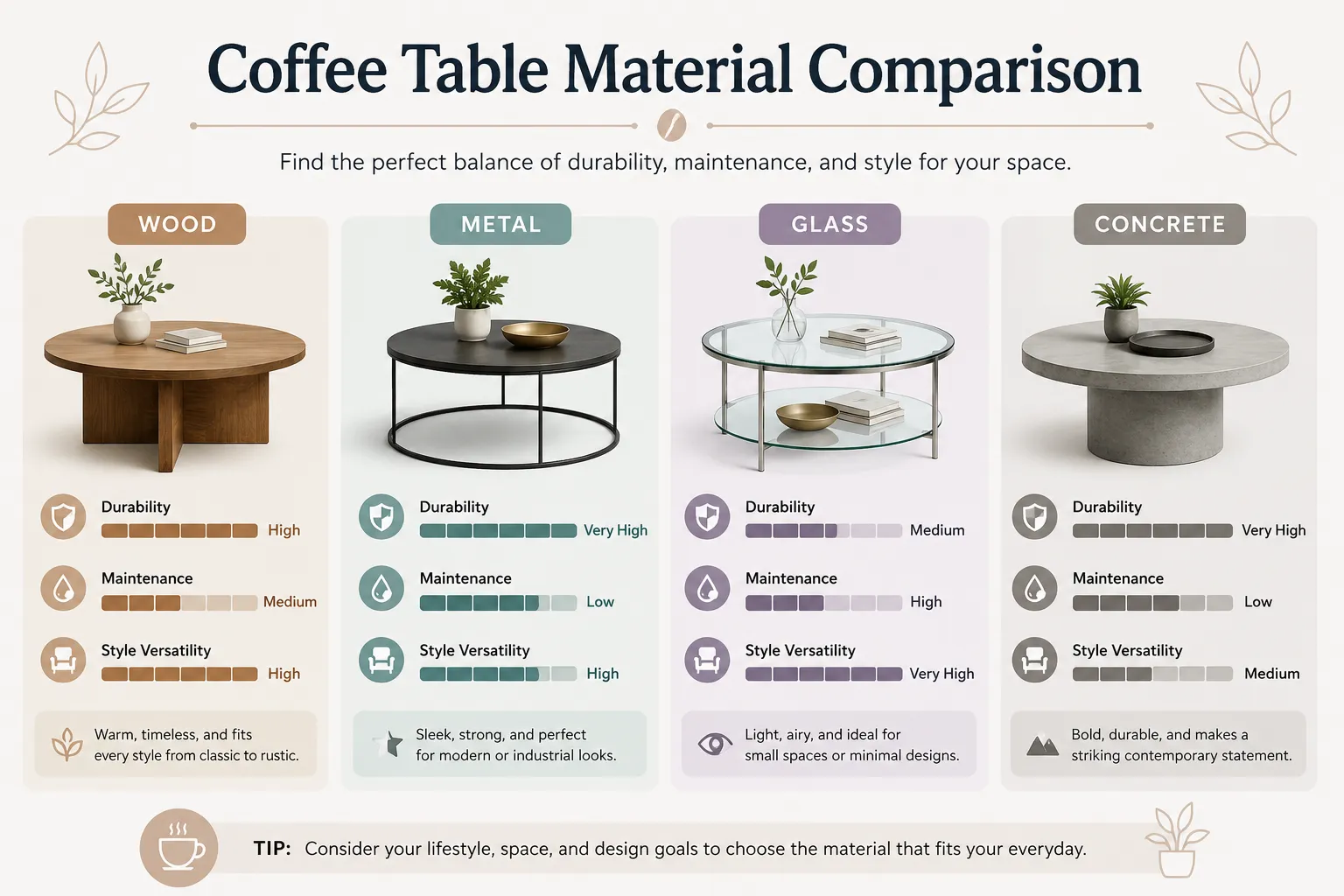
While wood holds a special place, metal, glass, and concrete offer compelling alternatives, each with distinct advantages and disadvantages. These materials can provide a fresh perspective, catering to specific design preferences and functional needs.
Metal: Industrial Edge and Robustness
Metal coffee tables, often constructed from steel, iron, or aluminum, bring a sense of strength and a contemporary aesthetic. They are particularly favored in industrial, minimalist, and modern interior designs.
Aesthetics: Metal offers a sleek, often utilitarian look. Finishes can range from polished chrome and brushed stainless steel to matte black or antiqued bronze, providing diverse visual impacts. Wrought iron tables can add a touch of classic craftsmanship, while minimalist steel frames with simple tops exude modern sophistication. Metal can be combined with other materials, such as a metal base with a wooden or glass top, offering hybrid designs.
Durability: Metal is exceptionally durable. It resists scratches, dents, and impacts better than most wood types and is impervious to moisture damage. Rust can be a concern for some metals, particularly iron, if not properly treated or powder-coated, but modern finishes largely mitigate this.
Maintenance: Metal tables are generally low maintenance. They can be wiped clean with a damp cloth and mild detergent. Polished metals may require specific cleaners to maintain their sheen and prevent fingerprints or smudges. Scratches on painted or powder-coated metal can be touched up, though deep scratches on polished finishes might be more noticeable.
Glass: Lightness and Modern Elegance
Glass coffee tables are celebrated for their ability to make a room feel larger and more open. Their transparency allows light to pass through, creating an airy aesthetic that doesn’t visually clutter a space.
Aesthetics: Glass tables are a staple in contemporary and minimalist design. They often feature simple, clean lines, sometimes with metal or wooden bases. The clear surface highlights a beautiful rug underneath or allows the floor to show through, making them an excellent choice for smaller living rooms. Tinted, frosted, or etched glass options provide additional design versatility.
Durability: While visually delicate, modern glass coffee tables typically use tempered glass, which is significantly stronger and safer than standard glass. Tempered glass shatters into small, blunt pieces rather than sharp shards if broken. However, glass is susceptible to scratches, chips, and fingerprints, making it less ideal for households with very young children or pets that might jump on surfaces.
Maintenance: Glass requires frequent cleaning to maintain its pristine appearance. Fingerprints, dust, and spills are highly visible. A glass cleaner and microfiber cloth are essential for streak-free shine. While glass is impervious to water rings, acidic spills should be wiped promptly to prevent etching over time.
Concrete: Boldness and Industrial Chic
Concrete coffee tables represent a move towards raw, authentic materials, embodying an industrial chic or brutalist aesthetic. They are a statement piece, bringing a strong, grounded presence to a room.
Aesthetics: Concrete tables are inherently modern, offering a distinct minimalist and industrial look. Their neutral gray tones provide a versatile backdrop for various decor styles. They can be cast in numerous forms, from chunky, sculptural blocks to thinner, more refined tops supported by metal or wood bases. Polished concrete can achieve a smooth, almost sophisticated finish, while raw concrete provides a more rugged, utilitarian feel.
Durability: Concrete is incredibly durable and strong, capable of withstanding heavy use and impacts. It is resistant to scratches and heat. However, concrete is a porous material and must be properly sealed to prevent staining from liquids like wine, coffee, or oils. Unsealed concrete can absorb moisture and develop unsightly marks.
Maintenance: Once sealed, concrete is relatively low maintenance. Regular dusting and wiping with a damp cloth are usually sufficient. Spills on sealed concrete should still be cleaned quickly to prevent potential etching or compromise of the sealant. Resealing may be required every few years, depending on use and the quality of the initial sealant. Due to its significant weight, concrete tables are not easily repositioned.
Choosing the Right Coffee Table for Your Living Room in 2026
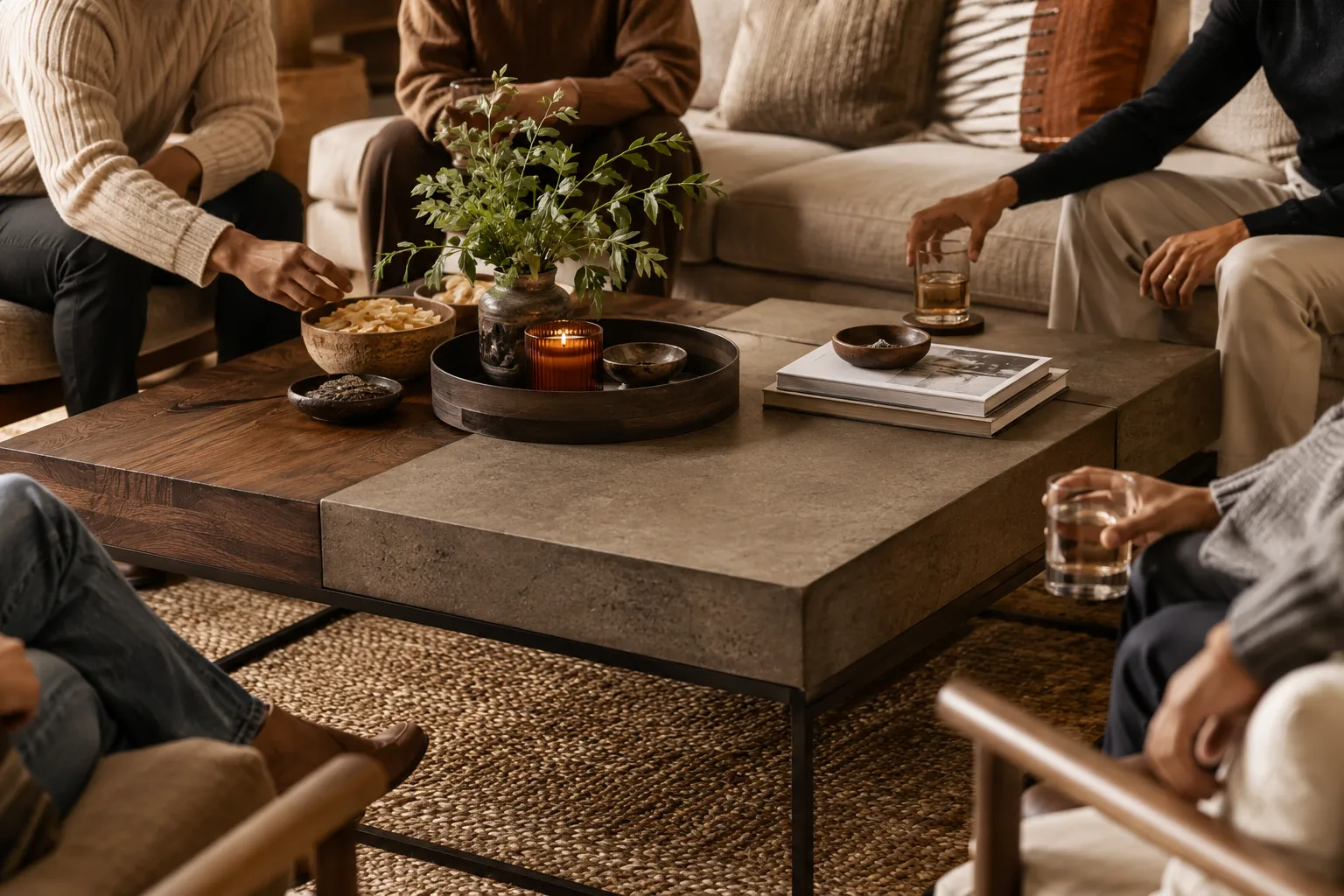
The decision of which coffee table material to choose, wood, metal, glass, or concrete, ultimately depends on a confluence of factors: your lifestyle, your existing decor, and your personal design preferences. Comparing Coffee Tables: Wood vs. Metal, Glass, and Concrete for Your Living Room should lead to an informed decision that enhances your living space for years to come.
Lifestyle Considerations
Your household’s activity level should heavily influence your choice.
- Busy Households (Kids/Pets): For homes with young children or pets, durability and ease of cleaning are paramount. Wood with a robust finish, sturdy metal, or well-sealed concrete are excellent choices. Glass, while elegant, may pose safety concerns (even tempered glass can chip or break) and shows fingerprints constantly.
- Entertaining Focus: If you frequently host guests, consider how spills might impact the surface. Metal and sealed concrete are very forgiving, while wood benefits from coasters and immediate wipe-downs. Glass, again, demands constant attention to stay pristine.
- Minimalist Living: For those who prefer a clutter-free environment, glass or sleek metal can contribute to an airy feel. Concrete offers a bold, minimalist statement.
Design Harmony and Aesthetic Impact
Consider how the coffee table will integrate with your existing furniture and overall room aesthetic.
- Warmth and Tradition: If your living room features upholstered furniture, soft rugs, and a generally cozy atmosphere, a wooden coffee table will likely complement the space best. Its natural elements bring inherent warmth. For inspiration on handcrafted wooden tables, explore Handcrafted Coffee Tables: Designs That Sell From Farmhouse to Modern.
- Modern and Industrial: Metal and concrete tables excel in spaces with clean lines, exposed brick, or minimalist furniture. They add a sophisticated, edgy, or industrial touch. A metal and glass combination can bridge modern and slightly traditional elements.
- Light and Space: If your living room is small or lacks natural light, a glass coffee table can be a game-changer. Its transparency helps maintain an open, spacious feel, preventing the room from feeling cramped.
- Eclectic or Transitional: Don’t shy away from mixing materials. A concrete top with a wooden base, or a metal frame with a glass insert, can create a unique, transitional piece that blends different styles effectively.
Budget and Longevity
While all these materials offer durability, there can be significant price differences. Solid hardwood tables or custom-made concrete pieces might be a larger investment upfront, but their longevity can make them more cost-effective over time. Mass-produced metal or glass tables can be more budget-friendly. Remember to factor in potential long-term maintenance costs, such as resealing concrete or specific cleaning products for polished metals.
For those interested in building their own tables, understanding the various types of tables, including coffee tables, can be very helpful. Our article on Console Tables vs. Coffee Tables vs. End Tables: How to Design and provides insights into distinguishing their functions and designs.
Conclusion
Choosing a coffee table is an important decision that goes beyond mere aesthetics. When Comparing Coffee Tables: Wood vs. Metal, Glass, and Concrete for Your Living Room, it becomes clear that each material offers a distinct personality and set of practical considerations. Wood provides warmth, versatility, and traditional charm. Metal introduces durability, modern lines, and an industrial edge. Glass offers lightness, elegance, and an illusion of space. Concrete makes a bold, contemporary statement with exceptional robustness.
In 2026, the ideal coffee table harmonizes with your lifestyle, complements your decor, and meets your functional needs. Whether you seek the timeless comfort of a classic wooden design, the sleek efficiency of metal, the airy transparency of glass, or the grounded solidity of concrete, understanding the strengths and weaknesses of each material empowers you to select a centerpiece that truly completes your living room. Consider your daily habits, your home’s overall design, and the level of maintenance you’re willing to undertake. By doing so, you’ll find a coffee table that is not just a piece of furniture, but a functional work of art that enhances your home for years to come.
References
- Draper, R. (2021). The Coffee Table Book: An Illustrated Guide. Chronicle Books.
- Garrison, J. (2019). Industrial Chic: Furniture and Design. Thames & Hudson.
- Miller, M. (2020). Modern Living Room Design. Rizzoli.
SEO Meta Title: Coffee Table Comparison: Wood, Metal, Glass, Concrete SEO Meta Description: Compare wood, metal, glass, and concrete coffee tables for your living room in 2026. Discover aesthetics, durability, and maintenance to pick the perfect fit.