
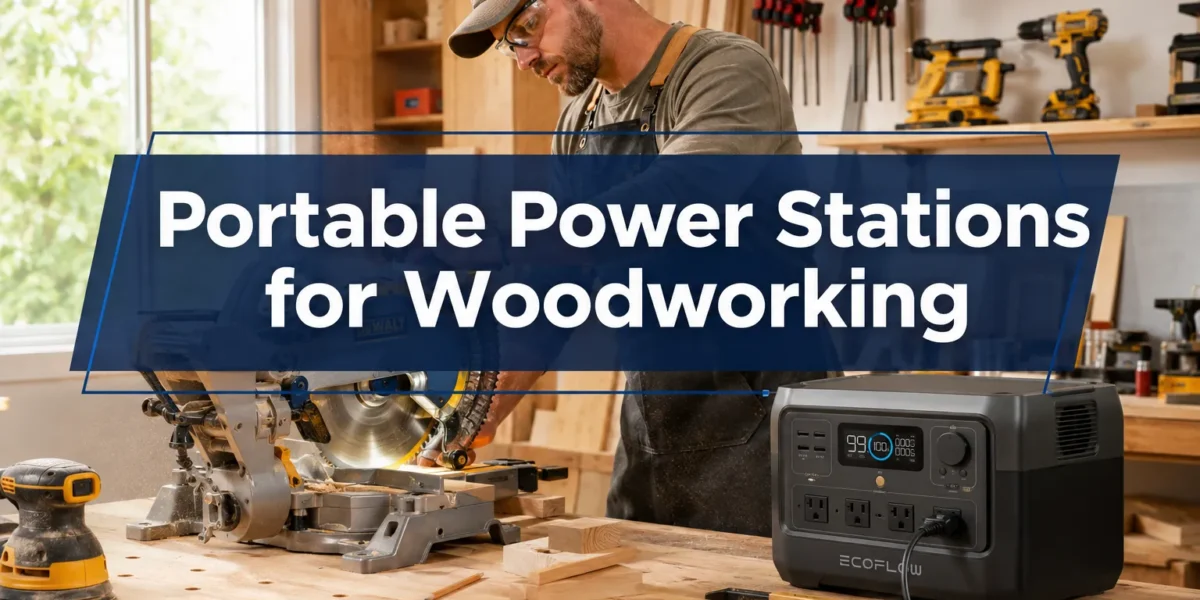
The hum of a miter saw in a remote cabin, far from any electrical outlet, or the sudden, frustrating silence of a drill in a backyard workshop when the extension cord won’t reach: these scenarios underscore a common challenge for woodworkers. Power outages, remote job sites, or simply the desire for a flexible workshop layout can bring production to a grinding halt. However, the solution often lies in selecting the Best Portable Power Stations for Woodworking: Sizing, Runtime, and Off-Grid Workshop Setup. These robust units are transforming how woodworkers operate in 2026, offering unparalleled freedom and efficiency.
Key Takeaways
- Sizing is Critical: Match the power station’s wattage (output) and watt-hours (capacity) to your tools’ needs, not just their labels. Surge wattage is crucial for motor-driven tools.
- Runtime Calculation: Understand how to calculate realistic runtime for your specific tools and usage patterns by dividing the power station’s usable capacity (Wh) by your tool’s average wattage (W).
- Off-Grid Setup: Integrate solar charging and smart power management for sustainable and efficient remote or backyard workshops.
- Essential Features: Prioritize pure sine wave inverters, multiple AC/DC/USB ports, durable build quality, and efficient charging options.
- Brand Reputation: Invest in reputable brands for reliability, safety, and customer support.
Understanding Portable Power Station Fundamentals for Woodworking
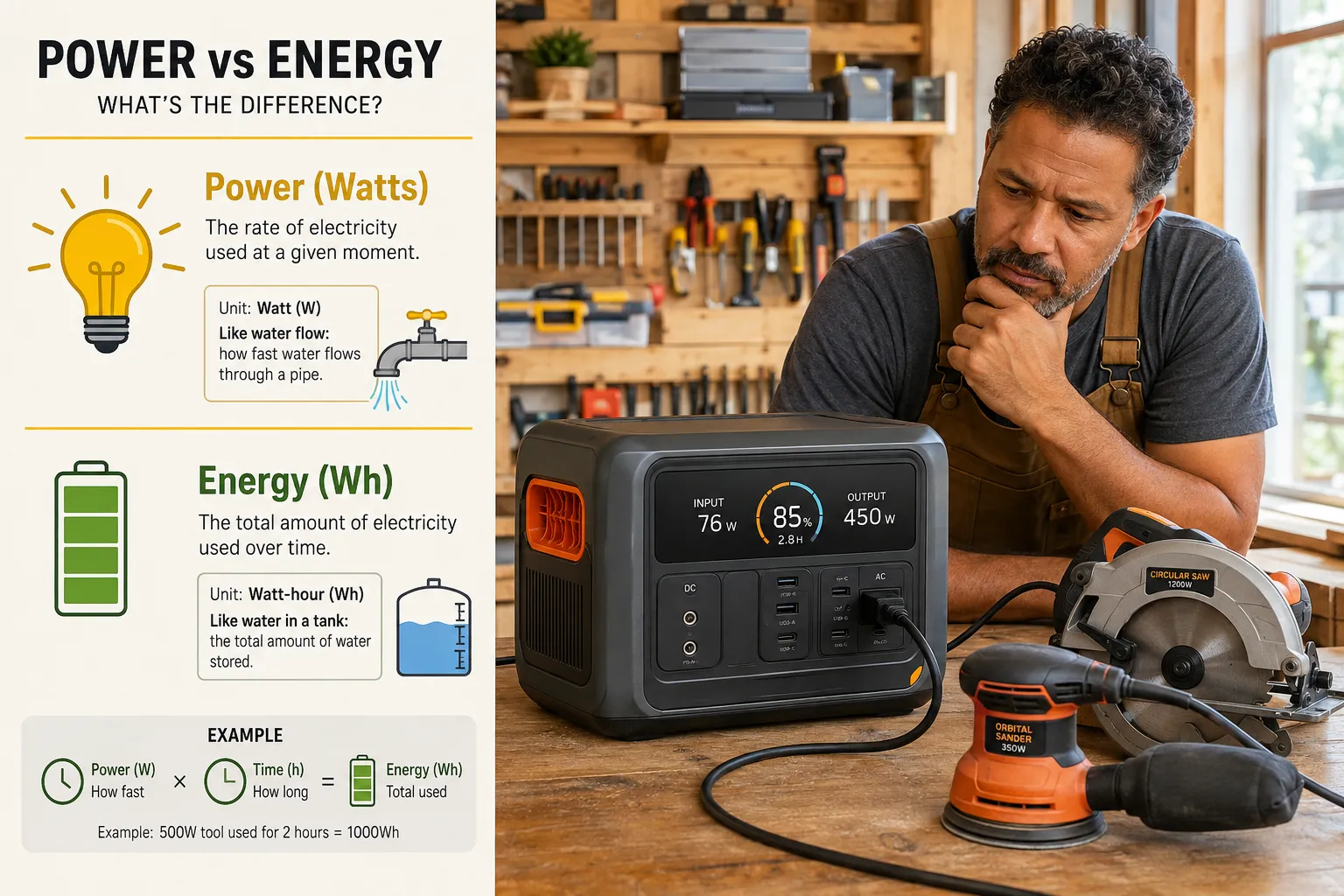
Selecting the Best Portable Power Stations for Woodworking: Sizing, Runtime, and Off-Grid Workshop Setup begins with a clear understanding of the core specifications. Two primary metrics govern a power station’s utility for woodworking: output wattage (W) and battery capacity (Wh).
Output Wattage: Powering Your Tools
Output wattage refers to the maximum power a portable power station can deliver at any given moment. This is critical because every power tool has a specific wattage requirement.
- Continuous Wattage: This is the sustained power a power station can provide. For example, a 1500W continuous output means it can run tools requiring up to 1500 watts for extended periods.
- Surge Wattage (Peak Wattage): Many motor-driven tools, such as circular saws, miter saws, and routers, demand a significantly higher burst of power (surge) for a fraction of a second when they start up. A power station with a 3000W surge capability can handle these initial spikes, even if the tool’s continuous draw is much lower. Without sufficient surge capacity, your power station will simply shut down or trip its breaker.
Common Woodworking Tools and Their Wattage Demands (Approximate)
| Tool Type | Continuous Wattage (W) | Surge Wattage (W) (Approximate) |
|---|---|---|
| Orbital Sander | 200 – 400 | 400 – 800 |
| Jigsaw | 300 – 600 | 600 – 1200 |
| Corded Drill | 400 – 700 | 800 – 1400 |
| Router (Handheld) | 700 – 1500 | 1400 – 3000 |
| Circular Saw (7-1/4″) | 1000 – 1500 | 2000 – 3000 |
| Miter Saw (10″-12″) | 1200 – 2000 | 2400 – 4000 |
| Table Saw (Small/Benchtop) | 1500 – 2500 | 3000 – 5000+ |
| Shop Vac (Wet/Dry) | 800 – 1500 | 1600 – 3000 |
| Work Lights (LED) | 50 – 200 | N/A |
| Battery Chargers | 50 – 200 | N/A |
Always check the nameplate of your specific tools for accurate wattage. When selecting a power station, ensure its continuous output meets or exceeds the highest continuous draw of any single tool you plan to run, and its surge output can handle the peak demands of your motor-driven equipment.
Battery Capacity: Long-lasting Power
Battery capacity, measured in watt-hours (Wh), determines how long a power station can run your tools. A higher Wh rating means longer runtime.
- Understanding Wh: 1000 Wh means the power station can supply 1000 watts for one hour, or 100 watts for ten hours, etc.
- Usable Capacity: Most lithium-ion batteries should not be discharged to 0% repeatedly. Manufacturers often rate their batteries for a usable capacity, typically 80-90% of the stated Wh, to prolong battery life. Factor this into your runtime calculations.
For woodworkers, especially those building a DIY router table or other large projects, choosing a power station with adequate capacity is as important as its power output.
Sizing and Runtime for the Best Portable Power Stations for Woodworking
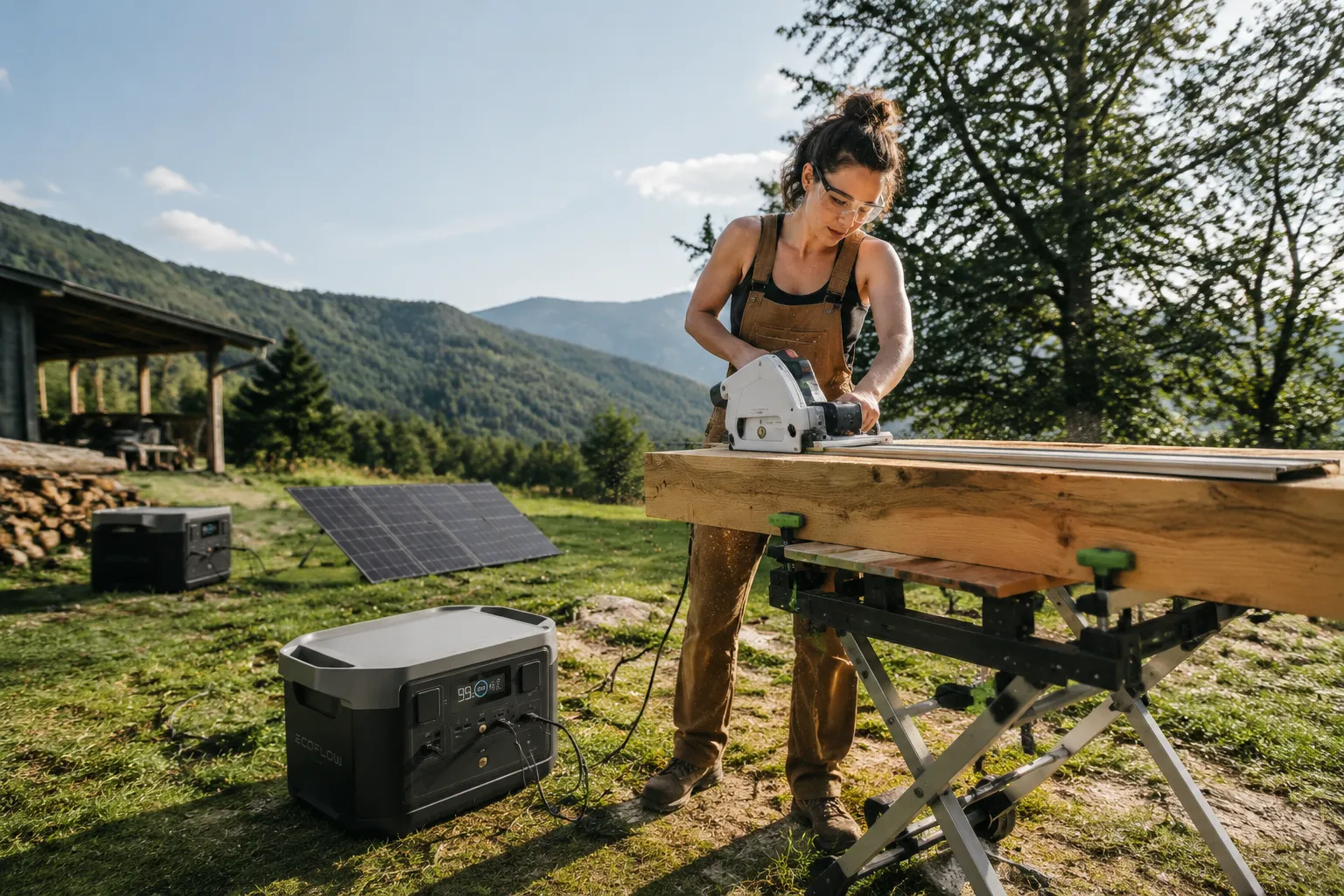
Accurately sizing your portable power station is critical to avoid under-powering your tools or overspending on unnecessary capacity. This involves a two-step process: determining your total power requirements and then calculating the necessary battery capacity for your desired runtime.
Step 1: Calculate Your Total Power Requirements (Wattage)
Identify all the tools you anticipate running simultaneously or in quick succession.
- List Tools and Wattage: Make a comprehensive list of every power tool, light, and charger you plan to connect to the power station.
- Find Continuous and Surge Watts: For each tool, note its continuous running wattage and its surge wattage (if applicable). This information is usually on the tool’s label or in its manual.
- Determine Peak Load:
- Identify the tool with the highest continuous wattage.
- Identify the tool with the highest surge wattage.
- If you plan to run multiple tools simultaneously, sum their continuous wattages. Ensure this sum is below the power station’s continuous output.
- Crucially, the power station’s surge capacity must exceed the highest single tool’s surge requirement, or the combined surge if multiple surge-prone tools might start at the exact same moment (less common, but possible with some setups).
Example Scenario: You want to run a 1200W miter saw (2500W surge) and an 800W shop vac (1600W surge) at the same time, plus a 100W LED work light.
- Total Continuous Load: 1200W (miter saw) + 800W (shop vac) + 100W (light) = 2100W
- Highest Single Surge Load: 2500W (miter saw) or 1600W (shop vac). The miter saw has the highest.
You would need a portable power station with at least 2100W continuous output and 2500W+ surge output to run these items simultaneously. A power station offering 2500W continuous and 5000W surge would provide a comfortable buffer.
Step 2: Calculate Runtime (Watt-hours)
Once you know your total wattage, you can estimate runtime.
Formula: Runtime (hours) = (Power Station Usable Capacity in Wh) / (Total Continuous Tool Wattage in W)
Example Continued: Let’s say you choose a portable power station with a 3000Wh (watt-hour) capacity, and its usable capacity is 90% (2700 Wh). You’re running the 2100W load calculated above.
- Runtime: 2700 Wh / 2100 W = 1.28 hours
This means you would get just over an hour and a quarter of continuous use. If your woodworking involves intermittent tool use (e.g., cutting for 10 minutes, then assembling for 20 minutes, then cutting again), your actual working time will be much longer, as the power station isn’t always under full load.
Consider Intermittent Use: For most woodworking, tools are not running continuously. A miter saw might run for only 30 seconds per cut. An orbital sander might run for a few minutes at a time. Factor in your actual usage pattern. A general rule of thumb for intermittent tool use is to multiply your calculated continuous runtime by a factor of 2 to 4, depending on how frequently your tools are actually drawing power.
For instance, if your calculated continuous runtime is 1.28 hours, your real-world working time for a project might stretch to 2-5 hours with typical intermittent tool operation. This is especially relevant for projects like building DIY outdoor furniture where you might be working outdoors for extended periods.
Off-Grid Workshop Setup with Portable Power Stations
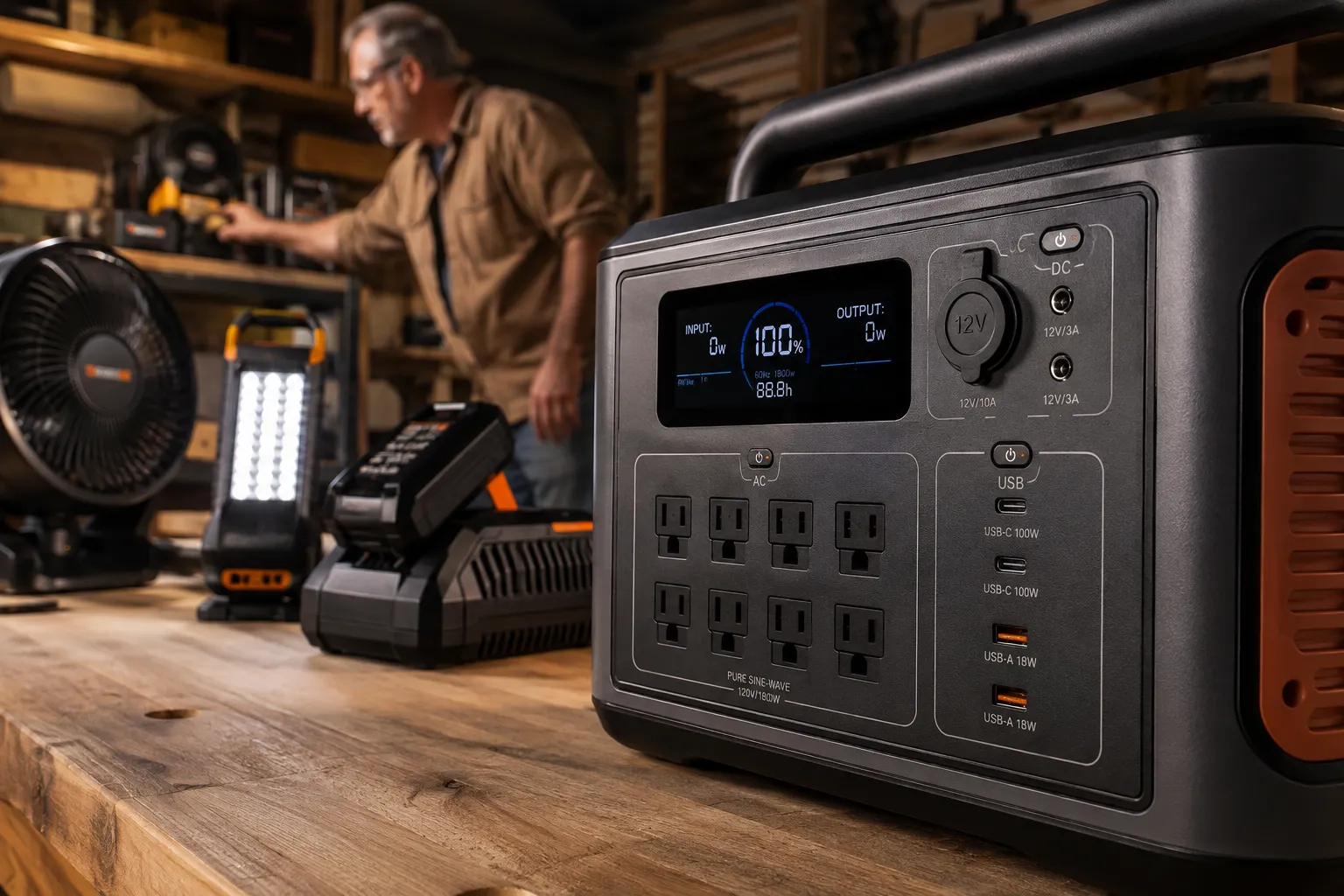
Establishing an off-grid workshop, whether it’s a remote shed, a temporary job site, or simply a flexible outdoor workspace, relies heavily on a well-planned portable power station integration. The Best Portable Power Stations for Woodworking: Sizing, Runtime, and Off-Grid Workshop Setup combine robust power with flexible recharging options.
Integrating Solar Panels
Solar panels are the cornerstone of a truly off-grid woodworking setup, allowing you to replenish your power station’s battery without relying on grid electricity.
- Panel Sizing: The wattage of your solar panels determines how quickly you can recharge. A 200W solar panel in ideal conditions can provide 200Wh per hour. If your power station is 2000Wh and you have two 200W panels, it could theoretically recharge in 5 hours of peak sun (2000 Wh / 400 W = 5 hours).
- MPPT Controller: Ensure your portable power station has a Maximum Power Point Tracking (MPPT) charge controller. This technology optimizes the power harvest from your solar panels, especially during variable sunlight conditions, making your charging more efficient.
- Portability: Foldable, portable solar panels are ideal for woodworking, as you can easily set them up and reposition them to track the sun throughout the day.
- Placement: Angle your panels directly towards the sun for maximum efficiency. Avoid shade from trees or buildings.
For a comprehensive approach to self-sufficiency, consider building a DIY portable power station enclosure to protect your investment and integrate it seamlessly into your workshop environment.
Essential Features for Off-Grid Woodworking
When evaluating portable power stations for off-grid woodworking, prioritize these features:
- Pure Sine Wave Inverter: This is crucial for sensitive electronics and motor-driven tools. Pure sine wave output replicates grid power, ensuring your tools run smoothly, efficiently, and without damage. Modified sine wave inverters can cause tools to run hotter, less efficiently, and potentially shorten their lifespan.
- Multiple Outlet Types: Look for a variety of AC (120V household outlets), DC (12V car ports), and USB ports (USB-A, USB-C, Power Delivery) to power a diverse range of tools, lights, and devices. This allows you to charge tool batteries, run a small workshop heating and cooling solutions fan, and keep your phone charged.
- Pass-Through Charging: This feature allows the power station to charge from solar or AC while simultaneously powering your tools. This is invaluable for continuous operation in an off-grid setting.
- Battery Chemistry (LiFePO4): Lithium Iron Phosphate (LiFePO4) batteries offer significantly longer cycle life (2500-3500+ cycles) compared to traditional Lithium-ion (NMC) batteries (500-800 cycles). This translates to a longer lifespan and better value for a heavy-use woodworking setup.
- Fast Recharging Options: Beyond solar, check for rapid AC wall charging and 12V car charging capabilities. The quicker you can recharge, the less downtime you’ll experience.
- Durable Build Quality: Your power station will likely endure dust, sawdust, and the occasional bump. Look for robust construction, integrated handles, and possibly IP-rated resistance to dust and moisture if working in exposed conditions.
Power Management and Safety
Efficient power management and safety are paramount in any workshop, especially an off-grid one.
- Monitor Display: A clear, comprehensive display showing input/output wattage, remaining battery capacity, and estimated runtime is essential for planning and preventing unexpected shutdowns.
- Battery Management System (BMS): A robust BMS protects against overcharging, over-discharging, over-current, and short-circuits, extending the battery’s life and ensuring safe operation.
- Dust Control: While portable power stations are robust, excessive sawdust can clog vents and interfere with cooling. Position your power station away from heavy dust-producing operations or consider a dust-resistant enclosure. For serious off-grid setups, explore integrating your power station with a DIY smart workshop dust collection system.
- Ventilation: Ensure adequate airflow around your power station, especially when it’s under heavy load or charging, to prevent overheating.
By carefully considering these factors, woodworkers can confidently choose the Best Portable Power Stations for Woodworking: Sizing, Runtime, and Off-Grid Workshop Setup to fuel their creativity wherever they choose to work.
Conclusion
The pursuit of the Best Portable Power Stations for Woodworking: Sizing, Runtime, and Off-Grid Workshop Setup is a strategic investment for any modern woodworker. These devices empower you to overcome the limitations of traditional grid power, enabling projects in remote locations, expanding your workshop’s footprint, and providing essential backup during outages. By understanding the critical balance between output wattage and battery capacity, performing realistic runtime calculations, and embracing solar charging, you can select a power station that not only meets your current needs but also future-proofs your woodworking ambitions. Always prioritize features like pure sine wave output, LiFePO4 battery chemistry, and comprehensive safety systems to ensure both performance and longevity. Investing in the right portable power solution means more freedom, greater efficiency, and uninterrupted creativity in your craft.