
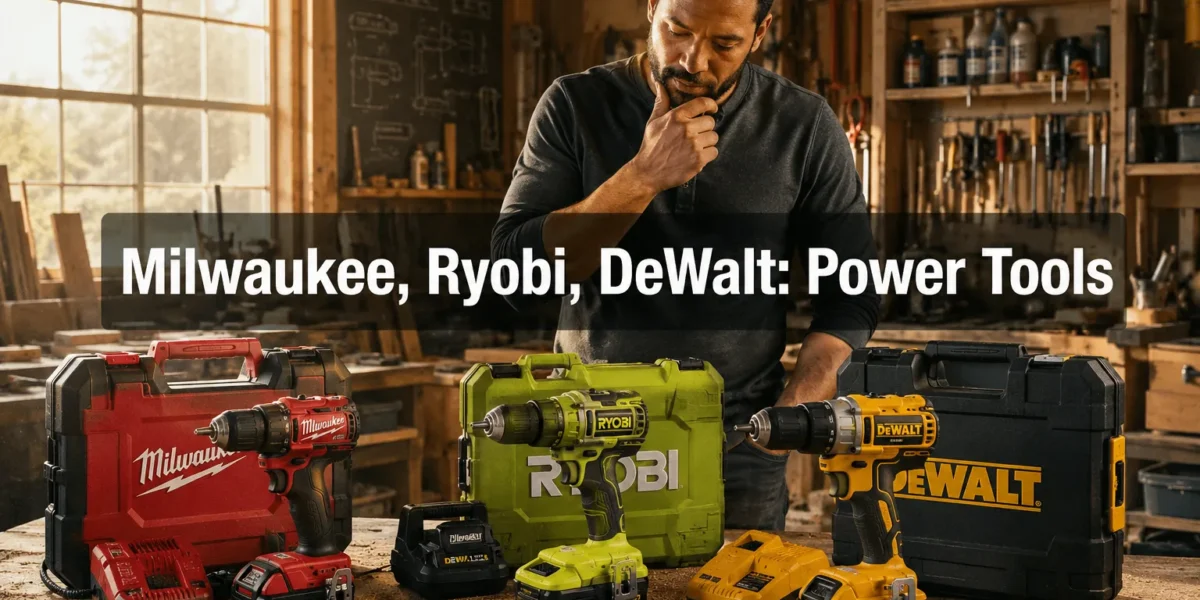
For beginner woodworkers and small shops, the choice of power tools can feel like navigating a dense forest without a compass. The initial investment, the bewildering array of options, and the sheer volume of conflicting advice can easily overwhelm. Few decisions are as fundamental to a budding woodworker’s journey as selecting their primary cordless tool platform. This comprehensive comparison for beginner woodworkers and small shops will cut through the noise, pitting three industry titans, Milwaukee Power Tools vs. Ryobi vs. DeWalt, against each other to help you make an informed choice that aligns with your specific needs, budget, and long-term aspirations in 2026. Understanding their strengths and weaknesses, especially regarding ecosystem fit, durability, and battery platform value, is crucial for anyone building their first workshop.
Key Takeaways
- Ryobi offers unparalleled value and breadth for beginners: With a massive 18V ONE+ system and attractive pricing, Ryobi is ideal for those starting out with diverse needs but a limited budget, prioritizing quantity of tools over professional-grade ruggedness.
- DeWalt strikes a balance between performance and accessibility: Positioned as a mid-range to professional brand, DeWalt’s 20V MAX system provides robust, reliable tools suitable for serious hobbyists and burgeoning small shops who need more power and durability than Ryobi offers, without the premium price of Milwaukee.
- Milwaukee targets professional-grade performance and innovation: Their M12 and M18 FUEL systems deliver industry-leading power, advanced features, and exceptional durability, making them the choice for woodworkers who demand the best performance, plan to use their tools extensively, and can justify the higher investment.
- Battery platform is paramount: Whichever brand you choose, commit to its battery ecosystem to maximize efficiency and cost-effectiveness. The long-term value of a platform often outweighs the individual tool price.
- Consider future needs: While a beginner today, think about the complexity and frequency of projects you envision for 2026 and beyond. This foresight helps prevent expensive upgrades or incompatible tool purchases down the line.
Understanding the Landscape: Milwaukee, Ryobi, and DeWalt in 2026
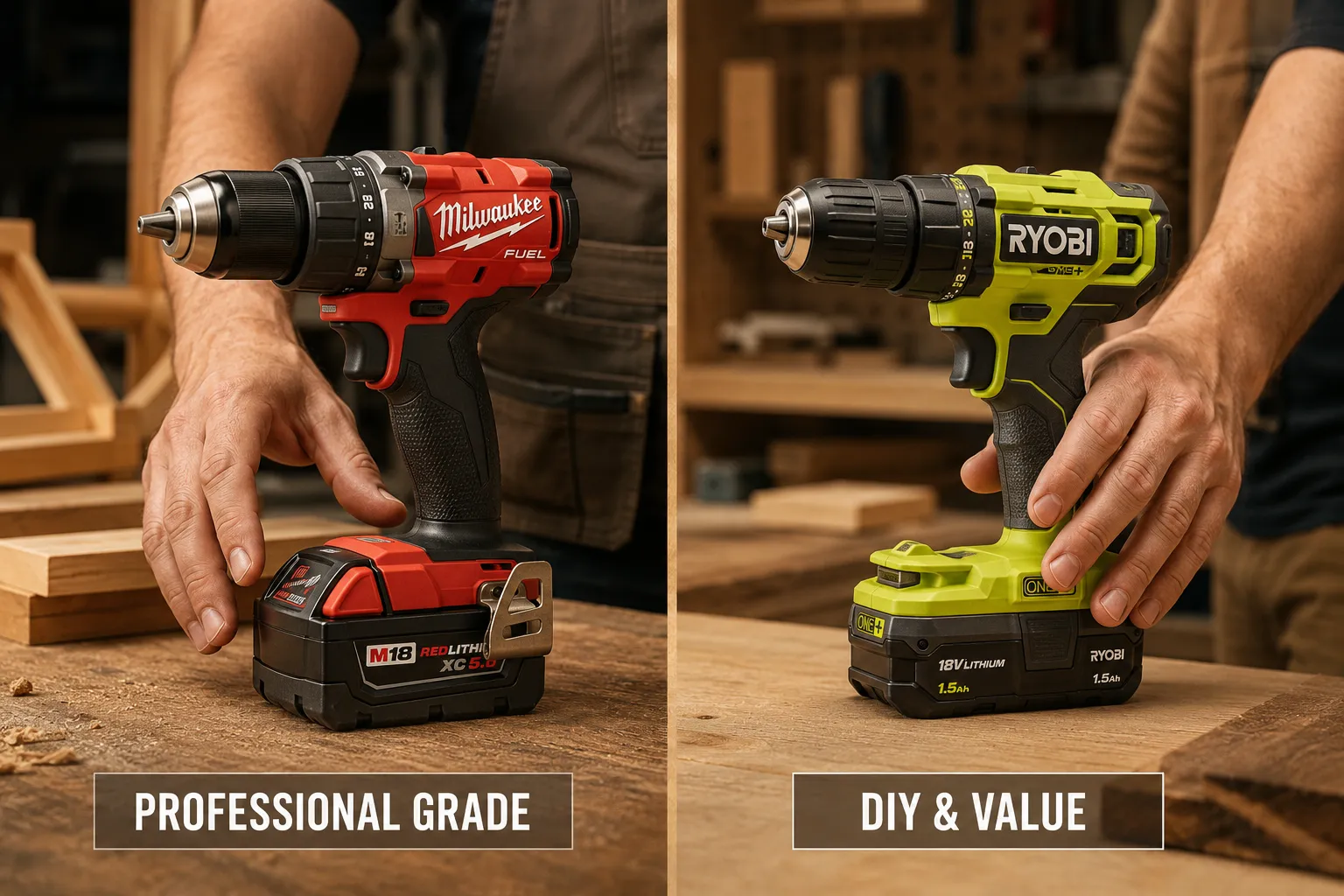
The power tool market in 2026 is highly competitive, with each brand carving out a distinct niche. For beginner woodworkers and small shops, these distinctions are more than just color schemes; they represent different philosophies regarding performance, cost, and ecosystem expansion.
Ryobi, often found at major home improvement retailers, has built its reputation on affordability and an incredibly extensive 18V ONE+ battery platform. It’s a brand designed for the DIY enthusiast and the weekend warrior, offering a tool for almost any task imaginable, from woodworking to lawn care. The sheer number of tools that share the same battery is a significant draw, making it easy and cost-effective to expand your collection.
DeWalt, a powerhouse known for its bright yellow and black livery, targets serious hobbyists, contractors, and small businesses. Their 20V MAX system is robust, durable, and offers a strong balance of performance and price. DeWalt tools are built to withstand the rigors of a jobsite, which translates well to the demands of a busy small woodworking shop. Their reputation for reliability and readily available service makes them a popular choice.
Milwaukee, with its iconic red and black branding, sits at the top tier, catering primarily to professional tradespeople and industrial users. Their M12 and M18 FUEL ( brushless motor technology) lines are synonymous with innovation, raw power, and extreme durability. While their price point is higher, the performance, advanced features, and long-term reliability often justify the investment for those who depend on their tools daily.
For anyone considering a major investment in power tools, especially those building out a new workshop, understanding these core identities is the first step in making the right choice for “Milwaukee Power Tools vs. Ryobi vs. DeWalt: Complete Comparison for Beginner Woodworkers and Small Shops.”
Ecosystem Fit and Battery Platform Value
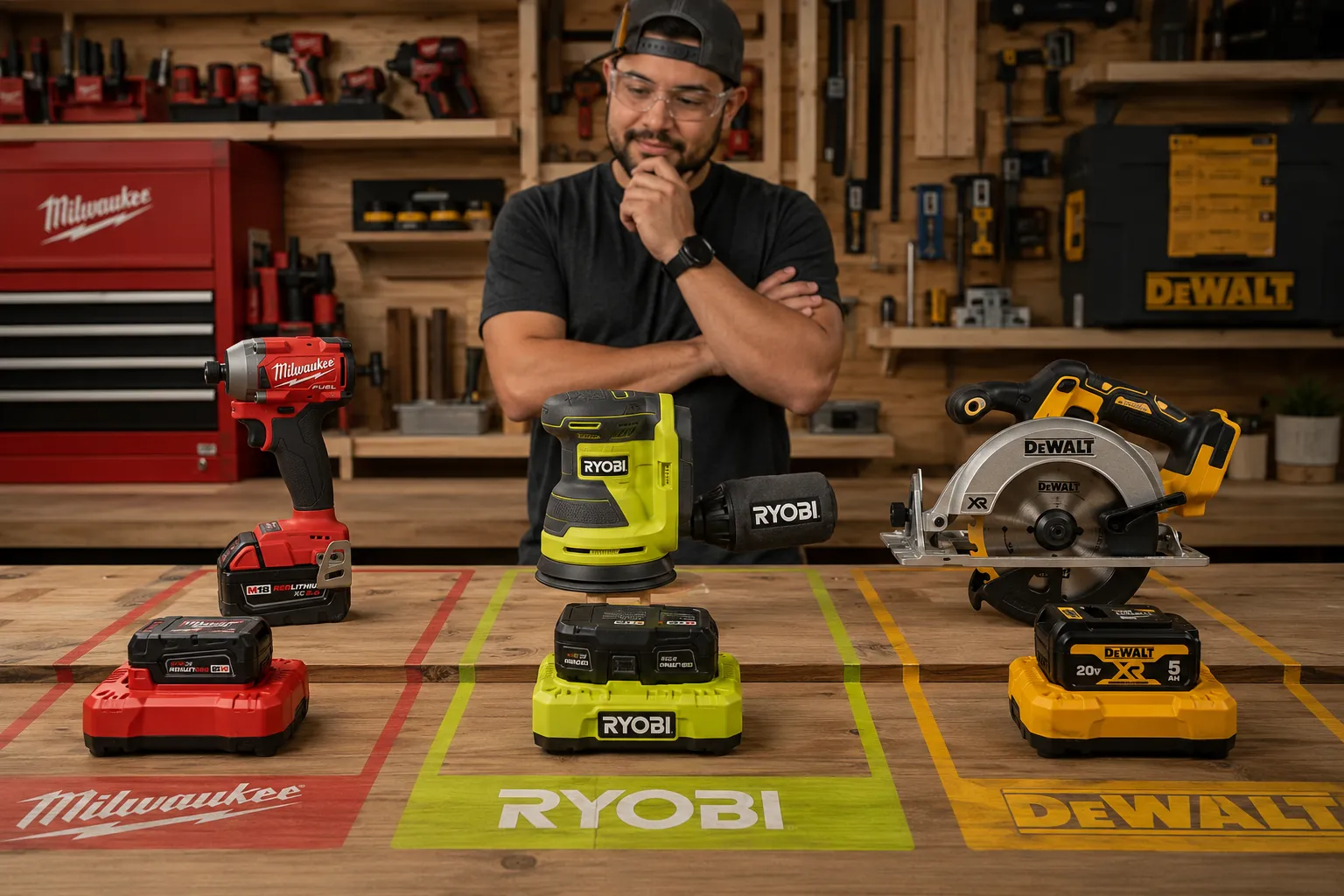
The single most crucial factor for beginner woodworkers and small shops when choosing a cordless power tool brand in 2026 is the battery platform and the breadth of its ecosystem. Investing in a brand means investing in its battery system, and the ability to share batteries across multiple tools provides immense value and convenience.
Ryobi’s 18V ONE+ Ecosystem: The Enthusiast’s Paradise
Ryobi’s 18V ONE+ system is legendary for its vastness. With over 280 tools compatible with the same 18V battery, it offers an unmatched variety for hobbyists and small shop owners who want to tackle a wide range of projects, from basic cuts to intricate joinery. This includes everything from drills and impact drivers to orbital sanders, routers, and even shop vacuums and lawnmowers.
- Pros: Unbeatable price point, incredibly wide tool selection, readily available.
- Cons: Generally lower build quality and performance compared to professional brands, not designed for heavy, continuous use.
- Best for: Beginners, DIYers, those with diverse home and garden needs, projects like building DIY reclaimed wood floating shelves or simple coffee tables.
DeWalt’s 20V MAX Ecosystem: The Professional’s Workhorse
DeWalt’s 20V MAX platform offers a robust selection of over 250 tools, focusing on jobsite durability and consistent performance. The tools are generally more powerful and built to a higher standard than Ryobi, making them suitable for more demanding woodworking tasks. DeWalt also offers a 60V FLEXVOLT battery system, which can power larger, more energy-intensive tools while being backward compatible with 20V MAX tools (though this is typically beyond beginner needs).
- Pros: Excellent balance of power, durability, and price; large tool selection, trusted by professionals.
- Cons: Higher price than Ryobi, not as many specialized tools as Milwaukee.
- Best for: Serious hobbyists, small professional shops, those building custom bar stools or requiring reliable performance for prolonged use.
Milwaukee’s M18 and M12 FUEL Ecosystems: The Performance Leader
Milwaukee operates two primary battery platforms: M18 and M12. The M18 system is their flagship, boasting over 250 tools, many of which feature their “FUEL” brushless motor technology. These tools are engineered for maximum performance, efficiency, and longevity, often outperforming competitors in power and runtime. The M12 system, with over 100 tools, offers compact, lighter-weight solutions for tasks where maneuverability is key, like detailed sanding or working in tight spaces.
- Pros: Industry-leading power and innovation, superior durability, advanced features, compact M12 option for precision.
- Cons: Highest price point, M12 and M18 batteries are not interchangeable.
- Best for: Dedicated woodworkers, small shops with high-volume production, those who demand the absolute best performance and intend to heavily use their tools for projects like building a custom workbench or detailed Japanese joinery.
When evaluating Milwaukee Power Tools vs. Ryobi vs. DeWalt: Complete Comparison for Beginner Woodworkers and Small Shops, consider which ecosystem aligns best with your growth trajectory. Committing to a single battery platform from the outset will save you money and headaches in the long run, ensuring seamless integration across your tools. For more on maximizing efficiency in a small space, check out small workshop hacks for 2026.
Durability, Performance, and Long-Term Value for Small Shops
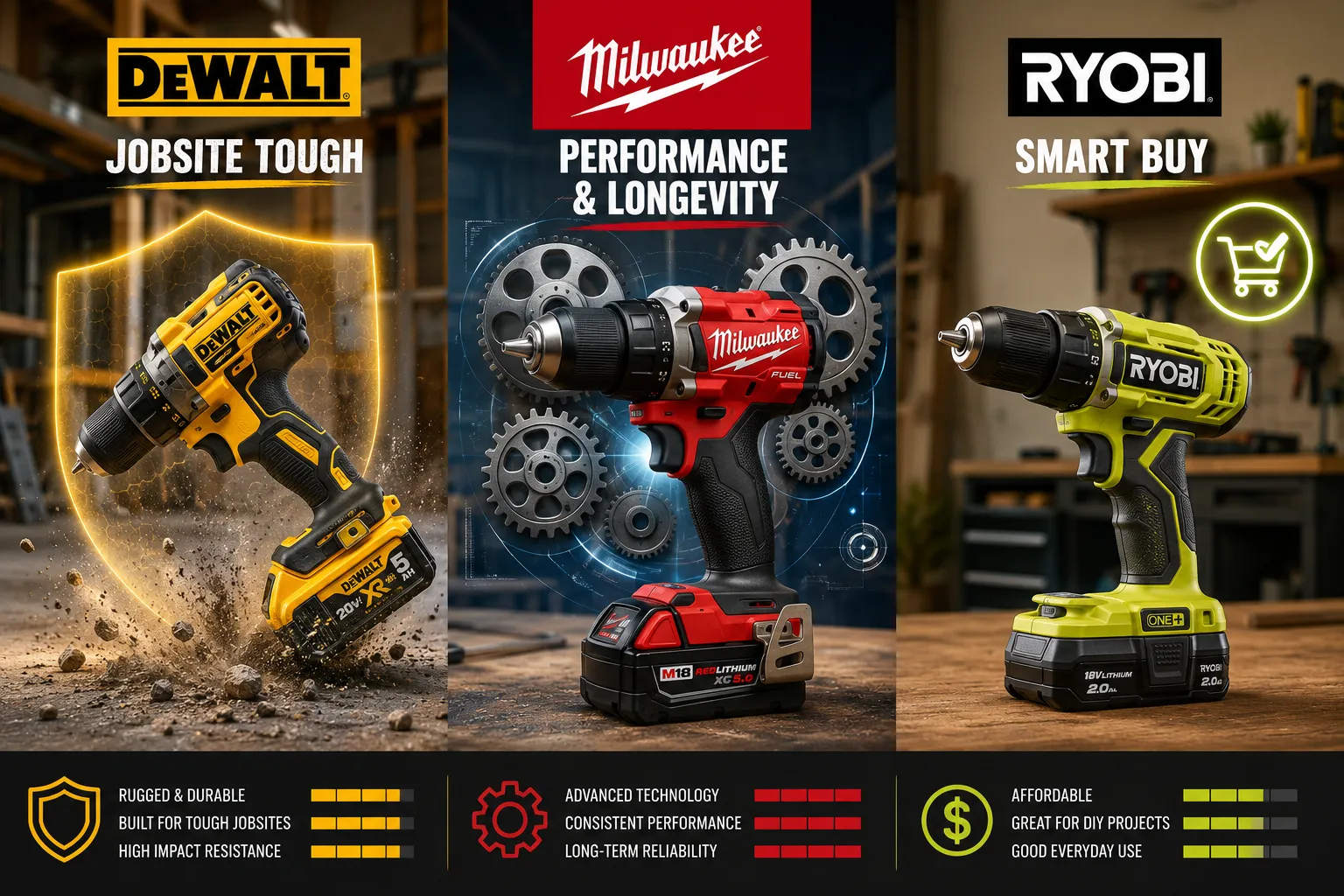
Beyond the initial purchase, the long-term value of your power tools, how long they last, how consistently they perform, and their serviceability, is paramount for a small woodworking shop. This is where the differences between Milwaukee, Ryobi, and DeWalt become most apparent.
Durability and Build Quality
- Ryobi: Tools are primarily housed in sturdy plastic. While generally reliable for home use, they are not designed for the constant drops, heavy impacts, or prolonged, continuous use seen in professional settings. Components like chucks can be plastic, and internal gears may not be as robust.
- DeWalt: Known for its rugged construction. DeWalt tools often feature metal gear housings, rubber overmolds for drop protection, and high-quality plastics. They are built to withstand jobsite abuse, making them a solid choice for a small shop that anticipates moderate to heavy use.
- Milwaukee: At the pinnacle of durability. Milwaukee’s M18 FUEL tools incorporate all-metal gear cases, advanced composite materials, and superior internal components designed for extreme conditions and professional use. Their tools are often praised for feeling solid and well-balanced, a testament to their build quality.
Performance and Power
- Ryobi: Offers sufficient power for most beginner and DIY woodworking tasks. Their drills, sanders, and saws will get the job done for occasional projects. However, under heavy load, they might struggle or bog down more quickly than their professional counterparts.
- DeWalt: Provides excellent power and torque for the price. Their brushless motor tools (XR line) are highly efficient and deliver consistent performance, making them capable of handling tougher woods and more intensive operations, such as precision cuts with a table saw.
- Milwaukee: The M18 FUEL line is engineered for maximum power and runtime. Utilizing advanced brushless motors and smart electronics (REDLINK PLUS intelligence), Milwaukee tools often lead in cutting speed, torque, and efficiency, allowing for faster work and fewer battery changes, even on demanding tasks. This is particularly valuable for power tool mastery in projects like building console tables.
Long-Term Value and Warranty
- Ryobi: Generally comes with a 3-year limited warranty. Given their lower initial cost, the long-term value is in their affordability and broad utility for casual use. Repairing them yourself can sometimes be more cost-effective than professional service due to lower part costs.
- DeWalt: Typically offers a 3-year limited warranty, 1-year free service, and a 90-day money-back guarantee. Their reputation for reliability means less downtime, contributing to better long-term value for a working shop. Parts and authorized service are widely available.
- Milwaukee: Provides a 5-year warranty on most tools and a 3-year warranty on batteries, reflecting their confidence in product longevity. While the upfront cost is higher, the superior durability, performance, and robust support infrastructure translate into excellent long-term value for dedicated users who can amortize the cost over many years of heavy use.
For the beginner woodworker and small shop operator, this “Milwaukee Power Tools vs. Ryobi vs. DeWalt: Complete Comparison for Beginner Woodworkers and Small Shops” highlights a clear trade-off: initial cost versus long-term performance and durability. If your shop is a casual hobby, Ryobi’s value is undeniable. If you foresee regular, demanding projects and perhaps even commercial aspirations, the investment in DeWalt or Milwaukee will likely pay dividends in reliability and efficiency.
Conclusion
Choosing the right power tool brand is a foundational decision for any beginner woodworker or small shop owner in 2026. The comparison of Milwaukee Power Tools vs. Ryobi vs. DeWalt reveals that there isn’t a single “best” brand; rather, there’s a best fit for your specific needs, budget, and ambitions.
- If you’re just dipping your toes into woodworking, have a tight budget, and need a diverse range of tools for occasional household tasks and simple projects, Ryobi with its expansive 18V ONE+ ecosystem offers unparalleled value and versatility.
- If you’re a serious hobbyist or a small shop with an eye towards more demanding projects, who values a balance of performance, durability, and a reasonable price, DeWalt and its robust 20V MAX platform provides a reliable and capable solution.
- If you’re an ambitious woodworker planning extensive use, complex builds, or even commercial work, and you demand the highest levels of power, innovation, and long-term durability, Milwaukee‘s M18 FUEL and M12 systems represent a premium investment that will deliver professional-grade results and withstand the test of time.
Ultimately, commit to a single battery platform early on to maximize your investment and simplify your workflow. Consider not just your immediate needs, but also where you envision your woodworking journey taking you in the coming years.
Actionable Next Steps:
- Assess your current needs and budget: Be realistic about the types of projects you’ll undertake and the funds you have available.
- Visit a local hardware store: Hold tools from each brand, feel their weight and balance, and get a sense of their build quality.
- Watch review videos: Look for independent reviews and comparisons specific to the tools you need (e.g., drills, impact drivers, sanders).
- Consider starter kits: All three brands offer excellent starter kits that include a tool, battery, and charger, providing a cost-effective entry point into their ecosystem.
By carefully evaluating these factors, you can confidently choose the power tool brand that will empower your woodworking journey for years to come.
SEO Meta Title: Milwaukee vs. Ryobi vs. DeWalt: Power Tools for Woodworking SEO Meta Description: Choosing between Milwaukee, Ryobi, & DeWalt in 2026 for beginner woodworkers and small shops? Compare ecosystem, durability, and value.